Glaswegian identity is shaped by the city’s history, language, transport, neighbourhoods, music, parks, football culture, food, humour and working-class traditions. A “true Glaswegian” is not defined by one checklist, but by familiarity with the everyday systems and cultural references that shape life in Glasgow.
- What does being a true Glaswegian actually mean?
- Why is Glasgow’s history still important to everyday Glaswegian life?
- Why do Glaswegians use the Subway as part of everyday city life?
- Why do Glaswegians understand the city through neighbourhoods?
- Why do Glaswegians recognise the importance of Glasgow’s parks?
- Why do Glaswegians use local expressions and understand the Glasgow accent?
- Why is music such a major part of Glasgow life?
- Why do Glaswegians have such a strong relationship with football?
- Why do Glaswegians know Glasgow’s food and drink traditions?
- Why do Glaswegians understand the River Clyde as part of the city?
- Why do Glaswegians understand Glasgow’s weather as part of daily planning?
- What everyday habits make someone feel genuinely local in Glasgow?
- How has Glasgow’s traditional identity changed in modern daily life?
- What should visitors understand about true Glaswegian daily life?
Glasgow developed rapidly during the Industrial Revolution through shipbuilding, engineering, manufacturing and trade. Its population expanded dramatically, creating dense residential neighbourhoods, public parks, transport networks and community institutions. Historic Environment Scotland records that Glasgow’s population reached about 1.396 million at its 1925 peak.
That history remains visible in the city’s tenements, streets, parks, museums, railway infrastructure and relationship with the River Clyde. Modern Glasgow adds universities, creative industries, international communities, restaurants, sporting venues and one of Scotland’s strongest music economies.
Understanding what Glaswegians know and do daily therefore requires looking beyond stereotypes. Everyday Glasgow culture is practical and place-based. It involves knowing how to get around, understanding local speech, recognising neighbourhoods, using public spaces and following the city’s cultural calendar.
What does being a true Glaswegian actually mean?
Being a true Glaswegian means having practical familiarity with Glasgow’s places, speech, transport, traditions and social routines, rather than following a fixed personality type or cultural checklist every resident must meet.
The word Glaswegian describes a person from Glasgow. The identity is connected to the city itself rather than to one occupation, neighbourhood, religion, age group or social class.
Glasgow has a long history of migration and population movement. Industrial expansion attracted workers from across Scotland, Ireland and elsewhere. Later migration created an increasingly diverse urban population. Scotland’s Census 2022 records substantial linguistic and cultural diversity across Scotland, with large cities including Glasgow having particularly high proportions of residents speaking languages other than English, Scots and Gaelic at home.
The modern Glaswegian identity therefore contains many influences.
A resident can live in a traditional tenement, a suburban house, a modern apartment or student accommodation and still participate in Glasgow culture. Daily routines differ between areas such as the West End, Southside, East End, North Glasgow and the city centre.
What connects these experiences is familiarity with the city.
A Glaswegian generally knows the difference between local neighbourhoods, understands common transport routes, recognises familiar expressions and knows that Glasgow’s cultural life extends far beyond its major tourist attractions.
Why is Glasgow’s history still important to everyday Glaswegian life?
Glasgow’s industrial and urban history remains visible through tenements, the River Clyde, public parks, transport infrastructure, museums and neighbourhood layouts, so understanding the city’s past helps explain many routines and places that residents encounter every day.
Glasgow’s modern identity developed strongly during the Industrial Revolution. The River Clyde became central to shipbuilding and engineering, while manufacturing and commerce expanded the city.
The city’s housing changed alongside population growth. Traditional Scottish tenements became a defining part of Glasgow’s urban landscape. Historic Environment Scotland describes tenements as multi-storey urban housing developed partly in response to high land values and growing housing demand. Traditional examples commonly contain stone construction, shared stairs and communal drying greens.
The scale of Glasgow’s growth was substantial. Historic Environment Scotland records that the city quadrupled in size between 1850 and 1925, when its population peaked at approximately 1.396 million.
The River Clyde also remains a major geographical reference point.
Riverside Museum documents Glasgow’s international contributions to shipbuilding, train manufacturing and engineering. The museum opened in 2011 and contains more than 3,000 objects from Glasgow’s transport and technology collections.
This history explains why Glaswegians often use industrial landmarks, bridges, streets and neighbourhoods as practical points of reference.
History is therefore not simply something encountered in museums. It is built into the physical city.
Why do Glaswegians use the Subway as part of everyday city life?
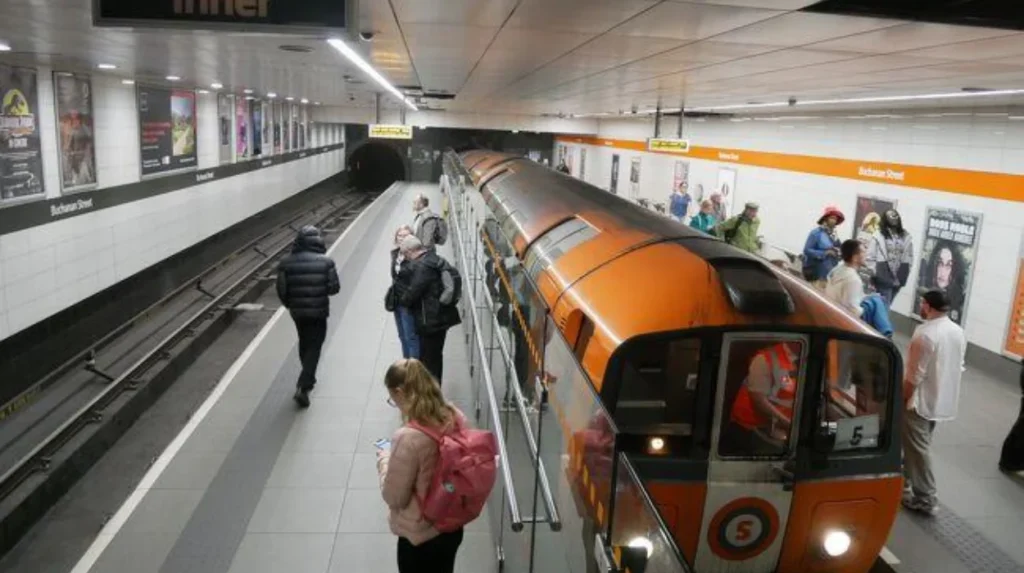
Glaswegians use the Subway as a practical transport network connecting the city centre and West End, with fifteen stations forming a circular system that has served Glasgow since 1896 and continues to carry millions of passengers each year.
The Glasgow Subway is one of the city’s most recognisable institutions.
The system opened on 14 December 1896. SPT identifies it as the world’s third-oldest underground railway after London and Budapest. It originally operated as a cable-hauled railway before electrification in 1935.
The network contains 15 stations, examples including Buchanan Street, St Enoch, Partick, Kelvinhall, Hillhead, Govan and Ibrox.
The Subway forms a circular route through the central and western parts of Glasgow. SPT states that a complete circuit takes approximately 24 minutes.
The system remains heavily used. SPT reported 13.1 million Subway journeys in 2024, alongside more than 350,000 Smartcards in circulation by the end of that year.
A regular Glaswegian understands that the Subway is not primarily a sightseeing attraction. It is a practical way to cross the city.
Contactless payment is now available across all 15 stations. SPT introduced contactless Pay As You Go across the complete network in 2026.
Knowing which station serves a destination is part of everyday Glasgow knowledge.
A visitor might ask how to reach the West End. A local often thinks immediately in terms of Subway stations, bus routes or walking connections.
Why do Glaswegians understand the city through neighbourhoods?
Glaswegians commonly identify places through neighbourhood names because Glasgow has distinct communities with different architectural, commercial, transport and social characteristics, including the West End, Southside, East End, city centre and North Glasgow.
Glasgow is not experienced as one uniform urban area.
The West End includes neighbourhoods such as Hillhead, Partick, Kelvinbridge and Hyndland. The area contains the University of Glasgow, Kelvingrove Park, Byres Road and extensive Victorian and Edwardian architecture.
The Southside includes areas such as Shawlands, Pollokshields, Govanhill, Battlefield and Cathcart. It combines traditional tenements, independent businesses, parks, transport connections and diverse communities.
The East End includes areas such as Dennistoun, Bridgeton and Parkhead. Historic industrial development, football, housing and community institutions remain important reference points.
The city centre contains major shopping streets, offices, transport hubs, cultural institutions and entertainment venues.
The North Glasgow area includes neighbourhoods with distinct housing histories and community identities.
Local geography matters because Glasgow developed through separate settlements, estates, industrial districts and residential expansions.
Historic Environment Scotland’s records show that areas such as Hillhead expanded rapidly during the nineteenth century, with large numbers of tenements built as Glasgow’s population increased.
Knowing neighbourhood names therefore provides more information than simply knowing a postcode.
Why do Glaswegians recognise the importance of Glasgow’s parks?
Glaswegians use parks as everyday spaces for walking, exercise, relaxation, socialising and events, reflecting Glasgow’s long municipal tradition of public green space and the historic importance of places such as Glasgow Green, Kelvingrove Park and Queen’s Park.
Glasgow is frequently associated with the phrase “Dear Green Place.” The city’s park network provides an important part of its urban identity.
Glasgow Green is the oldest park in the city. Glasgow Life traces its origins to 1450, when Bishop William Turnbull received land from James II and gave it to the people for common grazing.
The modern park developed over centuries and supported activities ranging from recreation to laundry, grazing and public events.
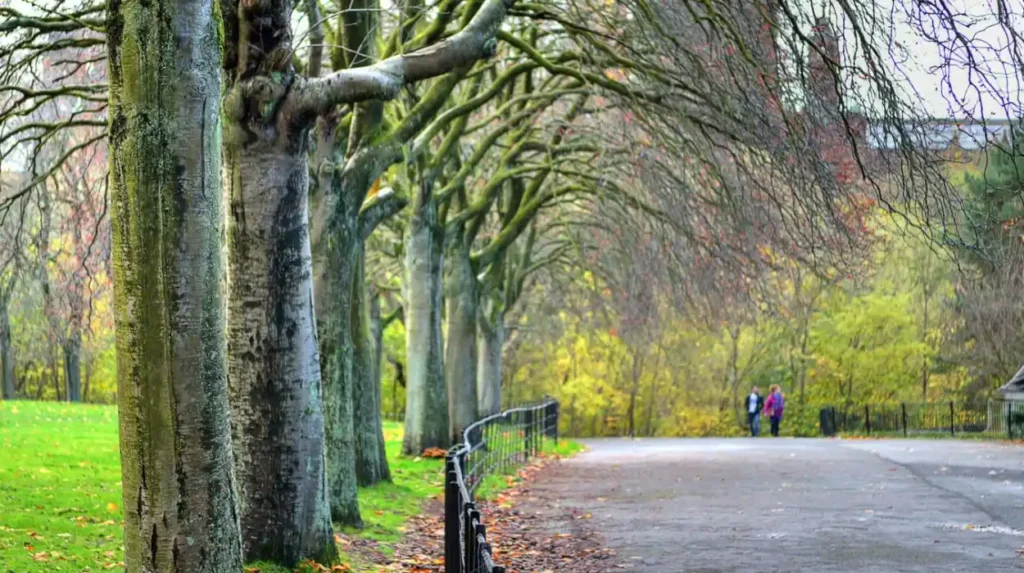
Kelvingrove Park was established in the nineteenth century. Glasgow Town Council purchased the land in 1852, and the park opened to the public in 1853.
Queen’s Park developed during the same Victorian expansion of Glasgow’s public park system.
These spaces continue to serve ordinary daily purposes.
A local resident can use a park for a morning walk, exercise session, lunch break, dog walk or route between neighbourhoods.
Kelvingrove Park also demonstrates Glasgow’s relationship between parks and culture. Its bandstand developed into an important music venue, reinforcing the connection between public space and entertainment.
Using Glasgow’s parks is therefore part of understanding how the city balances dense urban development with accessible open space.
Why do Glaswegians use local expressions and understand the Glasgow accent?
Glaswegian speech combines Scottish English, Scots vocabulary, local pronunciation and expressions that communicate identity and familiarity, making language one of the most recognisable everyday features of Glasgow culture.
The Glasgow accent is a regional variety of Scottish English. It has developed through the city’s social and industrial history.
Commonly recognised Glasgow expressions include “wee” for something small, “bairn” for a child in Scottish usage, and “aye” for yes. Some expressions vary between speakers and generations.
The term Glaswegian itself is part of this linguistic identity.
Scots also has a recognised place in Scotland’s linguistic landscape. Scotland’s Census 2022 found that 46.2% of people aged three and over had some skills in Scots, up from 37.7% in 2011.
That figure applies to Scotland rather than Glasgow specifically, so it should not be interpreted as a Glasgow-only measurement.
Glasgow speech also varies according to neighbourhood, age, social background and individual preference.
A visitor does not need to reproduce the accent to understand local culture. Listening carefully is more important than imitating pronunciation.
For residents, however, recognising familiar expressions and speech patterns is part of ordinary communication.
Why is music such a major part of Glasgow life?
Music is embedded in Glasgow’s cultural infrastructure through concert venues, local performers, festivals, clubs, education and weekly events, and UNESCO recognises Glasgow as a Creative City of Music because of the scale and importance of its music economy.
Glasgow became a UNESCO City of Music in 2008 through the UNESCO Creative Cities Network.
UNESCO describes Glasgow as a major international music centre and states that the city has the largest music economy in the UK outside London. It also identifies Glasgow’s extensive music workforce, educational institutions and range of venues.
Music is therefore part of normal city life rather than an occasional cultural activity.
Glasgow contains venues associated with different musical traditions and audiences. These include large concert venues, independent halls, clubs, theatres and historic performance spaces.
The city’s public parks also have music connections.
Kelvingrove Park’s bandstand has hosted performances for generations. Glasgow Life records that public music at Kelvingrove Park dates back to 1872, when a military band performed there.
The city’s musical reputation also affects tourism, nightlife and local business.
For a Glaswegian, checking a gig, hearing local music, attending a concert or discussing an artist can form part of ordinary weekly life.
Why do Glaswegians have such a strong relationship with football?
Football is a major part of Glasgow’s sporting culture, with Rangers and Celtic forming the city’s most internationally recognised football rivalry while clubs such as Partick Thistle and Queen’s Park also contribute to Glasgow’s football landscape.
Glasgow has a long-established football culture.
Celtic Football Club was founded in 1887. Rangers Football Club was founded in 1872. Their rivalry is known as the Old Firm, a term associated with the historic competitive relationship between the clubs.
Their home grounds are major city landmarks.
Celtic Park is in Parkhead in the East End. Ibrox Stadium is in the southwest of Glasgow.
Football culture extends beyond match attendance. Fixtures influence transport demand, pubs, conversations, sports media and weekend routines.
Glasgow also has other professional clubs.
Partick Thistle Football Club plays at Firhill Stadium in Maryhill. Queen’s Park Football Club, founded in 1867, has a particularly important place in Scottish football history and is Scotland’s oldest association football club.
Football allegiance is personal and varies across individuals and families.
A factual description of Glaswegian life therefore recognises football’s social importance without assuming that every resident supports one particular club.
Why do Glaswegians know Glasgow’s food and drink traditions?
Glaswegian food culture combines traditional Scottish dishes, local products, cafés, bakeries, pubs, restaurants and international cuisines, reflecting both Glasgow’s industrial history and its modern multicultural population.
Food is another practical part of local knowledge.
Traditional Scottish foods associated with Glasgow and Scotland include Scotch pie, square sausage, tatties, haggis, Cullen skink and porridge, although individual eating habits vary significantly.
Glasgow’s modern food scene extends far beyond traditional Scottish dishes.
Neighbourhoods contain Indian, Pakistani, Chinese, Italian, Middle Eastern, African, European and other international cuisines.
This diversity reflects wider population change.
Scotland’s Census identifies Glasgow and other large Scottish cities as areas where languages other than English, Scots and Gaelic are particularly common in households.
The city’s café culture is also strongly connected to universities, offices, shopping streets and residential neighbourhoods.
Pubs remain important social spaces, but Glasgow’s food and drink economy also includes cafés, bakeries, restaurants, markets and specialist food businesses.
Knowing where to grab breakfast, lunch, coffee or an evening meal is therefore part of practical local knowledge.
Why do Glaswegians understand the River Clyde as part of the city?
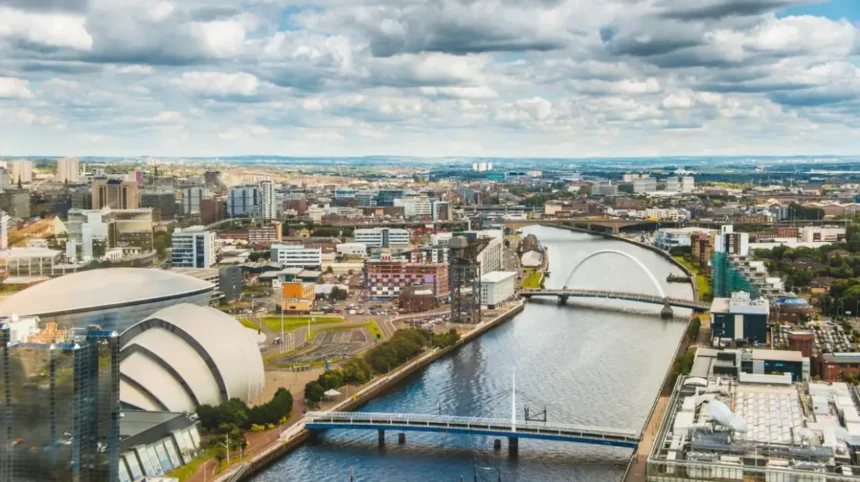
The River Clyde is a central geographical and historical feature of Glasgow, connecting the city’s industrial past with modern waterfront development, museums, transport routes, architecture, walking spaces and cultural destinations.
The River Clyde shaped Glasgow’s economic development.
Shipbuilding became one of the city’s defining industries, creating employment, engineering expertise and international trade connections.
The river remains visible across the city through bridges, waterfront paths, buildings and cultural attractions.
The Riverside Museum stands at the junction of the Rivers Kelvin and Clyde. Glasgow Life states that its collections reflect Glasgow’s historic contribution to heavy industries including shipbuilding, train manufacturing and engineering.
The Clyde also provides an important orientation point.
Glaswegians commonly describe locations in relation to the river, north or south banks, bridges and nearby neighbourhoods.
The river’s modern role differs from its industrial past. Former industrial areas have been redeveloped for housing, leisure, business and public spaces.
This makes the Clyde an example of how Glasgow combines historical infrastructure with contemporary urban development.
Why do Glaswegians understand Glasgow’s weather as part of daily planning?
Glaswegian daily routines account for changing weather through practical choices about clothing, walking, commuting, outdoor activities and travel, making weather awareness an ordinary part of navigating the city throughout the year.
Glasgow has a maritime climate influenced by its western Scottish location.
Rainfall is a normal consideration when planning outdoor activities.
Residents routinely consider weather before walking, cycling, commuting or spending time in parks.
This does not mean every Glaswegian dislikes rain or changes plans whenever the forecast changes. It means weather forms part of practical city planning.
The city’s pedestrian routes, parks, public transport and indoor venues allow residents to adjust routines according to conditions.
For visitors, weather awareness is equally useful.
A Glasgow day can involve walking between neighbourhoods, using the Subway, visiting museums, stopping at cafés and spending time outdoors. Appropriate clothing makes these activities easier throughout the year.
Weather therefore influences behaviour without defining the city’s culture.
What everyday habits make someone feel genuinely local in Glasgow?
Feeling local in Glasgow comes from knowing how the city works: using public transport confidently, recognising neighbourhoods, understanding local speech, respecting community spaces, knowing major landmarks and participating in everyday cultural activities rather than performing a stereotype.
Local familiarity develops through repetition.
A resident learns which Subway station is closest to a destination. They learn alternative bus routes. They recognise streets and neighbourhood boundaries. They understand local terminology.
They also become familiar with Glasgow’s public institutions.
Examples include Glasgow Life museums, libraries, parks, sports facilities and cultural venues.
The city’s transport network reinforces this familiarity. SPT operates the Glasgow Subway and coordinates transport services across the wider west of Scotland.
Local knowledge also includes understanding the city’s architectural vocabulary.
A Glaswegian can identify many tenement streets, Victorian terraces, modern flats and converted industrial buildings through repeated exposure.
Food, football and music add another layer.
Knowing a local café, recognising a football ground, understanding a common phrase or checking what is happening at a nearby venue are ordinary examples of urban familiarity.
There is no single test for being a “true Glaswegian.”
The phrase works best as a description of deep familiarity with Glasgow rather than a formal identity category.
Explore More Area Guide
Duke of Wellington Statue Glasgow Traffic Cone Explained
Irn-Bru Culture: Why Glasgow Loves Scotland’s Icon
How has Glasgow’s traditional identity changed in modern daily life?
Modern Glasgow retains strong links with its industrial, neighbourhood and cultural traditions while adding international communities, new businesses, modern transport technology, contemporary housing and expanding creative industries that continue to reshape everyday urban life.
Glasgow is a historic city with a modern population and economy.
Its old industrial identity remains visible through the Clyde, tenements, railway infrastructure, museums and surviving industrial buildings.
At the same time, new forms of work, housing, retail, education and entertainment have transformed the city.
The Subway illustrates this transition clearly. The original system opened in 1896, while modern trains, contactless payment and upgraded infrastructure now support contemporary travel. SPT recorded 13.1 million journeys in 2024.
Music demonstrates the same continuity.
Glasgow’s long performance history has developed into an internationally recognised music economy, with UNESCO recognising the city as a Creative City of Music.
Green spaces also retain their original civic purpose.
Glasgow Green dates back to the fifteenth century, while Victorian parks such as Kelvingrove were created partly in response to rapid industrial and population growth.
Modern Glasgow therefore combines inherited traditions with contemporary urban life.
What should visitors understand about true Glaswegian daily life?
Visitors understand Glasgow better by observing how residents use transport, neighbourhoods, parks, shops, cafés, cultural venues and public spaces than by relying on stereotypes about accents, humour, football or nightlife.
The most useful approach is practical.
Use the Subway to understand the city’s central and western geography. Walk through neighbourhoods rather than limiting exploration to major attractions. Visit public parks. Observe tenement architecture. Explore museums that explain Glasgow’s industrial history.
Listen to local speech without trying to imitate the accent.
Understand that football loyalties vary.
Explore Glasgow’s food culture beyond traditional Scottish dishes.
Experience the city’s music infrastructure, which remains one of its most significant cultural characteristics.
Most importantly, recognise that Glasgow is a diverse city.
Its identity developed through industrialisation, migration, urban expansion, community institutions, cultural production and continual change.
The everyday Glaswegian experience is therefore not one fixed lifestyle.
It is a relationship with the city.
Knowing the Subway, recognising neighbourhoods, understanding local expressions, using parks, following cultural events and recognising Glasgow’s industrial heritage are all practical ways that this relationship appears in daily life.
That combination of history and everyday familiarity explains why Glasgow remains distinctive.
What does it mean to be a true Glaswegian?
A true Glaswegian is someone closely familiar with Glasgow’s culture, neighbourhoods, speech, transport, traditions, food, music, football and everyday community life. The term describes local identity rather than a formal status.