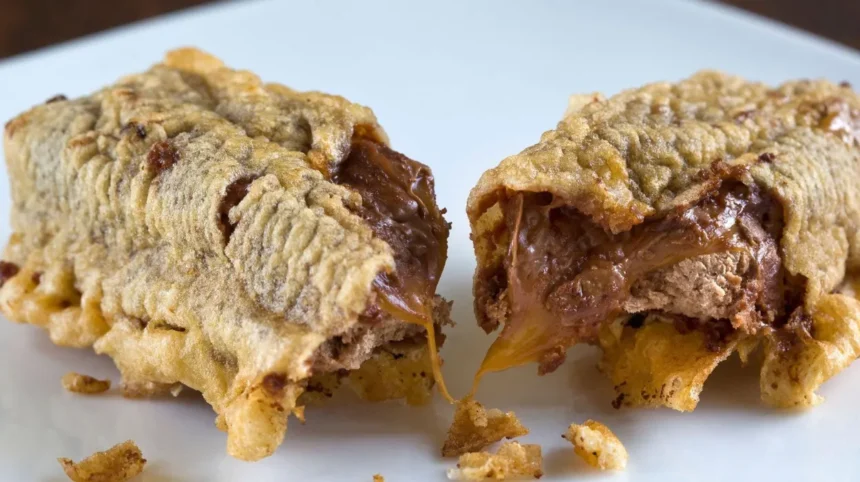
The deep fried Mars bar is a Scottish chip-shop snack made by coating a Mars chocolate bar in batter and cooking it in a deep fryer. The treat became associated with Scotland after its emergence in Stonehaven during the early 1990s.
- What exactly is a deep fried Mars bar?
- When was the deep fried Mars bar invented?
- Why did the deep fried Mars bar become associated with Scotland?
- How is a deep fried Mars bar actually made?
- What happens to the chocolate, caramel and nougat when it is fried?
- Is a deep fried Mars bar a traditional Scottish food?
- Why is the deep fried Mars bar famous in Glasgow?
- Where can you get a deep fried Mars bar in Glasgow?
- Can you get a deep fried Mars bar late at night in Glasgow?
- How much does a deep fried Mars bar cost in Glasgow?
- How many calories are in a deep fried Mars bar?
- Is a deep fried Mars bar unhealthy?
- Does deep frying a Mars bar create acrylamide?
- Why did Mars distance itself from the deep fried Mars bar?
- Is the deep fried Mars bar still popular in Scotland?
- Is the deep fried Mars bar mainly for tourists?
- What should visitors know before ordering a deep fried Mars bar in Glasgow?
- How does the Glasgow deep fried Mars bar fit into Scottish food culture?
- Where should you look first for a deep fried Mars bar in Glasgow?
The snack is one of Scotland’s most recognisable modern food curiosities. It combines a commercially produced chocolate bar with the cooking method traditionally associated with fish, chips and other chip-shop foods.
For Glasgow visitors, the important point is that the deep fried Mars bar exists in the city, but it is not a standard item at every chip shop. Current menus show it at several central Glasgow locations, including Blue Lagoon branches, while Merchant Chippie is also listed for the dish. Menu availability changes, so checking the current menu before travelling is practical.
What exactly is a deep fried Mars bar?
A deep fried Mars bar is a whole Mars chocolate bar covered in batter and cooked in hot frying oil. The heat softens the chocolate, caramel and nougat while the batter forms a crisp outer coating around the confectionery.
The basic construction is straightforward. A Mars bar contains chocolate, caramel and nougat. The complete bar is coated in batter before being placed into a deep fryer.
The batter creates the characteristic crisp exterior. Inside, the chocolate softens as the bar heats. The caramel becomes softer and more fluid, while the nougat changes texture.
The result is different from eating a standard Mars bar because the product is served hot and surrounded by cooked batter.
The snack belongs to a broader Scottish and British chip-shop tradition of frying foods in batter. Fish, sausages, haggis and other savoury products are common examples. Deep-fried confectionery represents a more unusual extension of that cooking technique.
A deep fried Mars bar is therefore best understood as a chip-shop dessert or sweet snack, rather than as a traditional ancient Scottish dish.
When was the deep fried Mars bar invented?
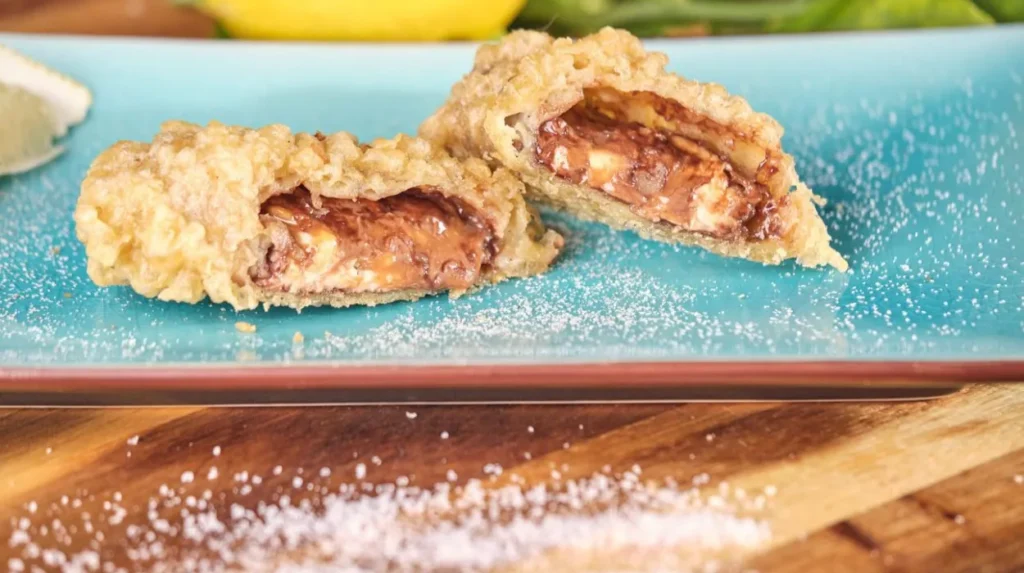
The deep fried Mars bar emerged in Stonehaven, Aberdeenshire, during the early 1990s, with the Carron Fish Bar widely credited with creating the first versions after experimenting with battered chocolate confectionery.
The commonly cited origin is Stonehaven, a coastal town in Aberdeenshire. The Carron Fish Bar is widely identified as the birthplace of the snack.
Historical reporting places the experiment in the early 1990s. A 2000 Guardian report described the former Haven chip shop as having experimented with battered chocolate during the early 1990s.
Later reporting identifies 1992 specifically as the year associated with the invention. The Guardian reported that the Carron Fish Bar’s fryers invented the battered chocolate bar in 1992.
The business was previously known as the Haven Chip Bar. It later became the Carron Fish Bar.
The snack developed from experimentation rather than from a long-established Scottish recipe. This distinction matters because the deep fried Mars bar is a modern food phenomenon.
The Carron Fish Bar continues to identify itself with the creation. Seafish records also show the Stonehaven business among the UK Top 10 finalists in the 2020 National Fish & Chip Awards.
Why did the deep fried Mars bar become associated with Scotland?
The deep fried Mars bar became associated with Scotland because its early Stonehaven origin, chip-shop preparation and extensive British media coverage turned a local experiment into an internationally recognised symbol of Scottish food culture.
The association developed through several stages.
First, the snack had a specific Scottish origin in Stonehaven. Second, it spread from the original shop to other chip shops. Third, newspapers and broadcasters repeatedly presented it as an unusual Scottish food.
By the 2000s, the deep fried Mars bar had become a recognisable part of international coverage about Scottish cuisine.
The association also became stronger because the snack was visually simple and easy to explain. A chocolate bar covered in batter and deep-fried was unusual enough to attract attention.
That media attention created a difference between recognition and everyday consumption. Many people outside Scotland know the snack, while reports from Scottish food writers have noted that it is not an everyday order for most Scots.
This distinction is particularly relevant in Glasgow. A visitor can find the snack in the city, but it does not represent the everyday diet of Glasgow residents.
How is a deep fried Mars bar actually made?
A deep fried Mars bar is prepared by coating a Mars bar in batter and placing it into a deep fryer until the coating becomes crisp and the chocolate centre becomes hot and soft. The finished bar is then served shortly after frying.
The preparation begins with a Mars bar. Some chip shops use the bar directly, while preparation practices differ between businesses.
The bar is covered with batter. Chip-shop batter commonly contains flour and liquid ingredients, although individual recipes differ.
The coated bar is then placed into hot frying oil.
The cooking period is short compared with many larger battered foods. The objective is to create a cooked exterior without completely destroying the structure of the chocolate bar.
Heat travels through the batter and into the confectionery. Chocolate softens rapidly at cooking temperatures. Caramel also becomes softer.
The finished product requires careful handling because the interior becomes much softer than the original bar.
Food Standards Agency guidance for deep-frying emphasises temperature control, oil quality and avoiding excessive browning. For relevant deep-fried foods, the agency recommends cooking to a golden-yellow or lighter colour and keeping frying temperatures appropriately controlled.
What happens to the chocolate, caramel and nougat when it is fried?
Deep frying changes the physical texture of the Mars bar. The chocolate softens, the caramel becomes warmer and more fluid, and the nougat becomes softer while the batter develops a crisp surface around the heated centre.
A standard Mars bar has a layered structure.
The outer chocolate coating is the first component affected by heat. It softens as its temperature rises.
The caramel layer also becomes softer. This creates the characteristic warm caramel texture associated with the snack.
The nougat changes from its normal firm texture to a softer consistency.
The batter behaves differently. Water in the batter turns into steam during cooking, while the exterior develops a browned, crisp surface.
The final texture therefore comes from the contrast between cooked batter and heated confectionery.
This explains why a deep fried Mars bar is eaten soon after preparation. As it cools, the chocolate and caramel gradually become firmer again.
Is a deep fried Mars bar a traditional Scottish food?
A deep fried Mars bar is a modern Scottish chip-shop creation rather than an ancient traditional dish. Its history begins in Stonehaven in the early 1990s, making it a contemporary part of Scotland’s food culture.
Traditional Scottish cuisine includes foods with much older histories, including haggis, porridge, oatcakes and various regional fish and meat preparations.
The deep fried Mars bar belongs to a different category.
Its history is linked to modern commercial confectionery and the established British fish-and-chip industry. The Mars bar itself is an industrially produced chocolate product, while the frying technique comes from chip-shop cooking.
The snack became culturally significant after its invention rather than because it inherited centuries of culinary tradition.
This distinction prevents a common misconception. Calling the deep fried Mars bar a “Scottish delicacy” describes its cultural reputation, not an ancient culinary origin.
Why is the deep fried Mars bar famous in Glasgow?
The deep fried Mars bar is famous in Glasgow because the city has a large chip-shop culture, a strong reputation for late-night food and numerous central takeaway businesses where visitors can encounter Scottish fried-food traditions.
Glasgow’s central food environment makes the snack accessible to visitors.
The city centre contains numerous fish-and-chip takeaways and late-opening food businesses. Current business listings include several Blue Lagoon branches, Merchant Chippie and other central takeaway venues.
The city’s nightlife also contributes to the snack’s visibility. Central chip shops often operate late, placing traditional takeaway foods within walking distance of entertainment districts.
The deep fried Mars bar therefore fits naturally into the wider Glasgow chip-shop environment.
It is important, however, to separate availability from cultural frequency. The presence of the snack on a menu does not mean Glasgow residents regularly eat it.
Where can you get a deep fried Mars bar in Glasgow?
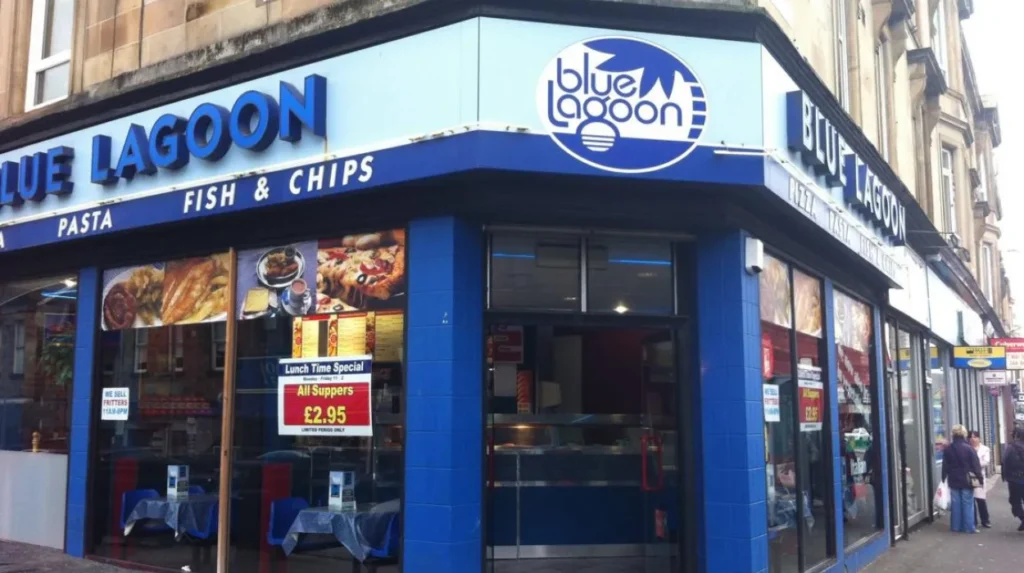
Current Glasgow listings show deep fried Mars bars at several central food businesses, including Blue Lagoon Fish & Chips locations and Merchant Chippie. Menu listings provide the clearest evidence, but availability and prices change, so check before visiting.
Blue Lagoon Fish & Chips
Blue Lagoon Fish & Chips (Argyle Street) is a central Glasgow fish-and-chip takeaway at 208 Argyle Street.
The business is listed with long opening hours, including late-night service on several days. Its wider Blue Lagoon network has multiple Glasgow locations.
The Sauchiehall Street branch at 299 Sauchiehall Street also currently appears in business listings.
A current delivery menu for the Sauchiehall Street branch lists a Deep Fried Mars Bar, priced at £3.50 on Just Eat at the time of checking. Another delivery listing showed the same item at a different price, demonstrating why prices should be checked before ordering.
Blue Lagoon Fish & Chips (Renfield St) at 84 Renfield Street is another central branch listed by current business data.
Blue Lagoon Fish & Chips (Queen St) at 151 Queen Street is another central Blue Lagoon location.
The Blue Lagoon locations are therefore useful places to check when looking for a deep fried Mars bar around Glasgow city centre.
Merchant Chippie
Merchant Chippie is located at 155 High Street, Glasgow G1 1PH.
Current business listings identify it as a fish-and-chip restaurant, while current food and travel listings specifically associate the venue with deep fried Mars bars.
Its location places it close to Glasgow’s Merchant City and central visitor areas.
The business currently lists opening hours extending into the evening, although opening schedules can change.
For visitors specifically searching for the snack, Merchant Chippie is therefore one of the central Glasgow locations worth checking.
Can you get a deep fried Mars bar late at night in Glasgow?
Yes. Several central Glasgow chip shops operate late and list deep fried Mars bars, making the snack accessible during evening and late-night food runs. Exact serving availability depends on the individual branch, kitchen hours and current menu.
Late-night food is an important part of Glasgow’s central takeaway landscape.
Blue Lagoon Fish & Chips (Sauchiehall St) currently lists opening hours extending into the early morning on several days.
Blue Lagoon Fish & Chips (Queen St) also has late opening hours listed for several days.
This does not guarantee that every menu item is available until closing time. Kitchens can operate differently from the front-door opening schedule.
Visitors should therefore check the current menu or ask the counter before ordering.
How much does a deep fried Mars bar cost in Glasgow?
There is no single Glasgow-wide price for a deep fried Mars bar. Current online menus show prices around the mid-single-digit pound range, with examples changing between branches and ordering platforms.
A current Just Eat listing for Blue Lagoon Fish & Chips on Sauchiehall Street shows a deep fried Mars bar at £3.50.
A separate delivery listing for the same named branch showed £5.50, illustrating how prices differ between platforms, menus and ordering channels.
Prices also change over time because food businesses adjust menus and costs.
A visitor should therefore treat online prices as current menu information rather than a permanent Glasgow price.
The snack is normally purchased as an individual item rather than as a complete meal.
How many calories are in a deep fried Mars bar?
The calorie content varies because the Mars bar size, batter quantity and oil absorption differ between preparations. The widely repeated 1,200-calorie figure has been challenged by nutritionists and should not be treated as a universal value.
The 1,200-calorie claim became one of the most repeated statistics associated with the snack.
A 2016 analysis published by Scotsman Food and Drink reported that three Scottish nutritionists found the commonly quoted calculation substantially overstated the calorie content.
There is no universal nutritional value for every deep fried Mars bar because chip shops use different batter recipes, frying conditions and bar sizes.
The original confectionery also contributes substantial energy.
The NHS states that average daily energy requirements are approximately 2,000 calories for women and 2,500 calories for men, although individual requirements vary according to factors including activity levels.
The deep fried version therefore represents an energy-dense discretionary food rather than a nutritionally balanced meal.
Is a deep fried Mars bar unhealthy?
A deep fried Mars bar is high in energy, sugar and fat compared with foods recommended as regular components of a balanced diet. UK dietary guidance recommends limiting foods high in fat, sugar and salt and consuming them less often.
The NHS Eatwell Guide recommends that foods high in fat, salt and sugar should be consumed less often and in small amounts.
Chocolate contributes sugar and fat. Batter and frying add additional energy and fat.
Saturated fat is another relevant consideration. NHS guidance states that average men should consume no more than 30g of saturated fat per day, while average women should consume no more than 20g.
The precise saturated-fat content of a deep fried Mars bar depends on the product size and cooking method.
This does not make the item uniquely dangerous. It places the snack within the wider category of high-fat and high-sugar foods that dietary guidance recommends limiting.
Does deep frying a Mars bar create acrylamide?
Acrylamide forms mainly in certain carbohydrate-rich foods during high-temperature cooking. A deep fried Mars bar is not equivalent to a fried potato product, so acrylamide concerns depend on the ingredients and cooking conditions rather than the name of the snack.
The Food Standards Agency states that acrylamide forms when foods containing the amino acid asparagine and certain sugars are heated above approximately 120°C.
The agency identifies foods such as potato crisps, French fries, bread and coffee among products where acrylamide occurs.
Its guidance recommends controlling frying temperatures and avoiding excessive browning for relevant foods.
A Mars bar itself is primarily a confectionery product rather than a potato-based food. The batter has different ingredients from chips.
Therefore, it is inaccurate to apply the highest acrylamide concerns associated with fried potatoes directly to every deep fried Mars bar.
Why did Mars distance itself from the deep fried Mars bar?
Mars did not endorse the deep fried version of its product. In 2012, the company opposed attempts to obtain protected geographical status for the snack because deep frying conflicted with its stated healthy-lifestyle position.
The issue became public when the Carron Fish Bar considered seeking protected geographical status for the deep fried Mars bar.
In 2012, Mars stated that it could not support such an application because deep-frying its product conflicted with its commitment to promoting healthy, active lifestyles.
The episode illustrates the difference between a branded commercial product and an independently created food preparation.
A chip shop can legally sell a Mars bar that it has battered and fried, subject to applicable food laws and business requirements. That does not mean the manufacturer created or officially endorses the preparation.
The distinction remains relevant when describing the snack.
Is the deep fried Mars bar still popular in Scotland?
The deep fried Mars bar remains available in Scottish chip shops and tourist-oriented food venues, but contemporary Scottish reporting shows that its cultural fame exceeds its everyday consumption among the wider Scottish population.
The snack continues to appear on menus.
Current Glasgow listings provide direct evidence of availability in 2026. Blue Lagoon menus list the item, while Merchant Chippie is also associated with it.
At the same time, Scottish food reporting has repeatedly questioned the idea that deep fried Mars bars are routine Scottish meals. One Scotsman investigation noted that many Scots had never eaten one.
The snack is therefore both a real food item and a strong cultural symbol.
Its reputation comes partly from its unusual history and international media attention.
Is the deep fried Mars bar mainly for tourists?
The deep fried Mars bar attracts tourists because it is strongly associated with Scotland, but it is not exclusively a tourist food. Scottish chip shops continue to sell it, while some reporting indicates that visitor demand forms a significant part of sales at famous locations.
The Carron Fish Bar provides a useful historical example.
In 2012, the business reported selling 100 to 150 deep fried Mars bars per week, with approximately 70% purchased by visitors to Stonehaven.
That figure demonstrates strong visitor interest at the snack’s most famous associated location.
It does not establish that the same customer pattern applies to Glasgow.
In Glasgow, the item appears within ordinary takeaway menus alongside fish, chips, pizza crunches and other fried foods. The context differs from Stonehaven’s origin story.
For visitors, however, ordering one provides a direct connection to one of Scotland’s most internationally recognised modern food stories.
What should visitors know before ordering a deep fried Mars bar in Glasgow?
Visitors should check the current menu, confirm that the item is available, expect a hot soft chocolate centre inside crisp batter, and treat it as an occasional high-energy snack rather than a substitute for a balanced meal.
The first practical issue is availability. Menus change, and individual branches can temporarily remove items.
The second issue is temperature. The centre becomes very hot and soft during cooking. Allowing it to cool briefly makes handling easier.
The third issue is portion expectations. A deep fried Mars bar is a single sweet item, not a full meal.
The fourth issue is dietary suitability. Anyone with allergies or dietary restrictions should ask the business about batter ingredients and cross-contact before ordering.
The fifth issue is nutritional context. Government dietary guidance recommends limiting foods high in fat, sugar and salt.
Explore More Area Guide
True Glaswegian: Daily Habits, Culture and Glasgow Traditions
Duke of Wellington Statue Glasgow Traffic Cone Explained
How does the Glasgow deep fried Mars bar fit into Scottish food culture?
The Glasgow deep fried Mars bar sits within a wider Scottish chip-shop culture that combines established frying traditions with modern food experimentation, creating a snack that is culturally recognisable without being an everyday staple of Scottish cuisine.
Glasgow’s chip shops form part of the city’s wider food identity.
Traditional takeaway menus commonly combine fish and chips with sausages, pizza crunches, puddings and other battered foods. The deep fried Mars bar extends that same frying technique into confectionery.
The snack also demonstrates how modern food culture develops.
Its ingredients are not uniquely Scottish. Mars is a commercial chocolate brand. Batter and deep frying are widespread cooking techniques.
The Scottish identity comes from where the preparation became famous, how chip shops adopted it and how media coverage connected it with Scotland.
That history explains why a visitor searching for a deep fried Mars bar in Glasgow is looking for more than a chocolate bar. The search connects a modern snack with Scotland’s fish-and-chip culture, Stonehaven’s food history and Glasgow’s extensive takeaway scene.
Where should you look first for a deep fried Mars bar in Glasgow?
For a Glasgow city-centre search, current evidence points to Blue Lagoon Fish & Chips branches and Merchant Chippie as practical places to check. Menus change, so confirm the item before travelling or ordering.
The strongest current menu evidence comes from Blue Lagoon.
Blue Lagoon Fish & Chips (Sauchiehall St) has a current delivery listing that explicitly includes a Deep Fried Mars Bar.
Blue Lagoon Fish & Chips (Argyle Street) provides another central location within Glasgow’s city centre.
Merchant Chippie on High Street is also currently associated with the dish in food listings.
For a visitor, these locations provide a straightforward starting point.
The broader historical answer is Stonehaven. The Carron Fish Bar is widely credited with the snack’s origin in the early 1990s.
The broader Glasgow answer is simpler: check central chip shops, especially venues whose current menus explicitly list the item.
The deep fried Mars bar is not an ancient Scottish recipe, and it is not an everyday meal for most Glaswegians. It is a modern chip-shop creation with a documented Stonehaven origin, a strong Scottish cultural association and continuing availability in Glasgow.
For travellers exploring Glasgow, it remains one of the city’s most recognisable examples of Scotland’s modern fried-food culture.
What is a deep fried Mars bar?
A deep fried Mars bar is a Mars chocolate bar covered in batter and cooked in a deep fryer. The process creates a crisp outer coating while the chocolate, caramel and nougat become hot and soft.