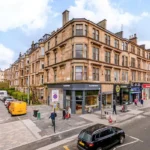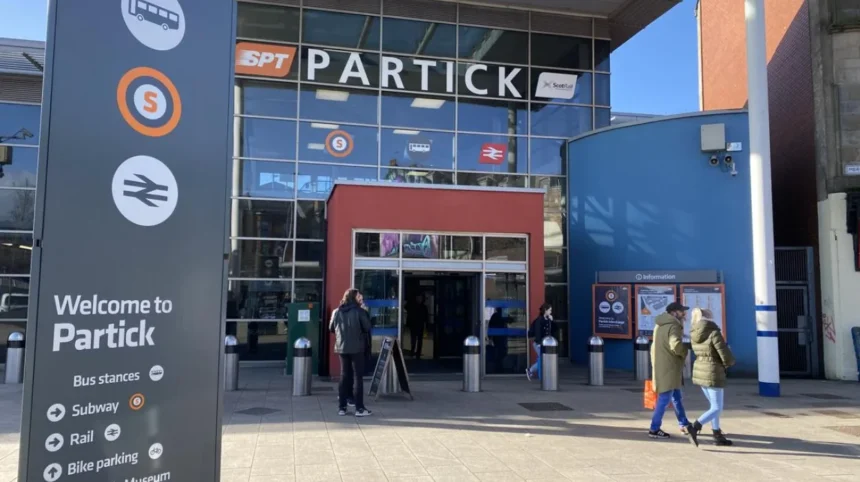
Partick is a well-connected residential area in Glasgow’s West End. It sits on the north bank of the River Clyde, close to the River Kelvin, University of Glasgow, Kelvingrove and the wider West End. Its defining feature is Partick Interchange, which combines rail, Subway and bus connections.
- What is Partick like as a place to live?
- How much does it cost to rent in Partick?
- What types of homes are available in Partick?
- How good is public transport in Partick?
- How easy is it to travel from Partick to Glasgow city centre?
- What local shops and everyday amenities are available in Partick?
- What are the main leisure and cultural amenities near Partick?
- Is Partick suitable for students and young professionals?
- Is Partick suitable for families?
- What is Partick’s history and how does it influence the neighbourhood today?
- What should you consider before moving to Partick?
- Why is Partick an important Glasgow neighbourhood for the future?
The area has a long history. Partick developed from a village and river-crossing settlement into an industrial community and then into an established Glasgow neighbourhood. It became a police burgh in 1852 and was incorporated into Glasgow in 1912. The industrial period brought shipbuilding, engineering, mills, housing and civic infrastructure.
Today, Partick combines traditional tenements, modern apartments, independent businesses, supermarkets, public services, cultural venues and transport facilities. Its location gives residents direct access to central Glasgow, the West End, the Clyde waterfront and destinations across west Glasgow.
Rental costs form an important part of the decision to live in Partick. Local rents reflect Partick’s West End location and transport connections. Official Scottish rental statistics provide useful Greater Glasgow benchmarks, although they do not publish a separate Partick average.
Transport is one of Partick’s strongest practical advantages. The station provides rail connections, the Glasgow Subway provides rapid journeys around the city’s underground network, and local bus services connect Partick with surrounding districts.
What is Partick like as a place to live?
Partick is an established Glasgow neighbourhood combining West End access, strong public transport, traditional housing, modern apartments, local shopping, community facilities and riverside attractions within a compact urban area.
Partick occupies an important position between Glasgow city centre and the western suburbs. The neighbourhood is close to Hillhead, Hyndland, Dowanhill, Yorkhill, Whiteinch and Kelvingrove. The River Kelvin forms part of its eastern boundary, while the River Clyde lies to the south.
The area has a dense urban character. Tenements are a major part of the residential landscape. Modern apartment developments also contribute to the housing stock, particularly around the Clyde waterfront and former industrial areas.
Partick’s location gives residents access to several different parts of Glasgow without depending on a car. The University of Glasgow is nearby, while Kelvingrove Park, Kelvingrove Art Gallery and Museum, Riverside Museum and the West End shopping and hospitality districts are within easy reach.
Partick also has a distinct historical identity. The Glasgow Story records that industrial expansion in the 1840s transformed Partick from a weaving village of about 1,000 people into an industrial community of around 5,000 by 1850. Shipbuilding and engineering drove population growth and created demand for streets, housing, lighting, medical services and sanitation.
The neighbourhood’s history remains visible through its civic buildings and street pattern. Partick Burgh Hall was constructed in 1872 as the council chambers of the former burgh. It is now a Category B listed building used for meetings, classes, clubs, exhibitions, rehearsals and community activities.
Modern Partick therefore has two important characteristics. It is a historic urban district, and it is also a highly functional transport and residential hub.
How much does it cost to rent in Partick?
Partick rents reflect its location in Glasgow’s West End and strong transport connections. Official 2025 Greater Glasgow averages were £865 for one-bedroom properties, £1,094 for two-bedroom properties and £1,362 for three-bedroom properties.
Partick does not have a separate published rent figure in the Scottish Government’s Broad Rental Market Area statistics. The official Greater Glasgow figures therefore provide the most useful broad benchmark rather than a precise Partick neighbourhood average.
For the year ending September 2025, the average Greater Glasgow rent for a one-bedroom property was £865 per month. The average two-bedroom rent was £1,094 per month. These figures were based predominantly on advertised rents collected through Rent Service Scotland’s Market Evidence Database.
Greater Glasgow rents increased substantially over the longer period. Between 2010 and 2025, the average one-bedroom rent increased from £437 to £865, representing a 98% increase. The average two-bedroom rent increased from £564 to £1,094, representing a 94% increase.
These figures should not be treated as a fixed Partick price list. Individual properties differ according to size, condition, furnishing, building type, location within Partick and proximity to transport.
A traditional tenement flat and a newly built apartment can therefore have substantially different asking rents even when both properties have the same number of bedrooms.
The rental market also changes as properties enter the market. Scottish Government statistics are based predominantly on advertised rents when properties become available because of tenant turnover or when properties are newly offered for rent. They do not represent every existing tenancy.
Renters should therefore compare current Partick listings rather than relying solely on historic averages.
Additional housing costs also affect the monthly budget. Tenants should account for council tax, energy, broadband, contents insurance and any parking costs. Furnished properties can also have different rental prices from unfurnished properties.
Partick’s transport connections can influence the total cost of living. A household that relies heavily on public transport can potentially reduce car ownership costs. A resident who requires private parking, however, needs to assess parking arrangements before signing a tenancy.
What types of homes are available in Partick?
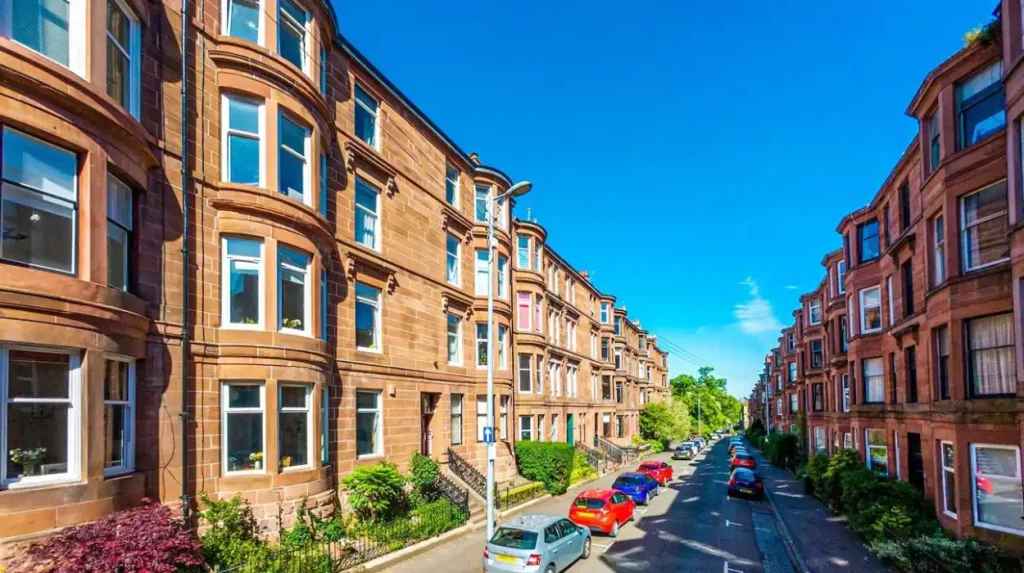
Partick has a mixed urban housing stock that includes traditional sandstone tenements, converted properties, purpose-built flats and modern apartment developments, giving renters and buyers different choices based on location, size, building character and transport access.
Traditional tenements are an important feature of Partick. Many were constructed during the expansion of Glasgow and its surrounding burghs during the nineteenth and early twentieth centuries.
Tenement flats commonly contain high ceilings, communal staircases and larger room proportions than some modern apartments. Building condition varies, so prospective tenants should assess communal areas, windows, heating systems, insulation and general maintenance.
Modern apartment developments provide a different housing format. These properties often include contemporary kitchens, newer heating systems, lifts and more recent building standards. Waterfront redevelopment has added modern residential buildings around former industrial areas.
The neighbourhood’s industrial past explains part of this housing transformation. Partick once contained shipyards, mills and engineering works. The Glasgow Story records the establishment of Tod & MacGregor’s Meadowside Shipyard in the 1840s and the later expansion of shipbuilding and engineering activity.
Some former industrial land has since been redeveloped for residential, commercial and cultural uses.
Housing location also matters within Partick. Properties close to Partick Interchange provide particularly strong access to public transport. Homes closer to the River Clyde provide access to waterfront areas and attractions. Properties toward the north connect more directly with the wider West End neighbourhoods.
Students form part of the local rental market because Partick is close to the University of Glasgow and several West End destinations. Young professionals also benefit from the area’s links to central Glasgow and surrounding employment districts.
Families can use local public services, libraries, parks and cultural facilities while maintaining access to the wider city.
How good is public transport in Partick?
Partick has one of Glasgow’s strongest public transport hubs, combining a railway station, Subway station and bus interchange. The network provides connections across Glasgow and west-central Scotland without requiring regular car travel.
Partick Interchange is the centre of the neighbourhood’s transport network. SPT identifies Partick as one of its bus interchanges and provides dedicated passenger facilities there.
The Partick Subway station is on the Glasgow Subway network. SPT describes the Subway as a key way to travel around Glasgow city centre and the West End. Trains operate every four minutes at peak times, while a complete circuit of the 15-station network takes around 24 minutes.
Partick Subway station is located on Merkland Street. SPT lists Partick railway station and Partick bus station among the nearby transport facilities.
Rail services provide another important connection. Partick railway station has step-free access to all platforms, according to ScotRail’s accessibility information. The station also has a ticket office, passenger information facilities, toilets, Wi-Fi and other passenger services.
Rail connections extend westwards towards destinations such as Dumbarton, Balloch and Milngavie, as well as providing access toward Glasgow city centre and other parts of the network.
Partick is also useful for journeys towards Loch Lomond. ScotRail lists direct services between Partick and Balloch, with the route serving Balloch at the western end of the line.
Bus connections provide another layer of coverage. Partick is an established SPT interchange, and bus services connect the neighbourhood with surrounding districts.
Partick also has a practical connection to Glasgow Airport. ScotRail identifies a bus connection from Partick for passengers travelling from areas including Milngavie, Dumbarton and the west of Scotland.
This transport structure has a direct effect on everyday life. Residents can access employment, education, shopping, healthcare and leisure destinations using several transport modes from the same neighbourhood.
For people without cars, this is particularly significant. Rail, Subway and bus services provide alternatives for commuting and longer journeys.
How easy is it to travel from Partick to Glasgow city centre?
Travelling from Partick to central Glasgow is straightforward because the neighbourhood has direct Subway, rail and bus connections. Residents can choose between rapid underground services, trains and surface bus routes depending on destination and journey requirements.
The Glasgow Subway provides a direct connection from Partick into the city-centre section of the network. St Enoch is one of the central Subway stations, while Buchanan Street provides access to Glasgow’s main shopping and commercial district.
Rail provides another option for journeys toward central Glasgow. Partick station forms part of the suburban rail network and gives residents access to wider destinations beyond the city centre.
Bus services provide additional flexibility for journeys that do not align directly with the rail or Subway networks.
The availability of multiple modes is important because each system serves different destinations. The Subway is particularly useful for West End and city-centre journeys. Rail is useful for longer suburban and regional journeys. Buses provide more localised coverage.
The transport interchange also reduces the need to travel into the city centre simply to change between transport systems. Partick brings several transport modes together within the neighbourhood.
SPT identifies Partick Subway as being close to the rail station, bus station and Riverside Museum.
This makes Partick especially practical for residents whose daily routines involve different parts of Glasgow.
What local shops and everyday amenities are available in Partick?
Partick provides everyday amenities through local shops, services, supermarkets, cafés, food businesses, public facilities and community venues, with additional West End retail and cultural destinations accessible through nearby streets and public transport.
Dumbarton Road is one of Partick’s main commercial streets. It provides a range of everyday services and contributes to the neighbourhood’s local-centre function.
The wider West End also expands the range of available amenities. Hillhead, Byres Road and Kelvinhall are accessible from Partick, giving residents additional shops, restaurants, cafés, cultural venues and services.
Partick Library is an important public amenity. Glasgow Life states that the library was built in 1925 and refurbished in 2019. It provides public computers, printing services, free Wi-Fi, study space and access to Glasgow’s wider library network.
The library also provides community programming. Its current programme includes book discussions, children’s activities, adult learning and wellbeing-related sessions.
Partick Burgh Hall provides another community facility. The Category B listed building operates as a venue for meetings, classes, clubs, fairs, exhibitions, rehearsals, concerts and other activities.
These facilities are important because local amenities are not limited to retail. Libraries, community venues and public cultural facilities contribute to the practical infrastructure of a residential neighbourhood.
Partick also benefits from its proximity to larger West End attractions. Kelvingrove Art Gallery and Museum, Kelvingrove Park, the University of Glasgow and Kelvin Hall are all within the wider local area.
Riverside Museum provides another major amenity near the Clyde. The museum opened in 2011 and contains more than 3,000 objects covering transport and technology, including vehicles and displays connected with Glasgow’s industrial heritage.
For families, Glasgow Life also runs free activities through Partick Library. Its programme includes sessions for young children and family activities.
What are the main leisure and cultural amenities near Partick?
Partick is close to major Glasgow cultural and leisure destinations, including Riverside Museum, Kelvingrove Art Gallery and Museum, Kelvingrove Park, the Clyde waterfront and West End venues, giving residents substantial recreational choice within short local journeys.
Riverside Museum is one of the most prominent attractions close to Partick. It stands at the junction of the River Kelvin and River Clyde and focuses on Glasgow’s transport and industrial heritage.
The museum’s collection includes cars, bicycles, motorcycles, trams, buses, locomotives and other objects. Glasgow Life states that more than 3,000 objects are displayed.
The museum is also connected with active travel. Glasgow Life states that Riverside Museum is on Sustrans Route 7 and has cycle parking and a cycle-hire facility. The Govan–Partick Bridge provides another route across the Clyde.
Kelvingrove Park provides a large green space within the wider West End. Its location makes it relevant to Partick residents seeking outdoor space without travelling to the edge of Glasgow.
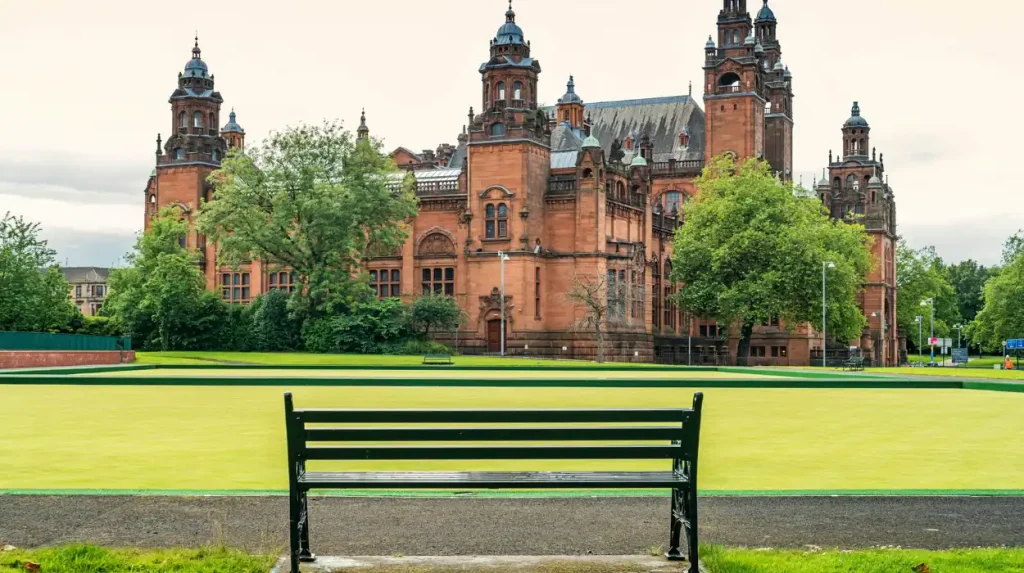
Kelvingrove Art Gallery and Museum is another major nearby cultural attraction. Glasgow Life describes it as one of Scotland’s popular free attractions and notes that it has operated since 1901.
The University of Glasgow adds an important educational and architectural presence to the surrounding area. Its campus sits north of Partick and connects the neighbourhood with Hillhead and the wider West End.
Partick therefore functions as more than a residential district. Its location places residents close to museums, parks, educational institutions, riverside attractions and cultural venues.
Is Partick suitable for students and young professionals?
Partick suits students and young professionals because it combines proximity to the University of Glasgow and West End, strong public transport, rental housing, local services and access to Glasgow’s employment, education, food, cultural and leisure districts.
The University of Glasgow is close to Partick, making the neighbourhood relevant to students seeking accommodation outside the university campus.
Transport is a major advantage for students. The Subway provides rapid access across the West End and into central Glasgow. Rail and buses provide additional options for travel beyond the immediate university area.
Young professionals also benefit from the same transport network. Central Glasgow employment districts are accessible without requiring a car, while west-side employment areas can be reached through rail, Subway and bus connections.
Partick also provides access to cafés, food businesses, local services and cultural venues. The wider West End expands the range of social and leisure facilities.
Rental housing varies significantly by property type. Students sharing accommodation can divide the cost of a larger flat, while professionals living alone generally require a one-bedroom property or studio.
The Greater Glasgow 2025 rental benchmark was £865 per month for one-bedroom properties and £1,094 per month for two-bedroom properties. These are area-wide averages rather than Partick-specific asking prices.
Partick’s location also makes it suitable for people who travel frequently around Glasgow. The combination of transport modes allows residents to select routes according to destination and timetable.
Is Partick suitable for families?
Partick provides family-oriented amenities through libraries, community facilities, nearby parks, museums, public transport and access to schools and services across Glasgow’s West End, although families should assess individual streets, property layouts and local school catchments before moving.
Partick Library provides children’s services and family activities. Glasgow Life lists dedicated children’s resources and programming at the library.
The library also hosts free pre-school activities. Glasgow Life lists Partick Library among locations for its Pre-5 Play Sessions, which support physical, social, language and communication development.
Outdoor access is another factor. Kelvingrove Park provides substantial green space nearby, while the Clyde and Kelvin corridors provide opportunities for walking and cycling.
Riverside Museum also provides family-oriented cultural activities. Glasgow Life runs free hands-on family sessions at the museum, including regular discovery activities.
Family housing requires closer attention to property size. Traditional tenements can provide generous internal space, but floor level, stair access and communal maintenance differ between buildings. Modern developments can provide lifts and newer facilities but differ in layout and service charges.
Families should also investigate school catchments separately. Catchment boundaries are administrative and can change, so a current address should be checked against official Glasgow City Council information before making a housing decision.
The neighbourhood’s public transport network also helps families reach activities elsewhere in Glasgow. Partick provides access to the Subway, rail and buses from a single interchange.
What is Partick’s history and how does it influence the neighbourhood today?
Partick developed from an ancient settlement around the River Kelvin and Clyde, became an industrial burgh during the nineteenth century, and joined Glasgow in 1912. Its historic streets, civic buildings and industrial legacy remain important features of the modern area.
Partick has medieval origins. The Glasgow Story records that King David I granted Partick to the Bishop of Glasgow in 1136. The settlement developed around a ford across the River Kelvin and the road linking Glasgow with Dumbarton.
Milling became important because of the River Kelvin. Later development included additional mills, weaving, printworks, bleaching works and other industries.
The nineteenth century brought a major transformation. Tod & MacGregor established a shipyard at Meadowside in the 1840s. Partick expanded rapidly as shipbuilding and engineering created employment.
Partick became a police burgh in 1852. The burgh developed public infrastructure, including roads, housing, drainage, street lighting and civic facilities.
Partick Burgh Hall was built in 1872 and remains a significant surviving civic building. Glasgow Life identifies it as a Category B listed building.
The former burgh was incorporated into Glasgow in 1912. By that point, Partick had become a substantial urban community with transport, housing, industry and public services.
Industrial decline later changed the physical environment. Former industrial sites were redeveloped, including areas associated with Glasgow Harbour. Modern residential development now occupies parts of land previously associated with heavy industry.
The Riverside Museum reflects this industrial heritage. Its transport and technology collection documents the role of shipbuilding, engineering and manufacturing in Glasgow’s development.
Partick’s history therefore remains connected to its present identity. The neighbourhood’s transport role, dense housing, civic buildings and waterfront redevelopment all reflect successive phases of urban development.
Explore More Area Guide
Living in Shawlands Glasgow: Rent, Transport and Lifestyle
Living in Dennistoun Glasgow: Rent, Transport, Shops and Lifestyle
What should you consider before moving to Partick?
Before moving to Partick, compare current rents, property condition, transport requirements, parking arrangements, council tax, local services and exact street location. The neighbourhood varies by housing type and position, so individual property assessment remains essential.
Renters should first establish the total monthly housing cost. Advertised rent is only one component of the household budget.
Property condition deserves particular attention in traditional tenements. Prospective tenants should inspect windows, heating, insulation, communal staircases, entry systems and general maintenance.
Transport requirements should also be assessed against daily destinations. Partick’s interchange is a major advantage, but the best transport option depends on where a resident works or studies.
Car users need to check parking arrangements before signing a tenancy. A property listing does not automatically guarantee dedicated parking.
Families should confirm school catchments using current council information. Students should compare distance to their campus with actual transport routes rather than relying only on straight-line distance.
Residents should also assess access to local amenities. Partick Library, Partick Burgh Hall and nearby cultural venues provide community and leisure infrastructure.
The neighbourhood’s proximity to Riverside Museum, Kelvingrove and the wider West End adds further recreational options.
Partick is particularly well suited to people who value public transport access. The combination of Subway, rail and bus services makes the neighbourhood one of the better-connected residential locations in Glasgow.
The main practical issue is housing cost. Greater Glasgow rents have increased significantly over the long term, with one-bedroom average rents nearly doubling between 2010 and 2025.
Why is Partick an important Glasgow neighbourhood for the future?
Partick’s future relevance comes from its strategic West End location, integrated transport interchange, established residential population, proximity to universities and cultural venues, and continuing connection between historic neighbourhoods and regenerated Clyde waterfront areas.
Partick already functions as a transport hub within Glasgow. Its rail, Subway and bus connections support movement between central Glasgow, the West End and destinations across the wider region.
The neighbourhood also sits close to major institutions and attractions. The University of Glasgow, Kelvingrove, Riverside Museum and the Clyde waterfront all contribute to the area’s long-term importance.
Regeneration has changed the relationship between Partick and the River Clyde. Former industrial land has been incorporated into new residential and commercial areas, while Riverside Museum provides a major cultural anchor.
Active travel also has a role. Riverside Museum is connected to Sustrans Route 7, while the Govan–Partick Bridge improves access across the Clyde.
Public transport remains central to the area’s function. SPT continues to operate the Subway and manage the Partick interchange, while ScotRail provides rail services through Partick station.
Housing demand and rental prices will remain important considerations for people considering Partick. Official Greater Glasgow statistics show that private rents increased significantly between 2010 and 2025, particularly for one-bedroom and two-bedroom properties.
Partick therefore combines several characteristics that define established urban neighbourhoods: historic housing, public transport, commercial streets, community facilities, cultural institutions and redevelopment.
For people researching where to live in Glasgow, Partick offers a clear combination of West End proximity, transport connectivity and local amenities. Its historic identity remains visible, while its transport infrastructure and waterfront connections continue to integrate it into the wider Glasgow urban area.
Is Partick a good place to live in Glasgow?
Partick is a well-connected Glasgow neighbourhood with strong public transport, local shops, community facilities, cultural attractions and easy access to the wider West End. It suits students, professionals, families and people who prefer living without a car.