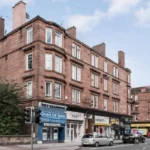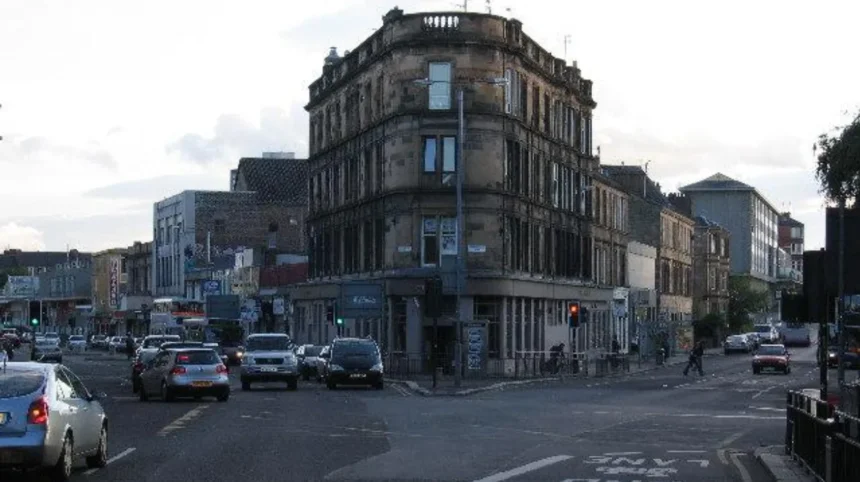
Shawlands is a well-established neighbourhood in Glasgow’s Southside, centred on Shawlands Cross and the commercial streets of Kilmarnock Road and Pollokshaws Road. It combines Victorian and Edwardian housing, a substantial town centre, rail connections, local services and access to Queen’s Park. Glasgow City Council identifies Shawlands as a town centre serving the wider south side of Glasgow.
- What is Shawlands like to live in?
- How did Shawlands develop?
- What types of homes are available in Shawlands?
- How much does it cost to live in Shawlands?
- Is Shawlands well connected to Glasgow city centre?
- What shops and services are available in Shawlands?
- What green spaces are near Shawlands?
- Is Shawlands suitable for families?
- Is Shawlands good for students and young professionals?
- What are the main advantages of living in Shawlands?
- What are the disadvantages of living in Shawlands?
- Is Shawlands a good place to live in Glasgow?
What is Shawlands like to live in?
Shawlands is a Southside Glasgow neighbourhood with traditional tenements, local shops, restaurants, transport links, green space and strong connections to central Glasgow, making it suitable for renters, homeowners, families, professionals and students.
Shawlands sits south of Glasgow city centre. Its commercial core is concentrated around Shawlands Cross, where Kilmarnock Road meets Pollokshaws Road and Moss-side Road. The wider area connects closely with Strathbungo, Langside, Pollokshaws, Battlefield, Crossmyloof and Queen’s Park.
The neighbourhood has a distinct urban structure. Traditional sandstone tenements sit alongside terraces, villas, converted properties and newer residential developments. The streets around the centre contain shops, cafés, restaurants, professional services and community facilities.
Shawlands is also an established transport location. Shawlands railway station is on Ravenshall Road and provides direct rail services towards Glasgow Central. ScotRail lists an average Shawlands-to-Glasgow Central journey time of about 13 minutes, while the reverse journey averages about 10 minutes under the published Monday timetable.
The area has a strong relationship with Queen’s Park. The park provides substantial public open space within walking distance of much of Shawlands.
For people considering a move, Shawlands offers a combination of city accessibility and neighbourhood infrastructure. The main decision factors are housing type, rent or purchase cost, proximity to the railway station, parking requirements, traffic around the town centre and the specific street.
What type of neighbourhood is Shawlands?
Shawlands is primarily a residential and town-centre neighbourhood rather than a standalone city. Its identity is based on the combination of homes, shopping streets, public transport, restaurants, services and nearby parks.
The wider Southside also has a diverse population and housing stock. Shawlands therefore attracts different household types rather than serving one narrowly defined group.
Where is Shawlands?
Shawlands is in the southern part of Glasgow. The central commercial area is around Shawlands Cross, with Kilmarnock Road running south-east and Pollokshaws Road providing an important north-west to south-east route.
The neighbourhood is positioned close to Strathbungo, Langside and Queen’s Park. Pollokshaws lies farther south, while Crossmyloof sits towards the north-west.
How did Shawlands develop?
Shawlands developed from rural land and small settlements into a substantial Glasgow suburb during the nineteenth and early twentieth centuries, with transport, industry, housing development and retail growth transforming the area around Shawlands Cross.
The history of Shawlands is closely connected with the growth of Glasgow south of the River Clyde. Glasgow City Council’s historical assessment records that Shawlands was formerly associated with Eastwood in Renfrewshire and that the area was annexed to Glasgow in 1891. Cathcart followed in 1912 as Glasgow continued expanding its boundaries.
In the eighteenth century, Shawlands was largely undeveloped apart from a cottage at the location that later became Shawlands Cross. The surrounding landscape included estates, agricultural land and rural properties.
The nineteenth century brought rapid change. The nearby settlements of Shawlands and Crossmyloof expanded as Glasgow grew. Crossmyloof was already a substantial village in the early nineteenth century. In 1840 it contained 124 families and a population of 587, with residents working as weavers, shopkeepers, blacksmiths, brass founders and tinsmiths.
Industrial activity increased population growth. The Camphill Bakery opened in 1847, while the Cart Forge relocated into the area. By 1851, Crossmyloof had experienced substantial population growth. Shawlands itself reached a population of 798 in 1882.
Residential development followed. In 1852, Neale Thomson acquired the Camphill estate and associated lands for the development of villas, terraces and tenements. The expansion created much of the architectural framework that remains visible across the Southside today.
The late nineteenth and early twentieth centuries produced further suburban development. Waverley Park developed as a Shawlands suburb and was completed by 1907.
Why is Shawlands Cross historically important?
Shawlands Cross became the principal meeting point of the neighbourhood and remains the centre of its commercial identity. The surrounding streets developed as shopping routes as the population increased.
Glasgow City Council records Pollokshaws Road, Kilmarnock Road and Minard Road as the principal shopping streets in the early twentieth century. These streets remain central to Shawlands Town Centre.
The area also retains Edwardian shopfronts and older building fabric. Some original features sit behind later commercial fascias.
What architecture can you see in Shawlands?
Shawlands contains substantial examples of Glasgow’s nineteenth-century tenement and suburban architecture. Sandstone buildings, Edwardian commercial premises, villas and terraces form much of the local built environment.
The historical development of the Southside is also connected with Alexander “Greek” Thomson, one of Glasgow’s most important nineteenth-century architects. Glasgow City Council records Thomson-designed development associated with the Camphill estate.
This architectural history gives Shawlands a clear connection with the wider architectural development of Victorian Glasgow.
What types of homes are available in Shawlands?
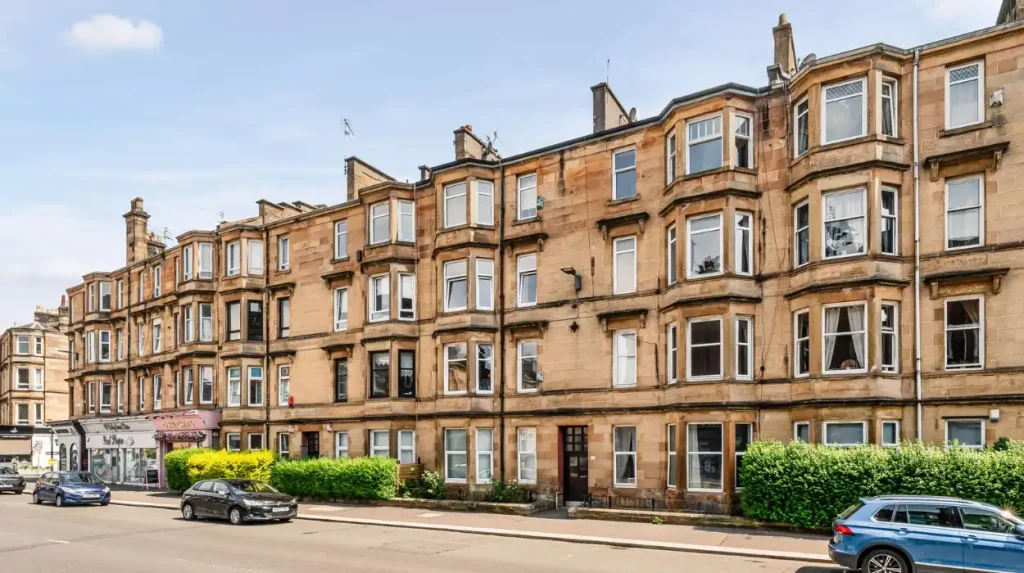
Housing in Shawlands includes traditional sandstone tenements, Victorian and Edwardian properties, flats, terraces, villas, converted homes and newer developments, with the exact housing character changing between streets around Shawlands Cross, Queen’s Park and neighbouring districts.
Traditional tenement flats are one of the most recognisable housing types. Many have high ceilings, large windows, substantial rooms and shared stairwells. Individual buildings differ considerably in condition, internal layout and refurbishment.
Older properties can contain original architectural features. These include fireplaces, cornicing, timber flooring, stonework and traditional windows. Renovated properties often combine these features with modern kitchens, bathrooms and heating systems.
Tenement ownership also brings communal responsibilities. Buyers should examine title documents, factoring arrangements, common repairs, roof condition, stair maintenance and insurance arrangements before purchasing.
Terraced houses and villas provide a different housing format. They are more common in particular residential pockets surrounding the central town centre and towards neighbouring districts.
Modern flats provide another option. These developments often have different maintenance structures, energy standards, parking arrangements and communal facilities from traditional tenements.
Is Shawlands suitable for renters?
Shawlands has a substantial private rented sector alongside owner-occupied housing. The range of flats provides options for single occupants, couples, families and sharers.
People renting in Scotland should understand the Private Residential Tenancy system. In most cases, a tenancy started after 1 December 2017 for a tenant’s main home is a Private Residential Tenancy when the landlord does not live in the property. Such tenancies have no fixed end date and continue until legally ended.
Current Scottish Government guidance states that a landlord can increase rent once within a 12-month period and must provide at least three months’ written notice using the correct rent-increase notice.
Renters should therefore assess both the advertised monthly rent and the legal tenancy terms before committing to a property.
What should buyers check in a Shawlands tenement?
Buyers should check the condition of the roof, stonework, windows, gutters, common stair, close entry, drainage and communal systems. They should also establish whether planned or outstanding common repairs exist.
A home report provides important information, but buyers should understand the management arrangements for the building. Older tenements can require substantial communal expenditure when roofs, masonry or other shared components need repair.
How much does it cost to live in Shawlands?
The cost of living in Shawlands depends mainly on property size, condition, tenure, exact street and proximity to amenities, while household budgets also depend on transport, energy, council tax, food, insurance and other recurring living costs.
There is no single Shawlands housing price that accurately represents the entire neighbourhood. A one-bedroom flat, a refurbished two-bedroom tenement, a larger family property and a modern apartment occupy different market segments.
Property condition is particularly important in older Glasgow housing. Refurbished tenements can command different prices from properties requiring substantial internal or communal work.
Renters should compare several properties with similar bedroom numbers and similar condition. They should also check whether heating costs, parking arrangements and factoring charges create additional expenses.
Homeowners need to budget for mortgage payments, council tax, utilities, insurance and maintenance. Tenement owners also need to account for communal repair costs.
What extra housing costs should residents consider?
Residents should consider council tax, electricity or gas, broadband, contents insurance, transport and building-related charges. Tenement flats can also have factoring fees for communal maintenance.
Factoring is the management of shared areas and communal repairs within a building. Charges differ between buildings and factoring arrangements.
Prospective tenants should ask what utilities are excluded from the rent. Prospective buyers should examine service charges and factoring information before making an offer.
Is Shawlands well connected to Glasgow city centre?
Shawlands has strong public transport connections with central Glasgow through Shawlands railway station, local bus routes and nearby Southside transport corridors, while road links provide access to surrounding neighbourhoods and the wider Glasgow road network.
Shawlands railway station is a major transport asset. ScotRail lists the station at Ravenshall Road, Shawlands, Glasgow G41 3RG. The station has ticket machines, seating, customer information and cycle storage with 10 spaces. It does not currently have step-free access to either platform.
Direct trains connect Shawlands with Glasgow Central. ScotRail lists up to 38 trains per day on the Shawlands-to-Glasgow Central route under its published Monday timetable. The average journey time is about 13 minutes.
The reverse journey from Glasgow Central to Shawlands has an average journey time of about 10 minutes, with up to 37 trains listed on the published Monday timetable.
The station therefore provides a practical option for commuters, students and leisure travellers.
How accessible is Shawlands without a car?
Shawlands is well suited to residents who rely on public transport and walking. Shops, cafés, services and restaurants are concentrated around the town centre, while Queen’s Park is close to residential areas.
The railway station provides a fast connection towards central Glasgow. Local buses provide additional routes through Pollokshaws Road, Kilmarnock Road and surrounding streets.
Cycling is another option. Shawlands station has 10 cycle storage spaces, and cycle hire is available close to the station according to ScotRail.
The exact experience depends on the street and destination. Residents travelling frequently to locations outside the Southside should compare bus, rail and cycling journey times before deciding whether to own a car.
Is parking difficult in Shawlands?
Parking conditions vary between residential streets and the town centre. Shawlands Cross, Kilmarnock Road and Pollokshaws Road experience substantial commercial and traffic activity.
Glasgow City Council has identified road and pedestrian issues around Kilmarnock Road and Pollokshaws Road. Recent works included pedestrian crossing improvements on Kilmarnock Road and road-safety measures on Pollokshaws Road near Shawlands Primary School.
People moving into a property with a car should check the precise parking arrangements rather than assuming that a nearby street always provides convenient unrestricted parking.
What shops and services are available in Shawlands?
Shawlands has an established town centre with independent shops, multiple retailers, food businesses, professional services and everyday amenities concentrated around Kilmarnock Road, Pollokshaws Road, Minard Road and nearby streets.
The town centre has served the wider Southside for generations. Glasgow City Council identifies Kilmarnock Road, Pollokshaws Road and the northern section of Skirving Street as important shopping areas within Shawlands Town Centre.
The commercial mix includes food shops, cafés, restaurants, takeaways, convenience retail, health and beauty services, professional businesses and other local services.
The Shawlands Arcade is another significant component of the town-centre environment. The large complex was constructed in the late 1960s and includes retail space, residential accommodation and a multi-storey car park.
Glasgow City Council has also pursued town-centre improvement and regeneration initiatives. Its planning documents describe Shawlands as having a strong night-time economy alongside independent and multiple retailers.
What is Shawlands like for food and cafés?
The concentration of restaurants, cafés, bakeries, takeaways and food businesses makes the town centre a significant part of everyday life.
Food options reflect the wider diversity of Glasgow’s Southside. Residents can use the town centre for routine meals, coffee, groceries and social occasions without travelling into central Glasgow.
The commercial environment changes over time. New businesses open while established premises close or change use. The long-term character is therefore better defined by the concentration of independent and multiple businesses than by a fixed list of individual operators.
What green spaces are near Shawlands?
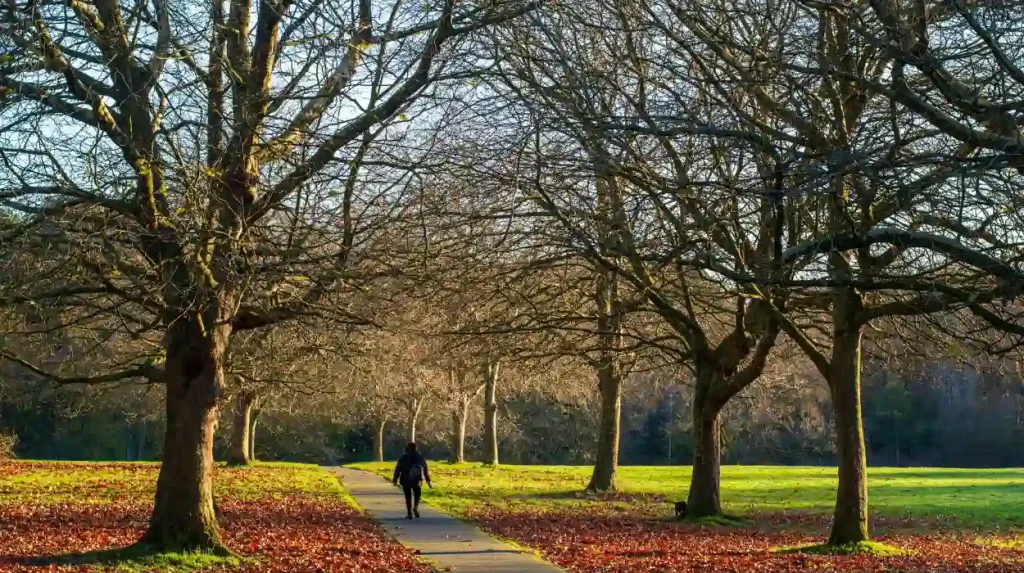
Queen’s Park is the most significant green space associated with Shawlands, providing open lawns, mature trees, paths, recreational areas and elevated viewpoints within the wider Southside, while smaller parks and landscaped areas supplement local outdoor space.
Queen’s Park is particularly important to Shawlands because of its proximity and scale. It provides residents with an accessible outdoor environment close to dense residential streets.
The park also has historical significance. Glasgow City Council’s historical assessment connects the name Queen’s Park with Mary Queen of Scots and records the Battle of Langside on 13 May 1568 in the surrounding area.
The Battle of Langside was fought during the Scottish political conflict involving Mary, Queen of Scots. The historical association forms part of the wider heritage of the Southside.
Is Shawlands good for walking and outdoor exercise?
Shawlands provides practical access to walking routes through residential streets and Queen’s Park. Residents can combine local walking with larger routes through the wider Southside.
Queen’s Park is particularly useful for routine exercise because it provides open space within an urban neighbourhood. Walking access differs by property, so people choosing a home should consider the distance from their front door to the park rather than treating Shawlands as a single uniform area.
Is Shawlands suitable for families?
Shawlands provides family housing, schools, parks, shops, public transport and community services, giving families access to many everyday facilities without travelling into Glasgow city centre for routine needs.
Family suitability depends heavily on the property and street. Larger tenement flats and houses provide different levels of bedroom space, storage, private outdoor space and parking.
Queen’s Park provides an important recreational resource. The town centre provides everyday shopping and services. Rail and bus connections also help families reach other parts of Glasgow.
Parents should research individual school catchment areas directly with Glasgow City Council because school catchments relate to specific addresses rather than the general Shawlands neighbourhood.
Families should also assess traffic levels, pavement width, crossing points and proximity to parks when choosing a property.
Is Shawlands good for students and young professionals?
Shawlands suits students and young professionals who want Southside housing, cafés, restaurants, local services, green space and fast rail access to central Glasgow, with property choice ranging from traditional tenement flats to modern apartments.
The neighbourhood provides direct access to Glasgow Central by rail. This makes commuting towards central employment, education and entertainment areas straightforward.
The town centre also supports a local lifestyle. Residents can access food businesses, cafés, shops and services close to home.
Students should compare Shawlands with areas closer to their university. Travel time, rent, household size and property condition all affect the practical value of a particular flat.
Young professionals can also benefit from the combination of residential streets and commercial activity. The area does not depend entirely on the city centre for everyday services.
What are the main advantages of living in Shawlands?
The main advantages of living in Shawlands are strong central-Glasgow rail connections, an established town centre, varied housing, nearby Queen’s Park, local services, Southside connectivity and a long-established residential environment.
Transport is a major advantage. Shawlands station provides direct trains to Glasgow Central, with ScotRail listing average journey times of roughly 10 to 13 minutes depending on direction.
The town centre is another advantage. Residents have access to shops, food businesses and services without relying on Glasgow city centre.
Housing variety is also significant. Traditional tenements, terraces, villas, converted properties and newer flats serve different household requirements.
Queen’s Park provides an important green-space resource. The combination of urban housing and nearby parkland creates a varied local environment.
The historical character is another defining feature. Much of the area’s built environment developed during Glasgow’s major nineteenth-century expansion.
Explore More Area Guide
Living in Dennistoun Glasgow: Rent, Transport, Shops and Lifestyle
Living in Glasgow City Centre: Pros, Cons and Costs
What are the disadvantages of living in Shawlands?
The main disadvantages include traffic around the busiest commercial streets, variable parking availability, maintenance considerations in older tenements, changing town-centre retail conditions and limited accessibility at Shawlands railway station.
Parking requires careful consideration. The central roads carry significant traffic and serve both residents and businesses. Glasgow City Council has identified transport concerns around Shawlands Cross, Pollokshaws Road and Kilmarnock Road.
Older housing can also require maintenance. Tenement ownership involves shared structures, which creates potential communal repair costs.
Rail accessibility is another consideration. ScotRail states that Shawlands station does not have step-free access to its platforms.
The town centre is also subject to commercial change. Glasgow City Council has previously identified the need to improve the vitality and viability of Shawlands Town Centre while maintaining its independent and multiple retail mix.
These factors do not apply equally to every property. Street-level research remains important before moving.
Is Shawlands a good place to live in Glasgow?
Shawlands is a well-connected Glasgow Southside neighbourhood with a strong town centre, varied housing, nearby Queen’s Park and established transport links, making it a practical residential choice for people who value local amenities and access to central Glasgow.
The neighbourhood combines several characteristics that are important when choosing a Glasgow home. It has a functioning town centre, established residential streets, railway access, bus connections and significant nearby green space.
Its history also explains its present form. Industrial growth and nineteenth-century suburban expansion created the housing and street pattern that define much of Shawlands today.
The area continues to receive public-sector attention through town-centre planning, transport improvements and regeneration initiatives. Glasgow City Council has continued to identify Shawlands as an important local centre within the wider Southside.
For renters, the key checks are tenancy terms, rent, property condition, heating costs, location and transport. For buyers, communal repairs, building condition, factoring and long-term maintenance require additional attention.
For commuters, the direct rail service to Glasgow Central is a major practical benefit. For households, Queen’s Park and local services provide important everyday infrastructure.
Shawlands therefore remains one of Glasgow’s established Southside residential areas. Its combination of housing, transport, commerce, heritage and green space gives it a clearly defined role within the wider city.
Is Shawlands a good place to live in Glasgow?
Yes. Shawlands is an established Southside Glasgow neighbourhood with traditional housing, shops, restaurants, public transport, Queen’s Park and good connections to Glasgow city centre.