Key Points
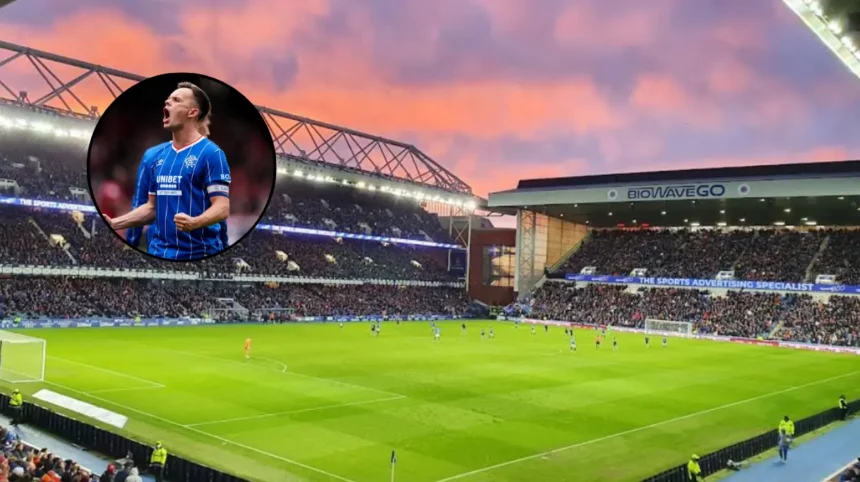
- Rangers captain and Scotland striker Lawrence Shankland has provided an update on his hamstring recovery, stating that things are moving in the “right direction”.
- The 31-year-old suffered a grade 2c tear and was forced off early during a 1-0 win against Motherwell at Ibrox on September 5.
- Manager Derek McInnes initially predicted an absence of up to four months, noting that surgery on the tear would minimise the risk of recurrence.
- Shankland has scored four goals in 10 appearances for the club following his summer transfer from Hearts.
- The striker recently came off crutches four weeks post-surgery and received encouraging feedback during a follow-up appointment with his specialist.
- Shankland admitted he had little choice regarding the operation, noting that a follow-up scan confirmed the surgeon’s immediate assessment.
- While a precise timeline remains difficult to confirm, a return is eyed around the three-to-four-month mark under the supervision of the medical team.
- During his rehabilitation, Shankland watched Rangers’ recent 1-0 William Hill Premiership victory over Celtic at Parkhead from home, inadvertently standing on one crutch for the entirety of the first half.
Rangers (Glasgow Express) October 7, 2026 – As reported by Press Association Sport, Rangers captain Lawrence Shankland has stated that his rehabilitation is progressing positively after undergoing surgery on a grade 2c hamstring tear. The 31-year-old striker sustained the injury during the early stages of a 1-0 victory over Motherwell at Ibrox. Following initial assessments, manager Derek McInnes projected an absence lasting up to four months, explaining that opting for surgical intervention would lower the likelihood of future recurrences despite extending the initial recovery period.
Shankland, who transitioned to the Light Blues from Hearts during the summer transfer window and has netted four goals across 10 appearances, offered clarity on his physical progress while promoting the Rangers Youth Development Company’s Rangers Lotto product. As noted by Sky Sports, the forward revealed that he has successfully transitioned off crutches four weeks after his operation.
As reported by BBC Sport, Shankland stated that
“things are going in the right direction, so everything’s good. I’m healing well after the surgery.” He added,
“It was just a kind of check-up to make sure everything was where it was meant to be. You need to speak to the medical team for a better description, but as far as I’m aware, everything’s going in the right direction.”
Why was surgery chosen for the Rangers striker’s injury?
Addressing the decision-making process behind his medical procedure, Shankland explained that the severity of the damage left him with very few alternatives. Having previously dealt with a similar muscular setback the previous year, the Scotland international recognized the gravity of the grade 2c tear immediately.
As reported by STV Sport, Shankland stated that
“I never really had much of a decision. When I went to see the surgeon, he told me straight away that it was going to need surgery to fix it, and a follow-up scan confirmed that.”
He further noted that
“It was made a bit easier, to be honest, that I just needed it fixed and he had to do it anyway. I was comfortable with it… this time it was just a bit worse. But I was comfortable with everything that needed to happen and I’ll get back as soon as I can.”
When can Rangers supporters expect Lawrence Shankland to return to the pitch?
Regarding a potential comeback date, the experienced frontman maintained a cautious approach, emphasizing that his return will be governed entirely by functional milestones and medical supervision rather than a fixed calendar date.
As reported by Daily Record, Shankland acknowledged that
“It’s hard to put a timeline on it. You kind of just need to see how it feels around that three-month, four-month mark.” He continued,
“Everything will be under the physio’s supervision and how it feels for myself. I need to be comfortable going back, to be on the pitch. Hopefully as quick as possible, but as I said, you can’t put an accurate timeline on it.”
How did Lawrence Shankland experience Rangers’ recent victories while sidelined?
During his absence, Rangers secured significant results, including a 3-0 Premier Sports Cup victory over Celtic at Ibrox and a subsequent 1-0 William Hill Premiership triumph against their Old Firm rivals at Parkhead. These results moved the Gers within two points of the league summit.
As a lifelong supporter of the club, watching from home proved to be a physically demanding experience despite his immobility. As reported by The Scotsman, Shankland described viewing the Parkhead fixture from his kitchen:
“I actually was on the crutches and I didn’t realise I’d stood up for the full first half until the half-time whistle went. I’d been standing on one leg for 45. It’s difficult to watch them and you want to be there with the boys. I don’t know if it felt (to them) like I supported them through the TV, but that’s how it felt for me.”
Background of the Development
The physical setback for Lawrence Shankland occurred during a demanding early-season fixture block for Rangers under manager Derek McInnes. Following his high-profile summer switch from Edinburgh club Hearts, the seasoned Scotland international was brought in to spearhead the Light Blues’ attacking line and provide critical cutting edge in domestic and European competitions. Hamstring strains, particularly grade 2 tears involving structural compromise to the musculotendinous junction, frequently present medical dilemmas for professional athletes. While conservative management can sometimes expedite a return, surgical repair is frequently selected for high-grade tears in explosive runners to restore baseline tensile strength and minimize chronic vulnerability. The timing of the injury coincided with a crucial phase of the campaign, heightening the significance of squad depth as Rangers navigate high-stakes fixtures in both the William Hill Premiership and cup competitions.
Prediction
This ongoing rehabilitation phase carries direct implications for Rangers’ tactical depth and attacking output in the domestic title race. With Lawrence Shankland sidelined for an extended period spanning three to four months, manager Derek McInnes must rely heavily on alternative offensive options to maintain pressure at the top of the league table. For the wider squad and supporters, the gradual recovery of their captain provides a psychological boost during a congested fixture schedule, though the team must adapt without his physical presence on the pitch through the pivotal winter months. Upon his eventual return, Shankland’s reintegration will require careful management by the medical and coaching staff to ensure match sharpness is regained without risking re-injury, ultimately influencing Rangers’ consistency in the latter half of the season.