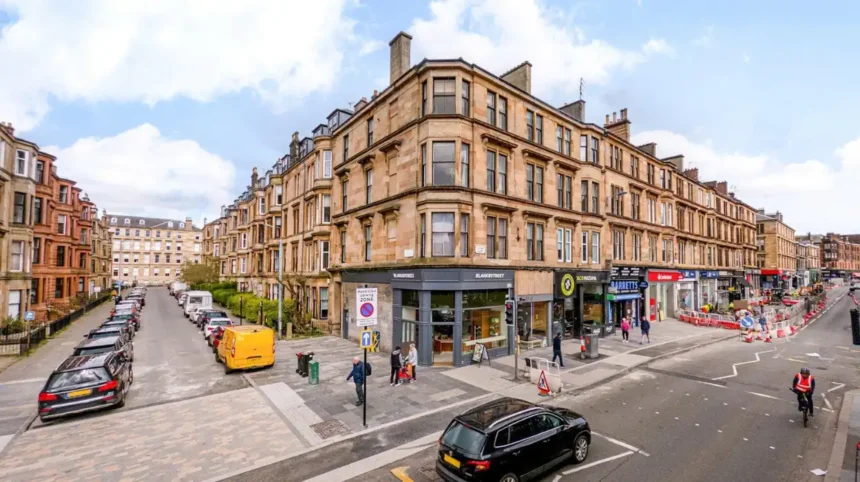
The West End of Glasgow is one of the city’s best-known residential and cultural areas. It covers a network of neighbourhoods around Byres Road, the University of Glasgow, Kelvingrove, Partick, Hillhead, Hyndland, Dowanhill and Kelvinbridge. The area combines historic tenements, student housing, independent businesses, parks, museums, transport links and major educational institutions.
- What is the West End of Glasgow?
- How did the West End of Glasgow develop?
- Which neighbourhoods are best known in Glasgow’s West End?
- How much does it cost to live in the West End of Glasgow?
- What is public transport like in Glasgow’s West End?
- What shops, restaurants and local amenities are available?
- What parks and outdoor spaces are available in the West End?
- Is the West End good for students and university life?
- Is the West End suitable for families and professionals?
- Is the West End a good place to live without a car?
- What should you check before moving to the West End?
- What are the main advantages and disadvantages of living in the West End?
- What is the long-term outlook for living in Glasgow’s West End?
Living in the West End means having direct access to central Glasgow while remaining close to large green spaces and the River Kelvin. The area also has a strong concentration of restaurants, cafés, shops, cultural venues and community facilities.
What is the West End of Glasgow?
The West End of Glasgow is a collection of neighbourhoods west of Glasgow city centre, centred on Byres Road, the University of Glasgow, Kelvingrove and Partick. It combines residential streets, cultural attractions, green spaces, universities, shops and major public transport connections.
The term West End does not describe one single administrative neighbourhood. It is a commonly used geographic and cultural description for several connected communities.
Important areas include Hillhead, Partick, Hyndland, Dowanhill, Kelvinbridge, Kelvindale, Yorkhill and Woodlands. Parts of Anniesland, Jordanhill and Kelvinside are also associated with the wider West End depending on context.
Byres Road is the main commercial spine for the central West End. It connects residential streets with the University of Glasgow and Glasgow Botanic Gardens. Partick provides another major commercial and transport centre.
Glasgow City Council describes the West End as a group of residential communities with distinct local centres, including Hyndland, Partick, Dowanhill and Hillhead. Its Byres Road placemaking work identifies strong pedestrian connections between these neighbourhoods.
The area has a mixed population. Students form a significant group because of the University of Glasgow and other nearby institutions. Long-term residents, families, professionals and private renters also contribute to the housing market.
This mixture creates different residential environments within a relatively compact area. Hillhead has a strong student and visitor presence. Hyndland has a substantial stock of traditional tenement housing. Partick combines residential streets with a busy town-centre environment.
How did the West End of Glasgow develop?
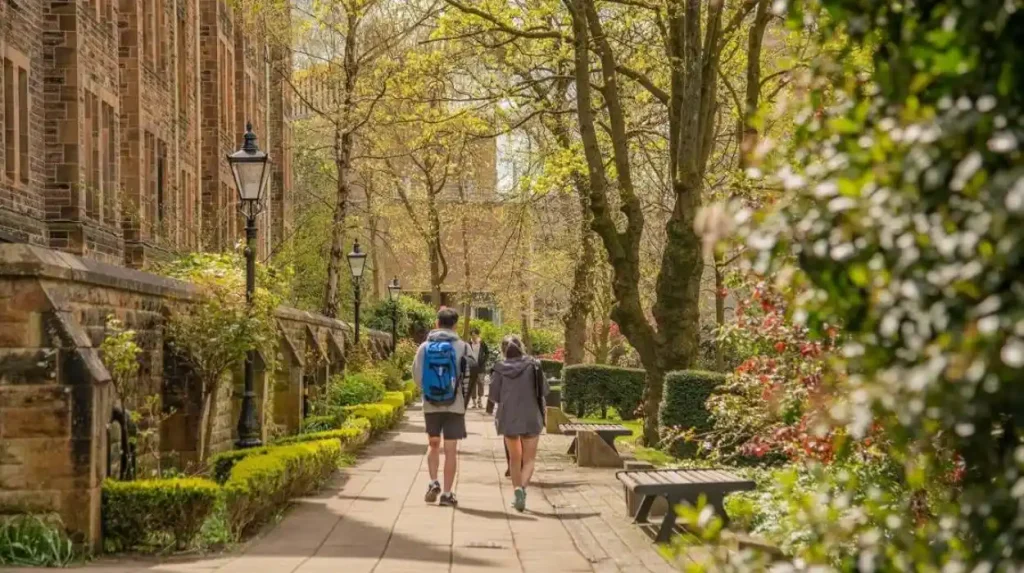
The West End developed through Glasgow’s nineteenth-century expansion, university growth, suburban development and Victorian investment in housing and public parks. The University of Glasgow moved to Gilmorehill in the nineteenth century, accelerating development around Hillhead and surrounding communities.
The history of the West End is closely connected with the expansion of Glasgow during the Industrial Revolution.
Glasgow’s population and economy expanded rapidly during the nineteenth century. Wealth generated by trade, manufacturing, engineering and shipbuilding supported new residential development outside the older city centre.
The University of Glasgow is one of the most important historical institutions in the West End. The university was founded in 1451 and later moved from its original High Street location to the Gilmorehill site in the West End. The University of Glasgow’s historical archive records the foundation of the institution and the development of its buildings and academic community.
The move to Gilmorehill transformed the surrounding landscape. New streets and housing developed around the university, creating the urban form that remains visible today.
Kelvingrove Park is another major historical feature. The park opened to the public in 1853. Glasgow Life records that the original park consisted largely of the grounds of Kelvingrove House before later expansion.
The Glasgow Botanic Gardens were founded in 1817 by botanist Thomas Hopkirk. They moved to their current location in 1842. The gardens later became a municipal facility after Glasgow Corporation took control in 1891.
The development of Victorian cultural institutions further established the West End as an important part of Glasgow’s civic identity.
Kelvingrove Art Gallery and Museum opened in 1901 as part of Glasgow’s International Exhibition and became the city’s civic art gallery and museum in 1902. Glasgow Life describes its collection as covering fine art, natural history, human history, arms and armour and other subjects.
The West End therefore combines residential history with educational, cultural and environmental development.
Which neighbourhoods are best known in Glasgow’s West End?
Hillhead, Partick, Hyndland, Dowanhill, Kelvinbridge, Kelvindale, Yorkhill and Woodlands are among the best-known West End neighbourhoods. Each has different housing, transport, shopping and lifestyle characteristics within the wider West End.
Hillhead
Hillhead is centred on Byres Road and has a strong connection with the University of Glasgow.
The neighbourhood contains cafés, restaurants, independent shops, student accommodation and traditional tenement housing. Hillhead Subway station provides direct access to the city centre and other Subway stations.
Byres Road and nearby Ashton Lane form an important commercial and social area.
Partick
Partick is a major transport and commercial hub on the western side of the central West End.
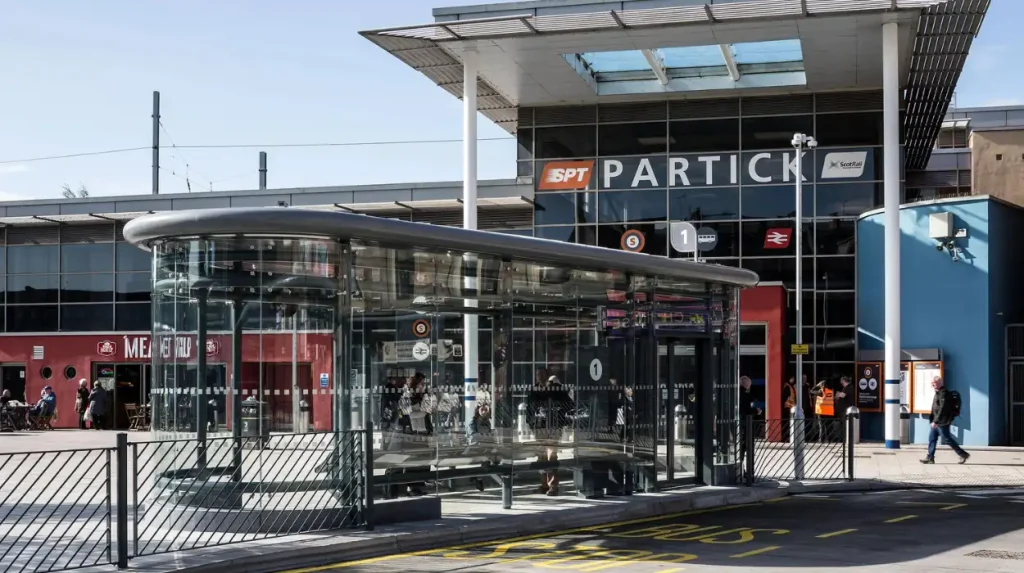
It has Partick Subway station, Partick railway station and Partick bus connections. SPT identifies Partick as a station located near Partick Rail Station, Partick Bus Station and the Riverside Museum.
Partick has a broader mix of housing than Hillhead. Traditional tenements sit alongside newer apartments and commercial developments.
Hyndland
Hyndland is primarily residential and is known for traditional tenement properties, tree-lined streets and proximity to Hyndland railway station.
The area provides access to Byres Road, Great Western Road, the University of Glasgow and nearby green spaces.
Dowanhill
Dowanhill lies between Byres Road and Hyndland. It has substantial traditional housing and convenient access to the university, Botanic Gardens and commercial facilities.
Kelvinbridge
Kelvinbridge sits close to the River Kelvin and Kelvingrove Park. Its Subway station provides a direct connection to the city centre and other parts of the West End.
Yorkhill
Yorkhill lies south of Kelvingrove and close to the River Clyde. It provides access to Kelvingrove Museum, Kelvingrove Park, the Riverside Museum and the wider Finnieston area.
These neighbourhoods are physically connected but have different housing markets and local identities.
How much does it cost to live in the West End of Glasgow?
Living in Glasgow’s West End generally costs more than living in many other parts of Glasgow, particularly in sought-after areas such as Hyndland and Hillhead. Greater Glasgow recorded average rents of £865 for one-bedroom properties in 2025.
Exact West End rents change according to neighbourhood, property size, condition, furnishing and proximity to transport.
Official Scottish Government rental statistics do not provide a separate “West End” rental category. They instead report rents by Broad Rental Market Area. Greater Glasgow recorded an average monthly rent of £865 for a one-bedroom property and £1,094 for a two-bedroom property in 2025.
These figures are useful benchmarks rather than exact West End asking rents.
The Scottish Government states that the statistics are based predominantly on advertised rents. They therefore reflect properties becoming available for rent rather than the rent paid by every existing tenant.
Housing costs increase for properties with stronger locations, larger floor areas, renovated interiors, parking, gardens or particularly desirable addresses.
Traditional West End tenements are common. A typical tenement can have high ceilings, large rooms, shared stairwells and period architectural details.
Modern apartment buildings provide another housing option. These properties often have newer insulation, lifts, controlled entrances and contemporary layouts.
Students frequently choose shared flats close to the University of Glasgow. Families and professionals often prioritise larger properties in Hyndland, Dowanhill and surrounding residential streets.
Renters also need to budget for council tax, energy, broadband, contents insurance and transport.
Glasgow City Council’s 2026/27 council tax rates range from £1,114 for Band A to £4,093.95 for Band H before any applicable reductions or exemptions.
Scottish private rental law provides important protections. A landlord can normally request a deposit of up to two months’ rent, and deposits generally have to be protected in an approved tenancy deposit scheme.
Most new mainstream private tenancies use a Private Residential Tenancy, which has no fixed end date and continues until the tenant or landlord legally ends it.
What is public transport like in Glasgow’s West End?
Public transport is one of the West End’s strongest practical advantages. Glasgow Subway stations, railway stations and bus routes connect neighbourhoods such as Partick, Hillhead and Kelvinbridge with central Glasgow and destinations across the wider city.
The Glasgow Subway is particularly important.
SPT operates the Subway, which has 15 stations arranged around an approximately 10-mile circular route. The system has an Inner Circle and Outer Circle, with trains stopping at every station in each direction.
West End stations include:
- Partick
- Kelvinhall
- Hillhead
- Kelvinbridge
- St George’s Cross
The Subway provides particularly useful connections between the West End and Glasgow city centre.
SPT states that the Subway is designed to connect the City Centre and West End, with peak services operating at frequent intervals. The full circuit takes about 24 minutes.
Partick is especially valuable because it combines Subway, rail and bus connections.
Rail services from Partick and nearby stations provide access to destinations across Glasgow and western Scotland. Hyndland railway station is another important local rail connection.
Walking is also practical in the central West End. Byres Road, the university campus, Botanic Gardens, Kelvingrove Park and surrounding residential streets are relatively close together.
Cycling is another option for local journeys. The concentration of university facilities, commercial streets and parks creates several short-distance journeys where cycling is practical.
The wider transport network makes the West End suitable for people who do not want to depend on a car.
What shops, restaurants and local amenities are available?
The West End has a dense concentration of shops, cafés, restaurants, supermarkets, cultural venues, fitness facilities and everyday services. Byres Road and Partick form the main commercial centres, while smaller businesses operate throughout surrounding neighbourhoods.
Byres Road is the best-known shopping and dining street in the central West End.
The area contains independent retailers, cafés, restaurants, convenience stores, professional services and other businesses.
Ashton Lane, close to Hillhead, adds restaurants, bars and hospitality businesses within a pedestrianised lane environment.
Partick provides another important retail centre. Its high street and surrounding streets serve local residents with food shops, services and everyday retail.
The West End also benefits from its proximity to major cultural institutions.
Kelvingrove Art Gallery and Museum contains 22 galleries and has free admission. Its collections include fine art, natural history and human history.
The Hunterian at the University of Glasgow is another major cultural institution. The university’s presence also supports libraries, academic facilities, research centres and public-facing events.
The Botanic Gardens provide an important recreational facility. Kibble Palace is one of the gardens’ best-known structures and was moved to the site in 1873.
The combination of retail, education, culture and recreation gives the West End a high concentration of amenities.
What parks and outdoor spaces are available in the West End?
Kelvingrove Park, Glasgow Botanic Gardens, the River Kelvin corridor and nearby open spaces provide substantial opportunities for walking, exercise, recreation and outdoor activities within the West End’s urban environment.
Kelvingrove Park is the largest major green space associated with the central West End.
The park opened to the public in 1853 and later expanded as Glasgow developed.
The park provides walking routes, open lawns, mature trees, recreational areas and access to Kelvingrove Bandstand.
The River Kelvin creates another important environmental corridor. Paths along the river connect sections of the West End and provide a quieter route away from major commercial streets.
The Botanic Gardens offer a different type of green space. Their history dates to 1817, although the gardens have occupied their present site since 1842.
The gardens contain landscaped areas, plant collections, glasshouses and Kibble Palace.
These spaces have practical value for residents. They provide places for walking, running, informal exercise and outdoor recreation without requiring a journey outside the city.
The concentration of green spaces is particularly significant because the West End has a dense urban housing pattern.
Is the West End good for students and university life?
The West End is a major student area because the University of Glasgow campus sits at its centre and surrounding neighbourhoods provide student accommodation, transport, cafés, study facilities, shops and recreational spaces within walking distance.
The University of Glasgow is the defining educational institution in the West End.
Its history reaches back to 1451, making it one of Scotland’s oldest universities. The university’s Gilmorehill campus became a major landmark in the West End after its nineteenth-century relocation from the city centre.
Students benefit from proximity to university buildings and local amenities.
Hillhead, Woodlands, Partick and Kelvinbridge contain substantial student housing. Shared flats are common in the private rental market.
The Subway provides a fast connection to Glasgow city centre and other university-related destinations.
The concentration of cafés and restaurants also supports student routines. Byres Road and surrounding streets contain many places for food, study breaks and social activity.
Student demand also affects the local housing market. Properties close to the university and Subway stations often attract strong demand.
This creates a clear distinction between the student-oriented parts of the West End and quieter residential streets in Hyndland and Dowanhill.
Is the West End suitable for families and professionals?
The West End suits families and professionals who value established housing, public transport, schools, parks, cultural facilities and access to central Glasgow. Hyndland, Dowanhill, Kelvindale and parts of Partick provide more residential environments than central Hillhead.
Families often prioritise larger properties, access to green spaces and proximity to everyday services.
Hyndland and Dowanhill contain larger traditional flats and residential streets. Some properties include multiple bedrooms, generous living spaces and period architectural features.
Kelvingrove Park provides accessible outdoor space for families.
Professionals benefit from the West End’s transport connections. Subway and rail services reduce dependence on private cars for journeys into central Glasgow.
Partick is particularly useful for commuters because its interchange combines several forms of public transport.
The West End also provides access to cultural facilities that support family activities throughout the year.
Property choice remains an important consideration. Large family-sized properties are more expensive than smaller student flats, and demand varies significantly between individual streets.
Families should also assess the exact catchment and availability arrangements for schools rather than assuming that all West End addresses provide the same options.
Is the West End a good place to live without a car?
The West End is one of Glasgow’s strongest areas for car-free living because Subway stations, railway services, buses, shops, universities, parks and cultural attractions are concentrated within a walkable urban network. Partick provides particularly strong multimodal transport connections.
A car is not essential for many daily journeys in the central West End.
Residents can walk between many residential streets and commercial areas.
The Subway connects Partick, Kelvinhall, Hillhead and Kelvinbridge with central Glasgow. SPT specifically identifies the West End and City Centre as the Subway’s core travel area.
Partick adds railway and bus services to the Subway network.
This creates several options for commuters and residents travelling outside the immediate neighbourhood.
Car ownership still has advantages for residents who regularly travel outside Glasgow, carry large items or need access to areas with weaker public transport.
Parking is an important consideration when renting or buying. Traditional tenement streets can have limited dedicated parking, and demand for on-street spaces varies.
People considering a West End property should therefore check parking arrangements before signing a tenancy or completing a purchase.
What should you check before moving to the West End?
Before moving to Glasgow’s West End, check the exact neighbourhood, property condition, transport distance, rent, council tax band, parking, energy efficiency, noise levels, tenancy terms and local services. Costs and conditions vary significantly between individual streets.
The first step is to compare the exact property rather than relying only on the neighbourhood name.
Two flats in the same West End district can have different costs and living conditions.
For rented accommodation, check the tenancy agreement, deposit requirements, council tax position and included utilities.
Scottish Government guidance states that landlords must provide tenants with a tenancy agreement and supporting information explaining their rights.
A deposit cannot normally exceed two months’ rent. It must generally be protected in one of Scotland’s approved tenancy deposit schemes within the required period.
Property condition also deserves close attention.
Traditional tenements can have older windows, communal stairwells, shared roofs and older heating systems. These features do not automatically indicate poor quality, but they affect maintenance and energy costs.
Check the Energy Performance Certificate, heating system, windows, insulation and electricity arrangements.
Noise is another practical issue. Properties close to Byres Road, Ashton Lane, university buildings and major transport routes experience different noise levels from quieter residential streets.
Transport distance should also be measured from the actual property. A listing described as “near the Subway” can represent a different walking distance depending on the street.
The best approach is to compare total monthly housing costs rather than rent alone.
Explore More Area Guide
Living in Partick: Rent, Transport and Glasgow Amenities
Living in Shawlands Glasgow: Rent, Transport and Lifestyle
What are the main advantages and disadvantages of living in the West End?
The main advantages are strong transport, cultural facilities, green spaces, independent businesses, university access and established housing. The main disadvantages are higher rents in sought-after areas, competition for accommodation, parking pressure and busy conditions around major commercial streets.
The West End’s strongest advantage is connectivity.
Residents have access to Subway, rail and bus services, while many daily destinations are walkable.
Its second major advantage is the concentration of cultural institutions. Kelvingrove Museum, the University of Glasgow, the Botanic Gardens and other venues provide major educational and recreational resources.
Green space is another defining feature. Kelvingrove Park and the River Kelvin provide outdoor areas within a dense urban environment.
Housing variety is also significant. The West End contains traditional tenements, modern apartments, student accommodation and larger period properties.
The disadvantages are closely linked to the area’s popularity.
Housing demand can be strong, particularly near the university and Subway stations.
Official statistics show that Greater Glasgow rents have risen substantially over the long term. Average Greater Glasgow one-bedroom rents increased from £437 in 2010 to £865 in 2025, representing a 98% increase. Two-bedroom rents increased from £564 to £1,094 over the same period.
Parking can also be difficult on some streets.
Busy commercial areas experience greater pedestrian activity and traffic than quieter residential streets.
The most appropriate West End location therefore depends on the resident’s priorities. Students often prioritise proximity to university facilities. Professionals often prioritise transport. Families often prioritise larger homes, green space and quieter streets.
What is the long-term outlook for living in Glasgow’s West End?
The West End’s long-term relevance is supported by its universities, established housing, transport infrastructure, cultural institutions, commercial streets and green spaces. Continued investment in transport and public-realm infrastructure will remain important to its future development.
The West End has several structural advantages that support long-term demand.
The University of Glasgow remains a major educational and research institution. Its historic presence has shaped the surrounding urban environment for generations.
The Subway also remains strategically important. SPT is continuing modernisation work, including new signalling, communications infrastructure and platform screen doors at selected stations. In 2026, SPT reported that platform screen doors had been fully installed at Govan, Partick and Ibrox as part of the modernisation programme.
Public-realm investment is also significant. Glasgow City Council has previously identified Byres Road improvements and wider Clyde Waterfront and West End development as strategic projects.
The West End therefore has a combination of historic assets and modern infrastructure.
Its housing market will continue to reflect demand from students, professionals, families and other residents seeking access to central Glasgow.
For people planning a move, the most important principle is to assess the exact neighbourhood and property rather than treating the West End as a uniform area.
Living in the West End of Glasgow: Final assessment
The West End of Glasgow combines historic neighbourhoods, university life, cultural institutions, green spaces, independent businesses and strong transport connections. Hillhead provides direct access to Byres Road and the University of Glasgow. Partick functions as a major transport and commercial hub. Hyndland and Dowanhill provide more residential environments. Kelvinbridge links the area with Kelvingrove Park and the northern side of the city.
The area is particularly suitable for people who value public transport, walkable amenities and proximity to Glasgow’s cultural and educational institutions.
Housing costs remain an important consideration. Official Greater Glasgow rent statistics show substantial long-term increases, while individual West End properties can command higher rents because of location and demand.
The combination of established neighbourhoods, transport infrastructure, green spaces and major institutions gives the West End a strong position within Glasgow’s residential landscape.
Is the West End of Glasgow a good place to live?
Yes. Glasgow’s West End offers strong public transport, green spaces, cultural attractions, restaurants, shops, universities and a wide range of housing. Hillhead, Partick, Hyndland and Dowanhill each provide different residential environments.