
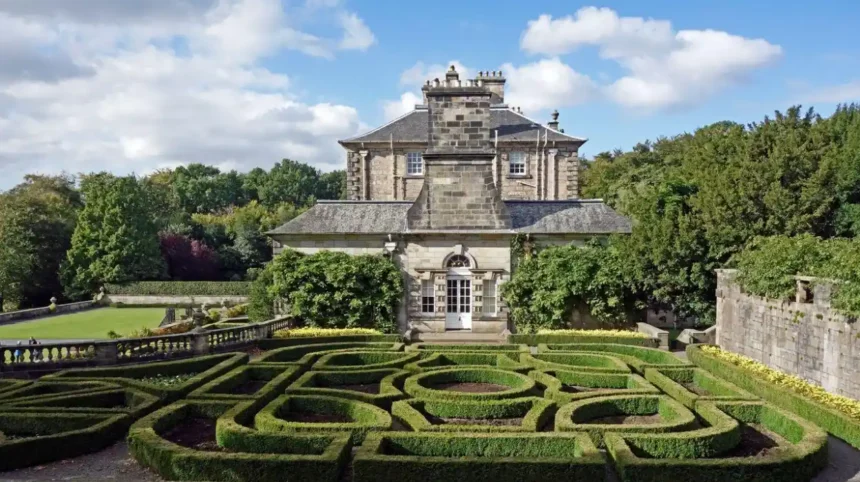
Glasgow is widely known as Scotland’s “Dear Green Place” because of the scale and distribution of its parks, woodlands, nature areas, gardens, sports grounds and other open spaces. The most consistent official council figure identifies 91 parks, while the wider managed greenspace estate covers 3,975 hectares.
- How many parks does Glasgow City Council manage?
- How much green space does Glasgow have beyond its 91 parks?
- What types of green spaces are found across Glasgow?
- Which are Glasgow’s most important major parks?
- How has Glasgow developed its parks and green spaces historically?
- How does Glasgow define and map open space?
- How are Glasgow’s parks and green spaces managed?
- How much woodland and nature conservation land does Glasgow have?
- Why are Glasgow’s parks important for climate and biodiversity?
- How accessible are parks and green spaces across Glasgow?
- What is the difference between Glasgow parks and green spaces?
- How is Glasgow planning the future of its parks and green spaces?
- What is the most accurate answer to how many parks and green spaces Glasgow has?
The important distinction is that 91 parks is not the total number of green spaces in Glasgow. Glasgow City Council manages a much wider network that includes amenity greenspace, woodland, nature conservation sites, cemeteries, allotments, ponds, sports grounds and other open-space assets.
In 2023, Glasgow City Council reported responsibility for 91 parks, 3,975 hectares of greenspace, an estimated 3 million trees, 29 ponds, 79 nature conservation sites, 5 golf courses and 190 sports pitches and grounds. Of the 3,975 hectares of greenspace, 1,754 hectares were within park settings.
The council’s current Open Space Strategy also treats open space as a connected citywide system rather than simply a collection of individual parks. The strategy supports recreation, biodiversity, climate resilience, drainage, air quality, community cohesion and healthier neighbourhoods.
How many parks does Glasgow City Council manage?
Glasgow City Council manages 91 parks across the city, divided historically into 5 city parks, 12 district parks and 74 local parks. These include major destinations such as Glasgow Green, Pollok Country Park, Kelvingrove Park, Victoria Park and other neighbourhood parks.
The figure of 91 parks has been used consistently in Glasgow City Council records over many years. Earlier council documentation classified the 91 parks according to their geographical and functional importance. The categories were 5 city parks, 12 district parks and 74 local parks.
A city park serves a broad citywide catchment and generally contains significant recreational, cultural, landscape or heritage assets. Glasgow Green is a prominent example because of its location, historic significance and range of public facilities.
A district park serves several neighbourhoods and provides larger recreational facilities than a typical local park. These parks form important parts of the wider urban green network.
A local park primarily serves nearby communities. Examples include neighbourhood parks containing grassed areas, children’s play facilities, paths, trees, seating and informal recreation areas.
The 91-park figure should therefore be understood as the council’s principal park estate rather than a count of every publicly accessible green parcel in Glasgow.
How much green space does Glasgow have beyond its 91 parks?
Glasgow’s wider managed greenspace estate is substantially larger than its 91-park network. Glasgow City Council reported 3,975 hectares of greenspace, including 1,754 hectares inside parks, alongside woodland, nature sites, ponds, sports grounds and other open spaces.
The 3,975-hectare figure demonstrates why counting parks alone gives an incomplete picture of Glasgow’s green infrastructure.
A hectare equals 10,000 square metres. Therefore, 3,975 hectares represents approximately 39.75 million square metres of managed greenspace.
The council’s 2023 information states that 1,754 hectares of the greenspace estate were within park settings. That leaves approximately 2,221 hectares outside those park settings within the reported greenspace maintenance responsibility.
These areas include different forms of amenity and environmental land. Amenity greenspace supports everyday neighbourhood use. Woodland provides habitat, shade and landscape structure. Nature conservation sites support ecological value. Sports grounds provide organised recreation.
The council also reported an estimated 3 million trees across Glasgow. This tree resource extends through parks, streets, woodland and other areas of the city.
This distinction is essential when answering how many green spaces Glasgow has. There is no single universally useful number representing every green parcel because Glasgow’s open-space system contains different asset types and ownership arrangements.
What types of green spaces are found across Glasgow?
Glasgow’s green-space network includes parks, woodlands, amenity greenspace, nature conservation sites, allotments, cemeteries, ponds, sports grounds and other open spaces. Each category provides different recreational, ecological, cultural or environmental functions.
Parks are the most recognisable component. Examples include Glasgow Green, Kelvingrove Park, Pollok Country Park, Victoria Park and Dawsholm Park.
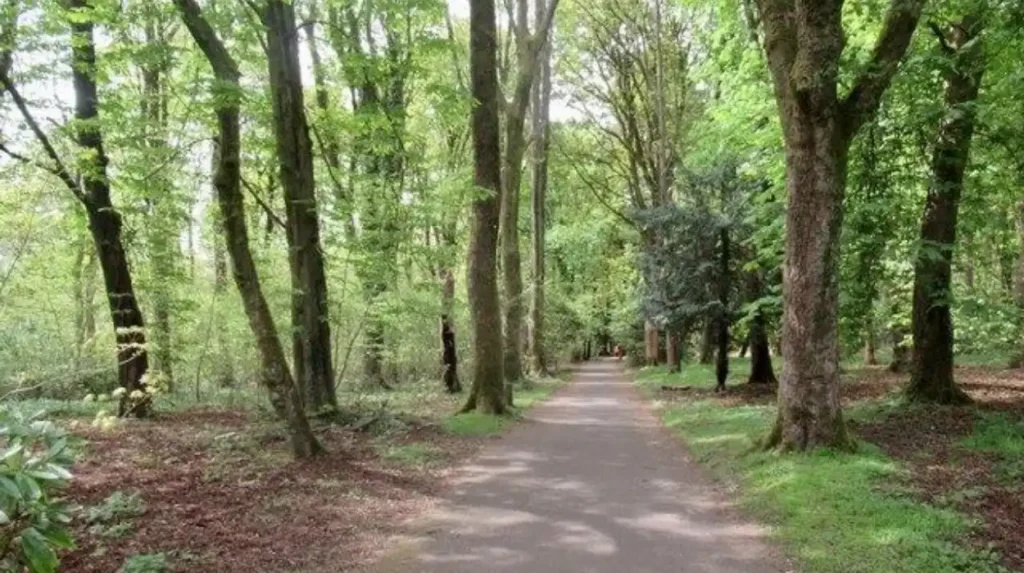
Woodlands form another major component. Glasgow City Council’s asset records identify approximately 1,029 hectares of woodland within its parks and open-space responsibilities.
Local Nature Reserves protect areas with particular ecological and educational value. Glasgow’s council records identify 12 Local Nature Reserves in the city’s open-space management information.
Nature conservation sites provide additional biodiversity value. A 2023 council procurement document recorded 79 nature conservation sites within the areas managed by Neighbourhoods, Regeneration and Sustainability.
Allotments provide land for community and individual food growing. Council asset information identifies approximately 24 hectares dedicated to allotments.
Cemeteries and graveyards also form part of the wider green infrastructure. The council reported responsibility for 32 cemeteries and graveyards.
Ponds provide drainage, habitat and landscape functions. The council reported 29 ponds within its managed greenspace responsibilities.
Sports pitches and grounds provide organised recreation. The 2023 council record identified 190 sports pitches and grounds.
These categories overlap functionally. A single park can contain woodland, ponds, sports pitches, play areas, gardens and nature habitats.
Which are Glasgow’s most important major parks?
Glasgow’s major parks combine recreation, heritage, biodiversity and landscape value. Important examples include Glasgow Green, Pollok Country Park, Kelvingrove Park, Victoria Park, Bellahouston Park, Queen’s Park, Alexandra Park and Rouken Glen Park.
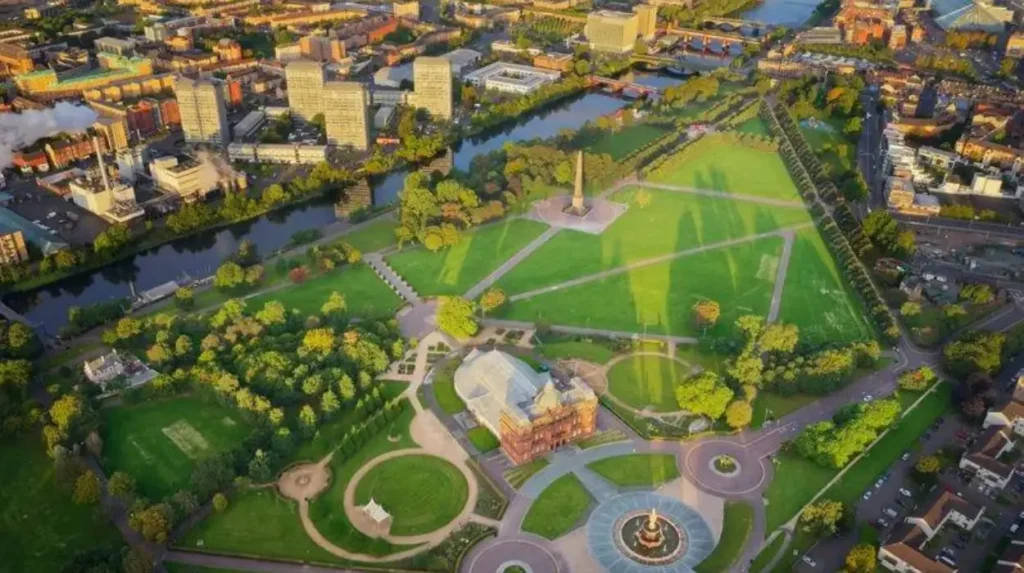
Glasgow Green is one of the city’s most historically significant public parks. Located east of the city centre beside the River Clyde, it contains extensive open lawns, mature trees, paths and heritage structures.
Pollok Country Park is one of Glasgow’s largest and most distinctive green destinations. It combines extensive landscape, woodland, riverside areas, cultural attractions and the Burrell Collection.
Kelvingrove Park occupies a prominent position west of Glasgow city centre. It connects with the River Kelvin and sits close to major cultural destinations including Kelvingrove Art Gallery and Museum.
Victoria Park in the west of Glasgow is known for its recreational landscape and historic geological features, including the Fossil Grove.
Bellahouston Park provides extensive recreational land in the south-west of Glasgow. It is associated with sports, events, gardens and the House for an Art Lover.
Queen’s Park in the south side combines landscaped parkland, recreation areas, woodland and elevated viewpoints.
Alexandra Park in the east end contains formal gardens, mature trees, recreational areas and water features.
Rouken Glen Park, on the southern edge of the city, contains woodland, open lawns, a pond, gardens and walking routes.
These parks demonstrate the range of functions contained within Glasgow’s park network. They are not identical in size, design or purpose.
How has Glasgow developed its parks and green spaces historically?
Glasgow’s green-space network developed alongside industrial expansion, population growth and public-health reforms. Victorian park creation expanded access to recreation and landscape, while later planning policies added neighbourhood parks, woodland, nature reserves and strategic green infrastructure.
Glasgow’s park history is closely connected to the city’s industrial development.
Rapid population growth during the nineteenth century created dense urban neighbourhoods with limited private gardens. Public parks became an important part of municipal investment in recreation and environmental improvement.
Glasgow Green has particularly deep historical roots. The land was acquired by the city in the seventeenth century and developed as a major public open space over subsequent centuries.
The Victorian period produced many of Glasgow’s best-known parks. Kelvingrove Park opened in the nineteenth century, while Queen’s Park and other major municipal landscapes developed during the same period.
Park creation formed part of a wider public-health movement. Access to clean air, exercise and outdoor recreation was increasingly considered important in rapidly industrialising cities.
The twentieth century expanded the network through additional neighbourhood parks, sports grounds and recreational land.
The modern approach is broader. Glasgow’s Open Space Strategy connects parks with biodiversity, climate adaptation, sustainable drainage, woodland, active travel and community wellbeing. The strategy was approved by Glasgow City Council in February 2020.
This represents a shift from treating parks solely as recreational destinations toward treating green infrastructure as part of the city’s essential environmental and civic infrastructure.
How does Glasgow define and map open space?
Glasgow’s Open Space Strategy uses an evidence-based mapping system to identify and manage protected open spaces. The council’s Open Space Map records spaces covered by planning policy and supports decisions about accessibility, quality, biodiversity, recreation and climate resilience.
The Open Space Strategy is the council’s strategic framework for coordinating policies affecting open land.
The council states that its Open Space Map is an audit of open spaces, including areas protected through the City Development Plan.
This mapping approach matters because a park is only one type of open space.
The council’s Supplementary Guidance SG6, adopted in September 2024, notes that Scottish Government requirements call for councils to audit open spaces of 0.2 hectares or greater, together with smaller spaces considered appropriate.
The mapping system therefore provides a more detailed picture than the headline figure of 91 parks.
It identifies different categories of land and helps planners understand where open-space provision is strong or limited.
The council has also introduced an Environmental Digital Twin, a spatial-data system designed to support evidence-based decision-making about the city’s environmental assets.
This digital approach supports long-term planning because green-space information can be considered alongside housing, transport, drainage, biodiversity and climate data.
How are Glasgow’s parks and green spaces managed?
Glasgow’s parks and open spaces are managed through Glasgow City Council’s Neighbourhoods, Regeneration and Sustainability service, strategic policies, management plans, maintenance programmes and partnership projects involving communities and external organisations.
Neighbourhoods, Regeneration and Sustainability, commonly abbreviated to NRS, has responsibility for significant parts of Glasgow’s parks and greenspace estate.
Management involves routine maintenance, horticulture, grass cutting, tree management, litter control, path maintenance, play facilities, sports infrastructure and environmental improvements.
Different spaces require different maintenance regimes. A formal park with gardens and high visitor numbers has different operational requirements from a woodland or nature conservation site.
Glasgow’s management framework also incorporates community participation. The council’s park-management approach references Friends of groups, which are community organisations involved in supporting individual parks and identifying local priorities.
The Open Space Strategy coordinates these operational responsibilities with broader city priorities.
The strategy links open space to passive recreation, formal sport, biodiversity and urban drainage, while also supporting climate resilience and healthier communities.
This integrated management model recognises that a green space can perform several functions simultaneously.
How much woodland and nature conservation land does Glasgow have?
Glasgow’s green infrastructure includes approximately 1,029 hectares of woodland and 12 Local Nature Reserves in council open-space records. Nature conservation sites add further ecological land, supporting habitats, species, ecological networks and environmental education.
Woodland is a major part of Glasgow’s environmental infrastructure.
The council’s corporate asset information records 1,029 hectares of woodland.
Woodland performs several functions. Trees store carbon, intercept rainfall, provide shade, support wildlife and contribute to landscape quality.
Glasgow’s Local Nature Reserves provide areas where nature conservation is combined with public access and education. The council’s records identify 12 Local Nature Reserves.
The council has also reported that Local Nature Reserves covered approximately 9.44 square kilometres, equivalent to 5.5% of the city’s total land area, in its earlier asset-management reporting.
Nature conservation extends beyond Local Nature Reserves.
A council biodiversity document identified 5 Sites of Special Scientific Interest, 12 Local Nature Reserves and 95 Sites of Importance for Nature Conservation in Glasgow. These designations represent different levels and purposes of biodiversity protection.
The figures should not be added together because these designations can represent overlapping areas and different legal or planning categories.
Why are Glasgow’s parks important for climate and biodiversity?
Glasgow’s parks and green spaces support climate resilience by storing carbon, managing rainfall, reducing heat exposure, supporting biodiversity and connecting habitats. The Open Space Strategy specifically promotes nature-based solutions for flood protection, air quality, ecological recovery and community resilience.
Urban green spaces have become increasingly important in Glasgow’s climate strategy.
Vegetation and soil absorb rainfall. This reduces pressure on drainage infrastructure during heavy precipitation.
Trees provide shade and contribute to urban cooling. This becomes increasingly relevant as cities experience warmer conditions.
Green corridors connect habitats across built-up areas. These connections allow plants, insects, birds and other wildlife to move between ecological sites.
The council’s Open Space Strategy identifies nature-based solutions as a core mechanism for delivering environmental benefits. These include ecosystem management, flood protection, improved air quality and social cohesion.
Glasgow’s climate planning also identifies additional Local Nature Reserves as a future objective. Its 2026–2030 climate action documentation includes an ambition for 30 or more additional aspirational Local Nature Reserves and a target of 1 hectare of Local Nature Reserve per 1,000 people.
This demonstrates that the future green-space agenda extends beyond maintaining existing parks.
How accessible are parks and green spaces across Glasgow?
Green-space provision varies between Glasgow neighbourhoods. The council recognises that open space is not distributed uniformly, with some communities having substantial parks while other areas experience limited provision and greater pressure on existing spaces.
Geographical distribution is an important part of understanding Glasgow’s green-space network.
Large parks can provide extensive open land, but distance from a resident’s home still affects practical access.
A resident living beside a small neighbourhood park has different access from someone who must travel several kilometres to reach a major country park.
Glasgow’s Open Space Strategy therefore considers quality, accessibility and distribution, rather than simply measuring total hectares.
A large amount of green land does not automatically mean equal access for every neighbourhood.
The council’s historical quality assessment examined 200 open spaces covering 2,805 hectares, representing approximately 54% of the total area included in that assessment framework. It evaluated factors including accessibility, attractiveness, biodiversity, health and wellbeing and community support.
This approach provides a more meaningful assessment than counting spaces alone.
It also supports investment decisions. Areas with limited access, poor-quality facilities or weaker ecological value can become priorities for improvement.
What is the difference between Glasgow parks and green spaces?
A park is a defined recreational landscape, while green space is a broader planning and environmental category covering parks, woodland, amenity land, nature sites, sports grounds, allotments and other open areas. Glasgow therefore has far more green spaces than its 91 named parks.
This distinction answers the central question directly.
If the question is “How many parks are there in Glasgow?”, the established council figure is 91 parks.
If the question is “How many green spaces are there in Glasgow?”, there is no single equivalent number because green space includes many different mapped and managed assets.
The council’s 2023 data provides the strongest quantitative picture: 3,975 hectares of greenspace, including 1,754 hectares within park settings, alongside other environmental and recreational assets.
The Open Space Strategy further expands the planning definition by recognising different categories of open space and mapping them through the council’s Open Space Map.
Consequently, the most accurate evergreen answer is:
Glasgow has 91 council-managed parks and thousands of hectares of wider greenspace, with the council reporting 3,975 hectares of managed greenspace in 2023.
That wording avoids incorrectly treating the number of parks as the total number of green spaces.
Explore More Area Guide
Best Walking and Hiking Routes Near Glasgow 2026
Glasgow vs Edinburgh Weather: Which City Is Wetter?
How is Glasgow planning the future of its parks and green spaces?
Glasgow’s future approach focuses on protecting existing open spaces, improving quality, expanding nature-based solutions, strengthening biodiversity networks, increasing Local Nature Reserves and integrating green infrastructure into climate, planning and neighbourhood investment.
The city’s green-space strategy is continuing to evolve.
Glasgow City Council’s Our Dear Green Place programme provides a strategic framework for parks and greenspaces. A further update was considered by the Environment and Liveable Neighbourhoods City Policy Committee in June 2026.
The current policy direction links parks with wider urban objectives.
These objectives include biodiversity recovery, climate adaptation, sustainable drainage, community wellbeing, recreational opportunities and improved environmental quality.
The council’s 2026–2030 climate action planning also includes ambitions for additional Local Nature Reserves, green frameworks and biodiversity improvements.
Investment is already directed toward parks and open spaces. Council financial records include programmes for play-park renewal, wildflower meadows and green connectors, nature restoration and wider parks and open-space investment.
Future measurement is therefore likely to focus on more than simply counting parks.
Important indicators include hectares of green space, accessibility, biodiversity quality, tree cover, Local Nature Reserve provision, recreational facilities and connections between ecological areas.
What is the most accurate answer to how many parks and green spaces Glasgow has?
Glasgow has 91 council-managed parks, while its broader managed greenspace estate covers 3,975 hectares according to 2023 council data. The wider network also includes woodland, nature sites, sports grounds, ponds, allotments and other open spaces.
The headline number is therefore 91 parks.
The wider answer is significantly larger.
Glasgow’s council-managed green infrastructure covers 3,975 hectares of greenspace. Of this, 1,754 hectares are within park settings.
The wider estate also includes approximately 1,029 hectares of woodland, 24 hectares of allotments, 29 ponds, 79 nature conservation sites, 32 cemeteries and graveyards, 5 golf courses and 190 sports pitches and grounds in the council’s 2023 management information.
These figures should not be summed into a single “number of green spaces” because they describe different asset categories and some areas can overlap.
For residents and visitors, the key point is that Glasgow’s green character is created by a connected network rather than 91 isolated parks.
The city’s Open Space Strategy provides the planning framework for protecting, improving and connecting that network.
Glasgow’s reputation as a “Dear Green Place” is therefore supported by a substantial measurable environmental estate. The most reliable current baseline is 91 parks and 3,975 hectares of managed greenspace, with continued investment and strategic expansion planned for biodiversity, climate resilience and accessible green infrastructure.
How many parks are there in Glasgow?
Glasgow City Council manages 91 parks across the city. The network historically includes 5 city parks, 12 district parks and 74 local parks, providing recreation, green space and community facilities.