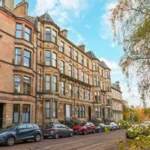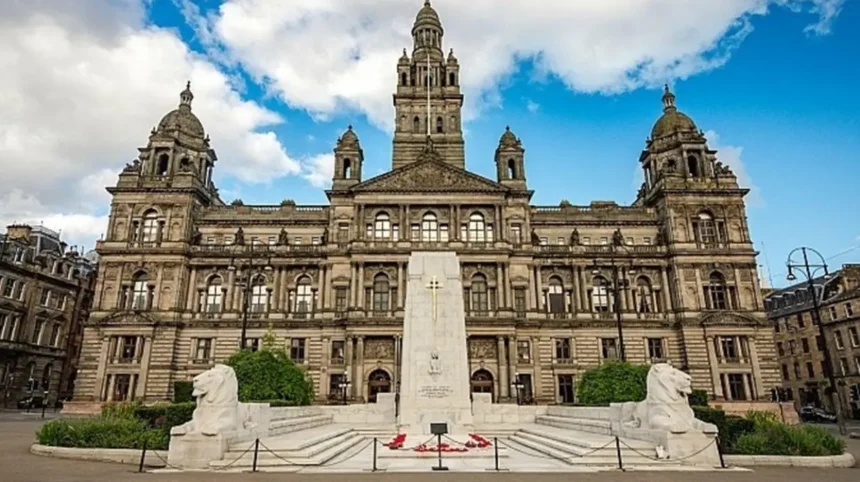
Glasgow Council Tax is a local property tax collected by Glasgow City Council to fund essential public services, including education, social care, waste collection, libraries and local infrastructure. Every residential property in Glasgow receives a Council Tax band from A to H. The annual bill depends on the property’s valuation band, the council’s approved annual rates and the household’s eligibility for discounts, exemptions or reductions.
- What is Glasgow Council Tax and why do residents pay it?
- What are the Glasgow Council Tax bands and property valuation thresholds?
- How does the Scottish property valuation system work?
- Does the current property market determine Council Tax bands?
- What are the Glasgow Council Tax rates for 2026/27?
- How much has Glasgow Council Tax increased in 2026/27?
- How much is Glasgow Council Tax per month?
- Are Glasgow Council Tax rates different from other Scottish councils?
- Who qualifies for the 25% single-person Council Tax discount in Glasgow?
- Who counts as an adult for Council Tax?
- How much can a single-person discount save?
- Does a household with two adults qualify?
- Are Glasgow students exempt from Council Tax?
- Which students qualify for Council Tax exemption?
- What happens when students share a Glasgow flat?
- Do students need to apply for an exemption?
- Can disabled Glasgow residents receive a Council Tax reduction?
- What is the Disabled Band Reduction Scheme?
- Can someone with severe mental impairment receive an exemption?
- Can low-income households receive Council Tax Reduction in Glasgow?
- Who qualifies for Council Tax Reduction?
- How much Council Tax Reduction can a household receive?
- How do Glasgow residents apply for Council Tax Reduction?
- Do Glasgow empty properties and second homes pay Council Tax?
- What happens when a Glasgow property remains empty?
- Do second homes receive a Council Tax discount?
- Who pays Council Tax on an empty rental property?
- Who pays Council Tax in a Glasgow shared house or HMO?
- How can Glasgow residents check or challenge their Council Tax band?
- How can residents check a Glasgow Council Tax band?
- When can a property owner challenge a Council Tax band?
- Who handles a Council Tax band dispute?
- Are water and sewerage charges included in Glasgow Council Tax?
- What is the total Band D household charge in Glasgow?
- Do Council Tax discounts apply to water charges?
- How can Glasgow residents pay their Council Tax bill?
- What payment options are available?
- What information appears on a Council Tax bill?
- What happens if a resident misses a payment?
- What should residents know when moving into or out of Glasgow?
- What happens when someone moves into a rented Glasgow property?
- Does Council Tax change when a household member moves out?
- What is the historical background and future of Glasgow Council Tax?
For residents, landlords, homeowners and tenants, understanding Glasgow Council Tax is essential when calculating household expenses, arranging a new tenancy or managing monthly living costs. Scotland operates a separate Council Tax valuation system from England and Wales. Scottish properties are assessed using their estimated market value on 1 April 1991 rather than their current market price.
Glasgow City Council sets the annual Council Tax charges for properties within its administrative area. The Scottish Assessors Association determines property valuation bands, while the Scottish Government establishes the wider legal framework for Council Tax discounts and reductions.
What is Glasgow Council Tax and why do residents pay it?
Glasgow Council Tax is an annual local property tax charged on most residential properties within Glasgow City Council’s administrative area. It finances essential council services, with individual bills determined by property bands, annual council rates and applicable household discounts or exemptions.
Council Tax is a major source of local authority revenue in Scotland. It helps Glasgow City Council maintain services used by residents, businesses and communities throughout the city.
The tax was introduced across Great Britain on 1 April 1993, replacing the Community Charge, commonly known as the Poll Tax. Scotland operates its own valuation and administrative arrangements within the wider Council Tax framework.
Which services does Glasgow Council Tax fund?
Council Tax contributes towards the delivery of essential public services throughout Glasgow. These services support households, neighbourhoods and the wider urban environment.
Major funded service areas include:
- Education: Primary schools, secondary schools, additional support for learning and educational facilities.
- Social care: Adult social care, support for vulnerable residents and community care services.
- Waste management: Household refuse collection, recycling facilities and street cleanliness.
- Libraries and leisure: Public libraries, community facilities, sports centres and recreational services.
- Environmental services: Parks, public spaces, local environmental maintenance and neighbourhood improvements.
- Community services: Local planning, regulatory services and other council responsibilities.
Council Tax does not represent a direct payment for an individual service. Residents contribute towards the council’s wider budget, which supports services across the city.
Who is responsible for paying Council Tax?
The person responsible for paying Council Tax is generally determined by the legal hierarchy of liability. The owner or resident at the property is not automatically responsible in every situation.
In an ordinary household, an adult resident who owns or rents the property usually becomes liable. Special rules apply to houses in multiple occupation, certain institutional accommodation and properties occupied by particular groups.
Glasgow City Council manages Council Tax billing, collection, discounts and account administration. Property valuation questions are handled by the relevant local assessor.

What are the Glasgow Council Tax bands and property valuation thresholds?
Glasgow Council Tax uses eight property valuation bands, ranging from Band A to Band H. Each band represents an estimated property value on 1 April 1991, with Band A covering the lowest valuation range and Band H covering properties valued above £212,000.
The Scottish Assessors Association maintains the Council Tax valuation system. Its assessors use historical property values and statutory valuation assumptions to determine the appropriate band.
The valuation thresholds for Glasgow follow the Scottish national system.
How does the Scottish property valuation system work?
The Scottish Council Tax valuation system uses the property’s estimated open-market value on 1 April 1991. It does not use the property’s current selling price, rental income or present-day market valuation.
The assessor applies the comparative principle of valuation. This means comparing a property with similar homes that sold around the valuation date.
The assessment considers the property’s physical characteristics and locality. Statutory assumptions also apply, including the assumption that the property was in reasonable repair and sold with vacant possession.
For example, a Glasgow flat with an estimated 1991 value of £40,000 falls into Band C. A property valued at £55,000 on the same historical basis falls into Band D.
Does the current property market determine Council Tax bands?
No. A property’s current market price does not automatically change its Council Tax band.
A Glasgow property purchased for £180,000 in 2026 does not automatically enter Band G. Its band depends on the relevant historical valuation and applicable assessment rules.
Extensions, conversions and property alterations also have specific valuation rules. Certain improvements trigger a review when a property is sold, while changes that create separate dwellings can affect the valuation list.
What are the Glasgow Council Tax rates for 2026/27?
Glasgow City Council’s approved Council Tax rates for 2026/27 range from £1,137.33 for Band A to £4,179.70 for Band H. The annual Band D charge is £1,706, providing the reference rate for calculating other property bands.
The financial year 2026/27 runs from 1 April 2026 to 31 March 2027. Glasgow City Council publishes its annual charges through its budget and revenue estimates.
The following figures represent the Council Tax element before discounts, exemptions and reductions.
Source: Glasgow City Council, Revenue Estimates 2026/27.
How much has Glasgow Council Tax increased in 2026/27?
Glasgow’s Band D Council Tax increased from £1,611 in 2025/26 to £1,706 in 2026/27. This represents an annual increase of £95, equivalent to approximately 5.9%.
The increase affects all eight valuation bands. For example, Band A increased from £1,074 to £1,137.33, while Band H increased from £3,946.95 to £4,179.70.
The annual change reflects the council’s budget-setting process and its assessment of the funding required for local services.
How much is Glasgow Council Tax per month?
Monthly Council Tax costs depend on the property’s valuation band and the payment arrangement selected by the council.
The following examples divide the annual 2026/27 charge into 12 equal monthly amounts. They are budgeting calculations rather than confirmation of the instalment schedule on an individual bill.
For example, a household living in a Band C property has an annual Council Tax liability of £1,516.44 before any eligible reduction. Dividing this amount by 12 gives approximately £126.37 per month.
Actual payment dates and instalment amounts appear on the Council Tax bill.
Are Glasgow Council Tax rates different from other Scottish councils?
Yes. Each Scottish local authority sets its own annual Band D charge. Other valuation bands are calculated using statutory proportions of that reference amount.
Glasgow therefore has different Council Tax rates from neighbouring authorities, including East Renfrewshire, East Dunbartonshire, Renfrewshire and South Lanarkshire.
People moving between Glasgow and surrounding areas should check the relevant council’s rates rather than assuming that properties with identical valuation bands have identical bills.
Who qualifies for the 25% single-person Council Tax discount in Glasgow?
A Glasgow household with only one adult counted for Council Tax purposes generally qualifies for a 25% single-person discount. The reduction applies to the standard Council Tax charge, not the property’s valuation band, and requires an application to Glasgow City Council.
The single-person discount is one of the most widely recognised Council Tax reductions in Scotland.
Council Tax legislation treats certain residents as disregarded when calculating the number of adults in a household. Therefore, a property occupied by two or more people can still qualify if only one person counts as an adult for Council Tax purposes.
Who counts as an adult for Council Tax?
Most residents aged 18 or over count as adults when calculating Council Tax liability. However, specific categories of people are disregarded under the rules.
Examples include:
- Full-time students who meet the relevant eligibility requirements.
- Certain apprentices undertaking approved qualifications.
- Some care leavers under 26.
- People with severe mental impairment who meet the eligibility conditions.
- Certain live-in carers.
- Some people receiving care in residential accommodation.
The council assesses each household’s circumstances before awarding a discount.
How much can a single-person discount save?
A 25% discount reduces the standard Council Tax charge by one quarter.
For a Band D Glasgow property in 2026/27, the calculation is:
- Standard annual Council Tax: £1,706.
- Single-person discount: £426.50.
- Remaining annual Council Tax: £1,279.50.
This calculation excludes water and sewerage charges and assumes that no other adjustments apply.
Does a household with two adults qualify?
A household with two adults who both count for Council Tax purposes does not normally qualify for the single-person discount.
However, a household containing one counted adult and one or more disregarded residents can qualify. For example, a working adult living with a full-time university student can qualify if the student meets the relevant conditions.
Residents must provide accurate information when applying. Changes in household occupancy must also be reported to the council.
Are Glasgow students exempt from Council Tax?
Full-time students in Glasgow can qualify for Council Tax exemption or disregard depending on their accommodation and household circumstances. Properties occupied entirely by eligible full-time students are generally exempt, while mixed households receive treatment based on the number of residents counted for Council Tax.
Glasgow has a substantial student population, with institutions including the University of Glasgow, University of Strathclyde and Glasgow Caledonian University.
Student Council Tax rules are particularly important for people renting private accommodation rather than university-managed halls.
Which students qualify for Council Tax exemption?
Under Scottish rules, a person over 20 generally qualifies as a full-time student if they:
- Attend a higher education course.
- Study for at least 21 hours each week.
- Follow a course lasting at least 24 weeks per academic year.
For students under 20, different requirements apply. These include studying for at least 12 hours per week on a qualifying further or higher education course lasting at least three months.
Students living in halls of residence are also exempt from Council Tax.mygov.scot
What happens when students share a Glasgow flat?
The Council Tax position depends on the status of everyone living in the property.
If every resident qualifies as a full-time student, the property generally receives an exemption.
If a student shares with a working professional, the student is normally disregarded when counting adults. The working resident remains responsible for the applicable Council Tax, although the household can qualify for a 25% single-person discount if only one adult counts.
For example, a Glasgow flat occupied by two qualifying full-time students and one working professional generally has one counted adult. The household can therefore qualify for a 25% discount.
Do students need to apply for an exemption?
Yes. Students should notify Glasgow City Council and provide the required evidence of their course and student status.
A university student certificate normally provides the relevant confirmation. Residents should also report changes when their course finishes, their study status changes or they move to another property.
An exemption should never be assumed simply because a resident holds a university identification card.
Can disabled Glasgow residents receive a Council Tax reduction?
Disabled residents can qualify for Council Tax support through the Disabled Band Reduction Scheme when their home contains essential adaptations or additional space required because of a disability. Eligible properties receive the charge for the valuation band immediately below their existing band.
The scheme recognises that some households require larger accommodation or structural adaptations to meet disability-related needs.
What is the Disabled Band Reduction Scheme?
The Disabled Band Reduction Scheme reduces Council Tax liability when a property contains qualifying facilities or adaptations.
Examples include:
- An additional bathroom or kitchen required by a disabled resident.
- An extra room used to meet disability-related needs.
- Additional indoor space required for wheelchair use.
A Band D property that meets the eligibility requirements receives the Band C charge instead.
A Band A property receives a special reduction equivalent to five-ninths of its standard charge.
The property must be the main residence of at least one disabled person. The person responsible for paying Council Tax does not necessarily have to be the disabled resident.
Can someone with severe mental impairment receive an exemption?
Yes. A person with severe mental impairment can qualify for Council Tax disregard or exemption when they meet the relevant medical and benefit conditions.
A severe mental impairment is a significant impairment of intelligence and social functioning that has a permanent effect on the individual.
A medical professional, such as a GP, provides the required certification. The council also checks eligibility against the applicable benefit requirements.
A person living alone who qualifies for this disregard can receive a full exemption. Other household arrangements receive discounts according to the number and status of the remaining residents.

Can low-income households receive Council Tax Reduction in Glasgow?
Low-income households in Glasgow can apply for the Scottish Government’s Council Tax Reduction Scheme. Glasgow City Council assesses household income, savings, benefits and personal circumstances to determine eligibility, with qualifying applicants receiving reductions of up to 100% of their Council Tax liability.
Council Tax Reduction is a means-tested support scheme. It helps residents who struggle to pay their annual Council Tax bills because of limited household income.
The Scottish Government establishes the scheme, while local authorities administer applications and calculate individual awards.
Who qualifies for Council Tax Reduction?
Eligibility depends on the household’s financial position and personal circumstances.
The assessment considers factors such as:
- Household income and savings.
- Certain social security benefits.
- The number of children living in the property.
- Disability within the household.
- The applicant’s wider financial circumstances.
Receiving Universal Credit does not automatically guarantee a Council Tax Reduction. Applicants must satisfy the scheme’s assessment requirements.
How much Council Tax Reduction can a household receive?
Eligible residents can receive a reduction of up to 100% of their Council Tax liability.
For example, a qualifying household living in a Band B property with a standard annual charge of £1,326.89 can receive a full reduction. This removes the eligible Council Tax liability for the relevant period.
The award depends on the council’s assessment. Some applicants receive partial reductions rather than complete exemptions.
Council Tax Reduction is separate from the single-person discount. Where more than one form of support applies, the council calculates the final liability according to the relevant rules.
How do Glasgow residents apply for Council Tax Reduction?
Residents should apply through Glasgow City Council’s official Council Tax and benefits services.
Applicants should prepare relevant information about their income, savings, benefits, household members and accommodation.
The council assesses the information and communicates the decision. Applicants should report changes in income, employment, household composition or benefits because these changes can affect entitlement.
Do Glasgow empty properties and second homes pay Council Tax?
Empty homes and second homes in Glasgow generally remain subject to Council Tax, although specific exemptions and premiums apply. Long-term empty properties can attract additional charges, while eligible properties receive statutory exemptions or other reductions following an assessment by Glasgow City Council.
An empty home is a residential property that is not occupied as someone’s main residence. A second home is a furnished property that is not the owner’s main home.
These categories have different Council Tax rules from ordinary occupied residential properties.
What happens when a Glasgow property remains empty?
An unoccupied property does not automatically receive a Council Tax exemption.
Glasgow applies additional charges to qualifying long-term empty homes under its empty homes policy. The relevant premium depends on the length of vacancy and the applicable council rules.
The owner remains responsible for notifying the council about the property’s occupancy status.
A property undergoing repairs, awaiting occupation or remaining vacant for personal reasons does not automatically qualify for exemption.
Do second homes receive a Council Tax discount?
Second homes are subject to specific Scottish Council Tax rules and local authority policies.
Owners should check the current Glasgow charges before purchasing or retaining a second residential property. The amount payable depends on the property’s classification and the applicable premium arrangements.
Certain statutory circumstances receive different treatment, so owners should provide evidence when requesting an exemption or reduction.
Who pays Council Tax on an empty rental property?
The owner is generally responsible for Council Tax when a rental property becomes vacant between tenancies.
Landlords should notify Glasgow City Council when tenants leave and provide the relevant dates. This helps establish the correct liability period and identifies whether any exemption or premium applies.
Who pays Council Tax in a Glasgow shared house or HMO?
Council Tax liability in Glasgow shared accommodation depends on the property’s legal classification and tenancy arrangements. In a qualifying Council Tax House in Multiple Occupation, the property owner is generally responsible for the bill rather than individual room-renting tenants.
A House in Multiple Occupation, commonly called an HMO, is accommodation shared by people who form separate households.
Council Tax HMO rules are distinct from housing licensing requirements. A property can qualify as a Council Tax HMO even when its licensing position differs.
When does the landlord become responsible?
The landlord generally becomes responsible when the property meets the Council Tax HMO definition.
Examples include a shared Glasgow house where:
- Different tenants rent individual bedrooms.
- Each tenant has a separate rental agreement.
- Residents share facilities such as kitchens and bathrooms.
In these circumstances, the owner is responsible for the Council Tax account.
A tenancy agreement stating that tenants must pay Council Tax does not automatically transfer the statutory liability to them.
What happens in an ordinary shared tenancy?
A property occupied by several people under a joint tenancy can have a different liability arrangement.
The residents’ legal status and tenancy agreements determine who is responsible. A joint tenancy does not automatically make the landlord liable for the bill.
Students and other disregarded residents also affect the household’s discount eligibility.
Landlords and tenants should establish the Council Tax classification before signing a rental agreement. This avoids unexpected charges and disputes about responsibility.mygov.scot
How can Glasgow residents check or challenge their Council Tax band?
Residents can check their property’s Council Tax band through the Scottish Assessors Association’s online valuation records. If the band appears incorrect, the owner or liable taxpayer can submit a formal proposal to the relevant assessor with supporting property and valuation evidence.
The Scottish Assessors Association provides the official valuation information for residential properties in Glasgow.
A property search identifies its existing valuation band and helps residents understand the basis of their Council Tax charge.
How can residents check a Glasgow Council Tax band?
Residents can use the Scottish Assessors Association’s Council Tax band search.
The search helps identify the property’s recorded band and relevant valuation information.
Before challenging a band, residents should examine comparable properties and historical valuation evidence. Similar properties provide useful evidence, although differences in physical characteristics and locality can justify different bands.
When can a property owner challenge a Council Tax band?
A formal proposal can be appropriate when the existing band does not reflect the correct statutory valuation or when a qualifying change affects the valuation list.
The Scottish Assessors Association identifies circumstances in which proposals can be submitted. These include certain property alterations and other statutory changes.
A person who becomes the owner or liable taxpayer generally has a six-month period to submit a proposal. Other statutory circumstances have their own applicable time limits.
The proposal should include relevant evidence, such as comparable property information and details of the property’s physical characteristics.
Who handles a Council Tax band dispute?
The City Assessor deals with valuation and banding matters in Glasgow.
Glasgow City Council deals with billing, payment arrangements, exemptions, discounts and Council Tax Reduction.
This distinction is important because sending a valuation complaint to the billing department does not replace the formal band proposal process.
Are water and sewerage charges included in Glasgow Council Tax?
Most Glasgow households receive water supply and waste water collection charges alongside their Council Tax bill. Scottish Water sets these charges, while Glasgow City Council collects them. The combined bill therefore includes separate local taxation and water service charges.
Water and sewerage charges are not part of Glasgow City Council’s Council Tax revenue. They are collected on behalf of Scottish Water.
For 2026/27, the combined unmetered water and waste water charge for a Band D property is £652.32.
The following figures show the separate Scottish Water charges for each band.
What is the total Band D household charge in Glasgow?
A Band D household with an ordinary unmetered water connection pays:
- Council Tax: £1,706.00.
- Water and waste water: £652.32.
- Combined annual bill: £2,358.32.
This is the standard annual amount before applicable discounts and reductions.
The distinction matters when comparing household expenses. A Council Tax Reduction does not automatically remove the water and waste water liability.
Do Council Tax discounts apply to water charges?
Many Council Tax discounts and exemptions also affect Scottish Water’s unmetered household charges.
However, the rules are not identical for every type of support. Households receiving Council Tax Reduction can qualify for a separate Water Charges Reduction Scheme, which provides a reduction of up to 35% on eligible water and waste water charges.
The local authority automatically assesses eligible Council Tax Reduction recipients for this support.
Full-time students also receive specific exemptions from household water and waste water charges under Scottish Water’s rules.
How can Glasgow residents pay their Council Tax bill?
Glasgow residents pay Council Tax through the payment arrangements provided by Glasgow City Council. The annual bill identifies the liable person, total amount, applicable discounts and payment dates. Most Scottish Council Tax bills divide the annual liability into 10 monthly instalments.
The payment schedule helps households spread their annual property tax across the financial year.
What payment options are available?
Scottish Council Tax guidance identifies several payment arrangements, including:
- Monthly payments over 10 months.
- Monthly payments over 12 months, where available.
- Fortnightly payments.
- Weekly payments.
Residents should check the payment methods and arrangements available through Glasgow City Council.
Direct Debit is a convenient option for households that want regular automatic payments. Residents should follow the instructions on their council bill when setting up an arrangement.
What information appears on a Council Tax bill?
A Council Tax bill provides essential information about the household’s liability.
It normally identifies the property, liable person, valuation band, annual charge, applicable reductions and payment dates.
Residents should check these details when receiving a new bill. Incorrect occupancy information, missing discounts or outdated account details can affect the amount payable.
What happens if a resident misses a payment?
Missing a Council Tax instalment can result in recovery action.
The council normally issues a reminder when a payment is overdue. If the account remains unpaid, further statutory recovery procedures can follow.
Residents experiencing financial difficulties should contact Glasgow City Council promptly. Early communication allows the council to explain payment arrangements and assess eligibility for financial support.
Explore More Area Guide
How to Live Cheaply in Glasgow: Housing, Food and Transport
Free Things to Do in Glasgow: Museums, Parks and Attractions
What should residents know when moving into or out of Glasgow?
Anyone moving into or out of Glasgow should notify Glasgow City Council so that the Council Tax account reflects the correct occupancy dates. The responsible person must provide accurate address information, household details and moving dates to establish the correct liability.
Council Tax liability normally changes when a person’s circumstances or main residence changes.
New residents should establish their account as soon as they move into a property. People leaving Glasgow should provide their forwarding address and departure date.
What happens when someone moves into a rented Glasgow property?
A tenant who becomes responsible for Council Tax should register with Glasgow City Council.
The registration process establishes the account, identifies the property band and confirms the applicable charges.
Tenants should check their tenancy agreement to understand their responsibilities. However, the agreement does not override statutory Council Tax liability rules, particularly for qualifying HMOs.
Does Council Tax change when a household member moves out?
Yes. A change in household occupancy can affect the household’s discount entitlement.
For example, a Glasgow property occupied by two counted adults does not normally qualify for a single-person discount. When one adult moves out, the remaining resident can apply for the 25% discount if they become the only counted adult.
The change should be reported promptly to avoid incorrect billing.
What is the historical background and future of Glasgow Council Tax?
Glasgow Council Tax forms part of Scotland’s local government funding system introduced in April 1993. Its eight-band valuation structure continues to use April 1991 property values, while national research and reform proposals examine valuation accuracy, household affordability and the distribution of tax liabilities.
The Council Tax system replaced the Community Charge on 1 April 1993. It introduced a property-based approach that linked local taxation to residential valuation bands and household circumstances.
Scotland retained the eight-band structure, with local authorities responsible for setting annual charges.
Why does Scotland still use 1991 property values?
The original valuation framework established a common historical reference date for residential properties.
The Scottish Assessors Association maintains the valuation list and applies the relevant statutory assumptions. The system provides a consistent framework for determining property bands across Scotland.
However, the housing market has changed considerably since 1991. Differences between historical and current property values have generated debate about the fairness and accuracy of the system.
What does Scottish Government research say about Council Tax reform?
The Scottish Government published its Council Tax revaluation and reform research findings on 18 December 2025.
The research, conducted with the Institute for Fiscal Studies, examined different approaches to changing the Scottish Council Tax system.
These included:
- Revaluing the existing eight-band system.
- Introducing more differentiated 12-band structures.
- Introducing a 14-band structure.
- Considering a continuous proportional property tax model.
The research identified concerns about outdated property valuations, differences between tax liabilities at band thresholds and the relationship between property values and Council Tax payments.
It also examined the potential effects of alternative systems on households and different parts of Scotland.
These options are research models rather than confirmation that a new system has replaced existing Council Tax arrangements.
Why will Council Tax remain important for Glasgow households?
Council Tax remains an important part of household budgeting and local authority finance.
Annual rate changes affect homeowners, tenants, landlords and students according to their property and household circumstances.
Residents need to understand the difference between standard property charges, water charges and available reductions. They also need to check their eligibility whenever their financial or household circumstances change.
For anyone planning to move to Glasgow, checking the property’s valuation band and the current annual charges provides a more accurate picture of accommodation costs.
Glasgow City Council’s annual budget decisions, Scottish Government policy and future valuation reforms will continue to influence the city’s Council Tax system.
How much is Council Tax in Glasgow for 2026/27?
Glasgow Council Tax for 2026/27 ranges from £1,137.33 for Band A to £4,179.70 for Band H. The annual Band D charge is £1,706 before discounts and exemptions.