Glasgow is Scotland’s largest city and a major centre for employment, education, culture, finance, technology, healthcare and creative industries. Its residential districts range from dense city-centre neighbourhoods to Victorian tenement areas and established suburban communities.
- Which areas of Glasgow are best for young professionals?
- Why is Glasgow attractive to young professionals?
- Is Glasgow West End a good place for young professionals?
- Is Finnieston a good place to live in Glasgow?
- Why do young professionals choose Partick?
- Is Dennistoun one of the best areas for young professionals?
- Is Merchant City suitable for young professionals?
- Are Shawlands and Strathbungo good areas for young professionals?
- How should young professionals compare Glasgow neighbourhoods?
- Which Glasgow areas suit different professional lifestyles?
- How is Glasgow’s housing and neighbourhood landscape changing?
- What should young professionals check before renting or buying in Glasgow?
- What is the long-term relevance of Glasgow’s best areas for young professionals?
The best areas to live in Glasgow for young professionals depend on commuting needs, housing type, access to public transport, lifestyle preferences and proximity to employment centres. Popular choices include the West End, Finnieston, Partick, Dennistoun, Merchant City, Shawlands, Strathbungo, Southside neighbourhoods and selected areas around the city centre.
Glasgow City had an estimated 654,330 residents in mid-2025, making it the largest council area in Scotland. Its population increased by 0.6% between 2024 and 2025. National Records of Scotland also projects Glasgow City to reach 690,161 residents by 2032 under its 2022-based projections.
The city also has a substantial working-age and student population. Scotland’s 2022 Census recorded a 4.6% population increase in Glasgow City from 2011, with most of that increase occurring among people aged 15 to 64.
For a young professional, location affects more than rent. It determines daily travel time, access to rail and Subway stations, proximity to offices and universities, availability of restaurants and cultural venues, and the type of housing available.
Which areas of Glasgow are best for young professionals?
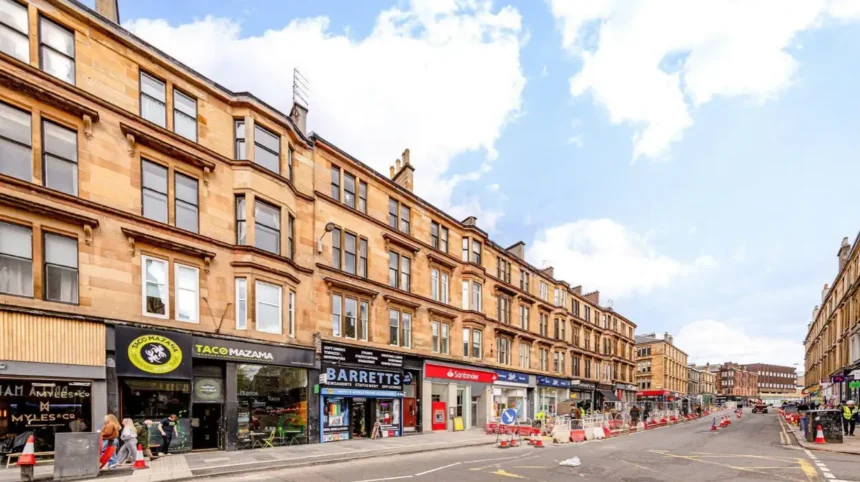
Glasgow’s strongest residential choices for young professionals include the West End, Finnieston, Partick, Dennistoun, Merchant City, Shawlands and Strathbungo. Each area combines housing, transport, employment access and local amenities in different proportions.
The West End is centred around neighbourhoods including Hillhead, Kelvinbridge, Woodlands and Partick. It has strong links to the University of Glasgow, extensive retail and hospitality facilities, parks and Subway stations.
Finnieston sits between the city centre and West End. Its location supports access to offices, hospitality businesses, cultural venues and the Clyde waterfront.
Partick is one of Glasgow’s strongest transport locations. Partick has a Subway station, railway station and bus station, providing connections across the city and wider region. SPT identifies Partick as a key interchange with rail and bus facilities alongside its Subway station.
Dennistoun lies immediately east of the city centre. Its location provides relatively direct access to central employment areas and connects with the wider East End.
Merchant City offers city-centre living close to offices, retail, restaurants, cultural venues and transport connections.
Shawlands and Strathbungo provide Southside living with independent businesses, restaurants, community facilities and rail access through nearby stations.
These areas also differ considerably in housing stock. Glasgow contains Victorian and Edwardian tenements, modern apartments, traditional terraces and newer developments. The choice of property type affects space, maintenance requirements, energy performance and monthly housing costs.
Why is Glasgow attractive to young professionals?
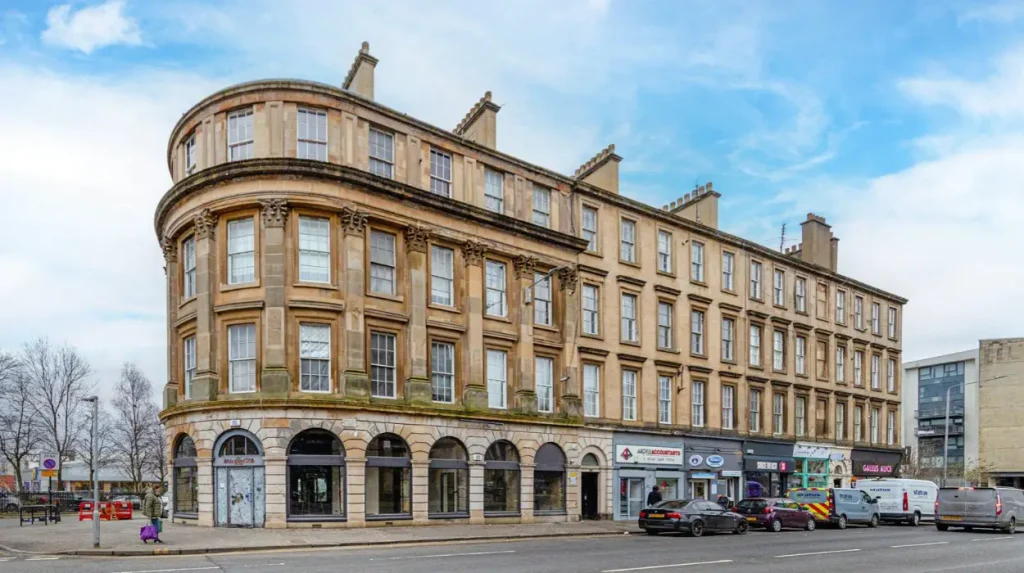
Glasgow attracts young professionals because it combines a large employment base, major universities, extensive public transport, diverse housing and a substantial cultural economy within a compact urban area. The city also has continuing investment in housing, regeneration, transport and economic development.
Glasgow has a diversified economy covering financial and business services, technology, healthcare, education, engineering, creative industries, retail, tourism and hospitality.
The city’s technology ecosystem has also expanded. A Scottish Government statement in 2025 reported that more than 400 founders from over 300 startups were engaged with Scotland’s Techscaler programme in the Glasgow region. The programme focuses on entrepreneurship, technology businesses, mentoring, networking and access to workspace.
Education is another major part of Glasgow’s professional ecosystem. The city hosts institutions including the University of Glasgow, University of Strathclyde, Glasgow Caledonian University and Glasgow School of Art. These institutions support research, professional education and graduate employment.
Transport is particularly important for professionals who work across different parts of the city. Glasgow Subway operates a 10-mile circular network with 15 stations across the West End, city centre and south-western districts. Stations include Hillhead, Kelvinbridge, Partick, Buchanan Street and St Enoch.
Glasgow also has extensive rail connections. Central and Queen Street stations provide national and regional services, while suburban stations connect districts such as Partick, Shawlands, Pollokshields, Dalmarnock and Hyndland with other parts of the urban area.
The combination of rail, Subway and bus services allows residents to consider housing based on commuting corridors rather than simply distance from the city centre.
Is Glasgow West End a good place for young professionals?
Glasgow’s West End is a major residential and employment-adjacent district with strong public transport, university access, cultural facilities, restaurants, green spaces and established tenement housing. Hillhead, Kelvinbridge, Woodlands and Partick provide different versions of West End living.
The West End is closely associated with the University of Glasgow and the cultural institutions surrounding Kelvingrove Park and Kelvin Grove.
Hillhead is centred around Byres Road and Great Western Road. It has shops, cafés, restaurants, services and Subway access through Hillhead station.
Kelvinbridge provides access to the River Kelvin, Great Western Road and the Subway. Its position is useful for residents travelling between the West End and central Glasgow.
Woodlands sits closer to the city centre and Great Western Road. Its housing stock includes substantial traditional tenement properties.
Partick provides a different West End experience. It has stronger transport infrastructure than many nearby neighbourhoods, with Subway, rail and bus connections.
SPT’s official station information confirms that Partick Subway is close to Partick Rail Station and Partick Bus Station. The station also provides access towards the Riverside Museum and other West End destinations.
Housing in the West End frequently consists of traditional tenements. These properties often have high ceilings, large windows and substantial internal rooms. Building condition varies by individual property and factor arrangements.
Young professionals considering the West End should therefore examine the specific building rather than judging an entire neighbourhood from its reputation.
Factors include communal stair maintenance, roof condition, window standards, heating systems, energy performance, factoring arrangements and planned repairs.
The West End also provides access to Kelvingrove Park, the University of Glasgow campus, Glasgow Botanic Gardens and the Kelvin walkway network.
Is Finnieston a good place to live in Glasgow?
Finnieston is well positioned between Glasgow city centre and the West End, making it useful for professionals who want short urban journeys and access to restaurants, cultural venues, offices, the Clyde waterfront and nearby transport connections. Housing includes traditional flats and newer apartments.
Finnieston developed historically around industrial and commercial activity associated with the River Clyde and nearby transport infrastructure.
The neighbourhood has experienced substantial urban change. Former industrial areas have been incorporated into a wider central-west urban environment containing residential buildings, hospitality businesses, offices and cultural venues.
Its position is a major practical advantage. Finnieston sits close to the city centre while remaining connected to the West End.
Nearby landmarks include the SEC, the OVO Hydro, the SEC Armadillo, Kelvingrove Park and the Clyde waterfront.
The area suits professionals working in central Glasgow, the financial district, media, events, hospitality, technology and professional services.
Finnieston housing includes traditional tenement flats alongside newer apartment developments. New-build properties often provide different layouts, building management arrangements and energy standards from traditional tenements.
The neighbourhood is also connected to wider transport options through nearby Exhibition Centre rail services, Anderston and Partick.
The main distinction is urban character. Finnieston is more central and commercially active than residential areas further west. Residents should therefore assess individual streets and buildings when comparing properties.
Why do young professionals choose Partick?
Partick attracts young professionals through its exceptional transport connectivity, West End location, established housing, retail facilities and access to employment and education. Its Subway, rail and bus interchange connects residents with Glasgow city centre, the West End and wider destinations across the region.
Partick is one of the most strategically located residential districts in Glasgow.
Its transport interchange is central to its appeal. SPT lists Partick among the 15 Subway stations and confirms its proximity to Partick Rail Station and Partick Bus Station.
The railway station provides access to routes serving western Glasgow and destinations beyond the city.
The Subway connects Partick with Hillhead, Kelvinbridge, St George’s Cross, Cowcaddens, Buchanan Street and St Enoch.
Partick also has a substantial commercial centre. Dumbarton Road and surrounding streets provide shops, supermarkets, cafés, restaurants and everyday services.
Housing includes traditional tenements, flats and modern residential developments. The area therefore provides different property formats within a relatively compact district.
Partick is particularly relevant for professionals with changing work locations. A resident working in the city centre can use the Subway. Someone working in the West End can travel in the opposite direction. Rail connections also support commuting outside Glasgow.
The nearby Riverside Museum and Clyde waterfront add recreational opportunities. Kelvingrove Park and the wider West End are also within practical reach.
The area has experienced continuing infrastructure and neighbourhood investment. Glasgow City Council continues to operate planning and improvement programmes covering Partick East/Kelvindale and surrounding districts.
Is Dennistoun one of the best areas for young professionals?
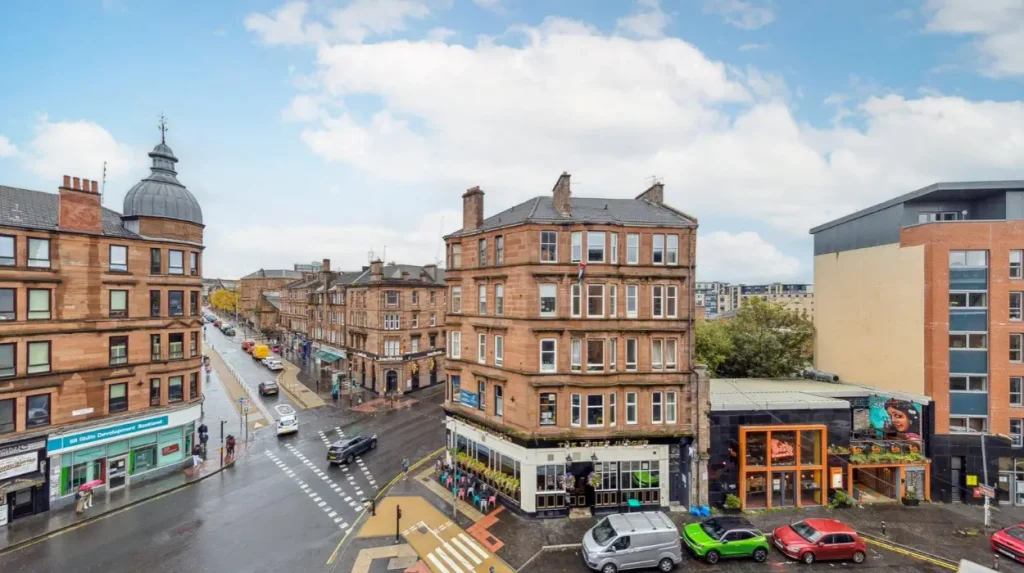
Dennistoun provides a central-east location with traditional tenement housing, local businesses, restaurants, community facilities and convenient access to Glasgow city centre. Its position makes it relevant for professionals seeking an inner-city neighbourhood outside the immediate city-centre core.
Dennistoun is located east of Glasgow city centre and forms part of the wider Inner East area.
Glasgow City Council identifies Dennistoun within its Inner East Strategic Development Framework alongside neighbourhoods such as Calton, Gallowgate, Haghill, Dalmarnock, Parkhead and Shettleston.
The neighbourhood contains substantial traditional tenement housing. Its streets connect directly with the city centre through routes including Duke Street and Alexandra Parade.
Dennistoun also benefits from proximity to Glasgow Cathedral, Glasgow Necropolis and the city’s historic eastern districts.
For young professionals, the location is particularly relevant to employment in central Glasgow. Walking, cycling and public transport provide several options for reaching the city centre.
The wider Inner East is undergoing regeneration. Glasgow City Council’s housing investment plans identify multiple projects in the area. One programme includes Calton Village, with 254 new affordable homes planned, while the broader Meat Market regeneration is associated with more than 500 affordable and energy-efficient homes.
Regeneration changes the housing and public-realm context over time. Professionals considering the area should therefore distinguish between established housing and newly developed schemes.
Dennistoun also benefits from active local governance. Glasgow City Council’s Dennistoun Area Partnership continues to consider neighbourhood infrastructure, community projects and local improvement activity.
Is Merchant City suitable for young professionals?
Merchant City suits professionals who prioritise city-centre living, short journeys to offices, restaurants, cultural venues and public transport. Its housing includes converted historic buildings, modern apartments and city-centre developments, creating a different residential environment from Glasgow’s traditional suburban neighbourhoods.
Merchant City forms part of central Glasgow and sits close to major employment, retail and cultural destinations.
Its streets include historic buildings associated with Glasgow’s commercial development. The neighbourhood has evolved into a mixed residential, retail, hospitality and cultural district.
Living in Merchant City reduces the need for long daily commutes for professionals working in central offices.
Buchanan Street, George Square, Glasgow Central Station, Queen Street Station and St Enoch are all within the broader central transport network.
SPT’s Subway network includes Buchanan Street and St Enoch stations. The network operates as an Inner and Outer Circle, with every train stopping at each station.
Housing differs significantly from areas such as Dennistoun or Shawlands. Merchant City contains apartments in converted commercial buildings, modern residential developments and historic properties.
Professionals should consider noise levels, communal management, parking availability and service charges when assessing city-centre apartments.
The area also supports access to Glasgow’s cultural economy. The nearby city centre contains theatres, galleries, music venues, restaurants, retail districts and public spaces.
Merchant City therefore works particularly well for professionals who prioritise proximity to central employment and urban amenities.
Are Shawlands and Strathbungo good areas for young professionals?
Shawlands and Strathbungo provide Southside alternatives to the city centre and West End, with established housing, independent businesses, restaurants, parks and rail connections. Their residential character suits professionals who want neighbourhood facilities while remaining connected to central Glasgow.
Shawlands and Strathbungo form part of Glasgow’s Southside and sit close to Pollokshields, Battlefield, Langside and Queen’s Park.
The area has extensive Victorian and Edwardian housing. Traditional tenements are common, alongside converted villas, terraces and newer residential properties.
Shawlands functions as a major local commercial centre. It has supermarkets, independent shops, cafés, restaurants and professional services.
Strathbungo has a strong residential identity around Pollokshaws Road and surrounding streets. Its location provides access to local businesses and nearby green spaces.
Rail services provide an important commuting option. Glasgow’s suburban rail network includes Shawlands and nearby stations such as Pollokshields East, Crosshill and Langside. SPT’s regional network map shows these stations within the wider Glasgow rail system.
Queen’s Park provides a significant green space nearby. The Southside also provides straightforward routes towards the city centre.
The neighbourhoods are therefore suitable for professionals who want a balance between urban access and a more residential setting.
Glasgow City Council’s neighbourhood data identifies Shawlands/Strathbungo as a defined neighbourhood area and also identifies nearby Langside/Battlefield and King’s Park/Mount Florida.
This local geography matters when comparing properties. A home advertised as being in “Shawlands” can sit closer to neighbouring districts than the commercial centre itself.
How should young professionals compare Glasgow neighbourhoods?
Young professionals should compare Glasgow neighbourhoods using commuting time, housing condition, transport access, local facilities, property costs, green space and future development. The same city-wide budget can produce very different housing choices depending on location and property type.
Commuting time should be the first practical measure. A neighbourhood close to a direct rail or Subway route can reduce daily travel even when it appears farther from an employer on a map.
Housing condition should be assessed separately from neighbourhood reputation. Glasgow’s traditional tenements vary substantially by building. A renovated flat and a property requiring major communal repairs represent different housing propositions.
Transport access should include more than the nearest station. Professionals should examine the number of routes available, service frequency, interchange requirements and late-evening options.
Local facilities also matter. Grocery shops, pharmacies, gyms, cafés, restaurants and green spaces affect everyday convenience.
Green space is particularly relevant for residents who want outdoor activity without leaving the city. The West End has Kelvingrove Park and the Botanic Gardens, while the Southside provides Queen’s Park and other public spaces.
Property type is another important consideration. Modern apartments often have lifts, controlled entrances and communal management. Traditional tenements can offer larger rooms and distinctive architectural features but require careful inspection of communal maintenance.
Future development should also form part of a long-term assessment. Glasgow City Council continues to operate strategic development and housing programmes across the city, including the Inner East and Govan-Partick areas.
A neighbourhood’s future transport, housing and public-realm projects can affect its long-term character.
Which Glasgow areas suit different professional lifestyles?
Different Glasgow neighbourhoods suit different professional routines. West End areas support university-linked and cultural lifestyles, Finnieston supports central-west employment, Dennistoun supports inner-east commuting, Merchant City supports city-centre workers, and Shawlands supports Southside residents seeking neighbourhood facilities.
Professionals working near Glasgow city centre can consider Merchant City, Dennistoun, Finnieston and central residential districts.
Professionals connected with the University of Glasgow and West End institutions can consider Hillhead, Kelvinbridge, Woodlands and Partick.
Professionals working around the SEC and Clyde waterfront can consider Finnieston, Partick and nearby central-west neighbourhoods.
Professionals seeking a Southside location can consider Shawlands, Strathbungo, Pollokshields and neighbouring areas.
Professionals seeking rail connectivity should examine Partick, Hyndland, Shawlands, Pollokshields and other districts on established suburban rail corridors.
Professionals seeking city-centre walking access can examine Merchant City and nearby central neighbourhoods.
Professionals seeking ongoing regeneration can examine parts of the Inner East, where Glasgow City Council has identified substantial housing and development activity.
These categories describe location characteristics rather than fixed rankings. Individual streets differ in housing quality, noise, transport access and local facilities.
The right area therefore depends on the relationship between employment location and daily routine.
How is Glasgow’s housing and neighbourhood landscape changing?
Glasgow’s residential landscape is changing through population growth, new housing, regeneration and investment in established neighbourhoods. The city’s population reached 654,330 in mid-2025, while council housing programmes continue to support additional affordable homes and neighbourhood improvements.
Glasgow’s population has increased over recent years. National Records of Scotland recorded 654,330 residents in mid-2025, up from 650,320 in 2024.
The longer-term population projection is also significant. NRS projects Glasgow City’s population to increase from 622,050 in 2022 to 690,161 in 2032 under the 2022-based projection.
Population change creates continuing demand for housing, transport, employment and local services.
Glasgow City Council has also maintained a major affordable housing investment programme. Council documentation states that £469.71 million was planned between 2021 and 2026 to support an additional 4,400 affordable homes.
Regeneration is geographically distributed. The Inner East includes Dalmarnock, Calton, Gallowgate, Haghill, Parkhead and other neighbourhoods. The Govan-Partick area also has strategic development activity connected with the River Clyde.
For young professionals, this means Glasgow’s residential market is not static. Existing tenement districts continue to coexist with new apartment developments and regeneration schemes.
Long-term residents and new arrivals therefore encounter different housing environments within relatively short distances.
Explore More Area Guide
Govanhill Named Among World’s Coolest Neighbourhoods in Glasgow 2026
Central Nepal Floods and Flash Floods Explained: Nepal 2026
What should young professionals check before renting or buying in Glasgow?
Before renting or buying in Glasgow, young professionals should check the exact property, transport route, building condition, council tax, energy performance, communal charges, local facilities and planned development. Neighbourhood reputation alone does not provide enough information for a housing decision.
The first check should be the exact address rather than only the neighbourhood name.
For rented accommodation, prospective tenants should examine the tenancy terms, deposit arrangements, repair responsibilities, energy costs and property condition.
For buyers, the assessment should include the building’s condition, communal maintenance, factoring arrangements, title information, survey findings and expected repair costs.
Traditional tenements require particular attention to communal structures. Roofs, staircases, stonework, windows and shared services affect multiple properties within the same building.
Transport should be checked at the time of day when commuting occurs. A route that appears short during the daytime can have different practical characteristics outside peak hours.
Council tax and household costs should also be included in the monthly housing calculation.
Energy performance is increasingly important. Heating type, insulation, glazing and building construction influence running costs.
Prospective residents should also check planning and regeneration information. Glasgow City Council publishes strategic development and housing information covering multiple neighbourhoods.
The final assessment should consider the complete daily routine. A slightly smaller property close to work and public transport produces a different living pattern from a larger property requiring a longer commute.
What is the long-term relevance of Glasgow’s best areas for young professionals?
Glasgow’s strongest professional neighbourhoods are likely to remain closely connected to employment centres, transport corridors, universities, cultural districts and regeneration areas. Population growth and housing investment will continue shaping where professionals live and how neighbourhoods develop.
Glasgow has a large and growing urban population. Its 2025 population was the highest among Scotland’s 32 council areas.
The city also has a broad employment and education base. Technology, professional services, healthcare, education, finance, culture and hospitality create demand across several employment districts.
Transport remains central to residential choice. Glasgow Subway provides a 15-station circular network linking the West End, city centre and south-western districts.
Rail expands this network into the wider metropolitan area. This allows professionals to consider locations beyond the immediate city centre while maintaining access to employment hubs.
Regeneration will also shape housing supply. Glasgow City Council’s Inner East plans include new affordable homes and wider neighbourhood development, while Govan-Partick continues to feature in strategic development activity.
The practical lesson is straightforward. Young professionals choosing where to live in Glasgow should assess location, transport, housing quality, employment access and neighbourhood facilities together.
The West End, Finnieston, Partick, Dennistoun, Merchant City, Shawlands and Strathbungo each provide different combinations of these factors. Comparing the exact property and commuting route gives a more accurate picture than relying on a generalised city-wide ranking.
What are the best areas to live in Glasgow for young professionals?
Glasgow’s popular areas for young professionals include the West End, Finnieston, Partick, Dennistoun, Merchant City, Shawlands and Strathbungo. Each area offers different combinations of transport, housing, employment access, restaurants, green spaces and local amenities.