
Key Points
- Blank Street Coffee faced a major planning setback after Glasgow City Council refused an application for a Certificate of Lawfulness regarding a proposed new branch on Buchanan Street, one of the city’s busiest shopping thoroughfares.
- The application, submitted for unit 164A Buchanan Street—formerly operating as a Dune footwear shop—sought a change of use confirmation.
- Glasgow City Council officials stated in their decision notice that the evidence submitted indicated the proposed use or operation would not be lawful under a certificate, meaning a formal planning application is required.
- The local authority clarified that the decision does not permanently block a café from opening at the site, provided the applicant submits a full planning application for the change of use.
- Under current Scottish planning legislation, the applicant holds the legal right to appeal the decision directly to Scottish Ministers within a three-month window from the date of the refusal notice.
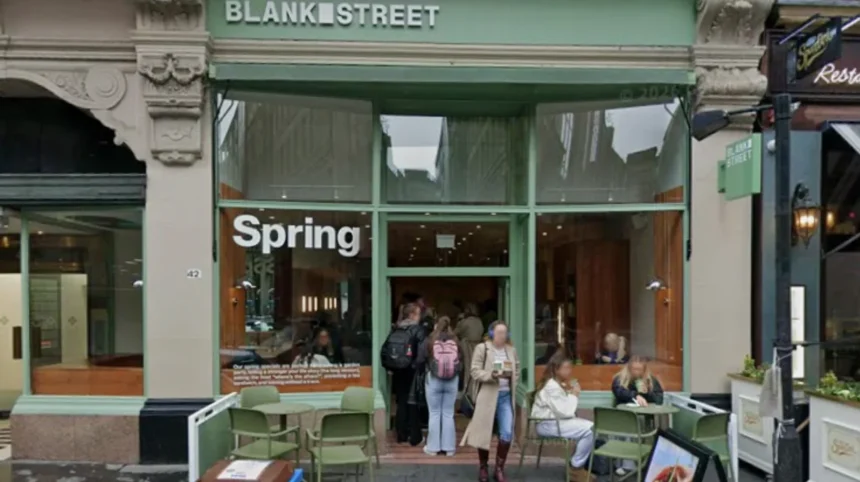
- The American-founded chain, widely known for its specialty coffee and signature matcha drinks that have gained massive popularity among younger demographics via social media platforms like TikTok, has previously established successful venues in Glasgow on Gordon Street and Byres Road.
Glasgow (Glasgow Express) September 29, 2026 — Expansion plans for popular US-origin coffee chain Blank Street Coffee on one of Glasgow’s premier shopping thoroughfares have encountered a significant regulatory hurdle after local civic authorities formally rejected a key application.
As reported by staff journalists covering local civic developments for the Glasgow Times, Glasgow City Council officially refused an application for a Certificate of Lawfulness relating to a proposed change of use at 164A Buchanan Street. The prominent city centre retail unit was previously occupied by footwear retailer Dune before the coffee chain set its sights on the location for its growing Scottish portfolio.
Detailing the rationale behind the local authority’s decision, the official council decision notice explicitly stated:
“The evidence submitted to the planning authority indicates that the proposed use or operation would not be lawful. Therefore, a planning application is required.”
Consequently, the administrative shortcut sought via the Certificate of Lawfulness pathway was dismissed.
What Are the Implications of the Council’s Decision for the Proposed Buchanan Street Branch?
While the refusal serves as an immediate procedural roadblock for the fast-growing beverage brand, municipal authorities noted that the ruling does not fundamentally bar a food and drink establishment from eventually occupying the site.
As outlined in planning guidance documents, the rejection means that the applicant cannot bypass standard scrutiny. Instead, the company must now undertake the more rigorous process of submitting a full, formal planning application for the proposed change of use. Furthermore, statutory provisions under Scottish planning legislation afford the applicant the legal recourse to lodge an appeal against the local authority’s decision with Scottish Ministers, provided any such challenge is initiated within three months of the official refusal notice date.
How Does This Development Fit Into Blank Street’s Broader Expansion Strategy in Scotland?
The setback on Buchanan Street arrives amidst an aggressive retail rollout by the brand across Scotland’s largest city. Blank Street Coffee first entered the Glasgow market to considerable public fanfare, drawing substantial queues of customers to its initial branch on Gordon Street, followed swiftly by a second location situated at 259 Byres Road in the city’s West End.
The chain, distinguished by its minimalist aesthetic and viral social media marketing centered around matcha beverages and specialty coffee offerings, has quickly built a robust consumer base among students and younger demographics. Securing a flagship footprint on Buchanan Street—widely regarded as Glasgow’s “Style Mile” and one of the busiest retail environments in the United Kingdom—represented a logical next step in cementing its commercial presence in the region. However, navigating local planning parameters continues to prove complex as the brand seeks to cement its physical footprint in high-density urban zones.
Background of the Particular Development
The application concerning 164A Buchanan Street represents the latest chapter in Blank Street Coffee’s rapid UK expansion outside of its initial London stronghold. Local municipal planning frameworks across Glasgow require strict adherence to designated use classes, particularly within prime retail zones where maintaining a balance between retail shops and food and drink establishments is closely monitored by planners. A Certificate of Lawfulness is typically deployed by applicants to ascertain whether a proposed commercial use is legally permissible without requiring a full structural or change-of-use planning consent. Because the council determined that the evidence failed to satisfy these specific legal thresholds for a certificate, the coffee chain must navigate the traditional, comprehensive planning application route if it wishes to proceed at the Buchanan Street address.
Prediction
For local consumers, commercial real estate observers, and regular patrons in Glasgow, this regulatory delay means that the opening of a third Blank Street location on Buchanan Street will likely face a postponed timeline while the company addresses the council’s planning requirements. For the brand itself, the setback underscores the bureaucratic realities of expanding across historic British high streets, requiring closer alignment with local municipal guidelines. Should Blank Street submit a full planning application or pursue an appeal, the outcome will set an important precedent for how fast-casual beverage chains integrate into prime Scottish retail corridors, directly impacting foot traffic, local high street competition, and retail leasing dynamics in Glasgow city centre.