Glasgow has a strong network of public parks and green spaces that support running, cycling and dog walking across the city. The best locations differ by activity. Pollok Country Park provides extensive paths and woodland, Glasgow Green offers central open routes, Kelvingrove Park combines urban access with established paths, and Bellahouston Park provides large open areas and dedicated recreation facilities.
- Which Glasgow parks are best for running?
- Which Glasgow parks are best for cycling?
- Which Glasgow parks are best for dog walking?
- What makes Pollok Country Park one of Glasgow’s best all-round activity parks?
- Why is Glasgow Green important for running and cycling?
- Which Glasgow parks are best for combining different activities?
- How should cyclists and runners share Glasgow park paths?
- What are the dog-walking rules in Glasgow parks?
- Which parks are best for longer outdoor sessions around Glasgow?
- How does Glasgow’s park network support public health and active travel?
- Which Glasgow park should you choose for running, cycling or dog walking?
Scotland’s public-access framework also makes Glasgow’s parks part of a wider culture of responsible outdoor recreation. The Land Reform (Scotland) Act 2003 established rights of responsible access to most land and inland water, while the Scottish Outdoor Access Code explains how walkers, cyclists and dog owners should share outdoor spaces.
Glasgow Life also supports outdoor activity through its Good Move programme. Its Health Walk network has more than 50 walks each week across Glasgow, demonstrating the importance of parks and green spaces in the city’s everyday physical activity infrastructure.
Which Glasgow parks are best for running?
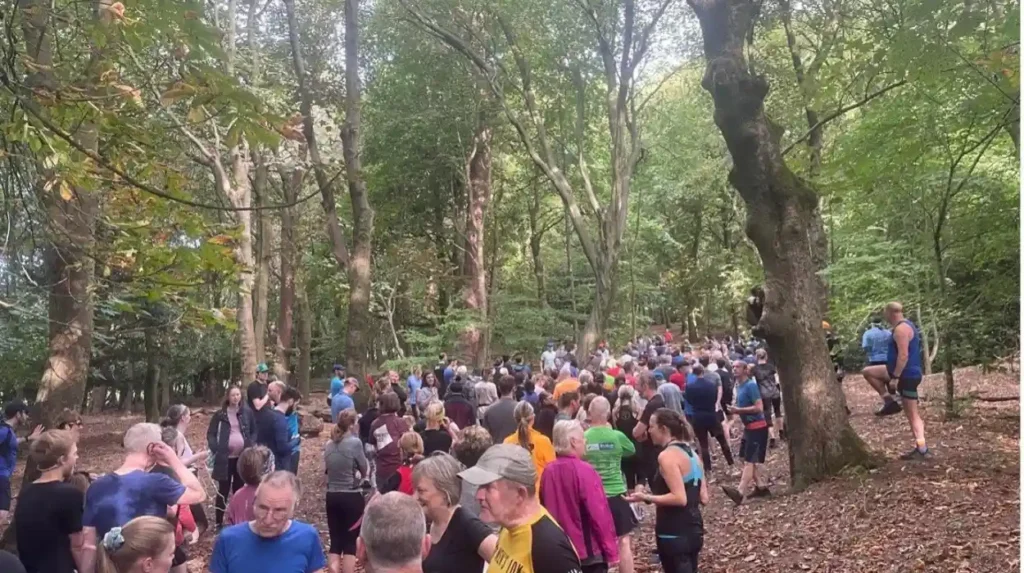
Pollok Country Park, Glasgow Green, Kelvingrove Park, Bellahouston Park and Queen’s Park provide strong running environments because they combine accessible paths, open areas and established recreational routes within different parts of Glasgow.
Running in Glasgow parks ranges from short urban sessions to longer mixed-surface routes. The most suitable park depends on distance, terrain, access and the amount of shared pedestrian and cycling traffic.
Pollok Country Park
Pollok Country Park is the strongest choice for runners seeking a larger landscape. The park covers 360 acres and is Glasgow’s largest city park and only designated Country Park. It was donated to Glasgow in 1966 by the Maxwell family.
Its woodland, open parkland, river corridors and established routes provide varied terrain. The park also contains Pollok House and The Burrell Collection, creating several identifiable points for route planning.
Glasgow Life has improved pedestrian and cycling arrangements around the main Pollokshaws Road entrance. Pedestrians and cyclists receive priority on important park routes, including Pollok Avenue, following restrictions on car movement through the park.
Glasgow Green
Glasgow Green is particularly suitable for runners who want a central location. It occupies 136 acres beside the River Clyde and is the oldest park in Glasgow. Glasgow Heritage Trust records its origins in 1450, when King James II granted 56 acres to Bishop William Turnbull and the people of Glasgow. The park reached its current 136-acre size in 1792.
Its historical importance does not prevent it from functioning as an active recreational space. The open layout supports walking, jogging, informal exercise and cycling.
The park also connects with the wider riverside environment. Cyclists can use nearby routes forming part of Glasgow’s active-travel network.
Kelvingrove Park
Kelvingrove Park is useful for shorter urban runs in Glasgow’s West End. Historic Environment Scotland records that development began around 1852, after Glasgow Town Council acquired land associated with Kelvingrove House and Woodlands. The original public parkland covered about 66 acres.
The park contains established paths, mature trees, open lawns and the River Kelvin corridor. Its location near the University of Glasgow, Finnieston and the West End makes it convenient for residents and visitors.
Kelvingrove also demonstrates why route choice matters. It is a busy urban park with pedestrians, cyclists, events and recreational users. Runners should maintain awareness on shared paths.
Bellahouston Park
Bellahouston Park covers 169 acres and provides extensive open parkland alongside formal gardens and sports facilities. Glasgow City Council procurement documentation records its area as 68.4 hectares, equivalent to 169 acres.
Its scale makes it useful for combining running with other outdoor activities. The park includes sports areas, an outdoor cycle track and open grassland. It also contains House for an Art Lover, designed from Charles Rennie Mackintosh’s 1901 plans.
Queen’s Park
Queen’s Park provides a Southside running option with established paths and open areas. Glasgow City Council research on park lighting found that 85% of respondents associated additional lighting with safer walking through Queen’s Park, while 79% associated it with safer cycling.
The findings demonstrate the importance of infrastructure and visibility for evening recreation. Runners should still follow current park signage and use routes appropriate to conditions.
Which Glasgow parks are best for cycling?
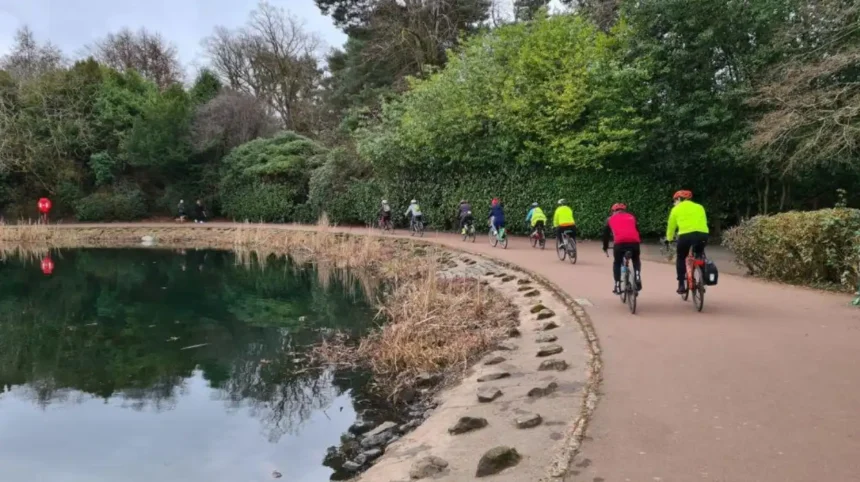
Pollok Country Park, Glasgow Green, Bellahouston Park and routes around the city’s larger green spaces provide the strongest cycling opportunities, with Pollok offering particularly useful connections to National Cycle Network Routes 7 and 75.
Cycling in Glasgow parks works differently from road cycling. Park routes typically combine pedestrians, cyclists and other recreational users. Riders need to control speed and give priority where paths are narrow or heavily used.
Pollok Country Park and National Cycle Network routes
Pollok Country Park is one of Glasgow’s most useful park-based cycling locations. Glasgow Life confirms that National Cycle Network Routes 7 and 75 run through the park. The park is also accessible by local cycle links and nearby rail and bus connections.
This network connection gives Pollok an advantage for cyclists who want a park ride connected to a wider journey.
Glasgow Life has also introduced improved separation between pedestrians, cyclists and vehicles at the main entrance. The changes prioritise active travel on key internal routes.
Glasgow Green
Glasgow Green provides a practical starting point for urban cycling. Its East End location connects with central Glasgow and the River Clyde corridor.
A Glasgow City Council community programme in 2025 specifically used cycling sessions through Glasgow Green and along the River Clyde with a qualified instructor.
The park therefore works both as a recreational cycling destination and as part of wider active-travel journeys.
Bellahouston Park
Bellahouston Park includes an outdoor cycle track, making it particularly relevant for cycling-focused visitors. Its 169-acre footprint also provides open areas for combining cycling with walking and other recreation.
Cyclists should distinguish between a dedicated or purpose-built cycle facility and ordinary shared paths. Dedicated cycling facilities allow more structured riding, while shared routes require slower speeds and greater awareness.
Victoria Park
Victoria Park in Glasgow’s West End covers 20 hectares, or 50 acres. It was acquired by the former Burgh of Partick and named for Queen Victoria’s Golden Jubilee in 1887.
Its broad parkland and established paths make it useful for recreational cycling. The park also contains the Fossil Grove, a major geological attraction, adding an educational dimension to a cycling visit.
Which Glasgow parks are best for dog walking?
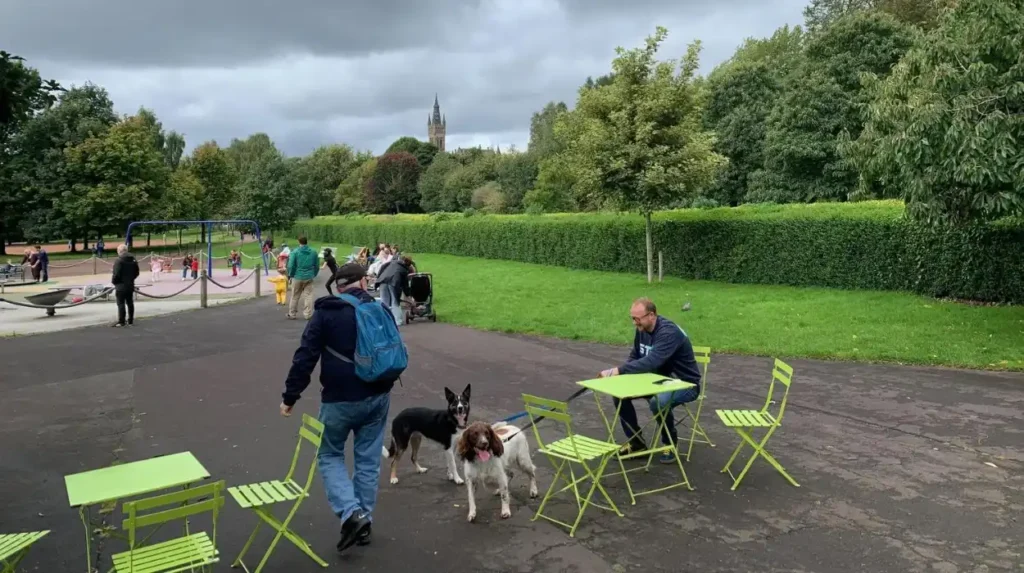
Pollok Country Park, Bellahouston Park, Glasgow Green, Kelvingrove Park and larger peripheral green spaces provide dog-walking opportunities, but owners must keep dogs under proper control, respect wildlife and clean up dog waste.
Dog walking in Glasgow is governed by both local park management and Scotland’s wider responsible-access framework. The Scottish Outdoor Access Code states that dog walking is permitted under responsible access rights, with owners required to keep dogs under proper control.
Pollok Country Park
Pollok Country Park provides one of the most extensive settings for dog walking within Glasgow. Its 360 acres include woodland, open land, riverside environments and established paths.
The variety of habitats makes responsible dog control particularly important. The park contains Highland cattle, and dog owners must prevent dogs from approaching livestock or disturbing wildlife.
The Scottish Outdoor Access Code specifically advises owners to keep dogs in sight and under control and to use a lead when necessary.
Bellahouston Park
Bellahouston Park is another significant option because of its 169-acre footprint and mixture of open parkland and formal landscapes. It also has a designated dog area, providing a defined space for dog activity.
Dog owners should follow local signage because designated areas and event arrangements can change.
Glasgow Green
Glasgow Green supports dog walking in a highly central environment. Its large open landscape and River Clyde setting provide several walking opportunities.
Because the park also accommodates cyclists, runners, families and events, owners should keep dogs close enough to maintain effective control around shared routes.
Kelvingrove Park
Kelvingrove Park provides convenient dog-walking access for West End residents and visitors. Its mature landscape and River Kelvin setting create an established urban green-space environment.
The park has also experienced concerns around dog fouling and interactions between different park users. Glasgow City Council consultation material specifically recorded dog fouling and concerns about dogs in child-friendly areas.
These issues reinforce the importance of following signage and keeping dogs under control.
What makes Pollok Country Park one of Glasgow’s best all-round activity parks?
Pollok Country Park stands out because its 360 acres combine woodland, open parkland, riverside routes, cycling connections, cultural attractions and wildlife, creating a large multi-use environment for running, cycling and responsible dog walking.
Pollok Country Park has a different scale from central Glasgow parks. Its 360 acres provide substantially more space for route variation. The Burrell Collection sits at the heart of the park, while Pollok House provides another major destination.
The park was donated to Glasgow in 1966 by the Maxwell family. Its historical landscape includes the Maxwell family’s long association with Pollok House and the surrounding estate.
For runners, the park offers longer routes and changing terrain. For cyclists, National Cycle Network Routes 7 and 75 provide strategic connections. For dog walkers, woodland and open spaces create varied walking environments.
The park also demonstrates how transport management influences outdoor recreation. Glasgow Life states that pedestrian and cycling access has been improved through changes to vehicle movement and route surfacing.
Why is Glasgow Green important for running and cycling?
Glasgow Green combines a 136-acre riverside landscape with central accessibility and centuries of public use, making it one of Glasgow’s most practical parks for running, recreational cycling, walking and everyday outdoor exercise.
Glasgow Green has a distinctive historical position in the city’s park system. Glasgow Heritage Trust identifies it as the oldest park in Glasgow, with origins dating to 1450.
The original grant covered 56 acres. Expansion increased the park to 136 acres by 1792. Unlike formal ornamental parks, Glasgow Green developed as a practical communal space.
Its relationship with the River Clyde also influences its recreational role. The surrounding riverside network supports walking and cycling connections beyond the park boundary.
Glasgow Green has also hosted major public events, which means temporary route restrictions can occur. Cyclists and runners should check current event information before planning a time-sensitive visit.
Which Glasgow parks are best for combining different activities?
Pollok Country Park is strongest for combining running, cycling and dog walking, while Bellahouston Park, Glasgow Green, Kelvingrove Park and Victoria Park provide practical alternatives based on location, route type and recreational facilities.
The best multi-use park depends on the activity combination.
Pollok is strongest for longer mixed recreation because of its 360-acre scale and National Cycle Network connections. Bellahouston is strong for sport-focused recreation because its 169 acres contain numerous sporting facilities and an outdoor cycle track.
Glasgow Green is strongest for central accessibility. Its position beside the Clyde makes it practical for city-centre residents and visitors.
Kelvingrove Park is strongest for West End access. Its historic landscape and urban location provide convenient access to green space without travelling to the city outskirts.
Victoria Park is useful for north-west Glasgow recreation, with 50 acres of parkland and established facilities.
How should cyclists and runners share Glasgow park paths?
Cyclists and runners should treat park routes as shared public spaces, maintain appropriate speeds, provide advance warning, give way on narrow paths and follow signs or instructions from park managers and the Scottish Outdoor Access Code.
The Scottish Outdoor Access Code specifically addresses cycling on shared paths. Cyclists should give other users advance warning, avoid endangering walkers and horse riders, and dismount where a narrow path is unsuitable for cycling.
This principle is important in Glasgow because popular parks serve several user groups simultaneously.
Runners should remain aware of cyclists approaching from behind. Cyclists should reduce speed when passing pedestrians. Both groups should avoid blocking narrow paths.
Events create another consideration. Glasgow parks frequently host cultural, sporting and community activities. Kelvingrove Park, for example, has hosted major events, including the 2026 WOMAD Glasgow programme. Glasgow City Council also recorded the park as the planned location for a UCI Cyclo-cross World Cup event in December 2026.
Temporary closures and diversions therefore form part of responsible route planning.
What are the dog-walking rules in Glasgow parks?
Dog owners should keep dogs under proper control, prevent dogs from disturbing people or wildlife, follow local signs, respect livestock restrictions and remove dog waste, reflecting the responsibilities established by the Scottish Outdoor Access Code.
The Scottish Outdoor Access Code is based on three principles: respect other people, care for the environment and take responsibility for personal actions.
Dog owners have additional responsibilities. NatureScot advises owners to keep dogs in sight and under control and to use a lead when necessary. Dogs should not approach people or animals without invitation.
Livestock requires particular attention. Pollok Country Park contains Highland cattle, so dog owners should maintain effective control around grazing animals.
Wildlife also requires protection. Dog owners should avoid disturbing animals and should take particular care during bird breeding periods.
Dog waste must be collected and disposed of correctly. NatureScot identifies dog waste as a potential source of disease affecting people, livestock and wildlife.
Which parks are best for longer outdoor sessions around Glasgow?
Pollok Country Park and the wider Seven Lochs area provide the strongest options for longer outdoor sessions because they offer extensive landscapes, connected paths, natural habitats and opportunities to extend a route beyond a compact urban park.
Pollok Country Park is the clearest city-boundary choice. Its 360 acres provide enough space for varied walking, running and cycling sessions without requiring immediate road travel.
The Seven Lochs Wetland Park provides a larger regional landscape. The park covers approximately 16 square kilometres and spans the Glasgow City Council and North Lanarkshire Council boundary. It was developed as a major urban nature park from the mid-2010s.
The Seven Lochs area differs from a conventional city park. It consists of a connected landscape containing wetlands, lochs, habitats and heritage sites.
Glasgow City Council continues to work with North Lanarkshire Council and other partners on the Seven Lochs project. Current work includes community greenspaces, cycling infrastructure and visitor activities.
For cyclists and runners seeking a more extensive outdoor environment, this connected landscape provides a useful alternative to compact central parks.
Explore More Area Guide
Best Outdoor Activities in Glasgow on Sunny Weekends 2026
Glasgow Parks and Green Spaces: Complete Guide 2026
How does Glasgow’s park network support public health and active travel?
Glasgow’s parks provide everyday spaces for walking, running, cycling and social activity, while programmes such as Glasgow Life Health Walks connect local green spaces with wider public-health and physical-activity initiatives across the city.
Glasgow Life operates more than 50 Health Walks each week across Glasgow. The walks generally last around one hour, are free and welcome different ability levels.
This network demonstrates that parks are not simply recreational attractions. They function as part of Glasgow’s physical-activity infrastructure.
Active travel also has strategic importance. Glasgow City Council has funded walking, cycling and safer-route programmes, while Scotland’s National Planning Framework 4 identifies the National Walking, Cycling and Wheeling Network as a national development.
The result is a broader connection between parks and everyday mobility. A park route can function as exercise space, a commuting link, a recreational destination or a connection between neighbourhoods.
Which Glasgow park should you choose for running, cycling or dog walking?
Choose Pollok Country Park for the widest all-round experience, Glasgow Green for central running and cycling, Bellahouston Park for sports-focused recreation, Kelvingrove Park for West End access, and Victoria Park for north-west Glasgow green-space access.
Pollok Country Park is the strongest all-round option because of its 360 acres, woodland environment and National Cycle Network connections.
Glasgow Green is the strongest central option. Its 136 acres, riverside setting and historical importance provide a practical urban running and cycling environment.
Bellahouston Park is the strongest choice for visitors prioritising sports facilities. Its 169 acres include open parkland and an outdoor cycle track.
Kelvingrove Park is particularly useful for West End residents and visitors who want an established historic park close to central attractions. Its development began in 1852, giving it more than 170 years of public-park history.
Victoria Park provides a smaller 50-acre option in the west of Glasgow, with formal landscapes and recreational facilities.
Rouken Glen Park is another useful option immediately outside Glasgow’s administrative boundary in East Renfrewshire. It covers 143 acres and contains woodland, walking and cycling routes, a boating pond and other recreation facilities.
For every park, current signage and local management instructions take priority. Users should also follow the Scottish Outdoor Access Code, particularly when cycling on shared paths or walking dogs around wildlife and livestock.
Glasgow’s parks therefore provide a broad outdoor recreation network rather than a single best destination. Pollok Country Park offers the greatest combination of scale and route variety, Glasgow Green provides central accessibility, Bellahouston delivers sports infrastructure, Kelvingrove serves the West End, and Victoria Park supports recreation in the north-west. Together, these spaces form an important part of Glasgow’s active-travel, leisure and public-health landscape.
Which is the best park in Glasgow for running?
Pollok Country Park is one of the best choices for running in Glasgow. Its 360-acre landscape provides woodland, open parkland, riverside paths and varied routes for different running distances.