The underground electronic music landscape in Glasgow functions as a highly structured, community-driven subculture. Gaining access to this ecosystem requires adherence to established nightlife practices, specific entry protocols, and a clear understanding of the city’s distinct inner-city venue geography.
- What Defines the Glasgow Underground Techno Scene?
- The Socio-Historical Foundations of Glasgow Electronic Music
- Core Characteristics of the Underground Subculture
- Where Are the Most Significant Venues Located in Glasgow?
- How Do You Secure Tickets and Find Event Schedules?
- What Entry Protocols and Door Policies Must Be Followed?
- Behavioral Requirements and Inclusivity Frameworks
- Physical Safety Inspections and Digital Restrictions
- How Does the Underground Nightlife Transport System Function?
- What Are the Community Expectations Regarding Dancefloor Etiquette?
What Defines the Glasgow Underground Techno Scene?
The Glasgow underground techno scene is an established electronic dance music subculture defined by small-capacity venues, high-fidelity sound systems, and strict community-enforced codes of conduct. Access relies entirely on verifying event scheduling, purchasing verified digital tickets, and maintaining inclusive dancefloor etiquette.
The Socio-Historical Foundations of Glasgow Electronic Music
The operational framework of contemporary electronic music spaces in Glasgow directly stems from the late-1980s acid house and rave movements (Morrison, 2014). Following structural socio-economic transformations in post-industrial Scotland, local music communities adapted vacant urban infrastructure into spaces for subcultural expression. Glasgow developed a distinct musical lineage heavily influenced by Detroit techno and Chicago house (MacKenzie, 2021). Rather than following the commercialized layouts of mega-clubs found in other European metropolitan centers, Glasgow nightlife consolidated around intimate, sub-surface spaces.
This historical evolution established a baseline architecture where the music and the collective experience take priority over commercial entertainment hospitality. A primary historical example is the Sub Club, which opened in April 1987 on Jamaica Street and remains one of the longest-running subterranean electronic music venues in the world (MacKenzie, 2021). The longevity of these spaces established specific cultural capital requirements for patrons, prioritizing respectful participation and deep musical knowledge over consumer spending power (Thornton, 1995).
Core Characteristics of the Underground Subculture
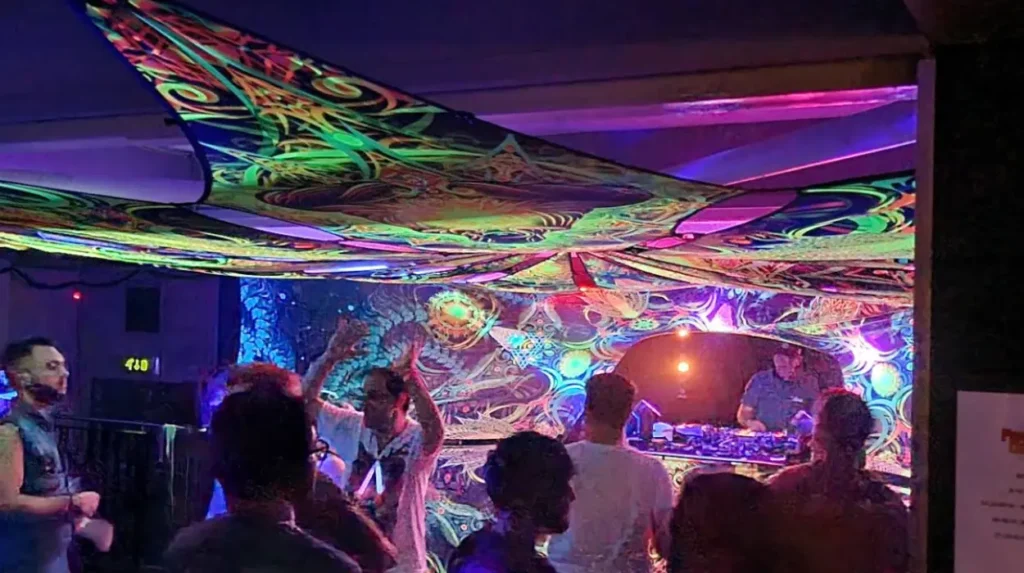
The modern underground infrastructure relies on three core tenets: architectural minimalism, sound quality maximization, and active community curation. Venues are structurally designed to minimize visual distractions, frequently utilizing low ceilings, dark acoustic paneling, and sparse lighting setups like strobe lights and monochromatic lasers. This design purposefully shifts the focus of the space onto the sound reinforcement system and the shared dancefloor experience.
Community curation manifests through specialized promotional groups, resident disc jockeys, and dedicated record stores. These entities act as gatekeepers, preserving the subculture against commercial oversaturation. The environment requires active, respectful participation rather than passive observation. This means patrons are expected to contribute to the energy of the room through dance and physical presence, rather than acting as detached consumers.
Where Are the Most Significant Venues Located in Glasgow?
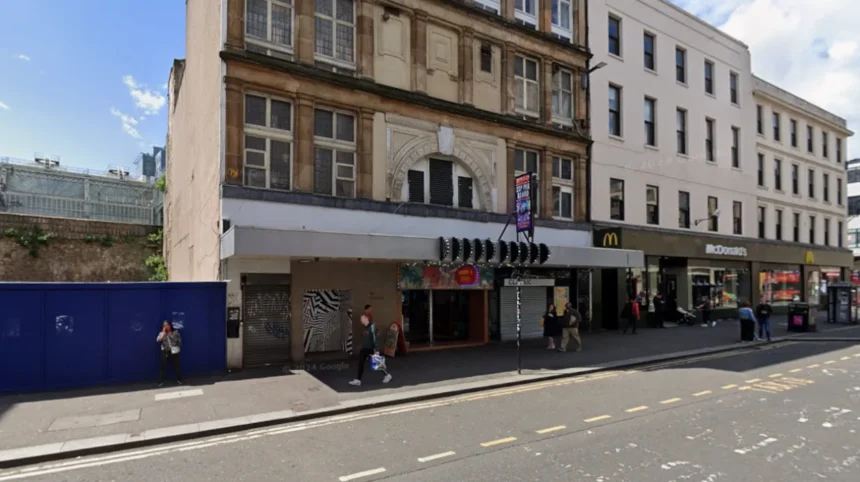
The primary venues comprising Glasgow’s underground techno infrastructure are concentrated within the city center and the immediate Southside and West End perimeters. These locations include Sub Club on Jamaica Street, The Berkeley Suite on North Street, and Stereo on Renfield Lane.
Sub Club: 22 Jamaica Street
Sub Club occupies a basement space on Jamaica Street within the city center. Operating since 1987, the venue is structurally characterized by its low-ceiling architecture and its specialized floor installation. It features one of the UK’s earliest integrations of a custom-installed body-sonic dancefloor, which uses subterranean bass transducers to transmit low-end frequencies directly through the feet of attendees.
The club hosts long-running resident nights and international touring artists. The space has a strict capacity limit of 415 persons, making advance entry planning essential. The programming primarily focuses on deep house, industrial techno, and experimental electronic music.
The Berkeley Suite: 237 North Street
Situated at Charing Cross on the western edge of the city center, The Berkeley Suite operates as a multi-level night venue with a distinct Art Deco interior aesthetic. The venue functions as an underground space beneath a traditional pawnshop facade, acting as a physical barrier between the outside world and the dancefloor.
The sound reinforcement system at The Berkeley Suite is tuned specifically for high-fidelity vinyl playback. The musical programming is highly eclectic, spanning leftfield techno, electro, EBM (Electronic Body Music), and post-punk electronics. It accommodates a capacity of approximately 300 individuals, emphasizing localized, intimate event structures.
Stereo: 22-28 Renfield Lane
Stereo operates within a building designed by renowned architect Charles Rennie Mackintosh in the central urban grid of Glasgow. The venue is structurally split: a vegan bar and kitchen occupy the upper level, while a dedicated, industrial brick basement serves as the club performance space.
The basement layout features a raw concrete aesthetic with exposed pillars and a modular stage setup. It serves as a crucial hub for the city’s avant-garde and experimental techno communities, frequently hosting live electronic acts, modular synthesizer sets, and underground label showcases. The venue handles a capacity of 300 patrons in the subterranean space.
How Do You Secure Tickets and Find Event Schedules?
Securing access to Glasgow techno events requires monitoring localized digital ticketing platforms and specialized event directories. Primary digital channels include Resident Advisor and Dice, supplemented by direct subscription newsletters from independent event promoters and local vinyl record shops.
Primary Digital Ticketing Platforms
The electronic music ecosystem in Glasgow relies almost exclusively on dedicated subcultural booking platforms rather than mainstream ticketing services. General consumers cannot reliably purchase entry through generic box offices.
- Resident Advisor (RA): This serves as the primary international architectural directory and ticketing infrastructure for electronic music in Glasgow. The platform lists weekly schedules, artist lineups, venue locations, and set times.
- Dice: This application utilizes mobile-only, secure ticketing delivery to eliminate secondary market scalping. Several independent local promotions use this platform to manage restricted capacity entries.
Specialized Local Directories and Independent Retail Hubs
Because underground events frequently operate via pop-up structures or unlisted locations, physical and hyper-local digital networks are vital for accurate information retrieval.
- Rubadub Records: Located on Howard Street, this independent record shop acts as a central distribution hub for underground electronic music intelligence in Scotland. Staff and physical notice boards provide direct information on independent label launches, warehouse events, and unadvertised club nights.
- Promoter Newsletters: Independent promotional groups bypass broad algorithmic social media networks by using closed mailing lists to distribute private ticketing links for non-traditional spaces like industrial units or studio basements.
What Entry Protocols and Door Policies Must Be Followed?
Door policies at Glasgow underground venues enforce strict behavioral frameworks centered on inclusivity, safety, and sobriety. Entry protocols require showing valid government-issued photographic identification, passing a physical safety inspection, and demonstrating awareness of the specific musical lineup.
Behavioral Requirements and Inclusivity Frameworks
Glasgow’s premier underground spaces enforce clear safer-spaces policies designed to protect marginalized communities. These policies are actively maintained by door supervisors and venue welfare officers.
- Zero Tolerance Policies: Immediate denial of entry or ejection applies to any individual demonstrating behavior linked to homophobia, transphobia, racism, sexism, or ableism.
- Proactive Sobriety Assessments: Door staff assess patrons for signs of advanced intoxication. If an individual shows slurred speech, unsteadiness, or disorientation, entry is denied to preserve the safety of the interior dancefloor.
- The Lineup Query: Door staff frequently ask prospective attendees who is performing inside. This protocol ensures that entrants are attending specifically for the musical program rather than general commercial social mixing, filtering out disruptive crowds.
Physical Safety Inspections and Digital Restrictions
Upon reaching the front of the entry queue, patrons undergo mandatory physical security processing before their tickets are validated.
- Pat-Downs and Bag Searches: Security personnel conduct full physical searches to intercept prohibited items like weapons, unsealed liquids, and illegal substances.
- Camera Policy Execution: An increasing number of underground events implement a strict “no cameras” policy. Security staff place colored tamper-evident stickers over the front and rear camera lenses of mobile devices at the entrance. Removing these stickers inside the venue grounds for immediate ejection.
Explore More Area Guide
How Locals In Glasgow Select The Best Reliable Daily News Options
Neil Young Glasgow Guide | Concert History & Venues
How Does the Underground Nightlife Transport System Function?
Navigating transport to and from Glasgow’s underground techno clubs involves coordinating with municipal rail schedules, night bus routes, and local taxi services. The Subway system closes early on Sundays, requiring alternative midnight transit arrangements.
Heavy Rail and Underground Subway Networks
The Glasgow Subway is a continuous circular underground line connecting the West End, City Centre, and Southside. It is highly efficient for reaching venues before midnight, with trains running every five minutes during peak evening hours. However, operations cease at 23:30 from Monday to Saturday, and at 18:00 on Sundays.
The ScotRail heavy rail network operates out of two major hubs: Glasgow Central Station (adjacent to Sub Club) and Glasgow Queen Street Station. Final evening trains to peripheral regions and neighboring cities like Edinburgh or Paisley typically depart between 23:30 and 23:55. This structural constraint requires late-night club attendees to plan for alternative transit options after midnight.
Late-Night Road Transport Infrastructure
Once rail networks shut down, options shift to road-based transport infrastructure to move safely across the city after clubs close at 03:00 or 04:00.
First Bus operates a dedicated network of night bus routes on Friday and Saturday evenings. These lines depart from central hubs like Jamaica Street and George Square, extending out to suburban sectors. For direct transport, hackney carriages (black cabs) can be hailed on the street or picked up at designated city center ranks. Private hire vehicles, managed through digital apps like Glasgow Taxis or Uber, require advance booking via mobile networks and enforce variable surge pricing during peak egress hours between 03:00 and 04:30.
What Are the Community Expectations Regarding Dancefloor Etiquette?
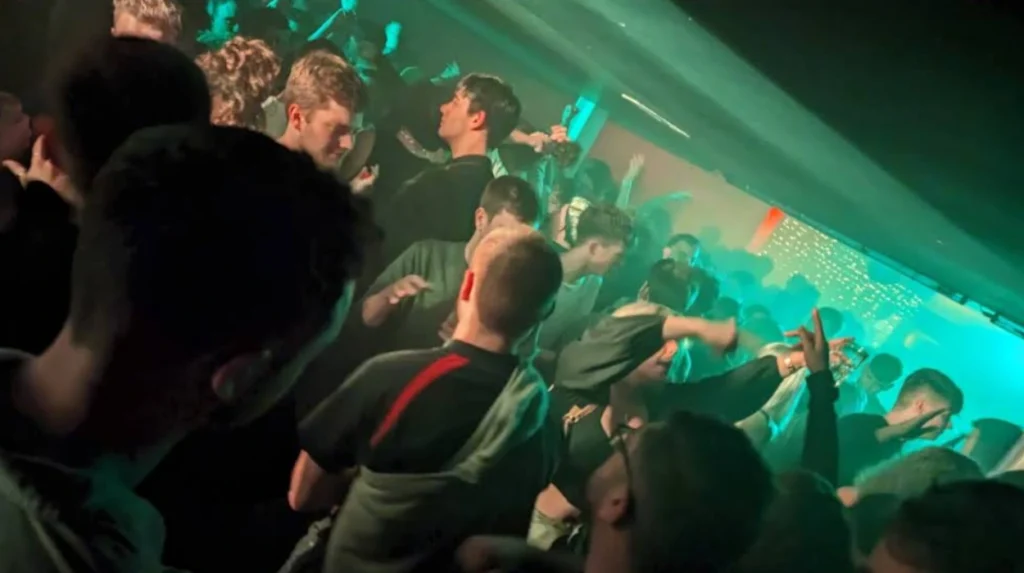
Dancefloor etiquette in Glasgow underground techno spaces requires prioritizing personal space, minimizing verbal communication on the floor, and avoiding digital device usage. These expectations are designed to preserve an immersive, distraction-free environment focused entirely on the sonic experience.
Spatial Awareness and Interpersonal Respect
The physical layout of an underground dancefloor is often dense and dark, which requires a high level of spatial awareness from all participants.
- Respecting Personal Boundaries: Pushing, aggressive jostling, or forcing one’s way through a crowded floor is considered a major breach of conduct. Patrons should move through the crowd by gently signaling their path rather than using physical force.
- Consent as an Absolute Standard: Any form of unwanted physical contact or harassment results in immediate intervention by venue security and a permanent ban from the premises.
Controlling the Sensory Environment
The collective experience relies heavily on keeping outside distractions to an absolute minimum.
- Minimizing Verbal Noise: The dancefloor is structured specifically for listening and dancing. Extended conversations should be moved to designated smoking areas, bars, or chill-out zones to avoid disrupting the acoustic experience of surrounding dancers.
- Eliminating Digital Disruption: Checking phones, typing text messages, or using bright screens on the dancefloor disrupts the visual atmosphere of a dark venue. If a phone must be used, the user is expected to step away from the main floor into a brightly lit area of the venue.
What is the Glasgow underground techno scene?
Glasgow’s underground techno scene is a community-focused electronic music culture centered on intimate venues, high-quality sound systems, independent promoters, and inclusive dancefloor environments.