Travelling from Glasgow to Edinburgh is straightforward because Scotland’s two largest cities are connected by direct trains, intercity coaches and major roads. The best transport option depends on ticket prices, departure times, traffic conditions and the location of your destination.
- Why do people travel between Glasgow and Edinburgh?
- What is the fastest way to travel from Glasgow to Edinburgh?
- What is the cheapest way to travel from Glasgow to Edinburgh?
- How long does the Glasgow to Edinburgh train take?
- How long does the Glasgow to Edinburgh bus or coach take?
- Is travelling by train or bus cheaper for a return trip?
- Which Glasgow station should you use for Edinburgh?
- Where does the train arrive in Edinburgh?
- Is driving from Glasgow to Edinburgh faster than taking the train?
- What is the best way to travel from Glasgow Airport to Edinburgh?
- Do trains and coaches run from Glasgow to Edinburgh at night?
- How can you save money on Glasgow to Edinburgh travel?
- Which transport option is best for different travellers?
- Where can you check Glasgow to Edinburgh timetables and tickets?
- What should you know before travelling from Glasgow to Edinburgh?
For most journeys between the city centres, the train offers the shortest scheduled journey, while the coach provides a practical alternative for budget-conscious travellers. Driving offers flexibility for people visiting destinations outside central Edinburgh, but parking and congestion affect the overall cost and journey time.
Why do people travel between Glasgow and Edinburgh?
Glasgow to Edinburgh travel connects Scotland’s two largest cities for work, education, tourism, shopping and healthcare. The cities sit approximately 47 miles apart by road, with direct rail and coach services providing regular connections between their central transport hubs.
Glasgow is Scotland’s largest city by population and a major centre for business, education, culture and entertainment. Edinburgh is Scotland’s capital and the location of the Scottish Parliament, major financial institutions, historic attractions and international festivals.
The distance between the cities makes same-day travel practical. Commuters travel between them for employment, while students visit universities, families arrange day trips and tourists explore both destinations during a single holiday.
Glasgow’s principal railway stations include Glasgow Queen Street and Glasgow Central. Queen Street serves the main direct route to Edinburgh Waverley, while Glasgow Central handles other rail routes and connections. Glasgow’s principal intercity coach terminal is Buchanan Bus Station.
Edinburgh Waverley is the main central railway station in Edinburgh. Edinburgh Bus Station serves intercity coach services and sits within walking distance of central shopping streets and other city attractions.
The starting point and final destination matter as much as the distance. Someone travelling from central Glasgow to Edinburgh’s Old Town has different transport requirements from someone travelling to Edinburgh Airport or a business park outside the city centre.
What is the fastest way to travel from Glasgow to Edinburgh?
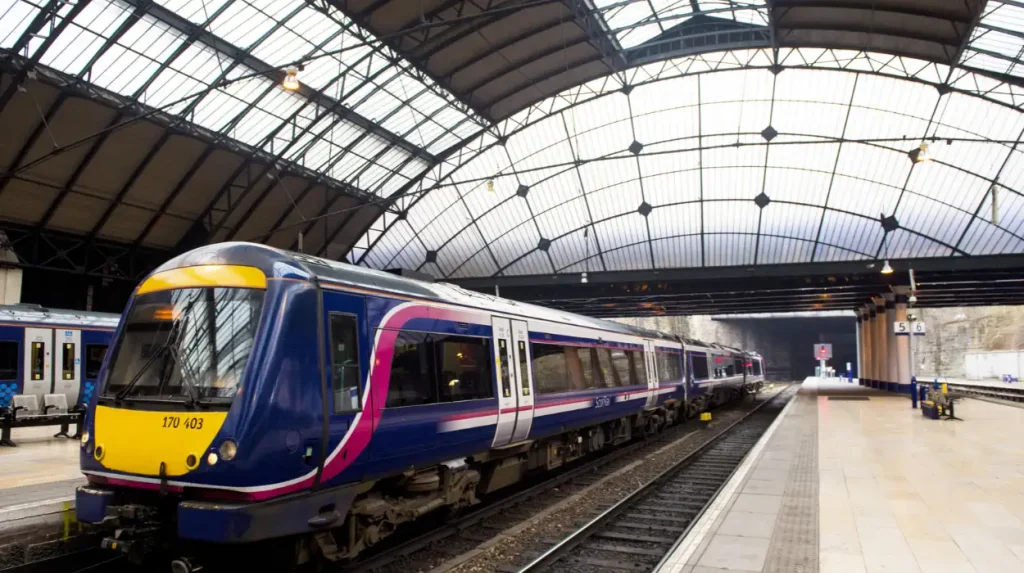
The direct train from Glasgow Queen Street to Edinburgh Waverley is generally the fastest public transport option between the city centres. Some scheduled services complete the railway journey in approximately 42–50 minutes, although departure patterns and journey times vary.
The principal direct railway route runs between Glasgow Queen Street and Edinburgh Waverley. Services travelling via Falkirk High provide the quickest scheduled connections, with some journeys taking around 42 minutes under the relevant timetable.
Other trains use different stopping patterns or routes, including services via Airdrie and Bathgate. These journeys take longer because they serve additional stations along the way.
The total door-to-door journey includes more than the time spent on the train. Travellers need to reach Glasgow Queen Street, allow time to board and then travel from Edinburgh Waverley to their final destination.
For a central Edinburgh appointment, the train’s arrival point is convenient for Princes Street, the Old Town and many major attractions. Travellers continuing to Edinburgh Park, the airport or suburban destinations need to include a further connection.
A coach offers an alternative when a suitable departure time or lower fare outweighs the difference in journey duration. Driving is useful for destinations away from the railway network, but road traffic makes arrival times less predictable.
Before travelling, check the actual departure and arrival times through the operator’s journey planner. A train that takes 42 minutes is not available at every departure, so the timetable for the selected date determines the fastest available service.
What is the cheapest way to travel from Glasgow to Edinburgh?
The cheapest Glasgow to Edinburgh journey depends on the departure date, booking time, passenger eligibility and ticket availability. Advance coach fares and advance train tickets are worth comparing, while railcards, eligible concessions and group discounts reduce costs for qualifying travellers.
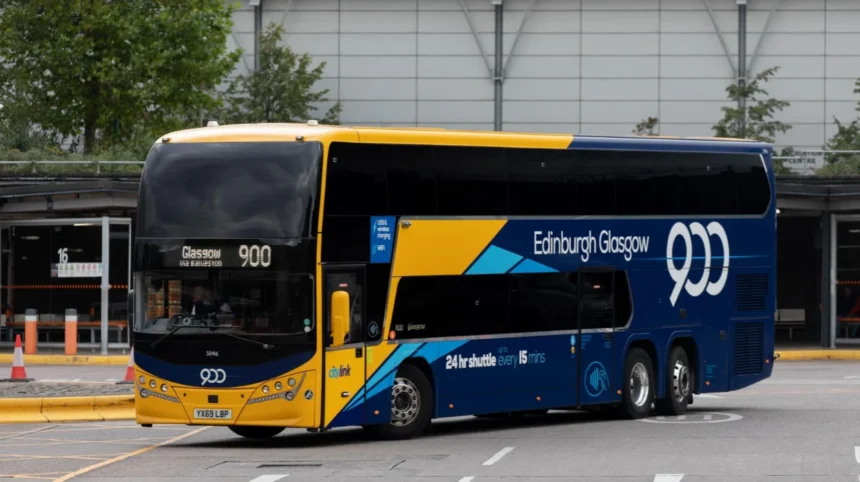
Coach travel is often competitive on price, particularly when tickets are booked ahead of departure. Scottish Citylink operates the 900 service between Glasgow Buchanan Bus Station and Edinburgh Bus Station, providing a direct intercity connection.
Train tickets also vary by journey and booking conditions. Advance fares are tied to particular services, while flexible tickets provide different travel conditions. The cheapest advertised fare is not necessarily available for every train or on the day of travel.
Travellers should compare the total cost rather than focusing exclusively on the headline ticket price. A journey from home to Buchanan Bus Station, for example, includes the cost of reaching the terminal. The same applies to travelling to Queen Street station.
For a return journey, compare the combined price of two singles with the available return-ticket options. The lower-priced combination depends on the specific date, times and ticket restrictions.
Eligible railcard holders should check discounted fares before paying. Railcards have eligibility requirements and conditions, so travellers need to confirm that their ticket and journey qualify.
Coach passengers should also review luggage allowances, amendment policies and departure conditions before booking. A low fare offers less value if the selected departure does not fit the travel schedule.
How long does the Glasgow to Edinburgh train take?
Direct trains between Glasgow Queen Street and Edinburgh Waverley generally take around 45–60 minutes, depending on the service and stopping pattern. The fastest scheduled journeys take approximately 42 minutes, while alternative routes take longer.
The fastest trains typically use the route via Falkirk High. Other services call at additional stations or travel via Airdrie and Bathgate, making them useful for passengers whose journeys begin or end outside the main city centres.
Journey duration also differs from the full travel time. Travellers need to consider how long it takes to reach the departure station, whether they need to change trains and how far the destination lies from Edinburgh Waverley.
For a morning meeting, a direct train with an arrival buffer provides a more reliable plan than selecting a connection that arrives immediately before the appointment. Timetables also differ between weekdays, Saturdays, Sundays and public holidays.
Engineering works, service disruption and timetable changes affect particular journeys. Checking live departures before leaving home helps travellers identify cancellations, platform changes and alternative services.
How long does the Glasgow to Edinburgh bus or coach take?
The direct Scottish Citylink 900 coach connects Buchanan Bus Station in Glasgow with Edinburgh Bus Station. The journey typically takes around 1 hour 15 minutes to 1 hour 45 minutes, depending on traffic, departure time and the service timetable.
The 900 service provides a direct link between the city centres. Its main advantage is the ability to travel without changing vehicles, making it suitable for visitors carrying luggage or travelling on a budget.
Road conditions influence the journey more than they influence a train journey. Congestion around Glasgow, motorway traffic and delays approaching Edinburgh affect arrival times, particularly during busy commuting periods.
Coach journeys also differ by departure. Travellers should check the selected service rather than assume that every coach completes the route in the same amount of time.
Buchanan Bus Station is Glasgow’s main intercity coach terminal. Edinburgh Bus Station is close to the city centre, allowing passengers to continue on foot, by local bus or by taxi, depending on their destination.
For late-night or early-morning journeys, check the complete timetable carefully. The existence of overnight departures does not mean every service operates at the same frequency throughout the night.
Is travelling by train or bus cheaper for a return trip?
A return journey is cheapest when the combined cost of outbound and inbound tickets is lower than competing options. Compare train returns, two single tickets and coach returns for the exact travel date, including any eligible railcard or concession discount.
Train and coach prices depend on demand, availability, ticket conditions and departure time. There is no single price difference that applies to every Glasgow–Edinburgh return journey.
Advance train tickets can provide savings when the passenger commits to a particular service. Flexible tickets are useful when the return time is uncertain, but their prices and conditions differ.
Coaches provide another option for travellers who prioritise a lower fare. Booking in advance gives passengers an opportunity to compare departures before the preferred service becomes full.
A useful comparison starts with four figures: the outward train fare, return train fare, outward coach fare and return coach fare. Check the actual ticket conditions before treating any option as equivalent.
For two or more passengers, calculate the total for the entire group. A discount available to an eligible passenger does not automatically apply to everyone travelling with them.
If the return trip takes place on the same day, compare departures that leave enough time to complete the planned activities. A cheaper return coach is less useful if its departure requires leaving an event early.
For regular commuters, compare the relevant season-ticket or flexible-travel products with individual tickets. The right product depends on how often the route is used and whether the travel schedule meets its conditions.
Which Glasgow station should you use for Edinburgh?
Glasgow Queen Street is the main departure station for direct trains to Edinburgh Waverley. Glasgow Central serves other routes and connections, while Buchanan Bus Station is the principal terminal for intercity coaches travelling between Glasgow and Edinburgh.
Glasgow Queen Street is located near George Square and the city’s main shopping district. Its central location makes it convenient for passengers travelling from central Glasgow, although travellers arriving from elsewhere in the city need to check their connecting transport.
Glasgow Central is a separate railway station. It serves numerous regional and long-distance routes, so passengers should not assume that a ticket or departure listed for Queen Street applies to Central.
Buchanan Bus Station is situated north of Glasgow city centre. It serves intercity coach routes and offers connections to local public transport. Passengers should check the departure terminal and stance shown on their ticket or operator information.
Choosing the right station prevents unnecessary transfers. A traveller who arrives at Glasgow Central for a train departing from Queen Street needs additional time to reach the correct station.
Before setting off, confirm the departure station, scheduled departure time and any platform or stance information. For rail journeys, check the station shown on the ticket and the live departure board. For coaches, follow the operator’s instructions.
Where does the train arrive in Edinburgh?
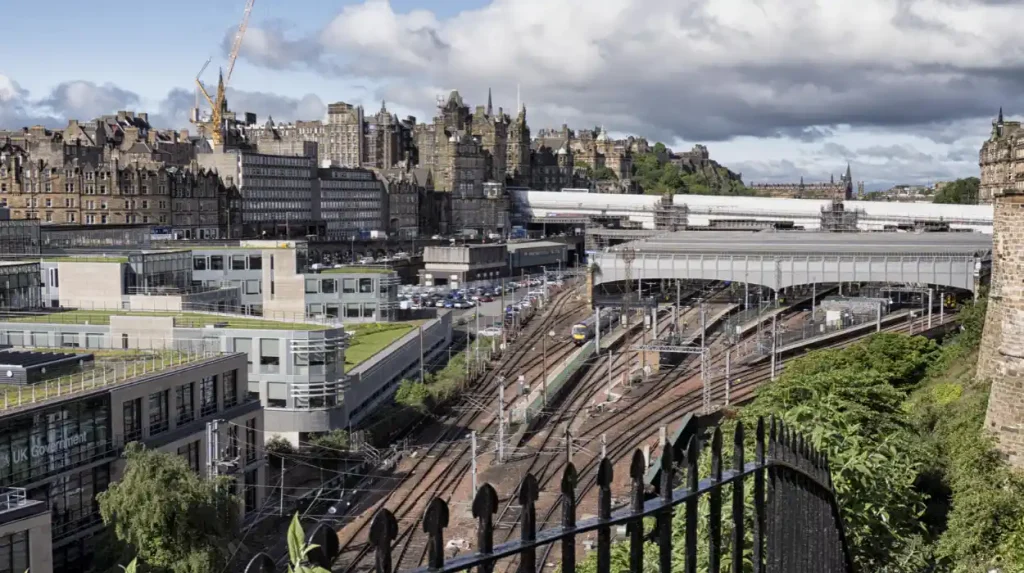
Edinburgh Waverley is the principal central railway station for direct trains from Glasgow Queen Street. It lies between Edinburgh’s Old Town and New Town, providing convenient access to Princes Street, major shopping areas and historic attractions.
Edinburgh Waverley sits in a central position beneath the city’s elevated streets and near the gardens below Edinburgh Castle. Its location supports onward travel to business districts, visitor attractions and residential neighbourhoods.
Passengers heading towards the Royal Mile or Edinburgh Castle can continue on foot, although the route includes gradients and uneven historic streets in some areas. Travellers carrying heavy luggage should allow extra time.
Local buses and taxis provide onward connections for destinations farther from the station. Edinburgh also has tram services serving locations including the city centre, Edinburgh Park and the airport, although passengers need to check the relevant stop and interchange.
Edinburgh Haymarket is another railway station in the city. Some services stop there, and it is useful for destinations in the West End and surrounding districts. However, passengers should confirm that their chosen train stops at Haymarket before planning an arrival there.
For visitors staying outside the central area, the best arrival station depends on the accommodation address. The closest station is not necessarily the one shown as the main destination on a standard Glasgow–Edinburgh ticket.
Is driving from Glasgow to Edinburgh faster than taking the train?
Driving from Glasgow to Edinburgh typically takes around 1 hour to 1 hour 30 minutes in favourable traffic, using the main motorway corridor. Congestion, roadworks, parking arrangements and the final destination affect the complete door-to-door journey.
The M8 motorway is the principal road connection between Glasgow and Edinburgh. It provides a direct route across central Scotland, linking urban areas and connecting with other major roads.
Driving gives passengers control over departure times, stops and destinations. This flexibility is useful for families, travellers carrying bulky equipment and visitors planning to explore locations outside Edinburgh city centre.
However, driving time is not the same as total travel cost. Drivers need to account for fuel, parking, vehicle wear and any applicable charges associated with their journey. Rental-car users also need to include hire costs and insurance.
Congestion affects the M8 and roads approaching both cities. Peak commuting periods, collisions, temporary lane restrictions and roadworks create delays. A journey that is straightforward at a quiet time takes longer when traffic builds.
Parking is another consideration. Central Edinburgh has limited space in some areas, and parking charges vary by location and duration. Drivers visiting the Old Town or New Town should check parking restrictions before arrival.
The train avoids motorway traffic and takes passengers directly into central Edinburgh. Driving becomes more practical when the destination is outside the city centre or when several stops are required along the way.
What is the best way to travel from Glasgow Airport to Edinburgh?
Travelling from Glasgow Airport to Edinburgh requires a connection or a suitable direct coach service. Existing Citylink airport services connect Glasgow city centre with Edinburgh Airport, while a new direct Glasgow Airport–Edinburgh city-centre service is scheduled to launch on 24 October 2026.
Glasgow Airport is west of Glasgow city centre. Passengers arriving by air need to account for the time required to leave the terminal, collect luggage and reach their chosen onward transport.
One established option is to travel from Glasgow Airport to Glasgow city centre and continue by train from Queen Street to Edinburgh Waverley. This involves separate stages and requires enough time to transfer between the airport connection and the railway station.
Scottish Citylink’s airport service also links Glasgow city centre with Edinburgh Airport. The airport operator identifies the Citylink AIR service as a connection between Edinburgh Airport and Glasgow Buchanan Street, with departures varying throughout the day.
A new Citylink 903 service is scheduled to begin on 24 October 2026. According to Glasgow Airport’s announcement dated 8 October 2026, it will connect Glasgow Airport with destinations including Uddingston, Blantyre, Bathgate, the SEC, Baillieston, Glasgow city centre and Edinburgh Haymarket.
Because the new service has a future launch date as of 20 October 2026, passengers should confirm that it is operating before relying on it. Check the operator’s timetable, fare and stop information for the actual travel date.
Travellers heading to Edinburgh Airport rather than Edinburgh city centre should compare direct airport coaches, rail connections and the location of their final destination. An airport-to-airport journey and a city-centre journey require different transport arrangements.
Do trains and coaches run from Glasgow to Edinburgh at night?
Night-time travel between Glasgow and Edinburgh depends on the day, departure time and operator timetable. Coach services include overnight departures on the Glasgow–Edinburgh corridor, while train services follow a different schedule and are not available at every hour.
The Scottish Citylink 900 timetable includes late-night and overnight departures, although the intervals between services vary. Published timetable data includes departures from Glasgow and Edinburgh after midnight, demonstrating that the coach route operates beyond ordinary daytime travel hours.
Rail services have their own operating hours and service patterns. Passengers travelling late at night should check the last available direct train rather than assuming that daytime frequencies continue into the evening.
The final departure differs according to the day of the week and scheduled engineering work. Sunday services and public-holiday timetables also require separate checks.
Late-night travellers should consider the complete journey from their home to the departure terminal and from the arrival terminal to the final address. Local bus services, taxis and walking routes have their own operating conditions.
For airport passengers, the overnight timetable is particularly important. A late flight arrival does not guarantee an immediate onward train or coach. Check the latest service information and allow time for baggage collection.
When the last train has departed, an available coach or pre-arranged road transfer provides an alternative. Confirm the actual departure time and arrival location before booking, especially when travelling with luggage or connecting to another service.
How can you save money on Glasgow to Edinburgh travel?
Travellers can reduce Glasgow to Edinburgh travel costs by booking suitable advance fares, comparing coach and train prices, checking eligible railcard discounts and avoiding unnecessary last-minute purchases. Comparing the full return journey helps identify the lowest suitable cost.
The most effective saving depends on the travel schedule. Passengers with fixed departure times can compare advance tickets, while those who need flexibility should examine the conditions of alternative fares.
Several practical steps help reduce costs:
- Book ahead: Compare fares as soon as travel dates are confirmed.
- Compare operators: Check both ScotRail and Scottish Citylink before purchasing.
- Check railcard eligibility: Review available discounts for eligible young people, older passengers, disabled travellers and other qualifying groups.
- Compare single and return tickets: Calculate the total cost for both directions.
- Travel outside peak periods when practical: Compare the fares and ticket restrictions for alternative departures.
- Consider group travel: Check whether the selected operator offers a suitable group discount.
- Avoid unnecessary transfers: Include the cost of local transport when comparing departure stations.
Travellers should also consider the value of their time. A coach with a lower fare is useful for someone with a flexible schedule, while a direct train offers a shorter scheduled journey for passengers who need to arrive quickly.
Ticket restrictions matter. Some advance tickets are valid only on the selected service, whereas flexible tickets offer different conditions. Read the terms before booking, especially when the return time is uncertain.
Which transport option is best for different travellers?
The best Glasgow to Edinburgh transport option depends on budget, journey duration, luggage, destination and flexibility. Trains suit time-sensitive city-centre journeys, coaches suit passengers comparing lower fares, and cars suit travellers visiting several locations outside central Edinburgh.
A commuter travelling from Glasgow city centre to an Edinburgh office benefits from comparing direct train services, journey duration and the cost of regular travel.
A student travelling between the two cities should compare discounted fares, coach tickets and the time needed to reach each terminal. Eligible railcards provide another option for reducing qualifying rail fares.
A tourist planning a day trip can choose between a direct train and a coach. Both arrive in central Edinburgh, although the best choice depends on the departure schedule and the amount of time available for sightseeing.
A family carrying luggage should compare the total cost for every passenger and consider how easily they can reach the departure station. A car provides flexibility for several stops, but central parking adds expense.
An airport passenger should distinguish between travel to Edinburgh city centre and travel to Edinburgh Airport. Directness, baggage handling and the timing of connecting services influence the most practical route.
People travelling at night should prioritise verified departure times and onward transport arrangements. A low ticket price does not solve the problem of arriving at a terminal without a suitable connection to the final destination.
Explore More Area Guide
Glasgow Night Transport: Buses and Trains After Midnight
Glasgow Airport to City Centre: Bus, Taxi & Train Guide
Where can you check Glasgow to Edinburgh timetables and tickets?
Official transport operators provide the most reliable starting point for checking Glasgow to Edinburgh departure times, ticket prices, route changes and service disruptions. ScotRail covers rail journeys, while Scottish Citylink provides coach information and booking facilities.
Check the date and direction of travel before comparing departures. A timetable for Glasgow to Edinburgh does not necessarily provide the correct departure details for the return journey.
Passengers travelling during engineering works, public holidays or major events should check for service changes before leaving home. Allow additional time for transfers, luggage collection and travel between stations.
What should you know before travelling from Glasgow to Edinburgh?
Glasgow and Edinburgh have direct train and coach connections, making travel between the cities practical for commuters, tourists and families. Trains generally offer shorter scheduled city-centre journeys, while coaches provide another option for comparing fares and departure times.
The direct train between Glasgow Queen Street and Edinburgh Waverley is generally the fastest public transport choice, with the quickest scheduled services taking approximately 42 minutes. Coach journeys typically take longer and depend on road conditions.
The cheapest fare varies according to the date, booking conditions, passenger eligibility and available tickets. Checking both train and coach prices before departure provides a more accurate comparison than relying on a fixed advertised fare.
Driving offers flexibility for destinations outside the city centres, but congestion, fuel and parking affect the overall cost. Airport journeys and overnight trips require additional timetable checks because the available routes differ from ordinary daytime city-centre travel.
For the most efficient journey, identify the exact departure point, confirm the destination, compare the complete journey time and check the ticket conditions. These steps help travellers select a suitable balance of speed, cost and convenience when travelling from Glasgow to Edinburgh.
What is the fastest way to travel from Glasgow to Edinburgh?
The direct train from Glasgow Queen Street to Edinburgh Waverley is generally the fastest public transport option. The quickest scheduled services take approximately 42 minutes, depending on the timetable.