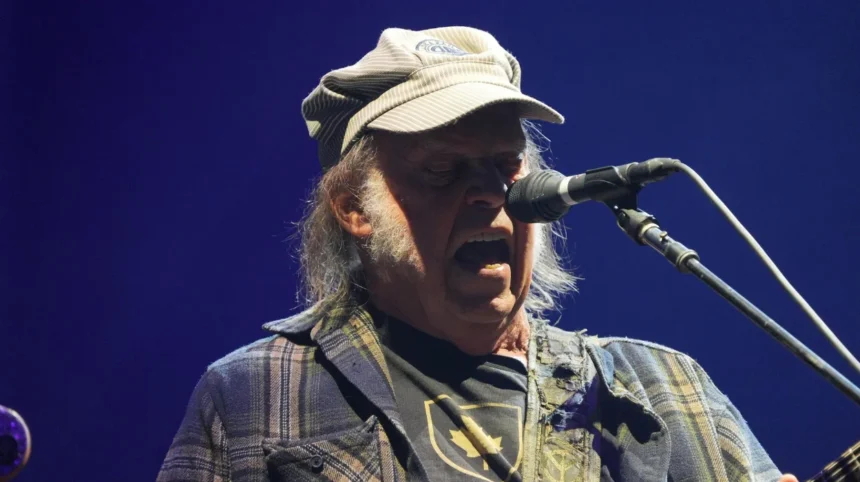
Neil Young is a Canadian-American singer-songwriter, musician, and activist who has influenced rock, folk, and country music since the nineteen-sixties. Navigating his connection to the city of Glasgow requires understanding his historical concert dates, specific venues, transport infrastructure, and current event updates.
- What is the history of Neil Young performing in Glasgow?
- Which venues host large-scale music events in Glasgow?
- How has the 2026 tour schedule affected Glasgow audiences?
- What transport options connect Glasgow to major event venues?
- How do municipal regulations govern major events in Glasgow?
- What are the long-term implications for music tourism in the West of Scotland?
Historically, this relationship comprises major live performances at key urban venues spanning multiple decades. It also encompasses modern event planning considerations within the West of Scotland regional infrastructure, which is dictated by municipal council regulations and transport networks.
What is the history of Neil Young performing in Glasgow?
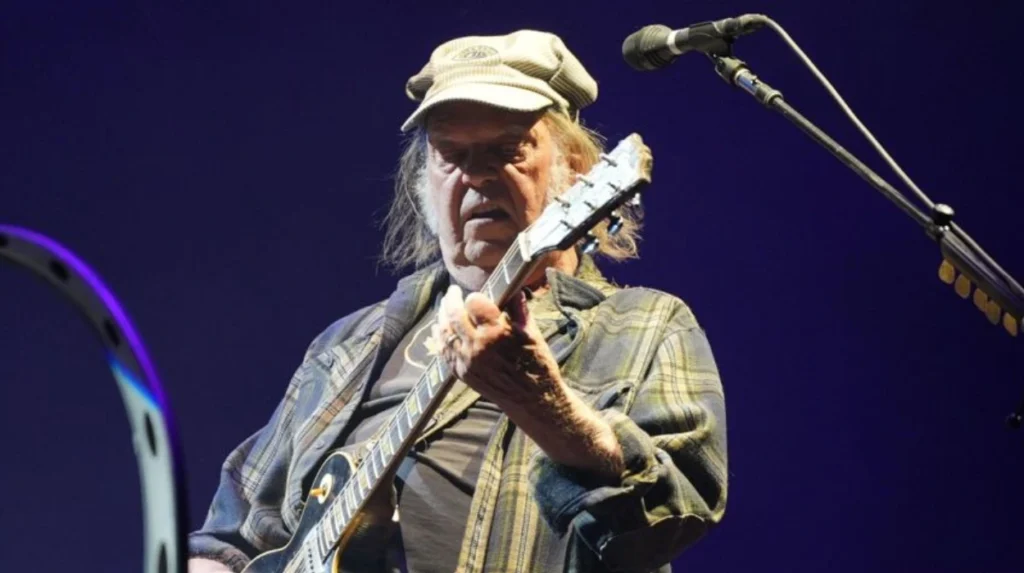
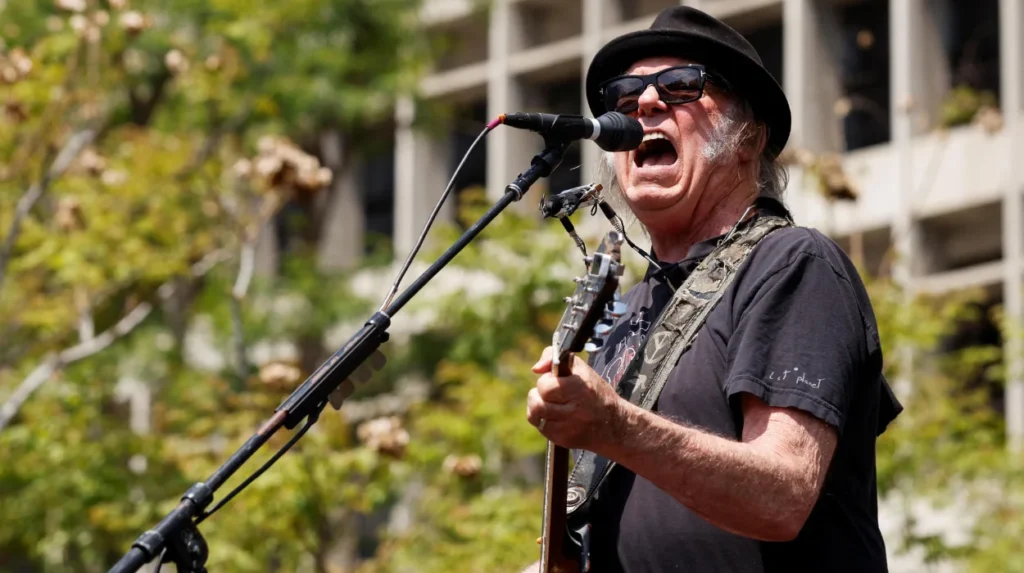
Neil Young has performed multiple high-profile concerts in Glasgow over a five-decade period, debuting at the Glasgow Apollo in nineteen-seventy-six. These landmark appearances occurred across major city venues, establishing a deep cultural connection with generations of Scottish music audiences.
The Glasgow Apollo Era
The inaugural live appearance of Neil Young in Glasgow occurred on two consecutive nights, specifically the second and third of April nineteen-seventy-six. The venue was the Glasgow Apollo, an iconic theatre located on Renfield Street that operated as a premier music space between nineteen-seventy-three and nineteen-eight-five.
During the nineteen-seventy-six performances, Neil Young toured with his long-term backing band, Crazy Horse. The setlist featured the live debut of the song “Like a Hurricane,” which became a staple of his electric repertoire.
The Glasgow Apollo was renowned for its nineteen-feet-high stage and enthusiastic crowd reception. It served as the central hub for rock music in the West of Scotland during this decade.
Neil Young returned to the Glasgow Apollo on the third of June nineteen-eighty-two during his Trans Band tour. This tour utilized electronic synthesisers and vocal vocoders, marking a radical stylistic departure from his traditional acoustic folk and electric rock frameworks.
The SECC and Concert Hall Appearances
Following the closure and subsequent demolition of the Glasgow Apollo in nineteen-eight-five, major indoor concert infrastructure shifted westward along the River Clyde. Neil Young transitioned his large-scale Glasgow performances to the Scottish Exhibition and Conference Centre, commonly abbreviated as the SECC.
He performed at the SECC on the fourteenth of May nineteen-ninety-three. This specific concert featured backing instrumentation from Booker T. and the M.G.’s, an influential American rhythm and blues group. This collaboration provided a soul-infused foundation for his extensive guitar solos.
In addition to large arena rock shows, Neil Young selected more intimate, acoustically precise environments within the municipal boundaries. On the third of May nineteen-ninety-nine, he delivered a solo acoustic performance at the Glasgow Royal Concert Hall. The Glasgow Royal Concert Hall is located at the intersection of Buchanan Street and Sauchiehall Street.
This solo performance contrasted sharply with his stadium appearances. It allowed the musician to present sparse, lyric-focused arrangements of songs from his nineteen-seventy-two album Harvest and his nineteen-ninety-two album Harvest Moon.
Which venues host large-scale music events in Glasgow?
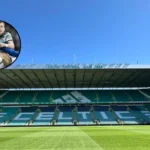
Large-scale music events in Glasgow take place across a structured network of indoor arenas and outdoor municipal parks. The primary spaces include the OVO Hydro, Hampden Park, Bellahouston Park, and Glasgow Green, which are governed by strict local licensing frameworks.
Indoor Arenas and the Clyde Waterfront
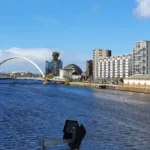
The premier indoor venue for major international music touring acts in Scotland is the OVO Hydro. This arena is located within the Scottish Event Campus on the north bank of the River Clyde, occupying land that was historically part of the Queen’s Dock.
Opened in September twenty-thirteen, the OVO Hydro possesses a maximum spectator capacity of fourteen-thousand-three-hundred individuals. The building features a distinctive translucent ETFE (ethylene tetrafluoroethylene) cushion exterior, which mimics the design of a Roman amphitheatre.
The OVO Hydro sits adjacent to the SEC Armadillo, a three-thousand-seat auditorium designed by the architectural firm Foster and Partners. Together, these venues form a dense cultural entertainment zone that is directly connected to the wider Strathclyde transport network via the Exhibition Centre railway station.
The indoor arenas utilize electronic ticketing systems and cashless payment operations. This infrastructure allows for the rapid processing of thousands of concertgoers within short time operational windows.
Outdoor Municipal Parks and Summer Sessions
Outdoor music festivals and standalone stadium concerts utilise the expansive green spaces managed by Glasgow City Council. Bellahouston Park, situated in the southwest quadrant of the city, serves as the primary location for the Glasgow Summer Sessions. The Glasgow Summer Sessions is an annual series of outdoor music concerts established in twenty-thirteen.
Bellahouston Park covers an area of one-hundred-and-eighty acres and can accommodate temporary concert footprints supporting up to thirty-five-thousand attendees per event day. The site requires extensive temporary staging, perimeter fencing, and sound reinforcement structures.
Glasgow Green is the oldest municipal park in the city, situated east of the merchant city quarter. It hosts the TRNSMT Festival, a multi-day music event that replaced the historical T in the Park festival.
Hampden Park is the national football stadium of Scotland, located in the Mount Florida area. It provides a permanent seating and pitch-standing capacity of over fifty-thousand spectators for massive global stadium tours.
These outdoor spaces operate under strict municipal licensing conditions. These conditions mandate definitive sound decibel limits and hard curfew times, typically set at eleven post meridiem.
Explore More Area Guide
Strategic Guide to Optimizing Romantic Valentine’s Day Dining Experiences in Glasgow
What Are The Most Ultimate Ways To Get From Paisley To Glasgow
How has the 2026 tour schedule affected Glasgow audiences?
The twenty-two-six European tour schedule brought significant disruption to Glasgow audiences due to the wholesale cancellation of Neil Young and The Chrome Hearts performances. The scheduled outdoor concert at Bellahouston Park was officially cancelled, altering regional tourism and ticketing markets.
Cancellation of the Love Earth Tour
Neil Young and his newly formed backing ensemble, The Chrome Hearts, formally announced a series of major UK and European outdoor concert dates for the summer of twenty-twenty-six. The Chrome Hearts features veteran guitarist Charlie Sexton alongside a established rhythm section.
The tour was designated as an extension of the ongoing Love Earth Tour, which focuses heavily on environmental sustainability themes and career-spanning setlists. The itinerary included a headline performance at the Glasgow Summer Sessions in Bellahouston Park, originally scheduled for Monday, the twenty-ninth of June twenty-twenty-six.
This event was highly anticipated as it was designed to feature Elvis Costello and The Imposters as the primary supporting act. However, the promoter, Gigs in Scotland, alongside the primary ticketing agent, Ticketmaster UK, formally announced the cancellation of the entire tour itinerary.
This cancellation included parallel dates at Heaton Park in Manchester, Blenheim Palace in Woodstock, and Virgin Media Park in Cork. The official announcements cited health and logistical reasons, forcing the immediate cessation of all ticket sales across authorized platforms.
Economic and Logistical Fallout
The cancellation of a major outdoor concert at Bellahouston Park has direct economic implications for the hospitality sector in Glasgow. Large-scale events at the Glasgow Summer Sessions consistently draw thousands of domestic and international visitors to the city. This influx generates significant revenue for local hotels, restaurants, and retail businesses.
The sudden removal of the twenty-ninth of June date from the cultural calendar resulted in widespread cancellations of short-term accommodation bookings across the city centre and the Southside district.
Furthermore, the cancellation triggered automated refund mechanisms across the primary ticketing ecosystems of Ticketmaster and StubHub UK. According to standard industry regulations enforced by the Society of Ticket Agents and Retailers, consumer point-of-sale systems must return the full face value of the tickets to the original purchasing bank accounts.
This process requires five to ten business days to complete. The cancellation also eliminated the secondary resale market for the event, which had previously seen limited ticket quantities listed on secondary exchanges.
What transport options connect Glasgow to major event venues?
Glasgow possesses a comprehensive multi-modal transport network consisting of heavy rail lines, an underground subway circuit, and dedicated bus corridors. These public systems connect the city centre directly to key event locations like the Scottish Event Campus and Bellahouston Park.
Rail and Subway Infrastructure
The primary methods for navigating to major concert venues in Glasgow are the national rail network and the Glasgow Subway. The Scottish Event Campus, which contains the OVO Hydro, is directly served by the Argyle Line via the Exhibition Centre railway station.
Trains depart regularly from Glasgow Central Station, providing a direct transit time of approximately five minutes. ScotRail, the national train operator, routinely deploys additional carriages and late-night services during major concert events to manage passenger surges.
The Glasgow Subway is a continuous double-track circular underground railway system that services fifteen stations across the city. For events located at Bellahouston Park, the closest operational subway stations are Ibrox and Cessnock, both situated on the Southside of the River Clyde.
The subway system operates on a tight schedule, with trains arriving every four to eight minutes during peak periods. However, the standard Sunday and late-night operating hours are historically restricted, with service terminating at six post meridiem on Sundays, which requires careful planning for weekend travellers.
Bus Corridors and Road Networks
First Glasgow operates the primary municipal bus network, which provides extensive coverage across all major entertainment zones. The Riversider Service one-hundred connects Glasgow Queen Street Station and Glasgow Central Station directly to the OVO Hydro and the Riverside Museum.
For transport to Bellahouston Park, multiple bus routes run along Paisley Road West, including the number nine, number ten, and number fifty-seven services. These buses drop passengers within short walking distance of the main park entrances.
The road network surrounding Glasgow is dominated by the M8 motorway, which bisects the city from east to west. Concertgoers utilizing private vehicular transport face strict parking restrictions around venues like the OVO Hydro and Bellahouston Park.
The local council enforces Event Day Parking Zones in residential neighborhoods surrounding these sites to prevent congestion. Consequently, the local authorities strongly advise the utilization of public transit networks or designated park-and-ride facilities located at outer rail stations like Shields Road or Duke Street.
How do municipal regulations govern major events in Glasgow?
Municipal regulations in Glasgow are strictly enforced by the Glasgow City Council Licensing Committee to ensure public safety and crowd control. These legal frameworks dictate absolute noise limits, mandatory curfews, age restrictions, and specific identification protocols for all public gatherings.
Licensing and Safety Frameworks
Every large-scale musical performance within the city boundaries requires a Temporary Public Entertainment Licence or a Premises Licence variation issued by Glasgow City Council. The licensing process involves rigorous consultation with Police Scotland, the Scottish Fire and Rescue Service, and the environmental health department.
These regulatory bodies establish the maximum safe capacity of the site based on emergency egress calculations, clear walkway widths, and the placement of temporary medical facilities.
Outdoor venues like Bellahouston Park face stringent environmental noise controls governed by the Control of Pollution Act nineteen-seventy-four. Sound engineers must install directional speaker arrays to minimize audio bleed into surrounding residential neighborhoods, such as Dumbreck and Craigton.
The standard mandatory curfew for outdoor music events in public parks is eleven post meridiem. Failure to adhere to this timeline results in severe financial penalties for the event promoter and compromises future licensing applications.
Admission Control and Public Order
Admission into major concert footprints is strictly monitored using age-gating policies and identification verification protocols. For major events like the Glasgow Summer Sessions, the standard minimum age for entry is fourteen years when accompanied by an adult, while individuals under fourteen are legally barred from entering the standing arenas.
Promoters strictly enforce the “Challenge 25” policy at all internal bars and alcohol dispensing points. This policy legally obligates staff to request valid photographic identification from any individual who appears to be under the age of twenty-five.
The accepted forms of identification are limited to three specific options:
- A valid photocard passport
- A driving licence issued by the Driver and Vehicle Licensing Agency
- A national identity card containing the official PASS hologram
The local authority also prohibits a comprehensive schedule of items inside the venue perimeters to maintain public order. Prohibited items include bags larger than an A3 paper sheet, flares, smoke devices, glass containers, professional audio-visual recording equipment, chairs, and umbrellas.
Furthermore, modern public events are entirely cashless. This policy requires all transactions for food, beverages, and artist merchandise to be executed via credit card, debit card, or contactless mobile payment technologies.
What are the long-term implications for music tourism in the West of Scotland?
The evolution of Glasgow’s concert infrastructure directly shapes the long-term viability of music tourism across the West of Scotland. Continuous venue modernization and structural transport integration are required to maintain the status of the city as a UNESCO City of Music.
Economic Impact of Live Music
The live music sector is a vital component of the broader Scottish economy, generating millions of pounds in gross value added annually. Glasgow acts as the primary anchor for this economic activity, attracting over one million event attendees to the region each year.
According to data published by UK Music, the financial expenditure of music tourists supports thousands of full-time equivalent jobs across the transport, hospitality, and retail sectors. The presence of world-class facilities ensures that global touring itineraries prioritize Scotland.
The retention of this economic power relies heavily on the ability of local promoters to secure high-caliber international heritage acts. Artists like Neil Young provide unique demographic draws, bringing older, higher-spending tourists into the city center.
The loss of major dates due to illness or logistical collapse highlights the vulnerability of regional tourism strategies that depend heavily on individual summer stadium tours.
The UNESCO City of Music Designation
In two-thousand-and-eight, Glasgow became the first city in the United Kingdom to join the UNESCO Creative Cities Network as a designated City of Music. This prestigious title recognizes the historic legacy of the city, its dense concentration of live performance spaces, and the global impact of its musical exports.
The designation requires the city to continually foster a sustainable environment for both grassroots music and massive commercial entertainment events.
To preserve this international standing, Glasgow City Council and regional development agencies continuously invest in urban regeneration projects that incorporate cultural spaces. The ongoing development of the Clyde Waterfront regeneration corridor is a prime example of this long-term strategy.
By linking historic urban parks, modern arena infrastructure, and advanced public transit lines, the city aims to build a resilient cultural ecosystem. This framework is designed to withstand short-term tour cancellations while securing the long-term future of live performance in the West of Scotland.
Has Neil Young performed in Glasgow?
Yes, Neil Young has performed in Glasgow multiple times since the 1970s, appearing at venues including the Glasgow Apollo, SECC, and Glasgow Royal Concert Hall.