
The cost of living in Glasgow compared with London is significantly lower across major household expenses, particularly housing, private renting and property purchases. Both cities offer extensive employment opportunities, public transport, education, healthcare and entertainment. However, the financial requirements for maintaining a comfortable lifestyle differ considerably.
- What Is the Difference Between the Cost of Living in Glasgow and London?
- Why Is Housing More Affordable in Glasgow Than in London?
- Private Rental Prices in Glasgow and London
- Property Purchase Prices
- Affordable Residential Areas in Glasgow
- How Do Transport Costs Compare Between Glasgow and London?
- How Much Do Food and Grocery Shopping Cost in Glasgow Compared with London?
- Are Energy Bills, Utilities and Council Tax Cheaper in Glasgow or London?
- Are Salaries and Employment Opportunities Better in London Than Glasgow?
- Employment Opportunities in Glasgow
- Employment Opportunities in London
- Does a Higher London Salary Provide Better Living Standards?
- Which City Is More Affordable for Students and Families?
- Student Living Costs in Glasgow
- Student Living Costs in London
- Family Living Costs in Glasgow
- Family Living Costs in London
- How Do Healthcare, Education and Lifestyle Expenses Compare?
- Healthcare in Glasgow
- Healthcare in London
- Education and Learning Opportunities
- Entertainment and Leisure
- How Much Money Do You Need to Live Comfortably in Glasgow Compared with London?
- Example: Single Person Living in Glasgow
- Example: Single Person Living in London
- Example: Family Living in Glasgow
- Example: Family Living in London
- Is Glasgow Better Than London for Saving Money and Long-Term Financial Planning?
- Saving Money on Accommodation
- Building a Property Deposit
- Managing Long-Term Expenses
- Future Housing and Rental Market Conditions
- Should You Choose Glasgow or London Based on the Cost of Living?
Glasgow, Scotland’s largest city, offers comparatively affordable accommodation, established neighbourhoods and access to essential services. London, the capital of the United Kingdom, has a larger employment market, internationally recognised business districts and extensive transport connections. These advantages come alongside higher housing costs and greater financial commitments.
Understanding the differences between Glasgow and London helps people evaluate relocation opportunities, employment prospects, housing options and everyday expenses. This comparison examines accommodation, transport, food, utilities, council tax, salaries, education, entertainment and household budgets using the latest available official statistics for 2026.
What Is the Difference Between the Cost of Living in Glasgow and London?
The cost of living in Glasgow is considerably lower than in London, particularly for housing and property ownership. London has higher average private rents and house prices, while Glasgow provides comparatively affordable accommodation and everyday living expenses for households.
The cost of living describes the amount of money required to maintain a particular standard of living. It includes essential expenses such as accommodation, food, transport, energy, healthcare, communication and leisure activities.
Glasgow and London operate within the same UK economy but have different housing markets, employment structures and transport systems.
Glasgow is located in west-central Scotland. It has a population of approximately 630,000 within the local authority area and serves as a major commercial, educational and cultural centre.
London is the UK’s capital and largest urban area. Greater London contains 32 boroughs and the City of London. Its economy includes finance, technology, professional services, government, tourism and international business.
The biggest difference between the cities concerns accommodation.
According to the Office for National Statistics (ONS), average private rent in Greater Glasgow reached £1,266 per month in September 2026. London’s average private rent reached £2,338 during the same month.
This represents a difference of £1,072 per month. Glasgow’s average is approximately 46% lower than London’s.
The figures demonstrate the financial difference between the two housing markets. However, actual household spending depends on property size, neighbourhood, household income and lifestyle.
Other expenses also influence affordability. London residents frequently spend more on commuting and accommodation near employment centres. Glasgow residents benefit from a smaller urban transport network and comparatively accessible residential areas.
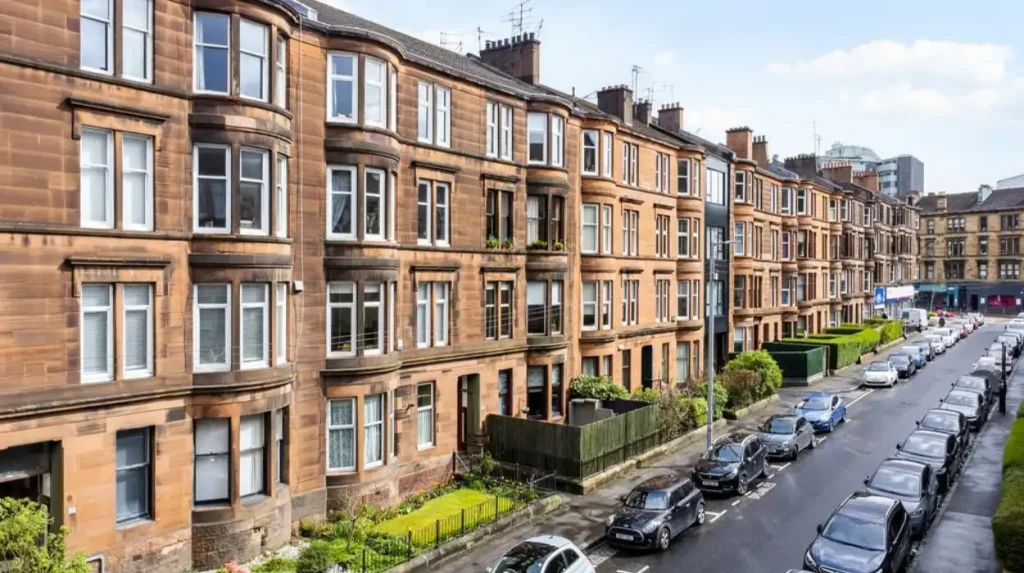
Why Is Housing More Affordable in Glasgow Than in London?
Housing is generally more affordable in Glasgow because property prices and private rents remain substantially below London’s averages. Greater Glasgow recorded average monthly rent of £1,266 in September 2026, compared with £2,338 across London, creating a significant difference in housing expenditure.
Housing represents one of the largest expenses for individuals and families. Differences in property demand, available accommodation, population concentration and employment opportunities influence prices in both cities.
Private Rental Prices in Glasgow and London
The ONS October 2026 private rent statistics provide an important comparison using September 2026 rental figures.
Greater Glasgow recorded the following average monthly rents:
- One-bedroom property: £845.
- Two-bedroom property: £1,091.
- Three-bedroom property: £1,340.
- Four-bedroom or larger property: £2,284.
These figures demonstrate the variation between property sizes within the Greater Glasgow rental market.
London recorded an average private rent of £2,338 per month during September 2026. Some central London neighbourhoods recorded considerably higher figures.
For example, Kensington and Chelsea recorded average monthly rent of £3,739.
This difference makes Glasgow an attractive location for renters seeking larger accommodation without committing to London’s higher rental expenditure.
Property Purchase Prices
Property ownership also demonstrates a substantial difference.
The ONS local housing statistics recorded the following average house prices in August 2026:
Glasgow recorded an average property price of approximately £194,000.
London recorded an average property price of approximately £554,000.
The difference is approximately £360,000.
Consequently, the average London property costs almost three times as much as the average Glasgow property.
This difference affects mortgage deposits, monthly repayments, affordability assessments and long-term financial planning.
First-time buyers also face different financial requirements. The average first-time buyer property price in London reached approximately £473,000 in August 2026.
Glasgow’s average first-time buyer property price was approximately £175,000 during the same period.
Affordable Residential Areas in Glasgow
Glasgow contains several residential neighbourhoods with different housing markets.
Examples include:
East End: Areas such as Dennistoun and Parkhead offer established residential communities and access to local amenities.
Southside: Shawlands, Govanhill and Cathcart provide housing options, independent businesses and transport connections.
West End: Partick, Maryhill and surrounding neighbourhoods offer access to universities, cultural attractions and employment locations.
London also has relatively affordable residential areas outside central districts. Barking and Dagenham, Croydon and other outer boroughs offer alternatives to expensive central neighbourhoods.
However, lower accommodation costs frequently involve longer commuting distances.
The financial comparison therefore depends on the relationship between housing expenditure and transport costs.
How Do Transport Costs Compare Between Glasgow and London?
Glasgow generally offers a more straightforward and affordable urban commuting system than London. Its Subway, suburban rail services and bus network connect residential districts with employment centres, while London’s extensive transport network involves additional costs for longer journeys.
Transport expenditure depends on commuting distance, travel frequency, transport choices and journey times.
Both cities provide public transport, including buses, rail services and underground connections. However, their networks differ considerably in geographical coverage and complexity.
Public Transport in Glasgow
Glasgow operates several public transport services.
The main systems include:
- Glasgow Subway.
- ScotRail suburban railway services.
- First Bus and other local bus operators.
- Regional coach connections.
The Glasgow Subway is one of the city’s most recognisable transport systems. It operates a circular underground route connecting central Glasgow with areas including Partick, Hillhead, Kelvinbridge, St Enoch and Govan.
ScotRail provides connections between Glasgow and surrounding communities.
Bus services connect neighbourhoods that do not have direct railway or Subway access.
These options provide residents with different commuting arrangements depending on where they live and work.
Public Transport in London
London operates a much larger transport network.
Transport for London (TfL) manages several major services, including:
- London Underground.
- Elizabeth line.
- London Overground.
- London buses.
- Docklands Light Railway.
- Tram services.
The network connects central London with residential boroughs, airports, employment districts and surrounding communities.
However, travel costs depend on journey zones, peak periods and transport combinations.
TfL’s published 2026 fare information records an adult Zone 1 pay-as-you-go fare of £3.10 during peak periods and £3.00 off-peak from March 2026.
Longer journeys involving multiple zones involve different fares.
Commuting Expenses and Daily Travel
A Glasgow resident working near the city centre often has several transport options within a relatively compact urban area.
For example, someone living in Partick can use the Subway, railway or bus network to reach central employment locations.
A London employee travelling from outer residential boroughs frequently requires longer journeys.
Someone commuting from Croydon to central London uses a different transport arrangement from someone living near their workplace.
Transport expenditure therefore depends on residential location rather than city averages alone.
Glasgow generally provides a lower-cost environment for people who live relatively close to their workplace. London offers greater network coverage but requires careful travel budgeting.

How Much Do Food and Grocery Shopping Cost in Glasgow Compared with London?
Food and grocery expenses are generally more manageable in Glasgow because accommodation and household budgets leave residents with different spending capacities. Both cities offer major supermarket chains, independent food shops, markets and restaurants, although prices vary by retailer and location.
Food is an essential household expense. Grocery spending includes everyday products such as bread, milk, vegetables, meat, rice, fruit, cooking ingredients and household supplies.
Glasgow and London have access to many of the same supermarket operators.
These include Tesco, Sainsbury’s, Asda, Aldi, Lidl and Morrisons.
Because these retailers operate nationally, many packaged grocery products have similar standard prices across the UK.
However, individual stores, promotions, local competition and product availability influence final shopping bills.
Supermarket Shopping in Glasgow
Glasgow residents have access to supermarkets throughout the city.
Examples include:
- Aldi and Lidl for budget grocery shopping.
- Tesco and Asda for general household shopping.
- Sainsbury’s for everyday groceries.
- Morrisons for fresh food and household products.
The city also has traditional markets and independent food retailers.
The Barras Market is an established Glasgow market associated with independent traders and local shopping.
Residents can compare supermarket promotions and use discount retailers to control household expenditure.
Grocery Shopping in London
London offers extensive grocery shopping opportunities.
Residents have access to the same national supermarket chains alongside specialist food shops, convenience stores and international grocery retailers.
Markets such as Borough Market provide specialist food products and prepared meals.
However, grocery expenditure depends heavily on shopping habits.
A household purchasing everyday supermarket products has a different budget from someone regularly purchasing premium food products or eating in restaurants.
Restaurant and Takeaway Expenses
Glasgow has a diverse hospitality industry covering traditional Scottish food, international restaurants, cafés and takeaway businesses.
Areas such as Finnieston, Merchant City and the West End contain established dining destinations.
London offers a significantly larger restaurant market, including international cuisines, premium dining establishments and independent food businesses.
Dining expenditure therefore varies according to restaurant type and location.
For both cities, regularly eating outside the home increases monthly spending.
Residents seeking to control expenses benefit from supermarket meal planning, cooking at home and comparing restaurant prices before booking.
Are Energy Bills, Utilities and Council Tax Cheaper in Glasgow or London?
Utility costs depend on property size, household energy consumption, insulation and regional pricing arrangements. Council tax also differs because Glasgow follows Scottish taxation rules, while London boroughs establish their own local charges under England’s council tax system.
Utilities represent recurring household expenses.
These include electricity, gas, water, broadband and mobile services.
Although Glasgow and London operate within the same UK energy market, household bills differ according to property characteristics and consumption.
Electricity and Gas Bills
Electricity and gas expenditure depends on several factors.
These include:
- Property size.
- Energy efficiency.
- Heating systems.
- Number of occupants.
- Daily electricity consumption.
A large detached property generally requires more energy than a small apartment.
Glasgow experiences a cooler climate than London for much of the year. This creates different heating requirements, particularly during winter.
London generally experiences milder average temperatures, although individual properties and heating habits determine actual energy consumption.
The energy price cap published by Ofgem regulates the maximum unit rates and standing charges for households on relevant default tariffs.
It does not establish one identical annual bill for every household.
Actual expenditure depends on energy usage and the applicable regional tariff.
Water Charges
Water arrangements differ between Scotland and England.
In Glasgow, household water and sewerage charges are generally collected alongside council tax. Scottish Water provides public water and wastewater services.
In London, households receive water services through providers operating across the capital, including Thames Water.
Billing arrangements depend on whether a property has a water meter or receives an assessed or unmetered charge.
This distinction matters when comparing monthly household budgets.
Council Tax in Glasgow
Glasgow City Council collects council tax to fund local services.
These services include waste collection, local facilities and other council responsibilities.
Council tax bands in Scotland range from Band A to Band H.
The amount payable depends on the property’s valuation band and the applicable annual council tax rates.
Eligible households receive reductions through schemes such as the Council Tax Reduction Scheme.
Council Tax in London
London residents pay council tax to their respective borough councils.
Examples include Westminster, Camden, Hackney, Islington and Croydon.
Each borough establishes its annual council tax charges.
The UK Government reported an average Band D council tax charge of £2,392 across English local authorities for 2026–27.
This is an England-wide average, not a London-specific figure.
Individual London boroughs have different charges, making direct comparisons dependent on the specific residential area.
Are Salaries and Employment Opportunities Better in London Than Glasgow?
London has a larger employment market and higher-paying opportunities in several professional industries. Glasgow offers established employment sectors, including healthcare, education, finance, technology and public services, while comparatively lower housing costs influence the purchasing power of local salaries.
Employment opportunities are an important part of any cost-of-living comparison.
A city with higher average salaries does not automatically provide better financial conditions. Housing, transport, taxation and other household expenses influence the amount of disposable income remaining after essential payments.
Employment Opportunities in Glasgow
Glasgow has a diverse economy supported by public and private sector employers.
Important employment sectors include:
Financial services: Glasgow has established banking, insurance and financial administration businesses.
Healthcare: NHS Greater Glasgow and Clyde is a major regional healthcare employer.
Education: The University of Glasgow, University of Strathclyde and Glasgow Caledonian University support substantial academic and professional employment.
Technology: Software development, digital services, data management and technology-related businesses contribute to the city’s economy.
Tourism and hospitality: Hotels, restaurants, cultural attractions and event venues provide employment across the hospitality industry.
The city’s economy also includes engineering, construction, retail and creative industries.
Employment Opportunities in London
London has one of Europe’s largest employment markets.
Major industries include:
- Banking and financial services.
- International business.
- Technology and software.
- Legal and professional services.
- Media and entertainment.
- Government and public administration.
- Healthcare and education.
The City of London is a major international financial centre.
Canary Wharf is another important commercial district containing financial institutions, technology companies and professional service providers.
These employment centres attract domestic and international workers.
Does a Higher London Salary Provide Better Living Standards?
A higher salary does not always translate into greater disposable income.
Consider a hypothetical comparison.
A professional earning £45,000 annually in Glasgow has different accommodation requirements from someone earning £60,000 in London.
If the London employee spends substantially more on rent, commuting and childcare, the salary difference does not necessarily produce greater financial flexibility.
The correct comparison considers net income after tax and essential expenditure.
Workers should also consider career progression, employer benefits, pension contributions, working arrangements and opportunities for professional development.
For some professions, London offers higher salaries and a wider selection of employers. Glasgow provides a lower housing-cost environment and established employment opportunities across several industries.
Which City Is More Affordable for Students and Families?
Glasgow generally offers lower housing costs for students and families than London. Both cities have universities, schools, healthcare facilities and childcare services, but accommodation expenditure and household size significantly influence the total financial requirements.
Students and families have different financial priorities.
Students frequently prioritise accommodation, university access, transport, food and educational expenses.
Families require additional financial resources for larger properties, childcare, school-related costs, transport and everyday household requirements.
Student Living Costs in Glasgow
Glasgow is an established university city.
Its major educational institutions include:
- University of Glasgow.
- University of Strathclyde.
- Glasgow Caledonian University.
- Glasgow School of Art.
Students can choose university accommodation, private student housing or shared rental properties.
Shared accommodation allows several students to divide rent and certain household bills.
Neighbourhoods such as Hillhead, Partick and Finnieston attract students because of their connections to university campuses and local facilities.
Glasgow’s relatively lower rental market provides additional flexibility for students managing limited budgets.
Student Living Costs in London
London contains numerous internationally recognised universities.
Examples include University College London, King’s College London, Imperial College London and London School of Economics and Political Science.
Students benefit from extensive educational facilities, professional networks and employment opportunities.
However, private accommodation in London generally requires a larger budget.
University-managed accommodation, shared houses and properties outside central London provide different housing arrangements.
Students also need to account for commuting expenses when selecting accommodation away from their university.
Family Living Costs in Glasgow
Families frequently require two-bedroom, three-bedroom or larger properties.
Greater Glasgow’s September 2026 rental figures recorded average monthly rents of:
- Two-bedroom properties: £1,091.
- Three-bedroom properties: £1,340.
- Four-bedroom or larger properties: £2,284.
These figures provide a useful starting point for family housing budgets.
Glasgow also offers access to public parks, schools, libraries, community centres and healthcare facilities.
Families can explore residential areas such as Bearsden, Giffnock, Newton Mearns and other surrounding communities.
Family Living Costs in London
London families face different housing requirements.
Larger properties in established residential neighbourhoods frequently involve substantial monthly rental commitments.
Families therefore consider areas outside central London when comparing accommodation.
Boroughs such as Bromley, Croydon, Bexley and Barking and Dagenham provide different residential environments and transport connections.
Childcare represents another significant consideration.
Nursery fees, after-school activities and holiday childcare add to household expenditure in both cities.
The total cost depends on children’s ages, childcare arrangements, household income and eligibility for government support.
How Do Healthcare, Education and Lifestyle Expenses Compare?
Glasgow and London both provide access to established public services, universities, cultural attractions and recreational facilities. Their main financial differences concern accommodation, travel and discretionary spending rather than access to essential public healthcare and education services.
Public services play an important role in household affordability.
The National Health Service provides publicly funded healthcare across the United Kingdom, although healthcare administration differs between Scotland and England.
Healthcare in Glasgow
Glasgow’s healthcare services are supported by NHS Scotland.
NHS Greater Glasgow and Clyde is one of Scotland’s largest health boards.
Its services include hospitals, GP practices, community healthcare and specialist treatment.
The Queen Elizabeth University Hospital is a major healthcare facility in Glasgow.
Eligible residents access NHS services according to Scottish healthcare arrangements.
Prescription charges are abolished in Scotland, meaning eligible patients receive NHS prescriptions without the standard prescription charge applied in England.
Healthcare in London
London’s healthcare services operate through NHS England.
The capital contains major hospitals and specialist medical institutions.
Examples include:
- St Thomas’ Hospital.
- Guy’s Hospital.
- University College Hospital.
- Royal London Hospital.
Eligible residents access NHS services without paying standard charges for NHS hospital treatment.
However, prescription charges in England differ from Scotland. Eligible exemptions and support schemes apply.
Education and Learning Opportunities
Glasgow and London both provide extensive educational facilities.
Glasgow has universities, colleges, primary schools, secondary schools and specialist training institutions.
London has a larger number of universities and a wider range of specialist educational institutions.
School admissions, local catchment areas and educational arrangements differ between Scotland and England.
Families relocating between the cities should review the relevant national education systems and local authority guidance.
Entertainment and Leisure
Glasgow offers numerous cultural and recreational attractions.
Examples include:
- Kelvingrove Art Gallery and Museum.
- Riverside Museum.
- Glasgow Botanic Gardens.
- Glasgow Green.
- Kelvingrove Park.
London offers a larger collection of major attractions, including the British Museum, National Gallery, Natural History Museum and Hyde Park.
Many major public museums and galleries provide free general admission, although special exhibitions and particular attractions charge separate fees.
Glasgow also offers free outdoor recreational spaces and public cultural facilities.
The overall entertainment budget depends on personal interests, frequency of visits and spending habits.
How Much Money Do You Need to Live Comfortably in Glasgow Compared with London?
The monthly budget required to live comfortably depends on accommodation, household size, transport and personal spending. Glasgow generally requires less income for comparable housing, while London residents need larger budgets to manage rent and commuting commitments.
There is no universal salary that guarantees a comfortable lifestyle in either city.
A single professional living independently has different financial requirements from a couple sharing accommodation or a family with children.
The following examples use actual September 2026 Greater Glasgow rental averages and London’s ONS average private rent to illustrate the housing difference. Other amounts are illustrative budgeting allowances, not official citywide averages.
Example: Single Person Living in Glasgow
A single person renting a one-bedroom property in Greater Glasgow can use the following illustrative monthly budget:
This example excludes income tax, pension contributions, savings, debt repayments and exceptional expenses.
The actual total depends on the property, lifestyle and commuting arrangements.
Example: Single Person Living in London
A London resident renting privately needs a higher accommodation budget.
An illustrative monthly budget is:
The £1,500 accommodation allowance is an illustrative example, not London’s average rent.
The ONS September 2026 average private rent for London was £2,338, which demonstrates that independent private renting can require substantially more than this example.
Example: Family Living in Glasgow
A family renting a three-bedroom property can use the Greater Glasgow average rent of £1,340 as a housing reference.
An illustrative monthly budget includes:
- Rent: £1,340.
- Food and groceries: £500.
- Utilities and household bills: £250.
- Transport: £160.
- Mobile and broadband: £60.
- Child-related and leisure expenses: £250.
The combined illustrative expenditure is £2,560 per month.
This calculation excludes childcare fees, council tax, debt repayments and other individual commitments.
Example: Family Living in London
A London family generally requires a larger accommodation budget.
An illustrative monthly budget includes:
- Rent: £2,000.
- Food and groceries: £600.
- Utilities and household bills: £280.
- Transport: £300.
- Mobile and broadband: £60.
- Child-related and leisure expenses: £300.
The combined illustrative expenditure is £3,540 per month.
The accommodation figure is a planning assumption rather than an official average for three-bedroom London properties.
These examples demonstrate why household size and accommodation choices matter when comparing the two cities.
Explore More Area Guide
Glasgow vs Edinburgh: Which City Is Cheaper to Live In?
How Much Does a Family Need to Live in Glasgow?
Is Glasgow Better Than London for Saving Money and Long-Term Financial Planning?
Glasgow generally provides stronger opportunities to reduce housing expenditure and manage household budgets. London offers access to a larger employment market, while Glasgow’s comparatively lower property prices and rental costs support different saving, homeownership and long-term financial planning opportunities.
Financial planning involves more than comparing monthly salaries.
People relocating between Glasgow and London should consider their income, essential expenditure, savings objectives and future housing requirements.
Saving Money on Accommodation
Housing creates the most significant financial difference between the two cities.
The September 2026 ONS rental figures show a £1,072 monthly difference between Greater Glasgow and London.
Over 12 months, this represents £12,864 in additional rent for someone paying the respective average London rent rather than the Greater Glasgow average.
This calculation compares area averages rather than identical properties, but it demonstrates the scale of the rental difference.
Building a Property Deposit
Lower property prices in Glasgow also affect deposit requirements.
Using August 2026 average property prices:
Glasgow: approximately £194,000.
London: approximately £554,000.
A hypothetical 10% deposit would equal:
Glasgow: £19,400.
London: £55,400.
This creates a £36,000 difference in the initial deposit requirement.
Actual mortgage eligibility depends on income, credit history, interest rates, lender criteria and existing financial commitments.
Managing Long-Term Expenses
Residents in both cities benefit from maintaining a structured household budget.
Important considerations include:
- Monthly housing payments.
- Council tax.
- Energy consumption.
- Food shopping.
- Commuting.
- Insurance.
- Childcare.
- Emergency savings.
People working remotely should also consider whether their employer permits permanent homeworking and whether occasional office travel creates additional expenses.
Future Housing and Rental Market Conditions
Housing affordability remains an important issue across the UK.
The ONS October 2026 release recorded average UK private rent of £1,406 in September 2026.
Scotland’s average was £1,011, while London’s average reached £2,338.
The figures demonstrate the continuing difference between the Scottish and London rental markets.
However, rental prices change according to housing supply, demand, population movement and economic conditions.
People planning a relocation should review the latest rental listings and official housing statistics before making long-term financial commitments.
Should You Choose Glasgow or London Based on the Cost of Living?
Glasgow is generally the more affordable choice for people prioritising lower housing costs, accessible accommodation and manageable household expenditure. London suits people prioritising its larger employment market, international business connections and extensive professional opportunities.
The right city depends on individual circumstances.
Glasgow provides comparatively affordable housing, established public transport, universities, healthcare services and cultural attractions.
Its residential property market offers lower average purchase prices than London, while private rents remain substantially below the capital’s average.
London provides access to a larger economy, international employers, specialist industries and extensive educational opportunities.
However, higher housing costs influence the financial requirements of people living independently or supporting families.
For students, Glasgow offers an established university environment with comparatively lower accommodation costs.
For families, its housing market provides opportunities to secure larger properties with lower average rental commitments.
For professionals, the decision requires comparing expected salaries against housing, transport, taxation and other expenses.
The strongest financial decision comes from comparing actual take-home income with realistic monthly expenditure.
Overall, Glasgow offers a more affordable cost-of-living environment than London in 2026, particularly for renters, first-time buyers and households prioritising housing affordability. London remains an important destination for career development, but its higher accommodation costs create substantially greater financial commitments.
Is Glasgow cheaper to live in than London?
Yes. Glasgow is significantly cheaper than London, particularly for rent, property purchases and everyday household expenses. Lower housing costs make Glasgow a more affordable option for individuals, students and families.