The cost of living in Glasgow depends on family size, housing requirements, childcare arrangements, transport choices and household income. Glasgow is Scotland’s largest city and offers a range of housing options, public services, educational facilities and employment opportunities. However, families need to budget carefully for rent or mortgage payments, groceries, energy bills, council tax, transport and children’s expenses.
- What Is the Cost of Living in Glasgow for a Family?
- How Much Does Family Accommodation Cost in Glasgow?
- How Much Do Groceries and Food Cost for a Family in Glasgow?
- How Much Are Gas, Electricity, Water and Internet Bills in Glasgow?
- How Much Is Council Tax for Families in Glasgow?
- How Much Does Childcare Cost for Families in Glasgow?
- How Does Scotland’s 1,140-Hour Childcare Programme Work?
- How Much Do Parents Spend on Additional Childcare?
- How Can Families Reduce Nursery Expenses?
- How Much Does Public Transport Cost for a Family in Glasgow?
- How Much Do Schools and Children’s Activities Cost in Glasgow?
- How Much Should Families Earn to Live Comfortably in Glasgow?
- What Are Average Earnings in Glasgow?
- Which Employment Sectors Provide Opportunities?
- How Much Income Is Left After Essential Expenses?
- What Financial Support Is Available to Families Living in Glasgow?
- What Is Scottish Child Payment?
- Can Families Receive Best Start Grant and Best Start Foods?
- Is Universal Credit Available to Families?
- How Does Glasgow Compare with Other Major UK Cities?
- What Is a Realistic Monthly Budget for a Family of Four in Glasgow?
- How Can Families Reduce Their Monthly Living Costs in Glasgow?
- Choose Accommodation Carefully
- Use Public Services and Family Facilities
- Compare Utility Providers
- Plan Food Purchases
- What Should Families Consider Before Moving to Glasgow?
- How Important Is School Location?
- Should Families Consider Healthcare Access?
- Why Should Families Research Employment Before Moving?
- Final Assessment: How Much Does a Family Need to Live in Glasgow?
For a family of four, a realistic monthly budget in Glasgow starts at approximately £3,500–£4,000, including private rent and essential household expenses but excluding substantial paid childcare. Families requiring a larger property, regular childcare or additional transport often need £4,000–£4,800 or more per month.
These estimates are planning figures rather than official minimum-income thresholds. Actual expenditure depends on the household’s circumstances, accommodation and lifestyle.
What Is the Cost of Living in Glasgow for a Family?
The cost of living in Glasgow for a family of four generally requires £3,500–£4,000 monthly, including rent, groceries, utilities, council tax and everyday transport. Families with nursery expenses, larger homes or additional financial commitments need a higher household budget.
Glasgow is located in west-central Scotland and forms one of the United Kingdom’s major urban economic centres. Its economy includes financial services, healthcare, education, retail, manufacturing, hospitality and technology.
The city attracts families because it combines employment opportunities with schools, universities, public transport, parks and cultural facilities. Its housing market also provides different accommodation options, from city-centre flats to suburban family houses.
However, the total household budget depends heavily on accommodation. A family renting a three-bedroom property faces considerably different expenses from a household living in an owned property with a mortgage.
The Office for National Statistics (ONS) reported that the average monthly private rent in the Greater Glasgow rental market area reached £1,266 in September 2026. The figure increased by 1.1% compared with September 2025.
A family should therefore assess housing, essential bills and childcare together rather than relying on a single average cost-of-living figure.
What Does a Typical Family Budget Include?
A household budget includes recurring payments and variable expenses. The main categories are accommodation, food, energy, water, council tax, transport, childcare, clothing, education-related expenses and recreation.
A family with two adults and two children generally needs more living space, groceries and household supplies than a single adult. School-age children also create expenses for uniforms, shoes, school activities and after-school arrangements.
The most important budgeting decision is selecting accommodation that balances rent, commuting costs and access to essential services.
How Much Does Family Accommodation Cost in Glasgow?
Housing represents the largest regular expense for most families in Glasgow. A privately rented three-bedroom property costs approximately £1,340 monthly in Greater Glasgow, while larger four-bedroom accommodation averages £2,284.
Housing costs vary according to property size, location, condition and proximity to public transport. Families generally prioritise properties with sufficient bedrooms, storage, outdoor space and access to schools.
According to the ONS September 2026 housing statistics, Greater Glasgow recorded the following average monthly private rents:
- One-bedroom property: £845.
- Two-bedroom property: £1,091.
- Three-bedroom property: £1,340.
- Four-bedroom or larger property: £2,284.
These figures represent the Greater Glasgow rental market area rather than every property within Glasgow City. Office for National Statistics
Which Glasgow Areas Offer Family Accommodation?
Glasgow contains established residential neighbourhoods with different housing characteristics.
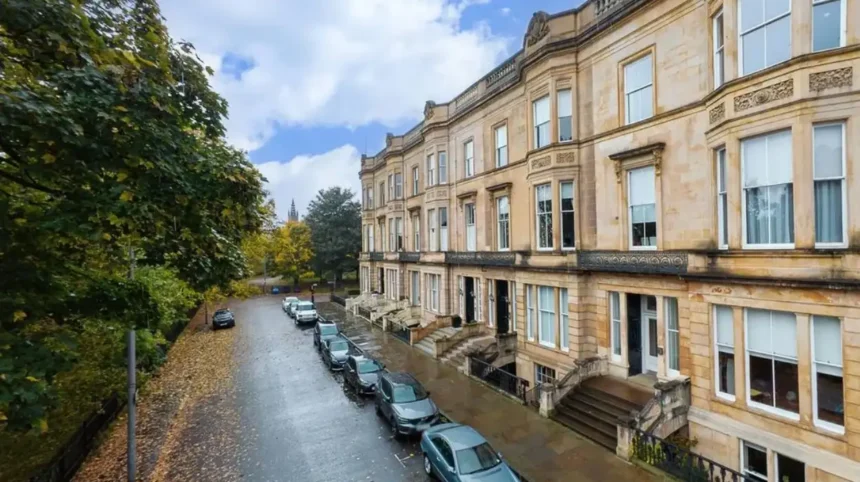
The West End includes Hillhead, Partick, Hyndland and Dowanhill. These neighbourhoods provide access to universities, parks, independent shops and public transport. Family accommodation includes traditional tenement flats and larger converted properties.
Shawlands, Pollokshields, Battlefield and Cathcart offer a mixture of flats, traditional houses and family-sized properties. The Southside also provides access to schools, local shopping streets and recreational spaces.
Dennistoun and surrounding East End neighbourhoods offer traditional tenement housing and access to local amenities. Families compare these locations when balancing accommodation costs and commuting requirements.
Areas around North Glasgow and neighbouring communities provide additional suburban housing options. Families also consider nearby locations such as Bishopbriggs and Bearsden, although these are outside Glasgow City Council’s administrative boundary.
Should Families Rent or Buy a Property?
Renting requires an ongoing monthly payment, while purchasing involves a mortgage deposit, mortgage repayments, legal fees, maintenance and other ownership expenses.
The average Glasgow house price reached approximately £194,000 in August 2026, according to ONS housing data. This figure covers different property types and does not represent the price of a typical family house. Office for National Statistics
Families purchasing a home should calculate mortgage affordability using interest rates, deposit size, household income and additional ownership expenses.
Private tenants should also budget for a rental deposit, moving expenses and possible furniture purchases when moving into a new property.

How Much Do Groceries and Food Cost for a Family in Glasgow?
A family of four should allocate approximately £450–£650 monthly for groceries in Glasgow, depending on shopping habits, dietary requirements and food preferences. Regular supermarket shopping, home cooking and meal planning help control household food expenditure.
Food represents an essential component of the Glasgow family budget. Household grocery spending increases with the number and ages of children, meal requirements and the proportion of meals prepared at home.
A household with two adults and two school-age children generally purchases fresh vegetables, fruit, dairy products, meat, fish, bread, cereals, snacks and household cooking ingredients.
The monthly grocery budget also changes according to shopping location. Large supermarkets, discount retailers, local convenience shops and specialist food stores have different product ranges and prices.
Which Supermarkets Help Families Manage Food Costs?
Families in Glasgow have access to several major supermarket chains, including Aldi, Lidl, Tesco and Asda.
Discount supermarkets offer lower-priced everyday groceries and selected branded products. Larger supermarkets provide broader selections of fresh food, household products and specialist dietary items.
Local markets and independent food shops also provide fresh produce and culturally specific ingredients.
Families can manage grocery expenditure by purchasing essential products in planned quantities, comparing unit prices and preparing meals at home.
How Much Does Eating Out Cost?
Eating out creates an additional expense beyond the weekly grocery budget. Glasgow has restaurants, cafés, takeaway outlets and family-friendly dining establishments.
A family eating out once or twice monthly can maintain a separate entertainment allowance. Frequent restaurant visits, takeaway deliveries and café purchases increase discretionary spending.
Families should distinguish essential food expenditure from recreational dining when calculating their monthly living costs.
How Much Are Gas, Electricity, Water and Internet Bills in Glasgow?
A family living in a typical three-bedroom Glasgow property should budget approximately £180–£300 monthly for energy, water-related charges and broadband. Actual bills depend on property insulation, household consumption, heating systems and the applicable utility tariffs.
Household utilities include electricity, gas, water and wastewater services. Internet and mobile telephone payments form additional communication expenses.
Energy consumption is particularly important in Scotland because colder weather increases household heating requirements during autumn and winter.
Older tenement buildings and larger properties also have different heating requirements from modern, energy-efficient homes.
What Are Typical Monthly Utility Expenses?
The following figures provide planning allowances rather than official average tariffs:
- Electricity and gas: £120–£200.
- Water and wastewater: £40–£55.
- Broadband: £25–£40.
- Mobile telephone services: £20–£50 for a household.
These estimates vary with household usage and service providers. Some properties use electric heating, while others rely on gas central heating.
Scottish Water collects household water and wastewater charges through council tax bills for most unmetered residential properties.
For 2026/27, Scottish Water’s combined annual water and wastewater charge is £652.32 for a Band D property, equivalent to approximately £54.36 monthly. Band C households pay £579.84 annually. scottishwater.co.uk
Why Do Winter Energy Bills Increase?
Glasgow experiences cooler temperatures during winter, increasing demand for domestic heating and hot water.
Families living in poorly insulated homes often experience higher energy consumption. Insulation, efficient heating controls, suitable thermostats and draught reduction help manage consumption.
Households should also compare energy tariffs and monitor meter readings to understand seasonal changes.
How Much Is Council Tax for Families in Glasgow?
Glasgow council tax depends on the property’s valuation band, with households also paying applicable Scottish Water charges through their council tax bill. Families should check their property’s band before calculating their annual housing expenses.
Council tax is a local property-based charge collected by Glasgow City Council to support local public services.
These services include waste collection, environmental maintenance, education-related local services and other council responsibilities.
Scottish residential properties fall into eight council tax bands, from Band A to Band H. The valuation system determines the applicable charge.
The household’s council tax liability does not depend directly on the number of family members living at the property.
What Other Charges Appear on the Council Tax Bill?
Scottish Water’s water supply and wastewater charges generally appear alongside council tax.
For 2026/27, the combined annual Scottish Water charges are:
- Band A: £434.88.
- Band B: £507.36.
- Band C: £579.84.
- Band D: £652.32.
- Band E: £797.28.
- Band F: £942.24.
- Band G: £1,087.20.
- Band H: £1,304.64.
These amounts cover water and wastewater services, not council tax itself. scottishwater.co.uk
Can Families Receive Council Tax Reductions?
Eligible households can apply for Council Tax Reduction through their local council.
The amount of assistance depends on household income, savings, circumstances and benefit entitlement.
Certain exemptions and discounts also apply under specific circumstances. Families should check Glasgow City Council’s current eligibility requirements rather than assuming that every household receives the same reduction.
How Much Does Childcare Cost for Families in Glasgow?
Childcare expenses depend on children’s ages, working arrangements and eligibility for funded nursery provision. Scotland provides up to 1,140 funded early learning and childcare hours annually for eligible three- and four-year-olds and qualifying two-year-olds.
Childcare is one of the most important financial considerations for working parents in Glasgow.
Families with babies and toddlers often require nursery places, registered childminders or other childcare arrangements. These services involve additional costs when parents work full-time or have limited family support.
The Scottish Government’s funded early learning and childcare programme reduces costs for eligible children.
How Does Scotland’s 1,140-Hour Childcare Programme Work?
Scotland introduced its expanded 1,140-hour funded early learning and childcare entitlement in August 2021.
Eligible three- and four-year-olds receive up to 1,140 funded hours annually. Certain two-year-olds also qualify.
The entitlement represents approximately 30 hours weekly during 38 school-term weeks or 22 hours weekly when distributed throughout the year.
Parents access funded hours through participating council nurseries, private nurseries, playgroups and eligible childminders.
The programme reduces the cost of early childhood education and childcare. However, families requiring additional hours outside their funded entitlement still face private childcare expenses.
How Much Do Parents Spend on Additional Childcare?
The Scottish Household Survey 2025 childcare research provides useful information about household expenditure.
The Scottish Government reported that approximately 47% of surveyed respondents used paid-for childcare. Among these parents, average monthly spending was £726.
Average expenditure was £733 for children under three and £635 for children aged three to five. Scottish Government
These figures cover Scotland rather than Glasgow alone. They provide a national indication of the financial commitment associated with paid childcare.
The survey also found that 71% of households with children aged 0–11 reported no childcare costs across the full year. This reflects differences in eligibility, childcare arrangements and family circumstances. Scottish Government
How Can Families Reduce Nursery Expenses?
Parents should check funded nursery eligibility before committing to private childcare arrangements.
Other options include registered childminders, family-supported childcare and coordinating working schedules between parents.
Families should also compare nursery opening hours, additional session charges, meals and holiday provision.
A funded nursery place does not automatically cover every childcare requirement. Working parents need to consider the time between nursery opening and closing, school holidays and commuting arrangements.
How Much Does Public Transport Cost for a Family in Glasgow?
A family using Glasgow’s public transport should budget approximately £150–£250 monthly, depending on the number of passengers, commuting frequency and ticket types. Bus, train and Subway services provide transport connections across the city and surrounding communities.
Glasgow has an established public transport network connecting residential neighbourhoods, employment centres, educational institutions and shopping districts.
The main transport options include buses, suburban trains and the Glasgow Subway. Families choose between individual journeys, season tickets and other available travel passes.
How Much Does Bus Travel Cost?
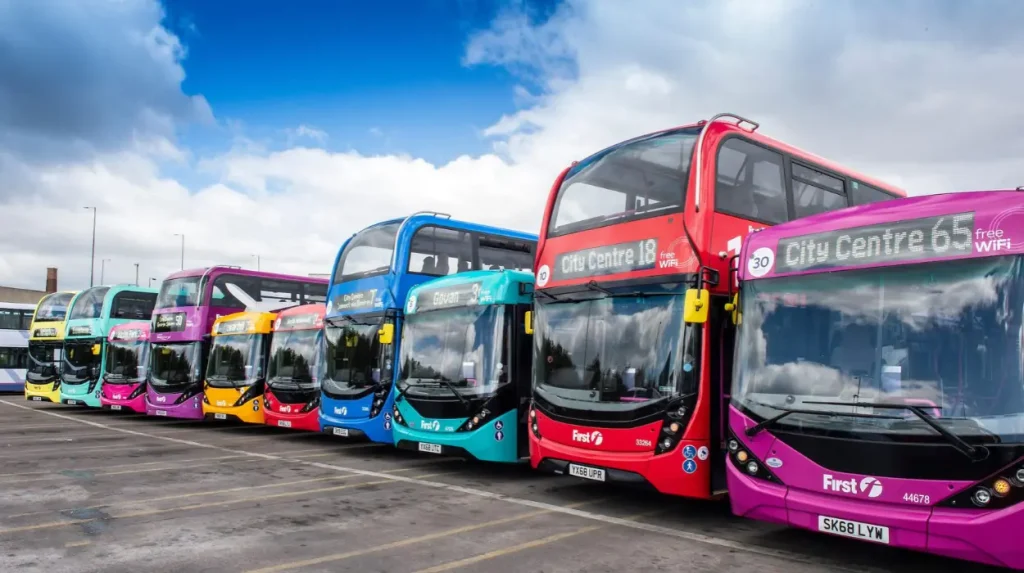
First Bus operates an extensive network across Glasgow and surrounding areas.
From 7 September 2026, First Bus introduced a £2 cap on adult single fares across its Glasgow services. Child single fares remain capped at £1.75.
For example, two adults making two single journeys each on the same day spend £8 in total before considering children’s fares.
Families commuting daily should compare single fares with available weekly and longer-term ticket options.
How Much Does the Glasgow Subway Cost?
The Glasgow Subway operates a circular underground railway network serving 15 stations.
It connects important locations, including Buchanan Street, St Enoch, Hillhead, Kelvinbridge and Partick.
The Subway provides convenient access to the city centre and West End. Families living near its stations can reduce dependence on private cars.
Passengers should check current SPT ticket prices and available child or family ticket arrangements before travelling.
Is Owning a Car More Expensive?
Car ownership creates additional expenses, including:
- Fuel and charging.
- Vehicle insurance.
- Road tax where applicable.
- MOT testing and maintenance.
- Parking permits and parking charges.
- Repairs and replacement tyres.
Families living outside central Glasgow often consider private vehicles for school runs, shopping and commuting.
However, parking availability and congestion affect the convenience of driving in central neighbourhoods.
The best transport arrangement depends on workplace location, school journeys and access to nearby public transport.
How Much Do Schools and Children’s Activities Cost in Glasgow?
Families in Glasgow benefit from Scotland’s publicly funded school education system. However, parents still need to budget for uniforms, footwear, school supplies, transport, extracurricular activities and occasional educational expenses.
Education is an important consideration when calculating the long-term cost of raising children in Glasgow.
Glasgow City Council operates a network of primary and secondary schools, while independent schools provide alternative fee-paying education.
Children generally attend local primary schools before progressing to secondary education.
What Are the Main Education Expenses?
State school education does not require parents to pay standard tuition fees. Nevertheless, households face additional education-related expenses.
These include school uniforms, shoes, coats, stationery, sports equipment and school trips.
A family with two school-age children should establish a monthly education allowance to spread annual expenses throughout the year.
School uniform costs vary according to school requirements and where parents purchase clothing.
How Much Do Children’s Activities Cost?
Glasgow provides recreational facilities for children, including parks, museums, libraries, sports centres and community activities.
Many family activities involve no admission charge, while specialist attractions, organised sports and paid classes require additional spending.
Parents should distinguish between essential education costs and optional recreational expenditure.
How Much Should Families Earn to Live Comfortably in Glasgow?
A family of four renting a three-bedroom home should target approximately £3,500–£4,000 in monthly take-home income for a controlled household budget. Families paying for additional childcare or expensive accommodation require a higher disposable income.
Household affordability depends on the relationship between income and expenditure.
A family earning a combined income from two full-time jobs has a different financial position from a single-income household.
The number of working adults, employment arrangements, tax deductions and benefit eligibility all influence available household income.
What Are Average Earnings in Glasgow?
According to Nomis labour market statistics using the ONS Annual Survey of Hours and Earnings, median gross weekly pay for full-time employees living in Glasgow City was £745.50 in 2025.
The equivalent figure for Scotland was £775.60, while Great Britain’s median was £766.60. Official Census and Labour Market Statistics
These figures describe individual full-time employee earnings, not combined household income.
Two adults working full-time can generate a higher combined gross income. However, income tax, National Insurance contributions, pension payments and childcare expenses reduce the amount available for household spending.
Which Employment Sectors Provide Opportunities?
Glasgow has employment opportunities across several established industries.
These include:
- Healthcare and social care.
- Financial and professional services.
- Education and research.
- Hospitality and tourism.
- Retail and wholesale.
- Manufacturing and engineering.
- Digital technology and creative industries.
The presence of major hospitals, universities, financial organisations and commercial employers supports employment across the metropolitan economy.
Families should compare employment opportunities with commuting expenses when selecting a residential location.
How Much Income Is Left After Essential Expenses?
A household’s disposable income is the money remaining after essential deductions and regular financial commitments.
For example, a family receiving £4,000 monthly after tax and pension deductions can use a portion for savings, recreation and unexpected expenses after paying its regular bills.
Families should avoid calculating affordability using gross salaries alone. Monthly take-home pay provides a more accurate picture of available household finances.
What Financial Support Is Available to Families Living in Glasgow?
Families in Glasgow can access several forms of financial assistance through the Scottish Government and UK benefit system. Support includes Scottish Child Payment, Child Benefit, Universal Credit, Best Start payments and eligible childcare funding.
Government support helps qualifying households manage the financial responsibilities of raising children.
Eligibility depends on income, benefits, household circumstances, children’s ages and other applicable conditions.
What Is Scottish Child Payment?
Scottish Child Payment is a benefit administered by Social Security Scotland.
As of October 2026, eligible families receive £28.20 weekly for each child under 16.
Payments are made every four weeks, providing £112.80 per eligible child per payment period.
A household with two eligible children receives £225.60 every four weeks.
Eligibility requires the applicant to live in Scotland, look after an eligible child and receive a qualifying benefit.
Can Families Receive Best Start Grant and Best Start Foods?
Best Start Grant provides financial assistance at important stages of a child’s early life.
The support includes payments associated with pregnancy, the birth of a child and starting school.
Best Start Foods helps eligible families purchase nutritious food for pregnant women and young children.
These programmes form part of Scotland’s wider family support system. Applicants should check current eligibility and payment amounts through Social Security Scotland.
Is Universal Credit Available to Families?
Universal Credit is a UK government benefit for eligible households with low incomes or limited employment.
The payment calculation considers household income, savings, housing circumstances, children and other relevant factors.
Eligible Glasgow families can receive assistance towards living expenses and housing costs.
Council Tax Reduction is a separate local authority support scheme. Families should assess both programmes when reviewing their household finances.
How Does Glasgow Compare with Other Major UK Cities?
Glasgow offers a different housing and living-cost structure from cities such as London, Edinburgh and Manchester. Accommodation costs, commuting requirements and household income determine how affordable Glasgow is for families relocating from other parts of the United Kingdom.
Glasgow is Scotland’s largest city, with a long history of industrial development, commercial activity and population growth.
During the 19th century, Glasgow became an important centre for shipbuilding, engineering, manufacturing and international trade. Industrial expansion attracted workers and encouraged the development of residential neighbourhoods across the city.
During the 20th century, economic restructuring changed the city’s employment structure. Healthcare, education, financial services, tourism and professional services became increasingly important.
Today, Glasgow combines historic residential districts with modern housing developments, commercial centres and educational institutions.
Is Glasgow More Affordable Than Edinburgh?
Glasgow generally provides different housing opportunities from Edinburgh, particularly for families comparing private rental accommodation.
Greater Glasgow’s average three-bedroom rent was £1,340 in September 2026, while four-bedroom accommodation averaged £2,284. These figures provide a useful starting point for evaluating family housing requirements.
Families relocating from Edinburgh should compare actual property listings, commuting costs and council tax rather than relying exclusively on citywide averages.
What Makes Glasgow Attractive to Families?
Glasgow provides access to educational institutions, healthcare facilities, employment centres, public transport and recreational spaces.
Its residential neighbourhoods also offer different housing arrangements, including traditional tenements, suburban houses and modern apartments.
The availability of public parks, museums, libraries and community facilities gives families access to activities beyond commercial entertainment.
However, affordability still depends on household income, property requirements and childcare responsibilities.
What Is a Realistic Monthly Budget for a Family of Four in Glasgow?
A family of four renting a three-bedroom property should plan for approximately £3,500–£4,000 monthly, including essential household expenditure and moderate discretionary spending. Paid childcare, debt repayments and larger housing requirements increase the total.
The following budget illustrates how a family with two adults and two school-age children can organise its monthly expenditure.
This example represents a controlled household budget. It is not an official Glasgow household expenditure survey. Council tax, water and utility allowances vary by property, and the budget excludes substantial paid childcare.
Families should also maintain separate provisions for unexpected expenses, holidays, dental treatment, vehicle repairs and annual payments.
How Does the Budget Change With Childcare?
Consider a family with one preschool child who requires additional paid nursery hours.
The Scottish Government’s 2025 childcare research recorded average monthly paid childcare spending of £726 among parents using paid-for childcare. Scottish Government
Adding that national average to the illustrative budget produces approximately £3,826 monthly.
A family with two children requiring paid childcare faces a different financial commitment.
The funded childcare entitlement reduces eligible expenses, but additional hours, meals and holiday arrangements still affect the household budget.
How Much Should Families Save Every Month?
Families should include emergency savings in their financial planning.
An emergency fund covers unexpected expenses such as appliance replacement, urgent travel, temporary unemployment and essential home repairs.
A practical approach involves saving a fixed amount after paying essential bills. The appropriate amount depends on household income, debt commitments and existing savings.
Households with variable earnings should maintain a larger financial reserve than families with stable employment income.
How Can Families Reduce Their Monthly Living Costs in Glasgow?
Families can reduce Glasgow living costs by choosing affordable accommodation, comparing utility tariffs, using public transport, accessing funded childcare and planning grocery purchases. Managing recurring expenses provides greater financial stability without removing essential household requirements.
Cost management begins with identifying the largest monthly payments.
Housing, food, transport and childcare generally deserve more attention than occasional discretionary purchases.
Choose Accommodation Carefully
Families should compare rents across different neighbourhoods and consider commuting expenses before signing a tenancy agreement.
A cheaper property located far from employment or schools creates additional transport costs.
The total monthly housing cost should include rent, council tax, heating and transport rather than rent alone.
Use Public Services and Family Facilities
Glasgow has public libraries, parks, museums and community facilities.
Families can organise recreational activities around free attractions instead of relying entirely on paid entertainment.
Public spaces also provide opportunities for walking, cycling and outdoor recreation.
Compare Utility Providers
Households should review energy tariffs, broadband packages and mobile contracts regularly.
Improving insulation and reducing unnecessary electricity consumption also helps control household bills.
Families living in older properties should pay particular attention to heating efficiency.
Plan Food Purchases
Weekly meal planning reduces unnecessary shopping and food waste.
Families should compare supermarket prices, purchase essential products in planned quantities and prepare meals at home.
Regular monitoring of grocery expenditure makes it easier to identify unnecessary spending.
Explore More Area Guide
How Much Does a Couple Need to Live in Glasgow?
Cost of Living in Glasgow: How Much Does One Person Need?
What Should Families Consider Before Moving to Glasgow?
Families relocating to Glasgow should assess employment opportunities, housing availability, school catchment arrangements, childcare access and transport connections before moving. A complete relocation budget must include initial expenses as well as recurring monthly living costs.
Relocation involves several expenses that do not appear in an ordinary monthly household budget.
These include travel, rental deposits, moving services, furniture, household equipment and initial utility payments.
Families moving from overseas should also account for immigration-related expenses where applicable.
How Important Is School Location?
School location influences daily commuting arrangements and residential choices.
Parents should research local school catchment areas and admission procedures through Glasgow City Council.
A property close to a preferred school can reduce travel time and transport expenditure.
Should Families Consider Healthcare Access?
Glasgow has major healthcare institutions, GP practices, pharmacies and community health facilities.
The NHS Scotland system provides publicly funded healthcare services, subject to eligibility and applicable charges.
Families relocating from outside Scotland should understand NHS registration requirements and local healthcare arrangements.
Why Should Families Research Employment Before Moving?
Employment determines the household’s ability to meet recurring living costs.
Parents should investigate salaries, working hours, employment contracts and commuting arrangements before committing to accommodation.
A realistic household financial plan should use confirmed take-home income rather than anticipated earnings.
Final Assessment: How Much Does a Family Need to Live in Glasgow?
The amount a family needs to live in Glasgow depends on accommodation, household size, employment arrangements and childcare requirements.
For a family of four renting a three-bedroom property, approximately £3,100 monthly represents a controlled illustrative budget covering rent, groceries, household bills, transport, education-related costs and moderate recreation.
A more comfortable planning allowance is approximately £3,500–£4,000 monthly, with additional income required when families use substantial paid childcare or rent larger properties.
Glasgow provides access to employment, schools, healthcare, public transport and family recreation. However, families should calculate their expected housing and childcare expenses before relocating.
Using current rental information, realistic household spending estimates and available government support gives families a clearer understanding of the income required to maintain a stable standard of living in Glasgow.
How much money does a family of four need to live in Glasgow?
A family of four generally needs around £3,500–£4,000 per month to live comfortably in Glasgow while renting a three-bedroom property. The budget depends on rent, groceries, transport, utility bills and childcare expenses.