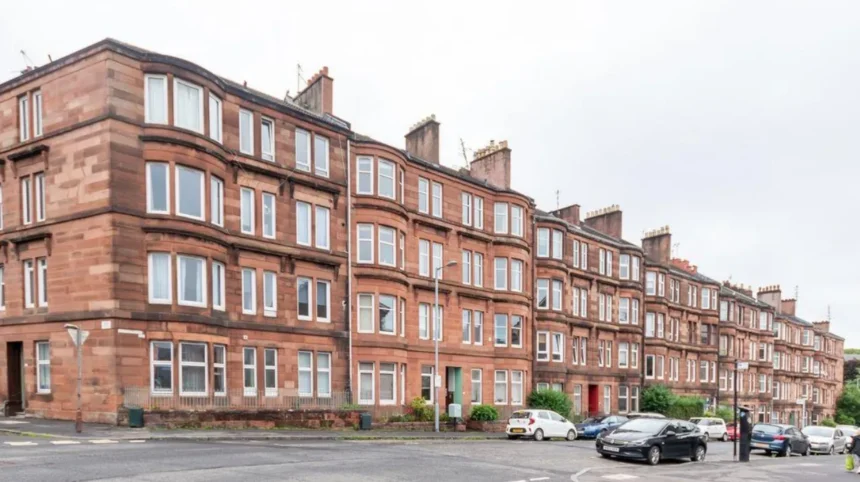
Glasgow remains one of Scotland’s major private rental markets, with significant differences between neighbourhoods and postcode districts. Citylets recorded an average Glasgow rent of £889 for one-bedroom properties in Q4 2025, while postcode-level figures showed substantially lower advertised averages in areas such as G32, G31, G41, G42, G44 and G51.
- Which areas are the cheapest places to rent in Glasgow?
- Is G32 one of the cheapest areas to rent in Glasgow?
- Is G31 a cheap area for renting in Glasgow?
- Is G44 affordable for renters in Glasgow?
- Is G41 a cheap place to rent in Glasgow?
- Is G42 affordable for renting?
- Is G51 one of the cheaper areas near central Glasgow?
- What other Glasgow postcode districts have relatively low rents?
- Why are rents cheaper in some parts of Glasgow?
- How much does renting in Glasgow cost compared with Scotland?
- How have Glasgow rents changed over time?
- What should renters check before choosing a cheap area in Glasgow?
- Are cheaper Glasgow areas suitable for students and young professionals?
- How can renters find the cheapest available properties in Glasgow?
- What is the outlook for affordable renting in Glasgow?
The cheapest areas to rent in Glasgow are generally found away from the city centre and prime West End locations. East Glasgow, parts of the Southside and several areas of the southwest offer lower asking rents than central districts. Rent depends on property size, condition, transport access, building type and local demand.
The Scottish Government’s latest Private Sector Rent Statistics cover rents to September 2025. The data is predominantly based on advertised rents collected through Rent Service Scotland’s Market Evidence Database. It excludes social housing, mid-market rents and halls of residence.
Which areas are the cheapest places to rent in Glasgow?
The lower-cost Glasgow rental areas include G32, G31, G51, G42, G41, G44 and parts of G40, with rents varying by property size. Q4 2025 Citylets data recorded one-bedroom averages from £732 in G32 to £864 in G42 among these districts.
Glasgow does not have one official list of cheapest neighbourhoods. Rental prices change between individual streets and properties. Postcode districts provide a useful way to identify broad areas with lower advertised rents.
Citylets’ Q4 2025 postcode data provides a clear comparison. G32 recorded an average one-bedroom rent of £732 per month. G31 followed at £757, G44 at £785, G41 at £830, G51 at £830 for two-bedroom properties, and G42 at £864 for one-bedroom properties.
These postcode districts cover different neighbourhoods. G32 includes areas such as Carmyle, Tollcross, Mount Vernon, Sandyhills and Shettleston. G31 covers Dennistoun, Haghill and part of Parkhead. G40 includes Bridgeton, Calton and Dalmarnock. G41 includes Pollokshields and Shawlands, while G42 covers Battlefield, Govanhill, Mount Florida and parts of Strathbungo. G44 covers Cathcart, Croftfoot and King’s Park. G51 includes Govan, Ibrox, Drumoyne, Cessnock and Plantation.
The figures demonstrate why postcode-level research is more useful than treating Glasgow as one rental market.
Is G32 one of the cheapest areas to rent in Glasgow?
G32 is one of the lower-priced Glasgow postcode districts in recent Citylets data, with an average advertised rent of £732 for one-bedroom properties and £911 for two-bedroom properties in Q4 2025.
G32 covers a broad section of east Glasgow. The postcode includes Carmyle, Tollcross, Mount Vernon, Lightburn, Sandyhills and Shettleston.
The Q4 2025 Citylets figures place G32 below several central Glasgow districts. A one-bedroom property averaged £732 per month, while a two-bedroom property averaged £911. The average time to let was 17 days for one-bedroom properties and 25 days for two-bedroom properties.
G32 also illustrates how rental prices can differ substantially within Glasgow. Citylets recorded £970 for one-bedroom properties in G1 during the same quarter. G3 recorded £1,003, while G12 recorded £961.
The area includes established residential neighbourhoods rather than Glasgow’s most expensive central and West End locations. This creates a larger supply of traditional flats and family-sized housing.
Tenants considering G32 should assess individual streets rather than relying solely on the postcode average. Property condition, heating systems, energy efficiency, parking and proximity to public transport affect the total cost of renting.
Is G31 a cheap area for renting in Glasgow?
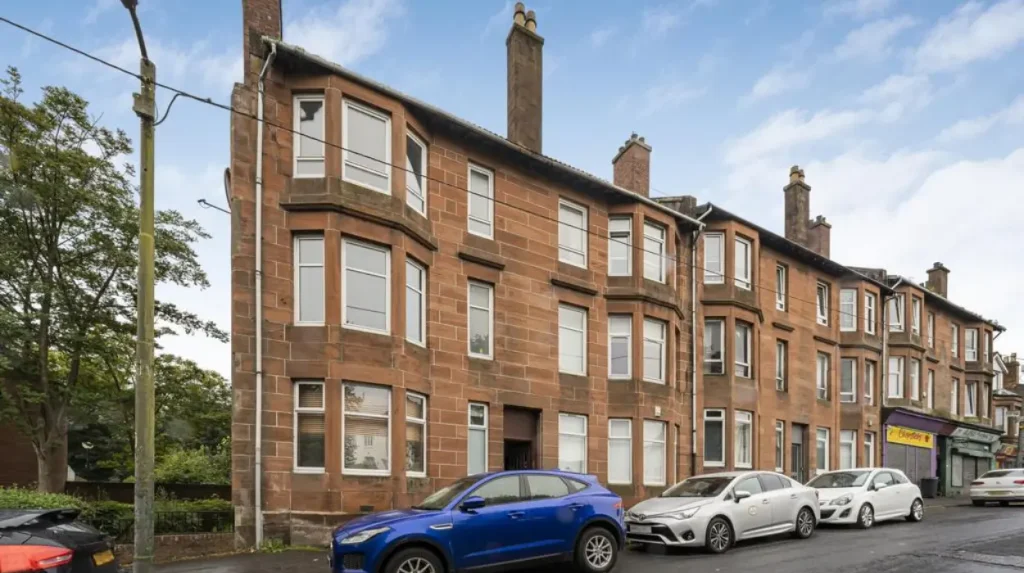
G31 is a relatively lower-cost inner-east Glasgow rental district, with Q4 2025 Citylets averages of £757 for one-bedroom properties and £1,070 for two-bedroom properties. It includes Dennistoun, Haghill and part of Parkhead.
G31 is closer to the city centre than several other budget-oriented districts. Its location makes it an important example of how relatively affordable rental options can exist near central Glasgow.
Dennistoun forms a major part of G31. Haghill and part of Parkhead are also within the postcode district.
Citylets recorded an average one-bedroom rent of £757 in Q4 2025. The two-bedroom average was £1,070. The reported time to let was 15 days for one-bedroom properties and 26 days for two-bedroom properties.
The district’s rental profile is influenced by its housing stock. Glasgow has a large stock of traditional tenement flats, particularly in inner-city neighbourhoods.
Glasgow City Council states that the city had an estimated 9,950 pre-1919 tenement buildings containing around 70,000 flats and 5,200 commercial premises. The council describes this stock as an important part of the city’s owner-occupied and private rented housing markets.
Older flats can have lower headline rents, but tenants should check heating costs, building maintenance, communal repairs and energy performance before signing a tenancy.
Is G44 affordable for renters in Glasgow?
G44 recorded an average one-bedroom advertised rent of £785 in Q4 2025, making it one of the lower-priced Glasgow postcode districts with published Citylets data for that property type. The district includes Cathcart, Croftfoot, King’s Park and surrounding neighbourhoods.
G44 is located in the south of Glasgow. It covers Cathcart, Simshill, Croftfoot, King’s Park, Muirend and parts of Netherlee. The postcode crosses the Glasgow City and East Renfrewshire boundary.
Citylets recorded £785 as the Q4 2025 average for a one-bedroom property in G44. The average time to let was 16 days.
The Q2 2025 Citylets report recorded £776 for one-bedroom properties in G44. This provides a useful comparison because it shows that the district remained in a similar price range across the year.
G44 offers a mixture of flats and houses. Housing type therefore affects affordability. A small flat and a larger family property within the same postcode can have very different rental prices.
Transport is also important. A lower rent becomes less significant if commuting costs increase substantially. Renters should calculate housing and transport costs together when comparing neighbourhoods.
Is G41 a cheap place to rent in Glasgow?
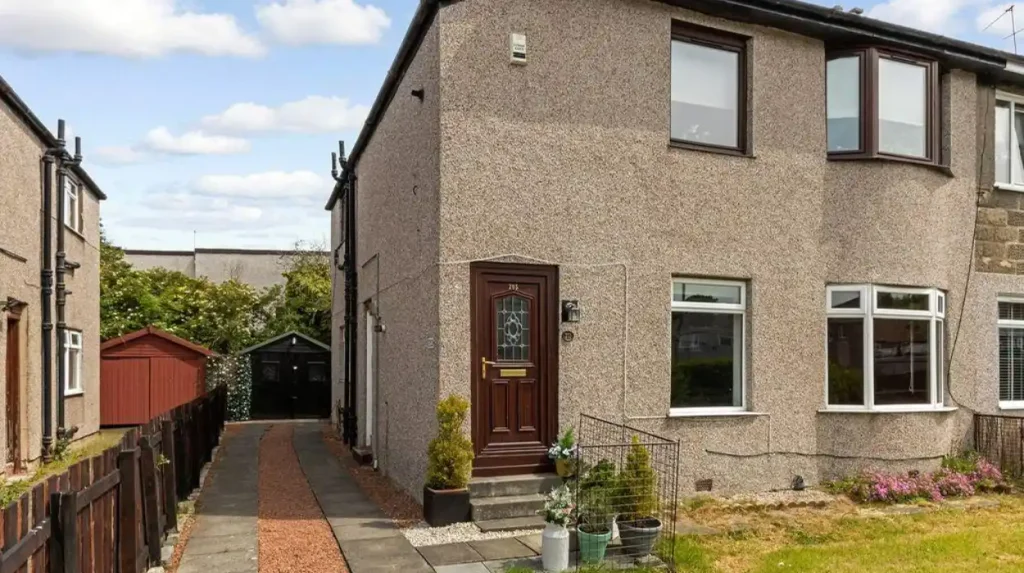
G41 provides relatively lower-cost rental options within Glasgow’s Southside, with Q4 2025 Citylets averages of £830 for one-bedroom properties and £1,104 for two-bedroom properties. The district includes Pollokshields and Shawlands.
G41 covers Pollokshields and Shawlands. These neighbourhoods sit in Glasgow’s Southside and contain substantial traditional tenement housing.
Citylets recorded £830 for one-bedroom properties in Q4 2025. Two-bedroom properties averaged £1,104. One-bedroom properties had an average time to let of 14 days, while two-bedroom properties averaged 30 days.
G41 demonstrates an important distinction between affordability and distance from the city centre. Some Southside locations provide access to central Glasgow while remaining below the rental levels recorded in several central and West End postcode districts.
The area also contains a mixture of older tenements and more modern residential properties. Tenants should therefore compare the condition and energy performance of individual homes.
Glasgow City Council has identified repair and maintenance of older tenements as an important housing issue. Its 2025 private-sector housing report states that property-condition problems occur in concentrations of older tenement stock across the city.
Is G42 affordable for renting?
G42 offers comparatively moderate rental prices across Glasgow’s Southside, with Q4 2025 Citylets data showing £864 for one-bedroom properties and £1,110 for two-bedroom properties. The district includes Govanhill, Battlefield, Mount Florida and Toryglen.
G42 covers several distinct neighbourhoods. These include Battlefield, Govanhill, Mount Florida, Toryglen and part of Strathbungo.
Citylets recorded an average one-bedroom rent of £864 and a two-bedroom rent of £1,110 in Q4 2025. The average time to let was 21 days for one-bedroom properties and 27 days for two-bedroom properties.
The postcode is particularly useful for renters who want a Southside location without moving into the highest-priced parts of Glasgow’s rental market.
Rental affordability differs considerably within G42. Property size, street location and building quality influence advertised prices.
Glasgow City Council specifically identifies Govanhill among areas where housing partnership initiatives have addressed property condition and management issues. This reflects the presence of older housing stock and the need for ongoing investment.
A tenant searching G42 should inspect communal areas, windows, heating, roof condition and factoring arrangements before agreeing to a tenancy.
Is G51 one of the cheaper areas near central Glasgow?
G51 provides relatively affordable two-bedroom rental options compared with several central Glasgow districts, with Citylets recording £989 per month in Q4 2025. The district includes Govan, Ibrox, Cessnock, Drumoyne and Plantation.
G51 is located in Glasgow’s southwest and includes Govan, Ibrox, Cessnock, Drumoyne and Plantation.
Citylets recorded a two-bedroom average of £989 in Q4 2025. The average time to let was 25 days.
The Q2 2025 figure was £945 for two-bedroom properties, showing that advertised rents can change during the year.
G51 is significant for renters who need access to central Glasgow but want to consider areas outside the highest-priced central districts. It also contains a mixture of traditional tenements, flats and newer residential development.
Glasgow City Council identifies Ibrox/Cessnock as an area where housing partnership initiatives have addressed property condition and management concerns.
Affordability should therefore be considered alongside property condition. A lower monthly rent does not automatically produce lower overall housing costs if heating, repairs or other occupancy costs are high.
What other Glasgow postcode districts have relatively low rents?
Other comparatively lower-priced Glasgow districts include G40, G13, G20 and G4, although prices differ by property size and available stock. Q4 2025 Citylets data recorded £881 for one-bedroom homes in G20 and £888 in G4.
G40 covers Bridgeton, Calton and Dalmarnock. Citylets recorded an average two-bedroom rent of £995 in Q4 2025.
G13 recorded a two-bedroom average of £1,020. G20 recorded £881 for one-bedroom properties and £1,141 for two-bedroom properties. G4 recorded £888 for one-bedroom properties and £1,231 for two-bedroom properties.
These figures show why renters should compare like-for-like property sizes.
A one-bedroom property in G20 cannot be directly compared with a two-bedroom property in G13. Different property types create different rental averages.
G40 is particularly relevant for renters considering the east side of the city centre. G20 covers Maryhill, North Kelvinside and Ruchill. G4 covers areas immediately north of the city centre, including parts of the traditional inner-city residential area.
The availability of properties also matters. Citylets only includes postcode districts where it has substantial quarterly rental volume, so the data does not represent every property advertised in Glasgow.
Why are rents cheaper in some parts of Glasgow?
Lower rents generally reflect a combination of housing stock, location, property size, demand, building condition and local supply. Glasgow’s large stock of traditional tenements provides many private rented homes, while central and West End demand increases rental pressure.
Location is one of the strongest influences on Glasgow rents. Central districts and popular West End areas attract demand from students, professionals and other renters seeking proximity to employment, universities, nightlife and cultural facilities.
Citylets reported that Glasgow’s rental market remained highly constrained in Q4 2025, with particularly strong demand in the city centre and West End.
Housing type is another important factor. Glasgow has an extensive tenement housing stock. Many pre-1919 tenements contain flats that form part of the city’s private rented market.
Property condition also affects asking rents. Older properties can require more heating and maintenance expenditure. Energy efficiency therefore forms an important part of a rental affordability assessment.
Supply influences competition. Citylets reported that 80% of Glasgow one-bedroom properties were let within one month in Q4 2025, while 27% were let within one week.
This means a lower advertised rent does not necessarily indicate an easy search. Affordable properties can attract strong demand.
How much does renting in Glasgow cost compared with Scotland?
Scotland’s average private rent reached £738 for one-bedroom properties and £921 for two-bedroom properties in the year to September 2025. Glasgow’s local postcode data shows substantial variation around these figures, depending on neighbourhood and property type.
Scottish Government statistics provide the national benchmark. In the year to September 2025, the Scottish average was £738 for one-bedroom properties, £921 for two-bedroom properties and £1,154 for three-bedroom properties.
The one-bedroom Scottish average increased by 4.0% between 2024 and 2025. The two-bedroom average increased by 3.1%.
Glasgow’s Citylets data uses a different methodology and should not be treated as directly equivalent to the Scottish Government series. Citylets reports advertised rental-market information by postcode, while the Scottish Government uses Rent Service Scotland’s Market Evidence Database and predominantly advertised rents for its official statistics.
This methodological difference explains why different sources can produce different Glasgow averages.
The useful conclusion is that renters should use official statistics for broader market context and postcode-level rental reports for neighbourhood comparisons.
How have Glasgow rents changed over time?
Glasgow rents have increased substantially over the long term, while individual neighbourhoods have experienced different rates of change. Scottish Government data shows national private rents rising significantly since 2010, and Citylets recorded a 67.4% ten-year increase for Glasgow one-bedroom rents by Q4 2025.
The Scottish Government recorded a 67.1% increase in the national average one-bedroom rent between 2010 and 2025. The average increased from £442 to £738 per month.
Two-bedroom rents increased from £554 in 2010 to £921 in 2025, representing a 66.3% increase.
Glasgow’s Citylets Q4 2025 report recorded a 67.4% increase in average one-bedroom rents over ten years. Its Glasgow one-bedroom average stood at £889 in Q4 2025.
Long-term growth has several implications. A postcode that was historically inexpensive can experience stronger demand and rising rents as transport connections, regeneration and housing demand change.
Rental affordability therefore requires current data. Historical descriptions such as “cheap Glasgow area” are not permanent classifications.
What should renters check before choosing a cheap area in Glasgow?
Renters should compare monthly rent with transport, energy, building condition, council tax, deposit requirements and property management. A lower asking rent is useful only when the full cost of occupying the property remains affordable.
Energy costs deserve particular attention in older Glasgow housing. Traditional tenements can have different insulation, heating and window arrangements.
Glasgow City Council identifies energy efficiency and the condition of existing housing as major priorities in its Housing Strategy 2023–28.
Building maintenance is also important. The council reports that around 5% of approximately 500 pre-1919 tenement properties surveyed between late 2018 and early 2020 were in serious disrepair.
Tenants should inspect the communal stairwell, roof condition, external walls, windows, heating system and signs of damp. They should also establish who manages common repairs.
Transport costs should be included in the budget. A property that saves £100 per month in rent but creates substantially higher commuting costs does not provide the same effective saving.
Tenants should also check the tenancy agreement, deposit arrangements, repair responsibilities and landlord or letting-agent information before moving in.
Are cheaper Glasgow areas suitable for students and young professionals?
Lower-cost areas can provide rental options for students and young professionals, particularly where properties have good public transport connections. G31, G32, G40, G41, G42 and G51 offer different combinations of rent, housing stock and access to central Glasgow.
Students often compare rental costs with travel time to universities. Young professionals typically consider the relationship between rent, employment locations and transport costs.
G31 and G40 sit relatively close to central Glasgow. G41 and G42 provide Southside options. G51 provides southwest accommodation, while G32 offers lower-cost east Glasgow options.
Citylets’ Q4 2025 figures demonstrate the difference between these districts. G32 recorded £732 for one-bedroom properties, while G31 recorded £757 and G41 £830.
Students sharing a property also need to calculate the rent per person rather than only the total monthly rent. A two-bedroom or three-bedroom property can produce a different individual housing cost from a one-bedroom flat.
Young professionals should consider commuting frequency. Hybrid workers can place greater importance on home energy efficiency, internet connectivity and internal space.
Explore More Area Guide
Best Areas to Live in Glasgow for Students
Best Family Areas to Live in Glasgow | 2026 Guide
How can renters find the cheapest available properties in Glasgow?
The most effective approach is to compare current listings by postcode, property size and total occupancy cost rather than relying on historical neighbourhood rankings. Renters should monitor new listings, compare several districts and inspect properties before committing to a tenancy.
Rental listings change quickly. Citylets reported that 80% of Glasgow one-bedroom properties were let within one month in Q4 2025.
A practical search begins with a budget. The renter can then compare G32, G31, G40, G41, G42, G44 and G51 against that budget.
Property size should remain consistent during comparisons. One-bedroom averages should be compared with one-bedroom averages. Two-bedroom averages should be compared with two-bedroom averages.
The next stage is checking individual listings. Advertised rent is only one part of the financial calculation. Council tax, utilities, broadband, transport and potential parking costs also matter.
Property condition should be assessed during a viewing. Tenants should check heating, windows, ventilation, water pressure, appliances, communal areas and evidence of damp.
Rental data should be treated as a market guide rather than a guaranteed price for every property. Citylets states that its postcode report includes districts with substantial quarterly rental volume.
What is the outlook for affordable renting in Glasgow?
Affordable rental supply remains an important Glasgow housing issue because demand, property condition, investment costs and rental supply interact. Future affordability depends on the availability of homes, household incomes, housing policy, repairs, energy efficiency and private-sector rental supply.
Glasgow City Council’s housing strategy identifies affordable housing, housing condition and energy efficiency as significant policy areas.
The city also faces pressure from older housing stock. The council reports around 70,000 flats within 9,950 pre-1919 tenement buildings. Maintaining this stock remains a major housing challenge.
Rental supply also influences affordability. Citylets described Glasgow’s private rented sector as highly constrained in Q4 2025 and reported strong demand in the city centre and West End.
For renters, this makes location flexibility increasingly important. Looking beyond central Glasgow can expand the number of properties within a fixed budget.
G32, G31, G44, G41, G42 and G51 provide examples of postcode districts where recent advertised rents were below many central Glasgow districts for comparable property types.
The cheapest area is therefore not a permanent label. Glasgow’s rental market changes with supply, demand, property condition and broader housing costs. Current postcode data remains the most useful starting point when searching for an affordable Glasgow rental.
What is the cheapest area to rent in Glasgow?
G32 is among the cheapest Glasgow postcode districts in the latest Citylets data used in the article. Its average advertised rent was £732 per month for a one-bedroom property in Q4 2025.