The Riverside Museum is Glasgow’s dedicated transport and technology museum on the River Clyde waterfront. Designed by architect Dame Zaha Hadid, it opened in 2011 and presents more than 3,000 objects covering transport, engineering, industrial history and everyday life.
- What exactly is the Riverside Museum?
- When did the Riverside Museum open?
- Who designed the Riverside Museum?
- What can you see inside Riverside Museum?
- Which objects are the main highlights at Riverside Museum?
- How does Riverside Museum explain Glasgow’s industrial heritage?
- Is the Riverside Museum connected to the Tall Ship Glenlee?
- How much does Riverside Museum cost?
- What are the current opening hours at Riverside Museum?
- How do you get to Riverside Museum?
- Is parking available at Riverside Museum?
- Is Riverside Museum suitable for families?
- Is Riverside Museum accessible?
- How long should you spend at Riverside Museum?
- How popular is Riverside Museum?
- Why is Riverside Museum important to Glasgow?
- What makes Riverside Museum different from other Glasgow museums?
- Is Riverside Museum worth your time?
- What should visitors know before going to Riverside Museum?
- What is the overall significance of Riverside Museum in Glasgow?
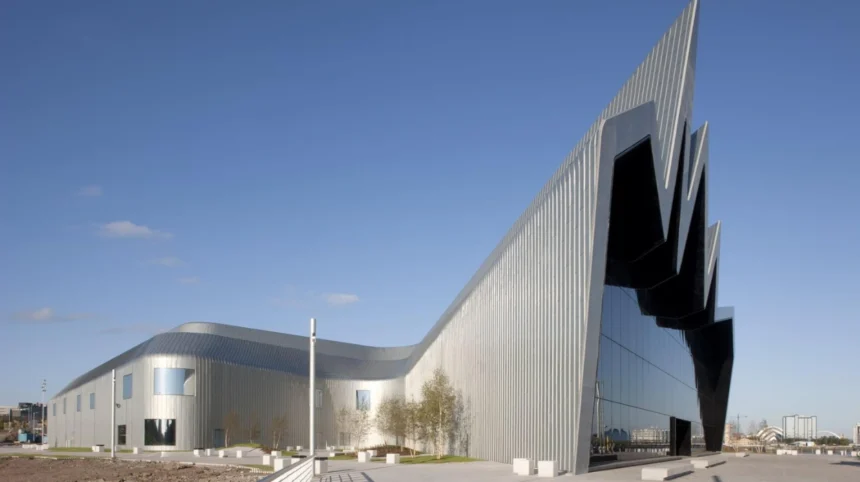
The museum stands at the junction of the Rivers Clyde and Kelvin in the west of Glasgow. Its location connects the museum directly with the city’s shipbuilding heritage and the historic industries that developed around the Clyde. The building itself forms part of the attraction, with its distinctive angular roof and large open exhibition spaces.
Riverside Museum is operated by Glasgow Life, the organisation responsible for Glasgow’s museums, cultural venues, libraries and sports facilities. Admission to Riverside Museum is currently free, with donations welcomed.
For visitors interested in Glasgow’s industrial history, transport technology, architecture and social history, Riverside Museum provides a concentrated introduction to several important aspects of the city. Its displays include vehicles, machinery, reconstructed interiors and interactive interpretation.
What exactly is the Riverside Museum?
The Riverside Museum is Glasgow’s award-winning transport and technology museum, housing more than 3,000 objects across two floors at the junction of the Clyde and Kelvin. It explains transportation, engineering, industrial development and Glasgow’s social history.
Riverside Museum replaced the former Museum of Transport collection that had been displayed at Kelvin Hall. The transport collection moved to the new Riverside Museum as part of a major redevelopment of Glasgow’s museum infrastructure. Glasgow Life identifies Riverside as its first purpose-built museum of the 21st century.
The museum is not limited to automobiles. Its collection includes cars, bicycles, motorcycles, buses, trams, locomotives, ship-related material and other forms of transport technology. The displays also examine the people, industries and communities associated with those forms of transport.
The museum therefore operates as both a transport museum and an industrial heritage museum. Its subject extends from individual vehicles to the wider systems that allowed Glasgow and other cities to move people and goods.
The building contains two floors and more than 150 themed displays. Historical museum documentation records more than 3,000 objects and describes the use of hands-on interactives and digital interpretation.
When did the Riverside Museum open?
Riverside Museum opened in 2011 after a four-year construction programme, replacing earlier arrangements for Glasgow’s transport collection and establishing a purpose-built museum beside the River Clyde. Its collections continued the long history of Glasgow’s Museum of Transport.
The museum’s development reflected Glasgow’s long association with engineering, shipbuilding and transport manufacturing. The River Clyde was central to these industries, while Glasgow also developed important railway, tram, bus and motor manufacturing connections.
Before Riverside Museum, the city’s transport collection had been displayed at Kelvin Hall. Glasgow Life records that the Museum of Transport moved to Kelvin Hall in 1987. The city’s transport collection subsequently moved to Riverside Museum as the new waterfront museum opened.
The relocation created a substantially larger and more purpose-designed environment for the collection. It also placed transport history directly beside the Clyde, one of the geographical features most closely associated with Glasgow’s industrial development.
The museum opened with more than 3,000 objects on display. Its exhibition design combines large vehicles with smaller objects and reconstructed environments, allowing visitors to examine transport technology alongside the social history surrounding it.
Who designed the Riverside Museum?
Dame Zaha Hadid designed Riverside Museum, creating a distinctive waterfront building whose complex geometry reflects Glasgow’s engineering heritage. Hadid was an internationally recognised architect, artist and designer whose work shaped major cultural and architectural projects worldwide.
Zaha Hadid was born in Baghdad in 1950 and became one of the most influential architects of the late 20th and early 21st centuries. She established Zaha Hadid Architects and received the Pritzker Architecture Prize in 2004.
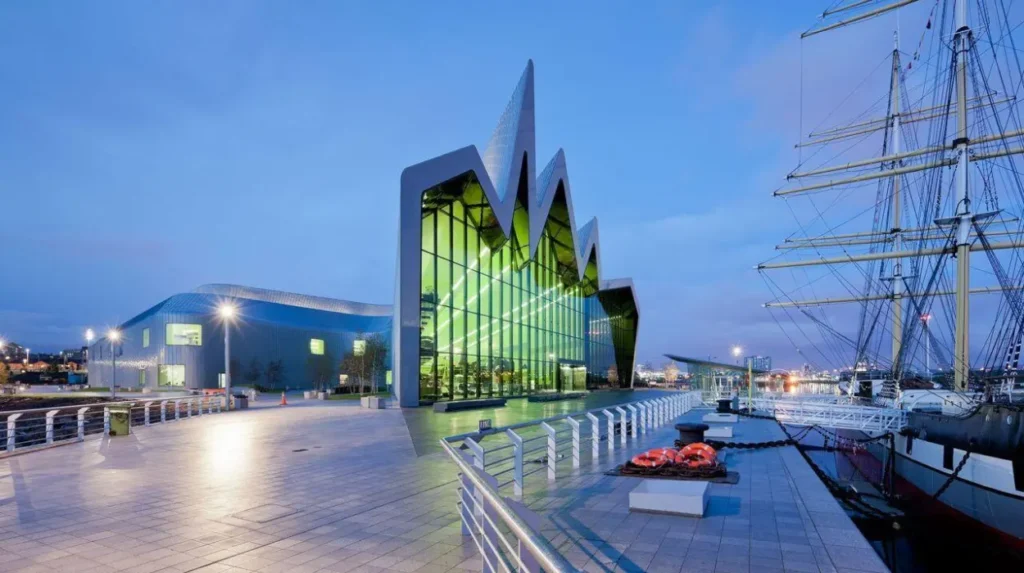
Her Riverside Museum design uses a large continuous roof structure and an expansive internal exhibition space. The building has a strong visual relationship with the Clyde waterfront.
Glasgow Life describes the museum as a place where the exhibits and architecture work together. Its complex geometry also connects with Glasgow’s historic engineering traditions.
The architectural importance of Riverside Museum extends beyond its exterior appearance. The building provides the large, open interior needed for substantial vehicles and industrial objects. A transport museum requires considerable vertical and horizontal space, particularly for locomotives, buses and other large exhibits.
The design therefore supports the museum’s operational purpose as well as its architectural identity.
What can you see inside Riverside Museum?
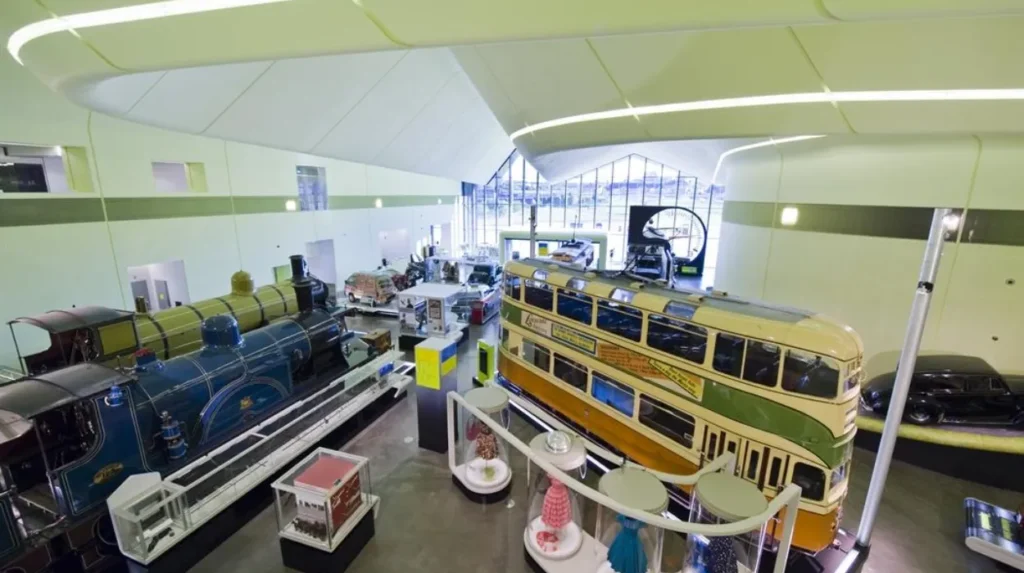
Visitors can see more than 3,000 transport and technology objects, including cars, motorcycles, bicycles, trams, buses, locomotives and historical displays. The collection also includes reconstructed streets, interactive exhibits and objects explaining Glasgow’s industrial and social history.
One of the museum’s defining features is its scale. Large objects are displayed alongside smaller personal and technological items. This arrangement demonstrates how transport affected both industrial production and ordinary daily life.
The vehicle collection includes historic automobiles and Scottish-built vehicles. Glasgow’s own manufacturing history appears through companies and models associated with Scottish engineering.
The museum also contains motorcycles and bicycles. These displays show the development of personal mobility and the changing technologies used for everyday travel.
Public transport is another major theme. Trams, buses and subway-related material demonstrate how Glasgow developed systems for moving large numbers of passengers.
The museum’s recreated street is particularly important for understanding social history. It presents a historic Glasgow streetscape with shops, houses and a subway station. Glasgow Life identifies the recreated street as one of Riverside’s major visitor features.
The museum also uses interactive interpretation. Hands-on elements provide visitors with practical ways to explore transportation and engineering concepts rather than relying exclusively on conventional object labels.
Which objects are the main highlights at Riverside Museum?
Major Riverside Museum highlights include the South African locomotive, the Car Wall, historic trams, motorcycles, bicycles, Glasgow street displays and the museum’s extensive collection of transport technology. These exhibits represent different periods of engineering, manufacturing and everyday transportation.
The South African locomotive is one of the museum’s largest exhibits. Glasgow Life states that it was built in Glasgow in 1945 and exported to South Africa, where it operated until 1987. Its interpretation also examines railway workers and the relationship between railways and apartheid-era South Africa.
The Car Wall is another major feature. It presents 31 cars from Glasgow Museums’ collections. Examples include Sir William Burrell’s Rolls-Royce Phantom II, a Porsche 911, an Isle of Arran postal van and a BMW Isetta bubble car.
Scottish manufacturers represented in the collection include Albion, Arrol-Johnston and Argyll. These manufacturers form part of Scotland’s wider history of vehicle production and engineering.
The museum’s tram displays provide another connection between transport and social history. Interpretation examines how Glasgow residents used trams as part of everyday urban life.
The bicycle and motorcycle displays extend the transport story beyond large machines. They demonstrate how mobility developed at different scales, from individual cycling to mass public transportation.
How does Riverside Museum explain Glasgow’s industrial heritage?
Riverside Museum explains Glasgow’s industrial heritage through transport objects, engineering displays and historical interpretation connected to shipbuilding, railway production, vehicle manufacturing and public transport. The museum places these technologies within the wider economic and social development of Glasgow.
Glasgow’s industrial history is strongly connected with the River Clyde. Shipbuilding became one of the defining industries of the city and surrounding communities. The Clyde also supported wider engineering, manufacturing and transport industries.
Riverside Museum’s location reinforces this historical context. Visitors can see the Clyde from the museum while exploring objects associated with industries that developed around the river.
The museum’s collection demonstrates that industrial history is not limited to factories. Transport systems connected workplaces, homes, commercial areas and communities.
Railways moved workers and goods. Trams and buses supported urban mobility. Cars transformed personal transportation. Bicycles provided another form of individual mobility. Ships connected Glasgow with national and international trade.
This broader approach makes Riverside Museum relevant to visitors who want to understand Glasgow rather than simply identify historic vehicles.
Is the Riverside Museum connected to the Tall Ship Glenlee?
The Tall Ship Glenlee is berthed beside Riverside Museum on the Clyde, creating a combined waterfront attraction, but the ship is a separate visitor experience. Visitors should treat Riverside Museum admission and Tall Ship access as separate arrangements.
The Tall Ship Glenlee is a historic sailing vessel launched on the Clyde in 1896. Glasgow Life’s Riverside learning material identifies the ship as an important part of the waterfront setting.
The ship is not part of Riverside Museum itself. Glasgow Life specifically states that the Tall Ship requires separate arrangements and recommends advance booking because visitor capacity is limited.
This distinction matters when planning a visit. A visitor can explore Riverside Museum without visiting the ship. The two attractions can also form part of the same waterfront itinerary.
The combination provides two different perspectives on transport history. Riverside focuses on a broad collection of vehicles and technology, while Glenlee provides access to a historic vessel and maritime environment.
How much does Riverside Museum cost?
Riverside Museum currently has free admission, and visitors do not need to book a standard museum visit. Glasgow Life welcomes donations, allowing visitors to support the museum service while accessing its permanent collections without an admission charge.
Free entry is one of the museum’s most significant practical features. It removes an admission cost from a Glasgow sightseeing itinerary.
Glasgow Life currently states that visitors can simply drop in without booking for standard entry. Special events and activities have their own arrangements, so visitors should check the current museum programme before travelling.
The free admission model also makes Riverside Museum suitable for shorter visits. Visitors do not need to allocate an entire day to justify a ticket price.
The museum accepts donations. These contributions support the wider museum service and help maintain public access to Glasgow’s collections.
What are the current opening hours at Riverside Museum?
Riverside Museum currently opens Monday to Thursday from 10am to 5pm, Friday from 11am to 5pm, Saturday from 10am to 5pm, and Sunday from 11am to 5pm. Visitors should check Glasgow Life before travelling.
The museum’s current published weekly schedule is:
Monday: 10am–5pm.
Tuesday: 10am–5pm.
Wednesday: 10am–5pm.
Thursday: 10am–5pm.
Friday: 11am–5pm.
Saturday: 10am–5pm.
Sunday: 11am–5pm.
Opening arrangements can change for public holidays, special events, operational requirements and temporary programmes. The official Glasgow Life venue page is therefore the appropriate source for checking opening information immediately before a visit.
The museum’s regular schedule gives visitors substantial daytime access throughout the week.
How do you get to Riverside Museum?
Riverside Museum is accessible by train, Subway, bus, bicycle and walking routes. Partick Interchange is about 0.6 miles away, Govan Subway station is about 0.3 miles away, and the museum is connected to Sustrans Route 7.
Partick Interchange provides connections between rail, Subway and bus services. Glasgow Life places the interchange approximately 0.6 miles from Riverside Museum and provides a signposted walking route.
Govan Subway station is approximately 0.3 miles from the museum. The station forms part of Govan Interchange, providing another public transport option.
The Govan–Partick Bridge provides another pedestrian connection across the Clyde. Glasgow Life states that the bridge creates an access point from the Govan transport hub, with a walking route to Riverside Museum.
Cyclists can use Sustrans Route 7. Cycle parking is available outside the museum, and a Voi cycle hire station is also located outside the venue.
These connections make Riverside Museum practical to combine with other west Glasgow destinations.
Is parking available at Riverside Museum?
Riverside Museum has on-site parking, but current capacity is reduced to approximately 100 spaces. Glasgow Life states that the car park fills quickly during busy periods, particularly weekends, and recommends public transport when possible.
The parking charges are based on the length of stay. Glasgow Life currently lists £3 for up to one hour, £5 for one to two hours, £7.50 for two to three hours and £10 for stays from three to ten hours.
Cashless parking is available through RingGo. The museum advises visitors to register before arrival.
The reduced capacity makes public transport a practical choice for busy periods. This is particularly relevant for families and visitors travelling during weekends or major events.
The museum’s location beside major transport connections also means that driving is not essential for a standard visit.
Is Riverside Museum suitable for families?
Riverside Museum is designed for visitors of different ages, with interactive displays, hands-on activities, historic vehicles and a recreated Glasgow street. Regular family programmes provide additional opportunities to engage directly with museum objects and themes.
The museum’s hands-on approach provides an alternative to a purely observational museum visit. Children can encounter large vehicles and technology while learning about how transportation works.
Glasgow Life runs family-focused programmes at Riverside. Its Discover programme provides free hands-on activities, trails and object-based learning sessions.
The museum also hosts seasonal activities. Programme details change over time, so visitors should consult the current events calendar.
The recreated street is another useful feature for families because it gives historical context to the objects. It shows how transport interacted with shops, homes, public services and urban life.
Is Riverside Museum accessible?
Riverside Museum provides wheelchair and pram access throughout public areas using lifts, accessible toilets, a Changing Places facility and assistance-dog access. Hearing loops and sensory resources also support different visitor requirements.
The museum provides wheelchair access to all public areas through lifts. Pram access is also available.
A Changing Places facility is located on the ground floor near reception. Glasgow Life states that no key is required during opening hours.
Assistance dogs are welcome.
A hearing loop is available within the venue. Glasgow Life also provides accessibility guides and an autism-friendly visual storyboard for visitors who benefit from advance information.
The museum also runs autism-friendly quiet openings for selected activities. These sessions reduce visitor numbers and environmental noise during the designated period.
Visitors with specific accessibility requirements should consult the latest Glasgow Life accessibility information before travelling.
How long should you spend at Riverside Museum?
A practical Riverside Museum visit requires around two to three hours for visitors who want to examine the main galleries, major vehicles, recreated street and interactive displays without rushing. Longer visits suit visitors studying transport, architecture or Glasgow’s industrial history.
The museum contains more than 3,000 objects across a large exhibition environment. A short visit can focus on the main highlights, while a longer visit allows more detailed examination of individual collections.
Visitors interested primarily in architecture can spend additional time studying the building and its relationship with the Clyde.
Transport enthusiasts require additional time because the collection covers multiple categories and historical periods. Families also benefit from allowing time for interactive displays and activities.
The museum’s free admission makes flexible visit lengths practical. A visitor can spend an hour on a wider Glasgow itinerary or several hours exploring the collection in greater depth.
How popular is Riverside Museum?
Riverside Museum has consistently attracted substantial visitor numbers since opening. It recorded 760,128 attendances in 2013–14, more than 1.06 million in 2014–15, over 1.3 million visits in 2017–18, and approximately 1.2 million visitors in 2025.
The museum reached its three-millionth visitor in March 2014, demonstrating rapid public interest during its first years. Glasgow Life recorded 760,128 Riverside attendances in 2013–14.
Attendance increased further in 2014–15, when Riverside recorded 1,067,508 visits.
Glasgow Life reported more than 1.3 million Riverside visits during 2017–18. The annual review also noted new and refreshed displays and acquisitions.
More recently, Glasgow Life reported approximately 1.2 million visitors to Riverside Museum in 2025. The figure demonstrates the attraction’s continued position among Glasgow’s major visitor destinations.
These figures provide a useful measure of the museum’s long-term public reach rather than relying only on subjective assessments.
Why is Riverside Museum important to Glasgow?
Riverside Museum preserves and interprets Glasgow’s transport, engineering and industrial heritage while making that history publicly accessible. Its Clyde waterfront location, free admission, major collection and modern architecture give it an important role in Glasgow’s cultural infrastructure.
Glasgow Museums collectively care for more than five million items, according to Glasgow Life’s annual review. Riverside Museum provides public access to a significant part of that wider civic collection through its transport and technology displays.
The museum also connects physical objects with wider historical questions. A locomotive can explain railway engineering and labour. A tram can explain public transport and urban life. A car can explain manufacturing, design and personal mobility.
The museum therefore contributes to heritage preservation and public education.
Its location is equally important. The Clyde waterfront provides direct geographical context for Glasgow’s industrial history. Visitors do not encounter the collection in isolation from the landscape that helped shape the city.
What makes Riverside Museum different from other Glasgow museums?
Riverside Museum differs from Glasgow’s art, religious and social-history museums through its concentration on transport, technology and engineering. Its collection combines very large vehicles with interactive displays and reconstructed environments inside a purpose-built modern building.
Kelvingrove Art Gallery and Museum covers art, natural history and broad cultural collections. The Burrell Collection focuses strongly on art and decorative objects. Riverside instead places transportation and industrial technology at the centre of its interpretation.
Its large objects create a distinctive exhibition environment. A full-size locomotive, bus or tram requires a different museum architecture from paintings or smaller artefacts.
The recreated street adds another dimension. It links transportation with everyday Glasgow life.
The building itself also forms part of the visitor experience. Zaha Hadid’s architecture creates a contemporary setting for collections associated with Glasgow’s industrial past.
Is Riverside Museum worth your time?
Riverside Museum is worth including in a Glasgow itinerary because it combines free admission, more than 3,000 objects, major transport exhibits, Glasgow industrial history, interactive interpretation and Zaha Hadid architecture beside the River Clyde. Its accessibility strengthens its practical value.
The strongest reason to visit is the combination of subjects. Riverside is not simply a collection of old vehicles. It explains how transportation and engineering affected Glasgow’s economy, communities and everyday life.
The museum also provides strong value for visitors because standard admission is free.
Its location creates an additional reason to visit. The Clyde setting connects the museum directly with Glasgow’s maritime and industrial history.
The architecture adds another layer. Visitors interested in contemporary design can study one of Zaha Hadid’s major cultural buildings while exploring the collections.
The visitor numbers also demonstrate sustained public interest. Riverside has attracted hundreds of thousands of visitors annually and exceeded one million visits in several years since opening.
For visitors building a Glasgow itinerary around museums, transport history, industrial heritage or west Glasgow, Riverside Museum provides a clear and substantial attraction.
Explore More Area Guide
Gallery of Modern Art Glasgow: Visitor Guide 2026
Best Street Art & Mural Locations Around Glasgow 2026
What should visitors know before going to Riverside Museum?
Visitors should check current opening hours, event arrangements, parking capacity and Tall Ship access before travelling. Standard Riverside Museum entry is free and does not require booking, while the Tall Ship is a separate attraction with separate visitor arrangements.
The most important practical point is that Riverside Museum and the Tall Ship Glenlee are separate visitor experiences. The ship has its own capacity and booking arrangements.
Visitors driving should account for reduced parking capacity. Glasgow Life currently lists approximately 100 spaces and recommends public transport during busy periods.
Visitors using public transport can travel through Partick or Govan. Cycling is also supported through the Sustrans Route 7 connection and cycle parking.
Families should check the current events programme because free activities and seasonal programmes change throughout the year.
Accessibility information is also available before arrival, including visual resources and venue accessibility guidance.
What is the overall significance of Riverside Museum in Glasgow?
Riverside Museum is a major Glasgow cultural attraction that combines transport collections, industrial heritage, modern architecture and public education. Opened in 2011, it remains a significant Clyde waterfront destination with free entry and more than 3,000 displayed objects.
Riverside Museum brings together several defining elements of Glasgow’s identity. The city’s engineering tradition appears through vehicles and machinery. Its industrial past appears through interpretation of shipbuilding, railways and manufacturing. Its social history appears through public transport and recreated urban environments.
The museum’s architecture represents a different period of Glasgow’s development. Zaha Hadid’s contemporary building stands beside the Clyde while interpreting industries that shaped the city during earlier centuries.
The result is a museum that connects past and present through transport technology.
Its free admission, public programmes and accessibility provisions also support broad public use. Visitor figures demonstrate sustained demand, including approximately 1.2 million visitors in 2025.
For Glasgow Express readers looking for a factual introduction to one of Glasgow’s major museums, Riverside Museum provides a strong example of how the city preserves industrial heritage while presenting it through contemporary museum design. The combination of transport collections, interactive interpretation, historic context, waterfront setting and architecture makes Riverside Museum a substantial part of Glasgow’s cultural landscape.
What is Riverside Museum in Glasgow?
Riverside Museum is Glasgow’s transport and technology museum beside the River Clyde. It contains more than 3,000 objects, including cars, buses, trams, bicycles, motorcycles and locomotives.