Key Points
- Major Infrastructure Proposal: Glasgow-based Allied Vehicles is exploring plans to construct a large-scale data centre facility in the north of Glasgow.
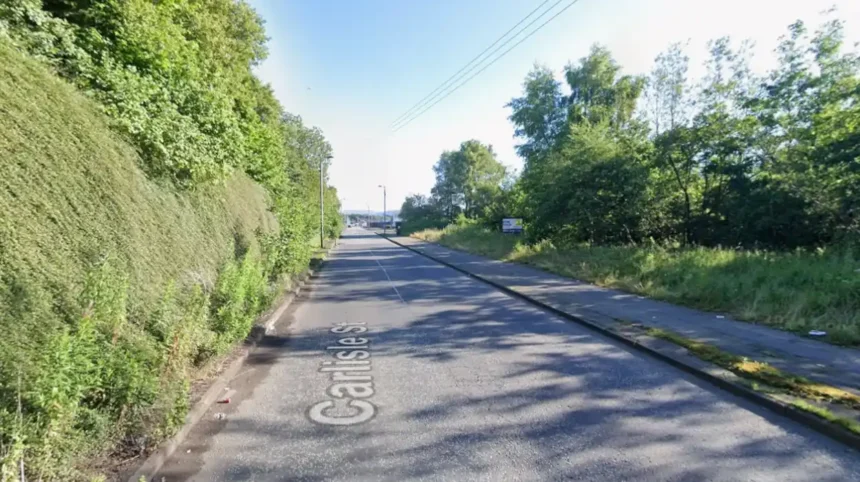
- Site Location: The proposed site covers 11 acres along Carlisle Street, directly opposite Cowlairs Park, on land formerly housing the historic Cowlairs Railway Works.
- Power Capacity: Depending on the ultimate structural design, the proposed development is projected to deliver between 20 megawatts (MW) and 100 megawatts (MW) of power capacity.
- Planning Status: The project remains at an informal, pre-application stage with Glasgow City Council, meaning full planning specifications have not yet been finalised.
- Council Position: Glasgow City Council has declined to provide official commentary on the development, citing commercial confidentiality regarding early-stage planning discussions.
- Broader Market Context: While Scotland currently maintains a modest data centre presence dominated by players such as DataVita, Iomart, and Asanti, a broader pipeline of gigawatt-scale developments has recently collided with a parliamentary move backing a de facto temporary moratorium on new hyperscale data centres.
Glasgow (Glasgow Express) October 31, 2026 – A local automotive company based in Glasgow is sounding out local authority officials regarding a potential multi-megawatt data centre development in the north of the city, according to local media reports. As reported by The Glasgow Bell, planning documentation submitted to Glasgow City Council reveals that vehicle manufacturer Allied Vehicles is examining the viability of constructing a digital infrastructure facility on an 11-acre plot situated along Carlisle Street, directly opposite Cowlairs Park. While comprehensive design schematics have not been formally published, initial planning disclosures indicate that the proposed facility could deliver between 20MW and 100MW of capacity, contingent upon the final architectural layout and grid connections.
- Key Points
- What Are the Key Details of the Allied Vehicles Glasgow Proposal?
- Who Is Allied Vehicles and What Is Their Current Core Operation?
- What Is the Current Landscape of Data Centres Across Scotland?
- Background of the Cowlairs Industrial Site and Scottish Data Infrastructure
- The Historical Legacy of Cowlairs Railway Works
- Scotland’s Data Centre Moratorium and Energy Grid Scrutiny
- Prediction: How This Development Could Affect Local Stakeholders and the Business Community
What Are the Key Details of the Allied Vehicles Glasgow Proposal?
As reported by The Glasgow Bell, the proposal outlined in preliminary submissions to Glasgow City Council remains in the pre-application phase. The company is actively evaluating the potential to redevelop land that holds deep industrial roots within the local authority boundary.
The site earmarked for the facility forms part of the historical Cowlairs Railway Works, an expansive industrial complex that originally ceased rail operations in 1968. In recent years, Allied Vehicles successfully brought portions of the disused land back into active commercial use, establishing a dedicated vehicle refurbishment centre on part of the acreage. The broader perimeter of the former railway works was historically repurposed into the Carlisle Street Business Park and the Cowlairs Industrial Estate.
Regarding the progress of the discussions, a spokesperson for Glasgow City Council informed The Glasgow Bell that the municipal authority strictly refrains from making public observations on early-stage planning engagements. As stated by the Glasgow City Council spokesperson, the local authority does not comment on “pre-application discussions on specific proposals as these are confidential or commercially confidential.”
As reported by Data Centre Dynamics (DCD), which subsequently covered the development, direct enquiries have been made to Allied Vehicles seeking further comment regarding timelines, prospective investment figures, and grid access arrangements, with responses pending.
Who Is Allied Vehicles and What Is Their Current Core Operation?
Established in 1993, Allied Vehicles has grown into a major UK supplier and adapter of specialist vehicles. The company specialises in the design, engineering, and manufacturing of wheelchair-accessible vehicles, adapted mobility cars, purpose-built taxis, and minibuses. The business is majority-owned by its founder, Gerry Facenna, and operates its primary manufacturing, refurbishment, and administrative footprint in the northern district of Glasgow.
The tentative expansion into digital infrastructure represents a significant diversification of land use for the automotive firm, leveraging its substantial property footprint in Cowlairs to tap into rising demand for computing power and data storage.
What Is the Current Landscape of Data Centres Across Scotland?
Scotland’s digital infrastructure ecosystem has historically operated on a modest scale in comparison to major European data centre hubs such as London, Dublin, Frankfurt, Amsterdam, and Paris. Currently, the largest operating data centre campus in Scotland is managed by provider DataVita at its facility in Chapelhall, located just outside Glasgow. DataVita additionally maintains a smaller urban facility within Glasgow city limits. Other established digital infrastructure operators maintaining a footprint in the local area include cloud and managed services firms Iomart and Asanti.
Despite this historically modest market footprint, developer interest in Scottish data centre sites has surged significantly. A substantial pipeline of large-scale proposals, cumulatively representing multiple gigawatts of proposed computing capacity, has been put forward by commercial developers aiming to capitalise on Scotland’s renewable energy supply and cool climate.
However, national policy hurdles have recently emerged. The Scottish Parliament has backed a de facto temporary moratorium on the construction of new hyperscale data centres. This parliamentary stance reflects growing legislative scrutiny surrounding grid capacity, energy consumption, and the balance between large-scale digital infrastructure and local climate targets.
Background of the Cowlairs Industrial Site and Scottish Data Infrastructure
The development proposed by Allied Vehicles marks the latest chapter in the long-running industrial evolution of the Cowlairs district in northern Glasgow.
The Historical Legacy of Cowlairs Railway Works
For more than a century, Cowlairs was synonymous with heavy engineering and locomotive manufacturing. Opened in 1841 by the Edinburgh and Glasgow Railway, the Cowlairs Railway Works was the first site in Britain to build both locomotives and railway carriages in a single integrated facility. Following nationalisation and subsequent industrial restructuring in the mid-20th century, the facility was permanently closed in 1968, leaving a substantial industrial void in the north of the city.
In the decades following its closure, progressive regeneration efforts split the vast railway acreage into distinct light-industrial zones, principally the Carlisle Street Business Park and Cowlairs Industrial Estate. The acquisition and refurbishment of unused sections by Allied Vehicles in recent years brought active automotive manufacturing back to the footprint. The current exploration of an 11-acre parcel for a data centre reflects broader UK-wide trends of converting former brownfield heavy-industrial sites into digital hub facilities, which benefit from established proximity to urban centres and existing utility corridors.
Scotland’s Data Centre Moratorium and Energy Grid Scrutiny
The proposal comes at a critical juncture for Scotland’s digital infrastructure policy. Over recent years, international developers have increasingly targeted Scotland due to its abundant wind power generation, cooler average temperatures that reduce cooling costs, and direct subsea telecommunications connectivity to North America and Europe.
However, the rapid influx of gigawatt-scale proposals prompted formal debate within Holyrood. Concerns regarding the intense power demand of artificial intelligence (AI) workloads and large-scale enterprise cloud computing led the Scottish Parliament to support a temporary de facto moratorium on new hyperscale data centre developments. Policy makers and environmental groups have called for comprehensive nationwide assessments to determine how mega-scale data facilities impact local electricity distribution networks, community energy prices, and Scotland’s legally binding net-zero targets.
Because the Allied Vehicles proposal ranges between 20MW and 100MW, industry analysts note that it occupies a mid-tier mid-scale to enterprise bracket rather than a multi-hundred-megawatt hyperscale footprint. Nevertheless, any formal planning application will have to navigate Scotland’s tightening regulatory scrutiny regarding energy efficiency and grid integration.
Prediction: How This Development Could Affect Local Stakeholders and the Business Community
If the Allied Vehicles proposal advances from pre-application discussions into a formal planning submission and eventual construction, its impact will ripple across several key stakeholder groups in Glasgow and the wider Scottish commercial landscape.
Impact on the Local North Glasgow Community and Economy
For the immediate Cowlairs and Springburn communities, the construction of a 20MW to 100MW data centre would bring substantial initial capital investment and high-value construction work to a historic industrial area. During the operational phase, data centres typically generate lower direct headcount than traditional manufacturing facilities of equivalent size; however, they require specialized long-term technical support, site security, and maintenance operations. Furthermore, modern urban data centres frequently incorporate district heating schemes, potentially allowing waste heat generated by the facility’s servers to be redirected to heat surrounding residential or public buildings in North Glasgow.
Impact on Allied Vehicles and Local Supply Chains
For Allied Vehicles, successfully securing planning consent and either operating or leasing a major data centre facility would mark a highly profitable diversification strategy. Capitalising on unutilised land along Carlisle Street would unlock new revenue streams independent of traditional automotive supply chains, bolstering the financial resilience of one of Glasgow’s largest private employers. Local engineering, electrical, and cybersecurity supply firms would also stand to gain sub-contracting opportunities throughout the lifecycle of the facility.
Impact on the Regional Tech Ecosystem and Local Businesses
For Glasgow’s growing technology sector, local enterprise-grade data centre capacity offers reduced latency, improved data sovereignty, and enhanced cloud connectivity. Regional businesses seeking secure, localized server hosting without relying entirely on remote hyperscale facilities down south or overseas would gain direct access to modern, high-capacity infrastructure within the city boundary.
Regulatory Precedent for Scottish Infrastructure Developers
Finally, the trajectory of this project will serve as an early bellwether for energy-intensive developments attempting to secure approval during Scotland’s current period of heightened parliamentary scrutiny. If Allied Vehicles and its prospective technical partners can demonstrate efficient power utilisation, integration with renewable energy sources, and tangible community benefit, the Cowlairs project could establish a workable blueprint for mid-scale data centre approvals across urban Scotland.