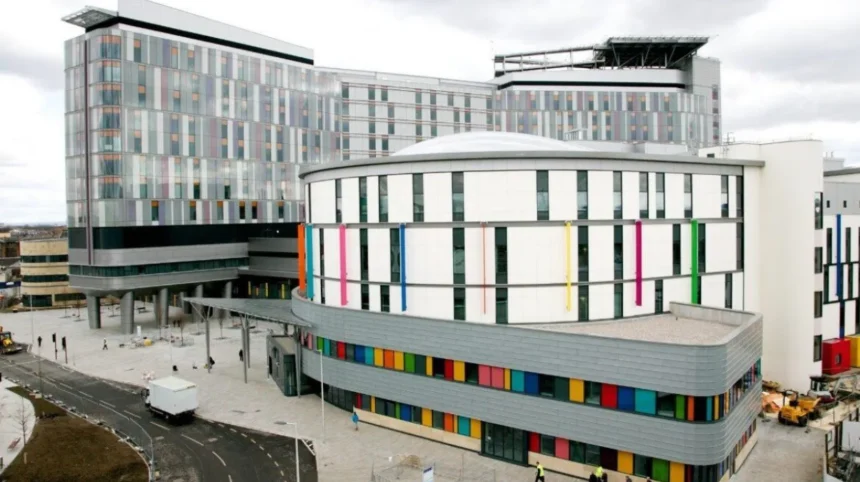
Moving to Glasgow gives new residents access to Scotland’s NHS primary healthcare system, but registering with a GP and finding an NHS dentist follow different processes. GP registration is generally straightforward when a local practice covers the address, while NHS dental access depends on practices accepting new NHS patients.
- How easy is it to register with an NHS GP in Glasgow?
- What happens if a Glasgow GP practice is not accepting new patients?
- Do you need an NHS number, proof of address or identification to get a Glasgow GP?
- How quickly can you get a GP appointment after moving to Glasgow?
- Is it harder to find an NHS dentist in Glasgow than an NHS GP?
- How do you find an NHS dentist after moving to Glasgow?
- What does NHS dental treatment cost in Glasgow?
- What happens if you need a dentist before registering in Glasgow?
- How does Glasgow NHS healthcare compare with the process in other parts of the UK?
- What should you do first after moving to Glasgow?
Glasgow is served primarily by NHS Greater Glasgow and Clyde (NHSGGC), one of Scotland’s territorial health boards. Primary care includes general practices, community pharmacies, optometry services and dental practices. A GP practice provides general medical care, while an NHS dental practice provides oral examinations, preventive care and eligible NHS dental treatment.
The key distinction for people moving to Glasgow is that GP registration is based mainly on where you live and whether a practice covers your address, whereas NHS dental registration depends on whether a dental practice is accepting new NHS patients. NHS Inform states that GP practices can refuse registration when a patient lives outside the practice boundary or when the practice is not accepting new patients.
Recent Scottish Government data also provides useful context. In the 2025–26 Health and Care Experience Survey, 78% of respondents said contacting their GP practice in their preferred way was very easy or fairly easy. The same survey found that 84% of people needing an urgent GP consultation saw or spoke to a doctor or nurse within two working days.
Dental access operates differently. NHS Inform states that not all dentists accept new NHS patients, and people moving to Scotland need to ask practices whether they can register them as NHS patients.
How easy is it to register with an NHS GP in Glasgow?
Registering with an NHS GP in Glasgow is normally straightforward when you live inside a practice’s catchment area and the practice accepts new patients. You complete the registration process, provide basic information, and the practice confirms whether it accepts your application.
A General Practitioner (GP) is a doctor who provides first-contact medical care for common illnesses, ongoing conditions, preventive healthcare and referrals to specialist services. In Scotland, GP practices form part of NHS primary care.
People staying in Glasgow for more than three months can register permanently with a GP practice. NHS Inform directs patients to Scotland’s Service Directory to identify local practices. A postcode search helps identify nearby practices, but the result is only guidance because the selected practice does not necessarily serve every address in that postcode.
The registration process involves completing a GP registration form and sending it to the chosen practice. NHS Inform states that the form does not require a signature. Practices recommend providing information confirming identity and address so existing NHS records can be matched.
Proof of address and identification can help the administrative process, but NHS Inform states that patients should not be delayed or refused registration simply because they cannot provide identification or proof of address. Anyone in Scotland can access primary care services at a GP practice without charge.
For a person moving into Glasgow, the practical sequence is therefore simple: establish the new address, identify the appropriate practice, check whether it accepts registrations, submit the registration form and wait for confirmation.
What happens if a Glasgow GP practice is not accepting new patients?
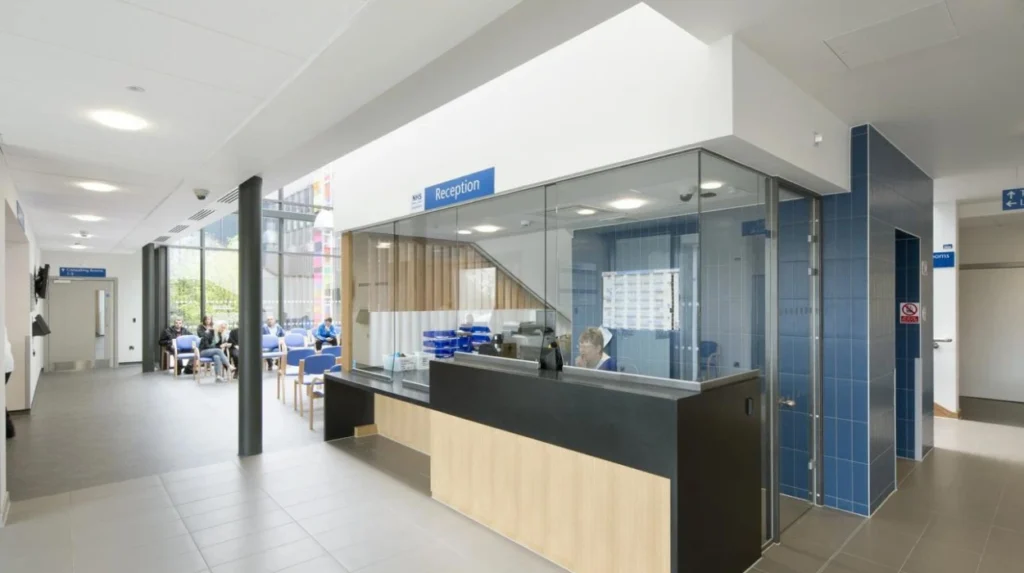
If a Glasgow GP practice is not accepting new patients, the patient needs to identify another practice serving the area. NHS Inform also directs people experiencing registration difficulties to National Services Scotland registration teams for advice and assistance.
A practice can have restrictions on registration. NHS Inform identifies two important situations: the patient lives outside the practice’s area, or the practice is not accepting new patients. In either situation, another GP practice needs to be considered.
Practice boundaries are particularly important in Glasgow because the city contains many neighbourhoods with different GP practices. Living close to a surgery does not automatically mean that the surgery accepts the address.
People moving between Glasgow neighbourhoods also need to check whether their existing practice remains appropriate. NHS Inform states that patients can apply to move to another GP practice in the same area, although practices can sometimes agree temporary restrictions with their local health board when capacity is under pressure.
This means GP availability and GP appointment availability are separate issues. A practice accepting a new patient does not mean every appointment is immediately available at every requested time.
Scottish Government survey evidence shows this distinction. In 2025–26, 52% of surveyed patients reported that they could book an appointment at their GP practice three or more working days in advance. Meanwhile, 84% of people who needed an urgent consultation reported seeing or speaking to a doctor or nurse within two working days.
The figures describe Scotland nationally rather than Glasgow alone, so they should not be treated as a Glasgow-specific waiting-time measurement.
Do you need an NHS number, proof of address or identification to get a Glasgow GP?
You do not need to produce identification or proof of address to avoid refusal of GP registration in Scotland. NHS Inform recommends providing information confirming identity and address, but states that registration should not be delayed or refused solely because those documents are unavailable.
An NHS number is a unique identifier used within NHS services to help identify a patient and match healthcare records. Existing NHS patients moving to Glasgow can provide their NHS number when available, but it is not the sole basis for registration.
The GP registration process is designed to connect a patient with the practice responsible for providing primary care in the local area. Personal information such as name, date of birth, address and previous medical details helps the practice manage the registration.
People who have never registered with a GP in the United Kingdom have a specific limitation. NHS Inform states that medical records from outside the UK will not be traced as part of a first UK GP registration.
This matters for international residents moving to Glasgow. Bringing relevant medical documentation from a previous country remains useful for continuity of care, particularly where medication, previous diagnoses or treatment history needs to be explained to the new GP.
A person staying in Glasgow for less than three months can still receive GP treatment as a Temporary Resident rather than completing permanent registration. NHS Inform provides this route for people who are temporarily living in an area.
How quickly can you get a GP appointment after moving to Glasgow?
Getting registered with a GP and getting a particular appointment are separate processes. Registration depends on practice eligibility and capacity, while appointment timing depends on clinical urgency, practice arrangements and available healthcare professionals on the day.
Once registration is confirmed, the patient becomes part of the practice’s patient population and can use its primary care services. The appointment system itself differs between practices.
A GP practice can use different methods for initial contact and clinical assessment. These can include telephone contact, face-to-face appointments, online communication and other practice-specific arrangements.
The 2025–26 Scottish Health and Care Experience Survey recorded a national improvement in several measures. Seventy-eight percent of respondents said contacting their GP practice in their preferred way was very easy or fairly easy. Seventy-two percent of reported last appointments were face-to-face, compared with 37% in 2021–22.
The same survey found that 23% of people considered their appointment waiting time too long. For urgent consultations, 84% reported seeing or speaking to a doctor or nurse within two working days.
These figures demonstrate why a new Glasgow resident should not interpret successful GP registration as a guarantee of immediate access to a particular GP or appointment slot.
Scotland is also investing in general practice capacity. In November 2025, the Scottish Government announced an additional £531 million of funding for general practice over three years, subject to parliamentary approval of future budgets, alongside plans for 15 new GP walk-in centres.
Is it harder to find an NHS dentist in Glasgow than an NHS GP?
Finding an NHS dentist can be more difficult than registering with a GP because dental practices are not required to accept every new NHS patient. NHS Inform specifically advises people to ask practices whether they can take new NHS patients.
The NHS dental system operates differently from GP registration. A dental practice can provide NHS treatment, private treatment or both. A patient therefore needs to establish whether the practice is currently accepting new patients specifically for NHS care.
NHS Inform states that not all dentists take on new NHS patients. New residents should ask a dental practice during initial contact whether it can accept them as an NHS patient. People can also use local health board information when looking for an NHS dentist.
Around 95% of people in Scotland are registered for NHS dental care, according to NHS Inform. Registration does not involve a regular fee or retainer, and NHS dental examinations are free.
However, the national registration figure does not mean that every Glasgow dental practice has immediate capacity for new patients.
Once a dental practice agrees to accept a new NHS patient, the patient provides information including name, address, date of birth and contact details. The practice then arranges an enhanced clinical examination, which forms part of the registration process.
A practice can also place a person on a waiting list before registration is completed. This creates a major practical difference between finding a GP and finding an NHS dentist after moving.
How do you find an NHS dentist after moving to Glasgow?
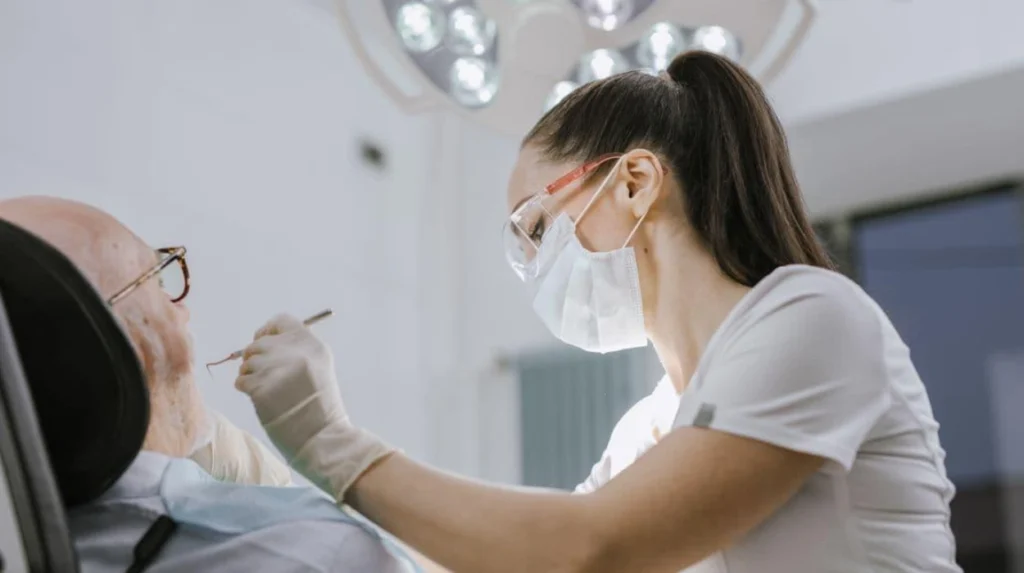
The process starts by identifying dental practices in the Glasgow area and asking each practice whether it is accepting new NHS patients. Once a practice agrees, provide the requested details and complete the required clinical examination.
NHS Inform advises people who are not registered with a dental practice to find an NHS dentist in their area or contact their local health board. The patient is responsible for registering with the dental practice.
The most important question when contacting a Glasgow dental practice is not simply whether the practice provides NHS treatment. The relevant question is whether it currently accepts new NHS patients.
A dental practice can provide NHS care to existing NHS patients while having no capacity to register additional NHS patients. Asking specifically about new NHS registrations avoids confusion between NHS provision and NHS registration capacity.
New patients should have basic personal information available. NHS Inform lists name, address, date of birth and contact details among the information requested during NHS dental registration.
Patients should also prepare an up-to-date list of medicines for the dental medical-history form. NHS Inform states that the medical history needs to be completed annually.
Children can also be registered with a dentist. NHS Inform states that parents can register children at the same time as themselves and do not need to wait until a child’s teeth appear.
For someone relocating to Glasgow, beginning the dental search soon after moving avoids leaving registration until a dental problem becomes urgent.
What does NHS dental treatment cost in Glasgow?
NHS dental examinations in Scotland are free. Patients who pay for NHS dental treatment generally pay 80% of treatment costs, subject to a maximum charge of £384 for one course of treatment, while eligible groups receive free treatment.
Scotland has a distinct NHS dental charging structure. Everyone in Scotland is entitled to a free NHS dental examination. Some patients also qualify for completely free NHS dental treatment.
For patients who are liable for charges, NHS Inform states that the patient contribution is 80% of treatment costs, capped at £384 per course of treatment. Costs above that maximum are subsidised by the NHS.
The current NHS Inform information gives examples of charges applicable from 1 November 2025. A small white filling on a front tooth has a listed patient charge of £23.36, while a simple extraction has a listed charge of £31.80. Root canal treatment has a listed patient charge ranging from £104.68 to £169.20.
These charges apply to NHS treatment rather than private dental treatment. Private dental prices are determined by the individual practice and are separate from NHS charges.
Several groups receive free NHS dental treatment. NHS Inform states that people aged under 26 receive free NHS dental treatment for treatment beginning before their 26th birthday. Pregnant people and people who have given birth within the previous 12 months also qualify for free treatment under the relevant rules.
People receiving qualifying low-income benefits can also receive free NHS dental treatment. NHS Inform gives examples including Income Support, income-related Employment and Support Allowance, income-based Jobseeker’s Allowance and Pension Credit Guarantee Credit. Specific Universal Credit eligibility conditions also apply.
What happens if you need a dentist before registering in Glasgow?
People who are not registered with a Glasgow dentist can still seek help when they have an urgent dental problem. NHS Inform provides separate guidance for urgent dental care before registration with a dental practice.
Dental registration should not be confused with emergency access. A person moving to Glasgow can have an urgent dental problem before completing routine registration.
NHS Inform specifically separates urgent care for people who are not registered with a dental practice from normal dental registration. This provides a route for people experiencing urgent dental problems while they are still looking for a regular NHS dentist.
The distinction is important because routine dental registration and emergency treatment serve different purposes.
Routine registration establishes an ongoing relationship with a dental practice. It supports examinations, preventive advice and planned treatment. Urgent care deals with immediate dental problems that require timely assessment.
A new Glasgow resident should therefore not delay seeking urgent dental assistance simply because routine NHS dental registration has not been completed.
After the urgent issue is addressed, the person can continue looking for a dental practice that accepts new NHS patients. Registration provides continuity for future examinations and treatment.
NHS dental examinations are designed to identify oral-health problems and determine the appropriate frequency of future examinations. NHS Inform states that the interval between examinations can range from less than six months to two years depending on oral health and risk.
Explore More Area Guide
Cultural Surprises When Moving to Glasgow
International Food Shops and Supermarkets in Glasgow
How does Glasgow NHS healthcare compare with the process in other parts of the UK?
Glasgow follows NHS Scotland rules, which differ from NHS arrangements elsewhere in the United Kingdom. GP registration and NHS dental charges therefore need to be understood using Scottish guidance rather than assumptions based on England, Wales or Northern Ireland.
The NHS is a publicly funded healthcare system, but healthcare administration differs between the four UK nations. Scotland operates NHS Scotland, while England, Wales and Northern Ireland have their own healthcare structures and rules.
This distinction matters particularly for dental charges. Scotland has its own NHS dental charging system, including free examinations and an 80% patient contribution for liable patients subject to the £384 maximum course-of-treatment charge.
GP access also follows Scottish registration rules. NHS Inform states that patients staying in Scotland for more than three months can register permanently with a GP practice, while temporary residents can receive treatment under temporary registration arrangements.
People moving from England to Glasgow should therefore avoid assuming that the administrative process is identical to the system they previously used.
The same applies to dental care. An existing relationship with an NHS dentist in another UK nation does not automatically create a new Glasgow dental registration.
For international arrivals, the distinction is even more important. NHS Inform states that people registering with a GP for the first time in the UK will not have medical records from outside the UK traced automatically.
Bringing previous medical information therefore supports continuity, while the Glasgow GP registration process establishes access to local primary care.
What should you do first after moving to Glasgow?
The most efficient approach is to register with a local GP as soon as your Glasgow address is established and start searching for an NHS dentist separately. GP registration depends on local practice coverage, while dental access depends strongly on NHS registration capacity.
A new resident should treat GP and dental registration as two separate administrative tasks.
For the GP, identify practices serving the new address through Scotland’s Service Directory, check the practice’s registration arrangements, complete the registration form and provide useful identity and address information where available.
For the dentist, search for local NHS dental practices and specifically ask whether they are accepting new NHS patients. A practice providing NHS dentistry is not necessarily accepting new NHS registrations at the time of enquiry.
It is also useful to keep important healthcare information accessible after moving. This includes current medicines, previous treatment information and relevant medical history.
People with children should consider dental registration at the same time. NHS Inform allows children to be registered with a dentist from birth.
People with urgent medical or dental needs should use the appropriate NHS route rather than waiting for routine registration to be completed.
The broader picture is that Glasgow residents benefit from Scotland’s universal primary-care framework, but access is organised through local practices. GP registration is primarily a question of geographical eligibility and practice capacity. NHS dental registration is more dependent on whether an individual practice has space for additional NHS patients.
For someone moving to Glasgow, getting an NHS GP is generally a clearer administrative process, while finding an NHS dentist requires more active searching. Current Scottish Government evidence shows substantial use of GP services and measured improvements in several aspects of primary-care access, while NHS dental guidance explicitly highlights the limited availability of new NHS registrations at some practices.
The most reliable information for a new resident remains the current NHS Scotland and NHS Inform guidance because practice registration arrangements, opening arrangements and local capacity change over time.
Is it easy to register with an NHS GP in Glasgow?
Yes. GP registration is generally straightforward when you live within the practice area and the practice accepts new patients. You normally complete a registration form and provide your personal details.