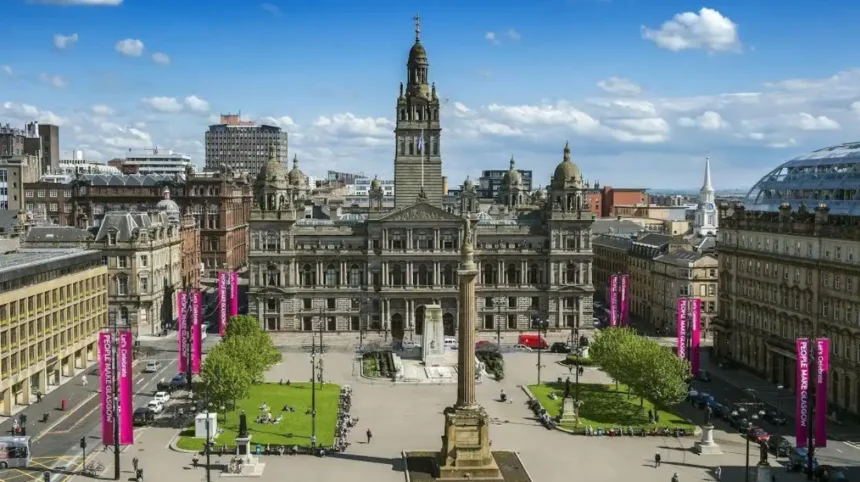
Moving to Glasgow introduces newcomers to a city shaped by industrial history, migration, distinctive language, music, neighbourhood identities and strong local traditions. Glasgow is Scotland’s largest city and has developed from a medieval religious settlement into an international centre for culture, education, commerce, engineering and the arts.
- Why does Glasgow feel culturally different from other UK cities?
- Why does the Glasgow accent sound so different to newcomers?
- Why are Glasgow neighbourhoods so important to local identity?
- Why is Glasgow’s music culture such a major part of everyday life?
- Why does Glasgow have such a strong connection with migration and multicultural communities?
- Why do food traditions surprise people moving to Glasgow?
- Why does Glasgow’s religious history still influence culture?
- Why do newcomers notice Glasgow’s humour, directness and social style?
- Why can Glasgow’s industrial past feel surprisingly present today?
- How is Glasgow changing while retaining its cultural identity?
The city’s cultural character is closely connected to its history beside the River Clyde. Glasgow became a major trading centre before developing a globally significant shipbuilding and engineering industry. Historic Environment Scotland records that Clyde shipyards built one in five of the world’s ships by the early 20th century.
For people moving to Glasgow, the biggest cultural surprises often involve everyday life rather than major attractions. Local speech sounds different from standard British English. Neighbourhood identities remain strong. Music is part of ordinary city life. Food reflects generations of migration. Religious history still influences some communities, while modern Glasgow is increasingly diverse.
Why does Glasgow feel culturally different from other UK cities?
Glasgow feels culturally distinctive because its identity combines industrial history, Scottish language, migration, neighbourhood traditions, music, sport and civic culture. These influences developed over centuries and remain visible in everyday speech, food, architecture, festivals, entertainment and community life today.
Glasgow’s cultural identity developed through several major historical phases. The settlement associated with St Mungo grew around the medieval cathedral and religious centre. Glasgow received burgh status in 1175, and Historic Environment Scotland describes 2025 as the 850th anniversary of that official foundation.
The city later became an important Atlantic trading centre. Its commercial development was connected to tobacco, sugar, rum and other commodities. Glasgow City Archives holds historical records documenting the city’s connections with Caribbean slavery, including records relating to sugar estates in Jamaica and the trade of sugar and rum.
Industrialisation transformed Glasgow during the 18th and 19th centuries. The River Clyde became central to shipbuilding, engineering and international commerce. Govan, Fairfield and other Clyde-side communities developed around these industries.
The industrial legacy remains important to local identity. Historic Environment Scotland states that the Clyde’s shipbuilding industry employed tens of thousands of people and that Clyde yards built one in five of the world’s ships by the early 20th century.
Glasgow also expanded by absorbing surrounding communities. Govan and Partick joined the city in 1912, while earlier incorporations included areas such as Calton, Crosshill, Govanhill, Pollokshields, Maryhill, Anderston and Hillhead. These former burghs retain distinctive identities within modern Glasgow.
This history explains why newcomers often encounter strong local references to particular areas. Glasgow is one city administratively, but its neighbourhoods retain historical, social and cultural identities.
Why does the Glasgow accent sound so different to newcomers?
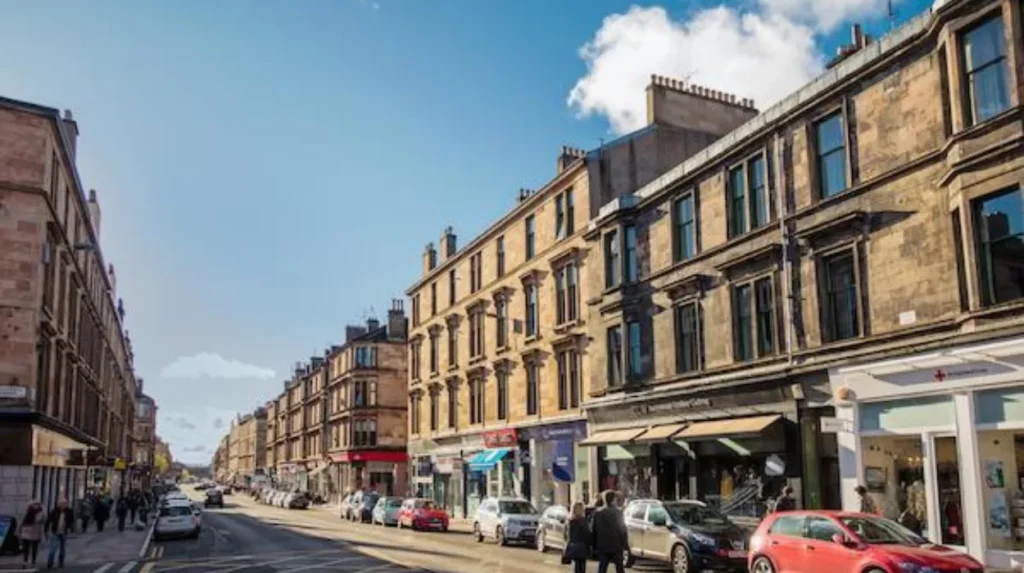
The Glasgow accent is a local variety of Scottish English shaped by Scots vocabulary, pronunciation and regional speech traditions. Words, expressions, rhythm and pronunciation differ from standard English, creating a distinctive form of everyday communication across the city.
The first linguistic surprise for many newcomers is not Gaelic. It is the everyday use of Scottish English and Scots-influenced vocabulary.
Scots is an indigenous language of Scotland and remains part of everyday cultural life. The Scottish Government describes Scots as an important part of Scotland’s culture and heritage, with uses in songs, poetry, literature and daily community life.
Scotland’s 2022 Census recorded 1,508,540 people who reported that they could speak Scots. A total of 2,444,659 reported some ability to speak, read, write or understand Scots.
Glasgow speech also contains local vocabulary and expressions that newcomers encounter in shops, workplaces, universities, pubs and public transport. Pronunciation often provides an immediate indicator of local identity.
The accent differs across Scotland. A Glasgow speaker does not sound identical to someone from Edinburgh, Aberdeen, Dundee or the Highlands. Differences also exist between Glasgow neighbourhoods and generations.
New residents therefore encounter a language environment that is English-speaking but culturally Scottish. Understanding individual words becomes easier through regular interaction with colleagues, neighbours and local businesses.
Gaelic also appears in Glasgow’s cultural landscape, although it is not the dominant everyday language of the city. Scotland has supported Gaelic through legislation and public policy, including the Gaelic Language (Scotland) Act 2005.
The 2022 Census recorded 130,161 people across Scotland with some ability in Gaelic, including 69,701 people who could speak it.
Why are Glasgow neighbourhoods so important to local identity?
Glasgow neighbourhoods retain strong identities because many developed as separate villages, burghs, industrial communities or residential districts before becoming part of the modern city. Names such as Govan, Partick, Maryhill and Pollokshields therefore carry historical and cultural meaning.
Neighbourhood identity is one of the most noticeable cultural features for people moving to Glasgow.
Glasgow’s modern urban area contains communities with different histories. Some developed around shipyards and factories. Others grew around transport routes, universities, Victorian housing, religious institutions or commercial centres.
Govan is particularly associated with shipbuilding on the Clyde. Partick developed as an independent burgh before becoming part of Glasgow. Both joined the city in 1912.
Pollokshields has its own architectural and community history. Maryhill developed as an important northern district. Govanhill has a distinctive multicultural identity. The West End contains university, cultural, residential and commercial communities centred around areas such as Hillhead, Partick and Kelvinbridge.
Newcomers therefore encounter local references that operate almost like cultural geography. Residents often describe themselves through their neighbourhood rather than simply saying they live in Glasgow.
This pattern also affects social life. Local cafés, shops, pubs, community organisations, sports clubs and cultural venues frequently serve specific neighbourhood populations.
The former burgh system helps explain this structure. Historic Glasgow incorporated separate communities as the city expanded. Their former civic boundaries and institutions contributed to the identities that remain today.
The result is a city with a strong metropolitan identity alongside highly recognisable local identities.
Why is Glasgow’s music culture such a major part of everyday life?
Music is central to Glasgow’s cultural identity because the city has a large network of live venues, grassroots performers, traditional music spaces and major events. Glasgow became the UK’s first UNESCO City of Music in 2008 and maintains an active year-round music economy.
Glasgow’s relationship with music is unusually prominent among British cities. UNESCO designated Glasgow a City of Music in 2008, recognising its musical heritage and active contemporary music scene.
The city combines large entertainment venues with smaller grassroots spaces. Major venues operate alongside pubs, clubs, independent venues and traditional music settings.
Visit Glasgow reports more than 150 live music events each week and identifies music as a major part of the city’s visitor economy and cultural identity.
This creates a cultural environment where live performance is not restricted to major festivals. Traditional Scottish music, folk performances, rock, indie, electronic music, jazz, classical performances and international acts all contribute to Glasgow’s music scene.
Events such as Celtic Connections reinforce the connection between Glasgow and Scottish musical traditions. Piping events also bring traditional Scottish performance into the city’s contemporary cultural calendar.
Glasgow’s 2026 cultural programme continues this pattern. Visit Glasgow describes the city as the UK’s first UNESCO City of Music and highlights events including Celtic Connections, Glasgow Film Festival, Glasgow International Comedy Festival, Glasgow Mela and TRNSMT.
For newcomers, the surprise is the frequency with which music appears in ordinary social life. A pub visit, neighbourhood event or evening in the city centre can involve live performance without requiring a major concert booking.
Why does Glasgow have such a strong connection with migration and multicultural communities?
Glasgow has a long history of migration, with Irish, Italian, Jewish, Chinese, South Asian, Gaelic and other communities contributing to the city’s cultural development. Migration shaped neighbourhoods, businesses, religious institutions, food traditions, festivals and community organisations across Glasgow.
Migration is a fundamental part of Glasgow’s modern cultural history.
Glasgow Life’s human-history collections document strong cultural links involving Gaelic, Jewish, Irish, Italian, Chinese and South Asian communities. The collection records how migrant communities established cultural identities while also influencing the wider city.
Irish migration has a particularly deep historical connection with Glasgow. Travel and trade between Scotland and Ireland supported movement between communities, including through Clyde shipping routes. Glasgow Life records the importance of Burns & Laird services between Glasgow, Derry and Belfast in migration and trade.
Modern Glasgow continues to reflect international migration.
Scotland’s 2022 Census found that 17.3% of Glasgow’s population identified as belonging to an ethnic minority group. The census recorded Pakistani, White Other, African, Irish and Chinese groups among the largest minority ethnic categories in the city.
The national picture also demonstrates increasing diversity. Across Scotland, the proportion of people identifying with a minority ethnic background increased from 8.2% in 2011 to 12.9% in 2022. The proportion of residents born outside the UK increased from 7.0% to 10.2%.
This diversity is visible through restaurants, supermarkets, places of worship, community centres, cultural organisations and festivals.
Glasgow’s cultural calendar also reflects this diversity. The Glasgow Mela, for example, forms part of the city’s established events programme and contributes to the wider multicultural cultural landscape.
For new residents, this means Scottish identity and international cultural influences operate alongside each other rather than existing as separate parts of city life.
Why do food traditions surprise people moving to Glasgow?
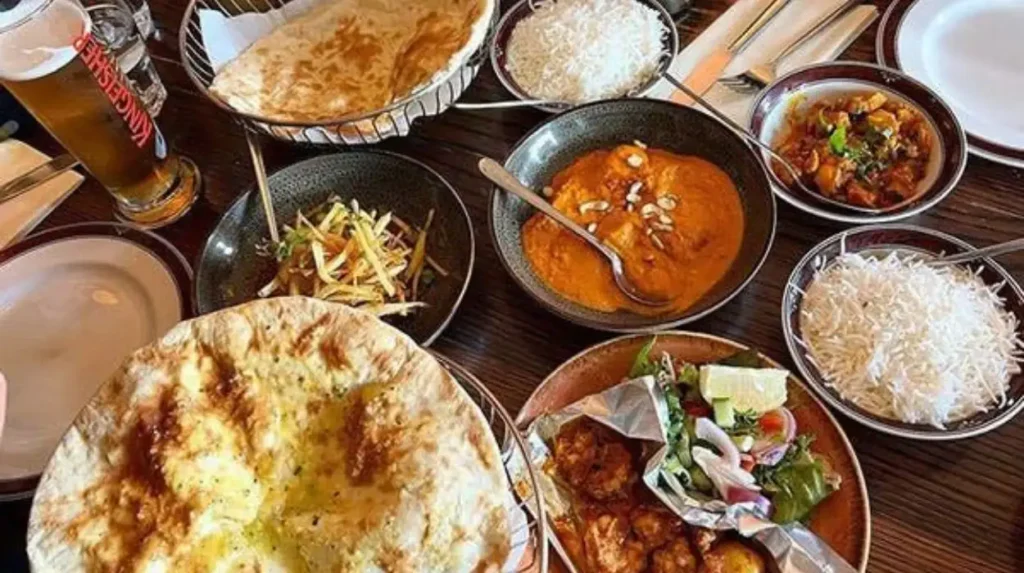
Glasgow’s food culture combines traditional Scottish dishes with Irish, Italian, South Asian, Chinese, Middle Eastern and other international influences. This reflects the city’s industrial history, migration patterns, neighbourhood development and continuing growth as a diverse modern urban centre.
Food provides one of the clearest ways to understand Glasgow’s cultural development.
Traditional Scottish food remains part of the city’s identity. Pubs, restaurants and specialist food businesses serve dishes associated with Scotland, including haggis, neeps and tatties, Scotch pies, Cullen skink and other regional foods.
At the same time, Glasgow’s migration history created strong international food traditions.
Italian migration contributed cafés, restaurants, ice-cream businesses and family-run food enterprises. Irish communities established food, social and religious traditions. South Asian communities contributed restaurants, grocery businesses and specialist food shops. Chinese communities developed restaurants and businesses serving Glasgow’s expanding population.
The city’s multicultural food landscape is therefore connected to social history rather than simply modern tourism.
New residents also notice differences in terminology. A roll can have a particular local meaning, while bakery products and takeaway foods often have names unfamiliar to people arriving from other parts of Britain.
Food also connects strongly with neighbourhood identity. Different parts of Glasgow have concentrations of restaurants and shops associated with particular communities.
The result is a city where traditional Scottish food and international cuisine operate within the same urban food culture.
This reflects the wider historical pattern documented by Glasgow Life, which identifies Irish, Italian, Jewish, Chinese and South Asian communities among the groups that contributed to Glasgow’s cultural development.
Why does Glasgow’s religious history still influence culture?
Glasgow’s religious culture reflects centuries of Christian history alongside modern secularisation and religious diversity. Presbyterian, Catholic, Jewish, Muslim, Hindu, Sikh and other communities have contributed to the city, while census data shows changing patterns of religious affiliation.
Religion remains an important part of Glasgow’s cultural history, although contemporary religious affiliation differs substantially from earlier generations.
The city’s origins are connected with St Mungo and the medieval religious settlement around Glasgow Cathedral. The cathedral remains one of the major historical structures associated with Glasgow’s early development.
Later history produced strong Protestant and Catholic institutions. These traditions influenced schools, churches, social organisations, neighbourhood identities and community life.
Irish migration contributed particularly to the growth of Catholic communities in Glasgow. Glasgow Life’s historical collections include material connected with both Catholic and Protestant Irish organisations, illustrating the complexity of the city’s Irish community history.
Modern Glasgow is more religiously diverse than its historical reputation suggests. Mosques, Hindu temples, Sikh gurdwaras, synagogues, churches and other religious institutions contribute to contemporary cultural life.
Scotland’s 2022 Census recorded a major national shift in religious affiliation. For the first time in a Scottish census, more than half of the population, 51.1%, reported having no religion. This compared with 36.7% in 2011.
Religious history therefore remains visible in Glasgow through architecture, institutions, festivals, community organisations and historical identities, while the current population contains a much broader range of religious and non-religious identities.
Why do newcomers notice Glasgow’s humour, directness and social style?
Glasgow’s social style is influenced by local speech, working-class traditions, neighbourhood networks, humour and long-established community institutions. Communication is often informal and conversational, while local expressions and humour form important parts of everyday social interaction.
Social communication can feel different to people arriving from other parts of the UK or overseas.
Glasgow developed as a major industrial city with large working-class communities connected to shipbuilding, engineering, manufacturing, transport and other industries. Historic Environment Scotland records the scale of the Clyde shipbuilding workforce and its international significance.
Industrial communities developed strong local networks. Neighbourhood institutions included churches, schools, sports organisations, social clubs, workplaces and community groups.
These structures contributed to a strong tradition of informal communication. Glasgow speech frequently combines local vocabulary with humour and conversational expressions.
The style is not uniform. Younger residents, older residents, university communities, international residents and different neighbourhoods use language differently.
The city’s social culture is also visible through community events and public entertainment. Music venues, sports clubs, festivals, cafés and pubs provide regular opportunities for informal interaction.
New residents often notice that local identity is communicated through language. A person’s accent, vocabulary and references to particular districts can indicate their connection with Glasgow.
This does not mean every Glaswegian communicates in the same way. Glasgow contains a diverse population and many different social styles.
The important cultural feature is the persistence of local speech within a large international city.
Explore More Area Guide
International Food Shops and Supermarkets in Glasgow
Is Glasgow LGBTQ-Friendly? Best Welcoming Areas
Why can Glasgow’s industrial past feel surprisingly present today?
Glasgow’s industrial past remains visible through the River Clyde, former shipyards, engineering landmarks, museums, architecture, neighbourhood identities and local vocabulary. The city’s modern cultural landscape developed directly from its transformation into a major industrial and international trading centre.
The River Clyde is one of the strongest physical reminders of Glasgow’s industrial history.
During the 19th and early 20th centuries, the Clyde supported shipbuilding, engineering, trade and heavy industry. Glasgow became internationally associated with Clyde-built ships and engineering expertise.
Historic Environment Scotland records that the Clyde’s proximity to steel and other raw materials helped the shipping industry expand during the second half of the 19th century. By the early 20th century, Clyde shipyards produced one in five of the world’s ships.
Govan became a major shipbuilding centre. Fairfield was one of the most important yards and became associated with the term “Clydebuilt”, which represented recognised shipbuilding workmanship.
The industrial era also shaped housing. Tenements, terraces, workers’ districts and industrial neighbourhoods expanded as Glasgow’s population grew.
Today, museums such as the Riverside Museum interpret transport and industrial history, while preserved buildings and former industrial areas provide physical evidence of the city’s transformation.
Glasgow’s industrial history also influences cultural memory. Family histories often contain connections to shipyards, engineering firms, railways, factories and other industries.
The city’s contemporary identity therefore does not replace its industrial history. Modern cultural institutions operate alongside physical and social reminders of the industrial period.
How is Glasgow changing while retaining its cultural identity?
Glasgow is becoming more internationally diverse while retaining strong Scottish, Glaswegian and neighbourhood identities. Migration, creative industries, cultural investment, language development, music, tourism and regeneration are reshaping the city without removing its historical cultural foundations.
Glasgow’s cultural identity continues to evolve.
The 2022 Census demonstrates the wider demographic changes affecting Scotland. Minority ethnic representation increased nationally from 8.2% in 2011 to 12.9% in 2022, while the proportion of residents born outside the UK increased from 7.0% to 10.2%.
Glasgow has a particularly diverse urban population. The 2022 Census recorded 17.3% of Glasgow residents in ethnic minority categories.
Language is also developing. The 2022 Census recorded increased levels of reported Scots and Gaelic language ability across Scotland. Scots skills rose from 37.7% in 2011 to 46.2% in 2022, while Gaelic skills increased from 1.7% to 2.5% among people aged three and over.
Government policy is also changing the position of Scotland’s languages. The Scottish Languages Act 2025 gave Gaelic and Scots official status and introduced measures concerning language education, research and promotion.
Glasgow’s cultural sector is also receiving strategic attention. The city’s Culture Strategy 2024–30 highlights museums, venues, parks, cultural organisations and the UNESCO City of Music designation while focusing on inclusion, accessibility and sustainability.
These developments show why newcomers encounter both historic and modern Glasgow.
The city remains recognisably Scottish and Glaswegian while becoming more international in population, food, languages, cultural events and creative activity.
For people moving to Glasgow, the most important cultural adjustment is understanding that local identity operates on several levels. Residents can identify with Scotland, Glasgow, a particular neighbourhood, a family migration history, a cultural community or several of these identities simultaneously.
Glasgow’s cultural surprises therefore come from the combination of continuity and change. Its language remains distinctive. Its neighbourhoods retain historical identities. Its industrial past remains visible. Its music scene remains internationally recognised. Its population continues to diversify.
That combination gives Glasgow a cultural structure that is immediately noticeable to newcomers and remains relevant long after the initial move.
What is the biggest cultural surprise when moving to Glasgow?
The strong local identity is one of the biggest cultural surprises. Glasgow has distinctive accents, vocabulary, neighbourhood identities, music traditions, food culture and community networks that differ from many other UK cities.