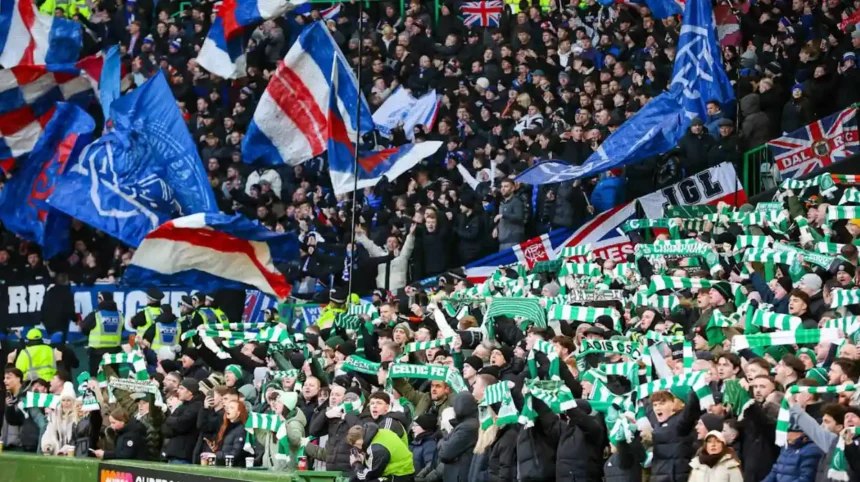
The Old Firm derby is the name commonly associated with matches between Celtic Football Club and Rangers Football Club, two Glasgow-based clubs with more than a century of shared history. The rivalry is one of the defining features of Scottish football and has a significance that extends beyond the football pitch.
- What exactly is the Old Firm derby?
- How did Celtic and Rangers become central to Glasgow’s identity?
- Why does the Old Firm derby matter beyond football?
- How does an Old Firm match change everyday life in Glasgow?
- How important is the derby to Glasgow’s local economy?
- Why is sectarianism connected with the Old Firm rivalry?
- How does the derby affect public safety and policing?
- How does the Old Firm derby influence family and community life?
- What role does the Old Firm play in Glasgow’s history and heritage?
- How important is the Old Firm derby to people who do not support Celtic or Rangers?
- How has the Old Firm rivalry changed in modern Glasgow?
- What does the Old Firm derby tell us about everyday life in Glasgow?
Celtic was founded in Glasgow in 1887, while Rangers was established in 1872. Celtic’s origins are closely connected with Glasgow’s Irish Catholic community and charitable activity in the city’s East End. Rangers developed earlier as a football club on Glasgow’s west side. Their first recorded competitive-era encounters established a rivalry that became progressively more important within Scottish football. The Scottish Football Museum records Celtic’s first official match against Rangers as a 5–2 victory on 28 May 1888.
The significance of the Old Firm is therefore not simply based on the number of football matches played. It involves sporting competition, supporter identity, local business activity, public transport, policing, community relationships, media coverage and Glasgow’s historical development.
Understanding its role in everyday life requires separating football fandom from the wider social history surrounding the clubs. Academic research identifies the rivalry as an important site for studying identity, ethnicity, religion, social belonging and sectarianism in Scotland.
What exactly is the Old Firm derby?
The Old Firm derby refers to football matches between Celtic and Rangers, Glasgow’s two historically dominant clubs. The fixture combines elite sporting competition with deeply established supporter identities, local traditions, commercial activity and a significant place in Scotland’s cultural history.
The term Old Firm describes the rivalry between Celtic and Rangers rather than a separate competition. The two clubs compete in Scottish domestic football and regularly meet in league and cup fixtures.
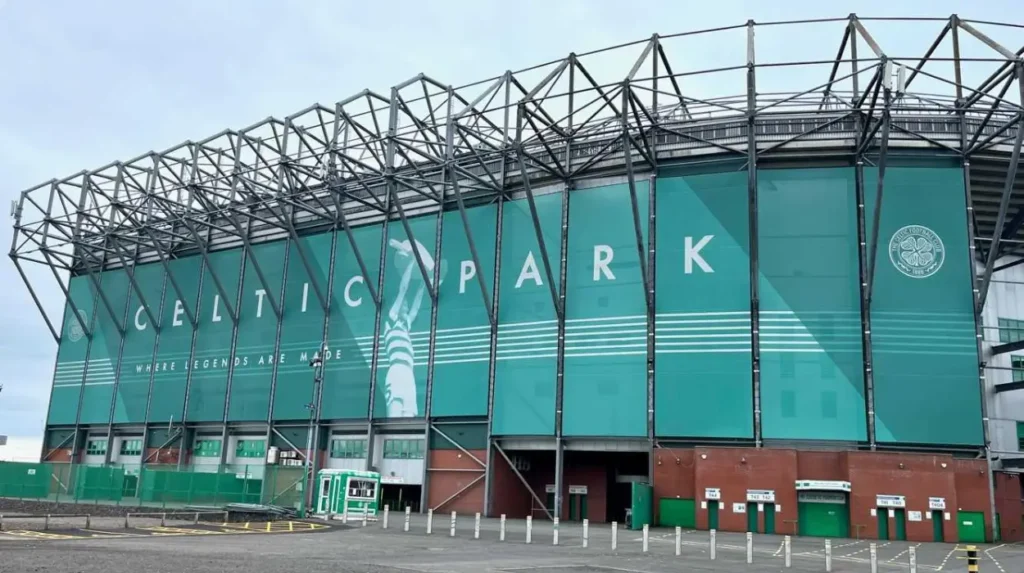
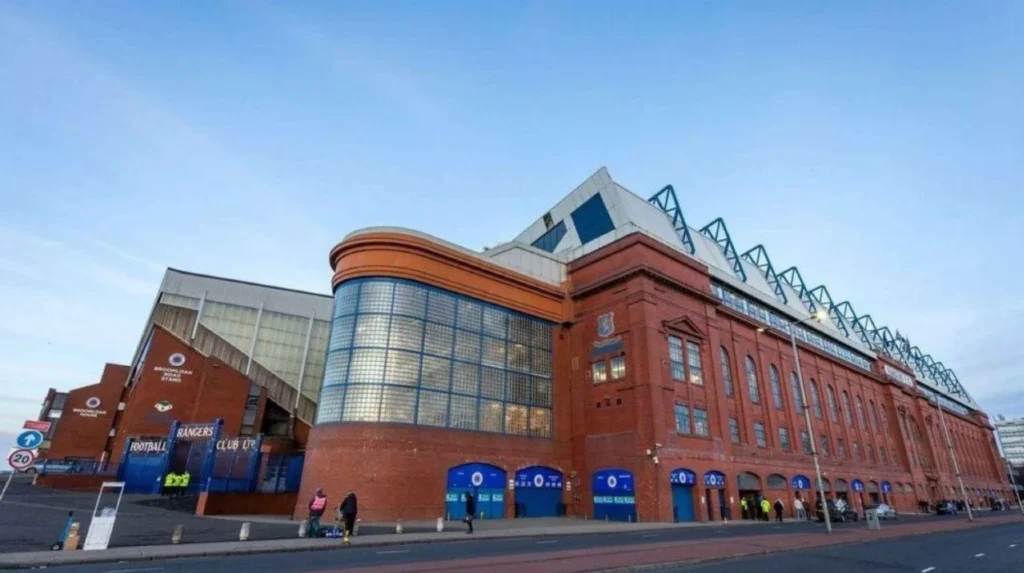
Both clubs have historically attracted large supporter bases. Their stadiums are major landmarks within Glasgow’s football geography. Celtic Park is in Parkhead in the east of the city. Ibrox Stadium is in the south-west of Glasgow.
The physical locations of the stadiums influence matchday movement. Supporters travel through residential districts, commercial areas and transport corridors before and after fixtures. This makes the derby visible in everyday urban activity.
The rivalry also operates beyond stadium boundaries. Supporters discuss fixtures at work, in schools, homes, social clubs, online communities and hospitality businesses. Football therefore becomes a recurring subject within ordinary social interaction.
The phrase Old Firm also carries historical meaning. Academic research stresses that the rivalry developed alongside wider changes in Glasgow, including migration, religious identity, industrialisation and community formation. Researchers caution against reducing the entire relationship to a simple Catholic-Protestant division because supporter identities have changed across generations.
How did Celtic and Rangers become central to Glasgow’s identity?
Celtic and Rangers became central to Glasgow’s identity through long-term sporting success, large supporter communities and connections with historical social groups. Their institutions developed alongside Glasgow’s industrial growth, migration patterns, neighbourhood cultures and changing forms of Scottish identity.
Rangers was founded in 1872. Celtic was founded in 1887 through the initiative of Brother Walfrid, an Irish Marist who wanted to raise funds to address poverty among Glasgow’s East End population. Celtic moved to its present Parkhead home in 1892.
These origins matter because nineteenth-century Glasgow experienced major demographic and economic changes. Industrial employment attracted large numbers of people to the city. Irish migration formed an important part of Glasgow’s population history, while religious and cultural divisions influenced many institutions.
Celtic developed strong associations with Glasgow’s Irish Catholic community. Academic research on Celtic describes the club as an important institution through which elements of Irish ethnicity and community identity were expressed in Scottish society.
Rangers developed a different historical supporter culture. Researchers have examined Rangers supporters through questions of Scottish, British and Protestant identity. These identities have never been identical for every supporter, but they form an important part of the historical literature surrounding the club.
Football gave these identities a highly visible public platform. Stadium attendance, club colours, songs, symbols, family traditions and community organisations created repeated opportunities for supporters to express belonging.
This process explains why the derby has remained important across generations. A supporter can inherit a club allegiance from parents or grandparents without having any direct connection with the historical circumstances that created the rivalry.
Why does the Old Firm derby matter beyond football?
The derby matters beyond football because its fixtures influence social interaction, local commerce, transport patterns, public safety planning and cultural discussion. The rivalry also provides a framework through which Glasgow communities express sporting loyalty, historical identity and competing interpretations of belonging.
Football matches create temporary changes in the normal rhythm of a city. An Old Firm fixture concentrates thousands of spectators around one stadium and generates additional activity before and after the match.
Pubs and hospitality venues are particularly connected with football culture. Historic reporting on Glasgow’s licensed trade has described Old Firm fixtures as commercially important occasions for publicans because supporters gather to watch matches and discuss results.
Retail activity also benefits from football culture. Club shirts, scarves, flags and other merchandise form a substantial part of supporter consumption. The existence of dedicated official retail operations demonstrates the commercial infrastructure surrounding both clubs.
The influence extends into media consumption. Old Firm fixtures receive extensive coverage from newspapers, broadcasters, websites, radio programmes and social media. Match previews and post-match analysis create a large amount of recurring content.
The rivalry also affects conversations between people who do not attend matches. A person can encounter the fixture through workplace discussions, family conversations, television coverage or social media without entering either stadium.
This distinction is important. Football participation and football influence are different concepts. A person does not need to attend Celtic Park or Ibrox to experience the derby’s presence in Glasgow.
How does an Old Firm match change everyday life in Glasgow?
An Old Firm match changes everyday life by concentrating large crowds around Celtic Park or Ibrox, increasing demand on transport and hospitality, altering pedestrian movement and requiring additional public-safety planning. Residents and visitors experience these effects most strongly near stadiums and transport routes.
Matchday activity begins before kick-off. Supporters travel from different parts of Glasgow, other Scottish cities and locations outside Scotland.
Celtic Park is located in Parkhead, while Ibrox Stadium is located in the Ibrox area of Glasgow. Their different locations create different patterns of pedestrian and vehicular movement.
Public transport becomes particularly important. Supporters use trains, buses and the Glasgow Subway alongside walking and private vehicles. Rangers’ own matchday information has highlighted public transport connections serving its stadium, while football travel guidance also identifies the Subway as an important route for visitors travelling towards Ibrox.
Road conditions also change around major fixtures. Large numbers of pedestrians require managed crossings and controlled movement. Police, stewards and transport staff work around the stadium environment to manage crowd flows.
For residents, this produces practical effects. Journey times, parking conditions, pedestrian congestion and noise levels can differ from ordinary days.
For businesses, the same concentration of people creates additional demand. Cafés, restaurants, pubs, convenience stores, taxis and other local services operate within the matchday economy.
The effect is not uniform across Glasgow. Areas immediately surrounding the relevant stadium experience the strongest physical impact. Other parts of the city experience the fixture primarily through television, social conversation and commercial activity.
How important is the derby to Glasgow’s local economy?
The Old Firm derby contributes to Glasgow’s local economy through match attendance, hospitality, retail, transport, employment and visitor spending. Its economic importance is strongest around stadium districts, pubs and businesses serving football supporters before and after major fixtures.
Football is an established economic activity within Glasgow. Celtic and Rangers operate large professional organisations involving players, coaches, stadium employees, administrative staff, commercial teams and community programmes.
A historical economic assessment reported that Glasgow’s two major football clubs supported around 3,000 jobs and generated approximately £118 million annually for the local economy at the time of the study. The figure is historical rather than a current 2026 estimate, but it demonstrates the scale of the clubs’ wider economic footprint.
The matchday economy has several components.
Hospitality spending includes pubs, restaurants and other venues where supporters gather.
Transport spending includes rail, bus, taxi and other journeys.
Retail spending includes official club merchandise and football-related purchases.
Employment includes permanent club positions and matchday roles such as stewards and hospitality workers.
The economic effect also reaches suppliers. Stadium operations require catering, security, cleaning, maintenance, technology and other professional services.
Old Firm fixtures have an additional commercial feature because demand is concentrated around a highly recognisable event. Supporters plan attendance, viewing arrangements, food, travel and merchandise purchases around the fixture.
The economic importance must also be considered alongside public costs. Police Scotland’s policing requirements increase for major fixtures, creating costs associated with additional officers, command structures and operational planning. A historical analysis of 2010–11 Old Firm fixtures recorded overall policing costs of almost £2 million, demonstrating the scale of the public-safety operation associated with the rivalry.
The economic story is therefore two-sided: the derby generates commercial activity while also requiring substantial public resources.
Why is sectarianism connected with the Old Firm rivalry?
Sectarianism is connected with the Old Firm because historical religious and ethnic divisions became associated with supporter identities around Celtic and Rangers. Modern supporters are diverse, but sectarian language, symbols and antagonism remain important public-policy and community-safety concerns.
Sectarianism refers to hostility or discrimination between groups defined by religious or religiously associated identities. In Glasgow, the historical division involving Catholic and Protestant communities became intertwined with football culture.
Celtic’s historical connection with Glasgow’s Irish Catholic population is well documented. Rangers developed a supporter tradition strongly associated historically with Protestant and British identity. Academic research has examined how these identities developed and changed over time.
The relationship is more complicated than a simple division between two religious groups. Not every Celtic supporter is Catholic. Not every Rangers supporter is Protestant. Supporters also have different national, political, ethnic and cultural identities.
Researchers therefore distinguish between the historical origins of supporter identities and the identities of contemporary individuals.
The connection remains relevant because football provides a highly visible environment for symbols, songs and language. Academic studies have specifically examined sectarianism in relation to Celtic and Rangers supporter communities and online spaces.
The Scottish Government and other public institutions have also treated football-related sectarianism as a social issue rather than simply a sporting problem. Research into Scottish football has examined education, community programmes and initiatives designed to reduce sectarian attitudes.
Police Scotland also classifies hate crime as an issue requiring reporting and support mechanisms. Religious hostility can form part of hate-related incidents, although the existence of a football rivalry does not mean every disagreement between supporters constitutes a hate crime.
This distinction is essential when discussing everyday Glasgow. The Old Firm rivalry is widespread, but its social impact differs between individuals, neighbourhoods and generations.
How does the derby affect public safety and policing?
Public safety planning is a major part of Old Firm matchdays because large rival supporter groups converge in Glasgow. Police and stadium stewards manage crowds, transport routes, public spaces and potential disorder while responding to risks associated with alcohol, violence and sectarian behaviour.
An Old Firm fixture requires planning before kick-off. Police intelligence, stadium arrangements, supporter movements and transport conditions influence operational decisions.
The scale of the policing requirement has historically been substantial. One documented analysis found that policing Old Firm fixtures during the 2010–11 season cost almost £1.97 million, including additional policing outside Glasgow because supporter movement affected communities beyond the city.
This demonstrates an important feature of the derby. Its public impact does not stop at the stadium gates.
Police operations can involve Glasgow city-centre activity, transport routes and surrounding communities. Officers also work with stadium security and other agencies.
The purpose is not simply to prevent football-related violence. Crowd management also protects ordinary residents, visitors, transport users, employees and businesses operating during the fixture.
The public-safety challenge has evolved with technology. Social media allows supporters to communicate rapidly before and after matches. Recent academic research has examined how sectarian discourse and antagonistic identities continue through digital supporter communities.
This means the modern Old Firm environment has both physical and digital dimensions.
Police Scotland provides reporting routes for hate crime and related incidents. These mechanisms are relevant when football-related hostility crosses into criminal behaviour.
Public safety therefore forms an important part of the derby’s relationship with everyday Glasgow. Most supporters attend or watch matches without involvement in disorder, but the potential scale of major fixtures requires professional planning.
How does the Old Firm derby influence family and community life?
The Old Firm influences family and community life through inherited club loyalties, shared matchday routines, supporter organisations and social conversations. Football allegiance often becomes part of family tradition, while community relationships reflect the wider diversity of modern Glasgow.
Football support is frequently passed between generations. Parents introduce children to clubs, stadiums, colours, historical players and matchday traditions.
This creates continuity. A family can maintain a Celtic or Rangers allegiance across decades even when its members live in different parts of Glasgow or move elsewhere.
Supporter culture also creates community structures. Clubs operate foundations and charitable initiatives, while independent supporter groups organise activities and represent fan interests.
Celtic’s original foundation itself demonstrates the community dimension of football. Brother Walfrid established the club in connection with fundraising to support people experiencing poverty in Glasgow’s East End.
Rangers also maintains institutional community programmes and a museum dedicated to the club’s history. The Rangers Museum at Edmiston House documents the development of the club from its beginnings through later achievements.
The social influence is also visible in ordinary conversations. Match results provide recurring subjects for discussion among colleagues, friends and relatives.
At the same time, the rivalry requires sensitivity. Historical sectarian divisions mean some football-related language has a meaning beyond sporting competition.
Modern Glasgow is more diverse than the communities that shaped the original rivalry. Migration, changing religious affiliation, international supporters and mixed families have altered the city’s social landscape.
The derby remains important because inherited traditions continue while the population surrounding them changes.
What role does the Old Firm play in Glasgow’s history and heritage?
The Old Firm forms part of Glasgow’s sporting heritage because Celtic and Rangers have operated in the city for more than a century. Their stadiums, archives, players, supporters and historic matches document major changes in Scottish football and Glasgow society.
Football heritage is a major part of Glasgow’s cultural landscape. The Scottish Football Museum at Hampden Park preserves Scotland’s national football collection and documents the development of the sport.
Old Firm history contains numerous events that have become part of Scottish sporting memory.
One particularly significant event occurred on 5 September 1931, when Celtic goalkeeper John Thomson suffered a fatal injury during an Old Firm match at Ibrox. Thomson was only 22. The Scottish Football Museum records the enormous public response to his death, including an estimated 30,000 people attending his funeral in Cardenden.
Such events demonstrate how individual football stories became embedded in wider Scottish memory.
The rivalry also reflects changes in the organisation of football. Scottish football moved from nineteenth-century amateur and local structures towards professional clubs, national competitions, modern stadiums, commercial sponsorship and global broadcasting.
The two Glasgow clubs remained central throughout those changes.
The heritage value extends beyond trophies. Club histories preserve photographs, programmes, badges, shirts, stadium records and supporter memories. These materials provide evidence for understanding how football developed as a social institution.
For visitors to Glasgow, the football heritage is also part of the city’s tourism offer. The Scottish Football Museum at Hampden provides a formal national collection, while Celtic and Rangers maintain their own historical visitor experiences.
How important is the Old Firm derby to people who do not support Celtic or Rangers?
The derby remains relevant to non-supporters because its effects extend into transport, hospitality, policing, media coverage and public space. However, its personal importance differs widely among Glasgow residents, with many people having little direct involvement with either club.
Glasgow is not divided exclusively between Celtic and Rangers supporters. The city has many supporters of other Scottish clubs, international teams and no football club at all.
This matters when measuring the derby’s everyday importance.
A person living near Celtic Park or Ibrox experiences matchdays differently from someone living in another part of Glasgow. A football supporter experiences the fixture differently from someone who has no interest in sport.
The effects are therefore geographical and social.
A non-supporter can still encounter the derby through road congestion, crowded public transport, television coverage or changes to local business activity. A supporter can experience it as a major personal event.
This distinction prevents exaggerated claims about the entire city.
The derby is structurally important to Glasgow because institutions plan around it. It is economically important because businesses receive matchday demand. It is historically important because the clubs form part of Glasgow’s social history. It is personally important only to the extent that individual residents engage with football culture.
This is why the Old Firm’s influence should be understood as layered rather than uniform.
Explore More Area Guide
Why Green and White Mean More in Glasgow
Celtic vs Rangers: Moving to Glasgow Guide 2026
How has the Old Firm rivalry changed in modern Glasgow?
The modern Old Firm rivalry retains its historic intensity while operating within a more diverse Glasgow, stronger regulatory environment and increasingly digital supporter culture. Stadium attendance remains central, but television, social media, online communities and global audiences now extend the rivalry beyond Glasgow.
The basic sporting structure remains familiar. Celtic and Rangers compete for domestic honours, meet in major fixtures and attract extensive media attention.
The communication environment has changed significantly.
Historically, supporter culture depended on newspapers, radio, match programmes, stadium crowds and face-to-face conversations. Modern supporters also use social media, podcasts, websites and online forums.
Academic research published in 2026 specifically examines how sectarianism associated with Celtic and Rangers has been reproduced through digital fan communities.
This creates a new dimension of everyday influence. A derby can become a global online discussion within minutes.
The clubs also operate substantial digital and commercial infrastructures. Official websites, social channels, merchandise operations and international supporter networks allow the rivalry to reach audiences far beyond Glasgow.
The city remains the physical centre of the rivalry, but the audience is international.
Modern public policy also places greater emphasis on tackling discrimination, hate crime and disorder. This creates stronger institutional expectations around supporter behaviour and event management.
The result is a rivalry that retains its historical foundations while operating in a substantially different social and technological environment.
What does the Old Firm derby tell us about everyday life in Glasgow?
The Old Firm derby demonstrates how football can intersect with Glasgow’s history, identity, economy, transport, public safety and community life. Its importance comes from this wider network of relationships rather than from the ninety minutes of football alone.
The Old Firm is important to Glasgow because it connects several parts of city life.
Its sporting importance comes from the historical success and rivalry of Celtic and Rangers.
Its historical importance comes from more than a century of football development alongside major changes in Glasgow society.
Its social importance comes from supporter identities, family traditions and community relationships.
Its economic importance comes from stadium operations, hospitality, retail, employment and visitor spending.
Its civic importance comes from policing, transport planning and public-space management.
Its cultural importance comes from songs, symbols, memories, museums, archives and media coverage.
Its international importance comes from global audiences that follow Celtic and Rangers beyond Scotland.
At the same time, the rivalry should not be treated as a complete definition of Glasgow. The city contains many football communities and many residents who have little interest in the Old Firm.
The most accurate conclusion is that the derby is one of Glasgow’s most influential sporting and cultural institutions, but its influence varies according to location, personal identity, age, occupation and interest in football.
For everyday Glasgow, the derby is therefore both a football fixture and a recurring urban event. It shapes certain streets, businesses, journeys, conversations and public-safety operations while also preserving historical connections that reach back into the nineteenth century.
That combination explains its durability.
The rivalry between Celtic and Rangers has survived changes in industry, population, football administration, media technology and supporter culture. Its future relevance rests on the same basic factors: two major Glasgow institutions, large and committed supporter communities, regular competitive encounters and a historical legacy that remains visible throughout the city.
What is the Old Firm Derby?
The Old Firm Derby is the name commonly used for football matches between Celtic Football Club and Rangers Football Club, two of Glasgow’s most historically significant football clubs. The rivalry dates back to the late nineteenth century.