Glaswegians are the people of Glasgow, Scotland’s largest city. Their reputation for friendliness comes from a combination of conversational openness, strong community culture, humour, hospitality, cultural participation, migration history and everyday social interaction. Travel surveys repeatedly reinforce this reputation, although friendliness remains a subjective measure rather than a scientific ranking.
- Why are Glaswegians known for being so friendly?
- How did Glasgow’s history shape its reputation for friendliness?
- Does Glasgow’s community culture explain the friendliness?
- Why does Glaswegian conversation feel particularly direct?
- What role does Glaswegian humour play in friendliness?
- Does Glasgow’s music culture contribute to its welcoming reputation?
- How do pubs and cafés influence Glasgow’s social culture?
- Does Glasgow’s diversity contribute to its welcoming image?
- How large is Glasgow today, and why does population density matter?
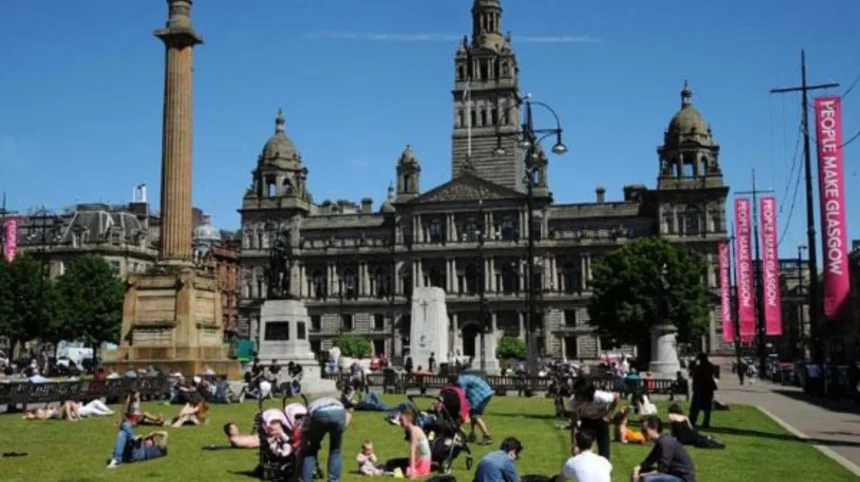
- What does the phrase “People Make Glasgow” mean?
- Is Glasgow scientifically proven to have the friendliest people in the UK?
- Why do visitors often remember Glaswegian friendliness?
- How does Glasgow’s cultural identity reinforce friendliness today?
- What makes Glaswegian friendliness different from simple Scottish hospitality?
- Will Glasgow’s reputation for friendliness remain important in the future?
Why are Glaswegians known for being so friendly?
Glaswegians are widely associated with friendliness because everyday social interaction in Glasgow often includes direct conversation, humour, practical help and informal hospitality. Travel publications have repeatedly recorded strong visitor perceptions of Glasgow’s welcoming atmosphere, reinforcing the city’s national reputation.
Glasgow’s reputation is not based on one historical event or a single social characteristic. It developed through the city’s distinctive urban culture and continues through contemporary visitor experiences.
Condé Nast Traveller has repeatedly highlighted Glasgow for friendliness. In its 2024 Readers’ Choice Awards, Glasgow was named the UK’s friendliest city with a score of 97.14 out of 100. The publication’s 2025 results again placed Glasgow first among UK cities for friendliness, with a score of 97.00.
These awards measure perceptions reported by readers and travellers. They do not establish that every Glaswegian is friendly or that friendliness is an objectively measurable personality characteristic.
VisitScotland also describes Glasgow as a city where visitors receive a warm and friendly welcome. Its tourism material connects this atmosphere with Glasgow’s culture, neighbourhoods, music, food, nightlife and visitor experiences.
The important point is that the reputation has become part of Glasgow’s identity. The phrase “People Make Glasgow” is also the city’s well-known brand message, placing people and community at the centre of its public image.
How did Glasgow’s history shape its reputation for friendliness?
Glasgow’s industrial expansion created a densely populated urban society shaped by migration, employment, neighbourhood networks and shared institutions. The city’s rapid growth connected people from different backgrounds and helped establish strong traditions of community life, conversation and collective participation.
Glasgow changed dramatically during the Industrial Revolution. Its location on the River Clyde supported the development of trade, engineering, shipbuilding and manufacturing.
The National Library of Scotland describes Glasgow as one of Scotland’s historic industrial heartlands. The city expanded rapidly during the late nineteenth and early twentieth centuries.
Industrialisation brought large numbers of workers into Glasgow. Employment opportunities encouraged population growth and created extensive working-class communities around factories, shipyards, foundries and other industries.
This environment produced dense neighbourhood networks. Families lived close to workplaces, schools, churches, shops, public houses and community facilities. Regular interaction became a normal part of urban life.
Glasgow’s history also includes significant migration. Irish migration was particularly important during the nineteenth century. Highland migration also contributed to the city’s changing population.
A Glasgow City Council historical document records the importance of Gaelic-speaking communities in Glasgow and notes that 18,536 people in the city could speak Gaelic or Gaelic and English in the 1901 Census. That represented approximately 2.5% of the city’s population at the time.
Glasgow therefore developed as a city with different regional, linguistic, religious and cultural influences.
That history does not prove that Glaswegians became friendly because of migration. It demonstrates that the city developed extensive experience of population movement and cultural interaction.
Does Glasgow’s community culture explain the friendliness?
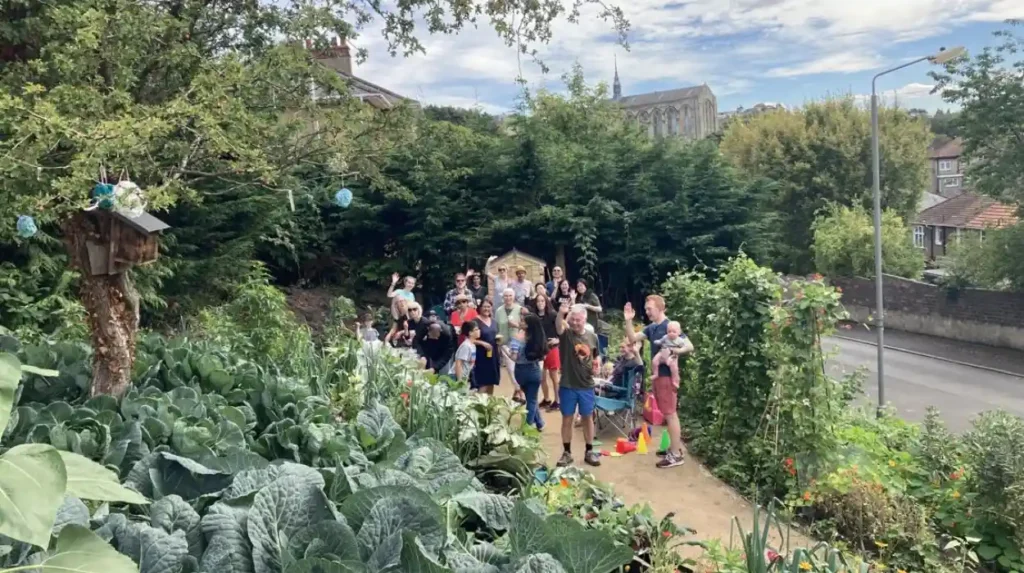
Community culture is an important part of Glasgow’s social identity. Local neighbourhoods, cultural organisations, sports groups, music venues, community projects and public institutions create repeated opportunities for people to meet, participate and build social connections.
Community is central to Glasgow’s contemporary cultural policy.
Glasgow’s Culture Strategy 2024–2030 reports that 89% of Glaswegians participate in some form of cultural activity annually. The same strategy records Glasgow’s concentration of creative workers, including 41% of Scotland’s actors, dancers and broadcasters, 38% of its musicians and 29% of its artists and graphic designers.
Cultural participation creates regular social contact.
Examples include music events, festivals, galleries, libraries, theatres, community arts projects and local celebrations. These activities provide settings where residents interact beyond formal workplace or family relationships.
The Scottish Government’s research on cultural engagement identifies social connection as one reason people participate in culture. Its 2024 research also describes culture as part of everyday life rather than something limited to formal venues.
This matters when examining Glasgow’s reputation.
Friendliness often becomes visible through small interactions. People exchange recommendations, discuss events, talk about local places and participate in shared activities. Cultural participation creates many situations where these interactions happen naturally.
Why does Glaswegian conversation feel particularly direct?
Glaswegian communication is strongly associated with direct conversation, humour, expressive language and informal interaction. This communication style often reduces social distance between strangers and visitors, making everyday encounters feel more personal and conversational than formal.
Language is an important part of Glasgow’s identity.
The Glaswegian accent is a distinctive variety of Scottish English associated with Glasgow and surrounding areas. It developed within a wider linguistic environment influenced by Scots, English, Gaelic and migration.
Glaswegian speech is widely recognised for its distinctive vocabulary and pronunciation. Words such as “wee”, meaning small, and “braw”, meaning good or fine, are associated with Scottish speech, while specifically Glasgow expressions form part of local vernacular.
Communication also involves tone.
A direct question from a stranger does not necessarily indicate familiarity in every culture. In Glasgow, informal conversation is an established part of everyday interaction.
Condé Nast Traveller’s 2022 discussion of Glasgow’s friendliness specifically connected local humour and spontaneous conversation with the city’s social character.
This does not mean every Glaswegian communicates in the same way. Glasgow contains people from many backgrounds and generations. The point is that direct and informal interaction is a recognisable part of the city’s cultural reputation.
What role does Glaswegian humour play in friendliness?
Glaswegian humour often combines quick responses, teasing, self-deprecation and informal language. This style can create social connection by giving conversations a relaxed character and reducing formality between people who have only recently met.
Humour is one of the most recognisable features of Glasgow’s cultural identity.
Glaswegian humour frequently uses exaggeration, wordplay and teasing. It also appears in music, comedy, television, literature, sport and everyday conversation.
The distinction between humour and friendliness is important. Humour does not automatically indicate kindness. Teasing can also be misunderstood when visitors are unfamiliar with local speech patterns.
In Glasgow, however, humour frequently forms part of informal social interaction.
A visitor who understands the conversational style can interpret a joke or light teasing as an invitation to participate in the conversation.
This contributes to the city’s reputation because friendliness is often judged through the quality of social interaction rather than through formal customer service alone.
Does Glasgow’s music culture contribute to its welcoming reputation?
Glasgow’s music culture provides extensive opportunities for social interaction through concerts, festivals, clubs, community events and independent venues. UNESCO recognised Glasgow as a Creative City of Music in 2008, strengthening the city’s international cultural identity.
Glasgow joined the UNESCO Creative Cities Network as a City of Music in 2008. UNESCO identifies music as a major component of Glasgow’s cultural development and international identity.
The city has a long history of live music.
Its music culture covers traditional Scottish music, folk, rock, pop, electronic music, classical performance, jazz and contemporary genres.
UNESCO’s Glasgow material has described the city’s music scene as extending across contemporary, classical, Celtic and country traditions. Historical UNESCO material also recorded an average of approximately 130 music events each week during the period covered by its earlier monitoring material.
Music venues create social environments where residents and visitors share experiences.
The same principle applies to major cultural events. Glasgow hosts festivals and cultural programmes involving local residents, performers, businesses and international visitors.
Glasgow’s Culture Strategy also lists major events including Celtic Connections, Glasgow International, the Glasgow Film Festival, TRNSMT, Glasgow International Comedy Festival and the World Pipe Band Championships.
These events help explain why friendliness is associated with Glasgow’s wider cultural environment rather than only with individual conversations.
How do pubs and cafés influence Glasgow’s social culture?
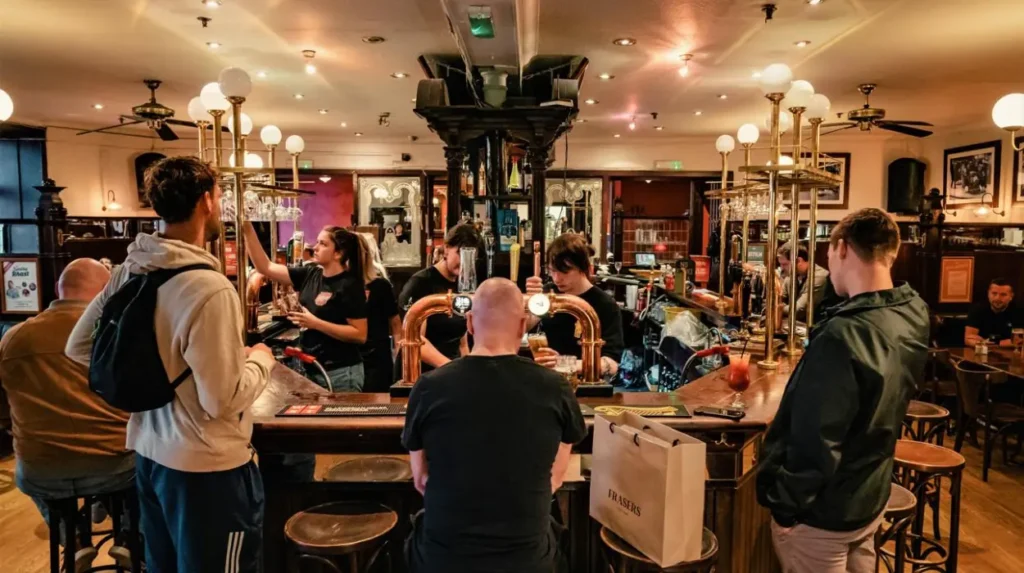
Pubs, cafés and restaurants provide everyday social spaces where Glaswegians meet friends, talk with neighbours, share local recommendations and interact with visitors. These informal settings help maintain Glasgow’s reputation for conversation, hospitality and accessible social interaction.
Food and drink venues are important parts of urban social life.
Glasgow has traditional pubs, modern bars, cafés, restaurants and live music venues across areas including the City Centre, West End, Southside and East End.
The significance of these places extends beyond eating and drinking. They function as social meeting points.
A traditional pub can provide a regular setting where people see familiar faces. A café can create similar interaction during daytime hours. Restaurants and music venues bring residents and visitors together.
VisitScotland identifies Glasgow’s food and drink scene and nightlife as major components of the city’s visitor experience.
This social infrastructure supports the perception that Glasgow is easy to engage with.
It also helps explain why visitors often associate the city with conversation. Informal venues create circumstances in which asking for recommendations, discussing local attractions or starting a conversation feels natural.
Does Glasgow’s diversity contribute to its welcoming image?
Glasgow has substantial social, economic and ethnic diversity, and its cultural institutions increasingly recognise diverse communities as part of the city’s identity. This diversity creates a broad cultural environment shaped by different backgrounds, traditions, languages and experiences.
UNESCO describes Glasgow as a city with significant social, economic and ethnic diversity. It also recognises the city’s contrasting levels of wealth and poverty.
Diversity is therefore an important part of understanding modern Glasgow.
The city’s cultural strategy emphasises openness and diverse cultures. Scotland’s national Culture Strategy similarly identifies diversity, cultural exchange and participation as important principles.
This does not mean diversity automatically produces friendliness.
Instead, cultural diversity provides more opportunities for interaction between people with different backgrounds. Glasgow’s universities, businesses, cultural institutions, hospitality sector and neighbourhoods contribute to this process.
The city’s history also provides context. Migration has been part of Glasgow’s development for generations.
Modern Glasgow continues this tradition through international students, workers, families and visitors.
How large is Glasgow today, and why does population density matter?
Glasgow City has the highest population density of Scotland’s council areas, at 3,555 residents per square kilometre in the 2022 Census. Dense urban living creates frequent opportunities for face-to-face interaction across neighbourhoods, workplaces, transport and cultural spaces.
Scotland’s Census 2022 recorded Glasgow City as having the highest population density among Scotland’s council areas, with 3,555 residents per square kilometre.
Population density affects urban interaction.
People living in densely populated areas encounter other people frequently. Streets, shops, public transport, workplaces, schools, parks, cafés and cultural venues all become points of contact.
Glasgow also has an extensive network of neighbourhoods.
Examples include the West End, Southside, East End, Merchant City, Finnieston, Dennistoun and Partick. Each area has its own local identity while remaining connected to the wider city.
The result is a city where local identity and metropolitan culture coexist.
This provides another context for Glasgow’s reputation. Friendliness is experienced not only in tourist attractions but also in ordinary neighbourhood environments.
What does the phrase “People Make Glasgow” mean?
“People Make Glasgow” is Glasgow’s city-branding message, placing residents, communities and human experiences at the centre of the city’s public identity. The phrase reflects the importance assigned to people in how Glasgow presents itself to visitors, businesses and residents.
The slogan became closely associated with Glasgow’s modern identity.
It communicates a straightforward idea: Glasgow’s character comes from the people who live, work and participate in the city.
The message is particularly relevant to the friendliness debate because it focuses attention away from architecture and attractions and towards human interaction.
Glasgow has significant architectural and cultural assets. The city has museums, galleries, historic buildings, parks, music venues and public spaces.
Yet tourism organisations repeatedly emphasise the city’s people.
VisitScotland describes Glasgow as offering visitors a warm and friendly welcome.
The branding therefore reinforces an existing cultural reputation rather than creating it from nothing.
Is Glasgow scientifically proven to have the friendliest people in the UK?
There is no scientific test proving that Glaswegians are objectively the friendliest people in the UK. Glasgow’s reputation is supported by repeated visitor surveys and travel awards, but these measure perceptions and experiences rather than an objective personality characteristic shared by every resident.
This distinction is essential.
The 2024 Condé Nast Traveller Readers’ Choice Awards gave Glasgow a friendliness score of 97.14 out of 100. In the 2025 awards, Glasgow again ranked first among UK cities for friendliness with a score of 97.00.
These are strong indicators of visitor perception.
They are not psychological studies of every Glasgow resident.
Friendliness also changes according to context. A visitor’s experience can depend on where they go, who they meet, the purpose of the interaction and their expectations.
Different surveys can produce different results. For example, the 2023 Condé Nast Traveller results placed Glasgow fourth among the UK’s friendliest cities, demonstrating that rankings vary between years.
The most accurate description is therefore that Glasgow has an unusually strong and repeatedly documented reputation for friendliness, rather than claiming that every Glaswegian is objectively friendlier than every other UK resident.
Why do visitors often remember Glaswegian friendliness?
Visitors often associate Glasgow with friendliness because social interaction is visible in ordinary settings such as shops, cafés, pubs, music venues, public transport and neighbourhood streets. Informal conversation and local humour make these encounters particularly memorable.
Visitor impressions are shaped by repeated small interactions.
A person asking for directions can receive a detailed answer. A customer can receive a local recommendation. A conversation can develop naturally in a café or pub.
These experiences create a perception of accessibility.
Glasgow’s compact urban environment also supports exploration. VisitScotland describes the city as compact and highlights its diverse neighbourhoods, making it practical for visitors to experience different parts of the city during a short stay.
The city’s cultural infrastructure adds another layer.
Visitors can encounter live music, museums, galleries, festivals, street art, food venues and public parks within the same trip.
The social dimension becomes part of the destination experience.
This explains why Glasgow’s friendliness reputation appears repeatedly in tourism coverage rather than existing only as a local stereotype.
How does Glasgow’s cultural identity reinforce friendliness today?
Glasgow’s contemporary cultural identity combines music, arts, neighbourhood life, public spaces, festivals and community participation. These activities create repeated opportunities for social contact and reinforce the city’s established reputation for openness, humour and hospitality.
Glasgow’s cultural activity remains extensive.
Glasgow’s Culture Strategy records that 89% of Glaswegians participate in cultural activity each year. The city also contains more than 20 museums and art galleries and more than 90 parks and green spaces.
These places provide different forms of social interaction.
Museums and galleries create shared cultural experiences. Parks provide informal public space. Music venues create collective experiences. Festivals connect local communities with visitors.
The Scottish Government’s research similarly identifies cultural participation as connected with heritage, identity, self-expression and social connection.
Glasgow’s friendliness reputation therefore has a strong contemporary context.
It is not solely a historical stereotype inherited from the industrial era. Modern cultural participation continues to provide the social environments in which the reputation is experienced.
Explore More Area Guide
Famous Glaswegian Slang Words and Their Meanings
Best Takeaway in Scotland: Glasgow Winner 2026
What makes Glaswegian friendliness different from simple Scottish hospitality?
Glaswegian friendliness is particularly associated with direct personal interaction, humour and conversational openness. Scottish hospitality provides the wider national context, while Glasgow’s dense urban culture gives that hospitality a distinctly informal, energetic and highly social expression.
Scottish hospitality is a broader national concept.
Glasgow adds its own urban characteristics.
The city has a large population, dense neighbourhoods, extensive cultural participation and a long history of industrial and migrant communities. These factors create a specific social environment.
Glaswegian communication is also highly recognisable.
The city’s accent and vocabulary give everyday conversation a distinctive character. Humour often accompanies direct speech.
These characteristics help explain why visitors describe Glasgow’s welcome in strongly personal terms.
VisitScotland explicitly promotes Glasgow’s friendly welcome as part of the visitor experience.
The distinction is therefore between Scottish hospitality as a broad national tradition and Glaswegian friendliness as a specific urban cultural reputation.
Will Glasgow’s reputation for friendliness remain important in the future?
Glasgow’s friendliness reputation has strong foundations in tourism, culture, community participation and international recognition. Continued cultural activity, demographic diversity and visitor engagement give the reputation an ongoing role in how Glasgow presents itself nationally and internationally.
Glasgow’s cultural reputation continues to receive international recognition.
The city remains part of UNESCO’s Creative Cities Network as a City of Music.
Its visitor economy also continues to promote cultural experiences, music, food, neighbourhoods and hospitality.
The Scottish Government’s current cultural research emphasises the relationship between culture, identity, social connection and community wellbeing.
These factors provide a continuing framework for Glasgow’s social identity.
The friendliness reputation also has a practical tourism value. Visitors often choose destinations based partly on how welcome they expect to feel.
Glasgow’s repeated appearance at the top of friendliness surveys strengthens that association.
The evidence supports a clear conclusion: Glaswegians are widely known for friendliness because Glasgow has developed a distinctive culture of informal conversation, humour, community participation and hospitality, and visitors consistently report positive perceptions of that social environment.
The reputation is cultural rather than biological, universal or scientifically fixed. It describes a widely recognised pattern in how Glasgow is experienced and represented.
For visitors, the most important context is that Glasgow’s people form a central part of the city’s identity alongside its music, architecture, food, museums, parks and neighbourhoods. That combination explains why the phrase “friendly Glasgow” remains such a persistent part of the city’s national and international reputation.
Why are Glaswegians known as the friendliest people in the UK?
Glaswegians are known for direct conversation, humour, hospitality and strong community culture. Glasgow’s reputation is also supported by repeated visitor surveys and travel awards that have recognised the city for its welcoming atmosphere.