Glasgow Subway is one of Scotland’s most distinctive transport systems. It is also one of the oldest underground railways in the world. The system opened in 1896 and developed a strong local identity through its circular route, compact stations, and distinctive orange trains.
- Why do Glaswegians call the Subway the “Clockwork Orange”?
- When did the Glasgow Subway first open?
- How did the orange trains create the Clockwork Orange nickname?
- What does “clockwork” mean in the Glasgow Subway nickname?
- When did the Clockwork Orange nickname become popular?
- How many stations does Glasgow Subway have?
- How did the Glasgow Subway work before the orange trains?
- Are the original Clockwork Orange trains still running?
- Where can visitors see a Clockwork Orange train today?
- What happened to the Clockwork Orange trains after retirement?
- Why does the Clockwork Orange nickname still matter today?
- How is Glasgow Subway changing after the Clockwork Orange era?
- What makes the Clockwork Orange name distinctive in Glasgow?
- What is the lasting legacy of Glasgow’s Clockwork Orange?
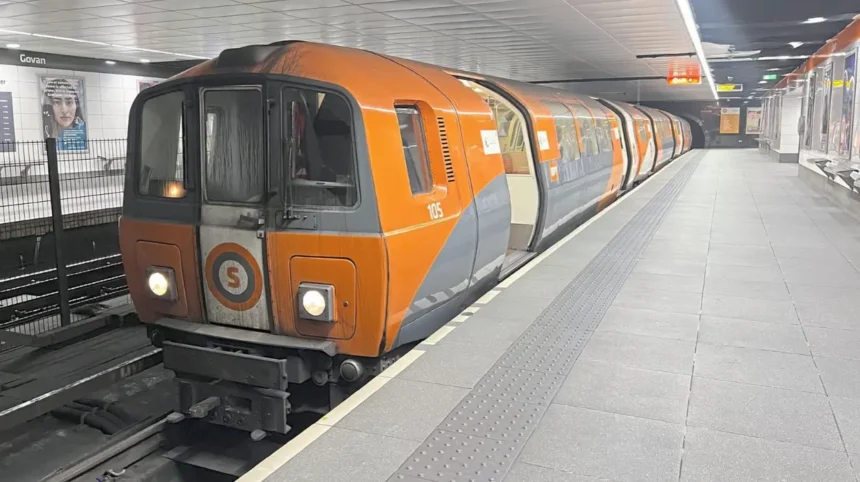
The nickname “Clockwork Orange” became closely associated with the Glasgow Subway during the late 20th century. The name describes two highly visible characteristics of the former Subway trains. Their exterior was bright orange, while the railway operated around a circular route in clockwise and anticlockwise directions.
The nickname became particularly established after the Subway reopened following its major 1977–1980 modernisation. The new Metro-Cammell trains introduced during that period carried the orange appearance that became instantly recognisable across Glasgow. Glasgow Life Museums states that these trains were nicknamed “Clockwork Orange” because of their bright paint scheme and their movement around the circular system.
Although the original orange fleet left passenger service in 2024, the name remains part of Glasgow’s transport vocabulary and heritage. The preserved trains also provide a direct connection between the nickname and the Subway’s modern history.
Why do Glaswegians call the Subway the “Clockwork Orange”?
Glaswegians call the Subway the “Clockwork Orange” because its former trains had a bright orange exterior and operated around Glasgow’s circular route. The nickname also reflects the trains’ repeated clockwise and anticlockwise journeys through the city’s underground railway system today.
The name combines the colour of the trains with the structure of the railway.
“Orange” refers directly to the livery of the Metro-Cammell trains introduced after the Subway’s major modernisation. These trains entered passenger service in 1980 and remained a defining feature of the system for more than four decades.
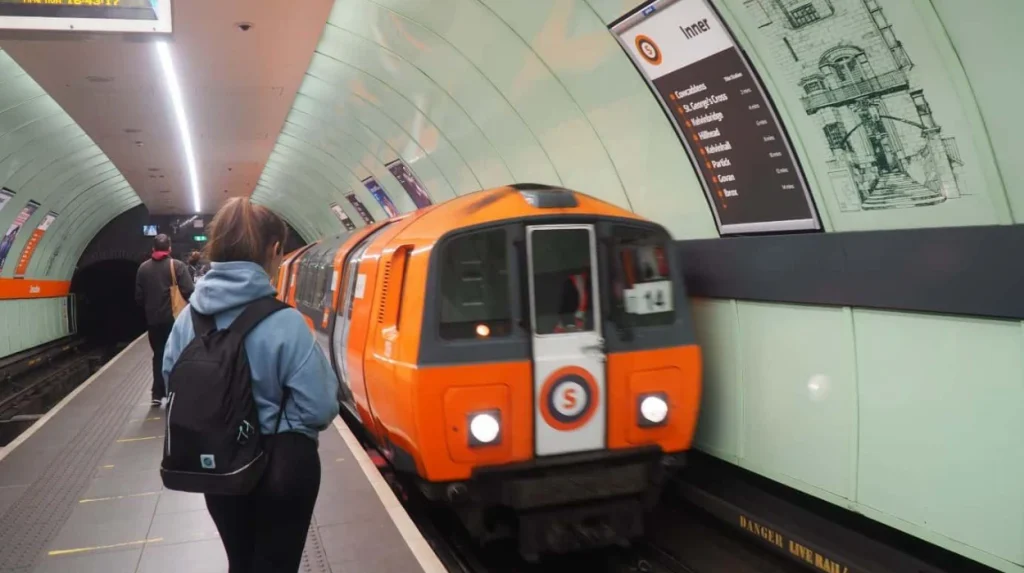
“Clockwork” refers to the repetitive circular movement of the Subway. Glasgow’s system does not operate like a conventional linear underground railway. Its tracks form a loop. Trains operate around the Inner and Outer Circles, allowing passengers to travel in opposite directions around the network.
The combination created a distinctive local expression. The name became associated with the Glasgow Subway itself rather than only with individual trains.
Glasgow Life Museums describes the former orange trains as local icons. SPT, the Strathclyde Partnership for Transport, also records that the “Clockwork Orange” nickname quickly became associated with the modern fleet introduced in 1980.
When did the Glasgow Subway first open?
The Glasgow Subway opened on 14 December 1896 and is the world’s third-oldest underground railway, after London and Budapest. It began as a cable-hauled system, became electric in 1935, and underwent major modernisation before orange trains entered service in 1980.
The Subway began during a period of rapid industrial and population growth in Glasgow. The city needed efficient public transport to move workers and residents across increasingly dense urban districts.
Construction began in the early 1890s. The Glasgow District Subway Company developed the railway as an underground circular route.
The system opened to passengers on 14 December 1896. SPT identifies Glasgow Subway as the third-oldest underground railway in the world, following the London Underground and Budapest Metro.
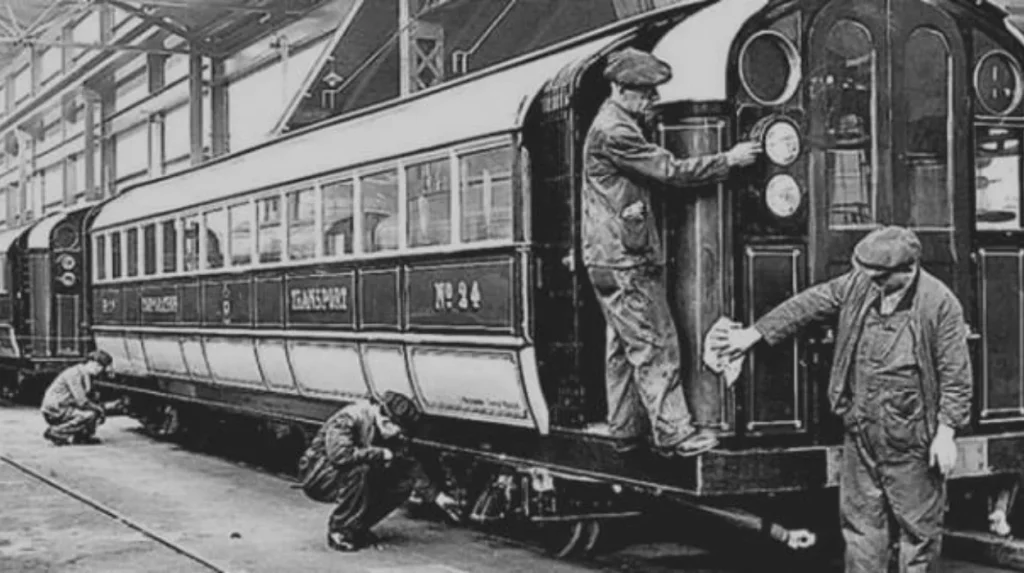
The original system used cable haulage rather than electric traction. Stationary steam engines powered the cable mechanism that moved trains through the tunnels.
This technology made Glasgow Subway different from many later underground railways. The system was designed around its circular route from the beginning.
The Subway continued operating with its original technology until the 20th century. Electrification was introduced in 1935, creating a new operational era for the railway.
Its long history explains why the Subway has remained an important part of Glasgow’s transport heritage.
How did the orange trains create the Clockwork Orange nickname?
The orange appearance came from the Metro-Cammell trains introduced after the Subway’s 1977–1980 modernisation. Their distinctive livery became strongly associated with Glasgow Subway travel, while the circular route supplied the “clockwork” part of the nickname used by Glaswegians and visitors.
The modern history of the nickname begins with the Subway’s major refurbishment in the late 1970s.
The system closed for approximately three years during the modernisation programme. Work included improvements to stations, tunnels, infrastructure, and rolling stock.
The refurbished Subway reopened in 1980 with new Metro-Cammell trains. These trains were significantly different from the earlier rolling stock. Their orange exterior became one of the most recognisable features of Glasgow’s public transport network.
The colour supplied the second half of the nickname.
The circular railway supplied the first conceptual element. Trains continually travelled around the Subway loop, creating the visual and operational association with clockwork movement.
The phrase became part of local terminology. It was not the formal name of the railway. The official transport system remained Glasgow Subway.
SPT continued using “Subway” as the formal name, while “Clockwork Orange” functioned as a popular nickname.
Glasgow Life Museums confirms that the trains became local icons from their introduction in 1980.
What does “clockwork” mean in the Glasgow Subway nickname?
The clockwork reference describes the Subway’s circular operating pattern rather than a mechanical clock inside the trains. The network has Inner and Outer Circles, allowing trains to travel around the same loop in opposite directions through Glasgow’s underground transport system.
The Glasgow Subway’s layout is central to understanding the nickname.
The railway forms a compact circular network beneath Glasgow. Its stations sit around the loop, allowing passengers to choose between trains travelling in different directions.
The system historically referred to these directions as the Inner Circle and Outer Circle.
A passenger travelling in one direction moves around one side of the loop. A passenger travelling in the opposite direction moves around the other side.
This arrangement gives the Subway a repetitive operating pattern. Trains continuously circulate through the network rather than travelling from one distant terminus to another.
The structure also contributes to the Subway’s unusual identity among British underground systems.
Glasgow Life’s historical material describes the system as a circular route operated in clockwise and anticlockwise directions.
The “clockwork” element therefore refers to the system’s circular movement and regular repetition. It is not a reference to a clock mechanism installed inside the railway.
When did the Clockwork Orange nickname become popular?
The nickname became established around the orange Metro-Cammell fleet introduced in 1980. Glasgow Life Museums and SPT describe the trains as quickly becoming local icons, and the phrase “Clockwork Orange” became a familiar cultural name for Glasgow Subway itself locally.
The nickname belongs primarily to the modernisation era.
The Subway’s original trains had served from the opening in 1896 through much of the 20th century. They were eventually replaced as part of the major modernisation that began in 1977.
The modern fleet entered service in 1980.
The bright orange trains created an immediate visual identity. Passengers could recognise them from the colour alone. Their circular journeys reinforced the connection with the “clockwork” description.
The expression became particularly durable because it described both the appearance and operating structure of the railway.
The name also appeared in Glasgow’s cultural and tourism context. Glasgow Life has used “Clockwork Orange” when describing Subway heritage and has incorporated the identity into museum material and transport-related activities.
The nickname therefore developed from everyday transport language into a recognised part of Glasgow’s cultural vocabulary.
How many stations does Glasgow Subway have?
Glasgow Subway has 15 stations arranged around a compact circular network linking areas including the city centre, West End and south-western districts. Key stations include St Enoch, Buchanan Street, Hillhead, Partick, Govan, Ibrox, and Bridge Street, providing connections across Glasgow.
The Subway’s 15 stations form the core of the circular network.
City-centre stations include St Enoch and Buchanan Street. These stations provide access to major commercial, shopping, cultural, and transport areas.
The West End is served by stations including Kelvinbridge, St George’s Cross, Kelvinhall, and Hillhead.
The western and south-western part of the network includes Partick, Govan, Ibrox, and Cessnock.
Other stations include Cowcaddens, Buchanan Street, St Enoch, Bridge Street, West Street, Shields Road, and Kinning Park.
The compact arrangement makes the Subway particularly important for movement within central and western Glasgow.
SPT confirms that the modernisation programme covers all 15 Subway stations. Station refurbishment formed a major part of the current modernisation programme.
The number of stations also contributes to the Subway’s recognisable compact scale compared with larger metropolitan underground networks.
How did the Glasgow Subway work before the orange trains?
The original Subway used cable haulage, with stationary steam engines providing propulsion through underground tunnels. Electrification arrived in 1935. The 1977–1980 modernisation replaced the earlier trains with Metro-Cammell stock, creating the orange visual identity associated with the Clockwork Orange nickname.
The first Glasgow Subway was technologically different from the system passengers know today.
When the railway opened in 1896, trains were moved by cables. Stationary steam engines provided the power needed to operate the cable system.
This arrangement was unusual because the trains themselves did not use conventional onboard steam propulsion.
The Subway later underwent a major technological change.
In 1935, the system was electrified. Electric traction replaced the original cable-haulage arrangement and created a more modern operating system.
Another major transformation occurred during the late 1970s.
The Subway closed from 1977 while engineers carried out extensive modernisation. The project involved station reconstruction, tunnel work, infrastructure improvements, and new trains.
The modernised system reopened in 1980.
The Metro-Cammell fleet became the visual symbol of that period. The orange exterior was therefore not a feature of the original Victorian Subway. It belonged to the later modernised system.
This distinction is important when explaining the history of the Clockwork Orange nickname.
Are the original Clockwork Orange trains still running?
The old orange trains were retired as the modern fleet entered passenger service. The final legacy trains completed their last passenger journeys on 28 June 2024 after more than 44 years, while preserved carriages continue representing the Clockwork Orange era.
The traditional orange trains are no longer the regular passenger fleet.
The legacy Metro-Cammell trains entered passenger service in 1980. They remained in operation for more than four decades.
SPT records that the final legacy trains completed their last passenger service on 28 June 2024. The trains had served for more than 44 years.
The retirement followed the introduction of a new generation of Subway trains.
The new fleet began entering passenger service in December 2023. SPT introduced the first new train to passengers on 11 December 2023 following extensive testing.
The end of the old fleet marked a major transition in Glasgow transport history.
The Clockwork Orange nickname nevertheless remains relevant because it describes an important era of the Subway rather than requiring the original trains to remain in daily service.
The historical name now connects modern Glasgow with the railway’s 1980–2024 orange-train period.
Where can visitors see a Clockwork Orange train today?
The Glasgow Subway nickname has cultural value because the orange trains became recognisable symbols of the city’s transport history. Glasgow Life Museums preserves Car 128 at Riverside Museum, while the Subway itself continues operating as a modernised circular underground network.
Visitors can see an original Subway carriage at Riverside Museum in Glasgow.
The preserved vehicle is Car 128, a former Subway carriage from the legacy fleet.
Car 128 entered service with the modernised system in 1980 and remained part of the passenger fleet for decades. It was transferred to Glasgow Life Museums after its operational career ended.
Glasgow Life states that the carriage weighs approximately 12 tonnes and was placed on display at Riverside Museum in 2024.
The museum’s collection also includes three carriages from the original 1896–1977 fleet.
This creates a direct historical sequence between Glasgow Subway’s Victorian origins and its modern orange-train era.
Riverside Museum therefore provides an important physical reference for understanding why the Subway became known as the Clockwork Orange.
The preserved carriage also demonstrates that the nickname refers to a specific period of Glasgow’s railway history.
What happened to the Clockwork Orange trains after retirement?
The retirement of the legacy fleet transferred the Clockwork Orange trains from everyday transport into Glasgow’s transport heritage. Preserved carriages, museum collections, archives, and historical records now document the trains that defined Subway travel from 1980 until 2024.
The retirement process began as the new Stadler trains entered passenger operation.
The legacy fleet had reached the end of its operational era after more than four decades of service. Maintaining older trains became increasingly difficult as specialist components became harder to source.
SPT introduced 17 new trains as part of its wider modernisation programme. The programme also includes new signalling and communications systems and improvements across the station network.
The final legacy trains completed their last loops in June 2024.
SPT records that the retired trains had travelled approximately 2.6 million miles each during passenger service, with individual trains completing roughly 400,600 loops of the Subway system.
These figures show the scale of the fleet’s operational history.
Preservation then became an important part of the transition.
Car 128 was transferred to Riverside Museum, where visitors can see an original orange Subway carriage outside its former passenger environment.
The preservation of the fleet ensures that the Clockwork Orange identity remains visible even as Glasgow Subway adopts new technology.
Why does the Clockwork Orange nickname still matter today?
The Clockwork Orange nickname remains relevant because it connects Glasgow’s modern Subway with its 1980–2024 orange fleet, circular route, and long transport history. The phrase remains widely recognisable even though the original orange trains have left passenger service.
The nickname has survived because it describes more than train colour.
It identifies a distinctive period in Glasgow’s transport history. The orange Metro-Cammell trains operated for more than four decades and became familiar to generations of passengers.
The name also connects directly with the Subway’s unusual circular design.
Glasgow Subway remains a historically significant underground railway. It opened in 1896 and reached its 125th anniversary in 2021. SPT and the National Transport Trust recognise its position as the world’s third-oldest underground railway.
The modernisation programme does not remove this history.
The system continues to use its historic circular network while introducing new trains, signalling, communications technology, station improvements, and platform screen doors. SPT describes the programme as the third major modernisation in the Subway’s lifetime.
The result is a transport system that combines Victorian infrastructure, 20th-century modernisation, and 21st-century technology.
The Clockwork Orange name remains the clearest popular reference to one of the most recognisable chapters in that history.
How is Glasgow Subway changing after the Clockwork Orange era?
Glasgow Subway is moving from its long-serving Metro-Cammell fleet toward new trains, modern signalling, improved stations, and future unattended train operation. The changes preserve the circular network while replacing major operating technology developed during earlier modernisation programmes.
The current modernisation programme represents a significant technological transition.
SPT introduced the new Stadler trains as replacements for the legacy fleet. The new trains provide an open front view and connected carriages that allow passengers to move through the train.
The programme also includes modern signalling and communications technology.
Platform screen doors are being installed at stations. SPT states that these doors support passenger safety and security while retaining an open station environment.
The long-term system is designed for unattended train operation.
This development represents a major change from the manually driven orange trains that defined the Subway from 1980 to 2024.
The route itself remains the essential constant.
The circular structure continues to define how the railway works and how passengers understand the network.
The historical nickname therefore remains useful even as the technology changes.
Explore More Area Guide
What Does Gallus Mean in Glasgow? Scots Slang Guide
Deep Fried Mars Bar Glasgow: Where to Get One
What makes the Clockwork Orange name distinctive in Glasgow?
The Clockwork Orange nickname is distinctive because it combines train design, railway structure, local language, and transport history in two words. The orange fleet supplied the colour reference, while the circular Subway supplied the clockwork reference.
The expression became strongly associated with Glasgow rather than with underground railways generally.
The Subway’s history provides the foundation. Its Victorian opening in 1896 established a circular underground railway. Its 1935 electrification modernised the operating technology. Its 1977–1980 reconstruction introduced the orange Metro-Cammell trains. The fleet then served for more than 44 years.
Each period contributed to the identity that exists today.
The name also demonstrates how transport systems develop local terminology. “Glasgow Subway” remains the official and practical name. “Clockwork Orange” became the memorable popular description associated with the orange rolling stock.
The nickname therefore survives as historical vocabulary.
Even though the original trains are retired, the phrase continues to describe one of Glasgow’s most recognisable transport traditions.
For visitors, the term provides useful cultural context. For residents, it remains a reference to a familiar part of Glasgow’s modern history.
The Clockwork Orange is consequently not a separate railway line. It is the enduring nickname for Glasgow Subway, especially its famous orange-train era.
What is the lasting legacy of Glasgow’s Clockwork Orange?
The lasting legacy of the Clockwork Orange is its association with Glasgow’s transport identity. The orange Metro-Cammell trains became local icons after 1980, operated for more than 44 years, and now form an important part of the city’s preserved transport heritage.
The nickname remains connected to the railway’s circular route and its distinctive appearance.
The original orange trains have now left passenger service, but their history is preserved through museum collections and surviving railway records.
Car 128 at Riverside Museum provides a physical example of the trains that carried millions of passengers during the modern era. Glasgow Life Museums identifies the carriage as part of the Subway’s transport collection.
The wider Subway continues to operate as Glasgow’s underground circular railway.
Its history stretches from the cable-hauled system of 1896 to electrification in 1935, the modernisation of 1977–1980, the orange Metro-Cammell fleet, and the new Stadler trains introduced from 2023.
That continuity explains why the Clockwork Orange remains an important Glasgow expression.
The name captures a specific combination of orange trains and circular movement that became part of the city’s everyday transport culture.
Today, the trains are changing, but the historical identity remains.
The Glasgow Subway is still the Glasgow Subway. The “Clockwork Orange” remains its enduring nickname and one of the clearest references to the railway’s modern heritage.
Why is Glasgow Subway called the Clockwork Orange?
Glasgow Subway is called the “Clockwork Orange” because its former trains had a distinctive orange exterior and operated around Glasgow’s circular underground railway. The nickname became strongly associated with the Metro-Cammell trains introduced in 1980.