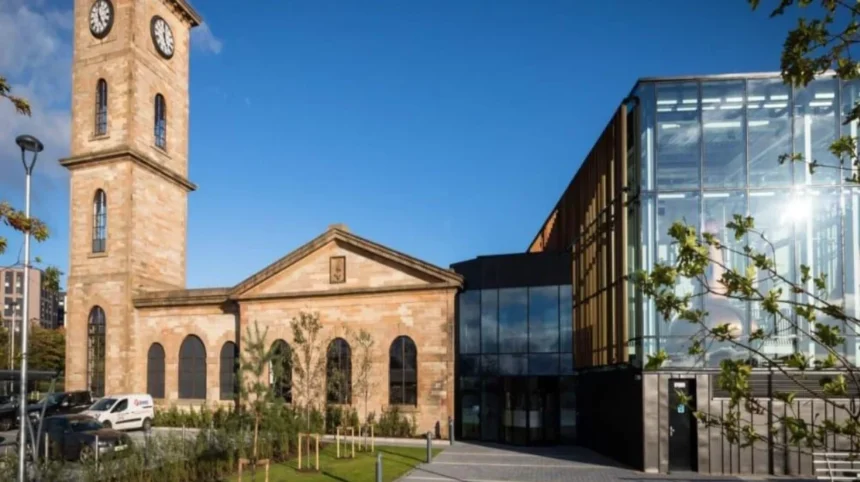
The Clydeside Distillery is a Lowland single malt Scotch whisky distillery on Glasgow’s River Clyde. It occupies the historic Queen’s Dock Pumphouse, combines whisky production with a visitor centre, and offers guided tours, tastings and specialist whisky experiences.
- What is the Clydeside Distillery?
- Why is the Clydeside Distillery important to Glasgow’s history?
- How does Clydeside Distillery make its whisky?
- What can visitors see on the Clydeside whisky tour?
- How much does a Clydeside Distillery tour cost?
- Is the Clydeside whisky tour worth the cost?
- What whisky does Clydeside Distillery produce?
- How does Clydeside compare with Glasgow’s other whisky attractions?
- How should visitors plan a Clydeside Distillery tour?
- What should visitors know about Clydeside whisky before tasting it?
- What makes the Clydeside Distillery relevant for Glasgow tourism?
- What is the final verdict on the Clydeside whisky tour?
The distillery opened to the public in November 2017 after the historic Pumphouse was converted into a modern whisky-making facility. Its location connects contemporary whisky production with Glasgow’s industrial, maritime and trading history. The building originally served the Queen’s Dock, an important Glasgow shipping facility.
For visitors searching for a Glasgow whisky tour, Clydeside provides an accessible introduction to Scotch whisky production without requiring travel outside the city. Its standard experience combines the history of the dockside location, the production process and whisky tasting.
The official distillery currently lists the standard Clydeside Tour at £19.50 per person for one hour. The experience includes the dockside story, an explanation of single malt whisky production, access to the production areas and three whisky drams. Premium experiences cost more.
What is the Clydeside Distillery?
The Clydeside Distillery is a working Lowland single malt Scotch whisky distillery in Glasgow. Opened in 2017, it occupies the historic Queen’s Dock Pumphouse beside the River Clyde and combines whisky production, visitor exhibitions, guided tours, tastings, retail facilities and a café.
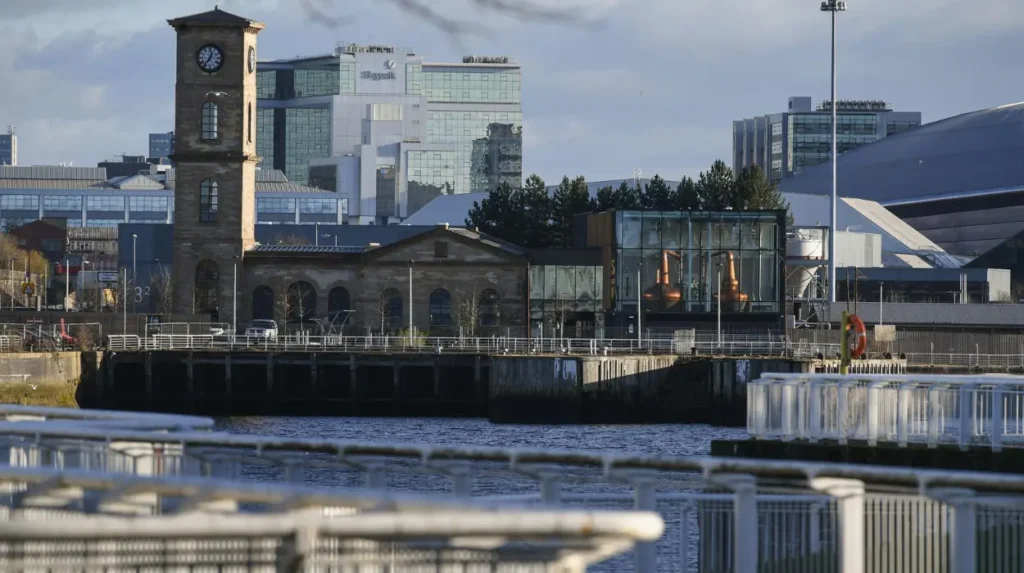
The Clydeside Distillery is located at 100 Stobcross Road, Glasgow, G3 8QQ, beside the River Clyde and close to major cultural attractions including the Riverside Museum, SEC Centre and OVO Hydro.
It is operated by Morrison Glasgow Distillers. The project was developed by whisky industry figure Tim Morrison, whose family has a direct historical connection with Queen’s Dock.
The distillery produces Lowland single malt Scotch whisky. Single malt Scotch whisky is made at one distillery using malted barley, water and copper pot still distillation. Scotch whisky must satisfy specific legal production and maturation requirements.
The Scotch Whisky Association states that Scotch Whisky is produced from cereals, water and yeast, distilled in Scotland and matured in oak casks in Scotland for at least three years. Bottling strength must be at least 40% alcohol by volume.
Clydeside therefore represents both a modern whisky producer and a Glasgow heritage attraction. Its visitor experience focuses on how whisky is made and how the River Clyde contributed to the city’s historic whisky trade.
Why is the Clydeside Distillery important to Glasgow’s history?
Clydeside Distillery is important because it restored whisky production to Glasgow’s River Clyde after more than a century. Its Pumphouse dates from 1877 and was associated with Queen’s Dock, linking modern whisky production directly with Glasgow’s maritime and industrial heritage.
The Pumphouse was constructed in 1877 to provide hydraulic power for the operation of the swing bridge serving Queen’s Dock. The dock was an important part of Glasgow’s maritime infrastructure.
The building later served other purposes before becoming the home of Clydeside Distillery. The official distillery history records that Queen’s Dock closed around the 1960s. The Pumphouse subsequently served as an Indian and Italian restaurant and later as a visitor centre for the Tall Ship before its conversion into the distillery.
The connection with the Morrison family adds another historical layer. Tim Morrison’s great-grandfather, John Morrison, was involved in the construction of Queen’s Dock. The modern distillery therefore occupies a location directly associated with the family behind the current whisky business.
Whisky was historically significant to Glasgow’s international trading economy. Ships leaving the Clyde carried Scottish goods to overseas markets, including whisky. The Queen’s Dock formed part of that wider maritime infrastructure.
Clydeside Distillery opened in 2017, bringing whisky production back to the River Clyde after an absence of more than 100 years. Contemporary reports described the opening as a return of distilling to Glasgow’s riverside.
The building itself is therefore a central component of the attraction. Visitors do not simply enter a newly constructed visitor centre. They enter a historic dockside structure adapted for modern whisky production.
How does Clydeside Distillery make its whisky?
Clydeside produces Lowland single malt whisky through malting, mashing, fermentation, distillation and maturation. Malted barley is converted into a fermentable liquid, yeast produces alcohol, copper stills concentrate the spirit, and oak casks mature it into Scotch whisky.
The production process begins with malted barley. Malting activates enzymes within barley so that starch can later be converted into fermentable sugars.
The malt is milled and combined with water during mashing. The resulting liquid, known as wort, contains sugars that support fermentation.
Yeast is added during fermentation. Yeast converts sugars into alcohol and produces compounds that contribute to the eventual aroma and flavour profile.
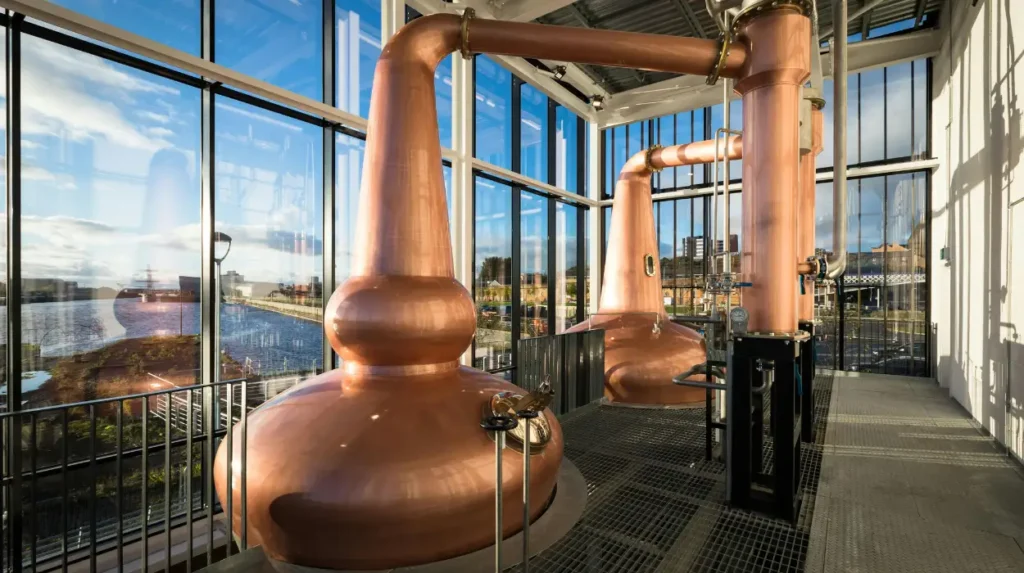
Distillation takes place in copper stills. Clydeside uses dedicated wash and spirit stills. Industry information records two stills at the distillery, with production capacity historically designed around approximately 500,000 litres of pure alcohol per year.
The distillation stage separates and concentrates alcohol while retaining compounds that influence the character of the new make spirit.
The spirit then enters oak casks for maturation. Maturation is a legally essential stage for Scotch whisky. Scotch Whisky must mature in oak casks in Scotland for a minimum of three years. The casks influence colour, aroma, texture and flavour.
Clydeside’s production is associated with a Lowland style. Its whisky portfolio includes expressions matured in different cask types, demonstrating the importance of oak maturation to the final character of the spirit.
The distillery released its first single malt, Stobcross, in 2021. The name references the historical Stobcross area and the former Queen’s Dock site.
What can visitors see on the Clydeside whisky tour?
The standard Clydeside Tour combines the dockside history, whisky-making process, production areas and guided tasting. Visitors learn how malted barley becomes spirit, how oak affects maturation and how Clydeside develops its Lowland single malt character.
The standard tour lasts approximately one hour. The official visitor programme describes the experience as an exploration of the dockside story followed by an explanation of single malt production.
Visitors learn about the raw materials used in Scotch whisky and follow the principal production stages. These include mashing, fermentation, distillation and maturation.
The tour also provides access to the distillery’s production environment. Copper stills form a major visual feature of the facility.
The visitor experience places whisky production within the history of the River Clyde. This distinguishes the attraction from a tasting-only venue because the tour explains both the industrial location and the technical production process.
The final part of the standard experience involves whisky tasting. The official distillery states that visitors taste three different drams as part of the Clydeside Tour.
The tasting demonstrates how maturation affects whisky. Oak casks interact with spirit over time and contribute colour and flavour. Scotch Whisky Association guidance explains that maturation and cask finishing are important components of Scotch whisky production.
Visitors who are driving can ask about arrangements for tasting samples. Responsible consumption remains important because whisky is an alcoholic drink.
How much does a Clydeside Distillery tour cost?
The standard Clydeside Tour currently costs £19.50 per person and lasts one hour. Other experiences cost more, including the £39 Chocolate & Whisky Tour, £90 Whisky Creator Tour and £175 Distillery Manager Tour. Prices are subject to official booking updates.
The standard Clydeside Tour costs £19.50 per person according to the distillery’s current official visitor information. It lasts approximately one hour and includes three whisky drams.
The Chocolate & Whisky Tour costs £39 per person and lasts approximately one hour and 20 minutes. It combines the distillery experience with a tasting of five whisky drams paired with artisan chocolates.
The Whisky Creator Tour costs £90 per person and lasts approximately one hour and 30 minutes. It includes a hands-on blending experience, tasting of four single casks and the opportunity to create a 200ml bottle of cask-strength Clydeside single malt to take home.
The Distillery Manager Tour costs £175 per person and lasts approximately two hours. It is hosted by Distillery Manager Alistair McDonald and includes a premium whisky selection and additional gifts. The official website states that this experience is normally available from April to October on Thursdays at 2pm, with other arrangements available on request. It has a minimum of two participants and a maximum of six.
These prices establish a clear progression. The standard tour focuses on education and tasting. The intermediate experience adds food pairing. The Whisky Creator Tour adds practical participation and a take-home bottle. The Distillery Manager Tour provides a smaller and more specialist experience.
Because tour prices change, visitors should confirm the price and available time slot through the official booking system before travelling.
Is the Clydeside whisky tour worth the cost?
The standard Clydeside Tour provides a structured introduction to Glasgow whisky production, local history and tasting for £19.50. Its value is strongest for visitors seeking one-hour educational access to a working distillery with three tasting drams included.
The standard tour offers several distinct components within one ticket. It combines heritage interpretation, production education, access to the distillery environment and whisky tasting.
At £19.50, the standard experience sits below the price of the specialist Clydeside experiences. The ticket therefore suits visitors who want an introduction rather than an intensive whisky workshop.
The inclusion of three whisky drams is significant for visitors interested in understanding whisky flavour. Tasting multiple expressions provides a practical way to identify differences created by maturation, cask selection and production characteristics.
The tour also has geographical value. It sits within Glasgow rather than requiring a separate journey to a rural distillery. Visitors staying in the city can combine it with nearby attractions along the River Clyde.
For whisky enthusiasts, the specialist tours provide additional depth. The Whisky Creator Tour includes four single-cask tastings and a personalised 200ml bottle. The Distillery Manager Tour provides a smaller group format and a premium tasting selection.
The appropriate ticket therefore depends on the visitor’s purpose. A first-time whisky visitor has a clear standard option. A visitor interested in cask comparison has a stronger reason to select the Whisky Creator Tour. A specialist enthusiast seeking a premium experience has the Distillery Manager Tour.
The standard tour is also useful for visitors interested in Glasgow’s industrial history because the Pumphouse is an integral part of the experience.
What whisky does Clydeside Distillery produce?
Clydeside produces Lowland single malt Scotch whisky, including Stobcross and other expressions developed through different maturation approaches. Its portfolio demonstrates the influence of barley, fermentation, distillation, oak casks, maturation length and finishing techniques on whisky character.
Clydeside’s first single malt release was Stobcross, introduced in 2021. It is named after the historic Stobcross area associated with the location of the former Queen’s Dock.
The distillery’s whisky portfolio demonstrates the relationship between new make spirit and oak maturation. Clydeside uses cask selection to develop different flavour profiles.
The official portfolio includes whisky presented with tasting descriptions covering fruit, floral, vanilla, spice and other flavour characteristics. The distillery also identifies expressions using different maturation and finishing approaches.
A current example is the 2026 Limited Edition, a whisky distilled in 2018 and presented at eight years old. It is matured in American bourbon barrels and finished in Canadian rye and Mexican tequila casks. It is bottled at 46% ABV, without chill filtration and with natural colour. The release is limited to 580 bottles.
This demonstrates why whisky age alone does not determine flavour. Cask history, maturation conditions, finishing and bottling choices also affect the final product.
Scotch whisky law provides the underlying framework. Whisky must mature for at least three years in oak casks in Scotland, although many expressions mature substantially longer.
How does Clydeside compare with Glasgow’s other whisky attractions?
Clydeside Distillery stands out because it combines active whisky production with a historic dockside setting. Its location beside the River Clyde, guided production tour, three-dram tasting and direct connection with Queen’s Dock create a focused Glasgow whisky experience.
Glasgow has a growing whisky visitor economy. Clydeside forms part of a broader revival of whisky production and whisky tourism within the city.
Its main distinction is the combination of location and production. The distillery operates inside the former Queen’s Dock Pumphouse, while its visitor experience explains the history of the surrounding maritime district.
The attraction is also close to the Riverside Museum and other Clyde-side destinations. This allows visitors to incorporate the distillery into a wider day of Glasgow sightseeing.
Scotland’s whisky visitor economy is substantial. The Scotch Whisky Association reported 2.7 million visits to Scotch whisky distilleries in 2024, making distillery visitor centres collectively one of Scotland’s leading tourist attractions. The association reported 154 operating Scotch whisky distilleries in Scotland in May 2026.
This wider context explains the importance of distillery tourism. Visitors increasingly encounter whisky as both a manufactured product and a cultural heritage subject.
Clydeside’s Glasgow location provides an urban alternative to travelling to Scotland’s major whisky-producing regions. The Scotch Whisky Association identifies five Scotch whisky regions: Campbeltown, Highland, Islay, Lowland and Speyside. Clydeside belongs to the Lowland category.
How should visitors plan a Clydeside Distillery tour?
Visitors should book an official time slot, arrive before the scheduled tour, check the current ticket conditions and allow time for the shop and surrounding Clyde attractions. Tour availability differs by experience, so advance booking provides the clearest schedule.
The official booking system provides date and time selection for the available experiences. Some specialist tours operate only on specified dates.
Visitors should check the exact tour type before booking. The standard Clydeside Tour, Chocolate & Whisky Tour, Whisky Creator Tour and Distillery Manager Tour have different durations, prices and inclusions.
The distillery is located at 100 Stobcross Road in Glasgow. Its position beside the River Clyde makes it suitable for visitors already exploring the Finnieston, SEC and Riverside Museum area.
Visitors should allow additional time beyond the one-hour standard tour. The shop provides an opportunity to examine Clydeside releases and other Scottish single malt whiskies. The official distillery also operates a café.
Photography restrictions can apply within production areas, so visitors should follow staff instructions.
Whisky tasting also requires responsible planning. Visitors who intend to drive should avoid consuming alcohol before driving and use appropriate arrangements for getting home.
The official website should remain the primary source for current prices, dates, accessibility information, booking conditions and tour availability.
What should visitors know about Clydeside whisky before tasting it?
Clydeside whisky is Lowland single malt Scotch whisky, so its production follows Scotland’s legal Scotch Whisky framework. Tasting focuses on aroma, flavour, texture and finish, while cask maturation provides important characteristics that distinguish individual Clydeside expressions.
Scotch whisky tasting begins with observation. Colour provides information about maturation and cask interaction, although colour alone does not establish whisky age.
Aroma is another major component. Whisky contains numerous volatile compounds created during fermentation, distillation and maturation. The nose can reveal fruit, floral, cereal, spice, oak and other characteristics.
Taste provides information about sweetness, spice, fruit, oak and texture. The finish describes the flavours that remain after swallowing or tasting.
The Scotch Whisky Association’s tasting guidance recommends using multiple senses when assessing Scotch whisky. It explains that colour, aroma, taste and mouthfeel all contribute to the tasting experience.
Cask maturation is particularly important. New make spirit is clear, while years of interaction with oak contribute colour and flavour. Different casks previously used for bourbon, wine or other spirits can create different maturation characteristics.
Clydeside’s portfolio includes examples of different cask influences. Its 2026 limited edition, for example, combines American bourbon maturation with finishing in Canadian rye and Mexican tequila casks.
Visitors do not need specialist whisky knowledge before taking the standard tour. The experience is designed around an explanation of production and tasting.
Explore More Area Guide
What Is Glasgow Necropolis and Is It Worth Visiting? Glasgow
Merchant City Festival: Comprehensive Guide to Summer Events Merchant City Glasgow 2026
What makes the Clydeside Distillery relevant for Glasgow tourism?
Clydeside Distillery strengthens Glasgow’s River Clyde tourism offer by combining a working whisky producer with a historic dock building. It connects whisky, maritime trade, industrial architecture and modern visitor experiences within one accessible city-centre cultural attraction.
The River Clyde has played a central role in Glasgow’s industrial development. Queen’s Dock was part of the infrastructure that supported the city’s international shipping economy.
The Pumphouse preserves a physical connection with that period. Its conversion into Clydeside Distillery gives the historic structure a contemporary commercial and cultural use.
The visitor experience therefore operates across several subjects. Whisky production explains the manufacturing process. The dockside story explains the building’s original function. The tasting demonstrates the finished product.
This combination supports Glasgow’s broader cultural tourism offer. Visitors can move between museums, architecture, events, riverside attractions and food and drink venues without leaving the city.
Clydeside also contributes to the wider Scottish whisky economy. The Scotch Whisky Association reports that Scotch whisky supported substantial economic activity across Scotland and the wider UK, with its latest industry figures showing continued global and domestic significance.
The distillery’s continuing releases also demonstrate the transition from a new producer into an established Lowland single malt brand. Its first single malt appeared in 2021, while later releases provide increasingly mature examples of its production.
What is the final verdict on the Clydeside whisky tour?
The Clydeside Tour is a concise Glasgow whisky experience combining industrial heritage, working production, single malt education and three tasting drams for £19.50. The standard ticket suits first-time visitors, while specialist tours target enthusiasts seeking deeper whisky experiences.
The strongest reason to visit is the combination of subjects covered within one experience. Clydeside is not solely a tasting room and not solely a museum. It is an operating distillery inside a historic Glasgow dock building.
The standard tour provides the clearest entry point. At £19.50, it includes approximately one hour of guided content and three whisky drams.
The Chocolate & Whisky Tour provides a longer experience with five whisky drams and artisan chocolate pairings. The Whisky Creator Tour adds single-cask tasting and a personalised 200ml bottle. The Distillery Manager Tour provides the most specialist format and a smaller group.
The attraction also has strong historical relevance. The Pumphouse dates from 1877, Queen’s Dock was an important part of Glasgow’s maritime infrastructure, and whisky production returned to the riverside when Clydeside opened in 2017.
For visitors building a Glasgow itinerary around the River Clyde, the distillery fits naturally with nearby museums and cultural venues.
For whisky beginners, the standard tour provides a structured introduction to Scotch production. For whisky enthusiasts, the specialist experiences provide additional tasting and production detail.
The current standard price of £19.50 makes the Clydeside Tour the most direct option for visitors seeking a combination of Glasgow history and whisky education. Visitors should verify current prices and availability before booking because tour information changes over time.
What is Clydeside Distillery?
Clydeside Distillery is a Lowland single malt Scotch whisky distillery on the River Clyde in Glasgow. It opened in 2017 inside the historic Queen’s Dock Pumphouse, a building dating from 1877.