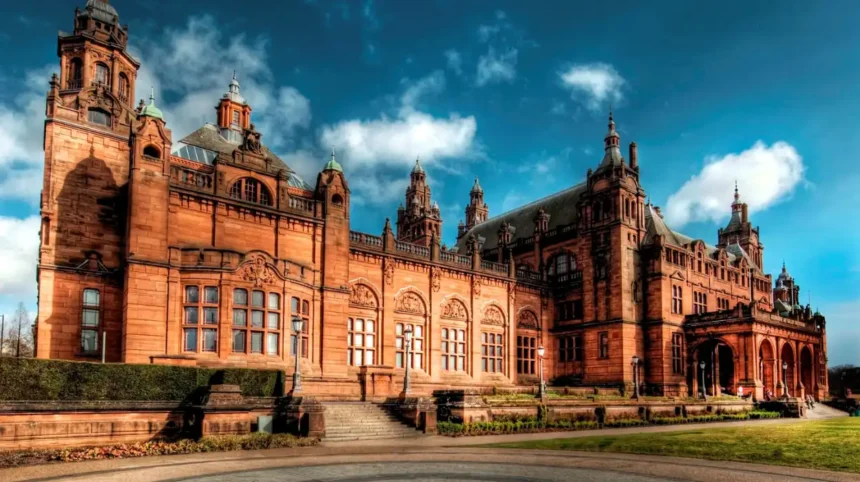
Kelvingrove Art Gallery and Museum is one of Glasgow’s most important cultural institutions. Located on Argyle Street beside Kelvingrove Park, the museum combines fine art, natural history, archaeology, social history, arms and armour, design and architecture under one roof.
- Why is Kelvingrove Art Gallery important to Glasgow?
- What can Glasgow locals see inside Kelvingrove?
- How many galleries does Kelvingrove have?
- Why is Kelvingrove suitable for repeat visits?
- What makes Kelvingrove free for Glasgow residents?
- How important is Kelvingrove to Glasgow’s cultural identity?
- How popular is Kelvingrove Art Gallery and Museum?
- What role does Kelvingrove play in education?
- What recent changes make Kelvingrove worth revisiting?
- How can Glasgow locals make regular visits more worthwhile?
- Is Kelvingrove better for regular visits than a one-time visit?
- What is the long-term value of Kelvingrove for Glasgow residents?
- Is Kelvingrove Art Gallery worth visiting regularly as a Glasgow local?
For Glasgow locals, its value extends beyond a single sightseeing visit. The museum is free to enter, contains 22 galleries and presents a large civic collection that supports repeat visits. Its displays also change through temporary exhibitions, refreshed galleries, conservation projects, educational activities and new acquisitions.
Kelvingrove opened in 1901 during Glasgow’s International Exhibition. In 1902, it became Glasgow’s civic art gallery and museum. Its Victorian red-sandstone architecture, central location and varied collections have made it a long-standing part of Glasgow’s cultural infrastructure.
For residents, regular visits provide access to internationally significant art, Scottish cultural history and natural-history displays without an admission charge. The museum also works as part of Glasgow Life Museums, a wider network that includes the Riverside Museum, The Burrell Collection, Gallery of Modern Art and other civic museums.
Why is Kelvingrove Art Gallery important to Glasgow?
Kelvingrove Art Gallery is important because it preserves Glasgow’s civic collections while providing free public access to art, history, science and design. Its 22 galleries connect local heritage with international works and support education, cultural participation and repeat museum visits.
Kelvingrove is operated by Glasgow Life Museums on behalf of Glasgow City Council. The museum represents the civic-museum tradition that developed strongly in Glasgow during the Victorian and Edwardian periods.
The building opened in 1901 as part of Glasgow’s International Exhibition. The exhibition demonstrated Glasgow’s industrial, commercial and cultural importance at the beginning of the twentieth century. The following year, Kelvingrove became Glasgow’s civic art gallery and museum.
Its collections now cover several major areas. These include European art, Scottish art, natural history, human history, archaeology, Ancient Egypt, arms and armour, decorative arts and design.
The museum also contains objects associated with Glasgow’s cultural identity. Charles Rennie Mackintosh, one of Scotland’s most influential designers and architects, is represented within the museum’s collections. Mackintosh’s work forms an important connection between Kelvingrove and Glasgow’s internationally recognised design heritage.
The institution therefore serves two functions. It preserves objects of cultural significance, and it provides a public setting where residents can encounter those collections without paying general admission.
This distinction is important for locals. A free civic museum supports casual visits rather than requiring every visit to justify a ticket purchase.
What can Glasgow locals see inside Kelvingrove?
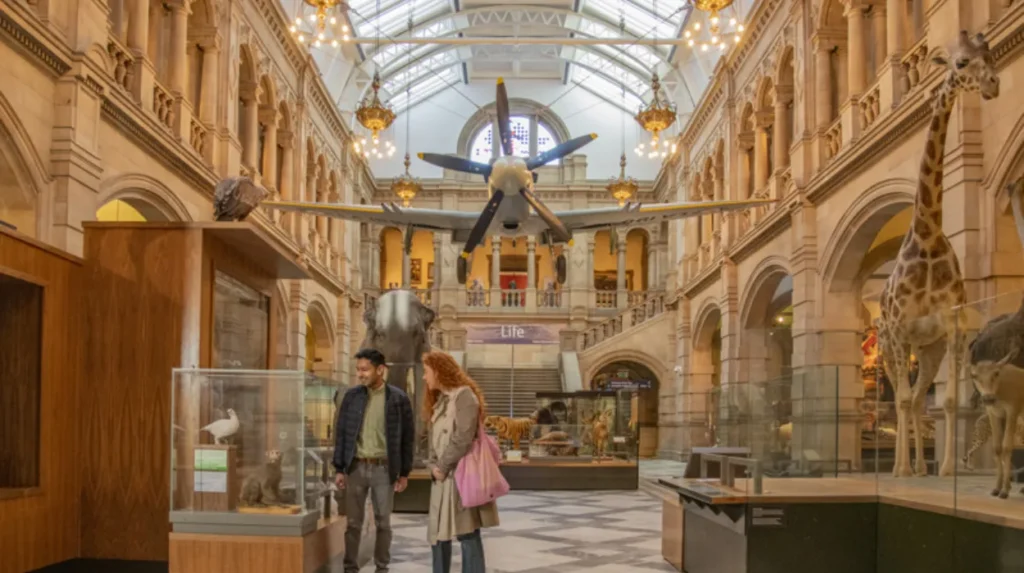
Glasgow locals can see fine art, Scottish Colourist works, French Impressionism, natural-history specimens, Ancient Egyptian objects, arms and armour, decorative arts, design displays, Charles Rennie Mackintosh material, a Spitfire and Sir Roger the elephant.
Kelvingrove’s collection is deliberately broad. It is not exclusively an art gallery and it is not exclusively a history museum. The combination creates different reasons for returning.
The fine-art collection includes European paintings and works associated with major artistic movements. The museum highlights French Impressionism and the Scottish Colourists. These collections give local visitors access to major developments in European and Scottish art within a single institution.
Natural history provides a separate experience. Sir Roger, a preserved Asian elephant, is one of the museum’s recognisable objects. Natural-history displays also connect museum collections with zoology, biodiversity and scientific observation.
The museum’s human-history collections provide another layer. Ancient Egypt, arms and armour, clothing and other historical objects demonstrate how museum collections can be used to explore societies, technologies and cultural practices.
Kelvingrove also displays a genuine Spitfire aircraft. The aircraft provides a direct connection between the museum’s collections and twentieth-century military history.
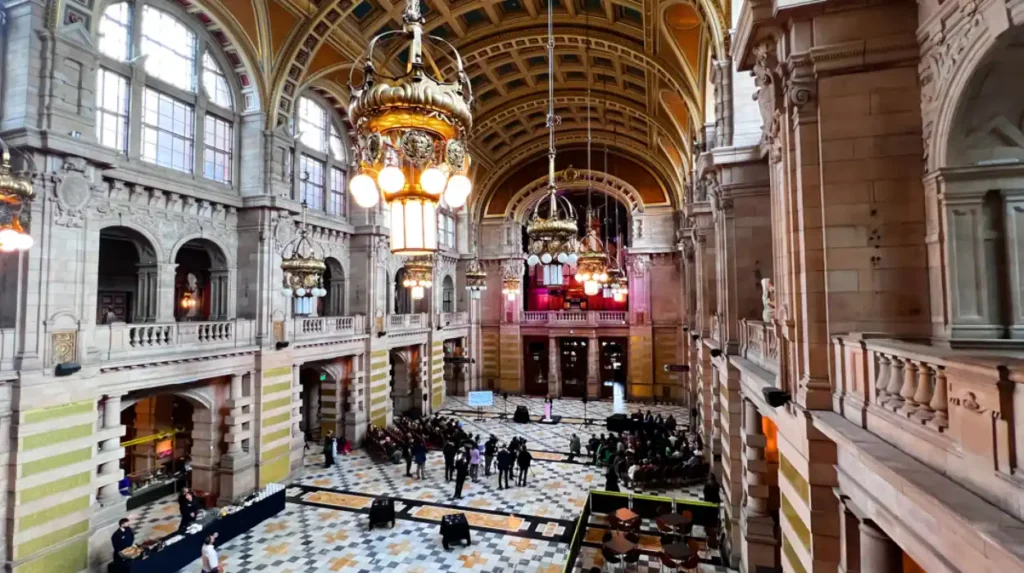
The architecture itself forms part of the experience. The building contains elaborate decorative details, large public spaces and historic interiors. A local visitor can therefore approach the museum through architecture, art, natural history or social history.
This variety reduces the need to see everything during one visit. A resident can focus on one collection during each visit instead of attempting to cover the complete museum in a single afternoon.
How many galleries does Kelvingrove have?
Kelvingrove Art Gallery and Museum has 22 galleries containing thousands of displayed objects across art, natural history, history, design and culture. Its current 125th-anniversary information identifies 4,500 objects on display, 421 paintings and 22 galleries.
The scale of Kelvingrove explains why repeat visits are practical.
Glasgow Life’s current information identifies 22 galleries. Its 125th-anniversary material also identifies approximately 4,500 objects on display and 421 paintings.
These figures represent displayed material rather than the complete holdings of Glasgow Museums. The wider Glasgow Museums service cares for a much larger civic collection.
The number of galleries also means that a visit does not need to follow a single fixed route. Visitors can select particular areas according to their interests.
An art-focused visit can concentrate on paintings, sculpture and design. A history-focused visit can concentrate on Ancient Egypt, arms and armour and human-history displays. A natural-history visit can focus on specimens and biodiversity.
The gallery structure also supports different visit lengths. A local resident can make a short visit to see one or two sections. A longer visit can cover multiple galleries.
For regular visitors, the physical scale creates a useful advantage. Familiarity with the building makes future visits easier to plan because residents already know where particular collections are located.
Why is Kelvingrove suitable for repeat visits?
Kelvingrove suits repeat visits because its free admission removes the cost barrier, while 22 galleries, temporary exhibitions, refreshed displays, events and changing programmes provide different reasons to return throughout the year.
Regular museum attendance does not require a visitor to see something completely new every time.
A repeat visit can involve looking at familiar works in greater detail. A painting that receives limited attention during a first visit can become the focus of a later visit. The same principle applies to architecture, historical objects and natural-history specimens.
Kelvingrove also provides changing programming. Glasgow Life lists temporary exhibitions, learning activities, talks, family activities and other events at the museum.
In 2026, the programme includes exhibitions and activities alongside the permanent galleries. The museum’s current schedule includes Barbie: The Exhibition, running from 13 June to 18 October 2026, and Who was Chevalière d’Eon?, running from July 2026 to July 2027.
These programmes demonstrate why a museum visit in one season does not necessarily replicate a visit in another.
The museum also refreshes permanent displays. Glasgow Life’s 2024/25 annual review records the refreshed Consequence and Conflict gallery and the display of a new acquisition, Cowcaddens by Alasdair Gray. The review also records the return of Salvador Dalí’s Christ of St John of the Cross following an international tour.
This cycle of display changes gives local residents additional reasons to monitor the museum programme.
What makes Kelvingrove free for Glasgow residents?
Kelvingrove provides free general admission, allowing Glasgow residents and other visitors to access its permanent collections without purchasing an entry ticket. Donations are welcomed, while separately ticketed temporary exhibitions can operate under different admission arrangements.
Free general admission is one of Kelvingrove’s strongest advantages for local visitors.
The permanent museum is free to enter. This means a resident can visit for a short period without committing to the cost associated with many commercial attractions.
Free entry also supports spontaneous cultural participation. A person can visit a single gallery, attend a programme activity or spend time examining a particular collection without needing to plan an expensive day out.
The distinction between general admission and temporary exhibitions is important. Special exhibitions can require separate tickets.
For example, Barbie: The Exhibition has its own ticket structure in 2026. Glasgow Life lists adult peak admission at £16, with separate prices for concessions and children. Advance booking is recommended because individual entry times can sell out.
This means locals should check the official programme before visiting a specific exhibition.
The permanent collections remain the foundation of the museum experience. Special exhibitions add an additional paid option rather than replacing the free museum.
How important is Kelvingrove to Glasgow’s cultural identity?
Kelvingrove is closely connected with Glasgow’s cultural identity because it combines civic collecting, Scottish art, international art, local history, architecture and public education in one institution that has served the city since 1901.
Glasgow developed an extensive civic museum system during the nineteenth and twentieth centuries. Kelvingrove became one of its most prominent institutions.
The museum’s location also matters. It sits beside Kelvingrove Park and close to the West End. Its position places cultural collections within an established urban neighbourhood rather than separating the museum from everyday city life.
The building itself is part of Glasgow’s architectural heritage. Its red sandstone exterior reflects the architectural character associated with the city’s historic public buildings.
The collections extend that identity inside the building.
Scottish art connects the museum to national cultural history. Mackintosh-related material connects it to Glasgow’s design heritage. Historical collections connect it to broader questions about migration, industry, warfare, religion and society.
The museum therefore functions as more than an attraction for tourists. It forms part of Glasgow’s public cultural infrastructure.
Glasgow Life’s museum research reinforces this civic role. Its 2022/23 annual review reported that 79% of surveyed museum visitors agreed their visit made them feel connected to Glasgow, while 91% stated they would recommend visiting a Glasgow Life Museum.
How popular is Kelvingrove Art Gallery and Museum?
Kelvingrove remains one of the most visited museums and attractions in Glasgow. It recorded 1,219,831 visitors in 2025, representing a 3% increase and placing it 26th among the UK’s most visited attractions reported by ALVA.
Visitor numbers demonstrate the museum’s continuing relevance.
The Association of Leading Visitor Attractions data reported by Glasgow Life recorded 1,219,831 visitors to Kelvingrove in 2025. This represented a 3% increase from the previous year and placed Kelvingrove 26th in the UK attraction ranking covered by the announcement.
Historical figures also show sustained demand.
Glasgow Life reported 1,300,735 attendances at Kelvingrove during 2015/16. In the same year, Glasgow’s nine civic museums collectively recorded almost 3.9 million visits.
The museum recorded 1,097,339 attendances in 2013/14, according to Glasgow Life’s annual review. That report also recorded almost 3.2 million attendances across Glasgow’s nine museums.
These figures establish a long-term pattern of high public use.
Kelvingrove’s popularity therefore extends well beyond tourist demand. Its continued high attendance demonstrates sustained interest in a museum that has operated for more than a century.
For Glasgow locals, this popularity also signals the museum’s importance within the wider cultural landscape.
What role does Kelvingrove play in education?
Kelvingrove supports education through museum learning, school engagement, family activities, public programmes and direct access to historical objects and artworks. Its collections provide material for learning about art, science, history, design, culture and Glasgow’s heritage.
Museums provide educational value through direct encounters with objects.
Kelvingrove’s collections support several academic and informal learning areas. Artworks provide examples for art and design education. Natural-history objects support scientific observation. Historical collections provide physical evidence for studying societies and technological development.
Glasgow Life also operates programmes specifically designed for young people.
Its annual Art Competition for Young People was established in 1904. The programme invites participants aged 3 to 18 to draw objects displayed in Glasgow museums. The 2026 competition includes Kelvingrove among the participating venues.
This long-running programme demonstrates the museum’s continuing role in arts education.
Glasgow Life’s 2024/25 annual review also recorded more than 100,000 attendances at learning programmes across its museum service, including 55,000 educational group visitors.
For local families, schools and lifelong learners, this educational infrastructure provides a reason to treat Kelvingrove as a recurring cultural resource rather than a one-time attraction.
What recent changes make Kelvingrove worth revisiting?
Recent changes include refreshed galleries, new acquisitions, returning artworks, temporary exhibitions, new visitor programmes and ongoing conservation work. These developments demonstrate that Kelvingrove continues to evolve while maintaining its permanent collections and historic architectural character.
Kelvingrove is currently undergoing a period of conservation and investment.
Glasgow Life states that restoration work began in September 2025 as part of a Glasgow City Council-funded investment programme. The work includes repairs to historic stonework, roofing and windows, together with conservation of decorative features such as plaster and timber elements.
The museum’s collections are also being refreshed.
The 2024/25 Glasgow Life annual review records changes to the Consequence and Conflict gallery and the display of Alasdair Gray’s Cowcaddens. It also records the return of Salvador Dalí’s Christ of St John of the Cross.
In July 2026, Glasgow Life announced that Dalí’s painting had a new home at Kelvingrove. The work is one of the museum’s major art highlights and has received an enhanced display on the ground floor.
The museum’s 125th anniversary in 2026 also provides additional programming. Glasgow Life identifies 4,500 objects on display, 22 galleries, 421 paintings and Sir Roger the elephant as part of its anniversary presentation.
These developments make the museum particularly relevant to residents who have not visited recently.
Explore more Area Guide
Glasgow vs Edinburgh Student Life Comparison – Glasgow 2026
Glasgow University Freshers Week Guide – Glasgow 2026
How can Glasgow locals make regular visits more worthwhile?
Locals can make regular Kelvingrove visits more useful by focusing on different galleries, following temporary exhibitions, checking programme updates, studying individual artworks, attending learning activities and combining museum visits with Kelvingrove Park and the surrounding West End.
A regular visitor benefits from having a specific purpose for each visit.
One visit can focus on European paintings. Another can concentrate on Scottish art. A separate visit can explore natural history or Ancient Egypt.
Residents can also choose individual objects for deeper study. Instead of attempting to see hundreds of objects, a visitor can spend more time examining provenance, artistic technique, historical context and museum interpretation.
Temporary exhibitions provide another reason to return. Glasgow Life maintains an events and exhibitions programme that changes throughout the year. Checking the official schedule before each visit helps residents identify new displays and activities.
Families can use the museum differently from individual visitors. Younger visitors can focus on animals, large objects and interactive activities. Older children can explore art, history and science through specific galleries.
The surrounding area also supports longer cultural visits. Kelvingrove Park provides green space immediately outside the museum, while the West End contains additional cultural, educational and commercial destinations.
Regular visits therefore do not need to follow an identical format.
Is Kelvingrove better for regular visits than a one-time visit?
Kelvingrove offers greater long-term value as a recurring cultural destination because free permanent admission, 22 galleries, extensive collections, changing exhibitions and refreshed displays provide reasons to return after an initial visit.
A first visit provides an introduction to the museum. Regular visits provide deeper engagement with the collections.
The distinction is particularly important because Kelvingrove contains multiple subject areas. A visitor who focuses only on the most famous paintings during an initial visit leaves substantial parts of the museum unexplored.
The museum’s scale also supports gradual discovery. The current anniversary information identifies thousands of objects on display, including hundreds of paintings.
Regular visitors can therefore develop their own areas of interest.
A person interested in Scottish culture can concentrate on Scottish art and design. A history enthusiast can explore military and historical collections. A family can focus on natural history. An art student can study specific paintings and movements.
The museum also provides a useful free indoor cultural destination throughout the year.
Its value is therefore not limited to major exhibitions. The permanent collection remains the central reason for returning.
What is the long-term value of Kelvingrove for Glasgow residents?
The long-term value of Kelvingrove comes from its free public collections, historical significance, educational role, changing exhibitions and continued investment. It remains a major civic museum where Glasgow residents can access culture repeatedly without paying general admission.
Kelvingrove’s significance rests on continuity and change.
The museum has served Glasgow since 1901. Its collections preserve historical material while its exhibitions and programmes respond to contemporary audiences.
Its public role is also supported by Glasgow’s wider museum network. Glasgow Life Museums cares for millions of objects across the city’s museum collections. Its 2022/23 annual review stated that Glasgow Life Museums cared for collections containing more than five million items.
Kelvingrove forms one of the most prominent public-facing parts of that system.
The museum’s continued visitor numbers demonstrate sustained demand. Its 2025 attendance of 1,219,831 shows that it remains one of the United Kingdom’s heavily visited cultural attractions.
For residents, the strongest reason for regular visits is accessibility. Free permanent admission removes a major barrier to repeated cultural participation.
The second reason is variety. Art, history, science, design and natural history exist within the same building.
The third reason is change. New acquisitions, refreshed galleries, temporary exhibitions, conservation projects and educational programmes ensure that the museum continues to develop.
Is Kelvingrove Art Gallery worth visiting regularly as a Glasgow local?
Yes. Kelvingrove Art Gallery and Museum is worth visiting regularly as a Glasgow local because it combines free admission, 22 galleries, thousands of displayed objects, major artworks, Scottish heritage, natural history and changing cultural programmes in one historic institution.
The evidence supports regular local visits rather than treating Kelvingrove solely as a tourist attraction.
The museum opened in 1901 and became Glasgow’s civic art gallery and museum in 1902. More than a century later, it continues to provide free access to permanent collections.
Its 22 galleries cover an unusually broad range of subjects. Residents can encounter European art, Scottish art, natural history, Ancient Egypt, arms and armour, design and human history during separate visits.
The museum also continues to attract more than one million visitors annually. Its 2025 attendance exceeded 1.2 million.
Regular visiting makes particular sense because the museum is not static. Its galleries are refreshed, new acquisitions enter displays, major artworks return from international exhibitions and temporary exhibitions create additional experiences.
Its 125th anniversary in 2026 further reinforces its continuing cultural role. The anniversary programme highlights the scale of the displays, including 4,500 objects and 421 paintings.
For Glasgow residents, Kelvingrove functions as a free, accessible and continually developing cultural resource. A first visit introduces its major highlights. Subsequent visits allow residents to explore collections in greater depth, follow new exhibitions and experience changes within one of Glasgow’s most significant civic institutions.
When did Kelvingrove Art Gallery open?
Kelvingrove opened in 1901 during Glasgow’s International Exhibition. In 1902, the building became Glasgow’s civic art gallery and museum, establishing its long-term role as a public cultural institution.