
You need a gross annual salary of £42,500 to live comfortably as a single person renting a one-bedroom flat in Glasgow in 2026. This salary covers essentials at 50% of your net income while leaving full savings buffer and discretionary spending power. Lower salaries work for tighter budgets: £34,500 for manageable living and £26,500 for a tight budget with no savings.
- What Is the Current Cost of Living in Glasgow for 2026?
- How Much Does Rent Cost in Different Glasgow Areas?
- What Are Monthly Food and Grocery Expenses in Glasgow?
- How Much Does Transport Cost in Glasgow?
- What Are Utility and Council Tax Costs in Glasgow?
- How Do You Calculate Net Income From Gross Salary in Scotland?
- What Salary Benchmarks Define Tight, Manageable, and Comfortable Living?
- What Is the Average Salary in Glasgow Compared to Requirements?
- How Does Family Size Change Salary Requirements for Glasgow?
- What Salary Do Different Professional Roles Earn in Glasgow?
- How Do You Budget for Comfortable Living at £42,500 Salary?
- What Future Factors Could Impact Glasgow Living Costs After 2026?
What Is the Current Cost of Living in Glasgow for 2026?
Glasgow’s monthly cost of living for a single person totals £1,406 for essentials without rent, plus £750–£1,050 for rent, making total expenses £1,700–£2,400 monthly. This represents Scotland’s largest city offering excellent value compared to London or Manchester while maintaining urban amenities and cultural attractions.
Glasgow remains Scotland’s most populous city with over 635,000 residents in the city proper and 2.3 million in the greater metropolitan area. The city serves as Scotland’s economic hub, hosting major financial institutions, creative industries, and the University of Glasgow among eight higher education institutions. Understanding Glasgow’s cost structure requires examining housing, food, transport, utilities, and council tax as separate components that combine into your total monthly budget.
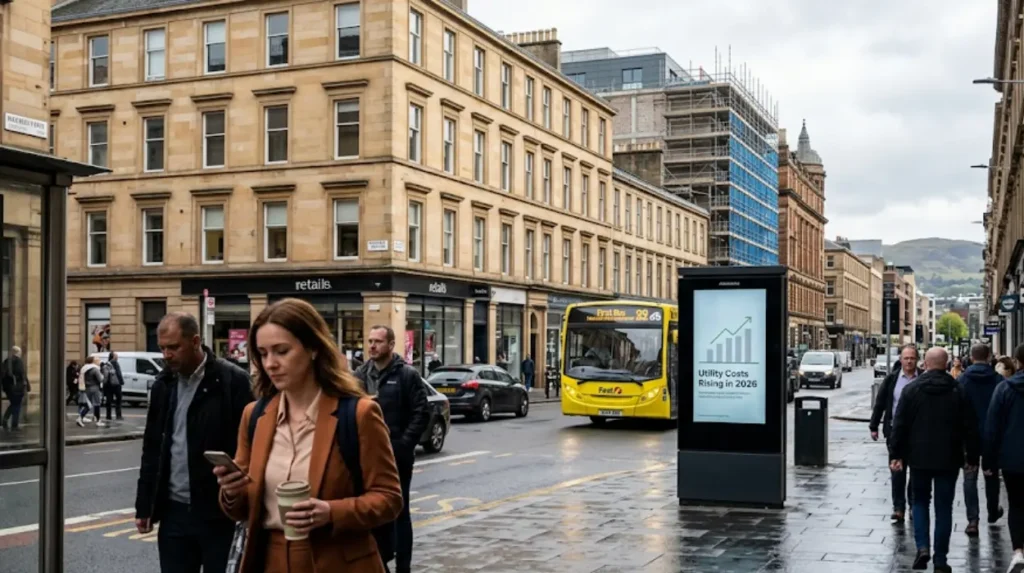
Private rents in Greater Glasgow averaged £1,278 monthly in April 2026, representing a 4.4% rise from April 2025’s £1,224. This average covers everything from luxury city-centre flats to basic tenements in outer areas. The provision average house price in Glasgow reached £184,000 in March 2026. Essentials including food, transport, and utilities cost £1,406 monthly for a single person.
How Much Does Rent Cost in Different Glasgow Areas?
Rent for a one-bedroom flat ranges from £550–£1,300 monthly depending on location: uk/local/west-end/">West End costs £1,000–£1,300, City Centre £895–£1,100, Dennistoun £695–£850, Southside £750–£900, Govanhill £650–£800, and outer areas £550–£700. Location choice directly impacts your total salary requirement by £400–£700 monthly.
The West End (Hillhead, Hyndland, Dowanhill) represents Glasgow’s priciest rental area at £1,000–£1,300 monthly. You pay for proximity to Byres Road, the Botanic Gardens, and the university atmosphere. This area attracts students, academics, and young professionals seeking vibrant cultural life with excellent transport links.
City Centre/Merchant City flats cost £895–£1,100 monthly. These modern properties offer handy access to everything but can be noisy due to urban activity. The area suits professionals working in Glasgow’s financial district who prioritize commute time over quiet living.
Dennistoun ranges £695–£850 monthly and represents the best value near the centre right now. This up-and-coming area loads cafes and independent shops with an easy walk to town. The Southside (Shawlands, Strathbungo) costs £750–£900 monthly, offering trendy living without the West End price tag alongside good restaurants and bars.
Govanhill rents average £650–£800 monthly, cheaper and more multicultural with a reputation worse than reality. This area is gentrifying fast. Outer areas including Maryhill, Springburn, and Drumchapel offer the cheapest rents at £550–£700 monthly but sit further from the action.
What Are Monthly Food and Grocery Expenses in Glasgow?
A weekly shop for one person runs £40–£60 depending on where you shop, translating to £160–£240 monthly for groceries, plus £100–£150 for occasional restaurant meals totaling £260–£390 monthly for food. Glasgow offers excellent value with diverse shopping options from premium supermarkets to budget chains.
Glasgow’s grocery landscape includes major supermarkets like Tesco, Sainsbury’s, ASDA, Morrisons, and Waitrose alongside budget options like Iceland and Lidl. A weekly shop costing £40–£60 assumes mixed shopping between budget and mid-range supermarkets. Shopping at Lidl or Iceland consistently reduces costs compared to Waitrose or Marks & Spencer.
Restaurant pricing in Glasgow remains reasonable compared to London. A mains dish at a mid-range restaurant costs £12–£18, while a three-course meal for two reaches £50–£70 including drinks. Takeaway options like pizza, curry, or Chinese food range £6–£10 per portion. The city’s cultural diversity ensures authentic options across Indian, Pakistani, Chinese, Thai, and Middle Eastern cuisines at competitive prices.
Monthly food budgets separate into groceries (£160–£240) and dining (£100–£150) for moderate social eating. Budget-conscious residents can reduce dining costs to £50 monthly by limiting restaurant visits. Food-heavy lifestyles with frequent social dining might increase this to £200–£250 monthly.
How Much Does Transport Cost in Glasgow?
Monthly transport costs range £50–£90 for public transport using bus or train, plus £25–£40 for a Santander Cycle subscription, totaling £75–£130 monthly for regular commuters without car ownership. Glasgow’s transport network provides comprehensive coverage across the city and surrounding areas.
Glasgow operates an extensive bus network primarily through First Bus and Stagecoach, with single fares costing £2.20–£2.80 depending on distance. Day tickets range £5.50–£7.00, while weekly tickets cost £28–£35. The city’s Underground system, nicknamed “the loaded trickle,” serves 15 stations on a circular route through the city centre, with single fares at £2.30 and day tickets at £5.50.
ScotRail operates train services connecting Glasgow to surrounding towns and cities. A monthly Railcard offering 33% discount costs £30 annually and reduces commutes to Edinburgh (£12–£15 single), Stirling (£10–£12), or Dundee (£18–£22). Santander Cycles provide £25–£40 monthly subscription options for cyclists, with Glasgow adding 300 new bikes and 30 new stations in 2025.
Car ownership adds significant costs: fuel £80–£120 monthly, insurance £40–£60, parking £50–£150 in city centres, plus maintenance £20–£40 monthly. Total car costs reach £190–£370 monthly, making public transport the economical choice for most residents. Parking charges in Glasgow city centre range £2.40–£4.80 per hour depending on location.
What Are Utility and Council Tax Costs in Glasgow?
Monthly utilities (electricity, heating, water, internet) cost £150–£200, while council tax for Band B (most common flat) is £104 monthly, totaling £254–£304 monthly for a single person who receives 25% discount. These fixed costs form essential budget components regardless of lifestyle choices.
Council tax in Glasgow depends on property banding, with most flats falling into Band A, B, or C. For 2025/26, Band B (the most common) totals £1,253 annually or roughly £104 monthly. Band D reaches £1,611 annually. Single persons receive 25% off, reducing Band B to £78 monthly. Students are exempt entirely from council tax.
Electricity and heating costs vary by property size and insulation. A one-bedroom flat typically costs £60–£80 monthly for electricity and heating, while larger properties reach £100–£140. Water charges average £25–£35 monthly depending on usage. Broadband internet ranges £25–£40 monthly for standard speeds (30–60 Mbps), with premium speeds (100+ Mbps) costing £40–£55.
Mobile phone contracts range £15–£35 monthly for 20–50GB data plans. Total utility costs combining electricity (£70), heating (£70), water (£30), internet (£35), and mobile (£25) reach £250 monthly. Energy price caps set by Ofgem affect maximum charges, with Glasgow residents benefiting from Scotland’s slightly warmer climate reducing heating demands compared to northern UK cities.
How Do You Calculate Net Income From Gross Salary in Scotland?
A £42,500 gross salary converts to approximately £3,050 monthly net income after UK income tax and National Insurance, providing £1,525 for essentials (50%) and £1,525 for savings/discretionary spending. Understanding tax calculations ensures accurate budget planning and salary requirements.
UK income tax uses progressive bands: 0% on earnings up to £12,570 (personal allowance), 20% on £12,571–£50,270 (basic rate), 40% on £50,271–£125,140 (higher rate), and 45% above £125,140 (additional rate). National Insurance contributes 8% on earnings between £12,570–£50,270 and 2% above £50,270. Scotland uses the same system but with slightly different threshold boundaries for Scottish taxpayers.
For £42,500 gross annual salary: personal allowance £12,570 at 0% = £0 tax; basic rate £29,930 (£42,500–£12,570) at 20% = £5,986 tax; National Insurance (£42,500–£12,570) × 8% = £2,394. Total tax and NI = £8,380 annually, leaving £34,120 net annually or £2,843 monthly. This calculation assumes no additional deductions like pension contributions or student loan repayments.
Monthly net income of £2,843 at the comfortable 50% essentials ratio means £1,421.50 for housing, food, transport, utilities, and council tax. The remaining £1,421.50 covers savings, discretionary spending, entertainment, and emergency buffer. A £34,500 salary nets approximately £2,520 monthly, while £26,500 nets around £2,040 monthly.
Explore More Area Guide
Is Glasgow or Edinburgh Better for Tech Jobs and Career Growth in 2026?
Which Industries Are Hiring the Most People in Glasgow Right Now?
What Salary Benchmarks Define Tight, Manageable, and Comfortable Living?
Three salary benchmarks exist for Glasgow: £26,500 for tight living (75% net on essentials, no savings), £34,500 for manageable living (60% net on essentials, modest savings), and £42,500 for comfortable living (50% net on essentials, full savings plus buffer). These thresholds reflect different lifestyle priorities and financial security levels.
Tight budget living at £26,500 gross requires essentials consuming 75% of net income with no savings buffer. This lifestyle demands careful spending discipline, limited dining out, budget shopping, and potentially sharing accommodation. Monthly net income of approximately £2,040 means £1,530 for essentials, leaving £510 for all discretionary spending including entertainment, clothing, and emergencies.
Manageable budget living at £34,500 gross allocates 60% of net to essentials with modest savings capability. Monthly net income of approximately £2,520 means £1,512 for essentials, leaving £1,008 for savings (£400–£500) and discretionary spending (£500–£600). This represents standard UK guidance for balanced financial health without significant wealth accumulation.
Comfortable budget living at £42,500 gross spends 50% of net on essentials with full savings and buffer capacity. Monthly net income of approximately £2,843 means £1,421.50 for essentials (matching the £1,406 monthly essentials cost), leaving £1,421.50 for savings (£600–£800), discretionary spending (£400–£500), and emergency buffer (£200–£300). This enables genuine financial security and lifestyle flexibility.
What Is the Average Salary in Glasgow Compared to Requirements?
Glasgow’s average salary is £35,000 annually (£17.95 hourly), which sits between manageable (£34,500) and comfortable (£42,500) living thresholds, meaning average earners achieve manageable but not comfortable lifestyles without additional income sources. This gap reveals many residents live below comfortable standards.
The average Glasgow salary in the United Kingdom is £35,000 per year or £17.95 per hour. This figure aligns closely with the manageable threshold of £34,500, suggesting average earners achieve modest savings with disciplined budgeting but lack the buffer for comfortable living. Monthly net income from £35,000 gross reaches approximately £2,540, allocating £1,524 to essentials (60%) and £1,016 to savings/discretionary spending.
Glasgow’s median salary likely falls below £35,000, as averages skew upward by high earners. Entry-level positions in retail, hospitality, and administration range £18,000–£24,000 annually, below even the tight threshold. Professional roles in finance, technology, healthcare, and engineering start at £28,000–£35,000, reaching manageable levels. Senior positions exceed £45,000, achieving comfortable living.
The £7,500 gap between average (£35,000) and comfortable (£42,500) salary represents significant lifestyle difference. Many Glasgow residents supplement income through part-time work, freelancing, or second jobs. Others reduce costs by sharing accommodation, living in outer areas, or avoiding city-centre premiums. Household income pooling (couples, families) often achieves comfortable standards more easily than single earners.
How Does Family Size Change Salary Requirements for Glasgow?
A family of four needs approximately £54,760 annually (£4,563 monthly) without rent, plus £1,500–£2,100 for two-bedroom rent, totaling £6,063–£6,663 monthly expenses, requiring £85,000–£95,000 gross salary for comfortable family living. Family costs scale non-linearly due to housing, childcare, and education expenses.
A family of four requires $5,476 monthly (approximately £4,380) without rent for common living costs including housing, food, and transport. This translates to £52,560 annually for essentials. Adding two-bedroom rent (£1,500–£2,100 monthly) reaches £71,560–£77,560 annually for basic needs. Comfortable family living requires 50% buffer, pushing salary requirements to £85,000–£95,000 gross annually.
Childcare costs dramatically impact family budgets. Glasgow nursery fees average £800–£1,200 monthly per child for full-time care, while childminders cost £500–£800 monthly. School-age children generate £200–£400 monthly for activities, clothing, and extras. Scotland offers free nursery hours (30 weekly for 3–5 year olds) and free school meals for younger children in low-income families.
Two-bedroom flats cost £950–£1,400 monthly depending on location, compared to one-bedroom at £750–£1,050. Larger properties require higher utilities (£200–£250 monthly vs £150–£200). Food costs increase to £300–£450 monthly for groceries. Family transport needs often require car ownership (£190–£370 monthly) rather than public transport (£75–£130).
What Salary Do Different Professional Roles Earn in Glasgow?
Glasgow professional salaries range: healthcare nurses £28,000–£35,000, teachers £30,000–£42,000, software developers £35,000–£55,000, financial analysts £38,000–£60,000, marketing managers £32,000–£48,000, with senior roles exceeding £55,000 for comfortable living. Role selection directly determines lifestyle feasibility.
Healthcare professionals including nurses earn £28,000–£35,000 annually, reaching manageable but not comfortable levels without additional income. Senior nurses and specialized roles reach £40,000–£45,000. Teachers start at £30,000, progressing to £42,000–£48,000 with experience and leadership roles. Both sectors offer stability but limited wealth accumulation at entry levels.
Software developers command £35,000–£55,000 annually, with senior developers reaching £60,000–£70,000. Glasgow’s growing tech sector includes companies like Amazon, Oracle, and numerous fintech startups. Financial analysts earn £38,000–£60,000, with Birmingham-tier banks and investment firms offering £65,000–£85,000 for experienced professionals. JPMorgan and Virgin Money operate significant Glasgow operations offering competitive salaries.
Marketing managers range £32,000–£48,000, while creative industry professionals earn £25,000–£40,000 depending on specialization. Engineering roles start £30,000–£38,000, progressing to £45,000–£55,000. Retail and hospitality positions typically offer £18,000–£24,000, below comfortable thresholds. Sales roles with commission can exceed £40,000–£50,000 for top performers.
How Do You Budget for Comfortable Living at £42,500 Salary?
At £42,500 gross (£2,843 monthly net), comfortable budgeting allocates £1,421.50 (50%) to essentials: rent £850, food £300, transport £90, utilities £200, council tax £78, leaving £1,421.50 for savings £700, discretionary spending £500, and emergency buffer £221. This structure ensures financial security with lifestyle flexibility.
Rent at £850 monthly places you in Dennistoun (£695–£850) or Southside (£750–£900), avoiding West End (£1,000–£1,300) and City Centre (£895–£1,100) premiums while maintaining quality and access. Food budgeting at £300 monthly includes £240 groceries (£60 weekly) plus £60 occasional dining, matching Glasgow’s £40–£60 weekly shop average.
Transport at £90 monthly covers public transport (£50–£90) plus Santander Cycle subscription (£25–£40), totaling £75–£130. Utilities at £200 monthly combine electricity/heating £140, water £30, internet £35, mobile £25, matching the £250 calculated total. Council tax at £78 monthly reflects Band B £104 with 25% single-person discount.
Savings of £700 monthly equals £8,400 annually, building £42,000 in five years for major purchases, emergency fund, or investment. Discretionary spending £500 monthly covers entertainment (£150), clothing (£100), hobbies (£100), travel (£100), and gifts (£50). Emergency buffer £221 monthly provides £2,652 annually for unexpected costs without touching savings.
What Future Factors Could Impact Glasgow Living Costs After 2026?
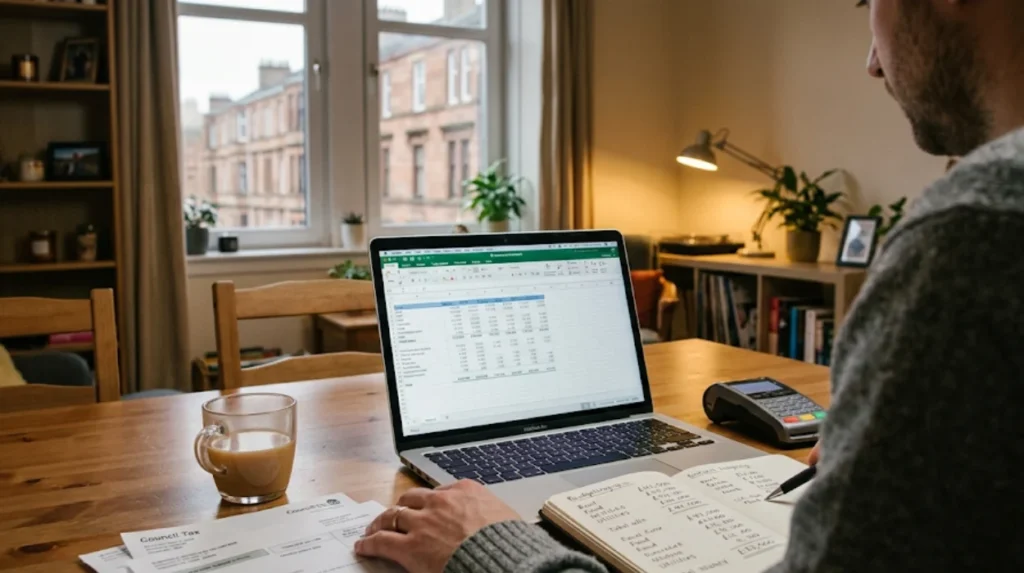
Glasgow living costs face upward pressure from 4.4% annual rent increases, energy price volatility, potential council tax rises, and inflation,comfortable salary requirements may reach £45,000–£48,000 by 2027–2028 if trends continue. Forward planning requires adjusting salary expectations annually.
Private rents in Greater Glasgow rose 4.4% from April 2025 to April 2026, continuing a multi-year upward trend. If this persists, £850 rent in 2026 reaches £927 by 2027 and £1,007 by 2028. Energy price caps set by Ofgem fluctuate with global markets, potentially increasing utilities from £200 to £230–£250 monthly. Council tax bands adjust periodically, with Band B potentially rising from £1,253 to £1,300–£1,350 annually.
UK inflation affects grocery prices, transport costs, and discretionary spending. If inflation remains at 3–4% annually, food costs increase from £300 to £318–£324 monthly within a year. Glasgow’s economic growth in tech, finance, and creative sectors may increase wage competition, potentially raising average salaries but also attracting higher-cost residents.
Scotland’s net-zero by 2045 commitment drives green energy investments, potentially reducing long-term heating costs through improved insulation but increasing short-term upgrade expenses. Transport infrastructure improvements including cycle lane expansion and bus network enhancements may reduce transport costs while improving quality. Post-pandemic remote work trends continue affecting city-centre demand, potentially stabilizing or reducing City Centre rents while increasing outer-area values.
Comfortable salary requirements of £42,500 in 2026 may reach £45,000 by 2027 and £48,000 by 2028 if 4–5% annual cost increases persist. Proactive financial planning includes building savings buffers, negotiating salary increases annually, and considering location flexibility to access lower-cost areas as rent patterns shift.
What salary do you need to live comfortably in Glasgow in 2026?
A single person renting a one-bedroom flat in Glasgow typically needs a gross annual salary of around £42,500 to live comfortably. This allows essential expenses to consume roughly 50% of net income while leaving room for savings, leisure spending, and an emergency buffer.