

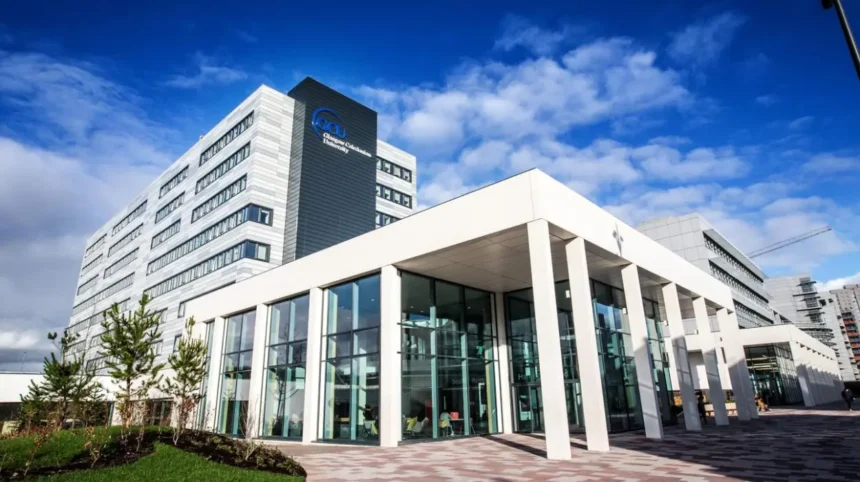
Glasgow Caledonian University delivers career-focused practical training in healthcare, social sciences, and modern business, while the University of Strathclyde emphasizes intensive technological research, engineering innovation, and elite commercial education. Choice depends on specific professional targets and entry requirements.
- Institutional Classification and Core Educational Philosophy
- Academic Specializations and Program Strengths
- How Do Historical Origins and Institutional Missions Differ Between Glasgow Caledonian University and Strathclyde?
- Historical Development of Glasgow Caledonian University
- Historical Evolution of the University of Strathclyde
- Which University Offers Superior Graduate Employment Outcomes and Industry Connections in Glasgow?
- How Do the Academic Structures and Degree Offerings Compare Across Both Institutions?
- Academic Organization at Glasgow Caledonian University
- Academic Organization at the University of Strathclyde
- What Are the Campus Facilities and Urban Environment Differences in Central Glasgow?
- Campus Layout and Infrastructure of Glasgow Caledonian University
- Campus Layout and Infrastructure of the University of Strathclyde
- How Do National Rankings and Research Quality Metrics Distinguish Strathclyde from Glasgow Caledonian University?
- Which Institution Provides Better Value for Specific Career Paths and Educational Goals?
Academic institutions in Glasgow maintain distinct operational frameworks and specialized educational mandates. Glasgow Caledonian University operates as a modern public university focused on applied skills, social inclusion, and vocational professions. The University of Strathclyde functions as a public research university with historical roots in technological development, engineering, and enterprise.
Institutional Classification and Core Educational Philosophy
Glasgow Caledonian University embeds social impact across academic disciplines through its designated mandate as the University for the Common Good. The university focuses on accessible education, interprofessional healthcare instruction, and regional workforce integration.
The University of Strathclyde prioritizes technological innovation under its founding motto, The Place of Useful Learning. Strathclyde structures degrees around fundamental science, industrial co-development, and advanced research applications.
Academic Specializations and Program Strengths
Glasgow Caledonian University maintains market leadership in three specialized academic domains:
- Allied Health Professions (Physiotherapy, Radiography, and Optometry).
- Built Environment (Quantity Surveying, Building Surveying, and Environmental Management).
- Applied Social Business (International Fashion Branding, Risk Management, and Social Work).
The University of Strathclyde controls major academic market share across four technical fields:
- Engineering Disciplines (Naval Architecture, Mechanical Engineering, and Electronic and Electrical Engineering).
- Business Administration (Accounting, Finance, and Marketing via the triple-accredited Strathclyde Business School).
- Physical Sciences (Pure and Applied Chemistry, Physics, and Biomedical Sciences).
- Legal Studies (Commercial Law and Clinical Legal Education).
How Do Historical Origins and Institutional Missions Differ Between Glasgow Caledonian University and Strathclyde?
Glasgow Caledonian University developed from nineteenth-century vocational colleges focused on domestic science and polytechnic training, whereas the University of Strathclyde originated in 1796 as an Enlightenment-era institute dedicated to practical natural philosophy and industrial technology.
Understanding institutional trajectories clarifies modern degree structures, faculty specializations, and campus culture. Both institutions expanded during major economic shifts in Scotland.
Historical Development of Glasgow Caledonian University
Glasgow Caledonian University traces its structural lineage to two founding institutions:
- The Glasgow School of Cookery (established in 1875, later renamed The Queen’s College, Glasgow).
- Glasgow Polytechnic (established in 1971 to provide higher technological education).
In 1993, the Parliament of the United Kingdom authorized the merger of The Queen’s College and Glasgow Polytechnic under the Further and Higher Education (Scotland) Act 1992. This statutory action created Glasgow Caledonian University as a post-1992 modern university. The institution expanded its healthcare footprint by constructing custom clinical simulation facilities and expanding nursing qualifications across Scotland.
Historical Evolution of the University of Strathclyde
Professor John Anderson founded the Andersonian Institute in 1796 to deliver practical scientific education to working citizens. The institution underwent four structural transformations:
- Anderson’s University (1828).
- Glasgow and West of Scotland Technical College (1887).
- Royal College of Science and Technology (1912).
- University of Strathclyde (1964).
In 1964, the University of Strathclyde received its Royal Charter, becoming the first technological university in the United Kingdom. This charter established its status as a research-led university focused on industry integration and physical sciences.

Which University Offers Superior Graduate Employment Outcomes and Industry Connections in Glasgow?
Glasgow Caledonian University achieves high immediate graduate employment rates in public sectors like health and social care, while the University of Strathclyde leads in corporate recruitment, global technical industries, high-salary engineering roles, and commercial spin-outs.
Graduate employability depends on degree alignment, industry partnerships, and professional accreditation. Both universities structure programs to match employer demands across Scotland and international markets.
Employment Metrics and Graduate Destinations
Glasgow Caledonian University registers a 90% to 91% employment and further study rate within 15 months of graduation according to Higher Education Statistics Agency data. The university places 76% of employed graduates into highly skilled occupations. Graduate placement concentrates heavily in three primary employer categories:
- National Health Service trusts (NHS Greater Glasgow and Clyde, NHS Lothian, and NHS Lanarkshire).
- Construction management firms (Balfour Beatty, Morgan Sindall, and BAM Construct UK).
- Commercial service providers (Big Four accounting firms and municipal councils).
The University of Strathclyde records strong employment metrics in corporate finance, software engineering, and heavy industry. Strathclyde graduates access global employment networks across three industrial sectors:
- Global Engineering Consultancies (Arup, Mott MacDonald, and Rolls-Royce).
- Multinational Technology Corporations (Amazon, Barclays Technology Centre Scotland, and IBM).
- Investment Banks and Financial Services (J.P. Morgan, Morgan Stanley, and Deloitte).
Industry Partnerships and Professional Accreditations
Glasgow Caledonian University integrates professional body accreditations across two key academic divisions:
- School of Health and Life Sciences (Health and Care Professions Council, Nursing and Midwifery Council, and College of Optometrists).
- School of Computing, Engineering and Built Environment (Royal Institution of Chartered Surveyors and Chartered Institute of Building).
The University of Strathclyde maintains corporate partnerships through dedicated research and industrial facilities:
- The National Manufacturing Institute Scotland (NMIS).
- The Technology and Innovation Centre (TIC).
- Strathclyde Business School (holding triple accreditation from AMBA, EQUIS, and AACSB).
How Do the Academic Structures and Degree Offerings Compare Across Both Institutions?
Glasgow Caledonian University structures academic delivery through three applied schools focused on health, business, and technology, whereas the University of Strathclyde operates four large faculties emphasizing engineering, science, humanities, and triple-accredited business studies.
Academic organization governs degree options, interdisciplinary collaboration, and research infrastructure. Prospective students evaluate these structures against specific subject requirements.
Academic Organization at Glasgow Caledonian University
Glasgow Caledonian University consolidates all undergraduate and postgraduate academic programs within three schools:
- School of Health and Life Sciences: Delivers degrees in Nursing, Physiotherapy, Radiography, Vision Sciences, Occupational Therapy, and Psychology. The school contains custom clinical suites, including an on-campus eye clinic and virtual reality anatomy labs.
- School of Computing, Engineering and Built Environment: Manages programs in Software Engineering, Cyber Security, Civil Engineering, Quantity Surveying, and 3D Animation.
- Glasgow School for Business and Society: Operates courses in International Fashion Branding, Risk Management, Multimedia Journalism, Law (LLB), and Social Sciences.
Academic Organization at the University of Strathclyde
The University of Strathclyde distributes its degree programs across four faculties:
- Faculty of Engineering: Administers eight individual departments, including Biomedical Engineering, Chemical Engineering, Civil and Environmental Engineering, Electronic and Electrical Engineering, and Naval Architecture.
- Faculty of Science: Encompasses five research centers, including the Strathclyde Institute of Pharmacy and Biomedical Sciences, Physics, Computer and Information Sciences, and Pure and Applied Chemistry.
- Strathclyde Business School: Houses six academic departments, including Accounting and Finance, Economics, Marketing, and the Hunter Centre for Entrepreneurship.
- Faculty of Humanities and Social Sciences: Directs programs in Government and Public Policy, Law, Education, Social Work, and Psychological Sciences.
What Are the Campus Facilities and Urban Environment Differences in Central Glasgow?
Glasgow Caledonian University operates a self-contained, compact single-site campus on Cowcaddens Road, while the University of Strathclyde maintains an expansive urban campus in the Merchant City district, covering over 500 acres of integrated academic buildings.
Geographic layout influences student daily routines, housing proximity, and access to municipal transportation. Both campuses occupy central locations in Glasgow.
Campus Layout and Infrastructure of Glasgow Caledonian University
Glasgow Caledonian University occupies a unified single-site campus adjacent to Buchanan Bus Station and Glasgow Queen Street Railway Station. The campus features three primary architectural structures:
- The Sir Alex Ferguson Library (housing over 1,200 study spaces and digital archives).
- The George Moore Building (containing lecture theaters, practical computing labs, and dining halls).
- The Arc Health and Wellbeing Centre (offering sports facilities, fitness suites, and exercise studios).
The self-contained perimeter allows students to move between academic buildings within five minutes. The campus holds EcoCampus Platinum status for environmental sustainability.
Campus Layout and Infrastructure of the University of Strathclyde
The University of Strathclyde spans the Merchant City region east of George Square. The campus includes three major institutional developments:
- The Technology and Innovation Centre (TIC) on George Street (a 25,000-square-meter facility for commercial research).
- The Strathclyde Sport Building (a £31 million facility featuring a 25-meter swimming pool and specialized training halls).
- The Learning and Teaching Building (a centralized hub combining student support services, learning spaces, and catering facilities).
Strathclyde’s campus layout mixes academic buildings with public city streets, creating an open urban environment integrated directly into Glasgow’s commercial center.
Explore More Area Guide
What Is Student Life Actually Like at the University of Glasgow
What Is It Like Raising Children in Glasgow West End vs the Southside?
How Do National Rankings and Research Quality Metrics Distinguish Strathclyde from Glasgow Caledonian University?
The University of Strathclyde ranks higher in overall national and international league tables, placing top 20 in the UK, whereas Glasgow Caledonian University ranks in the top 40 nationally, achieving top position in Scotland for health professions.
League table position and research assessments reflect university funding, entry competitiveness, and scholarly output. These rankings help define academic prestige and global employer recognition.
Comparative National and Global Rankings
National directory rankings measure student satisfaction, entry standards, student-to-staff ratios, and graduate prospects.
The University of Strathclyde holds top ten UK subject positions in 23 disciplines, including Accounting and Finance, Medical Technology, Mechanical Engineering, and General Engineering. Glasgow Caledonian University holds top rankings in Scotland for Health Professions, Nursing, Radiography, and Civil Engineering.
Research Excellence Framework (REF 2021) Performance
The Research Excellence Framework (REF 2021) assesses research quality across higher education institutions in the United Kingdom:
- University of Strathclyde: Rated 90% of its research output as “world-leading” ($4^*$) or “internationally excellent” ($3^*$). Strathclyde submitted major research profiles in Advanced Manufacturing, Photonics, Energy Systems, and Drug Formulation.
- Glasgow Caledonian University: Rated 72% of its research output as “world-leading” ($4^*$) or “internationally excellent” ($3^*$). GCU achieved 100% world-leading impact ratings in Communications, Culture, and Media Studies, alongside top regional scores for Allied Health research.

Which Institution Provides Better Value for Specific Career Paths and Educational Goals?
Glasgow Caledonian University provides superior value for students targeting allied health professions, modern building management, and practical business roles, while Strathclyde offers higher value for candidates seeking chartered engineering credentials, top-tier corporate finance careers, and international research degrees.
Selecting the optimal university requires matching individual academic profiles, career targets, and learning preferences to institutional strengths.
When Glasgow Caledonian University Is the Optimal Choice
Glasgow Caledonian University serves as the preferred institution under four primary operational criteria:
- Healthcare Vocational Training: Candidates entering Nursing, Optometry, Radiography, or Physiotherapy benefit from direct NHS integration, clinical simulation suites, and high regional placement rates.
- Built Environment Professions: Students targeting careers in Quantity Surveying or Building Surveying gain access to RICS-accredited degrees with strong Scottish construction firm ties.
- Accessible Entry Routes: Applicants seeking flexible entry tariffs, college articulation pathways (HNC/HND transfers), and strong academic support find GCU’s structure aligned with diverse academic backgrounds.
- Focused Urban Experience: Students desiring a single-site campus with concentrated services adjacent to public transport hubs benefit from GCU’s Cowcaddens layout.
When the University of Strathclyde Is the Optimal Choice
The University of Strathclyde serves as the preferred institution under four distinct professional criteria:
- Engineering and Physical Sciences: Students aiming for chartered engineer status (CEng) gain access to specialized engineering departments with global accreditation and advanced laboratories.
- Corporate Business and Finance: Candidates seeking careers in investment banking, management consultancy, or international marketing benefit from Strathclyde Business School’s global network and triple accreditation.
- Research-Intensive Postgraduate Study: Academics targeting PhD funding, technological research grants, and commercial patent development profit from Strathclyde’s high REF scores and industry-funded innovation centers.
- Global Brand Recognition: Applicants prioritizing overall national league table standing (Top 20 UK) and international employer recognition gain an advantage from Strathclyde’s academic profile.
Both institutions remain essential contributors to higher education in Scotland. Selecting between Glasgow Caledonian University and the University of Strathclyde ultimately depends on whether a student’s career plan requires GCU’s applied social focus or Strathclyde’s technological research environment.