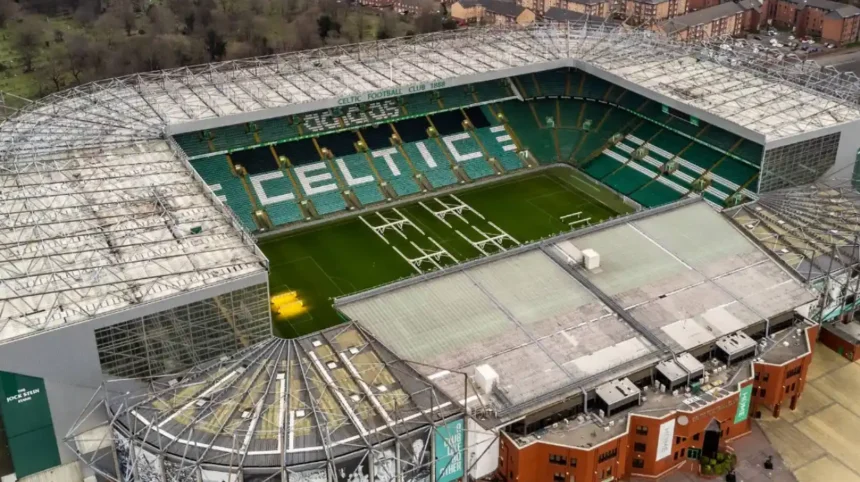
Celtic Football Club is one of Glasgow’s most important sporting institutions. Founded in 1887, the club has shaped Scottish football, local identity, and stadium culture for more than a century.
- What is Celtic FC?
- Why was Celtic founded?
- Where does Celtic play?
- Why Celtic Park matters
- How successful is Celtic?
- What shaped Celtic’s early history?
- Key early milestones
- What is Celtic’s identity in Glasgow?
- How does Celtic perform today?
- What makes Celtic relevant now?
- Why does Celtic matter to Glasgow?
- What should readers remember?
What is Celtic FC?
Celtic FC is a Glasgow-based professional football club founded in 1887. It plays at Celtic Park, competes in the Scottish Premiership, and ranks among Scotland’s most successful clubs with a major domestic and European trophy record.
Celtic’s full name is Celtic Football Club. The club is based in Glasgow and has played its home matches at Celtic Park since 1892. Its foundation links football with Glasgow’s East End social history, where the club first took shape in St. Mary’s Church hall in the Calton district.

Why was Celtic founded?
Celtic was founded in 1887 to support poor families in Glasgow’s East End while building a football club with a clear community purpose. The founding meeting took place in St. Mary’s Church hall in Calton, and Brother Walfrid led the initiative.
The club’s origin was social as well as sporting. Contemporary historical records describe its purpose as alleviating poverty in Glasgow’s East End parishes. That background explains why Celtic remains closely tied to Glasgow’s working-class history and Irish Catholic heritage.
The first match came in 1888 against Rangers, and Celtic won 5–2. That result introduced one of football’s most famous rivalries and gave the club an immediate place in Scottish sport.
Where does Celtic play?
Celtic plays at Celtic Park in Glasgow, the club’s home ground since 1892. The stadium has a capacity of about 60,411 seats and remains the largest football stadium in Scotland.
Celtic Park is also known as Parkhead and Paradise. Transfermarkt lists the stadium capacity at 60,411, with seats for the same number and undersoil heating installed. Other references place the capacity slightly higher, at 60,832, reflecting minor differences in reporting across sources.
The stadium is central to Celtic’s identity. It hosts league matches, cup fixtures, European nights, and major club events, and it gives Glasgow one of its most recognisable football landmarks.
Why Celtic Park matters
Celtic Park matters because it combines scale, history, and atmosphere. It opened in 1892, so it links the club’s Victorian-era origins with its modern commercial and sporting footprint. It also functions as a civic symbol in Glasgow’s East End, where football culture strongly shapes local life.
How successful is Celtic?
Celtic is one of the most successful clubs in Scottish football history. Britannica reports 51 league championships, 40 Scottish Cups, 19 League Cups, and one European Cup title in 1966–67.
That record places Celtic among the dominant forces in domestic football. The club’s European Cup win in 1967 remains one of the defining achievements in British football history. The team that won that trophy became known as the “Lisbon Lions,” a group of players remembered for their attacking style and historic achievement.
Celtic also built major domestic streaks. Historical records show that the club won nine Scottish league championships in a row from 1965–66 to 1973–74 under Jock Stein. That run defined an era of sustained excellence and set a standard for modern Scottish club success.
What shaped Celtic’s early history?
Celtic’s early history was shaped by rapid growth, early trophies, and a strong link between football and community identity. The club won its first Scottish Cup in 1892 and its first league championship in 1892–93.
The club moved to its current ground in 1892 after starting at an earlier Celtic Park. That move gave Celtic the foundation for long-term stability and stadium development in Glasgow.
By the late 1890s, Celtic had become a major Scottish side. Records show the club became a private limited liability company in 1897, which reflects the growing professionalism of the sport. That shift mirrored broader changes in football across Britain, where clubs moved from local groups to formal sporting institutions.
Key early milestones
Celtic’s early milestones include its 1887 founding, its first match in 1888, its first Scottish Cup in 1892, and its first league title in 1892–93. These dates mark the transition from a charitable community project to an established football powerhouse.
What is Celtic’s identity in Glasgow?
Celtic’s identity in Glasgow combines football success, community history, and a powerful cultural presence. The club is widely associated with Glasgow’s East End, Irish heritage, and one of Britain’s most famous rivalries with Rangers.
Britannica describes the Celtic-Rangers rivalry as fierce and often sectarian in nature. That rivalry shapes the city’s football calendar, media coverage, and public conversation. It also gives Celtic an identity that extends beyond sport into religion, migration history, and social memory.
Celtic’s roots in charity and local support matter in that identity. The club’s founding purpose was to help poor families in Glasgow, which makes its history more than a sporting story. In Glasgow, Celtic represents both achievement on the pitch and deep historical belonging off it.
How does Celtic perform today?
Celtic remains a top-level force in Scottish football. ESPN listed Celtic as 1st in the Scottish Premiership in May 2026, showing the club’s continued competitiveness at the top of the league.
Current standings change over time, but the broader pattern is stable: Celtic regularly contends for domestic titles and remains a leading Scottish side. That continuity matters because it keeps the club relevant in both sports reporting and search demand across Glasgow and beyond.
Modern Celtic also operates in a much more data-driven football environment than the club’s founders knew. Squad performance, goal totals, assists, injuries, and tactical systems all shape season outcomes. ESPN’s current season coverage shows that the club’s present-day profile is still strong enough to generate sustained attention.
What makes Celtic relevant now?
Celtic remains relevant because it combines historical significance, repeated sporting success, and strong city-level identity. It is a living Glasgow institution, not just a club from the past.
The club’s relevance continues through domestic competition, stadium attendance, matchday culture, and European ambitions. Celtic Park’s large capacity helps sustain a strong home atmosphere and supports the club’s commercial visibility. Historical achievement also reinforces modern relevance, since clubs with deep records keep attracting search interest, media focus, and fan engagement.
For Glasgow audiences, Celtic matters in several overlapping ways. It is a local team, a historic institution, a major employer in the sports economy, and a central part of the city’s football identity. That combination ensures lasting attention from fans, residents, journalists, and search engines alike.
Why does Celtic matter to Glasgow?
Celtic matters to Glasgow because it reflects the city’s social history, sporting culture, and urban identity. The club began in the East End, grew with the city, and still anchors one of Scotland’s most visible football communities.
Celtic’s story mirrors Glasgow’s own history of migration, religion, industry, and working-class organisation. The club’s early charitable purpose links football to social welfare, while its modern success links it to elite sport and international visibility.
The stadium also matters locally. Celtic Park is one of the city’s best-known landmarks, and its size places it among the most significant sporting venues in the United Kingdom. That gives Celtic a physical presence that extends well beyond the matchday crowd.

What should readers remember?
Celtic FC is a historic Glasgow club founded in 1887, based at Celtic Park since 1892, and recognised as one of Scotland’s most successful football teams. Its importance comes from its trophies, its stadium, its origins, and its lasting role in Glasgow life.
The club’s defining facts are clear: a community-driven beginning, a long-term home in the East End, a trophy cabinet full of domestic success, and a European Cup triumph that still stands out in British football history. That combination makes Celtic one of the most searchable and enduring football topics connected to Glasgow.