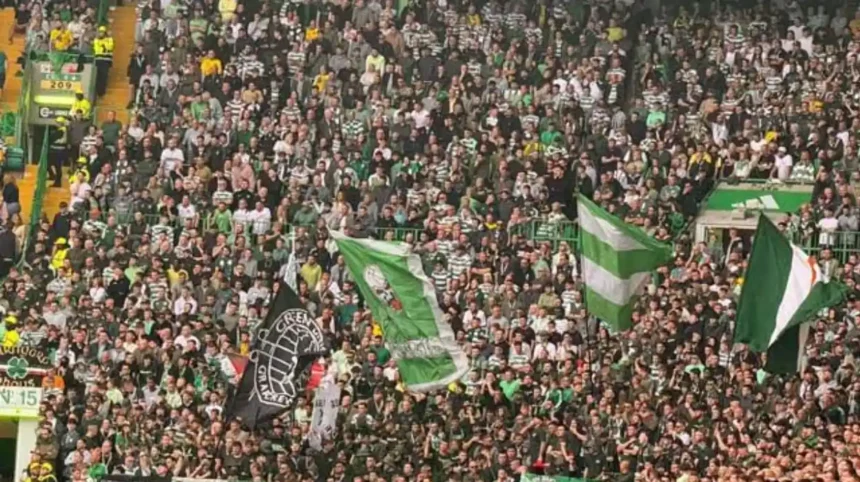
Glasgow football culture is a major part of the city’s social landscape. It influences friendships, family conversations, pubs, workplaces, public transport, community identity and weekend routines. Football in Glasgow is not limited to what happens inside Celtic Park, Ibrox Stadium or other grounds. It operates across neighbourhoods, social networks and public spaces.
- Why is football so important to everyday life in Glasgow?
- How did the Celtic and Rangers rivalry shape Glasgow social identity?
- How does football influence friendships and family relationships in Glasgow?
- How do Glasgow pubs change on football match days?
- How does football affect public transport and movement around Glasgow?
- Does Glasgow football culture influence workplaces and professional relationships?
- How does football affect young people growing up in Glasgow?
- How does football culture connect with sectarianism in Glasgow?
- What laws regulate football-related behaviour in Scotland?
- How does football contribute positively to Glasgow community life?
- How does Glasgow football culture affect visitors and new residents?
- What does the future of Glasgow football culture look like?
- Why does Glasgow football culture remain central to everyday social life?
The strongest cultural influence comes from the long-standing rivalry between Celtic Football Club and Rangers Football Club, commonly known as the Old Firm rivalry. The relationship between football, religion, migration, class, family identity and local community history gives Glasgow football culture a distinctive social character.
The Scottish Government’s research provides an important foundation for understanding this relationship. Its Scottish Social Attitudes Survey found that 88% of respondents identified football as a factor contributing to sectarianism in Scotland, while 55% considered it the main factor. The same research found that Celtic and Rangers each had the support of about 12% of Scotland’s population, although 58% supported no Scottish football club.
Why is football so important to everyday life in Glasgow?
Football matters in Glasgow because clubs provide powerful social identities that connect families, friendships, neighbourhoods, workplaces and leisure activities. Celtic and Rangers dominate this culture, while other clubs provide additional identities across Glasgow and wider Scotland.
Football developed as a mass social activity in Glasgow during the nineteenth century. The city’s industrial expansion created large urban communities with strong neighbourhood and family networks. Football clubs became institutions through which residents developed shared identities.
Rangers was formed in Glasgow in 1872 by Moses McNeil, Peter McNeil, William McBeath and Peter Campbell. The club identifies its origins with West End Park, now associated with Kelvingrove Park.
Celtic was formally established on 6 November 1887 at St Mary’s Church Hall in Glasgow’s East End. Brother Walfrid founded the club to raise funds for disadvantaged children and families in the area.
Celtic played Rangers in their first match against each other on 28 May 1888, with Celtic winning 5–2. This fixture established a rivalry that subsequently became one of the defining relationships in Scottish football.
Football therefore entered Glasgow social life through institutions that already had strong community connections. Families passed club affiliations between generations. Friends discussed results. Supporters gathered in pubs. Match days created predictable patterns of movement around the city.
The result is a football culture that operates beyond stadiums.
How did the Celtic and Rangers rivalry shape Glasgow social identity?
The Celtic-Rangers rivalry developed through sporting competition and became connected with historical religious, cultural and community identities. Its influence remains strongest in west-central Scotland, where football allegiance can still function as a visible social marker.
Celtic developed from Glasgow’s Irish Catholic community and originally operated with a charitable purpose in the East End. Rangers developed separately and became historically associated with Protestant identity. These historical associations became embedded within wider perceptions of the clubs.
This history does not mean that every Celtic supporter is Catholic or every Rangers supporter is Protestant. The Scottish Government explicitly found that both clubs attracted supporters from people with different religious backgrounds and from people with no religion.
The distinction is important because football identity and religious identity are not identical.
The Scottish Government’s community research found that participants frequently connected Celtic and Rangers with cultural, religious and political backgrounds. It also found that the rivalry was the issue most frequently associated with sectarianism among research participants.
Football therefore became one of the ways people interpreted social identity.
A person’s club allegiance can become part of introductions, family discussions and friendships. Supporters frequently know which clubs their relatives support. Children often encounter football affiliations through parents, grandparents, schools and peer groups.
This process gives football an intergenerational character.
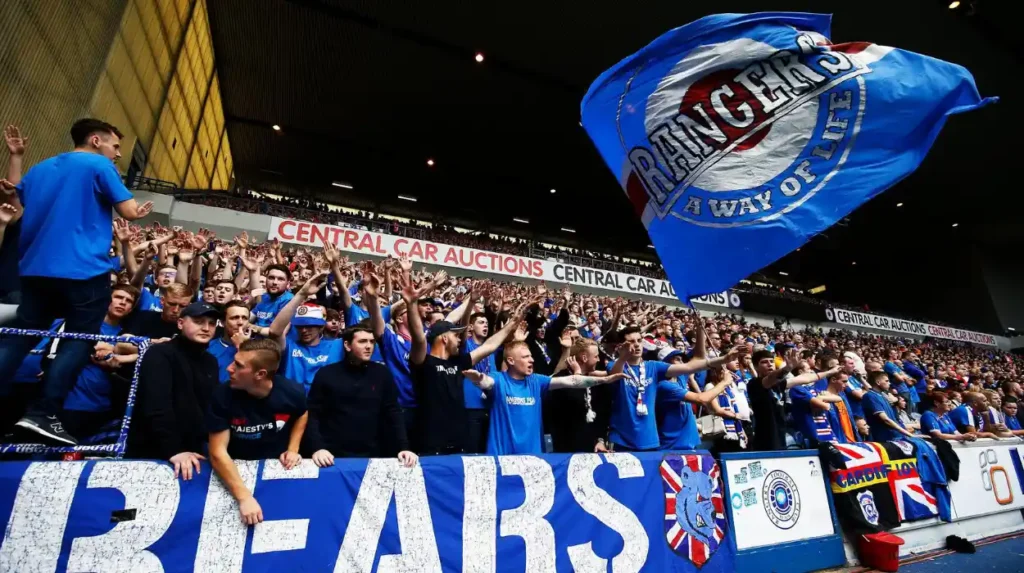
How does football influence friendships and family relationships in Glasgow?
Football influences Glasgow relationships by creating shared interests, family traditions and regular conversation. Club allegiance often passes between generations, while match results provide recurring topics for discussion among relatives, friends, colleagues and neighbours.
Family transmission is particularly important. Scottish Government research found that older generations can play a role in transmitting sectarian attitudes and football-related identities. The research identified grandparents as well as parents as sources of inherited beliefs.
Football also provides a straightforward social activity. Watching a match together gives friends and relatives a fixed event around which to organise time.
A match can influence:
- where friends meet
- which pub they choose
- when families gather
- what people discuss at work
- which social events supporters attend
- how supporters travel around Glasgow
These patterns create routine.
Football also produces social connections between people who would otherwise have limited contact. Supporters’ clubs, amateur teams, community groups and organised fan organisations create networks based around shared allegiance.
The social effect is therefore not exclusively divisive.
Football provides a common language for millions of supporters. Results, players, managers, competitions and fixtures create recurring subjects that are easy to discuss across generations.
However, club allegiance can also create boundaries.
The Scottish Government found that some people experienced exclusion or discomfort because of religious identity, while football allegiance also influenced how some people navigated particular social spaces.
The social impact therefore depends heavily on context.
How do Glasgow pubs change on football match days?
Glasgow pubs become important football social spaces because supporters gather to watch matches, discuss results and meet friends. Match days increase the visibility of club colours, chants and football conversations, particularly around fixtures involving Celtic and Rangers.
Pubs have historically provided one of the most visible connections between football and everyday social life.
Supporters use pubs before matches, during televised fixtures and after games. The pub becomes a meeting point rather than simply a place for drinking.
The Scottish Government’s community research found that specific pubs were identified by participants as places where sectarian tensions were more noticeable on football match days. Some participants reported avoiding particular pubs when Celtic or Rangers were playing.
This demonstrates how football affects spatial behaviour.
Match-day social activity also affects businesses. Pubs, restaurants, convenience shops and transport services experience changes in customer patterns when major fixtures take place.
Televised football extends this influence beyond stadium capacity. Supporters without tickets can participate through public screenings and television broadcasts.
The pub environment also creates opportunities for positive social interaction. Friends meet regularly, supporters build relationships and local businesses become part of the match-day routine.
The distinction between football enthusiasm and sectarian behaviour remains important.
Supporting Celtic or Rangers is not itself sectarianism. The Scottish Government’s research specifically states that strong identification with either club does not automatically constitute sectarianism.
Problems arise when sporting rivalry becomes associated with religious hostility, threatening behaviour, discriminatory language or violence.
How does football affect public transport and movement around Glasgow?
Football affects Glasgow transport by concentrating large numbers of supporters around stadiums, railway stations, bus routes and city-centre areas. Major fixtures create predictable changes in pedestrian movement, public transport demand and travel behaviour.
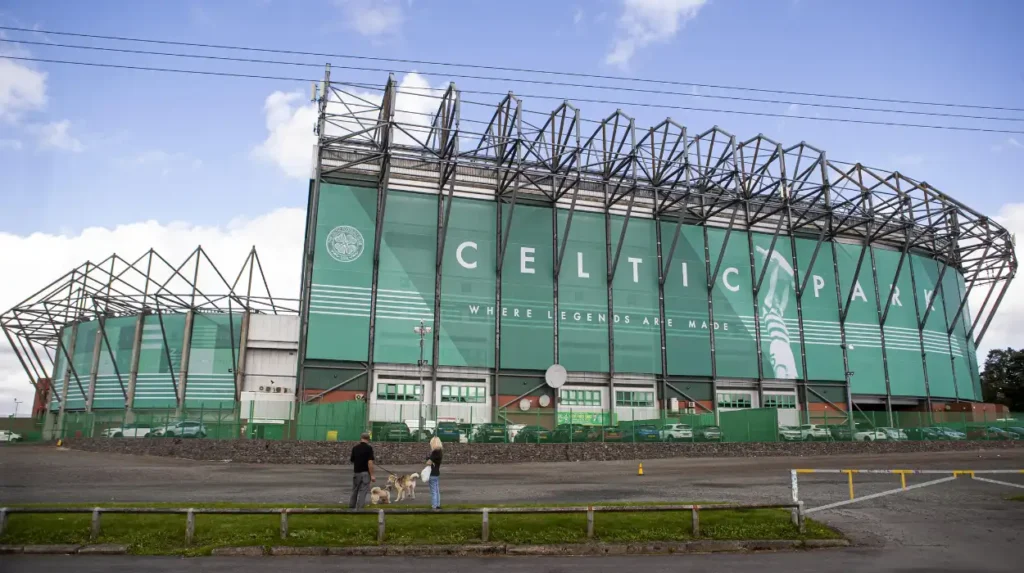
Celtic Park is located in the east of Glasgow, while Ibrox Stadium is in the city’s southwest. Their locations connect football directly with residential districts, commercial areas and public transport networks.
On match days, supporters travel from across Glasgow, Scotland and further afield.
The movement starts before kick-off and continues after the final whistle. Trains, buses, taxis, walking routes and private vehicles all form part of the match-day transport pattern.
Scottish Government research found that some participants specifically reported avoiding public transport on football match days because of concerns about sectarian behaviour. Others avoided particular routes, pubs and city-centre areas after matches.
This illustrates an important aspect of football culture: its effects extend beyond stadium boundaries.
The impact is strongest during high-profile fixtures. Old Firm matches generate particularly strong interest because they combine sporting importance with longstanding cultural significance.
Transport planning therefore forms part of football-event management.
Police operations, stewarding, crowd management and transport coordination help manage supporter movement. These mechanisms reduce the likelihood that large crowds create disorder or conflict.
For everyday residents, this means football can influence when and where they travel even when they have no interest in the match.
Does Glasgow football culture influence workplaces and professional relationships?
Football influences Glasgow workplaces through conversation, identity and social networking, but professional environments generally operate under workplace equality and conduct standards. Football allegiance becomes significant when personal rivalry enters discussions, relationships or behaviour.
Football is a common workplace conversation topic.
Employees discuss weekend results, upcoming fixtures, transfers and performances. These conversations can help colleagues establish informal relationships.
The same conversations can create tension when rivalry becomes personal.
Workplaces contain people with different football affiliations, religious backgrounds and levels of interest in football. Professional relationships require behaviour that remains respectful and appropriate.
The connection between football and employment also appears in Scottish research. A Scottish Government review found differences in reported experiences of religious discrimination between supporters of different clubs. For example, the research reported that 16% of Celtic supporters surveyed said they had experienced job discrimination, compared with 2% of Rangers supporters and 3% supporting other Scottish clubs. These figures describe reported experiences in the survey and do not establish that football allegiance itself caused employment discrimination.
The findings demonstrate why football identity can become socially significant beyond leisure.
Football-related assumptions can influence how people interpret surnames, schools, religious backgrounds, clothing or social affiliations. Scottish Government research identified these markers as part of how some participants understood social identity.
Modern workplaces therefore benefit from separating sporting identity from professional judgement.
How does football affect young people growing up in Glasgow?
Football influences young people through family traditions, peer groups, school environments, social media and local communities. Young supporters learn club identities through repeated exposure, while football rivalry can influence friendship networks and perceptions of neighbourhoods.
Young people encounter football through multiple social channels.
Parents introduce clubs. Grandparents transmit traditions. Friends create peer pressure. Schools provide social environments where football identities become visible. Social media extends these interactions beyond match days.
Scottish Government research involving young people in Glasgow found strong awareness of football rivalry and its relationship with social identity. Research also identified the role of older male family members in transmitting football-related sectarian attitudes.
The research found that some young people treated sectarian language as harmless banter. It also identified areas that some young people avoided when wearing particular football colours.
This concept of hidden territory is important.
A neighbourhood can feel different depending on visible club affiliation. Clothing, scarves and colours can communicate football identity before a person speaks.
Such behaviour affects how young people navigate public space.
Football also provides positive opportunities for young people. Amateur football teams create structured activities, coaching environments and social relationships. Community football programmes connect sport with education, health, inclusion and volunteering.
The broader social impact therefore contains both constructive and harmful elements.
The key difference is whether football identity produces participation and belonging or exclusion and hostility.
How does football culture connect with sectarianism in Glasgow?
Football and sectarianism are historically connected in Glasgow, especially through perceptions surrounding Celtic and Rangers. However, football support itself is not sectarian. Sectarianism involves prejudice, exclusion, hostility or discrimination connected with religious identity or perceived religious affiliation.
Sectarianism requires careful definition.
The Scottish Government’s working approach describes sectarianism as originating in religious difference while involving distorted expressions of identity and belonging and destructive patterns of relating.
Football is not the sole source of sectarianism.
However, football is the factor most strongly associated with perceived sectarianism in Scottish public attitudes. In the 2014 Scottish Social Attitudes Survey, 88% mentioned football as a contributing factor and 55% identified it as the main factor.
The research also found that football rivalry could operate as a shorthand for broader identities.
This explains why apparently simple questions such as “Which team do you support?” can have greater social significance in some Glasgow contexts than they do elsewhere.
Songs and chants are another important mechanism.
Scottish Government research found that songs can communicate sectarian meanings through lyrics, tunes, context and audience interpretation. Clothing, flags, colours, school backgrounds and surnames also functioned as social markers in some communities.
This does not mean every song, colour or flag has a sectarian meaning.
Meaning depends on context.
Football culture therefore requires a distinction between supporter identity, sporting rivalry and sectarian behaviour.
That distinction is essential for accurately understanding Glasgow social life.
What laws regulate football-related behaviour in Scotland?
Scottish law regulates threatening, hateful and certain offensive behaviour connected with regulated football matches. The Offensive Behaviour at Football and Threatening Communications (Scotland) Act 2012 created specific offences covering football-related behaviour and threatening communications.
The Offensive Behaviour at Football and Threatening Communications (Scotland) Act 2012 came into force on 1 March 2012. Section 1 addressed threatening, hateful or otherwise offensive behaviour at regulated football matches when the statutory conditions were met.
Section 6 addressed threatening communications, including communications involving threats of serious violence or incitement of religious hatred.
The legislation demonstrates the extent to which football behaviour became a public policy issue.
Government research also shows why enforcement statistics require careful interpretation. Reported charges measure police activity and enforcement as well as underlying behaviour.
For example, 377 section 1 charges were reported in 2016–17, including 140 charges associated with the Rangers v Hibernian Scottish Cup Final at Hampden on 21 May 2016. The Scottish Government described that fixture as a major factor behind the increase that year.
The legislation therefore forms part of a wider approach involving policing, football authorities, clubs, education and community organisations.
How does football contribute positively to Glasgow community life?
Football strengthens community life through charitable activity, volunteering, supporter organisations, youth programmes and shared local identity. Celtic and Rangers both operate community-focused initiatives that extend football’s influence into education, social inclusion, poverty reduction and local participation.
Football’s social influence is not limited to rivalry.
Celtic’s charitable origins provide a clear historical example. Brother Walfrid established Celtic partly to raise funds for poor children in Glasgow’s East End. The club’s modern charitable organisation, Celtic FC Foundation, continues work involving poverty, employability, education and social inclusion.
This creates a direct connection between football and community development.
Football clubs also provide established platforms for fundraising. Supporters’ groups organise collections, community events and charitable campaigns. Players and former players frequently participate in public initiatives.
Youth football creates another social pathway.
Local teams give children structured sporting environments. Coaches provide regular supervision and training. Players build friendships through shared participation rather than only through spectator identity.
Football also supports local economies.
A Celtic Football Club economic impact report stated that Celtic generated a £95 million net contribution to the Scottish economy, supported 1,780 net jobs in Scotland and hosted 1.3 million match attendances in Glasgow for the period assessed in that report. These figures relate to the report’s specified methodology and period rather than a current annual estimate.
The economic effect demonstrates that football functions as a significant urban institution.
How does Glasgow football culture affect visitors and new residents?
Football culture affects visitors and new residents by shaping pub choices, match-day movement, local conversations and awareness of neighbourhood identities. Understanding the football calendar helps newcomers navigate Glasgow’s social environment respectfully and confidently.
Visitors encounter football culture through stadium tours, pubs, sports broadcasts, merchandise, public transport and conversations.
New residents also encounter football through colleagues, neighbours and social groups.
The most important principle is context.
A football conversation can be casual in one environment and sensitive in another. Club allegiance can have different meanings depending on family history, religious identity and local relationships.
Newcomers benefit from avoiding assumptions.
A Celtic scarf does not automatically indicate a particular religious identity. A Rangers shirt does not automatically establish a person’s religious beliefs. Likewise, not supporting a club does not remove someone from Glasgow’s football culture.
The Scottish Social Attitudes Survey found that 58% of Scots did not support any Scottish football club, demonstrating that football culture is influential without being universal. Celtic and Rangers each attracted approximately 12% of Scottish respondents in that survey.
Visitors should also understand that football-related social activity increases on match days.
Crowds become larger around stadiums and transport routes. Pubs become busier. Football shirts and scarves become more visible. Conversations become more focused on the fixture.
Understanding these patterns helps visitors experience Glasgow without treating football culture as a stereotype.
Explore More Area Guide
Best Pubs to Watch the Old Firm Derby in Glasgow 2026
Celtic and Rangers Colours: Glasgow Clothing Guide 2026
What does the future of Glasgow football culture look like?
Glasgow football culture remains socially important because clubs retain strong supporter networks, historical identities and community institutions. Its future is shaped by changing religious affiliation, younger generations, community programmes, digital media, policing and broader social diversification.
Glasgow’s football culture is changing alongside Scottish society.
The Scottish Social Attitudes Survey documented substantial secularisation. The proportion of Scots identifying with no religion increased from 40% in 1999 to 54% in 2013.
This change matters because historical religious identities remain embedded within football culture even as religious affiliation becomes less central to everyday life.
The Scottish Government’s community research also reported that changing populations and increasingly secular lifestyles were viewed as factors that can weaken older divisions.
Digital communication is another major change.
Football discussions now continue throughout the week through social media, fan forums, podcasts and online video. This expands participation beyond stadiums and pubs.
At the same time, online communication creates additional opportunities for abuse and harassment.
Football clubs therefore have a continuing role in setting standards for supporter behaviour.
Community programmes also provide a route towards a broader football culture. Education, youth participation, charitable work and social inclusion can place football within a wider civic framework.
The future of Glasgow football culture is therefore not defined solely by rivalry.
It includes sporting identity, community participation, commercial activity, heritage, entertainment and charitable work.
Why does Glasgow football culture remain central to everyday social life?
Glasgow football culture remains central because football combines sport, family history, community identity, leisure, business, public space and social relationships. Celtic and Rangers dominate the cultural conversation, but Glasgow’s wider football environment is more diverse than the Old Firm rivalry alone.
Football remains visible because it operates through ordinary routines.
People watch matches at home and in pubs. Families discuss clubs. Friends attend games. Colleagues debate results. Supporters travel through the city. Local businesses respond to match-day demand. Community organisations use football to reach residents.
The Old Firm rivalry provides the strongest cultural reference point.
Its historical connections with Catholic and Protestant identities have given football a social significance that extends beyond competition. Scottish Government research confirms that the rivalry remains strongly associated with perceptions of sectarianism, particularly in west-central Scotland.
Yet Glasgow football culture is not defined entirely by division.
It also produces belonging.
Football clubs create social networks, charitable activity, youth opportunities and community engagement. The history of Celtic’s charitable foundation and the longstanding community roots of Rangers demonstrate how football institutions can become embedded in civic life.
The most accurate understanding of Glasgow football culture therefore requires balance.
Football is a sporting activity, a social identity and a community institution. It influences where people gather, how they communicate and how they interpret local identity. It can strengthen relationships and create community participation. It can also reinforce social boundaries when rivalry becomes connected with religious hostility or exclusion.
Understanding this distinction explains why football remains such an important part of everyday life in Glasgow.
How does football affect everyday life in Glasgow?
Football influences friendships, family traditions, pub culture, workplace conversations, public transport, community activities and weekend routines. Celtic and Rangers have the strongest influence, but Glasgow also has supporters of many other clubs.