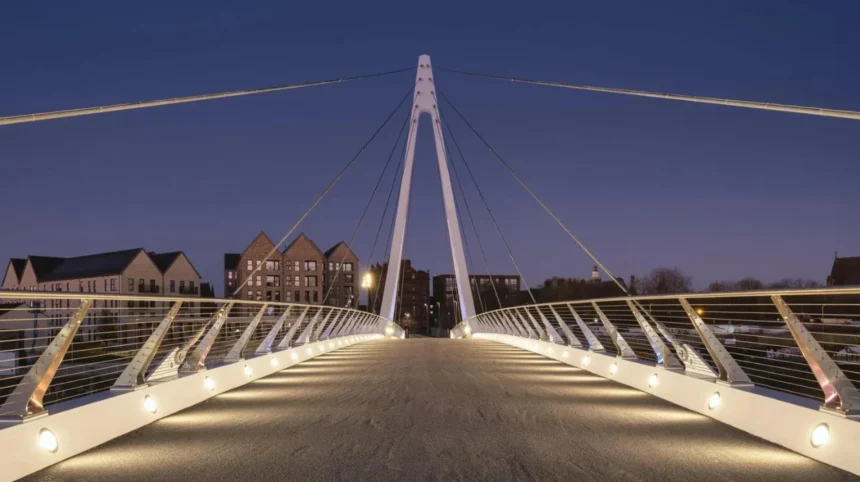
Govan has a long-standing reputation for deprivation, industrial decline and higher levels of social disadvantage, but its current position is more complex. The area is undergoing substantial regeneration through housing, transport, waterfront investment, heritage projects and improved connections with Glasgow’s West End.
- What is Govan and why does it have a reputation for being a rough area?
- How did Govan become associated with deprivation and social problems?
- Is Govan genuinely improving today?
- Has Govan become a safe place to live?
- What is changing around Govan town centre and Water Row?
- Is new housing improving Govan?
- What role does the River Clyde play in Govan’s improvement?
- Is Govan becoming more connected to Glasgow’s West End?
- Is Govan attracting new employment and investment?
- What community improvements are taking place in Govan?
- What problems still remain in Govan?
- Is Govan a good area to live in now?
- Is Govan likely to keep improving?
- What is the overall verdict on Govan’s reputation?
The key question is therefore not simply whether Govan is “rough”. The more useful question is whether the conditions that created that reputation are changing, where improvement is visible, and what problems remain for people considering living there.
What is Govan and why does it have a reputation for being a rough area?
Govan is a historic district on Glasgow’s south-western side with a strong shipbuilding heritage and a long history of industrial employment, population change and social deprivation. Its reputation reflects genuine historic disadvantage, but current regeneration is changing important parts of the area.
Govan sits on the south bank of the River Clyde, opposite Partick and close to Glasgow’s West End. It is centred around Govan Road, Govan Cross, Water Row and the riverside.
The district became closely associated with shipbuilding during Glasgow’s industrial expansion. Fairfield Shipbuilding and Engineering Company became one of the most important shipbuilders in the area. Glasgow Life records that a shipyard was established at Fairfield in 1864 and eventually employed thousands of people.
Govan’s industrial importance created employment, housing demand and a dense working-class community. The subsequent decline of heavy industry removed many traditional jobs and weakened the economic foundations of the district.
Govan also has a long history as a separate settlement. Govan and Partick were independent burghs before both became part of Glasgow in 1912.
The modern reputation of Govan therefore comes from several connected factors:
- industrial decline
- unemployment and low household incomes
- poor housing conditions in some locations
- health inequalities
- concentrated deprivation
- crime and antisocial behaviour concerns
- decades of urban redevelopment
These characteristics are important, but they do not describe every street or household in Govan.
The Scottish Index of Multiple Deprivation, or SIMD, is the Scottish Government’s official system for identifying concentrations of disadvantage. It measures seven domains: income, employment, health, education, access to services, crime and housing.
This distinction matters because deprivation is not the same as crime, and crime is not the same as personal safety. A neighbourhood can experience economic deprivation while still containing stable residential streets, active community organisations, good transport connections and improving public spaces.
How did Govan become associated with deprivation and social problems?
Govan’s deprivation developed through long-term industrial and housing changes rather than one single event. Shipbuilding decline removed employment, while large-scale redevelopment altered established communities and housing patterns across Glasgow during the twentieth century.
Shipbuilding was central to Govan’s identity and economy.
Fairfield was particularly significant. The yard produced major naval and passenger vessels and became one of the defining industrial institutions on the Clyde.
The concentration of employment supported surrounding shops, housing, schools, transport services and community institutions. When industrial employment contracted, the consequences extended beyond individual workplaces.
Glasgow also experienced major housing redevelopment between the 1950s and 1970s. Glasgow Life records that 29 inner-city areas were designated Comprehensive Development Areas, with parts of Govan included in this programme. The programme involved extensive demolition and redevelopment between 1957 and 1975.
These changes altered the physical structure of neighbourhoods.
Older tenement housing was demolished in many areas. New housing estates and different forms of housing replaced sections of the traditional urban fabric.
The wider consequences of deindustrialisation were significant. Traditional employment became less dominant, while unemployment and economic inactivity became important features of many former industrial communities.
Govan’s reputation therefore has a historical basis. It is not simply an outdated stereotype invented without evidence.
However, the same historical explanation also shows why the label is incomplete.
The physical and economic conditions associated with Govan’s old reputation are now being addressed through long-term regeneration programmes.
Is Govan genuinely improving today?
Yes. Govan is experiencing measurable physical and economic regeneration. New housing, the Govan-Partick Bridge, waterfront investment, heritage projects, improved public spaces and innovation-sector development are changing important parts of the district.
The strongest evidence of change is physical investment.
The Govan-Partick Bridge opened on 6 September 2024. It created a direct walking, cycling and wheeling connection across the Clyde between Govan and Partick. Scottish Government reporting recorded more than 820,000 pedestrian crossings and 185,000 cyclist crossings after opening.
The bridge forms part of the wider £97 million Clyde Waterfront and West End Innovation Quarter project.
Its importance extends beyond transport.
The bridge connects Govan more directly with Glasgow’s West End, the University of Glasgow area and employment and visitor destinations on the north side of the Clyde.
Government reporting estimates a 23% increase in jobs accessible within a 20-minute walk of Govan Cross and an 87% increase in jobs accessible within a 10-minute cycle.
This represents a major change in Govan’s relationship with the wider city.
Regeneration is also visible around Water Row.
The Water Row Masterplan was approved in principle in 2020. The scheme was designed around approximately 200 homes and 3,500 square metres of commercial space, together with improved public realm and a stronger connection between Govan town centre and the Clyde.
Phase one delivered 92 mid-market-rent flats and six commercial units.
The council’s regeneration programme also identifies additional development around the waterfront, Govan Graving Docks, East Govan and the wider River Clyde corridor.
These are substantial structural changes rather than cosmetic improvements.
Has Govan become a safe place to live?
Govan should not be described as uniformly unsafe or uniformly safe. Conditions differ between streets, housing developments and activity areas. Crime remains one component of local deprivation, but regeneration, improved connectivity and active community investment are changing the environment.
Safety is one of the most important considerations for prospective residents.
The first point is geographical.
Govan is not a single homogeneous neighbourhood. Conditions vary between the town centre, residential streets, waterfront locations, areas around the underground station and neighbouring districts such as Ibrox, Linthouse and Elderpark.
The Scottish Index of Multiple Deprivation includes crime as one of its seven domains, but SIMD is not a simple neighbourhood crime league table. It measures multiple forms of disadvantage across small geographical areas.
This distinction is important when assessing Govan.
A high level of deprivation does not automatically mean that every resident experiences crime.
Likewise, a regenerated development does not automatically eliminate wider social problems.
People assessing safety should therefore examine the exact street and immediate surroundings rather than relying on the historic reputation of Govan as a whole.
Daytime and nighttime conditions also differ.
Busy routes around Govan Road and Govan Cross benefit from commercial activity and public transport. Quieter residential streets have a different environment. Riverside locations can also feel different outside normal daytime activity.
For prospective residents, practical checks are more useful than broad labels.
Visit the exact property location during the daytime and evening. Check the route to the nearest station or bus stop. Examine lighting, pedestrian activity, building entrances and nearby vacant sites.
The important point is that Govan’s safety profile should be assessed at street level.
What is changing around Govan town centre and Water Row?
Water Row is one of Govan’s most important regeneration areas. New housing, commercial space, public realm improvements and the Govan-Partick Bridge are reconnecting the town centre with the River Clyde and the wider Glasgow economy.
Water Row sits at a strategic location beside Govan town centre and the Clyde.
Its regeneration is intended to reconnect the area with its waterfront.
The first phase delivered 92 mid-market-rent homes and six commercial units. Glasgow City Council identifies a further 100 residential units as part of the planned second phase, although delivery depends on resolving land issues associated with existing Showmen’s Yards.
This illustrates an important feature of regeneration.
Investment does not mean every planned project is completed immediately.
Some schemes face land, financing, construction and infrastructure constraints. A realistic assessment therefore distinguishes completed projects from proposals.
The completed Water Row development represents delivered change.
The planned second phase represents future development.
Both are relevant, but they should not be presented as equivalent.
Water Row also benefits from its relationship with the new Govan-Partick Bridge.
The bridge opened in September 2024 and provides a direct active-travel connection between Govan and Partick.
This creates a stronger pedestrian relationship between the two sides of the Clyde.
The result is greater access to employment, education, cultural facilities and services.
That connectivity is particularly important for a neighbourhood undergoing economic transition.

Is new housing improving Govan?
New housing is an important part of Govan’s regeneration. Water Row has already delivered 92 mid-market-rent flats, while wider housing programmes target additional affordable homes and stronger residential environments across the Govan-Partick regeneration area.
Housing quality has a direct relationship with neighbourhood conditions.
Govan contains a mixture of traditional tenements, social housing, private housing and newer developments.
This creates substantial differences in property condition and residential environment.
Water Row provides a clear example of new housing investment. Phase one delivered 92 mid-market-rent flats through Govan Housing Association.
The wider Glasgow Strategic Housing Investment Plan identified Water Row as a key opportunity for affordable housing and described potential for more than 200 affordable homes through the broader masterplan.
New housing also supports population stability.
Well-designed developments bring residents into areas that previously contained vacant or underused land. Commercial space can increase local activity. Public realm improvements can make walking routes more attractive.
However, housing regeneration does not automatically resolve deprivation.
New buildings do not replace the need for employment, education, health services, community facilities and effective local management.
Successful regeneration requires these components to operate together.
What role does the River Clyde play in Govan’s improvement?
The River Clyde is central to Govan’s regeneration strategy. Waterfront investment is reconnecting the community with the river, improving public spaces and supporting new housing, heritage, employment and innovation projects along a strategically important part of Glasgow.
For much of Govan’s industrial history, the Clyde was primarily an economic workplace.
Shipyards dominated the waterfront.
The contemporary regeneration strategy gives the river a broader civic and economic role.
Glasgow City Council’s Govan-Partick and River Clyde plans include aspirations for a River Park and improved connections along the waterfront. The Govan Graving Docks and other riverside projects form important parts of this strategy.
The Govan Graving Docks are particularly important because they retain a direct physical connection with the area’s shipbuilding heritage.
Waterfront regeneration also supports tourism and heritage.
Govan Old Church is being developed as a cultural destination associated with the Govan Stones. Glasgow City Council reports that parts of the building have already been converted for new uses, with further works forming part of the wider project.
This gives regeneration a heritage dimension.
The objective is not simply to replace old industrial land with housing.
It also involves preserving significant parts of Govan’s identity while introducing new economic and community uses.
Is Govan becoming more connected to Glasgow’s West End?
Govan is substantially better connected to Glasgow’s West End since the opening of the Govan-Partick Bridge in 2024. The bridge creates a direct active-travel route and expands access to employment, education, healthcare, cultural facilities and services across the Clyde.
Historically, the River Clyde created a physical separation between Govan and Partick.
The bridge changes this relationship.
The Govan-Partick Bridge is designed for pedestrians, cyclists and other active travel users. Its location connects Govan with Partick and the wider West End network.
Its usage demonstrates demand.
More than 820,000 pedestrian crossings and 185,000 cyclist crossings were recorded after the bridge opened, according to Scottish Government reporting for the period covered.
This is significant for residents.
Better connectivity increases access without requiring a car.
It also strengthens the relationship between Govan and major institutions.
The route supports connections involving the University of Glasgow’s Gilmorehill campus and the Queen Elizabeth University Hospital.
Improved connectivity is one of the strongest indicators of Govan’s changing position within Glasgow.
The area is no longer being planned simply as an isolated former industrial district.
It is increasingly integrated into a wider Clyde corridor.

Is Govan attracting new employment and investment?
Govan is attracting investment beyond traditional housing development. The Clyde Waterfront Innovation Campus and Glasgow Riverside Innovation District are introducing health, science and commercial activity, creating a stronger employment base around the former industrial waterfront.
Economic diversification is critical to Govan’s long-term improvement.
The area historically depended heavily on shipbuilding.
Modern regeneration is introducing different economic sectors.
The Clyde Waterfront Innovation Campus is a major example. Construction of a Health Innovation Hub began in 2023, with the project designed to support commercial businesses and University of Glasgow-led activity connected with precision medicine. Glasgow City Council reported capacity for up to 450 jobs.
This represents a significant shift in the area’s economic structure.
The emerging Glasgow Riverside Innovation District also connects Govan with wider research, health and commercial development.
Economic regeneration is particularly important because physical redevelopment alone does not eliminate deprivation.
Employment opportunities provide a direct route towards improved household incomes.
They also increase daytime activity and support local businesses.
The long-term success of Govan therefore depends partly on whether investment produces accessible employment for existing residents rather than simply increasing land values.
The new bridge is relevant here because improved connectivity expands the number of jobs accessible from Govan.
What community improvements are taking place in Govan?
Community infrastructure is another important part of Govan’s improvement. Elder Park Library and Community Hub reopened after a £4 million restoration, while heritage, public-space and community projects support local identity alongside physical redevelopment.
Regeneration is not limited to major construction projects.
Community facilities influence everyday quality of life.
Elder Park is one of Govan’s most important historic green spaces. The park was created through the philanthropy of Isabella Elder, who donated 37 acres for public recreation in 1885.
Elder Park Library and Community Hub reopened in June 2024 following a £4 million restoration. Glasgow City Council reported improvements to accessibility and sustainability as part of the project.
This type of investment matters because community infrastructure creates places for residents to access services, activities and social interaction.
Govan also has a substantial network of housing and community organisations.
Their role includes housing management, community facilities, local development and neighbourhood improvement.
This provides a foundation for regeneration that is different from large commercial redevelopment.
A successful neighbourhood needs both major investment and functioning local institutions.
What problems still remain in Govan?
Govan has not eliminated deprivation, housing pressures or social inequalities. Regeneration is ongoing rather than complete. Some planned developments face delays, and historic socioeconomic disadvantages continue to influence parts of the community.
A balanced assessment must acknowledge the remaining problems.
Govan’s historic deprivation has not disappeared simply because new developments have opened.
The Scottish Index of Multiple Deprivation continues to identify areas of disadvantage across Scotland using income, employment, health, education, access to services, crime and housing indicators.
The index is particularly useful because it shows why neighbourhood improvement cannot be judged using property development alone.
Employment remains important.
Health remains important.
Housing conditions remain important.
Education remains important.
Crime remains one component.
Access to services also matters.
Some regeneration projects remain incomplete.
Water Row phase two, for example, involves a further 100 homes but depends on resolving the relocation of existing Showmen’s Yards.
The River Clyde regeneration programme also contains long-term proposals requiring additional funding and coordinated delivery. Glasgow City Council has identified further funding requirements for projects within the Govan-Partick and River Clyde strategic development areas.
These factors demonstrate that Govan is in transition rather than fully transformed.
Is Govan a good area to live in now?
Govan can provide good residential value and strong transport access, especially for residents who prioritise proximity to the Clyde, Partick and Glasgow’s West End. The suitability of individual streets and properties remains more important than Govan’s historic reputation.
The answer depends on what a resident needs.
Govan has several clear strengths.
Its location provides access to the River Clyde, Partick, Glasgow’s West End and major employment areas.
The Govan-Partick Bridge has substantially improved active-travel connectivity.
Govan Underground station provides access to Glasgow’s Subway network.
New residential development is increasing the range of housing available.
Historic sites such as Govan Old Church, the Govan Stones and Elder Park provide distinctive local assets.
The area’s regeneration also creates long-term investment potential.
At the same time, residents should assess individual properties carefully.
Older housing can have different maintenance requirements from new-build accommodation.
Street environment varies.
Noise levels vary.
Parking arrangements vary.
Local shopping provision varies.
The quality of individual blocks also varies.
A prospective resident should therefore assess the exact property rather than deciding solely from the word “Govan”.
This is particularly important because regeneration produces mixed neighbourhoods during the transition period.
New buildings can sit close to older housing.
Improved public spaces can sit close to vacant development sites.
A neighbourhood can therefore contain both established challenges and visible investment at the same time.
Explore More Area Guide
How Safe Is Glasgow City Centre at Night for Women?
Is Possilpark Really Bad to Live In? Glasgow Guide 2026
Is Govan likely to keep improving?
Govan has a substantial pipeline of regeneration projects and strategic investment that supports continued improvement. The strongest long-term drivers are waterfront redevelopment, new housing, active travel, employment investment, heritage projects and integration with Glasgow’s West End.
The evidence points towards continued structural change.
The Govan-Partick Bridge is already operational.
Water Row phase one is complete.
New residential development has been delivered.
Elder Park Library and Community Hub has reopened.
The Clyde Waterfront Innovation Campus has introduced a new economic focus.
The wider River Clyde strategy continues to identify Govan as a major regeneration location.
The scale of investment is important.
The Scottish Government identifies the Clyde Waterfront and West End Innovation Quarter as a £97 million project.
This investment provides a foundation for further economic and physical change.
However, regeneration success should be measured using outcomes rather than construction volume.
Important indicators include:
- employment among local residents
- household income
- housing quality
- crime levels
- health outcomes
- educational attainment
- access to services
- quality of public space
- local business activity
These measures provide a better assessment than property prices or new-build numbers alone.
What is the overall verdict on Govan’s reputation?
Govan is no longer accurately described as simply a “rough area”. It retains genuine socioeconomic challenges, but major regeneration has already changed its infrastructure, housing, connectivity, public facilities and economic prospects. The area is improving while remaining unequal in places.
Govan’s old reputation has a real historical foundation.
The district experienced industrial decline, housing redevelopment and persistent deprivation.
Those factors shaped public perceptions for decades.
But current Govan is different from the Govan of previous generations.
The Govan-Partick Bridge has created a major new connection.
Water Row has delivered new homes and commercial space.
Elder Park Library and Community Hub has been restored.
The Clyde Waterfront Innovation Campus is diversifying the local economy.
Govan Old Church and the Govan Stones are strengthening the heritage offer.
The River Clyde is becoming a focus for public space, housing, employment and cultural investment.
These changes provide strong evidence that Govan is genuinely improving.
The improvement is not uniform.
Some socioeconomic challenges remain.
Some regeneration projects are incomplete.
Some streets continue to experience greater disadvantage than others.
For anyone considering moving to Govan, the most accurate conclusion is therefore straightforward: Govan is a regenerating Glasgow neighbourhood with genuine historical disadvantages and significant current investment.
Its reputation has not disappeared, but it no longer tells the complete story.
The most important change is Govan’s growing integration with the wider Glasgow economy.
The bridge, waterfront development and innovation investment connect the district more closely with Partick, the West End, the Clyde corridor and major employment locations.
That makes Govan an important part of Glasgow’s long-term urban regeneration rather than simply a former industrial neighbourhood dealing with decline.
Is Govan still considered a rough area of Glasgow?
Govan still has areas affected by socioeconomic deprivation, but describing the entire district as “rough” is outdated. Major regeneration, new housing, improved transport links, waterfront investment and community projects have significantly changed parts of Govan.