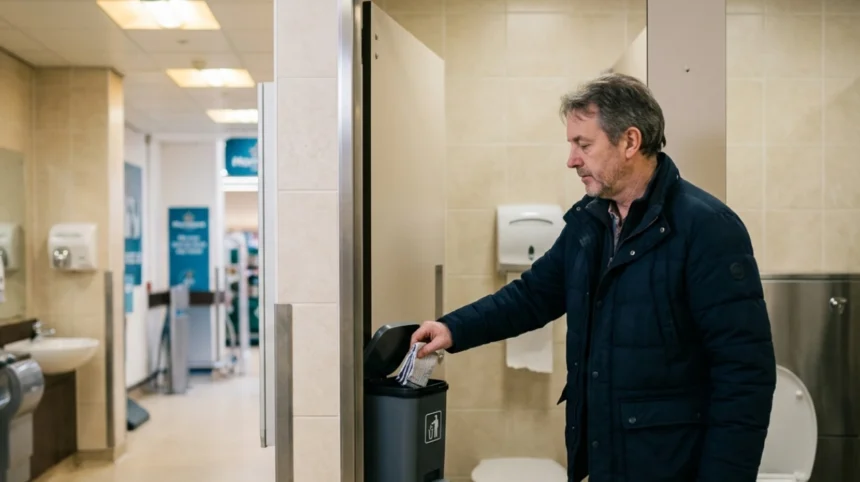
Morrisons has become the first UK supermarket chain to install male sanitary bins in customer toilets at all its stores, including outlets in Glasgow. This new toilet rule introduces discreet incontinence‑pad disposal units in men’s cubicles, aligning the retailer with “The Bog Standard” guidelines on male incontinence support and improving dignity for shoppers with conditions such as prostate‑cancer‑related incontinence.
- What is the Morrisons male–toilet bin rule?
- Why has Morrisons introduced sanitary bins in men’s toilets?
- What is “The Bog Standard” and how does Morrisons meet it?
- How are the male sanitary bins designed and installed in Morrisons toilets?
- Who benefits from Morrisons’ male‑toilet sanitary bins?
- How does this rule affect Glasgow shoppers and Morrisons stores?
- Is this toilet rule the same in all Morrisons stores?
- What do the male sanitary‑bin bins look like in practice?
- How does this compare with other supermarkets’ toilet facilities?
- What data and research support this change?
- How does this policy relate to disability and equality law in Scotland?
- What are the public and customer reactions in Glasgow so far?
- How does this fit into Morrisons’ wider accessibility strategy?
- What practical steps can Glasgow customers take using this rule?
- Will other supermarkets in Glasgow adopt similar toilet rules?
What is the Morrisons male–toilet bin rule?
Morrisons has rolled out male sanitary bins in the customer toilets of all its supermarkets, including branches in Glasgow, making it the first UK grocery chain to require this facility nationwide. The rule means every male toilet cubicle in a Morrisons supermarket now contains a dedicated sanitary bin for incontinence pads, allowing men to dispose of used products discreetly while shopping.
This change is part of a formal policy, not a one‑off trial, and applies to full‑size Morrisons supermarkets rather than smaller Morrisons Daily convenience shops that may lack toilets. The bins are fitted for male incontinence products, not for general waste or nappies, and are maintained under the same hygiene protocols as existing female sanitary bins.
Why has Morrisons introduced sanitary bins in men’s toilets?
Morrisons introduced male sanitary bins to address a long‑standing gap in public toilet facilities for men with incontinence, especially those affected by prostate‑cancer treatment. Many men with incontinence avoid leaving the house because public toilets lack discreet disposal options, which can limit their ability to shop, socialise, or attend medical appointments.
The move responds to research and guidance from phs Group and Prostate Cancer UK, which estimate that over 1 million men in the UK live with incontinence after prostate‑cancer treatment. By providing secure, private bins in men’s toilets, Morrisons reduces stigma and helps men manage their condition with greater confidence, aligning with the “Bog Standard” scheme for incontinence‑inclusive facilities.
What is “The Bog Standard” and how does Morrisons meet it?
“The Bog Standard” is a set of guidelines created by phs Group and Prostate Cancer UK to help organisations provide supportive, incontinence‑friendly toilet facilities for men. The scheme sets minimum standards such as having disposal bins in men’s cubicles, clear signage, and staff training so that buildings can be certified as “incontinence‑friendly.”
Morrisons has installed male sanitary bins in nearly 500 male toilet cubicles across its UK estate, including Glasgow‑area stores, to meet these criteria. The retailer now advertises itself as the first supermarket to comply fully with “The Bog Standard”, meaning its stores satisfy the recommended layout, signage, and disposal‑bin requirements for supporting customers with male incontinence.
How are the male sanitary bins designed and installed in Morrisons toilets?
Morrisons uses specially designed sanitary bins placed at cubicle level inside all men’s toilets in its supermarkets, including Glasgow locations. The units are typically wall‑mounted or recessed within the cubicle, with a lid or flap to keep contents concealed and reduce odour and hygiene risks.
These bins are sized and sealed for incontinence pads and similar products, not for nappies or general litter, and are emptied regularly by cleaning staff following standard waste‑handling procedures. In Glasgow‑area Morrisons store plans, the bins are installed in every male cubicle plus any accessible / disabled toilets, reinforcing accessibility and privacy for customers with mobility issues or continence products.
Who benefits from Morrisons’ male‑toilet sanitary bins?
The primary beneficiaries are men with incontinence linked to conditions such as prostate‑cancer treatment, MS, spinal‑cord injuries, and other urological disorders. Prostate Cancer UK notes that around 40% of men who have curative treatment for prostate cancer experience some form of incontinence, making access to public‑toilet disposal facilities a daily concern.
Secondary beneficiaries include:
- Older men with age‑related bladder‑control issues who regularly shop at Morrisons in Glasgow.
- Men recovering from surgery or managing chronic conditions who may wear pads during trips to the supermarket.
- Families and carers accompanying men with incontinence, as the change reduces stress and embarrassment during routine shopping.
How does this rule affect Glasgow shoppers and Morrisons stores?
In Glasgow, the rule means that every Morrisons supermarket now has discreet incontinence‑pad bins in men’s toilets, which can influence where customers choose to shop. Men who previously avoided long trips or limited shopping due to lack of disposal options may now feel more comfortable visiting Morrisons stores in areas such as Glasgow city centre, East Kilbride, and nearby suburban branches.
店内, the policy also affects staff training and maintenance routines. Store teams are expected to:
- Check and empty male sanitary bins as part of regular cleaning schedules.
- Respond to customer feedback about the bins’ condition or accessibility.
This can subtly raise Glasgow‑area Morrisons’ profile as a more inclusive and “bog‑standard”‑compliant retailer compared with competitors that have not yet adopted similar provisions.
Is this toilet rule the same in all Morrisons stores?
The male‑sanitary‑bin rule applies uniformly to all Morrisons supermarkets across the UK, including all Glasgow locations with full‑service toilets. Each store with a customer toilet block has bins installed in every men’s cubicle, following the same national specification.
However, the rule does not extend to all Morrisons outlets:
- Morrisons Daily convenience stores without toilets are excluded from the initiative.
- Some very small or older sites with limited facilities may have phased the rollout slightly later, but national coverage was completed by mid‑2026.
This means that in Glasgow, only the main Morrisons supermarkets (not the smallest local off‑licences) will consistently display the male sanitary‑bin signage and infrastructure.
What do the male sanitary‑bin bins look like in practice?
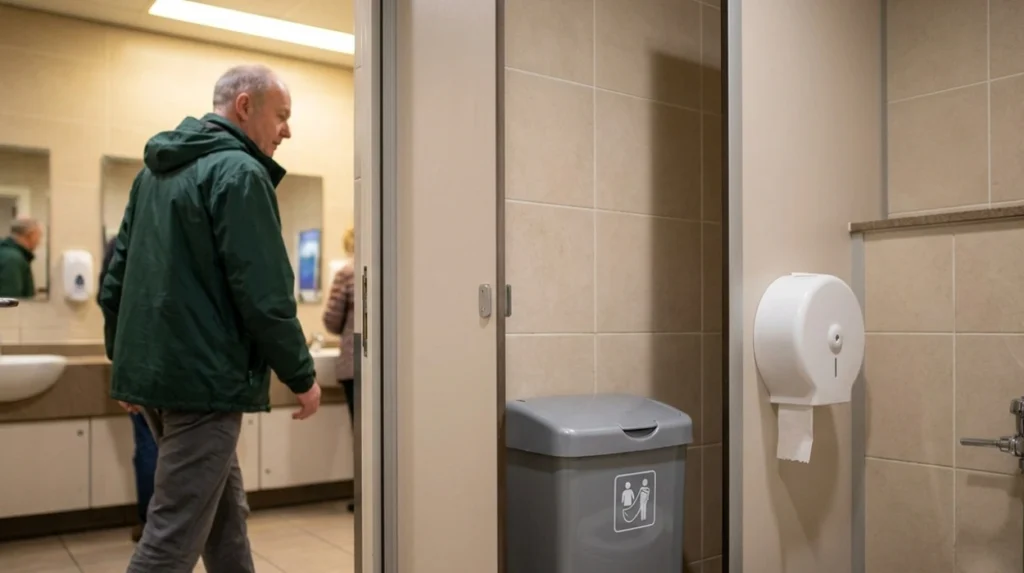
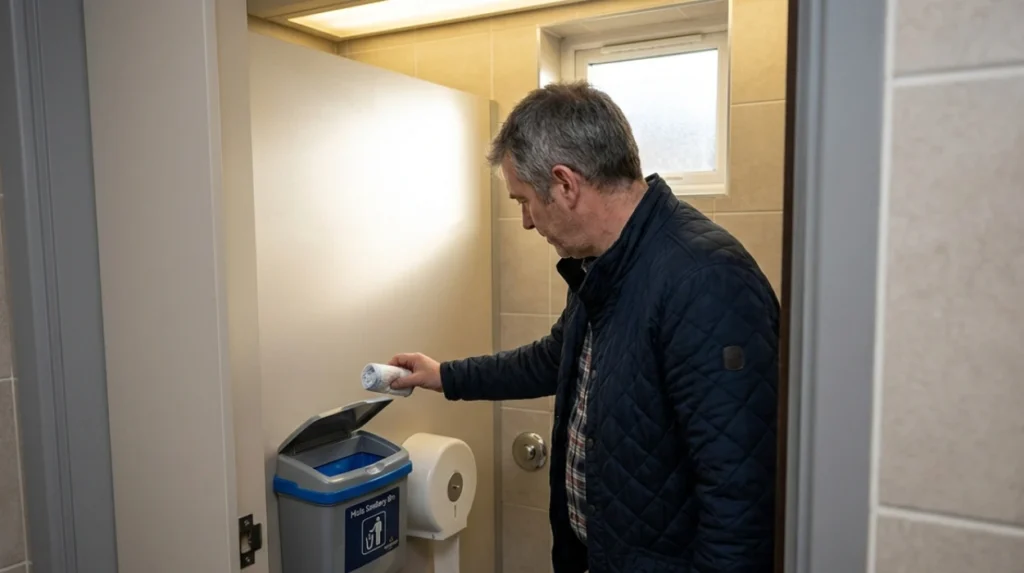
In Morrisons stores, the male sanitary bin is typically a small, lidded unit mounted inside the cubicle, often with a sanitary‑bin pictogram and written instructions. Example features include:
- A wall‑mounted plastic or metal container with a hinged lid or flap.
- A “male sanitary bin” label and/or “for incontinence pads only” text.
- A discreet opening that prevents odour and maintains privacy, similar in style to existing female sanitary bins.
In Glasgow‑area stores, customers may also see associated signage near the entrance to the male toilets, explaining that the facility supports men with incontinence as part of Morrisons’ “Bog Standard” commitment.
How does this compare with other supermarkets’ toilet facilities?
Morrisons is currently the only** UK supermarket chain to install male sanitary bins in toilets across all its supermarkets, setting it apart from rivals such as Tesco, Sainsbury’s, Asda, and Lidl.** Most other major retailers still provide sanitary bins only in female toilets, leaving men with incontinence to manage pad disposal without dedicated facilities.
Examples of the current gap:
- Tesco and Sainsbury’s: Female sanitary bins in ladies’ toilets only; no male‑specific units in most outlets.
- Asda and Lidl: Similar layout, with limited or no public‑toilet bins in men’s cubicles.
This makes Morrisons’ “toilet rule” a notable differentiator in Glasgow, where customers with incontinence may deliberately choose Morrisons over other supermarkets for the extra privacy and dignity the bins provide.
What data and research support this change?
Academic and charity data show that male incontinence is far more common than many people assume, especially after prostate‑cancer treatment. Prostate Cancer UK and phs Group estimate that around 1 in 10 men in the UK eventually experiences incontinence, with a significant proportion linked to prostate‑cancer therapy.
Hospital and continence‑service studies indicate:
- Up to 40% of men who receive radical prostatectomy or radiotherapy report incontinence symptoms post‑treatment.
- Many men describe avoiding public spaces such as shopping centres due to fear of pad‑disposal embarrassment.
By acting on these figures, Morrisons positions the male‑sanitary‑bin rule as an evidence‑based accessibility measure rather than a purely symbolic gesture.
How does this policy relate to disability and equality law in Scotland?
In Scotland, Morrisons’ male‑sanitary‑bin rule aligns with the broader goals of the Equality Act 2010** and the Public Sector Equality Duty (PSED), even though supermarkets are private businesses.** The policy supports men whose incontinence amounts to a disability by reducing barriers to using public facilities and shopping environments.
Under the Equality Act, a physical or mental impairment that has a long‑term adverse effect on normal day‑to‑day activities, such as bladder control, can qualify as a disability. By providing discreet disposal options, Morrisons improves equal access to its stores for affected customers, which strengthens its compliance with:
- Reasonable adjustments expectations for customers with disabilities.
- Best‑practice guidance on inclusive design promoted by Scottish health and equality bodies.
What are the public and customer reactions in Glasgow so far?
Initial public reaction has been broadly positive, especially among men with incontinence and disability‑advocacy groups who describe the bins as a “game‑changer.” Charities such as Prostate Cancer UK and continence‑support organisations have praised Morrisons for making a visible, tangible improvement to the shopping experience for affected men.
In Glasgow‑focused social‑media discussion, some local customers have noted:
- Appreciation for the extra privacy and reduced embarrassment when managing incontinence during a supermarket visit.
- Occasional questions about the bins’ exact location or how they are labelled, which Morrisons has addressed through clearer in‑store signage and staff guidance.
A minority of online comments have questioned the need for male bins, but these have been outweighed by supportive feedback from men who say the change makes them feel more comfortable frequenting Morrisons’ Glasgow stores.
How does this fit into Morrisons’ wider accessibility strategy?
The male‑sanitary‑bin initiative is part of Morrisons’ broader focus on accessibility, which includes wheelchair‑accessible toilets, changing places‑style facilities, and improved signage. In Scotland, the retailer has invested in upgrading toilet blocks in many larger stores to meet modern accessibility standards, including at several Glasgow locations.
Other related measures include:
- Changing places toilets in select large‑format stores, offering hoists and adult‑changing surfaces.
- Clear wayfinding for toilets and incontinence facilities, often in collaboration with local health‑board and charity partners.
By bundling the male‑sanitary‑bin rule with these features, Morrisons positions itself as a more inclusive retailer for older customers, people with disabilities, and families, which can build long‑term loyalty in Glasgow’s competitive supermarket market.
What practical steps can Glasgow customers take using this rule?
Glasgow shoppers can use the male sanitary bins in Morrisons toilets by carrying incontinence pads as normal and disposing of them in the designated cubicle bin. Men with incontinence should:
- Locate the men’s toilets in their local Morrisons store (city centre, East Kilbride, or suburban branches).
- Enter a cubicle and look for the male sanitary‑bin unit, typically mounted on the wall with a lid or flap.
Customers who encounter issues such as an overflowing or broken bin can:
- Speak to a store colleague or manager, who is trained to report maintenance needs.
- Use the store’s customer‑service desk or online feedback form to request improvements or clarification.
Will other supermarkets in Glasgow adopt similar toilet rules?
As of mid‑2026, no other major supermarket chain has announced a nationwide rollout of male sanitary bins, but Morrisons’ move may push others to follow. Industry observers expect that, over time, retailers such as Tesco, Sainsbury’s, and Asda may trial similar bins in selected Scottish locations, including Glasgow, especially if customer demand increases.
Possible drivers of wider adoption:
- Public‑health campaigns highlighting the stigma and practical difficulties faced by men with incontinence.
- Local‑authority accessibility strategies in Glasgow and across Scotland that encourage inclusive design in public and retail spaces.
This means Glasgow shoppers may eventually see male sanitary bins in other supermarkets, but for now Morrisons remains the clear leader in this policy.
What is the new toilet rule at Morrisons?
Morrisons has introduced sanitary bins in men’s toilet cubicles across all of its supermarkets, including stores in Glasgow. The bins are designed specifically for the discreet disposal of male incontinence pads and related hygiene products.