Glasgow has two major railway stations: Glasgow Central and Glasgow Queen Street. Both serve Scotland’s largest city, but they operate different routes, connect passengers with different destinations, and occupy separate locations in the city centre. Understanding the difference helps commuters, tourists, and business travellers choose the correct station.
- What Is the Main Difference Between Glasgow Central and Queen Street?
- Where Are Glasgow Central and Queen Street Stations Located?
- Which Destinations Can You Reach From Glasgow Central?
- Long-distance trains from Glasgow Central
- Regional destinations from Central
- Glasgow Central Low Level services
- Which Destinations Can You Reach From Glasgow Queen Street?
- Why Were Glasgow Central and Queen Street Built as Separate Stations?
- When did Glasgow Queen Street open?
- When did Glasgow Central open?
- How did railway competition shape the two stations?
- What Facilities and Accessibility Features Do Both Stations Offer?
- Ticket offices and departure information
- Step-free access and passenger assistance
- Shops, refreshments and waiting areas
- How Do You Transfer Between Glasgow Central and Queen Street?
- Which Glasgow Station Should You Choose for Your Journey?
- How Can You Check Train Times and Avoid Going to the Wrong Station?
- Check the station name on your ticket
- Check live departures before travelling
- Allow time for station transfers
- How Have Glasgow Central and Queen Street Changed in Recent Years?
- Glasgow Queen Street’s modernisation
- Glasgow Central’s historic significance
- What does the future mean for passengers?
- What Should Travellers Remember About Glasgow Central vs Queen Street?
What Is the Main Difference Between Glasgow Central and Queen Street?
Glasgow Central and Glasgow Queen Street are the city’s two principal railway stations, serving different railway corridors. Central mainly handles trains to southern and western Scotland and destinations in England, while Queen Street serves Edinburgh, central Scotland and the Highlands.
The distinction comes from Glasgow’s railway history and the development of competing railway companies during the nineteenth century. Each company built its own terminal to serve different routes, commercial interests and passenger markets.
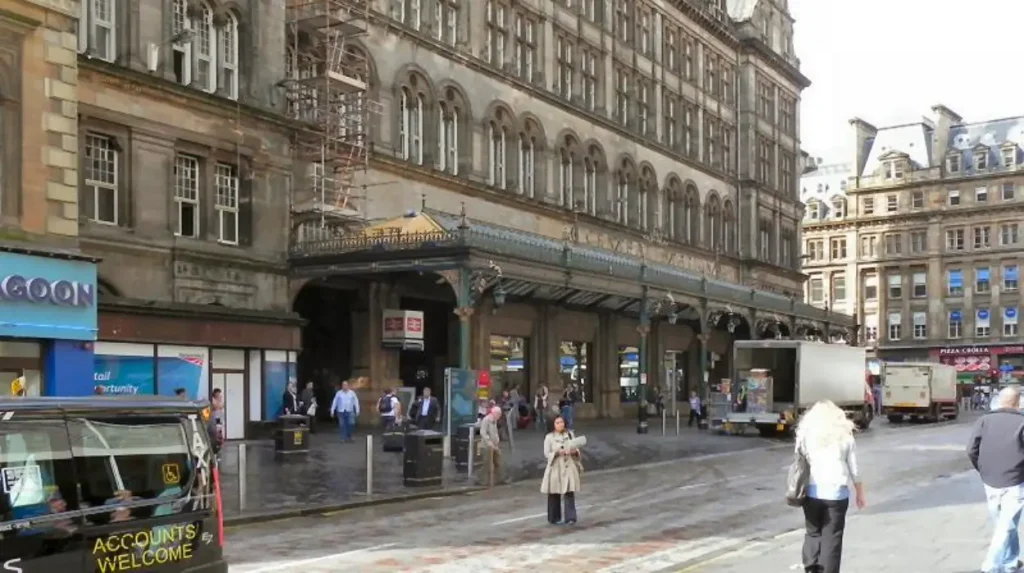
Glasgow Central is the larger of the two main stations. It handles extensive intercity and regional services, including journeys towards London, Manchester, Birmingham, Ayrshire and Inverclyde. Its location near Gordon Street and Argyle Street places it within walking distance of Glasgow’s main shopping streets and the River Clyde.
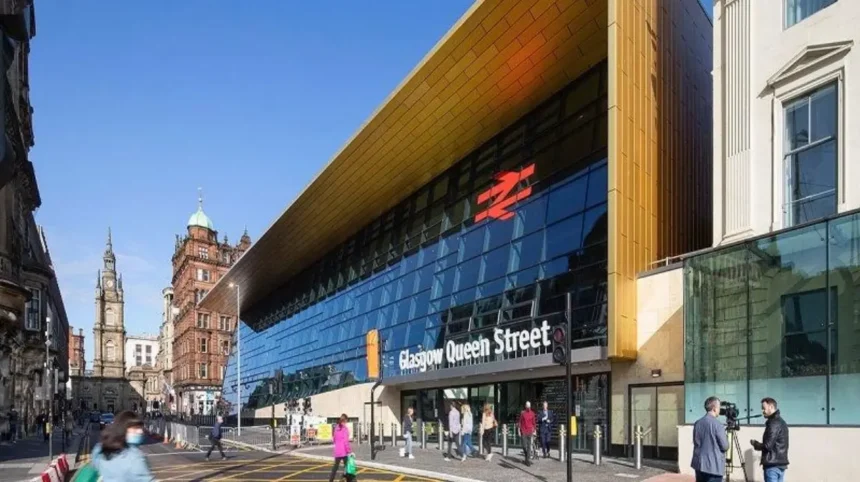
Glasgow Queen Street stands beside George Square, close to Buchanan Street and the city’s main shopping district. Its services connect Glasgow with Edinburgh, Stirling, Perth, Dundee, Aberdeen, Inverness and destinations along the West Highland railway network.
The stations are separate facilities with different departure boards, platforms and railway approaches. A ticket for a journey departing from Central does not mean the train departs from Queen Street. Passengers must check the station name on their ticket and confirm the departure location before travelling.
Where Are Glasgow Central and Queen Street Stations Located?
Glasgow Central is located on Gordon Street in the southern part of Glasgow city centre, close to Argyle Street and the River Clyde. Queen Street is beside George Square in the northern city centre, near Buchanan Street and major shopping areas.
The difference in location affects how passengers reach each station on foot, by taxi, by bus or through other public transport connections.
Glasgow Central’s location
Glasgow Central’s main entrance is on Gordon Street. The station sits near major retail streets, hotels, restaurants and business premises. Its position also provides convenient access to the St Enoch area and the southern side of the city centre.
The station’s high-level platforms serve mainline services. Glasgow Central Low Level is a separate underground section of the station complex used by suburban trains. This distinction matters because passengers travelling on a Low Level service must follow the signs for the correct platforms rather than assume every train leaves from the main concourse.
Glasgow Queen Street’s location
Queen Street’s main entrances are on North Hanover Street and beside George Square. Its position places it close to Buchanan Street, Royal Exchange Square and several central shopping destinations.
The station is also convenient for passengers visiting the Glasgow Royal Concert Hall, City Chambers and other landmarks around the northern city centre. Its location suits journeys that begin or end near George Square and the Buchanan Street shopping district.
How far apart are the stations?
The two stations are separated by roughly half a mile, depending on the walking route and entrance used. A typical walk takes approximately 10–15 minutes, although luggage, crowding, mobility requirements and traffic crossings affect the journey.
Passengers transferring between stations should allow additional time to find the correct exit, navigate the city centre and locate the next departure platform. A tight connection is particularly risky when travelling with children, carrying heavy luggage or changing between services during busy periods.
Which Destinations Can You Reach From Glasgow Central?
Glasgow Central primarily serves railway routes towards southern and western Scotland, including Ayrshire, Inverclyde and Lanarkshire, alongside long-distance services to destinations in England. The exact destinations depend on the operator, route and timetable for the date of travel.
Central’s railway network supports commuting, regional travel, tourism and long-distance journeys. It is an important departure point for passengers travelling beyond Glasgow and for people arriving from other parts of Britain.
Long-distance trains from Glasgow Central
Passengers use Central for services to major English destinations, including London and other cities served by operators running south from Scotland. The available routes and stopping patterns depend on the specific service.
For example, a passenger travelling from Glasgow to London should check the train operator and departure details before arriving at Central. The station name, departure time and destination shown on the booking confirmation provide the clearest guidance.
Regional destinations from Central
Central also serves numerous towns and cities across the west and south of Scotland. Examples include Paisley, Ayr, Greenock, Gourock, Kilmarnock, Motherwell and Hamilton, depending on the route.
These services are important for daily commuting, education, shopping and access to coastal communities. Travellers heading towards the Ayrshire coast or Inverclyde should check whether their chosen train departs from Central and whether it stops at the intended station.
Glasgow Central Low Level services
The Low Level platforms form part of the wider suburban rail network. They serve routes through the central area towards communities on the north and south sides of the Clyde corridor.
Low Level trains differ from the long-distance services using the main high-level platforms. Passengers should therefore check the departure board carefully, especially when travelling to a suburban destination with a similar name to a larger town or city.
Which Destinations Can You Reach From Glasgow Queen Street?
Glasgow Queen Street primarily serves routes to Edinburgh, Stirling, Perth, Dundee, Aberdeen and Inverness, alongside services to towns across central Scotland. It also provides access to scenic Highland destinations, including Fort William, Oban and Mallaig, through the relevant railway routes.
Queen Street is particularly important for journeys heading east and north from Glasgow. Its services connect the city with Scotland’s central belt and the Highlands, supporting commuting, university travel, tourism and intercity journeys.
Glasgow to Edinburgh
Queen Street is a principal departure point for trains to Edinburgh. Services use different routes, including the line via Falkirk High and the route via Airdrie and Bathgate.
Journey times and stopping patterns vary. Travellers should check the timetable to determine whether a train is direct, which Edinburgh station it serves and whether the service stops at intermediate locations.
Stirling, Perth and Dundee
Queen Street connects Glasgow with several important destinations in central and eastern Scotland. Examples include Stirling, Perth and Dundee, with some services continuing farther north.
These routes support access to universities, workplaces, historic attractions and regional transport connections. Passengers travelling to a specific town should check the departure board rather than rely solely on the general destination shown on the ticket.
Highland and west coast journeys
Queen Street is also a gateway to Scotland’s Highland railway network. Routes serve destinations such as Oban, Fort William and Mallaig, although the precise service pattern depends on the timetable.
These journeys connect Glasgow with coastal communities, outdoor recreation areas and popular visitor destinations. Passengers planning a trip to the Highlands should check the full journey, including any changes, before departure.
The station’s railway role reflects its historic connection with routes extending north and east from Glasgow. This remains one of the most important practical differences between Queen Street and Central.
Why Were Glasgow Central and Queen Street Built as Separate Stations?
Glasgow developed two principal railway terminals because competing nineteenth-century railway companies built networks serving different parts of Scotland and Britain. Queen Street opened in 1842, while Central opened in 1879, reflecting Glasgow’s expanding population, commerce and railway demand.
Railway expansion transformed Glasgow during the Industrial Revolution. The city became a major centre for manufacturing, trade, shipbuilding and commerce. Railways provided faster connections for workers, merchants, industrial goods and visitors.
Different railway companies developed their own routes and infrastructure. Their terminals reflected the geography of their networks, the areas they wanted to serve and competition for passengers and freight.
When did Glasgow Queen Street open?
Glasgow Queen Street opened on 21 February 1842 as the Glasgow terminus of the Edinburgh and Glasgow Railway. It initially operated under the name Dundas Street station before becoming known as Queen Street.
The station’s original role was closely connected to the railway link between Scotland’s two largest cities. Its position north of the traditional city centre suited routes heading east towards Edinburgh and north towards central Scotland.
Queen Street’s historic station building subsequently underwent major changes. Its Victorian glass roof was completed in 1878, decades after the station first opened. Network Rail’s historical account describes the station’s redevelopment as part of a wider programme to accommodate changing passenger demand and longer trains.
When did Glasgow Central open?
Glasgow Central opened on 1 August 1879 under the Caledonian Railway. Rapid passenger growth soon created a need for additional capacity, and major extensions followed.
A substantial redevelopment between 1901 and 1905 expanded the station and helped create the large railway complex visible today. The station’s growth reflected Glasgow’s increasing importance as a commercial and industrial centre.
Network Rail identifies Central as Scotland’s busiest railway station. Its historical development illustrates how railway infrastructure expanded in response to passenger demand and the growth of long-distance travel.
How did railway competition shape the two stations?
The companies behind Central and Queen Street developed separate routes and terminals rather than combining their operations into one station. Their different networks established travel patterns that continued as railway ownership changed.
The two stations eventually became part of the national railway system. Their separate identities nevertheless remained important because their approaches, platforms and destination networks continued to serve different corridors.
What Facilities and Accessibility Features Do Both Stations Offer?
Glasgow Central and Queen Street both provide passenger facilities, accessible routes to their platforms, toilets and information services. Their layouts and available amenities differ, so passengers should check the relevant National Rail station information for current facilities and any temporary restrictions.
Both stations are designed to accommodate large numbers of passengers. They provide ticketing facilities, departure information and access to trains, although the location of individual facilities varies.
Ticket offices and departure information
Passengers can use ticketing facilities and electronic departure boards to check their services. Station staff provide assistance with journey information, platform directions and passenger support.
Checking the departure board is particularly important at Central because its high-level and Low Level services operate from different parts of the station complex.
At Queen Street, passengers should check the platform number and destination before entering the platform area. Platform assignments and departure times can change, so live information is more reliable than assumptions based on previous journeys.
Step-free access and passenger assistance
National Rail lists step-free access to all platforms at both stations. Queen Street also has lifts, accessible toilets and Changing Places toilet facilities listed in its station information. Central’s accessibility information identifies step-free access to its platforms.
Passengers who need assistance should arrange it in advance through their train operator when possible. This is especially useful for travellers with reduced mobility, visual impairments, hearing impairments or heavy luggage.
Accessible routes can involve different entrances and walking distances. Checking the relevant station information before travelling helps passengers identify suitable routes and assistance arrangements.
Shops, refreshments and waiting areas
Both stations offer passenger amenities, including retail and refreshment facilities, although the exact businesses and opening hours change.
Central’s large concourse provides access to shops and food outlets. Queen Street’s modernised concourse also accommodates passenger facilities within its station building.
Passengers making a long journey should check opening hours if they need food, refreshments or particular services early in the morning or late in the evening. Not every retail outlet operates for the full duration of station opening hours.
How Do You Transfer Between Glasgow Central and Queen Street?
Passengers can transfer between Glasgow Central and Queen Street by walking through Glasgow city centre, using a taxi or taking an appropriate local public transport connection. Walking generally takes around 10–15 minutes, depending on the route, walking speed and entrance.
The transfer is straightforward for many travellers because both stations occupy the central area. However, they are not directly connected by an internal passage, so passengers must leave one station and travel through the city to the other.
Walking between the stations
A typical walking route runs between Gordon Street and the George Square area. The journey passes through busy city-centre streets and pedestrian crossings.
Passengers with rolling suitcases should allow extra time for crowds and changes in pavement levels. Travellers with limited mobility should check the route and accessibility conditions before setting out.
The walk also passes through areas containing shops, cafés and commercial buildings. This makes the transfer practical for passengers who have enough time between trains, but it does not remove the need to allow for delays.
Taking a taxi or bus
A taxi provides a direct transfer for passengers carrying substantial luggage or travelling with people who find walking difficult. Journey time depends on traffic, road access and the exact pick-up and drop-off points.
Local buses also operate through Glasgow city centre. Passengers should check the current route, stop location and service frequency before relying on a bus for a train connection.
For most straightforward transfers, walking avoids waiting for another service. A taxi or bus becomes more useful when accessibility, weather or luggage makes the walk less suitable.
How much transfer time should you allow?
A 10–15-minute walk is a useful starting estimate, not a guaranteed connection time. Passengers should also allow for leaving the first platform, locating the exit, crossing the city centre and finding the second departure platform.
A longer buffer is sensible when travelling on separate tickets or connecting to an infrequent long-distance service. A delayed incoming train can quickly reduce the time available for the transfer.
Which Glasgow Station Should You Choose for Your Journey?
Choose Glasgow Central for a journey whose booked train departs from Central, particularly routes towards southern and western Scotland or England. Choose Queen Street for services towards Edinburgh, Stirling and many Highland destinations. Always follow the station printed on your ticket.
The correct station depends on the specific train, not simply the destination’s general direction. Railway routes sometimes serve intermediate towns through different stations or follow alternative paths.
For commuters
Commuters should identify the station that serves their workplace or residential area most directly. For example, someone travelling towards Paisley or Ayr typically checks Central services, while someone commuting towards Stirling or using a Queen Street route checks departures from Queen Street.
The best station for a particular commute also depends on the starting location within Glasgow. A passenger living near George Square has a different access journey from someone living near the River Clyde or the southern city centre.
For tourists and day-trippers
Tourists visiting Edinburgh, Stirling, Perth or the Highlands often use Queen Street, depending on their chosen train. Visitors travelling south to England or west towards Ayrshire often use Central.
For example, a traveller planning a railway trip to Fort William should investigate the Queen Street departure and confirm whether the selected train runs directly to Fort William. A visitor travelling from Glasgow to London should check the departure details for Central.
For airport connections
Passengers travelling to Glasgow Airport should check the full journey rather than assume either mainline station offers a direct train to the terminal. Glasgow Airport is connected to the railway network through Paisley Gilmour Street, with onward travel by bus or taxi.
The most convenient starting station depends on the train route, departure time and local transport connection. Passengers should compare the complete journey, including transfer time and the final connection to the airport.
How Can You Check Train Times and Avoid Going to the Wrong Station?
Passengers should confirm the departure station, destination, platform and travel date before leaving for Glasgow Central or Queen Street. National Rail and ScotRail provide journey-planning tools and service information that help travellers check routes, scheduled departures and changes to train services.
A reliable journey starts with the correct station information. Glasgow’s two principal railway terminals are close enough to appear interchangeable on a map, but they handle different services.
Check the station name on your ticket
Read the station name displayed on the booking confirmation. Glasgow Central and Glasgow Queen Street have separate station codes: GLC for Central and GLQ for Queen Street.
These codes help distinguish the terminals when searching for tickets or checking journey details. Passengers should also confirm whether their ticket covers a direct service or a journey involving a change.
Check live departures before travelling
Timetables provide scheduled information, while live departure boards report current service details. Engineering works, operational disruption and platform changes affect individual journeys.
ScotRail recommends using its journey planner or app to check travel information before departure. National Rail also provides station information and live journey-planning resources.
For longer journeys, passengers should check their return service as well. This is particularly important for travel to smaller destinations, where evening and late-night services are less frequent than busy intercity routes.
Allow time for station transfers
Passengers changing between Central and Queen Street should plan the transfer as part of the journey. They should account for the walk, platform access and any waiting time required for the next train.
Travellers with separate tickets should pay particular attention to the connection conditions. A delayed first train does not automatically guarantee that a later service will wait or that a replacement connection will be available.
Explore More Area Guide
Glasgow Train Stations: Routes, Tickets & Travel Guide 2026
McGill’s Buses Glasgow: Routes, Tickets & Timetables Guide
How Have Glasgow Central and Queen Street Changed in Recent Years?
Both Glasgow stations have undergone significant redevelopment to improve passenger capacity, accessibility and the station environment. Central retains its major Victorian railway structure, while Queen Street completed a substantial modernisation programme in October 2021, including an expanded concourse and longer platforms.
Railway infrastructure must adapt to passenger demand, changing train fleets and modern accessibility requirements. Redevelopment helps stations accommodate longer trains, improve passenger circulation and maintain historic structures.
Glasgow Queen Street’s modernisation
Queen Street underwent a major £120 million redevelopment as part of the Edinburgh Glasgow Improvement Programme. The work included a larger concourse, improved entrances, longer platforms and modern passenger facilities.
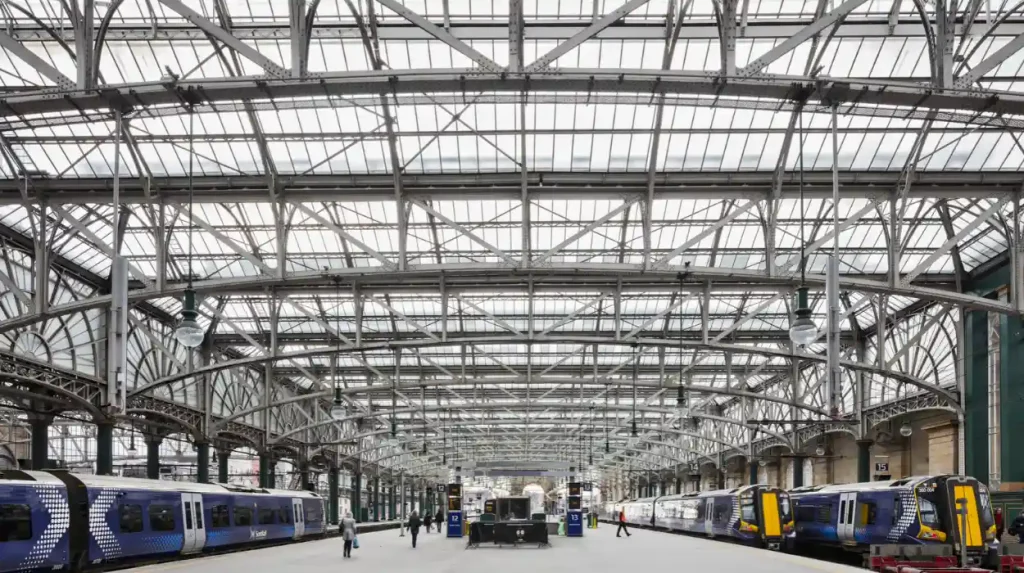
Network Rail reported that the completed improvements were designed to accommodate longer trains and provide a more accessible station environment. The project also incorporated the station’s historic Victorian roof into the modernised building.
The redevelopment demonstrates how a historic railway terminus can retain important architectural features while meeting modern transport requirements.
Glasgow Central’s historic significance
Central’s architecture remains closely associated with Glasgow’s Victorian railway expansion. Its large glass roof, main concourse and extensive platform layout reflect the scale of the station’s original role and subsequent growth.
Network Rail records the station’s opening in 1879 and its later expansion as passenger numbers increased. The station continues to function as a major transport hub while retaining its historic character.
What does the future mean for passengers?
Both stations remain important to Glasgow’s public transport network. Passenger information, accessibility improvements, railway investment and timetable changes continue to shape how people use them.
For travellers, the practical priority is to use current service information rather than rely on older station guides. Construction work, temporary access restrictions and changes to train services should be checked close to the date of travel.
What Should Travellers Remember About Glasgow Central vs Queen Street?
Glasgow Central and Queen Street are separate railway stations serving complementary networks. Central primarily connects Glasgow with southern and western Scotland and England, while Queen Street serves Edinburgh, central Scotland and Highland routes. Checking the booked station prevents unnecessary transfers and missed trains.
The stations’ differences reflect more than their locations. Their nineteenth-century origins established railway corridors that continue to shape Glasgow’s transport network.
Central is the main departure point for many long-distance journeys towards England and regional services across western and southern Scotland. Queen Street is essential for routes towards Edinburgh, central Scotland and destinations farther north.
Both stations provide modern passenger facilities, accessible platform routes and connections with Glasgow’s wider transport network. Their central locations make them convenient for shopping, tourism, business travel and commuting.
The simplest rule is to check the station name before setting off. A few seconds spent confirming the departure location, platform and live service information can prevent an unnecessary walk across the city centre.
What is the difference between Glasgow Central and Queen Street?
Glasgow Central mainly serves southern and western Scotland and long-distance trains to England. Glasgow Queen Street primarily serves Edinburgh, central Scotland and Highland destinations.