Understanding the championship landscape requires an objective examination of competitive, financial, and structural parameters in professional football. Analyzing historical metrics, current squad builds, and statistical trends provides an accurate projection of how likely Rangers Football Club is to claim the title.
- What Are the Current Odds for Rangers Winning the Title?
- How Did the Previous Season Impact Their Current Status?
- What Key Managerial Tactics Drive the Team?
- Who Are the Crucial Players for the Campaign?
- How Does the Financial Landscape Affect Performance?
- What Role Does the Ibrox Atmosphere Play?
- How Will the Old Firm Derbies Decide the Title?
- What Obstacles Exist Outside of the Top Rivals?
- How Do European Commitments Affect Domestic Form?
- What Are the Long-Term Implications of the Championship Outcome?
- What Historical Trends Define This Title Race?
- How Does Sports Science Influence the Title Chase?
- What Recruitment Strategies Form the Squad?
- Summary of Title Probability Factors
- How Will the League Split Affect the Final Push?
- What Does Success Look Like Beyond the Trophy?
What Are the Current Odds for Rangers Winning the Title?
Rangers Football Club holds clear second-favorite status in betting markets at odds of 15/8, trailing the reigning champions Celtic Football Club, who sit at 8/11. These figures indicate a 34.8 percent implied probability of securing the championship trophy.
Understanding Market Projections
Sportsbooks utilize predictive algorithms to determine these figures based on squad depth, managerial consistency, and financial resource distribution. The William Hill Premiership market reflects a major separation between the top two Glasgow institutions and the rest of the division. Heart of Midlothian Football Club sits as a third choice at 5/1 odds despite pushing the title race into the final stages of the previous domestic campaign.
Implied Probability Mechanics
Implied probability translates decimal or fractional betting formats into a raw percentage chance of success. A price of 15/8 means that out of 100 hypothetical simulations of the championship season, analysts project Rangers to finish in first place exactly 35 times. This baseline probability directly influences incoming investments, squad valuation targets, and media pressure surrounding the squad located at Ibrox Stadium in Glasgow.

How Did the Previous Season Impact Their Current Status?
The previous campaign severely diminished the short-term status of Rangers after the team finished third in the standings, trailing champions Celtic and runners-up Hearts. This marked a rare departure outside the traditional top two places for the Ibrox club.
Statistical Breakdown of the League Campaign
Rangers concluded their 38-game fixture schedule with an excessive number of dropped points via draws and narrow away defeats, which prevented a sustained championship run. In contrast, Celtic accumulated the necessary points totals to retain their crown on the final matchday against Hearts. The final league table highlighted distinct structural issues in the Rangers attacking output, which fell short of the scoring metrics set by their cross-town rivals.
Psychological and Structural Fallout
Finishing behind a club from outside Glasgow fractured the traditional duopoly of Scottish football, known locally as the Old Firm. The failure to secure the direct financial windfall associated with automatic UEFA Champions League group stage qualification restricted access to critical broadcasting revenue streams. This financial shortfall forced immediate modifications to the squad assembly strategy, accelerating the departure of aging veterans and adjusting the baseline expectations for the squad.
What Key Managerial Tactics Drive the Team?
Head coach Danny Röhl deploys a high-intensity, possession-oriented system utilizing a 4-2-3-1 structural layout that emphasizes rapid vertical transitions. The system demands extreme physical conditioning and tactical discipline from every defensive and offensive outfield player.
Defensive Pressing Structures
The tactical framework relies on an aggressive counter-pressing mechanism executed in the attacking third of the pitch. Outfield players must compress the playing area immediately upon losing possession to force opposition turnovers near the opponent’s penalty area. This mechanism mitigates defensive vulnerabilities by keeping the ball as far from the Rangers goal line as possible.
Offensive Transition Systems
When possession is consolidated, the shape shifts into an asymmetric structure during build-up phases. The full-backs push high up the flanks into advanced wing positions, forcing wide forwards to cut inside into central half-spaces. This overload creates passing lanes for creative central midfielders to deliver progressive passes into the penalty area, maximizing high-probability shooting opportunities.
Who Are the Crucial Players for the Campaign?
The success of a top-flight title challenge rests on key players who anchor the spine of the first-team squad. These individuals dictate tactical tempo, defensive stability, and clinical goal conversion rates across the 38-game league calendar.
Central Defensive Anchors
The primary defensive responsibility falls on the starting central defenders, who must maintain structural integrity during high-pressing phases. These players require high passing accuracy to initiate build-up sequences from the penalty box. Their spatial awareness prevents long-range counter-attacks from breaking through the high defensive line deployed by the coaching staff.
Creative Midfield Controllers
The designated central attacking midfielder serves as the primary engine for expected assists and shot-creation actions. This position requires an individual capable of executing intricate passes in compact defensive low-blocks used by trailing opponents. Statistical success in this role requires generating consistent clear-cut scoring opportunities per 90 minutes of active play.
Lead Attacking Goalscorers
Winning the title requires a central striker capable of converting low-probability chances into verified goals. Historical trends show that championship-winning squads in Scotland require an individual goalscorer to exceed the 20-goal threshold in a single league season. The starting center-forward must combine physical hold-up play with elite movement inside the box to maximize cross-delivery metrics from wide areas.
How Does the Financial Landscape Affect Performance?
Rangers operates with an annual wage bill exceeding 35 million pounds, which represents a massive resource advantage over ten other top-flight clubs. However, this budget trails the financial power of Celtic, who maintain a substantial revenue advantage.
Revenue Streams and Disparities
Club revenue stems from three core categories: matchday ticket sales at the 51,700-capacity Ibrox Stadium, commercial sponsorship agreements, and European broadcasting distributions. The absence of guaranteed group-stage revenue from the premier tier of European football limits the total transfer budget available to the scouting department. This structural deficit makes finding undervalued talent via data analytics essential for keeping pace with wealthier rivals.
Cost Control and Sustainability Regulations
The club must comply with the UEFA Financial Sustainability Regulations, which mandate that squad cost ratios do not exceed defined percentages of total revenues. This rule restricts the board from injecting unbacked capital to fund rapid squad transformations. Every incoming transfer fee must be balanced against player amortization costs and outgoing transfer receipts, slowing down the squad rebuilding process.
What Role Does the Ibrox Atmosphere Play?
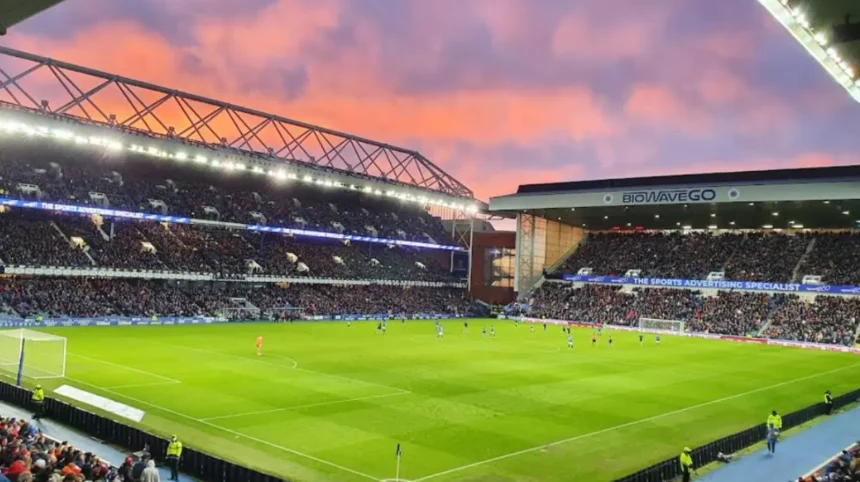
The 51,700 supporters inside Ibrox Stadium create an intense environment that acts as an economic and psychological home advantage. Statistical data shows that Rangers consistently capture the vast majority of available home points during championship seasons.
Impact on Opposition Performance
The extreme acoustic levels generated by home supporters disrupt the communication networks of visiting squads during high-pressure moments. Visiting teams from smaller municipal regions face immense psychological pressure, which often results in early defensive errors or low passing completion rates. This hostile environment allows Rangers to establish early dominance in home fixtures, reducing the likelihood of dropping points against lower-ranked opponents.
Pressure on the Home Squad
While vocal support lifts the team, the immense expectations from the local crowd can turn into an obstacle during prolonged scoring droughts. If the team fails to score within the opening 30 minutes of a match, the tension in the stands increases visible anxiety on the pitch. Players must possess elite psychological resilience to block out crowd frustration and execute complex tactical combinations under intense scrutiny.
How Will the Old Firm Derbies Decide the Title?
The four annual head-to-head fixtures against Celtic Football Club directly account for a potential 12-point swing in the final standings. Historical league data proves that the club winning the head-to-head series secures the league title in the vast majority of seasons.
Tactical Adjustments in Derbies
The extreme physical demands and historical rivalry of the Old Firm match demand a deviation from standard league tactics. High-pressing systems are refined to focus on specific opposition defensive triggers, reducing the risk of leaving space open for counter-attacks. Control of the central midfield zone via defensive duels and second-ball recoveries determines which side controls the overall tempo of the game.
Discipline and Variance Factors
Matches between these historic rivals feature high card counts and frequent video assistant referee interventions. Managing emotional discipline is crucial, as picking up a red card drastically reduces the probability of winning an elite match. Managing defensive set-pieces and minimizing individual errors under intense pressure are the ultimate differentiating factors in these high-stakes games.
What Obstacles Exist Outside of the Top Rivals?
Stiff tactical opposition from mid-tier clubs like Heart of Midlothian, Motherwell, and Aberdeen represents a constant threat to title consistency. Dropping points in away fixtures against defensive low-blocks undermines the progress made in major head-to-head derbies.
Breaking Down Low-Block Formations
Outside the top matchups, opposition managers routinely deploy ultra-defensive tactical shapes designed to deny central space. These teams concede possession, often holding under 30 percent of the ball, to pack the penalty area and preserve a draw. Rangers must find ways to break down these dense defensive structures using quick, horizontal passing sequences and high crossing volumes without opening themselves up to counter-attacks.
Pitch Variations and Geographical Challenges
Away fixtures introduce difficult environmental variables, including tight pitch dimensions and harsh weather conditions. Synthetic surfaces or poorly maintained grass fields slow down the ball, hindering fluid, one-touch passing styles. To navigate these tricky away fixtures successfully, the squad must shift away from purely technical build-ups toward a more physical, direct aerial approach.
How Do European Commitments Affect Domestic Form?
Navigating continental fixtures in modified UEFA competitions increases squad fatigue and muscle injury risks significantly. Managing the squad through Thursday-to-Sunday transition cycles represents a major challenge for the coaching staff.
Logistics and Recovery Protocols
Traveling long distances across Europe shortens the essential physical recovery window before the next domestic kickoff. The medical team relies on advanced sports science tools, such as cryotherapy chambers and real-time biometric tracking, to monitor player fatigue levels. Players displaying high fatigue metrics must be rested to prevent soft-tissue injuries during demanding stretches of winter fixtures.
Balancing Squad Rotation
The manager must regularly rotate multiple starting players to keep the squad fresh for domestic league matches. Making heavy changes risks breaking up team chemistry and dropping critical points against highly motivated opponents. Success requires building a balanced squad where backup players can execute the tactical game plan without a drop-off in overall quality.
What Are the Long-Term Implications of the Championship Outcome?
Securing the league title unlocks direct qualification into the lucrative UEFA Champions League group stage, yielding massive baseline revenue. Conversely, a runner-up finish locks the club into difficult qualification rounds, delaying long-term financial growth.
Financial Growth vs. Austerity Cycles
The massive financial gap between premier elite European participation and secondary European tournaments shapes the club’s long-term spending power. Securing regular elite European revenue allows the board to invest heavily in modern training facilities and expand global scouting networks. Missing out on these funds forces a shift toward a developmental model, requiring the club to sell its top young talents early to balance the books.
Footballing Reputation and Player Recruitment
Winning trophies elevates the club’s profile, making Ibrox an attractive destination for top international prospects and proven top-flight players. The prestige of competing for league titles and playing in elite European competitions provides strong leverage during transfer negotiations. Missing out on championships reduces the club’s pull, making it harder to attract elite talent and widening the gap with rivals.
What Historical Trends Define This Title Race?
Rangers holds a historic record for domestic league championships, demonstrating a long history of bouncing back from competitive setbacks. Over multiple decades, the club has consistently averaged high points-per-game returns following a trophyless campaign.
Historical Response Mechanisms
Analyzing past recovery seasons shows that Rangers consistently responds to disappointing campaigns by restructuring the football operations department. These adjustments usually involve moving on from underperforming players and lowering the average age of the first-team squad. This historical pattern reveals a club culture engineered to quickly return to a standard of winning trophies.
Domination Profiles of the Top Flight
For the past several decades, every single Scottish league title has been captured by either Rangers or Celtic. This intense duopoly creates a unique psychological environment where second place is viewed as a total failure within the city of Glasgow. This historical reality fuels an unrelenting drive for excellence, meaning the entire club structure is single-mindedly focused on overcoming their cross-town rivals.
How Does Sports Science Influence the Title Chase?
The deployment of data-driven sports science networks monitors player workloads across approximately 50 annual matches to maximize performance. These advanced systems track individual player metrics to keep key starters performing at their peak during the spring run-in.
GPS Tracking and Load Monitoring
Every first-team player wears integrated global positioning system trackers during daily training sessions and competitive matches. These units collect key metrics like total sprint distance, acceleration rates, and metabolic power output. If a player exceeds their customized training threshold, the coaching staff adjusts their workload to lower the risk of soft-tissue injuries.
Nutritional Protocols and Recovery Analytics
Post-match recovery windows are tightly managed using structured nutritional strategies designed to restock glycogen levels quickly. Sleep tracking and hydration testing provide the medical staff with precise data on how well each player is recovering. These meticulous protocols ensure that the team can maintain a high-intensity pressing game even during the most demanding parts of the fixture list.
What Recruitment Strategies Form the Squad?
The scouting network focuses heavily on data analytics to identify undervalued players aged 20 to 24 in secondary European and South American leagues. This model prioritizes high athletic upside and strong resell value to build long-term financial sustainability.
Data-Driven Scouting Profiles
The recruitment team uses advanced metrics like expected goals, progressive pass numbers, and defensive duel success rates to screen potential signings. This analytical approach uncovers top talent playing in less-scouted divisions, such as the Belgian Pro League or the Austrian Bundesliga. By focusing on overlooked markets, the club can secure high-quality players before their market valuations skyrocket.
The Player Trading Model
This transfer strategy relies on developing young talent and selling them at a premium to self-fund future investment cycles. To keep the team competitive, the scouting department must identify and line up replacements a full year before a star player is sold. Executing this player trading model flawlessly allows Rangers to continuously upgrade squad quality while maintaining total financial stability.
Summary of Title Probability Factors
The following outline identifies the primary variables that dictate the final league placement for Rangers Football Club.
- Derby Performance Index: The total points accumulated from the four head-to-head fixtures against Celtic Football Club.
- Squad Rotational Efficiency: The ability of secondary roster players to secure victories during post-European fixture dates.
- Expected Goals Conversion: The efficiency of the central striking unit in converting low-probability attacking opportunities into verified domestic goals.
- Injury Prevention Metrics: The success of the medical department in keeping core spine players above high seasonal availability rates.
- Defensive Low-Block Resolution: The tactical capacity to break down ultra-dense, defensive setups deployed by bottom-six opponents in away environments.
How Will the League Split Affect the Final Push?
The final five matches of the domestic season bring the top six teams together into a high-stakes championship group. This crucial phase eliminates lower-ranked opponents, forcing the title contenders into a series of intense, back-to-back fixtures.
Structural Mechanics of the Split
After 33 rounds of matches, the table splits into two distinct sections of six teams each, with clubs only playing others in their respective halves. This sudden increase in competitive balance means title hopefuls face exclusively high-ranked opponents during the final weeks of the season. The concentration of difficult matches increases tactical pressure and eliminates any room for error during the title run-in.
Psychological Pressures of the Final Five
During these final five games, the intense media spotlight in Glasgow amplifies the pressure on every single pass, tackle, and tactical decision. With the margin for error effectively down to zero, teams must display immense mental toughness to get wins over the line. Staying calm and executing the game plan under this extreme pressure is what separates champions from runners-up.

What Does Success Look Like Beyond the Trophy?
While winning the league title is always the primary objective, true success requires building a modern, sustainable club infrastructure. Establishing a clear identity and a healthy financial model is vital for securing the long-term future of the institution.
Modernizing Football Operations
Long-term success requires creating a seamless pathway from the youth academy straight into the first-team squad. Investing in top-tier coaching and modern analytics tools ensures that homegrown talent can smoothly step into the senior setup. This focus on youth development reduces reliance on expensive transfer windows and aligns the club with the best modern sporting models.
Securing Global Brand Stability
Consistently performing well both at home and in European competitions expands the club’s commercial reach into lucrative international markets. Increased global visibility drives higher merchandise sales and attracts lucrative corporate partnerships. This steady commercial growth creates a stable financial foundation, ensuring the club can compete at the highest level for years to come.
What are the current odds for Rangers winning the Scottish Premiership title?
Rangers Football Club currently holds second-favorite status in most betting markets at odds of 15/8, behind Celtic Football Club at 8/11. These odds imply that Rangers has roughly a 34.8 percent probability of winning the league title.