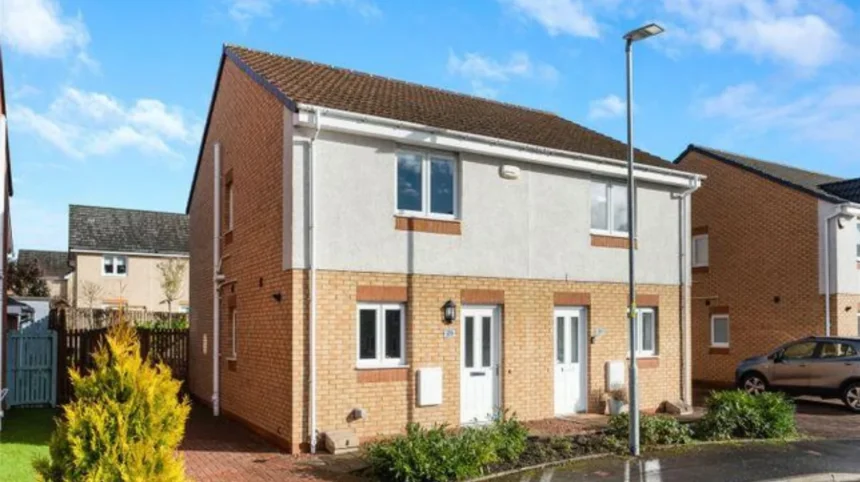
Cambuslang is a town in South Lanarkshire located immediately southeast of Glasgow. Its combination of rail access, road connections, established residential neighbourhoods and proximity to Glasgow makes it relevant to buyers who work in the city. Property investment decisions in Cambuslang depend on purchase price, property type, rental demand, transport access, running costs, taxation and long-term housing conditions.
- Why is Cambuslang attractive to Glasgow commuters?
- What is the Cambuslang property market like?
- Which types of property are available in Cambuslang?
- How strong is Cambuslang’s rail connection to Glasgow?
- How does Cambuslang compare with Glasgow for property costs?
- Does Cambuslang have rental demand from Glasgow workers?
- Which Cambuslang locations matter most to property investors?
- How does planning affect property investment in Cambuslang?
- What taxes and regulations apply to a Cambuslang investment property?
- What are the main risks of investing in Cambuslang property?
- What should Glasgow commuters check before buying an investment property in Cambuslang?
- What does Cambuslang’s population and housing growth indicate?
- Is Cambuslang suitable for long-term property investment?
- What is the overall property investment picture for Glasgow commuters?
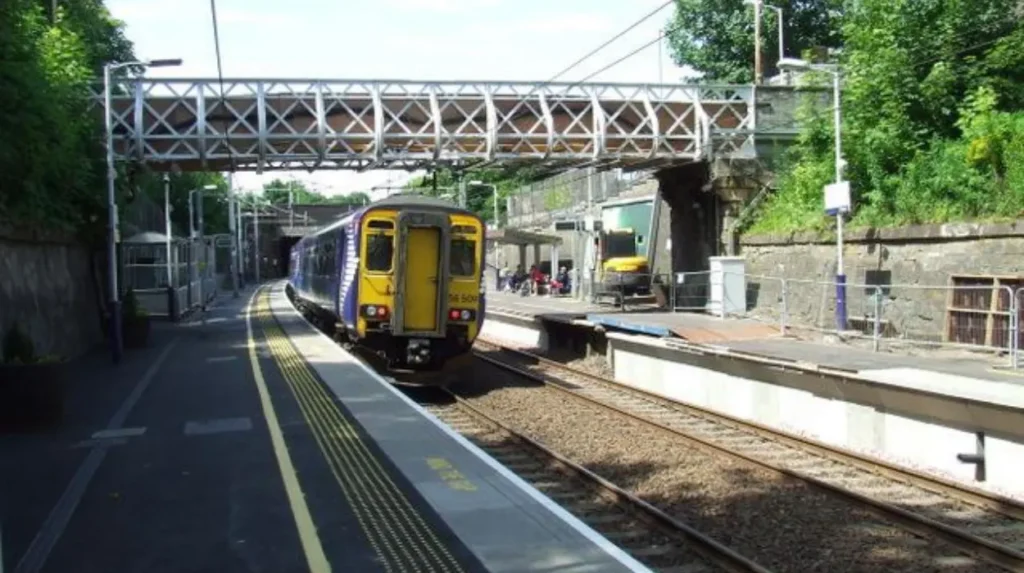
The area has a strong commuter profile because Cambuslang railway station provides direct services to Glasgow Central. ScotRail states that the average train journey from Cambuslang to Glasgow Central takes about 12 minutes, with up to 109 trains per day listed on its journey information. Cambuslang also connects to Glasgow’s road network through routes including the A724 and M74.
Property values vary substantially by housing type and neighbourhood. Recent Registers of Scotland transaction data reproduced by Rightmove shows an overall Cambuslang average sold price of £260,903 over the last year. Semi-detached properties averaged £271,750, detached homes £342,685 and flats £125,593. These figures describe completed transactions rather than asking prices.
Why is Cambuslang attractive to Glasgow commuters?
Cambuslang is attractive to Glasgow commuters because it combines a short direct rail journey with established housing, local services and road access. Its location southeast of Glasgow gives residents access to Glasgow employment while retaining a distinct South Lanarkshire residential environment.
Cambuslang’s main commuter advantage is its railway connection. The direct service to Glasgow Central removes the need for a train change on the core journey. The average journey time published by ScotRail is approximately 12 minutes.
Glasgow Central is one of Scotland’s principal railway stations and provides access to the city centre employment area, shopping district and wider rail network. For workers whose employment is concentrated around central Glasgow, the Cambuslang rail connection is therefore an important housing factor.
Road connectivity provides another commuter route. Cambuslang is linked to the A724 Cambuslang Road and the M74 motorway network. Transport Scotland identifies the Cambuslang Road junction as an important connection for traffic travelling between Cambuslang, Rutherglen and the M74.
The commuter proposition is not limited to transport. South Lanarkshire Council describes Cambuslang as having shops, restaurants, pubs, dental practices, opticians, a post office and nearby supermarket provision. Cambuslang Gate includes a library and GP surgery.
This combination reduces dependence on Glasgow for everyday services. A property buyer therefore assesses Cambuslang as both a residential market and a commuter location.
What is the Cambuslang property market like?
Cambuslang has a mixed residential property market covering flats, terraced houses, semi-detached properties and detached homes. Recent recorded sales show substantial price differences between these categories, creating different entry points for homeowners and property investors.
Rightmove’s current Cambuslang sold-price data, based on Registers of Scotland records, places the overall average at £260,903 for the latest year covered. The same dataset records an average of £125,593 for flats, £271,750 for semi-detached properties and £342,685 for detached properties.
These figures demonstrate why a single Cambuslang average price does not describe every investment opportunity. A flat close to the railway station has a different financial profile from a family house in a suburban neighbourhood.
The latest data also records a 7% increase in Cambuslang historical sold prices over the preceding year and states that prices were 20% above the 2023 peak recorded in that dataset. Property price statistics must be interpreted according to the transaction period and property mix because individual neighbourhoods can perform differently.
South Lanarkshire provides a wider market comparison. The Office for National Statistics reported a provisional average house price of £185,000 for South Lanarkshire in July 2026, compared with £178,000 in July 2025. That represented a 4.1% annual increase.
The South Lanarkshire average is not directly interchangeable with the Cambuslang figure because the two datasets cover different geographic areas and methodologies. Cambuslang is a specific local market, while South Lanarkshire covers the entire council area.
Which types of property are available in Cambuslang?
Cambuslang contains several established housing formats, including tenement flats, maisonettes, deck-access flats, four-in-a-block homes, multi-storey flats, terraces, semi-detached houses and detached houses. Each format serves different household and investment requirements.
South Lanarkshire Council’s local housing information identifies a broad mix of property types across Cambuslang. This diversity gives buyers several possible investment strategies.
Flats generally provide a lower purchase-price entry point. Recent sold-price data places the average Cambuslang flat substantially below the local average for houses. Flats can therefore suit buyers whose principal constraint is acquisition cost.
Terraced and semi-detached properties occupy another part of the market. They provide more internal space than many flats and attract households requiring multiple bedrooms. Their investment performance depends on purchase price, condition, local rents, garden or parking provision and proximity to transport.
Detached houses sit at the higher end of the local price spectrum. Their larger capital requirement changes the calculation for rental yield because rent does not necessarily increase in the same proportion as purchase price.
Property condition is also important. Older housing can require expenditure on roofing, windows, heating systems, insulation, kitchens and bathrooms. Modern properties can have different maintenance profiles but often command higher purchase prices.
For an investment purchase, the building itself matters as much as its postcode. A lower-priced property with significant repair requirements does not automatically represent a lower-cost investment.
How strong is Cambuslang’s rail connection to Glasgow?
Cambuslang has a direct railway connection to Glasgow Central with an average journey time of about 12 minutes. ScotRail lists up to 109 daily services on its Cambuslang-to-Glasgow Central journey information, supporting the area’s commuter function.
Cambuslang station is the central transport asset for buyers targeting Glasgow commuters.
The direct service is particularly relevant for workers whose destination is Glasgow Central or the surrounding city centre. A commuter can travel without changing trains, which simplifies the daily journey.
ScotRail’s published journey information gives an average Cambuslang-to-Glasgow Central journey time of approximately 12 minutes. The service page also lists early and late departures, although exact timetables vary by day and operating conditions.
Transport availability should be checked before buying a specific property. Distance from a property to Cambuslang station is different from the town’s general rail accessibility. A home several miles from the station has a different commuter proposition from one within a practical walking distance.
Station access also influences tenant preferences. Properties that combine rail convenience with local shops, schools and residential amenities can appeal to households seeking a balance between city employment and suburban living.
For property investors, transport access is therefore a location characteristic rather than a guarantee of rental performance.
How does Cambuslang compare with Glasgow for property costs?
Cambuslang provides a separate South Lanarkshire housing market next to Glasgow, with recent local transaction data showing lower entry prices for some property types than the wider Glasgow commuter market. Direct comparisons require identical property types and transaction periods.
Location alone does not establish a meaningful price advantage. A proper comparison considers property type, size, condition, tenure, parking, outdoor space and proximity to transport.
Cambuslang’s recent recorded average of £260,903 covers all property types in the available transaction dataset. Its flat average of £125,593 demonstrates the substantial difference between entry-level apartments and larger houses.
South Lanarkshire’s ONS average was £185,000 in July 2026. The difference between that figure and the Cambuslang sold-price average reflects geographic and methodological differences, including the composition of properties sold.
Glasgow itself contains a much wider range of neighbourhoods and property types. A city-centre flat, Victorian tenement, suburban semi-detached house and new-build apartment do not form a single comparable investment product.
For a commuter investor, the relevant comparison is often between specific properties rather than whole local-authority averages. A buyer should compare the total acquisition cost, expected rent, travel access and property condition for equivalent homes in Cambuslang and selected Glasgow neighbourhoods.
Does Cambuslang have rental demand from Glasgow workers?
Cambuslang’s direct rail connection, local services and housing variety create conditions relevant to commuter rental demand. Rental performance still depends on achievable local rent, property type, tenant profile, operating costs, supply and the individual property’s location.
Rental demand is influenced by employment accessibility. Cambuslang provides direct rail access to Glasgow Central and road links toward the city, making the area relevant to people who work in Glasgow but prefer to live outside the city boundary.
The local housing stock also supports different tenant profiles. One-bedroom flats can appeal to single professionals and couples. Two-bedroom flats and houses can appeal to couples, small families and professional sharers. Larger houses target households requiring additional bedrooms and outdoor space.
South Lanarkshire Council’s housing information records low availability of one-bedroom and amenity properties, reasonable availability of two-bedroom flats, limited availability of houses with two or more bedrooms and high demand for ground-floor homes within its local housing context.
Council housing demand does not equal private rental demand. The figures therefore provide local housing context rather than a direct forecast of private investment returns.
A private investor should obtain current rental evidence for comparable properties. Asking rents, achieved rents, letting periods and incentives provide more useful evidence than a headline regional average.
Rental yield is calculated by dividing annual rent by the purchase price and multiplying by 100. Net yield requires additional deductions for management, maintenance, insurance, vacancy, factoring, tax and financing costs.
Which Cambuslang locations matter most to property investors?
Cambuslang contains distinct residential areas including Cambuslang Central, Kirkhill, Cairns, Cathkin, Eastfield, Overton, Springhall, Westburn, Whitlawburn and other local communities. Investment analysis should assess each property’s transport access, housing stock and local services individually.
South Lanarkshire Council identifies 11 Cambuslang letting areas in its housing information. These include Borgie and Kirkhill, Cairns, Cambuslang Central, Cathkin, Dechmont and Lightburn, Eastfield, Overton, Springhall, Wellshot and Silverbanks, Westburn and Whitlawburn.
These areas do not have identical housing characteristics.
Cambuslang Central provides direct access to town-centre services and the railway connection. Kirkhill has established residential housing and its own railway station serving the wider area. Cathkin and other southern or eastern residential areas have different housing layouts and transport patterns.
The practical investment question is therefore not simply whether Cambuslang is suitable. It is whether a particular property provides a strong combination of purchase price, condition, transport access and rental appeal.
Walking distance also matters. Two properties in the same postcode area can have very different practical access to a station, supermarket, school or bus route.
Investors should inspect the immediate street and surrounding properties rather than relying only on a town-wide property statistic.
How does planning affect property investment in Cambuslang?
Planning policy affects Cambuslang investment through decisions about housing development, land use, infrastructure, environmental constraints and regeneration. South Lanarkshire Council’s Local Development Plan 2 currently guides development decisions while Local Development Plan 3 is being prepared.
South Lanarkshire Council adopted Local Development Plan 2 on 9 April 2021. The plan guides where development can take place across the council area and includes policies and maps covering housing, business, minerals, renewable energy and environmental considerations.
The plan includes settlement mapping for the Cambuslang and Rutherglen area. This makes planning information relevant when assessing future development around an investment property.
New housing development can affect an investment market in several ways. Additional homes increase housing supply and introduce new property types. New infrastructure can improve an area’s accessibility and services. Development activity can also change the character and demand profile of individual locations.
An investor should therefore examine planning applications near a property before completing a purchase. Proposed housing, roads, commercial development, infrastructure works and changes in land designation can all affect future conditions.
Planning is especially important for buyers considering redevelopment or extensions. Planning permission, building standards, title restrictions and local policy determine what can legally be changed.
What taxes and regulations apply to a Cambuslang investment property?
Buying an investment property in Cambuslang involves Scottish property taxation and private-renting regulations. LBTT and the Additional Dwelling Supplement can apply to purchases, while landlords must comply with registration, tenancy, safety and property-management requirements.
Land and Buildings Transaction Tax, known as LBTT, is Scotland’s property transaction tax. The Scottish Government states that the Additional Dwelling Supplement, or ADS, can apply when a buyer purchases an additional residential property such as a rental property.
The Scottish Budget for 2026-27 states that ADS remains at 8% for relevant residential transactions of £40,000 or more. Standard LBTT rates and bands also remain at their stated levels.
The tax calculation depends on the buyer’s circumstances and property value. Buyers should use the current Revenue Scotland calculator before committing to a purchase.
Private landlords also need to comply with Scottish landlord registration rules. The Scottish Government states that renting out property without being registered with the relevant council is a criminal offence and can result in a fine of up to £50,000.
Most new residential tenancies are Private Residential Tenancies under the Private Housing (Tenancies) (Scotland) Act 2016. These tenancies are open-ended and provide statutory rights and responsibilities for landlords and tenants.
Additional requirements apply to property condition, safety, deposits, repairs and tenancy administration. Investors should therefore calculate regulatory and management costs before assessing returns.
What are the main risks of investing in Cambuslang property?
Cambuslang property investment carries risks linked to interest rates, purchase prices, rental income, maintenance, taxation, vacancy, regulation and local market changes. Strong transport connectivity does not eliminate these risks or guarantee capital growth or rental yield.
The first risk is purchase price. Paying above a property’s sustainable market value reduces the potential financial return from rent and future resale.
The second risk is financing. Mortgage rates affect monthly costs and therefore influence the difference between rental income and expenditure. Investors using high leverage have greater exposure to changes in borrowing costs.
The third risk is maintenance. Older properties can require substantial expenditure. Roofs, heating systems, windows, electrical installations and common areas can create unexpected costs.
The fourth risk is vacancy. A property without a tenant produces no rental income while still generating mortgage, insurance, council-related and maintenance costs.
The fifth risk is regulation. Scottish private-rental legislation continues to develop. Investors must monitor changes affecting rent, tenancy management, property standards and landlord responsibilities.
The sixth risk is local competition. New housing can increase the number of rental properties available to tenants. Investment performance therefore depends on the specific property’s quality and position within the local market.
These risks apply across residential property investment and should form part of a complete financial assessment.
What should Glasgow commuters check before buying an investment property in Cambuslang?
A Cambuslang investment assessment should combine purchase price, comparable rents, rail and road access, property condition, local planning, taxation, financing and operating costs. The strongest evidence comes from comparable transactions and current rental listings for similar properties.
The first check is the property’s actual market value. Recent completed sales provide stronger evidence than asking prices.
The second check is rent. Investors should compare properties with the same bedroom count, property type, condition and transport access.
The third check is station access. A property marketed toward Glasgow commuters needs a practical journey to the railway station or a reliable alternative transport connection.
The fourth check is property condition. A professional survey identifies defects that affect the purchase decision and future expenditure.
The fifth check is taxation. The buyer should calculate LBTT, ADS where applicable, legal costs, mortgage fees and other acquisition expenses.
The sixth check is operating expenditure. This includes insurance, factoring where relevant, maintenance, management fees, compliance costs and periods without tenants.
The seventh check is planning. South Lanarkshire Council’s development plans and planning application records provide information about development around the property.
The eighth check is exit demand. Investors should consider who would buy the property later, not only who would rent it today.
What does Cambuslang’s population and housing growth indicate?
South Lanarkshire has experienced long-term population and housing growth, providing important regional context for Cambuslang. The council area had 334,330 residents in mid-2025 and 160,843 dwellings in 2025, according to National Records of Scotland.
National Records of Scotland reported a South Lanarkshire population of 334,330 on 30 June 2025. This represented a 0.4% increase from 2024. Between 2001 and 2025, the council area’s population increased by 10.6%.
The same NRS data records 160,843 dwellings in South Lanarkshire in 2025. This was a 0.7% increase from 2024 and a 22.9% increase compared with 2001.
These figures provide council-area context rather than Cambuslang-specific population forecasts. They demonstrate that the wider area has experienced substantial long-term housing growth.
For investors, housing growth matters because supply influences market conditions. Population growth can support housing demand, while additional construction increases available supply.
The balance between these forces differs by neighbourhood and property type. An investor should therefore use local transaction and rental evidence rather than treating council-wide population growth as a direct prediction of property returns.
Explore More Area Guide
Best Areas in Glasgow for First-Time Buyers
Glasgow Property Prices vs Scotland: 2026 Trends
Is Cambuslang suitable for long-term property investment?
Cambuslang has characteristics that support long-term property analysis, including proximity to Glasgow, direct rail access, established neighbourhoods, varied housing stock and a growing South Lanarkshire population. Long-term performance still depends on purchase price, demand, costs and wider economic conditions.
Cambuslang’s strongest structural feature is its position within the Glasgow commuter area. The direct rail journey to Glasgow Central gives the town a clear connection with central Glasgow employment.
Its housing diversity also supports different buyer and tenant groups. Flats provide lower-cost entry points, while houses offer family accommodation and different resale markets.
Recent transaction data shows price movement within Cambuslang, while ONS data records annual growth across South Lanarkshire. These statistics establish recent market direction but do not guarantee future appreciation.
Long-term investors should focus on fundamentals that can be measured. These include transport access, property condition, rental affordability, local services, planning conditions, purchase price and recurring costs.
The investment case therefore rests on the individual property and its financial structure rather than the Cambuslang name alone.
What is the overall property investment picture for Glasgow commuters?
Cambuslang combines direct rail access to Glasgow Central, road connectivity, established housing and a broad range of property types. Its investment suitability depends on the relationship between purchase price, achievable rent, operating costs, taxation, property condition and commuter accessibility.
Cambuslang is a clearly defined Glasgow commuter market within South Lanarkshire. ScotRail’s approximately 12-minute average journey to Glasgow Central provides a significant transport connection.
The housing market offers multiple entry points. Recent sold-price data shows substantial differences between flats, semi-detached properties and detached houses. This creates different investment calculations for different budgets.
The wider South Lanarkshire market also shows population and dwelling growth. NRS recorded a 10.6% population increase between 2001 and 2025 and a 22.9% increase in dwellings over the same period.
Investment analysis must account for Scottish taxation and regulation. LBTT, ADS, landlord registration, private residential tenancy rules and property-management obligations all affect the financial outcome.
Cambuslang therefore works best as an investment location when the specific property is assessed against comparable sales, achievable rents, transport access, maintenance requirements and total ownership costs. The commuter connection is an important market characteristic, but the financial performance of an individual property remains determined by its purchase price, income, expenses and future market conditions.
Is Cambuslang a good place to invest in property?
Cambuslang has several investment-relevant features, including direct rail access to Glasgow Central, established residential areas, varied housing stock and proximity to Glasgow. Investment performance depends on the individual property’s purchase price, rent, condition, taxation and ongoing costs.