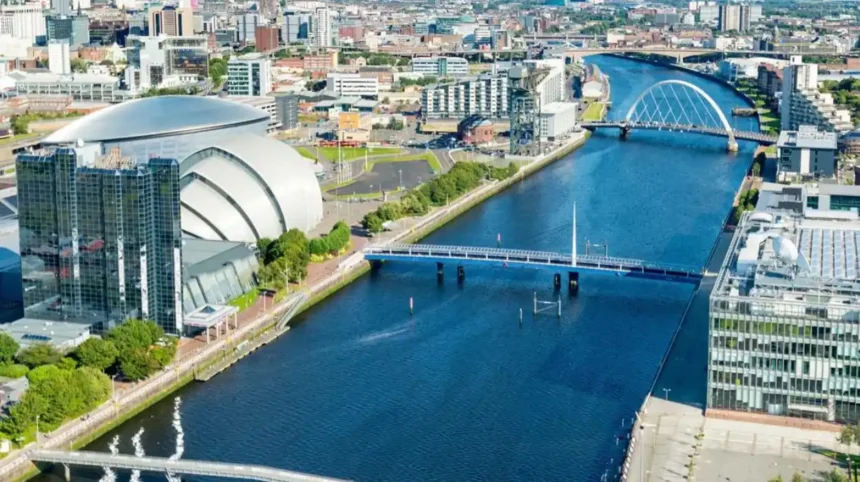
Glasgow is Scotland’s largest city and one of the UK’s major centres for education, healthcare, finance, technology, culture and professional services. It combines a large urban economy with established residential neighbourhoods, universities, extensive public transport and a substantial international population.
- What is Glasgow like for expats moving from outside the UK?
- How international is Glasgow for people arriving from overseas?
- What immigration rules apply when moving to Glasgow from outside the UK?
- What is housing like for expats in Glasgow?
- What are Glasgow neighbourhoods like for expats?
- How does healthcare work for expats living in Glasgow?
- How does taxation work for expats living in Glasgow?
- What is everyday life like in Glasgow for international residents?
- What is work and professional life like in Glasgow for expats?
- What is education like for expat families in Glasgow?
- What should expats arrange after arriving in Glasgow?
- How is Glasgow likely to change as more people move there from overseas?
- What should expats know before choosing Glasgow as their new UK home?
For an expat moving from outside the UK, Glasgow involves more than choosing a home. Immigration status, employment, housing, healthcare, taxation, transport, education and local administration all operate within the Scottish and UK systems.
Glasgow City had a population of 622,800 in mid-2022, making it Scotland’s largest council area by population. National Records of Scotland projects the population to reach 690,161 by 2032, with migration accounting for most of the projected growth.
Scotland also has a substantial overseas-born population. The 2022 Census recorded 554,900 people in Scotland who were born outside the UK. Poland, India and Pakistan were the three most common non-UK countries of birth.
What is Glasgow like for expats moving from outside the UK?
Glasgow is a large, internationally connected Scottish city with established immigrant communities, universities, diverse employment sectors, extensive public services and varied neighbourhoods. Expats encounter Scottish institutions within the wider UK immigration system, alongside distinctive Scottish taxation, education, healthcare and housing arrangements.
Glasgow has a strong urban identity shaped by its industrial history, universities, migration and cultural institutions. The city developed rapidly during the Industrial Revolution through shipbuilding, engineering, manufacturing and international trade.
Its economy has since shifted substantially toward services, education, healthcare, finance, technology, tourism, retail and creative industries. The city remains an important employment centre for western Scotland.
Glasgow’s population structure also supports an international environment. National Records of Scotland reports that the 25–44 age group was the largest age group in Glasgow City in 2025, with 229,260 people.
For an international resident, the city therefore combines a large student population, established professional communities, families, long-term residents and people arriving from other parts of the UK and overseas.
Glasgow is also geographically compact compared with many major international cities. Central districts connect with surrounding residential areas through rail, subway and bus services. This gives residents several options for living outside the immediate city centre while remaining connected to employment and education hubs.
How international is Glasgow for people arriving from overseas?
Glasgow has a substantial international population supported by universities, employment, migration and established communities. Scotland recorded 554,900 overseas-born residents in the 2022 Census, while Glasgow’s population continues to be shaped strongly by international and domestic migration.
International diversity is visible across Glasgow’s neighbourhoods, workplaces, universities, restaurants, shops and community organisations. The scale differs between districts, so the experience of an expat depends partly on where they live and work.
Scotland’s 2022 Census recorded more than half a million residents born outside the UK. The overseas-born population increased by 185,600 between 2011 and 2022.
The Census also recorded significant populations born in Poland, India and Pakistan, alongside residents born in many other European, African, Asian, Middle Eastern and American countries.
Glasgow’s universities contribute substantially to this international environment. International students create demand for accommodation, transport, restaurants, professional services and community activities.
Migration also remains an important demographic factor. In 2024–25, Glasgow City recorded 38,670 people moving into the council area and 34,770 moving out, producing net migration of 3,910 people. The 20–24 age group recorded the highest net migration at 5,439.
This demographic pattern is important for newcomers because Glasgow is not a city where international migration exists separately from everyday urban life. Overseas residents form part of the city’s wider population, employment and education systems.
What immigration rules apply when moving to Glasgow from outside the UK?
Immigration permission for Glasgow is governed primarily by UK Government rules rather than Glasgow City Council or the Scottish Government. Depending on nationality and purpose, an overseas applicant needs an appropriate work, study, family or other immigration route.
Scotland does not operate a separate visa system for people moving specifically to Glasgow. UK immigration law determines whether an overseas national can live, work or study in the city.
The appropriate route depends on nationality, purpose, length of stay and personal circumstances. GOV.UK identifies different immigration routes for people coming to the UK to work, study, visit or join family.
Common long-term routes include employment-based immigration, Student visas and family visas. The requirements, permitted activities and conditions differ by route.
A person coming to Glasgow for employment therefore needs to establish their immigration status before relocating. A student needs to meet the requirements of the relevant Student route. A person joining a qualifying family member uses the applicable family or dependant route.
Visa holders should also check the conditions attached to their specific permission. These conditions determine matters such as employment rights, study rights, duration of stay and eligibility for dependants.
The UK immigration system has also moved toward digital immigration records. Successful applicants increasingly receive an eVisa, which records immigration status digitally.
Immigration status should therefore be treated separately from the practical question of where to live in Glasgow. A tenancy, job offer or university place does not itself create UK immigration permission.
What is housing like for expats in Glasgow?
Glasgow offers apartments, traditional tenement flats, terraced houses, semi-detached homes and detached properties across central and suburban areas. Housing costs vary substantially by property type, location, size and transport access, while private renting remains an important entry route for newcomers.
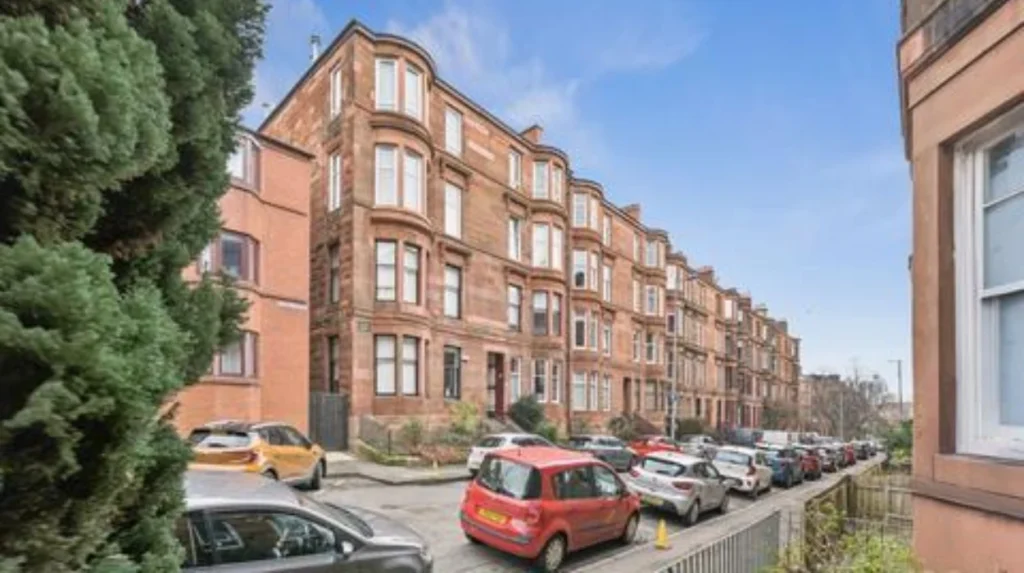
Glasgow has a distinctive housing stock. Traditional sandstone tenements are a major feature of established neighbourhoods. Modern apartment developments are concentrated in central and regenerated districts. Suburban areas contain terraces, semi-detached properties and detached houses.
The Office for National Statistics recorded an average Glasgow house price of £194,000 in July 2026. The figure was provisional and represented a 2.6% annual increase.
Average prices differed considerably by property type. In July 2026, average Glasgow prices were approximately £163,000 for flats and maisonettes, £249,000 for terraced properties, £305,000 for semi-detached properties and £502,000 for detached properties.
Private renting provides an important starting point for people who have not yet purchased property. Greater Glasgow, the broad rental market area covering the city, recorded an average private rent of £1,266 per month in August 2026.
Scottish tenancy arrangements also differ from England. Private residential tenancies in Scotland provide an open-ended tenancy structure rather than a fixed contractual end date in the traditional sense.
Scotland does not use England’s statutory right-to-rent checking system for private tenants. MyGov Scotland states that landlords in Scotland do not need to conduct the English-style right-to-rent check.
International tenants should still expect landlords or letting agents to request identification, evidence of income, bank information or references. A landlord can request a passport or driving licence and evidence that the tenant can afford the rent.
What are Glasgow neighbourhoods like for expats?
Glasgow contains distinct neighbourhoods with different housing types, transport connections, amenities and residential environments. Areas such as the West End, city centre, Southside, East End and North Glasgow provide different combinations of universities, employment access, housing and local services.
The West End includes areas such as Hillhead, Partick, Hyndland and Kelvinbridge. It has strong links to the University of Glasgow, the Subway network, restaurants, cafés, cultural venues and established residential streets.
The city centre provides direct access to major employment, shopping, entertainment and transport facilities. Accommodation includes modern apartments and converted buildings. Central living provides convenient access to Glasgow Central and Queen Street railway stations.
The Southside includes districts such as Shawlands, Pollokshields, Strathbungo and Govanhill. It contains a mixture of traditional tenements, independent businesses, restaurants, parks and community facilities.
The East End includes areas such as Dennistoun and Bridgeton. These districts provide access to the city centre and include traditional housing alongside regeneration and newer developments.
North Glasgow contains a mixture of residential communities, regeneration areas and access routes toward the northern suburbs.
The most suitable neighbourhood depends on practical factors rather than nationality alone. Employment location, university location, household size, rent budget, commuting requirements and access to schools or healthcare all influence housing decisions.
Transport access is particularly important because Glasgow’s rail and Subway networks connect specific corridors more directly than others.
How does healthcare work for expats living in Glasgow?
Healthcare in Glasgow is delivered through NHS Scotland, with access rules depending on immigration status and residence. New residents should register with a local GP after arrival and check their healthcare eligibility under UK immigration and Scottish NHS rules.
The National Health Service in Scotland is commonly known as NHS Scotland. Primary healthcare is delivered through local GP practices, while hospitals and specialist services operate through NHS health boards.
People moving to Scotland should register with a GP as soon as possible after arrival. MyGov Scotland specifically advises new residents to register with a local doctor and dentist.
The healthcare position for an overseas national depends on immigration status. Many visa applicants who require immigration permission for longer stays need to pay the Immigration Health Surcharge as part of the UK immigration process.
There are exemptions and different rules for particular immigration categories. NHS Inform identifies specific arrangements for international students, migrant workers and certain family members.
Emergency healthcare is available through NHS services. NHS 24 operates the telephone service on 111 for urgent healthcare advice when GP practices and pharmacies are closed.
Dental access operates separately from GP registration, so newcomers should identify a local dental practice as part of their initial settlement process.
International residents who need language support can ask their GP practice about interpreting services. NHS Inform states that patients can tell their GP practice which language they prefer when arranging an appointment.
How does taxation work for expats living in Glasgow?
Expats living in Glasgow can fall under Scottish Income Tax rules when they become Scottish taxpayers. The tax system applies through HMRC, while Glasgow residents also deal with local Council Tax administered by Glasgow City Council.
Scotland has its own Income Tax rates and bands for most non-savings and non-dividend income. HM Revenue & Customs administers the system.
A person who moves to Scotland during a tax year becomes a Scottish taxpayer when they live in Scotland for longer than anywhere else in the UK during that tax year. HMRC states that the relevant tax year runs from 6 April to 5 April.
The taxpayer should update HMRC with their new address when moving to or from Scotland. HMRC then determines the applicable tax treatment.
Council Tax is separate from Income Tax. It is a local property-based charge administered by the relevant Scottish council.
When moving into a property, residents need to register for Council Tax with the local authority.
One important Scottish difference concerns water and sewerage. For most households, Scottish Water charges are included within Council Tax rather than being billed separately in the same way as in England and Wales.
The final tax position for an individual depends on income, residency, employment and other personal circumstances. International residents with overseas income or assets require specific tax advice where relevant.
What is everyday life like in Glasgow for international residents?
Everyday life in Glasgow combines a major-city economy with established residential communities, universities, cultural venues, public transport, parks, restaurants and neighbourhood shopping. English is the dominant everyday language, while international communities contribute significantly to the city’s social and commercial life.
Glasgow has a strong concentration of cultural institutions. Museums, galleries, theatres, music venues, festivals and sporting facilities form part of the city’s urban infrastructure.
The city also has extensive retail and food provision. International restaurants, specialist food shops and community businesses reflect Glasgow’s diverse population.
Daily life varies considerably between the city centre and residential neighbourhoods. Central areas provide dense access to offices, shops, restaurants and entertainment. Residential districts generally provide quieter streets, local shops, schools and community facilities.
Weather is an important practical consideration. Glasgow has a cool maritime climate with frequent rainfall and relatively moderate seasonal temperature variation compared with many continental climates. New residents need suitable waterproof clothing and should expect changing conditions throughout the year.
Glasgow also has a strong public transport network. ScotRail operates suburban and regional railway services, while the Glasgow Subway provides an orbital underground connection through the city’s inner areas. Bus services cover wider residential districts.
The combination of rail, Subway and bus services makes transport planning an important part of choosing a neighbourhood.

What is work and professional life like in Glasgow for expats?
Glasgow has employment opportunities across financial services, healthcare, education, technology, engineering, professional services, retail, tourism and creative industries. International workers typically connect their immigration permission, professional qualifications and employment arrangements before starting work.
Glasgow’s historic industrial base created long-term expertise in engineering, manufacturing and shipbuilding. The modern economy has expanded into service-based and knowledge-intensive sectors.
The city has major universities and teaching hospitals, creating employment in education, research, medicine and related professional services.
Financial and professional services also form an important part of the metropolitan economy. Technology, digital businesses and creative industries contribute to the wider employment base.
International professionals should distinguish between having the right to work and having the qualifications required for a specific profession. Regulated occupations can require recognition or registration with a professional body.
Examples include healthcare professions, teaching and certain technical occupations. Requirements depend on the occupation and the country where qualifications were obtained.
Employment contracts also operate under UK employment law. Employees should review salary, working hours, annual leave, pension arrangements, probation periods and notice requirements before accepting employment.
For people arriving through an employment visa, the immigration route can impose additional conditions on the job or employer. UK Government immigration guidance should therefore be checked alongside the employment contract.
What is education like for expat families in Glasgow?
Glasgow provides state schools, independent schools, colleges and universities. School education is administered within Scotland’s education system, which differs from systems elsewhere in the UK, particularly in school-age classifications, qualifications and administration.
Families moving to Glasgow need to understand the Scottish school system before choosing accommodation.
Local authority schools generally operate according to catchment arrangements. The home address can therefore influence the school options available to children.
MyGov Scotland states that education services differ from the rest of the UK and that school enrolment uses Scottish school-age year categorisation and pupil-placement catchment areas.
Glasgow also has major higher education institutions, including the University of Glasgow, the University of Strathclyde and Glasgow Caledonian University.
International students form an important part of Glasgow’s higher education environment. Their presence contributes to demand for accommodation, transport, hospitality and specialist services.
Families arriving from outside the UK should also consider childcare, school holidays, transport arrangements and documentation when planning a move.
The education system should be researched before signing a long-term tenancy when school placement is a major household requirement.
What should expats arrange after arriving in Glasgow?
New arrivals should organise accommodation, immigration documentation, local registration, healthcare, banking, taxation, utilities, transport and employment administration. Completing these practical steps early creates the administrative foundation for living legally and efficiently in Glasgow.
The first priority is confirming immigration status and retaining access to the relevant digital immigration record.
The next step is establishing a permanent address. A tenancy agreement or property documentation can be required when accessing other services.
New residents should register for Council Tax after moving into their property.
A GP registration should follow soon after arrival. NHS Inform and MyGov Scotland provide guidance on finding and registering with local healthcare services.
Employment-related administration includes obtaining or confirming a National Insurance number where required, completing payroll documentation and understanding pension arrangements.
Banking is another practical priority. A UK bank account is useful for salary payments, rent, utility bills and regular household expenses. Banks establish their own identity and address requirements.
Utilities normally include electricity, gas where applicable, broadband and telecommunications. Scottish Water provides water and sewerage services for most homes, with charges generally incorporated into Council Tax.
Transport planning should be based on the exact home and workplace locations. A property with a lower rent can have different practical costs if it creates a longer commute.
Explore More Area Guide
Cambuslang Property Investment for Glasgow Commuters
Best Areas in Glasgow for First-Time Buyers
How is Glasgow likely to change as more people move there from overseas?
Glasgow’s population growth is closely connected to migration, and National Records of Scotland projects continued population growth through 2032. International migration is expected to remain a major component of population change in Scotland’s largest cities, including Glasgow.
National Records of Scotland projects Glasgow City’s population to rise from 622,050 in 2022 to 690,161 by 2032, an increase of 10.9%. Scotland as a whole is projected to grow by 4.4% over the same period.
The projection attributes a substantial part of Glasgow’s growth to migration. International migration is projected to be the largest driver of population increase in Glasgow among the main migration components.
This has practical implications for housing, transport, education, healthcare, employment and local services.
A larger international population also reinforces the importance of culturally diverse retail, food, education and community infrastructure.
For expats, the key point is that Glasgow already operates as an international city within Scotland’s national framework. Its future population profile is expected to remain strongly influenced by migration.
What should expats know before choosing Glasgow as their new UK home?
Expats choosing Glasgow need to evaluate immigration status, employment, housing, neighbourhood connectivity, healthcare, taxation, education and household costs together. Glasgow offers a large urban economy and international population, while Scottish institutions create administrative differences from other UK regions.
Glasgow is not simply a smaller version of another UK city. Its Scottish legal, tax, education and public-service structures influence everyday administration.
Immigration remains a UK Government responsibility. Local services such as Council Tax, education and healthcare operate through Scottish and local institutions.
Housing costs vary by neighbourhood and property type. The 2026 average Glasgow house price was £194,000, while Greater Glasgow private rents averaged £1,266 per month in August 2026.
Healthcare requires GP registration and depends on immigration status and applicable NHS rules.
Taxation requires attention to Scottish taxpayer status and HMRC records.
The city’s international character is supported by long-established communities, universities and continued migration. Scotland’s overseas-born population reached 554,900 in the 2022 Census, with Poland, India and Pakistan among the largest countries of birth outside the UK.
For an expat relocating from outside the UK, Glasgow therefore presents a combination of international urban life and specifically Scottish administration. Understanding those two dimensions before arrival provides the clearest framework for planning housing, work, education, healthcare and long-term settlement.
Is Glasgow a good city for expats?
Glasgow has a large international population, major universities, diverse employment sectors, extensive public transport and established multicultural communities. The city also offers varied housing options and access to Scotland’s public services.