

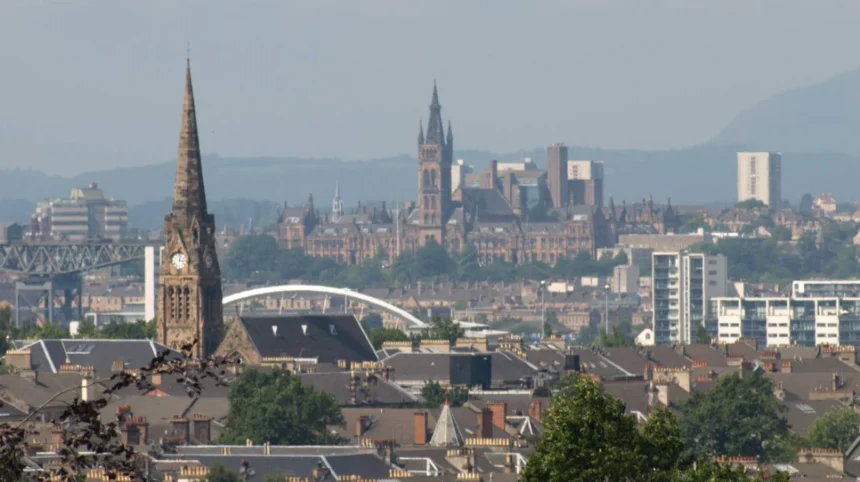
Sanctuary Scotland received approval for 46 new Glasgow social homes on Grange Road in the Southside area, establishing an energy-efficient amenity housing development specifically designed to provide independent living options for residents over the age of 55.
- Why Did Glasgow City Council Approve The Grange Road Application?
- How Does This Project Fit Into The Victoria Infirmary Masterplan?
- What Design Standards Mitigate Fuel Poverty In These Social Homes?
- What Is The Application Process For Sanctuary Scotland Social Housing?
- How Does Amenity Housing Support Independent Living For Older Residents?
- What Long-Term Impact Will This Housing Project Have On Glasgow?
The project represents a targeted urban intervention on a long-vacant brownfield site located within the Battlefield neighborhood. Sanctuary Scotland Housing Association Limited, a registered social landlord managing over 9,000 properties across Scotland, oversees the delivery of these residential units. The site layout consists of two five-storey blocks and a third building featuring four wings that range from five to seven storeys in height.
The primary allocation model centers on social rent, offering long-term tenancy agreements with below-market rents to eligible applicants. All 46 properties are designated as amenity housing, meaning they incorporate specialized design modifications like lift access, level-access floor plans, and secure entry systems to assist aging individuals.
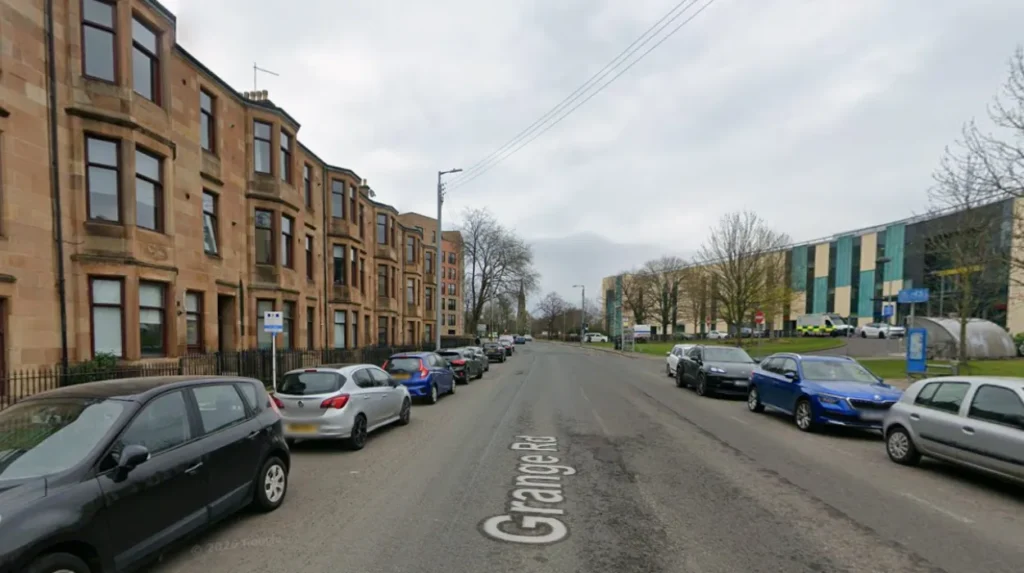
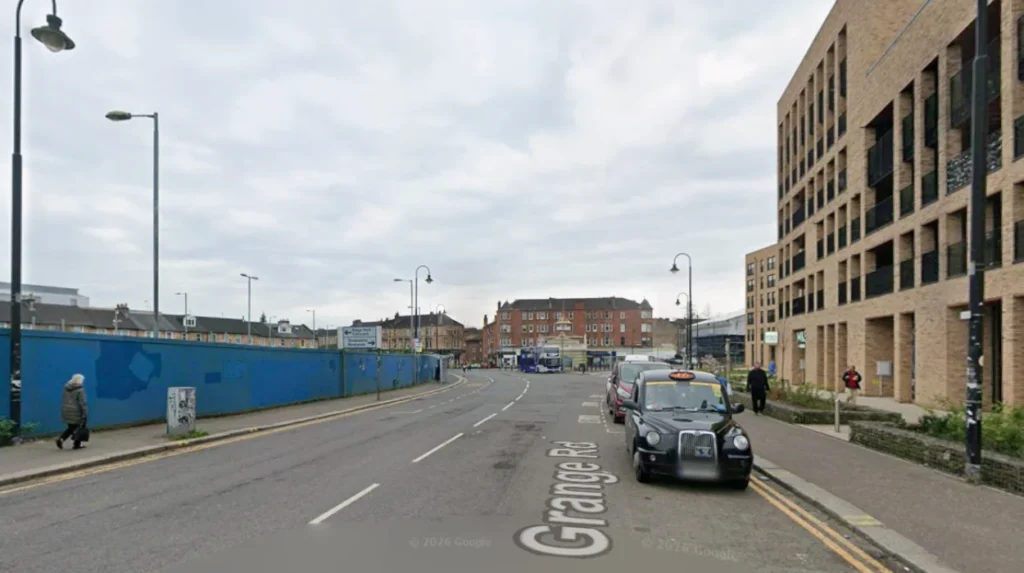
The development site occupies the former Queen’s Park School grounds, which have remained mostly unused since 2019 following a period operating as a temporary car park. Demolition of the original secondary school structures occurred in phases between 1995 and 2006. By constructing new housing infrastructure on this land, the project removes an urban blight while expanding the localized supply of dedicated senior accommodation.
Why Did Glasgow City Council Approve The Grange Road Application?
Glasgow City Council approved the Grange Road application because the revised plan increases high-quality social housing stock, satisfies the National Planning Framework 4 guidelines, remediates unused brownfield land, and causes no adverse impact on nearby historical elements.
The municipal planning department initially reviewed a 36-home iteration of this scheme in February 2024. Sanctuary Scotland subsequently submitted a revised planning application increasing the total yield to 46 units. Planning officers concluded that adding 10 apartments would not overwhelm local public services or detract from neighborhood amenities.
A central factor in the local authority’s decision is the acute municipal housing crisis. Glasgow City Council officially declared a housing emergency due to unprecedented pressures on temporary accommodation, rising private sector rents, and a deficit in affordable properties. The introduction of 46 social rent units helps alleviate this pressure within the Southside district, where affordable options remain limited.
The decision directly aligns with the strategic objectives of Scotland’s National Planning Framework 4. This legislative document mandates sustainable development by prioritizing infill construction over greenfield expansion. Because the Grange Road plot features high public transport accessibility links, including nearby regular bus corridors and commuter rail connections at Crossmyloof and Queens Park stations, the local authority validated the reduction of resident car parking spaces down to 14 bays.
Architectural compatibility with local heritage assets also influenced the positive planning assessment. The site rests near historical landmarks, specifically the B-listed Battlefield Rest building and the official perimeter of the 1568 Battle of Langside. Planning officers confirmed that the structural massing of the five-storey and seven-storey blocks avoids significant visual impairment to these historic settings. Sanctuary Scotland agreed to integrate public art within the planned open spaces to commemorate the local history.
How Does This Project Fit Into The Victoria Infirmary Masterplan?
This project fits into the Victoria Infirmary masterplan by acting as a specialized senior-living extension that complements the broader mixed-tenure regeneration of the adjacent former hospital grounds to create a balanced, multi-generational community.
The Grange Road development functions as a critical component of the wider masterplan for the former Victoria Infirmary site, an expansive regeneration project spearheaded by Sanctuary Scotland. The historic hospital closed its doors in 2015, leaving a large footprint in the Battlefield area. Sanctuary Scotland acquired the site to deliver hundreds of homes using a mixed-tenure framework that blends private sales, mid-market rent properties, and social housing units.
Integrating diverse tenures prevents the monocultural concentration of single housing types, which urban planners associate with long-term socioeconomic vulnerability. The first phases of the Victoria Infirmary revival delivered standard family apartments and restored historic facades. The Grange Road addition fills a specific demographic niche by dedicating its entire capacity to individuals aged 55 and over.
The geographical integration connects the old school site to the newly formed residential streets via public realm improvements. These enhancements include new pedestrian paths, uniform street furniture, and shared open spaces. By positioning senior amenity housing adjacent to general-population housing, the masterplan establishes a multi-generational neighborhood model where older residents retain access to localized community support networks.
The spatial configuration provides dual-purpose green areas. The development plan incorporates a private communal garden for the immediate residents alongside a separate, publicly accessible green space. This design approach links the development with the surrounding Battlefield community, preventing the isolation of the senior housing blocks while extending urban greenery across the entire masterplan zone.
What Design Standards Mitigate Fuel Poverty In These Social Homes?
The design standards mitigate fuel poverty in these social homes through enhanced thermal insulation, high-performance double glazing, low-carbon communal heating loops, and architectural configurations maximizing passive solar gain.
Social housing providers must comply with the Energy Efficiency Standard for Social Housing set by the Scottish Government. To exceed these base requirements, Sanctuary Scotland utilizes a fabric-first approach to construction. This methodology prioritizes the performance of the building envelope over add-on technologies, ensuring structural longevity and predictable energy performance.
The structural panels feature thick layers of high-density insulation within the wall cavities, floors, and roof structures. This insulation minimizes thermal bridging, which is the movement of heat across object interfaces. By maintaining an airtight building fabric, the units retain internal heat energy, significantly reducing the kilowatt-hour demand needed to keep living spaces at a comfortable temperature.
Windows and external doors utilize argon-filled double glazing housed in draft-proof frames. This configuration blocks cold air infiltration from the exterior while capturing solar radiation. The architectural orientation of the buildings maximizes natural daylight exposure, lowering the electrical load requirements for artificial illumination and providing natural thermal input during daylight hours.
Space heating and domestic hot water generation rely on low-carbon centralized heating infrastructure rather than individual fossil-fuel boilers. These systems utilize communal air-source heat pumps or high-efficiency district networks to distribute heat through insulated piping. This collective utility model lowers the carbon footprint per household and insulates older tenants on fixed incomes from the volatile price spikes of the retail gas market.
What Is The Application Process For Sanctuary Scotland Social Housing?
The application process for Sanctuary Scotland social housing requires individuals to submit a detailed housing application form, undergo a formal points-based needs assessment, provide verifying documentation, and receive a property match through designated allocation channels.
Applicants seeking tenancy within Sanctuary Scotland properties must register their details through the organization’s centralized housing portal or via the local common housing register system. Because allocation policies vary by local authority area, Sanctuary Scotland works in partnership with Glasgow City Council to fill vacancies using nomination agreements alongside its internal waiting lists.
The framework assesses submissions according to an objective points-based system that quantifies housing need. Points are awarded across specific vulnerability categories, including medical requirements, current overcrowding, threat of homelessness, and localized social factors. Amenity housing blocks, such as the Grange Road development, require applicants to meet the minimum age threshold of 55 and demonstrate an operational need for accessible features.
The verification phase requires applicants to provide official proof of identification, income statements, and a comprehensive tenancy history. Sanctuary Scotland housing officers review these documents to confirm eligibility under social housing regulations. Background checks ensure applicants do not hold outstanding housing debt or active anti-social behavior orders that would invalidate their registration.
Once an applicant reaches the top of the selection queue based on cumulative points, an official offer of tenancy is extended. If the applicant accepts the property, they execute a Scottish Secure Tenancy agreement. This legal contract grants long-term security of tenure, protecting the resident from arbitrary eviction and establishing clear statutory rights regarding rent adjustments and property maintenance.
Explore More Area Guide
How to Get University Hospital Hairmyres Photos in Glasgow: Essential Guide
Smart Ways To Get East Dunbartonshire Parking Charges In Glasgow
How Does Amenity Housing Support Independent Living For Older Residents?
Amenity housing supports independent living for older residents by removing physical architectural barriers, integrating universal access layouts, incorporating emergency communication infrastructure, and locating properties close to essential neighborhood service networks.
The physical design of amenity housing differs from standard residential stock by eliminating steps, narrow thresholds, and tight internal radiuses. The Grange Road buildings feature level-access entryways and modern passenger elevators serving every floor level. This enables residents with limited mobility, or those using assistive mobility devices like wheelchairs and walking frames, to navigate the structures without physical assistance.
Internal apartment layouts follow universal design principles to simplify daily domestic tasks. Kitchen configurations place countertops and storage units at optimized heights to reduce excessive bending or reaching. Bathrooms incorporate structural reinforcement within the walls to accommodate the installation of grab rails, and they feature slip-resistant flooring alongside level-access shower stalls instead of traditional bathtubs.
Safety features provide security for aging residents. The apartments include integrated door-entry control systems, allowing tenants to visually verify visitors before granting access to the building lobby. The properties are pre-wired to support technology-enabled living packages, such as warden-call systems, fall-detection sensors, and remote environmental monitors that alert emergency services if a domestic accident occurs.
The strategic urban positioning of the development addresses the external factors of independent living. Placing the 46 units within an established community like Battlefield ensures residents live within walking distance of healthcare facilities, including pharmacies and local general practitioner surgeries. This proximity reduces reliance on private vehicles, encourages physical activity, and mitigates social isolation by keeping older citizens integrated within the wider urban environment.
What Long-Term Impact Will This Housing Project Have On Glasgow?
The long-term impact will show a measurable reduction in localized senior housing deficits, a revitalized brownfield footprint, an accelerated transition toward municipal decarbonization, and an established template for multi-generational master planning.
This housing project helps rebalance the demographic infrastructure of Glasgow’s Southside. As the population ages, municipal authorities face rising demand for specialized residential units that alleviate pressure on health and social care services. By providing 46 purpose-built homes, this development allows older residents to transition out of unadapted family housing, freeing up larger homes for younger families within the city.
The conversion of the former Queen’s Park School site creates a permanent template for brownfield remediation. Leaving urban plots vacant for long periods reduces surrounding property values and invites unauthorized use. This development demonstrates how inactive municipal land can return to productive economic use, generating sustainable infrastructure without consuming green belt assets.
The environmental performance of the Grange Road blocks supports Glasgow’s statutory net-zero carbon targets. By proving the viability of large-scale, energy-efficient social housing projects, this build establishes an operational benchmark for future residential developments. The long-term tracking of energy consumption within these units will supply data to validate the efficiency of fabric-first building methods in the west of Scotland.
The successful delivery of this project confirms the long-term effectiveness of partnership-led urban regeneration. The coordination between Glasgow City Council as the planning authority and Sanctuary Scotland as the housing developer provides a replicable methodology. Future metropolitan expansion strategies will rely on this model of combining social rent allocation, historic preservation, and targeted age-exclusive housing within single master-planned communities.
What is the Grange Road social housing development in Glasgow?
The Grange Road development is a new Sanctuary Scotland project delivering 46 energy-efficient amenity homes for people aged 55 and over on the former Queen’s Park School site in Glasgow’s Battlefield area.