


Choosing the right place to live near the University of Strathclyde is an important decision for students, university staff, graduates and professionals moving to Glasgow. The university’s central location provides access to several residential neighbourhoods, each offering different advantages in accommodation costs, commuting distance, transport connections and everyday facilities.
- Where Is the University of Strathclyde Located in Glasgow?
- Which Areas Are Closest to Strathclyde University?
- Is Dennistoun a Good Area to Live Near Strathclyde University?
- Is Cowcaddens a Convenient Place to Live for Strathclyde Students?
- Is Finnieston a Good Alternative for Strathclyde University Students?
- Which Glasgow Areas Offer Affordable Accommodation Near Strathclyde University?
- Which Areas Near Strathclyde University Have the Best Transport Connections?
- What Types of Student Accommodation Are Available Near Strathclyde University?
- What Should Students Check Before Renting a Property Near Strathclyde University?
- Check the Exact Property Location
- Inspect the Property
- Understand Scottish Tenancy Rules
- Check Deposit Protection
- Which Area Near Strathclyde University Is Best for Different Residents?
- Best for First-Year Students
- Best for International Students
- Best for Postgraduate Students
- Best for Young Professionals
- Best for Students on a Tight Budget
- What Are the Best Local Amenities Near Strathclyde University?
- How Should Students Choose Between Living Near Campus and Further Away?
- What Is the Future of Residential Living Near Strathclyde University?
- Growth of Purpose-Built Student Accommodation
- Importance of Affordable Housing
- Improving Sustainable Transport
- Which Is the Best Area to Live Near Strathclyde University?
The best areas to live near Strathclyde University include Glasgow City Centre, Merchant City, Townhead, Dennistoun, High Street, Cowcaddens and Finnieston. These neighbourhoods provide convenient access to the university while offering different housing options, from purpose-built student accommodation and modern apartments to traditional Glasgow tenement flats.
Location is particularly important for students who attend lectures regularly, use university libraries and participate in campus activities. Living close to the university reduces commuting expenses and makes it easier to access Glasgow’s shopping districts, restaurants, cultural attractions and public transport.
However, the closest neighbourhood is not automatically the most suitable. Accommodation budgets, property condition, household requirements and lifestyle preferences all influence the final decision.
Where Is the University of Strathclyde Located in Glasgow?
The University of Strathclyde is located in Glasgow city centre, Scotland, within the historic John Anderson Campus. Its central position places students close to George Square, Merchant City, Glasgow Cathedral and major transport connections, making several surrounding neighbourhoods suitable for university accommodation.
The University of Strathclyde is a public research university established in Glasgow in 1796 as the Andersonian Institution. It received university status in 1964 and developed into one of Scotland’s major higher education institutions.
Its main campus occupies a central position in Glasgow’s commercial and historic district. University buildings are distributed around streets including George Street, Cathedral Street, Richmond Street and Montrose Street.
This location creates several accommodation opportunities. Students do not need to live in a traditional university district to maintain convenient access to lectures and academic facilities.
Understanding the John Anderson Campus
The John Anderson Campus is the university’s principal academic location. It contains teaching buildings, research facilities, student services and university accommodation.
Its surroundings include established commercial streets, historic buildings, independent businesses and residential developments. George Square and Glasgow Queen Street railway station are also within the wider central area.
The campus location provides convenient connections to the rest of Glasgow. Students can walk to nearby accommodation, use local buses or connect with the city’s railway and Subway networks.
Why Does Location Matter When Choosing Accommodation?
The distance between accommodation and university buildings affects everyday travel arrangements. Students attending early lectures benefit from shorter walking journeys, while postgraduate researchers often prioritise quiet residential surroundings and access to transport.
A suitable location also provides access to:
- Supermarkets and convenience shops.
- Libraries and university study facilities.
- Restaurants, cafés and affordable food outlets.
- Medical centres and pharmacies.
- Parks and outdoor recreation.
- Railway stations and bus routes.
The University of Strathclyde’s accommodation guidance also recommends researching Glasgow’s different neighbourhoods before arranging private accommodation.
Which Areas Are Closest to Strathclyde University?
Glasgow City Centre, Merchant City, Townhead and High Street are among the closest residential areas to Strathclyde University. Their central positions provide convenient walking access to university buildings, student facilities, shopping streets and Glasgow’s main transport connections.
The university’s central location makes these neighbourhoods particularly suitable for students who want to minimise daily travel.
1. Glasgow City Centre
Glasgow City Centre is one of the most convenient places to live near Strathclyde University. It includes commercial streets, shopping districts, restaurants, entertainment venues and residential apartment developments.
The area provides direct access to the university’s academic buildings. Students living around George Square, Cathedral Street and nearby streets can reach campus on foot.
The city centre also provides access to Glasgow Queen Street and Glasgow Central railway stations. Buchanan Bus Station offers additional connections to destinations throughout Scotland and the wider United Kingdom.
Main advantages:
- Convenient walking access to campus.
- Extensive shopping and restaurant facilities.
- Access to major railway and bus stations.
- Modern apartments and student accommodation.
- Strong connections to other Glasgow neighbourhoods.
The main disadvantage is the cost of central accommodation. Students also need to consider traffic, nightlife activity and limited private outdoor space when choosing a property.
Glasgow City Centre is particularly suitable for international students, postgraduate researchers and professionals who prioritise convenience.
2. Merchant City
Merchant City is a historic district in the eastern part of Glasgow city centre. It developed around Glasgow’s commercial trading activities and contains converted warehouses, sandstone buildings, restaurants, galleries and contemporary residential developments.
Its proximity to Strathclyde University makes it an attractive residential choice for students who prefer central accommodation.
The neighbourhood provides access to university buildings, Glasgow Green, Trongate and the wider city-centre shopping district.
Merchant Square is an established hospitality and social destination. Its surrounding streets contain restaurants, cafés and independent businesses.
Why choose Merchant City?
The neighbourhood offers a combination of central convenience and residential accommodation. Modern apartments appeal to professionals and postgraduate students, while shared flats provide options for students managing their budgets.
However, demand for central properties influences rental prices. Noise from restaurants, bars and evening entertainment also requires consideration when viewing accommodation.
Merchant City is especially suitable for students who want to walk to university and enjoy central Glasgow’s cultural and social facilities.
3. Townhead
Townhead is a residential district immediately north of Glasgow’s central commercial area. It is particularly convenient for Strathclyde University because of its proximity to the university campus.
The neighbourhood contains traditional residential properties, student accommodation and newer developments. Its location also provides access to Glasgow Cathedral, the Glasgow Necropolis and nearby educational institutions.
Students living in Townhead can reach campus without relying on regular public transport. This makes it a practical choice for people attending lectures throughout the week.
The area also provides access to Cowcaddens, High Street and Glasgow city centre.
Main residential benefits:
- Short walking journeys to university.
- Access to student accommodation.
- Proximity to Glasgow Cathedral.
- Convenient connections to central facilities.
- Residential streets away from some busy shopping areas.
Townhead is suitable for students who prioritise campus access and straightforward daily travel over living in a major entertainment district.
4. High Street
High Street is one of Glasgow’s oldest streets and forms part of the city’s historic eastern centre. It connects the central commercial district with important heritage locations, including Glasgow Cathedral and the Glasgow Necropolis.
Its position makes it a convenient residential option for Strathclyde students.
High Street railway station provides an additional transport connection. The surrounding area includes traditional tenement properties, newer developments and local businesses.
The neighbourhood also provides access to Glasgow Green and the Merchant City.
High Street suits students who prefer historic surroundings and convenient campus access. Its residential character differs from the busier shopping streets around Buchanan Street.
Property availability and condition vary considerably. Prospective tenants should inspect heating, insulation, windows, building maintenance and access arrangements before signing a tenancy agreement.

Is Dennistoun a Good Area to Live Near Strathclyde University?
Dennistoun is a popular residential choice for Strathclyde students because it combines traditional Glasgow housing, local cafés, independent businesses and convenient connections to the city centre. It provides an East End alternative to more expensive central accommodation.
Dennistoun is located east of Glasgow city centre and is recognised for its Victorian sandstone tenement architecture. Its residential streets provide a different environment from the commercial centre.
Duke Street is an important local shopping and hospitality area. It contains independent cafés, restaurants, convenience shops and other neighbourhood businesses.
The area also benefits from access to Alexandra Park, a substantial public green space in Glasgow’s East End.
What Makes Dennistoun Attractive to Students?
Dennistoun offers a combination of housing choices and local facilities.
Traditional tenement flats provide opportunities for shared accommodation. Students can rent individual rooms or share a property with friends to divide household expenses.
The area also has railway connections through nearby stations, including Bellgrove, Duke Street and Alexandra Parade.
A 2026 Glasgow rental comparison reported average advertised rents in postcode district G31 of approximately £836 per month for a one-bedroom property and £1,066 for a two-bedroom property during April–June 2026. These are postcode-level averages rather than guaranteed rents for every Dennistoun street.
Is Dennistoun Suitable for Long-Term Living?
Dennistoun is suitable for students, graduates, young professionals and households seeking an established residential neighbourhood.
Its local facilities support everyday living without requiring residents to travel into the city centre for every purchase.
The main consideration is the exact property location. Walking distances to campus differ across Dennistoun, and some residents prefer using the train or bus for regular journeys.
Is Cowcaddens a Convenient Place to Live for Strathclyde Students?
Cowcaddens offers convenient access to Glasgow city centre, Strathclyde University and Glasgow Caledonian University. Its residential developments, transport connections and proximity to central facilities make it a practical option for students seeking accommodation within walking distance of campus.
Cowcaddens is situated north-west of Glasgow’s central shopping district. It provides access to educational institutions, residential developments and major city-centre facilities.
The Cowcaddens Subway station connects the neighbourhood with other parts of Glasgow, particularly the West End and southern districts.
Students can also access central shopping streets, restaurants and university facilities on foot.
Accommodation Options in Cowcaddens
The area contains modern apartment developments and purpose-built student accommodation. Purpose-built student accommodation, commonly called PBSA, refers to residential buildings specifically designed for university students.
These developments often provide furnished rooms, shared kitchens, communal areas and study facilities.
Some properties offer individual studio apartments for students who prefer private living arrangements.
Students should compare accommodation packages carefully. Included utilities, internet access, laundry facilities and contract duration affect the overall cost.
Cowcaddens is particularly suitable for first-year students, international students and people who want convenient connections to multiple educational institutions.
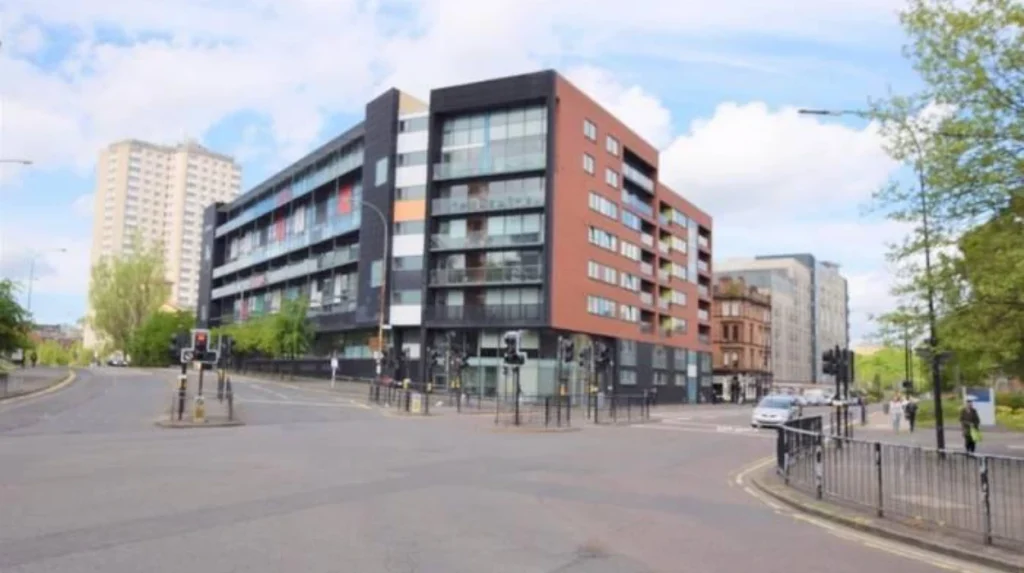
Is Finnieston a Good Alternative for Strathclyde University Students?
Finnieston is a popular residential and entertainment neighbourhood west of Glasgow city centre. It suits Strathclyde students who prioritise restaurants, cafés, cultural attractions and urban lifestyle facilities while accepting a longer commute than accommodation in Townhead or Merchant City.
Finnieston is located west of the city centre between central Glasgow and the West End. Argyle Street is its main commercial corridor and contains restaurants, independent shops, cafés and bars.
The neighbourhood has developed into an established destination for dining and entertainment. Its location also provides access to the SEC campus, the OVO Hydro and the Clyde waterfront.
Students can travel towards Strathclyde using buses, cycling routes or walking connections through the city centre.
Housing and Residential Environment
Finnieston contains traditional sandstone tenements, modern apartment buildings and converted commercial properties.
Traditional flats attract people seeking established residential accommodation. Modern developments appeal to residents who prefer contemporary layouts and building facilities.
The area is generally more suitable for students with flexible accommodation budgets than those searching for the cheapest available room.
Finnieston also provides access to Kelvingrove Park and the wider West End.
Who Should Choose Finnieston?
Finnieston is suitable for postgraduate students, young professionals and students who value restaurants and cultural facilities.
It is less convenient than Townhead or Merchant City for people who want the shortest possible walk to university.
Which Glasgow Areas Offer Affordable Accommodation Near Strathclyde University?
Dennistoun, selected parts of Townhead, Cowcaddens and Glasgow’s eastern neighbourhoods provide accommodation alternatives to premium central locations. Comparing room rentals, shared flats, utility costs and transport expenses helps students identify genuinely affordable housing.
Accommodation affordability depends on the type of property, number of occupants, contract length and included household expenses.
Comparing Glasgow Rental Costs
Citylets rental figures reported for April–June 2026 provide a useful indication of differences between Glasgow postcode districts.
For context, the Glasgow-wide average advertised rent was £912 per month for a one-bedroom property and £1,211 for a two-bedroom property.
Dennistoun’s G31 averages were lower, at £836 and £1,066 respectively. Merchant City’s G1 averages were £1,009 for a one-bedroom property and £1,297 for a two-bedroom property.
These figures demonstrate the importance of comparing neighbourhoods rather than assuming that every central property has the same rental cost.
They are historical quarterly figures, not guaranteed November 2026 asking prices.
Shared Accommodation
Shared accommodation is a common way for students to reduce individual housing expenses.
For example, two students renting a two-bedroom property can divide the monthly rent between them. Three students sharing a larger flat can distribute eligible household expenses across additional occupants.
However, the tenancy agreement determines the legal responsibilities of each tenant. Students should establish whether everyone signs the same agreement or holds an individual tenancy.
Additional Household Expenses
Rent is only one component of accommodation costs.
Students should calculate:
- Electricity and gas.
- Broadband and mobile services.
- Food and household shopping.
- Transport expenses.
- Contents insurance.
- Laundry and cleaning supplies.
Energy Performance Certificate (EPC) ratings also deserve attention. An EPC records the energy efficiency of a property and provides information about its energy performance.
A poorly insulated flat can generate higher heating expenses during Glasgow’s colder months.
Which Areas Near Strathclyde University Have the Best Transport Connections?
Glasgow City Centre, Dennistoun, Cowcaddens and Finnieston provide useful transport connections for Strathclyde students. Railway stations, local buses, the Subway and cycling routes connect these neighbourhoods with the university and other parts of Glasgow.
Glasgow has an extensive public transport network. The most suitable transport option depends on the accommodation address, university building and daily timetable.
Glasgow Subway
The Glasgow Subway is an underground railway operated by Strathclyde Partnership for Transport (SPT). It serves 15 stations across the city centre and West End.
Cowcaddens is particularly useful for students living near the Subway network. Residents in the West End can also use stations such as Kelvinbridge, Hillhead and Partick.
However, the Subway does not directly serve the Strathclyde campus. Students need to complete the journey using walking or another transport connection.
SPT’s published adult contactless fares include:
- Single journey: £1.80.
- Unlimited daily travel: £3.40.
- Seven-day travel cap: £15.50.
These published fares are subject to change. Students should check the latest SPT ticket information before budgeting for regular travel.
Railway Connections
Glasgow Queen Street and Glasgow Central are the city’s principal railway stations.
Queen Street provides connections to destinations including Edinburgh and other parts of central and northern Scotland. Glasgow Central serves major routes across the United Kingdom.
Students living in Dennistoun can also use local railway stations, including Bellgrove and Duke Street.
Railway connections are particularly useful for students who travel outside Glasgow during weekends or academic holidays.
Local Bus Services
Glasgow’s bus network provides connections between residential neighbourhoods and the city centre.
Buses are useful for residents living farther from the university, including those in Finnieston and the wider East End.
Students should check current routes, operating hours and fares before selecting accommodation. The nearest bus stop does not necessarily provide a direct service to the university.
Walking and Cycling
Walking is a practical commuting option for students living in central neighbourhoods.
Cycling also provides flexibility for people living in Dennistoun, Finnieston and surrounding districts. Students should check cycle storage, secure entrances and suitable routes before renting a property.
The university’s own accommodation guidance identifies walking, buses, trains, cycling and the Subway as relevant ways of travelling around Glasgow.
What Types of Student Accommodation Are Available Near Strathclyde University?
Students near Strathclyde University can choose university-managed halls, private purpose-built student accommodation and privately rented flats. Each option has different arrangements for contracts, facilities, household expenses, deposits and tenant responsibilities.
The Strathclyde Students’ Union House Hunting Starter Guide identifies three principal accommodation categories. House Hunting Starter Guide
University Halls
University halls are accommodation buildings managed by the university.
They provide a structured residential environment for students and usually include furnished rooms and shared facilities.
The advantages include:
- Convenient access to university facilities.
- A student-focused residential environment.
- Established accommodation management.
- Payment arrangements designed for students.
Students should check eligibility, available room types, contract duration and the accommodation fees for their academic year.
Private Purpose-Built Student Accommodation
Private purpose-built student accommodation is developed specifically for university students.
Buildings commonly provide furnished bedrooms, shared kitchens, study rooms and communal spaces. Some also offer private studios.
This accommodation type suits students who prefer managed residential facilities without arranging a traditional private tenancy.
However, fixed-term contracts and additional charges require careful consideration. The advertised weekly price does not always represent the complete cost of living.
Privately Rented Flats
Privately rented accommodation is available through landlords and letting agencies.
This option includes individual rooms in shared flats, entire apartments and traditional Glasgow tenement properties.
Private renting offers greater choice in location and property type. It is also suitable for students who want to live with friends, partners or family members.
Before signing an agreement, tenants should inspect the property, understand the tenancy terms and establish which expenses are included in the rent.
What Should Students Check Before Renting a Property Near Strathclyde University?
Students should assess location, rent, property condition, tenancy agreements, energy efficiency and landlord registration before renting accommodation near Strathclyde University. Checking these details helps prevent unexpected expenses, unsuitable housing arrangements and avoidable disputes.
Choosing accommodation involves more than comparing photographs and advertised prices.
Check the Exact Property Location
Students should use the full property postcode when checking walking distances and public transport connections.
A property advertised as being in Dennistoun or the city centre can still be considerably farther from campus than expected.
The exact university building also matters because Strathclyde’s academic facilities occupy different locations.
Inspect the Property
A physical viewing provides an opportunity to assess the property’s condition.
Important inspection points include:
- Damp and mould.
- Heating and hot water.
- Window condition and insulation.
- Kitchen and bathroom facilities.
- Door and window security.
- Fire safety arrangements.
- Shared entrances and communal areas.
Students arriving from overseas should arrange a trusted representative to inspect the property if they cannot attend personally.
Understand Scottish Tenancy Rules
Private residential renting in Scotland operates under a legal framework that protects tenants and establishes landlord responsibilities.
Most new private residential tenancies in Scotland fall under the Private Residential Tenancy (PRT) system introduced on 1 December 2017.
A PRT generally has no fixed end date. Tenants and landlords must follow the statutory rules for ending the tenancy.
Students should read the agreement carefully and understand notice requirements, rent arrangements and repair responsibilities.
Landlords generally need to be registered with the local authority unless an exemption applies. Prospective tenants can check the Scottish Landlord Register.
Check Deposit Protection
Scottish tenancy deposit legislation requires qualifying private tenancy deposits to be protected through an approved tenancy deposit scheme.
The three approved schemes are:
- SafeDeposits Scotland.
- mydeposits Scotland.
- Letting Protection Service Scotland.
The landlord must normally lodge the deposit with an approved scheme within 30 working days of the tenancy starting.
Students should request the relevant deposit protection information and retain payment records.
The Strathclyde Students’ Union House Hunting Starter Guide also advises students to verify rental properties before transferring money and to avoid paying for accommodation they or a trusted representative have not inspected. House Hunting Starter Guide
Which Area Near Strathclyde University Is Best for Different Residents?
The best neighbourhood depends on household requirements and lifestyle priorities. City Centre suits students seeking maximum convenience, Dennistoun suits residents seeking established housing, Merchant City offers central urban living, and Finnieston attracts people prioritising restaurants and cultural facilities.
Different residents have different accommodation requirements.
Best for First-Year Students
Townhead, Cowcaddens and Glasgow City Centre are practical choices for first-year students.
Their central locations simplify access to university facilities, student services and social activities.
Students living away from home for the first time also benefit from having shops and transport connections nearby.
Best for International Students
Merchant City and Glasgow City Centre are suitable for international students who want convenient access to university buildings and central services.
These areas also provide access to railway stations and Buchanan Bus Station, making travel around Scotland easier.
Purpose-built student accommodation offers an additional option for international students who prefer furnished rooms and managed residential facilities.
Best for Postgraduate Students
Dennistoun and Merchant City are suitable for postgraduate students seeking a balance between academic access and independent living.
Postgraduate researchers often benefit from accommodation that provides a comfortable working environment and reliable internet access.
Best for Young Professionals
Finnieston and Merchant City are suitable for young professionals who want restaurants, entertainment, shops and convenient connections to Glasgow’s commercial districts.
Dennistoun provides an alternative for professionals seeking traditional residential properties.
Best for Students on a Tight Budget
Dennistoun and selected parts of the East End provide useful starting points for budget-conscious accommodation searches.
Students should also compare shared properties in Townhead and Cowcaddens.
A room in a shared flat can cost less than renting an entire central apartment. However, the condition of the property and total household expenses remain important.
What Are the Best Local Amenities Near Strathclyde University?
The neighbourhoods surrounding Strathclyde University provide access to supermarkets, restaurants, parks, healthcare facilities, shopping districts and cultural attractions. City Centre, Merchant City, Dennistoun and Townhead offer different combinations of everyday services and recreational opportunities.
Access to local amenities influences the quality and cost of everyday student life.
Shopping and Supermarkets
Glasgow City Centre provides extensive shopping facilities, including Buchanan Street, Argyle Street and the surrounding retail districts.
Merchant City contains independent shops, convenience stores and specialist food businesses.
Dennistoun has local shops and independent retailers along Duke Street. These facilities help residents manage everyday shopping without travelling into the central retail district.
Parks and Outdoor Spaces
Students living near Strathclyde University have access to several green spaces.
Glasgow Green is an established public park east of the city centre. It provides walking routes, open spaces and access to the People’s Palace.
Alexandra Park serves Dennistoun and the wider East End. It provides landscaped grounds and recreational facilities.
The Glasgow Necropolis is a historic Victorian cemetery beside Glasgow Cathedral. Its elevated location provides views across central Glasgow.
These spaces offer opportunities for walking, outdoor exercise and relaxation between university commitments.
Restaurants and Cafés
Merchant City offers restaurants, cafés and hospitality venues within walking distance of the university.
Duke Street in Dennistoun has independent food businesses and neighbourhood cafés.
Finnieston’s Argyle Street is recognised for its restaurants and contemporary dining establishments.
Students should compare prices and opening hours when selecting regular places to eat. Preparing meals at home and using local supermarkets also helps control monthly food expenses.
Healthcare Facilities
Students living in central Glasgow can access pharmacies, GP practices, dental services and larger healthcare facilities across the city.
Before moving, students should identify their nearest GP practice and understand the NHS Scotland registration process.
International students should also check their healthcare entitlements and any immigration-related requirements.
How Should Students Choose Between Living Near Campus and Further Away?
Students should compare the total cost of accommodation with commuting expenses, travel time and household facilities. Living near campus reduces daily travel, while selected neighbourhoods farther away offer different property choices and residential environments.
The decision involves balancing convenience and affordability.
A central property with higher rent can reduce transport expenses. A cheaper property farther away can increase travel time and regular commuting costs.
Students should calculate the complete monthly budget before choosing an area.
Compare the Total Monthly Cost
The total accommodation budget should include rent, utilities, broadband, food, transport and other regular expenses.
For example, students comparing a central studio with a shared flat in Dennistoun should consider the cost per person rather than the advertised property price alone.
Consider Academic Schedules
Students attending lectures throughout the week often benefit from living close to campus.
Postgraduate students with flexible research schedules can consider a wider selection of neighbourhoods.
Students with evening classes should also check the availability of transport services after their academic commitments finish.
Prioritise Property Quality
A convenient location does not compensate for poor property maintenance.
Students should prioritise safe entrances, working heating systems, suitable insulation and reliable maintenance arrangements.
The best accommodation provides a reasonable combination of location, affordability and property quality.
Explore More Area Guide
Best Areas to Live Near Glasgow University: Top Neighbourhoods
Best Areas to Live Near Strathclyde University
What Is the Future of Residential Living Near Strathclyde University?
Residential demand around Strathclyde University remains connected to Glasgow’s higher education sector, central employment opportunities and established transport network. Future accommodation choices will depend on housing supply, rental affordability, property improvements and the changing requirements of students.
Glasgow’s city centre continues to serve as an important location for education, employment, shopping and cultural activities.
Strathclyde’s central campus contributes to demand for nearby student accommodation and private rental properties.
Growth of Purpose-Built Student Accommodation
Purpose-built student accommodation has become an established part of Glasgow’s housing market.
These developments provide furnished rooms and shared facilities designed around university living.
Their availability gives students an alternative to traditional private tenement flats.
Importance of Affordable Housing
Rental affordability remains an important consideration for students and young professionals.
Rising household expenses influence decisions about shared accommodation, commuting distances and property sizes.
Neighbourhoods such as Dennistoun provide alternatives for people who want residential accommodation outside the most expensive central locations.
Improving Sustainable Transport
Walking, cycling and public transport remain important parts of Glasgow’s urban mobility.
Students increasingly benefit from choosing accommodation that provides convenient access to university facilities without requiring daily car journeys.
Secure cycle storage, pedestrian access and reliable public transport connections are important property-selection considerations.
Which Is the Best Area to Live Near Strathclyde University?
The best areas to live near Strathclyde University depend on accommodation budgets, commuting requirements and personal preferences.
Glasgow City Centre and Merchant City are strong choices for students seeking immediate access to university facilities, restaurants and shopping. Townhead and Cowcaddens provide convenient residential options close to campus. Dennistoun offers established housing, local amenities and connections to central Glasgow. Finnieston suits residents who prioritise restaurants, entertainment and cultural attractions.
Students should compare actual property addresses, rental costs, tenancy conditions and transport connections before signing an agreement.
The most suitable neighbourhood is one that provides a manageable monthly budget, convenient university access and a comfortable residential environment.
What is the best area to live near Strathclyde University?
Glasgow City Centre, Merchant City and Townhead are among the best areas for students attending Strathclyde University. They offer convenient walking access to campus, restaurants, supermarkets, transport connections and student facilities.