
Glasgow City Council delivers and coordinates a wide range of public services for people who live, work, study and visit Scotland’s largest city. Council services affect daily life through waste collection, housing, education, roads, social care, community facilities, environmental health and local taxation.
- What services does Glasgow City Council provide to residents?
- How is Glasgow City Council organised?
- How do Glasgow residents access council services?
- How does council tax work in Glasgow?
- What housing services are available through Glasgow City Council?
- How does Glasgow City Council manage waste and recycling?
- What should residents do with household waste?
- How are missed collections and street problems reported?
- What education services does Glasgow City Council oversee?
- How does the council maintain roads and public spaces?
- What social care and support services are available?
- How does planning and building regulation work in Glasgow?
- How can residents participate in Glasgow local government?
- What should Glasgow residents know about future council services?
- How do environmental responsibilities affect council services?
- Why should residents follow official updates?
- Why is understanding Glasgow Council services important?
Understanding which services the council provides helps residents report problems, make applications, pay charges and access support through the correct process. Glasgow’s local government system also works alongside national bodies, including the Scottish Government, NHS Scotland and Police Scotland, which have separate responsibilities.
Glasgow City Council is the local authority responsible for the City of Glasgow council area. The authority is made up of elected councillors who make decisions on local policy, budgets and services. Council officers and employees administer services and carry out decisions within the legal and financial framework that applies to Scottish local government.
What services does Glasgow City Council provide to residents?
Glasgow City Council provides essential local services including waste collection, council tax administration, housing support, education, roads, planning, social care, environmental health, libraries, community facilities and local registration services. Different council departments manage specific responsibilities under Scottish law and local policy.
Council services cover both universal services available across the city and targeted services for people who meet specific eligibility requirements. Universal services include many public functions such as road maintenance, street lighting and household waste collection. Targeted services include some forms of social care, housing assistance and financial support.
The council’s responsibilities are shaped by legislation passed by the Scottish Parliament and the United Kingdom Parliament, as well as local policies approved by elected councillors.
Waste and environmental services
Waste services include household refuse collection, recycling arrangements and the management of public cleansing. Residents use council information to check collection arrangements, report missed collections and understand local recycling requirements.
Environmental services also cover issues such as litter, fly-tipping, noise complaints, pest concerns and some forms of pollution. Environmental health officers enforce legal standards that protect public health and investigate relevant complaints.
Housing and homelessness services
The council provides information and assistance for people seeking housing support. This includes homelessness assessments, housing advice and administration connected with social housing.
Glasgow also has a substantial network of registered social landlords. A registered social landlord is an independent housing organisation regulated in Scotland that provides and manages social rented homes. The council and housing associations therefore have connected but separate responsibilities.
Education and family services
Local authorities in Scotland have major responsibilities for school education. Glasgow City Council manages many local authority schools and supports services connected with children and families.
Education services include school admissions, attendance, additional support for learning and school transport arrangements where eligibility requirements apply. Parents and carers should use the relevant council process for the service they need because education applications and assessments follow defined procedures.
How is Glasgow City Council organised?
Glasgow City Council is a democratic local authority led by elected councillors and supported by professional officers. Councillors set policy and approve major decisions, while council departments administer services, manage staff and deliver statutory and locally funded responsibilities throughout Glasgow.
The modern structure of Scottish local government developed through legislation and successive reforms. Glasgow’s current council area operates within Scotland’s unitary local government system, where one principal council delivers most local authority functions.
Residents elect councillors to represent defined local areas called wards. A ward is an electoral area used to elect representatives to local government.
What do councillors do?
Councillors represent residents, participate in decision-making and scrutinise council activity. They take part in meetings, committees and other formal processes that shape local services and spending.
A committee is a group of councillors assigned responsibility for considering specific areas of council business. Committees can examine subjects such as planning, finance, education and other public functions.
Councillors also provide a route for residents to raise local concerns. A councillor does not personally administer every service request, but elected representatives can help residents understand council processes and raise matters within the authority.
What do council officers do?
Council officers are employees who carry out the authority’s administrative and operational work. Senior officers oversee departments and provide professional advice to councillors.
Officers administer applications, maintain public infrastructure, deliver frontline services and enforce relevant regulations. This separation between elected decision-makers and professional administrators forms a central part of local government accountability.

How do Glasgow residents access council services?
Glasgow residents access council services through official digital systems, telephone contact, written correspondence and designated service locations. The correct contact route depends on the service, urgency and type of request, with online reporting used for many routine transactions.
Digital services have become an important part of local government administration. Online systems allow residents to submit forms, report issues and manage some accounts without visiting a council office.
Residents should identify the specific service before making contact. A missed bin collection, council tax query and homelessness application involve different departments and different procedures.
Using online council services
Online services commonly support transactions such as paying council tax, reporting environmental problems and accessing service information.
Residents should keep confirmation details after submitting an online report or application. Reference numbers help identify a specific case when further contact is required.
Official council systems also publish service updates and guidance. Information can change when legislation, local policies, budgets or operational arrangements change, so residents should check current official guidance before taking action.
Contacting the correct department
Clear information improves the handling of a request. Residents should provide the relevant address, dates and details of the problem where required.
For example, a report about a damaged pavement should identify the location as precisely as possible. A council tax enquiry should include the relevant account information through the council’s approved communication process.
Urgent emergencies require different action from routine service requests. A threat to life or immediate public safety should be reported to the appropriate emergency service rather than treated as a standard council enquiry.
How does council tax work in Glasgow?
Council tax is a local tax charged on domestic properties and used to help fund local public services. Glasgow City Council administers billing and collection, while Scottish legislation establishes the national framework for valuation, discounts, exemptions and reductions.
Council tax contributes to the funding of local services alongside other income sources. These sources include government funding, charges for some services and other locally generated revenue.
Domestic properties are assigned to valuation bands. The valuation system provides the basis for calculating the council tax charge that applies to a property.
Who is responsible for paying council tax?
Liability depends on the legal status and occupancy of a property. Owners, tenants and residents can have different responsibilities under council tax rules.
The person responsible for payment should ensure that the council holds accurate information about occupancy and relevant changes. Moving into or leaving a property can affect an account.
Council tax bills explain the charge and payment arrangements. Residents who believe information is incorrect should use the official process to query the account.
What discounts and reductions are available?
Council tax rules include discounts, exemptions and reductions for eligible households and properties. These categories have different purposes and eligibility criteria.
A discount reduces the amount charged under defined circumstances. An exemption removes a charge in circumstances specified by the rules. A reduction provides financial assistance for eligible people based on the applicable scheme.
Examples include arrangements connected with single occupancy, certain student households and people receiving support through council tax reduction schemes. Eligibility depends on current law and individual circumstances.
What housing services are available through Glasgow City Council?
Glasgow City Council provides housing advice, homelessness assistance and related support while working alongside housing associations and other organisations. Residents facing housing difficulties should use the appropriate official route because homelessness, social housing and private tenancy issues follow different processes.
Housing is one of the most significant areas of local authority responsibility. Glasgow has a large and varied housing stock that includes owner-occupied homes, private rented properties and social rented housing.
Social housing is rented accommodation provided by local authorities and registered social landlords. A registered social landlord operates independently but is regulated under Scotland’s housing framework.
How does homelessness assistance work?
A person experiencing homelessness or threatened with homelessness can seek assistance through the local authority.
Homelessness legislation sets duties for Scottish councils to assess applications and provide assistance where legal requirements are met. The assessment considers the applicant’s circumstances and housing situation.
Residents should provide accurate information and engage with the process as requested. Emergency accommodation and longer-term housing outcomes are handled according to individual circumstances and available legal duties.
How do housing associations fit into Glasgow’s system?
Housing associations own and manage many social rented homes across Glasgow. They are separate organisations from the council.
Residents seeking a social rented home often need to understand the allocation systems operated by individual landlords or relevant partnership arrangements. Applying for housing through one organisation does not automatically create an application with every social landlord.
How does Glasgow City Council manage waste and recycling?
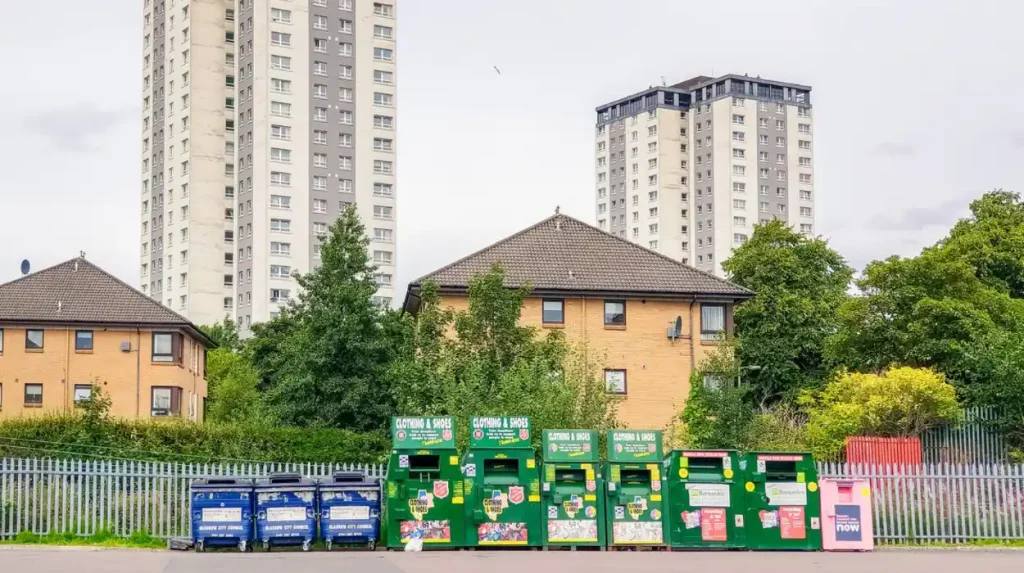
Glasgow City Council manages household waste collection, recycling arrangements and public cleansing across the city. Residents are responsible for following local collection requirements, using the correct containers and presenting waste appropriately under the council’s published service arrangements.
Waste management is a core local service because it protects public health and maintains neighbourhood environments.
Collection arrangements can differ according to property type and location. Houses, flats and properties with communal waste facilities can use different systems.
What should residents do with household waste?
Residents should separate materials according to current council guidance. Recycling systems are designed to collect specified materials for processing and reduce the amount of waste sent for disposal.
Incorrect materials can contaminate recycling collections. Contamination occurs when unsuitable items are placed in a recycling container and affect the quality or processing of collected materials.
Residents should also follow collection schedules and presentation rules. These rules help collection crews access containers safely and efficiently.
How are missed collections and street problems reported?
Residents can use designated council reporting systems for service problems such as missed collections, litter and fly-tipping.
A report should identify the location and nature of the problem. Photographs or other evidence can be useful when the reporting process requests supporting information.
Fly-tipping is the illegal disposal of waste. It differs from ordinary household waste collection because it involves waste deposited outside authorised collection or disposal arrangements.
What education services does Glasgow City Council oversee?
Glasgow City Council has major responsibilities for local authority education, including schools, admissions and support services for children and families. Education services operate within Scotland’s national legal and curriculum framework while responding to local needs and administrative requirements.
Scotland has a distinct education system with national legislation, curriculum guidance and local authority administration.
Glasgow’s education responsibilities include managing many publicly funded schools and supporting children who require additional services.
How do school admissions work?
School admissions processes determine how children are allocated places at local authority schools.
A catchment area is the geographical area associated with a school for admissions purposes. Living within a catchment area is an important factor in the standard admissions process.
Parents and carers seeking a place at a school outside the normal catchment area generally follow a separate placing request process. A placing request is a formal application to attend a school other than the designated local school.
What is additional support for learning?
Additional support for learning is the Scottish system for identifying and supporting children who need extra assistance to benefit from education.
Support needs can arise from many circumstances and can involve educational, social or other factors. Schools work with families and relevant professionals to identify appropriate support.
The council’s education responsibilities therefore extend beyond school buildings to wider systems that support attendance, learning and child wellbeing.
How does the council maintain roads and public spaces?
Glasgow City Council manages many local roads, pavements, street infrastructure and public spaces. Residents can report defects and local problems through council systems, while responsibility for some roads and transport infrastructure belongs to national agencies or other organisations.
Public infrastructure involves multiple levels of government and public administration. Identifying the responsible authority is important before reporting a problem.
Local authority responsibilities include many streets, pavements and public spaces. Other roads, including parts of the strategic road network, are managed through separate national arrangements.
What road issues can residents report?
Common reports include potholes, damaged pavements, faulty street lighting and problems affecting public spaces.
A pothole is a hole or depression in a road surface caused by deterioration. The council assesses reports according to its inspection and maintenance processes.
Reporting a problem does not automatically mean immediate repair. Local authorities prioritise work according to safety, condition, legal duties, available resources and operational schedules.
Why is location information important?
Precise location information allows the responsible service to identify the problem. Street names, nearby property numbers and descriptions of the exact position improve the quality of a report.
A vague report can delay investigation because officers need sufficient information to locate the issue.
What social care and support services are available?
Glasgow’s social care system provides assessment, support and safeguarding services for eligible adults, children and families. These services involve statutory duties and partnership working, with some functions delivered through specialised organisations rather than a single council department.
Social care supports people who need assistance because of age, disability, family circumstances or other assessed needs.
Eligibility and service arrangements depend on legal duties and individual assessments. An assessment examines a person’s circumstances and identifies relevant support needs.
What is adult social care?
Adult social care includes services designed to support eligible adults with daily living, safety and independence.
Examples include home support, community-based assistance and assessment for longer-term care needs. Services are organised through formal assessment and care planning processes.
A care plan records identified needs and the support arranged to address them. The exact structure of services depends on the individual’s assessed circumstances.
What support is available for children and families?
Children and family services include safeguarding and support for children who require assistance.
Safeguarding means actions taken to protect children and adults at risk from harm, neglect or exploitation. Concerns involving immediate danger require urgent contact with the appropriate emergency or protection service.
How does planning and building regulation work in Glasgow?
Glasgow City Council manages local planning functions and building standards processes under Scotland’s statutory framework. Planning controls how land and buildings are developed, while building standards focus on technical requirements for construction, safety, accessibility and environmental performance.
Planning decisions shape how the city changes over time. The planning system considers proposed development against national and local policies and other material considerations.
Building standards are separate from planning permission. A development can require both approvals because each process addresses different legal requirements.
What is planning permission?
Planning permission is formal consent required for certain types of development or changes to land and buildings.
Not every project requires the same level of permission. Scottish planning rules define categories of development and permitted work.
Applications generally include plans and supporting information. The council considers relevant policies, consultation responses and the specific circumstances of the proposal.
What are building standards?
Building standards establish technical requirements for building work. These requirements cover areas such as structural safety, fire safety, accessibility and energy performance.
A building warrant is an approval required for certain building work before construction proceeds. The planning and building standards systems should therefore be treated as related but distinct processes.
How can residents participate in Glasgow local government?
Glasgow residents participate in local government by voting in council elections, contacting elected councillors, responding to consultations and engaging with formal community processes. Public participation helps connect local decisions with neighbourhood needs and improves democratic accountability.
Local government decisions affect neighbourhoods, public services and the use of public resources. Democratic participation provides residents with ways to understand and influence local decision-making.
Council elections determine which representatives sit on the authority. Councillors then participate in formal decisions on policies, budgets and service priorities.
How do consultations work?
A public consultation is a process used to collect views before or during the development of a policy, plan or proposal.
Residents can provide information based on local experience and respond to specific questions. Consultation responses form part of the evidence considered by decision-makers, although consultation does not require a public body to adopt every suggestion received.
What role do local communities have?
Community participation also occurs through local organisations, community groups and formal engagement structures.
Residents often raise issues involving neighbourhood conditions, public facilities, planning proposals and local services. Organised community engagement gives public authorities additional information about how policies affect different areas.
Explore More Area Guide
How to Contact Glasgow City Council: Complete Guide
How to Report a Streetlight Problem in Glasgow
What should Glasgow residents know about future council services?
The future of Glasgow Council services depends on population needs, public funding, digital administration, environmental responsibilities and national legislation. Residents will continue to rely on clear information because local government services must adapt while maintaining essential statutory functions.
Local authorities operate in an environment of changing demands and financial pressures. Population change affects housing, education, social care and transport requirements.
Digital administration continues to change how residents access information and submit requests. Online systems can improve access to routine services, but public bodies must also consider residents who need alternative methods of communication.
How do environmental responsibilities affect council services?
Climate and environmental policies increasingly influence transport, waste management, building standards and public space planning.
Glasgow’s council services therefore have a direct role in practical local action. Waste collection, active travel infrastructure, energy efficiency and land management are examples of service areas connected with wider environmental objectives.
Why should residents follow official updates?
Council policies, charges, service schedules and application processes can change. The most reliable action is to use current information published by the responsible authority.
Residents should also distinguish between council responsibilities and services provided by other public bodies. NHS Scotland manages the national health service in Scotland. Police Scotland provides national policing. The Scottish Government sets national policy in devolved areas including much of local government and public services.
Why is understanding Glasgow Council services important?
Understanding Glasgow Council services helps residents identify the correct authority, follow official procedures and access local support efficiently. Knowledge of council responsibilities also strengthens public participation by explaining how local taxation, democratic representation and public services connect across the city.
Glasgow City Council forms a central part of everyday public administration in Scotland’s largest city. Its responsibilities extend from visible services such as waste collection and road maintenance to complex systems involving housing, education, planning and social care.
Residents benefit from understanding the difference between universal services and eligibility-based support. They also benefit from recognising when another organisation, rather than the council, holds responsibility for a particular issue.
The most effective approach is to identify the service category, use the official contact process and provide accurate information. This supports faster administration and creates a clear record of requests and applications.
Glasgow’s council services will continue to evolve with changes in legislation, technology, funding and local needs. The core purpose remains consistent: local government provides democratic administration and essential public services that support the city’s communities, infrastructure and long-term development.
What services does Glasgow City Council provide?
Glasgow City Council provides local services including council tax administration, waste and recycling collection, housing support, education, social care, planning, road maintenance, environmental health and community services.