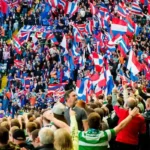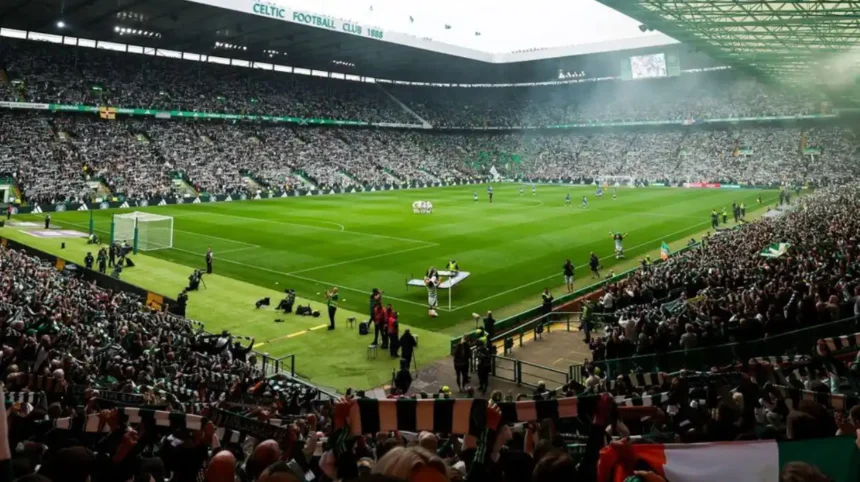
Attending a Celtic FC or Rangers FC match for the first time is a structured Glasgow sporting experience built around football, stadium traditions, supporter participation, ticket controls, transport planning, and matchday safety. Celtic play at Celtic Park in the East End, while Rangers play at Ibrox Stadium in the southwest of Glasgow.
- What is the atmosphere like at a Celtic or Rangers match?
- Why are Celtic and Rangers matches historically important in Glasgow?
- What is Celtic Park like for a first-time Celtic supporter?
- What is Ibrox like for a first-time Rangers supporter?
- How should a first-time visitor buy a Celtic or Rangers ticket?
- How early should you arrive at Celtic Park or Ibrox?
- What should you wear to a Celtic or Rangers match?
- What happens when you enter the stadium?
- What should you know about chants, flags and supporter behaviour?
- Is a Celtic or Rangers match safe for first-time visitors?
- How do you travel to Celtic Park for a match?
- How do you travel to Ibrox Stadium for a match?
- What facilities are available inside Celtic Park and Ibrox?
- What happens during half-time?
- What happens after the final whistle?
- What should families and children know before attending?
- Is a Celtic-Rangers match different from a normal football match?
- What should a first-time visitor remember about Celtic and Rangers matches?
Both clubs have deep historical roots in Glasgow football. Rangers were founded in 1872, while Celtic were formally established on 6 November 1887. Their first meeting took place on 28 May 1888, when Celtic defeated Rangers 5–2 in a match watched by around 2,000 people.
Today, matches involving the two clubs form an important part of Scottish football culture. The Scottish Professional Football League (SPFL) reported that top-flight attendance exceeded 3.9 million during the 2025–26 season before the final round, putting the Premiership on course to pass four million spectators for the first time.
For a first-time visitor, understanding the stadium, ticketing process, supporter etiquette, transport arrangements and safety rules makes the experience straightforward.
What is the atmosphere like at a Celtic or Rangers match?
The atmosphere combines large crowds, coordinated singing, club colours, football chants, flags, announcements and intense attention to the match, with the strongest atmosphere occurring during important fixtures and derby matches.
The atmosphere starts before kick-off. Supporters travel towards the stadium wearing club colours and carrying scarves, flags or other permitted supporter items. Streets around the grounds become significantly busier as kick-off approaches.
Inside the stadium, supporters follow the action closely. Singing and chanting form an established part of Scottish football support. Supporters also react collectively to goals, refereeing decisions, substitutions and important passages of play.
The intensity depends heavily on the fixture. A routine league match has a different atmosphere from a Scottish Cup tie or a Celtic-Rangers fixture.
A first-time visitor should understand that the crowd is emotionally invested in the result. Loud reactions are normal. Standing, shouting and singing occur in designated supporter areas, subject to stadium rules.
The atmosphere also changes during the match. Pre-match anticipation gives way to concentrated attention once play begins. Half-time creates a short break before the second half.
Why are Celtic and Rangers matches historically important in Glasgow?
Celtic and Rangers represent two of Scotland’s most historically significant football institutions, with foundations in nineteenth-century Glasgow and a rivalry that has become one of the defining sporting relationships in Scottish football.
Rangers were founded in Glasgow in March 1872 by Moses McNeil, Peter McNeil, William McBeath and Peter Campbell. The club developed from the early growth of association football in Scotland.
Celtic was formally established on 6 November 1887 following a meeting at St Mary’s parish hall in the Calton area. Brother Walfrid, a Marist Brother, helped establish the club with the original purpose of raising money for people experiencing poverty in Glasgow’s East End.
The rivalry began almost immediately. Celtic’s first recorded match was against Rangers on 28 May 1888. Celtic won 5–2. The game attracted approximately 2,000 spectators.
The term Old Firm is widely associated with Celtic-Rangers fixtures. It describes the long-standing rivalry between the clubs rather than a separate competition.
For first-time visitors, this history explains why Celtic-Rangers fixtures carry more significance than ordinary league games. The rivalry has sporting, cultural and community dimensions that have developed over more than a century.
It also explains why supporters display strong club identities. A visitor does not need to know every historical detail, but understanding the rivalry helps explain the intensity surrounding these matches.
What is Celtic Park like for a first-time Celtic supporter?
Celtic Park is Celtic Football Club’s home stadium in Glasgow’s East End, providing a large-capacity match environment with controlled entry, supporter facilities, digital ticketing arrangements, accessibility services and dedicated first-time visitor information.
Celtic Park is located in the Parkhead area of Glasgow. It is commonly associated with the nickname “Paradise”, reflecting the stadium’s longstanding place within Celtic’s identity.
Celtic provides dedicated visitor information covering stadium access, matchday arrangements, tickets and transport. The club also maintains dedicated information for first-time fans.
The matchday process begins outside the stadium. Supporters approach their designated entrance and prepare their tickets before reaching the turnstiles.
Digital ticketing is an important part of modern stadium entry. Visitors should have the correct ticket available on their phone and follow the instructions supplied by Celtic before travelling.
Celtic also provides dedicated accessibility information. Its supporter services include accessible matchdays, accessible routes, facilities and support through the club’s Disability Access Officer.
Inside Celtic Park, first-time visitors should follow their allocated seating instructions. Stadium stewards provide assistance with directions and access.
The experience combines the physical scale of a major football ground with strong supporter participation. The noise level increases significantly when Celtic attack, score or face important moments.
What is Ibrox like for a first-time Rangers supporter?
Ibrox Stadium is Rangers Football Club’s home ground in Glasgow, with organised turnstile entry, digital tickets, supporter facilities, concessions, programmes, accessibility arrangements and a dedicated first-time visitor guide.
Ibrox is located in the southwest of Glasgow. It has been the home of Rangers for generations and remains one of Scotland’s best-known football stadiums.
Rangers provides specific information for first-time visitors. The club states that the stadium opens 90 minutes before kick-off, giving supporters time to enter and find their seats.
The club’s current matchday system uses digital tickets and QR codes for many fixtures. Rangers advises supporters to download their e-ticket before arriving at the stadium.
Stadium kiosks do not accept cash, according to Rangers’ first-time visitor information. Cash machines are located outside the stadium, including facilities on Copland Road and at the Asda Superstore on Helen Street.
Matchday programmes are also available around Ibrox. Rangers’ 2026–27 programme information confirms that programmes cover first-team interviews, match previews, opposition information, club history and other features.
For a first-time visitor, Ibrox therefore operates like a modern major football venue. Preparing the ticket, arriving early and following steward instructions removes most avoidable problems.
How should a first-time visitor buy a Celtic or Rangers ticket?
A first-time visitor should use the club’s official ticketing channels, confirm the fixture and seat information, keep the digital ticket accessible, avoid unauthorised resale and arrive early enough to complete stadium entry without rushing.
Ticket availability depends on the fixture, competition, membership arrangements and demand. Celtic provides dedicated ticket information covering Scottish Premiership matches, European fixtures, digital tickets, accessible tickets and unauthorised ticket resale.
Rangers similarly operates an official ticketing system and provides first-time visitor instructions for stadium entry.
Visitors should purchase through official club channels whenever possible. Unauthorised ticket resale creates additional risks because clubs impose conditions on ticket transfers and stadium access.
The ticket contains essential information. This includes the fixture, date, kick-off time, stadium, stand, section, row and seat.
A first-time visitor should check these details before travelling.
Digital tickets should remain accessible on the phone. Battery power is therefore important. Downloading or preparing the ticket before arriving reduces pressure at the turnstile.
A visitor should also check fixture information shortly before travelling because kick-off times and match arrangements are subject to official confirmation.
How early should you arrive at Celtic Park or Ibrox?
Arriving early gives first-time visitors time to reach the stadium, navigate crowds, prepare tickets, pass security controls, locate the correct entrance and find their seats before kick-off begins.
Rangers explicitly states that Ibrox opens 90 minutes before kick-off.
Celtic publishes match-specific guidance through its official matchday information and matchday guides.
The safest approach is to reach the stadium area well before kick-off rather than planning arrival for the final minutes.
Large crowds create queues around transport stations, streets and stadium entrances. A visitor unfamiliar with Glasgow also needs additional time to identify the correct route.
Early arrival provides time to:
Check the stadium entrance.
Open the digital ticket.
Pass through turnstiles.
Locate the seating block.
Use toilet facilities.
Purchase refreshments.
Buy a programme or club merchandise.
Take the seat before the pre-match build-up.
This is particularly important for high-demand fixtures. The larger the crowd and the greater the fixture significance, the more important early arrival becomes.
What should you wear to a Celtic or Rangers match?
Visitors should dress for Glasgow weather, wear comfortable clothing and follow their ticketed area requirements, while avoiding clothing, symbols or behaviour that breach stadium regulations or create unnecessary confrontation with opposing supporters.
Glasgow weather changes quickly throughout the year. A waterproof outer layer and comfortable footwear are practical choices for football matches.
A supporter attending a Celtic home fixture often wears Celtic colours or merchandise. Rangers supporters similarly wear Rangers colours.
Neutral visitors do not need to wear club merchandise.
The more important consideration is the seating location. Home and away supporters occupy designated areas, particularly for fixtures involving both clubs. Visitors should not enter restricted supporter sections.
A first-time visitor should also follow stadium rules concerning flags, banners, clothing, bags and other items. Celtic’s published child-group guidance, for example, states that bags are subject to search and must be small enough to fit under the seat.
The specific prohibited-item list should always be checked against the club’s current ground regulations before travelling.
What happens when you enter the stadium?
Stadium entry involves approaching the correct turnstile, presenting the authorised ticket, passing required security controls and following steward directions to the allocated seating section before taking the assigned seat.
The entry process is controlled to manage thousands of spectators safely.
At Ibrox, Rangers states that QR-code and season-ticket procedures are used for stadium entry and provides an entry video for visitors.
For some Rangers fixtures, mobile-friendly e-tickets are scanned directly from a phone. Rangers advises supporters to download their tickets before reaching the stadium.
Celtic also provides dedicated digital-ticket information through its ticketing section.
Once inside, visitors should follow signage and steward instructions.
Seats are identified by stand, section, row and number. A steward can assist if the seating location is difficult to find.
Security procedures vary according to fixture requirements. Bags and prohibited items are subject to stadium regulations.
The objective is straightforward: every spectator enters through the correct access point, reaches the correct seat and remains within the permitted supporter area.
What should you know about chants, flags and supporter behaviour?
Football chants, coordinated singing, flags and collective celebrations form part of Scottish stadium culture, but visitors should follow ground regulations, respect stewards and avoid discriminatory, threatening or disorderly behaviour throughout the match.
Supporter participation is central to the matchday environment.
Chants often begin in one part of a stand and spread through surrounding sections. Supporters also sing after goals and during periods of sustained pressure.
Flags and banners form another part of supporter culture. Their use is governed by stadium policies and restrictions.
A visitor does not need to join every chant. Observing the atmosphere is acceptable.
The key principle is respect. Visitors should not deliberately provoke opposing supporters. They should not enter another club’s designated area or interfere with other spectators.
Football rivalry does not remove stadium rules. Stewards have responsibility for crowd management and spectator safety.
The Scottish Government is strengthening Football Banning Order legislation. In July 2026, it announced proposed measures addressing behaviour including pyrotechnics, pitch incursions, missile throwing and entering a stadium without a match ticket.
Is a Celtic or Rangers match safe for first-time visitors?
Celtic and Rangers matches operate under organised stadium safety procedures, policing plans and club regulations, but visitors should remain alert around large crowds, follow steward instructions, avoid disorder and leave the stadium through designated routes.
Most spectators attend football matches to watch their team and return home safely. Scottish Government consultation information states that the vast majority of football fans attend matches to support their team.
Police Scotland works with football clubs and other organisations to manage matchday risks.
However, Glasgow has experienced football-related disorder. Police Scotland reported arrests and disorder following the Celtic-Rangers Scottish Cup quarter-final at Ibrox on 8 March 2026. The incident involved pitch disorder, thrown items and injuries to members of the public and officers.
Police Scotland also reported three arrests following disorder associated with Celtic’s match against Utrecht on 29 January 2026.
These incidents demonstrate why visitors should follow official instructions.
A first-time visitor should avoid confrontations, remain within the designated supporter area and follow police or steward directions if crowd movement changes.
Visitors should also avoid carrying prohibited objects or pyrotechnics. Scottish Government policy specifically identifies pyrotechnics and pitch incursions as issues targeted by strengthened Football Banning Order legislation.
How do you travel to Celtic Park for a match?
Celtic Park is located in Glasgow’s East End, and visitors should plan their journey around the stadium location, public transport demand, walking routes, road congestion and the increased pedestrian traffic created by matchday crowds.
Public transport is a practical option for reaching Celtic Park. Visitors should check current travel information before leaving because services and road conditions change.
Walking from central Glasgow takes longer than travelling directly to the stadium area. The final approach should account for increased pedestrian traffic.
Drivers should allow additional time for congestion and restrictions around the stadium. Parking availability also varies according to the fixture and local arrangements.
Celtic publishes dedicated information covering how to get to Celtic Park.
A visitor unfamiliar with Glasgow should save the stadium location and entrance details before leaving their accommodation.
For a high-profile fixture, leaving earlier is particularly important. Large numbers of supporters travelling simultaneously create congestion around public transport facilities and roads.
How do you travel to Ibrox Stadium for a match?
Ibrox Stadium is in southwest Glasgow, and Rangers provides detailed driving guidance while supporters should also plan for busy roads, pedestrian congestion, public transport demand and controlled movement around the stadium.
Rangers provides specific driving guidance for visitors arriving from Glasgow’s M8. Its first-time visitor information identifies Junctions 24, 25 and 26 for westbound approaches, with additional routes for eastbound traffic.
The Ibrox area becomes significantly busier around kick-off and final whistle.
Visitors should not rely on finding convenient parking immediately beside the stadium. A pre-planned route is more reliable.
Rangers’ first-time visitor guidance also identifies the nearby subway area and surrounding facilities when explaining access to cash machines.
Public transport reduces the need to navigate matchday road congestion. However, visitors should still expect busy stations and pedestrian routes.
The best transport plan is one that allows time for the final walk to the stadium.
What facilities are available inside Celtic Park and Ibrox?
Both stadiums provide essential matchday facilities including seating, toilets, food and drink concessions, supporter services and accessibility arrangements, while individual services and payment methods depend on current club policies and fixture arrangements.
Food and drink facilities operate within the stadium concourses.
At Ibrox, Rangers confirms that tap water is available from concessions on request. Its kiosks do not accept cash payments.
Matchday programmes provide additional information about the fixture. Rangers currently publishes programmes containing interviews, match information, club history and supporter-focused features.
Celtic provides matchday information through its official stadium pages and also operates dedicated supporter services.
Accessibility is an important component of both clubs’ stadium operations. Celtic lists accessible matchdays, accessible facilities and accessible routes through its supporter information.
Visitors requiring specific accessibility assistance should check the relevant club’s current arrangements before attending.
What happens during half-time?
Half-time normally provides a short interval for spectators to use facilities, purchase refreshments, discuss the first half and return to their seats before the second half begins.
The break is usually busy.
Toilets and food concessions experience increased demand because thousands of spectators leave their seats simultaneously.
Visitors should avoid unnecessary delays if they want to watch the second half from the beginning.
Some supporters remain in their seats throughout half-time. Others use the interval to purchase food, collect programmes or merchandise, or meet people at agreed locations.
First-time visitors should identify their seating section before leaving the stand. Returning to the correct seat is easier when the stand, row and seat number are already known.
What happens after the final whistle?
After the final whistle, supporters leave through designated exits while public transport, roads and surrounding streets experience increased demand, making patience, route awareness and adherence to steward instructions especially important.
The final whistle triggers a large movement of people.
Supporters leave the stands and move towards transport links, car parks, pubs, restaurants and residential areas.
A first-time visitor should avoid stopping directly in major pedestrian flows. Moving a short distance away from the immediate stadium area can make navigation easier.
For major fixtures, crowd management continues after the match. Police and stewards can control routes and movement when necessary.
Police Scotland’s 2026 reporting demonstrates that disorder can occur around football fixtures rather than exclusively inside stadium seating areas.
Visitors should therefore continue following instructions after leaving the turnstiles.
What should families and children know before attending?
Children can attend football matches, but every child requires appropriate ticketing and supervision, while families should prepare for loud noise, large crowds, stadium rules, walking distances and busy transport conditions before matchday.
Rangers explicitly states that babies and young children require a ticket because each person needs a physical seat allocation.
Celtic also publishes safeguarding guidance for child groups. Its guidance recommends planning seating allocations in advance and checking the weather before travelling.
Families should therefore prepare children for a loud environment.
Ear protection is practical for children sensitive to high noise levels.
Parents and guardians should establish a meeting point in case members of the group become separated.
The child’s ticket should remain accessible throughout the visit.
Families should also check the club’s latest rules on bags, food, banners and other items before travelling.
Explore More Area Guide
Old Firm Derby and Everyday Life in Glasgow 2026
Why Green and White Mean More in Glasgow
Is a Celtic-Rangers match different from a normal football match?
A Celtic-Rangers match carries substantially greater rivalry and supporter significance than an ordinary fixture, creating heightened demand, stronger crowd reactions, increased policing and stricter attention to supporter separation and matchday arrangements.
Celtic-Rangers fixtures are among the most significant matches in Scottish football.
The historical rivalry stretches back to Celtic’s first match in 1888.
Modern fixtures attract very large crowds. A Scottish Premiership meeting at Ibrox on 1 March 2026 recorded an attendance of 50,129, according to the SPFL. The match finished Rangers 2–2 Celtic.
That scale explains why visitors should prepare carefully.
Ticket demand is higher. Crowd density increases. Transport becomes busier. Police and stewards have larger operational responsibilities.
The Scottish Government’s 2026 Football Banning Order programme also reflects ongoing attention to football-related disorder, including pyrotechnics and pitch incursions.
For a first-time visitor, the correct approach is simple: use official tickets, arrive early, remain in the correct area, respect supporters and follow instructions.
What should a first-time visitor remember about Celtic and Rangers matches?
A successful first match visit depends on official ticketing, early arrival, suitable clothing, planned transport, awareness of supporter culture, respect for stadium rules and sensible behaviour before, during and after the football match.
Celtic Park and Ibrox provide two distinct entry points into Glasgow’s football culture.
Celtic Park represents the historic East End home of Celtic, a club founded in 1887. Ibrox represents Rangers, a club established in 1872. Both clubs developed from nineteenth-century Glasgow football and became major institutions within Scottish sport.
The modern matchday experience is highly organised. Tickets are increasingly digital. Stadium entry is controlled. Stewards manage seating and crowd movement. Clubs publish dedicated visitor information.
The biggest difference for a first-time visitor is the intensity surrounding major fixtures. Ordinary matches provide a structured football experience, while Celtic-Rangers games carry a deeper historical rivalry and require greater preparation.
The essential preparation remains consistent: purchase an authorised ticket, check the club’s latest matchday information, arrive early, charge the phone, dress for Glasgow weather, follow stadium rules and plan the journey home.
That preparation allows visitors to experience Celtic or Rangers football within the established matchday structure of Glasgow’s two major football institutions.
What is it like attending a Celtic or Rangers match for the first time?
Attending a Celtic or Rangers match involves entering a large football stadium, experiencing passionate supporter chants, watching live Scottish football and following organised ticketing, security and crowd-management procedures.