
Finding a flat in Glasgow requires more than comparing two property websites. SpareRoom and Rightmove serve different parts of the private rental market. SpareRoom is strongly focused on rooms, flatshares, house shares and people looking for compatible housemates. Rightmove is a broad property portal with extensive listings for entire flats and houses, typically advertised by letting agents, landlords and property professionals.
- What is the difference between SpareRoom and Rightmove for Glasgow renters?
- Is SpareRoom better for finding a room in a Glasgow flatshare?
- Is Rightmove better for renting an entire flat in Glasgow?
- Which platform offers better options for students in Glasgow?
- Which platform is better for comparing Glasgow rental prices?
- How do SpareRoom and Rightmove differ in their Glasgow search process?
- Should Glasgow renters use both SpareRoom and Rightmove?
- What should you check before renting a Glasgow property found online?
- Are SpareRoom and Rightmove safe for Glasgow renters?
- Does the Scottish rental law change the SpareRoom versus Rightmove decision?
- Which platform should you choose for different Glasgow rental needs?
- What is the best strategy for finding a Glasgow flat quickly?
- Is SpareRoom or Rightmove better for finding a flat in Glasgow?
The best platform depends on what “flat” means for the renter. A student seeking one room in a shared West End property has a different search requirement from a couple seeking an entire two-bedroom flat in Shawlands. A professional moving to Glasgow alone also faces different affordability and tenancy considerations.
The Scottish rental system provides an important legal framework for both searches. Since 1 December 2017, almost all new private tenancies in Scotland have been Private Residential Tenancies (PRTs) under the Private Housing (Tenancies) (Scotland) Act 2016. PRTs are open-ended rather than fixed-term agreements.
Rental prices also make platform choice important. Scottish Government statistics show that the average advertised rent for a two-bedroom property in the Greater Glasgow Broad Rental Market Area reached £1,094 per month in the year to September 2025, compared with £1,024 in 2024. That represented a 6.8% annual increase.
This guide compares SpareRoom and Rightmove across property type, price discovery, flatshares, whole-property rentals, search features, tenant checks, location, costs and the Scottish legal framework.
What is the difference between SpareRoom and Rightmove for Glasgow renters?
SpareRoom specialises in rooms and shared accommodation, while Rightmove covers the wider residential rental market, including entire flats and houses. SpareRoom connects prospective tenants with existing households, landlords and advertisers; Rightmove primarily aggregates property listings from agents and other providers.
SpareRoom was founded by Rupert Hunt in 2004 and developed around the online roommate market. Its Glasgow search is specifically organised around rooms for rent, rooms wanted and flatsharing.
Rightmove has a broader property-market history. Rightmove.co.uk was formed in 2000 by Countrywide, Connells, Halifax and Royal & Sun Alliance. The platform originally allowed free listings before introducing charging in 2002.
This difference determines the type of search each platform supports.
A SpareRoom search is useful when the renter wants an individual bedroom within an existing property. The listing can include information about the current household, room type, availability date and whether bills are included.
A Rightmove search is structured around properties. A renter can search for an entire one-bedroom flat, two-bedroom flat, three-bedroom property or house. The listing normally provides information about the property, rent, photographs, location and advertiser.
The distinction is important because a person searching for “a flat in Glasgow” can actually mean two different things: an entire property or a room in a shared property.
For an entire flat, Rightmove generally aligns more closely with the search intent. For a room in a shared home, SpareRoom directly matches the accommodation model.
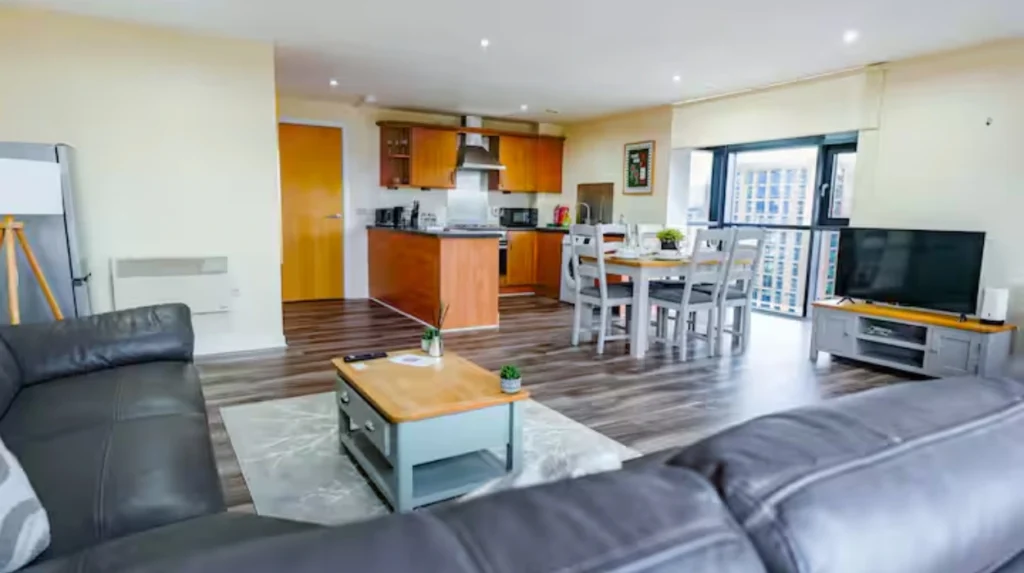
Is SpareRoom better for finding a room in a Glasgow flatshare?
SpareRoom is better suited to renters seeking individual rooms because its Glasgow marketplace is designed around flatshares, houseshare arrangements and existing households. Listings can identify room types, household details, availability and whether utilities are included.
A flatshare is an arrangement where two or more people live in the same property, usually with separate bedrooms and shared facilities such as a kitchen, bathroom and living area. SpareRoom defines flatsharing in this way and specifically supports people searching for rooms and compatible housemates.
This model is common among students, graduates, young professionals and people moving to Glasgow without an established household.
SpareRoom’s Glasgow listings demonstrate the range of accommodation formats available. Current listings include double rooms, furnished rooms, student rooms, studios and entire properties offered in connection with shared accommodation. The platform also provides filters for areas such as Glasgow City Centre, the West End and Shawlands.
The platform therefore provides information that is less central to a conventional whole-property search.
A prospective flatmate can assess whether the accommodation is furnished, whether bills are included, whether the landlord lives in the property and whether the household has specific requirements.
The household itself also becomes part of the search process. That matters because the rental decision involves both the property and the people sharing it.
For example, someone seeking accommodation near the University of Glasgow can search for a room in the West End rather than renting an entire flat. Someone relocating to Glasgow for employment can search for an existing household rather than assembling a new tenancy with several strangers.
This reduces the amount of property that needs to be rented by the individual.
Is Rightmove better for renting an entire flat in Glasgow?
Rightmove is generally the more direct platform for renters seeking an entire flat because its Glasgow rental section is organised around complete properties, including one-bedroom, two-bedroom and larger flats offered through letting agents and other property advertisers.
Rightmove’s Glasgow rental search includes dedicated flat listings and filters that help renters evaluate complete properties. At the time of research in August 2026, its Glasgow flats section displayed hundreds of listings, demonstrating the scale of the marketplace. Listing numbers change continuously as properties are added, removed and let.
The platform is particularly relevant for renters who already know their desired property type.
A renter can search for a one-bedroom flat in Glasgow City Centre, a two-bedroom property in the West End, or a larger property in the South Side.
The search process therefore starts with the property rather than the household.
This is an important distinction for couples, families and professionals who want exclusive use of the accommodation.
Rightmove listings also commonly provide details such as asking rent, bedroom count, property type, photographs, advertiser information and location. Some developments provide additional facilities and services. Current Glasgow listings include examples with gyms, communal facilities, concierge services, shared workspaces and transport links.
These features are particularly relevant to renters comparing professionally managed developments.
However, a large listing inventory does not automatically mean a property is available indefinitely. Rental listings change quickly. A renter should verify availability directly with the advertiser before arranging travel or preparing an application.

Which platform offers better options for students in Glasgow?
Students seeking a single room in shared accommodation should start with SpareRoom, while students seeking an entire private flat should compare Rightmove. The appropriate platform depends on whether the student needs one bedroom or exclusive use of the whole property.
Glasgow has a substantial student population and several areas commonly associated with student accommodation. The West End is particularly relevant to students connected with the University of Glasgow, while the city centre and South Side also contain student-oriented accommodation.
SpareRoom’s structure is useful for students who need one room. Current Glasgow results include student-only rooms and tenancy replacement listings, demonstrating how the platform accommodates people entering or leaving shared arrangements.
Tenancy replacement is particularly relevant to students because academic accommodation needs often change around university terms.
A student taking over an existing room should establish exactly what is being transferred. The renter should confirm the tenancy type, landlord or letting agent, rent amount, deposit arrangements, remaining tenancy obligations and whether the landlord has approved the change.
Rightmove is more suitable when several students are forming a household and want to rent an entire flat or house.
In that situation, the group needs to consider affordability, joint tenancy obligations and the landlord’s requirements.
Under a Scottish joint tenancy, all joint tenants can be responsible for the rent together and separately for as long as the joint tenancy continues.
This makes the distinction between a room search and a whole-property search legally important.
Which platform is better for comparing Glasgow rental prices?
Rightmove provides a stronger basis for comparing whole-property asking rents, while SpareRoom provides stronger information for comparing room rents and shared accommodation costs. Renters should compare like-for-like properties rather than treating room prices and entire-flat prices as equivalent.
Official Scottish Government rent statistics provide useful market context.
For the year ending September 2025, the average Scottish rent was £738 per month for a one-bedroom property, £921 for a two-bedroom property, £1,154 for a three-bedroom property, and £560 for a one-bedroom shared property.
Greater Glasgow recorded particularly strong longer-term rent growth.
The average one-bedroom rent in the Greater Glasgow Broad Rental Market Area increased from £437 in 2010 to £865 in 2025, an increase of 98%. The average two-bedroom rent increased from £564 to £1,094, representing a 94% increase.
These figures demonstrate why renters need to distinguish between property categories.
A £600 room and a £1,100 entire two-bedroom flat represent different accommodation products. The room price usually relates to one person’s use of a bedroom and shared facilities. The flat price relates to exclusive occupation of the entire property.
Bills also affect the calculation.
A SpareRoom advertisement can state that bills are included. A whole-flat listing can require the tenant to arrange and pay household utilities separately. Therefore, comparing only the headline monthly rent can produce an inaccurate assessment of total housing costs.
The correct comparison is the total monthly housing cost, including rent, utilities, council tax where applicable, internet, transport implications and other contractual charges.
How do SpareRoom and Rightmove differ in their Glasgow search process?
SpareRoom begins with the room, household or flatshare requirement, while Rightmove begins with the property requirement. SpareRoom therefore prioritises shared living arrangements; Rightmove prioritises property characteristics such as bedrooms, location, rent and property type.
On SpareRoom, a renter can search specifically for rooms and use filters related to shared accommodation. The platform also allows users to save searches and receive alerts when new listings appear.
This is useful in a fast-moving room market.
A renter can create a defined search for an area and budget, then respond to new listings as they appear.
Rightmove also provides saved searches and alerts for rental properties. Its Glasgow rental pages allow users to search available properties and prioritise different characteristics.
The mechanisms are similar, but the inventory differs.
SpareRoom’s core unit is the room or shared household.
Rightmove’s core unit is the property.
This distinction affects how renters should set their search criteria.
A SpareRoom user should consider maximum room rent, bills, furnishing, household composition, preferred move-in date and transport links.
A Rightmove user should consider total rent, bedrooms, property type, furnishing, deposit, location, EPC information where supplied, parking and access to public transport.
Both platforms benefit from fast responses. Renters should prepare identification, proof of income and relevant references before contacting advertisers when those documents are required.
Should Glasgow renters use both SpareRoom and Rightmove?
Using both platforms gives renters broader coverage because the websites address different segments of Glasgow’s rental market. SpareRoom covers rooms and shared homes, while Rightmove covers complete properties, creating complementary rather than identical search coverage.
Using both platforms is particularly useful when the renter has flexibility over accommodation type.
For example, a professional with a £900 monthly budget can compare an individual room in a central or West End flat against a complete one-bedroom flat farther from the city centre.
The comparison then becomes a question of space, privacy, location and total cost.
A student can compare a room in an established flatshare with a complete flat rented jointly with friends.
A newcomer can use SpareRoom to understand room availability while using Rightmove to monitor entire-property prices.
This two-platform approach also reduces dependence on one marketplace.
Rental listings are not permanent. A property disappears after being let, withdrawn or replaced. New advertisements enter the market continuously.
The Scottish Government’s rental statistics reinforce the importance of current market research. Its statistics are based predominantly on advertised rents, meaning they reflect properties becoming available through tenant turnover or entering the rental market.
Advertised rent is therefore useful for understanding the market available to a new renter.
It is not identical to the rent paid by every existing tenant.
What should you check before renting a Glasgow property found online?
Before paying money or signing a tenancy, Glasgow renters should verify the advertiser, property, tenancy terms, deposit protection, landlord registration where applicable and required documentation. Online listing details do not replace legal checks or a written Scottish tenancy agreement.
Scotland has specific protections for private renters.
Most new private tenancies that meet the statutory conditions are Private Residential Tenancies. These agreements are open-ended, and landlords cannot simply require a tenant to leave because a fixed term has expired.
The landlord must provide written tenancy terms.
The Scottish Government model tenancy guidance states that a landlord must provide the tenant with written terms and relevant statutory information.
Deposits also have legal protections.
A Scottish landlord cannot require a tenancy deposit exceeding two months’ rent. The deposit must be placed in an approved tenancy deposit scheme, with required information provided to the tenant within the relevant period.
Landlord registration is another important check.
Renting out property without being registered with the local authority is a criminal offence in Scotland, subject to the statutory framework and exemptions. Scottish Government guidance states that an unregistered landlord can face enforcement action and a fine of up to £50,000.
Houses in multiple occupation, commonly called HMOs, have additional licensing requirements. An HMO generally involves multiple unrelated people sharing accommodation and facilities. The precise licensing requirements depend on Scottish legislation and local authority rules.
A room listing therefore deserves the same level of legal attention as an entire-flat listing.
Are SpareRoom and Rightmove safe for Glasgow renters?
Neither platform should replace independent checks by the renter. Safety depends on verifying the advertiser, viewing the property, confirming the tenancy arrangement and avoiding inappropriate payments before the rental arrangement is properly established.
SpareRoom provides dedicated advice for room seekers, including safety information, tenancy guidance and information about Scottish tenancy deposit schemes.
Rightmove provides a large property marketplace, but renters still need to assess individual listings and advertisers.
A professional-looking listing is not proof that an advertiser is legitimate.
Renters should verify the property address, confirm who has authority to let the property and inspect the accommodation before committing where practical.
The tenancy documentation should identify the landlord or appropriate letting agent and specify the agreed rent and other terms.
A renter should also establish whether the advertised rent includes bills.
This point is especially important on SpareRoom because room listings frequently use “bills included” or “bills not included” descriptions. A room costing £700 with utilities included has a different effective monthly cost from a £650 room where electricity, gas, water, broadband and other household costs are separate.
The same principle applies to whole-property rentals.
Renters should also keep records of correspondence, property advertisements, payment receipts and tenancy documents.
Does the Scottish rental law change the SpareRoom versus Rightmove decision?
Scottish rental law applies to qualifying private tenancies regardless of whether the property was discovered on SpareRoom, Rightmove or another platform. The website used for discovery does not determine the tenant’s statutory rights or the landlord’s legal obligations.
The Private Housing (Tenancies) (Scotland) Act 2016 created the modern Private Residential Tenancy system, which began on 1 December 2017. The system replaced assured and short assured tenancies for most new private lets.
This means the platform is primarily a discovery mechanism.
The legal relationship exists between the landlord and tenant under the relevant tenancy legislation.
The Scottish Government is continuing to update the private rented sector. Current policy changes include measures relating to tenant protections, rent assessments, succession rights, damp and mould duties, rent adjudication and joint tenancies across dates from 2026 to 2027.
For renters, this creates an important evergreen principle: always check the current Scottish Government guidance when signing a new tenancy.
A property advertisement can describe an accommodation arrangement, but the legal status of the tenancy depends on the actual circumstances and applicable law.
Which platform should you choose for different Glasgow rental needs?
Choose SpareRoom for an individual room or existing flatshare, Rightmove for an entire flat or house, and both platforms when accommodation type, neighbourhood or budget remains flexible. The correct choice follows the rental requirement rather than platform popularity.
A renter seeking a room in a shared flat should prioritise SpareRoom because its search structure directly targets this accommodation type.
A renter seeking an entire one-bedroom flat should prioritise Rightmove because its property listings directly represent complete rental units.
A couple seeking a two-bedroom flat should normally focus on Rightmove.
A group of friends seeking a shared property should compare Rightmove’s whole-property listings with SpareRoom’s existing flatshares.
A student seeking a room should examine SpareRoom first, particularly around areas with strong student demand.
A new Glasgow resident with an open accommodation preference should use both platforms and compare the total cost of each option.
The choice should also reflect the desired tenancy structure.
An existing flatshare can reduce the number of people required to establish a new household. An entire flat gives the tenant exclusive use of the property but normally creates a larger total rent obligation.
The correct platform is therefore determined by the combination of property type, budget, household structure, location and tenancy requirement.
Explore More Area Guide
Finnieston Named Coolest Neighbourhood as Brooklyn of Glasgow in 2026
How Hard Is It to Rent a Flat? Glasgow 2026
What is the best strategy for finding a Glasgow flat quickly?
The most effective Glasgow rental strategy is to define the accommodation type, set a realistic budget, create alerts on relevant platforms, prepare documents, respond promptly and verify every property before committing. Using SpareRoom and Rightmove together provides broader market visibility.
Start by defining the accommodation requirement.
Decide whether the target is a room, studio, one-bedroom flat, two-bedroom flat or larger property.
Next, establish a realistic maximum monthly housing budget.
Use official Scottish rent statistics as a market benchmark rather than assuming that one advertised listing represents the entire Glasgow market. Greater Glasgow recorded an average two-bedroom advertised rent of £1,094 per month in 2025, while the Scottish average was £921.
Then select locations based on work, university, transport and lifestyle requirements.
Glasgow contains distinct rental markets across areas including the City Centre, West End, South Side and surrounding districts. Prices and property types vary between neighbourhoods.
Create alerts on the relevant platform.
Respond to suitable listings quickly.
Prepare standard documentation before making applications. This includes identification and evidence of income or other information requested by the landlord or letting agent.
Finally, verify the tenancy.
Confirm the written terms, rent, deposit, landlord or agent details and applicable legal protections before transferring money.
Is SpareRoom or Rightmove better for finding a flat in Glasgow?
Rightmove is the stronger first choice for an entire Glasgow flat, while SpareRoom is the stronger first choice for a room or flatshare. Renters with flexible requirements should use both because the platforms cover different parts of the rental market.
The comparison is not simply about which website has more listings.
The fundamental difference is the type of rental relationship being searched for.
SpareRoom focuses on shared accommodation and roommate matching. Its Glasgow marketplace includes rooms, existing flatshares and related accommodation arrangements.
Rightmove provides a broader property marketplace and is particularly relevant to renters seeking complete flats and houses. Its Glasgow rental pages contain extensive property listings and search functionality.
For a private one-bedroom or two-bedroom Glasgow flat, start with Rightmove.
For a bedroom in an existing household, start with SpareRoom.
For students, graduates, professionals and newcomers who are open to either arrangement, use both.
The strongest approach combines platform coverage with Scottish rental-law checks. Rental prices in Greater Glasgow have experienced substantial long-term increases, with official statistics showing a 94% increase in average two-bedroom rents between 2010 and 2025.
That makes accurate price comparison, rapid responses and careful verification increasingly important.
Ultimately, SpareRoom and Rightmove are complementary tools rather than direct substitutes. SpareRoom is built around the people and rooms within shared accommodation. Rightmove is built around the property itself. Glasgow renters who understand this distinction can choose the platform that matches their housing requirement and use the other platform as a useful comparison source.
Is SpareRoom or Rightmove better for finding a flat in Glasgow?
Rightmove is generally better for finding an entire flat in Glasgow, while SpareRoom is better for finding individual rooms or shared accommodation. Using both platforms provides wider coverage of the Glasgow rental market.