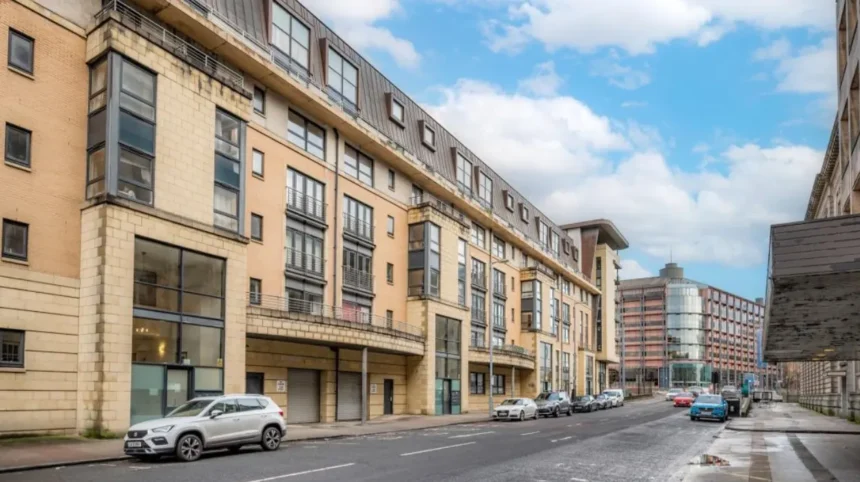
Finding a good flat to rent in Glasgow remains competitive in 2026, especially for well-presented one- and two-bedroom properties in popular neighbourhoods. Rental demand continues to exceed available supply in several parts of the city, while average rents remain substantially higher than five years ago.
- How competitive is Glasgow’s rental market in 2026?
- What do flats cost to rent in Glasgow right now?
- Which Glasgow flats are hardest to secure?
- Which Glasgow areas offer more choice for renters?
- Why is the supply of rental flats under pressure?
- How have Glasgow rents changed over the past five years?
- What makes a flat “good” in Glasgow’s rental market?
- How does the Scottish tenancy system affect Glasgow renters?
- What upfront costs should Glasgow renters prepare for?
- How can renters improve their chances of securing a good Glasgow flat?
- Is it easier to rent a flat outside central Glasgow?
- What should renters check before signing a Glasgow tenancy?
- Will Glasgow’s rental market become easier for tenants?
The Glasgow private rented sector includes properties managed by private landlords, letting agents, property companies and housing providers. The sector has changed significantly since the introduction of Scotland’s Private Residential Tenancy system in December 2017. Current conditions reflect limited supply, sustained tenant demand, higher operating costs and continuing changes to Scottish rental legislation.
Citylets data for the first quarter of 2026 provides a clear picture. Glasgow’s average rent across reported properties was £1,155 per month. Average rents were £902 for one-bedroom flats, £1,167 for two-bedroom properties, £1,525 for three-bedroom properties and £2,524 for four-bedroom properties.
The difficulty is not simply the number of listings. Rent level, location, property condition, transport access, tenant affordability, application speed and competition all affect the chances of securing a suitable home.
How competitive is Glasgow’s rental market in 2026?
Glasgow’s rental market is competitive because tenant demand continues to exceed available supply, particularly for attractive one- and two-bedroom flats in central and west-end locations. Good properties receive applications quickly, requiring renters to prepare documentation and respond promptly.
Citylets reported that Glasgow properties took an average of 34 days to let during Q1 2026. One-bedroom properties averaged 29 days, two-bedroom properties 35 days, three-bedroom properties 43 days and four-bedroom properties 51 days.
The headline figures also show that some properties move much faster than the overall average. In Q1 2026, 17% of one-bedroom properties were let within one week. Twelve percent of two-bedroom properties were let within one week. Across all property sizes, 14% were let within seven days and 57% within one month.
This creates a two-speed market. Properties with strong locations, reasonable rents and good presentation attract immediate attention. Properties with weaker locations, higher prices or less competitive specifications remain available for longer.
Competition also varies according to tenant profile. Students, young professionals, relocating workers, couples and households seeking larger accommodation all compete for different sections of Glasgow’s rental stock.
Citylets described Glasgow’s Q1 2026 market as buoyant, with demand still outpacing supply. Its market commentary specifically identified popular locations and continued pressure on available accommodation.
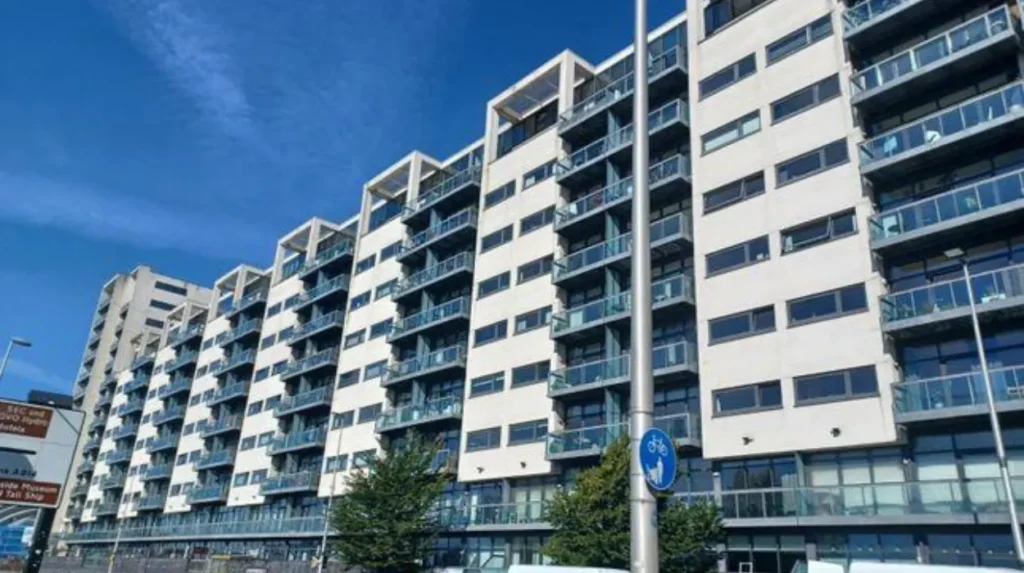
What do flats cost to rent in Glasgow right now?
Average Glasgow rents in Q1 2026 were £902 for one-bedroom properties, £1,167 for two-bedroom properties, £1,525 for three-bedroom properties and £2,524 for four-bedroom properties, although actual prices vary significantly by postcode and property quality.
Average city-wide figures provide useful benchmarks, but they do not represent every neighbourhood. Location produces substantial differences in asking rents.
Citylets postcode data for Q1 2026 illustrates this variation. In G1, covering much of Glasgow city centre, the reported average was £1,020 for a one-bedroom property and £1,303 for a two-bedroom property. In G3, which includes areas around Anderston, Finnieston and parts of the west side of the city centre, the averages were £975 for one-bedroom accommodation, £1,253 for two-bedroom accommodation and £1,759 for three-bedroom accommodation.
The wider rental trend is also important. Glasgow’s Q1 2026 average across all property sizes was £1,155, representing a 0.4% increase over one year and a 37.8% increase over five years. The ten-year increase was 62.7%.
One-bedroom rents increased by 4.2% over one year and 38.8% over five years. Two-bedroom rents recorded a 0.3% annual decrease while remaining 35.9% higher than five years earlier. Three-bedroom rents fell 8.8% year on year but remained 28.8% above their five-year level.
These figures demonstrate why affordability remains a major consideration even when annual rental growth slows.
Which Glasgow flats are hardest to secure?
Well-priced one- and two-bedroom flats in high-demand locations are generally the hardest properties to secure because they combine broad tenant demand with limited suitable supply and strong transport, employment, university, retail and entertainment connections.
One-bedroom flats attract demand from individual professionals, postgraduate students, couples and people relocating to Glasgow. Two-bedroom flats attract couples, professional sharers, small households and tenants seeking an additional room for working or study.
The concentration of demand makes certain property characteristics especially competitive. Central locations reduce commuting time. West-end locations provide access to universities, restaurants, cultural venues and established transport connections. Properties close to major railway stations and subway stations also provide strong connectivity.
A well-maintained flat with modern heating, good insulation, reliable appliances and a practical layout attracts more attention than a poorly maintained property at a similar price.
Presentation also influences competition. Professional photography, clear property descriptions and accurate floor plans help tenants assess properties before viewing. Once a property attracts several suitable applicants, the landlord or letting agent has a larger pool from which to select a tenant.
Citylets’ Q4 2025 Glasgow report identified competitive bidding for well-presented one- and two-bedroom flats and particularly strong demand in the city centre and west end.
Which Glasgow areas offer more choice for renters?
Renters generally find broader choice by considering neighbourhoods beyond the most concentrated central and west-end markets, while retaining access to public transport and local services through Glasgow’s extensive rail, subway, bus and road networks.
Central Glasgow provides strong access to employment, shopping, nightlife, universities and transport. Areas around G1 and G2 command significant rental interest because of their proximity to the city centre.
The west side includes established rental markets around G3 and surrounding neighbourhoods. These locations combine residential streets with access to the city centre, universities, cultural attractions and commercial areas.
South Glasgow contains a broad range of residential neighbourhoods with different housing types and rental levels. Areas farther from the central core often provide larger properties or different price points, although commuting requirements become more important.
The north and east of Glasgow also contain private rental accommodation. These areas provide alternatives for tenants prioritising space, local amenities or affordability over immediate access to the city centre.
Postcode-level Citylets data confirms that rental prices differ between neighbourhoods. G1, G2, G3 and G4 show different average rents and letting times, demonstrating that the Glasgow rental market is not uniform.
For renters, expanding the search area by a few transport stops can materially increase the number of suitable properties.
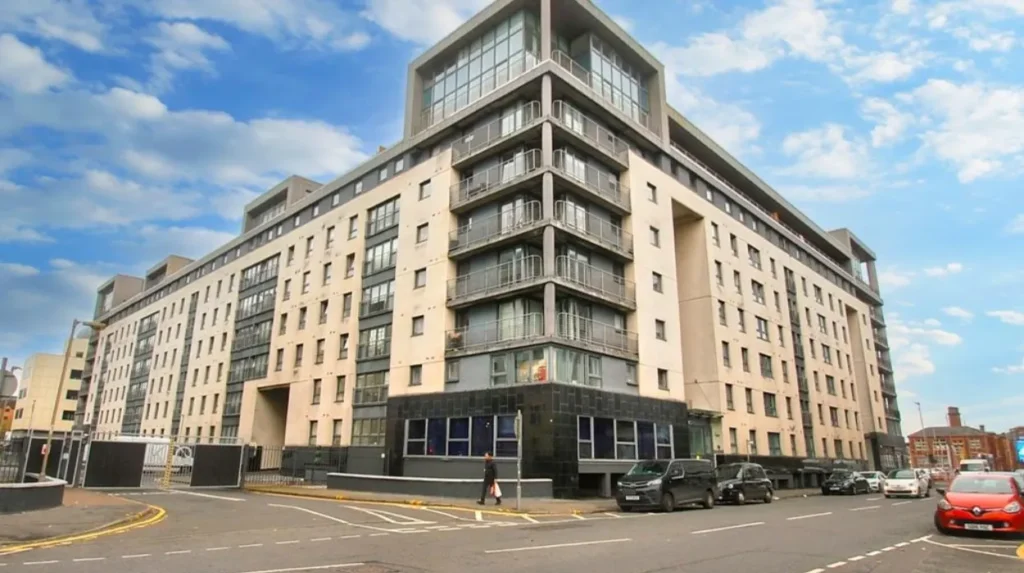
Why is the supply of rental flats under pressure?
Glasgow’s rental supply is under pressure because available private housing has not expanded at the same pace as tenant demand, while landlords face higher financing, compliance and operating costs that influence investment and property availability.
The private rented sector depends on landlords continuing to provide homes for rent. When ownership costs increase, some landlords sell properties rather than retain them as rental investments. Fewer rental homes then remain available to incoming tenants.
Citylets reported that Glasgow’s private rented sector remained highly constrained during Q4 2025. Its market commentary identified landlord withdrawals, rent-control uncertainty, increased compliance costs and higher interest rates as factors affecting rental supply.
This supply pressure has a direct effect on renters. When fewer flats are available, tenants have fewer choices at each price level. Competition becomes stronger for properties that combine affordability and good condition.
The supply issue also affects mobility. Tenants who already hold suitable accommodation often remain in place longer because moving involves searching, viewing, application costs and uncertainty about finding another suitable property.
The result is a market in which advertised availability does not automatically translate into abundant choice.
How have Glasgow rents changed over the past five years?
Glasgow rents have increased substantially over five years despite slower recent growth, with Q1 2026 data showing a 37.8% rise in the average rent across all property sizes compared with Q1 2021.
The five-year increase demonstrates the structural change in Glasgow’s rental market.
The average rent across all property sizes reached £1,155 in Q1 2026, compared with a five-year increase of 37.8%. The ten-year increase reached 62.7%.
The pattern differs by property size. One-bedroom rents increased 38.8% over five years. Two-bedroom rents increased 35.9%. Three-bedroom rents increased 28.8%. Four-bedroom rents increased 61.0%.
The four-bedroom category therefore shows particularly strong long-term growth. This reflects the cost of larger rental accommodation and the limited supply of suitable larger homes.
Annual changes are more mixed. One-bedroom rents increased 4.2% over one year, while two-bedroom rents fell 0.3% and three-bedroom rents fell 8.8%. This indicates that recent market growth has moderated in some segments.
A slowdown in annual growth does not reverse previous increases. Tenants entering the market in 2026 still face rental levels substantially above those recorded five years earlier.
What makes a flat “good” in Glasgow’s rental market?
A good rental flat combines a sustainable rent with sound condition, reliable heating, adequate insulation, practical space, secure access, suitable transport links, accurate listing information and a tenancy arrangement that meets the renter’s financial and household requirements.
Price alone does not determine whether a rental property represents good value.
Energy performance is important because heating costs affect the real monthly cost of living. A lower advertised rent can become less affordable when a property has poor insulation or inefficient heating.
Property condition also matters. Tenants should inspect windows, doors, heating systems, plumbing, ventilation, appliances, flooring and signs of dampness during a viewing.
Location determines daily travel requirements. A property close to a railway station, subway station or frequent bus route can reduce dependence on private transport.
The internal layout matters for households working from home. A second bedroom, dining area or separate workspace provides practical value where the tenant’s budget supports it.
Tenancy documentation also forms part of a good rental arrangement. Scottish private residential tenancies provide important legal protections and are generally open-ended rather than fixed-term arrangements.
A strong rental decision therefore evaluates the complete housing cost rather than focusing exclusively on monthly rent.
How does the Scottish tenancy system affect Glasgow renters?
Most new private tenancies in Scotland use the Private Residential Tenancy system, introduced on 1 December 2017, providing open-ended occupancy, defined eviction grounds and statutory protections governing rent and tenancy administration.
The Private Residential Tenancy, commonly called a PRT, replaced assured and short assured tenancy arrangements for almost all new private tenancies in Scotland from 1 December 2017.
A PRT is open-ended. A landlord cannot require a tenant to leave simply because a fixed contractual term has expired. Eviction requires one of the specified legal grounds.
Rent increases are also regulated. Under current rules, a landlord must provide at least three months’ written notice of a rent increase and cannot increase rent more than once during a 12-month period.
The tenancy system therefore affects both existing tenants and people searching for flats. Renters need to understand their rights before signing an agreement or responding to a proposed rent increase.
Scotland’s housing legislation continues to develop. The Housing (Scotland) Act 2025 established a framework for evidence-based rent controls in designated areas where rent conditions meet statutory criteria. Local authorities began rent-condition assessments from 1 April 2026, with first reports due by 31 May 2027.
What upfront costs should Glasgow renters prepare for?
Glasgow renters should budget for the first rent payment and a refundable tenancy deposit, while understanding that Scottish law restricts additional rental fees and limits a tenancy deposit to no more than two months’ rent.
The initial financial requirement depends on the property’s advertised rent and the landlord’s lawful payment requirements.
Scottish Government guidance states that a landlord cannot charge a fee or premium as a condition of granting, renewing or continuing a tenancy. The lawful charges include rent and a refundable deposit, with the deposit capped at two months’ rent.
Deposits must also be protected through an approved tenancy deposit scheme. The landlord must provide the required deposit information within 30 working days of the tenancy beginning.
This framework makes it important for renters to distinguish legitimate tenancy costs from unlawful charges.
For a flat costing £1,000 per month, a deposit of two months’ rent would equal £2,000. A tenant therefore needs sufficient funds for the lawful deposit and required rent before moving into the property.
Renters should also budget separately for household bills, council tax where applicable, energy, broadband, insurance and transport. These costs determine the real affordability of the property.
How can renters improve their chances of securing a good Glasgow flat?
Renters improve their chances by setting a realistic budget, preparing identification and income evidence, monitoring listings frequently, arranging viewings quickly, understanding tenancy requirements and submitting complete applications immediately after finding suitable accommodation.
Preparation is critical in a competitive market.
Tenants should establish a maximum monthly housing budget before beginning the search. The budget should include rent and essential household costs.
Documentation should be ready before viewing properties. Typical application evidence includes identification, proof of income, employment information and previous landlord or tenancy references where requested.
Students and applicants with irregular income should understand the landlord or agent’s affordability requirements in advance. Scottish law permits landlords to assess whether tenants can afford the rent. Since 1 May 2026, landlords and letting agents cannot discriminate against tenants because they have children or receive benefits.
Speed matters because Glasgow properties can be let within days. Q1 2026 data shows that 17% of one-bedroom properties and 12% of two-bedroom properties were let within one week.
A renter who waits several days before contacting an agent can lose a suitable property even when their application is financially strong.
Is it easier to rent a flat outside central Glasgow?
Renting outside central Glasgow provides access to a wider range of neighbourhoods and property types, but affordability depends on postcode, property condition, transport costs, local demand and the balance between monthly rent and commuting requirements.
Moving farther from the city centre does not automatically guarantee a cheaper or better flat.
The main benefit is choice. Central areas contain concentrated demand because of employment, universities, entertainment, retail and transport. Outer neighbourhoods contain different housing stock, including traditional tenements, modern developments, terraces and larger family properties.
Transport remains a major consideration. Glasgow’s rail network connects numerous suburban communities with the city centre, while the Subway serves central and west-end locations. Bus services provide additional connections across the metropolitan area.
A renter should therefore compare total monthly costs rather than rent alone.
For example, saving £100 per month on rent has limited financial benefit if additional commuting costs and travel time substantially increase.
The right strategy is to identify a set of connected neighbourhoods rather than restricting the search to one postcode.
Explore More Area Guide
Moving to Glasgow Guide: Homes, Jobs & Life Glasgow 2026
Best Glasgow Festivals and Events 2026 Glasgow
What should renters check before signing a Glasgow tenancy?
Before signing a Glasgow tenancy, renters should verify the landlord or agent, inspect the property, review the written tenancy terms, confirm rent and deposit requirements, document property condition and understand the legal process for rent increases and ending the tenancy.
Property inspection is the first practical check. Tenants should examine signs of dampness, mould, condensation, water damage, faulty fixtures, heating problems and inadequate ventilation.
The written tenancy agreement should identify the landlord, tenant, property address, rent amount and relevant tenancy terms.
Renters should also confirm deposit arrangements. Scottish Government guidance requires landlords to protect deposits through an approved tenancy deposit scheme and provide prescribed information within 30 working days.
The property should be photographed at the start of the tenancy. A detailed inventory helps establish the condition of fixtures, appliances, walls, flooring and furnishings.
Tenants should retain copies of the tenancy agreement, deposit information, correspondence and payment records.
Understanding the legal framework prevents confusion later. The Scottish Government provides prescribed notices and forms covering matters including notices to leave and rent increases for private residential tenancies.
Will Glasgow’s rental market become easier for tenants?
Glasgow’s rental market depends on the future balance between housing supply, tenant demand, investment, construction, landlord participation and regulation, while Scottish rent-control legislation and local authority assessments create a significant policy framework for future rental conditions.
The immediate market is defined by constrained supply and strong demand. Citylets reported this imbalance during both Q4 2025 and Q1 2026.
Long-term improvement requires additional suitable housing and a stable private rented sector. New construction increases the overall housing stock, while continued landlord participation maintains existing rental properties.
Regulation is another major factor. The Housing (Scotland) Act 2025 introduced a framework for rent-control areas based on evidence of local rent conditions. From 1 April 2026, Scottish local authorities began assessing rental conditions in their areas.
These assessments provide a formal mechanism for identifying areas where rent pressures require further consideration.
Glasgow renters therefore face a market shaped by both economic and regulatory changes. Current rent levels remain elevated compared with historical levels, while annual growth has slowed in several property categories.
The most practical conclusion is clear: finding a good flat in Glasgow in 2026 is difficult when the search is limited to one neighbourhood, one property type or a narrow budget. It becomes more manageable when renters use realistic affordability limits, monitor several connected areas, prepare documentation in advance and act quickly when a suitable property appears.
Glasgow remains one of Scotland’s major rental markets. Its large population, universities, employment base, transport network and continuing inward movement of residents sustain demand for private accommodation. The supply constraint remains the central factor affecting how quickly and easily renters secure suitable homes.
For renters, the strongest approach is therefore not simply searching for the cheapest flat. It is comparing rent, location, condition, energy costs, transport, tenancy rights and long-term affordability as one decision.
Is it hard to find a good flat to rent in Glasgow in 2026?
Yes. Glasgow’s rental market remains competitive, particularly for well-priced one- and two-bedroom flats in popular areas. Citylets reported an average Glasgow rent of £1,155 per month in Q1 2026, with some suitable properties being let within one week.