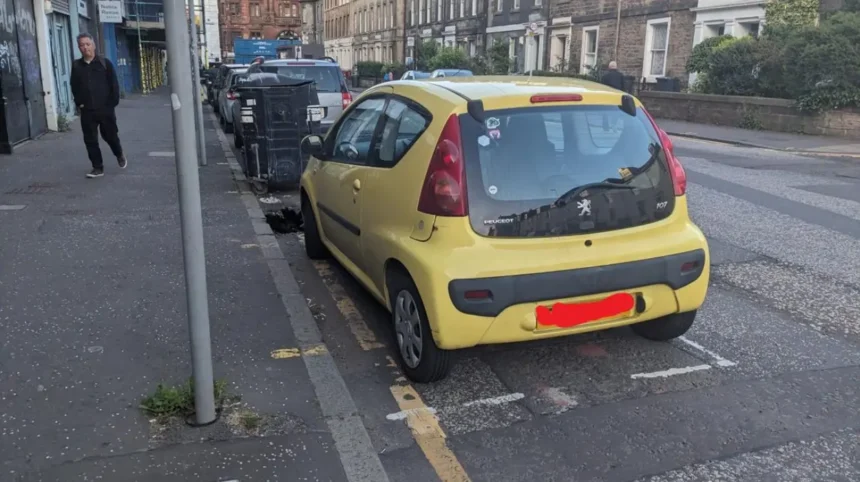
Parking problems in Glasgow can affect road safety, pedestrian access, public transport, residential streets and access to businesses. Residents and visitors can report illegal parking, pavement obstruction, vehicles blocking dropped kerbs and dangerous parking through the appropriate council or police service.
- Why is reporting a parking problem in Glasgow important?
- How do you report a parking problem to Glasgow City Council?
- Which parking problems should you report in Glasgow?
- Can you report pavement parking?
- Can you report a vehicle blocking a dropped kerb?
- Can you report double parking?
- Can you report parking on yellow lines or in a disabled bay?
- When should you contact Police Scotland about a parking problem?
- What information should you include in a Glasgow parking complaint?
- Which vehicle details should you record?
- What location details should you provide?
- Should you include photographs?
- What happens after you submit a parking report in Glasgow?
- How do you report repeated parking problems in a Glasgow neighbourhood?
- What is the law on pavement parking in Glasgow?
- What should you do if Glasgow City Council does not resolve a parking complaint?
- How can Glasgow residents prevent parking obstructions and improve road safety?
The correct reporting route depends on the location, the type of parking offence and the level of immediate danger. Glasgow City Council handles relevant parking restrictions and civil enforcement, while Police Scotland deals with dangerous parking and road obstructions that require police attention.
Why is reporting a parking problem in Glasgow important?
Reporting a parking problem in Glasgow helps the responsible authority identify illegal parking, assess safety risks and take appropriate enforcement action. Reports about blocked pavements, obstructed crossings and vehicles creating hazards help protect pedestrians, wheelchair users, cyclists, drivers and public transport passengers.
Parking management is part of Glasgow’s wider transport system. The city includes busy shopping streets, residential neighbourhoods, bus routes, controlled parking zones and areas with high pedestrian activity. Poorly parked vehicles interfere with the safe movement of people and traffic.
Glasgow City Council is the local authority responsible for relevant roads, parking restrictions and council enforcement services. Police Scotland handles dangerous parking and certain obstruction offences where police intervention is appropriate.
The distinction matters because a report sent to the wrong organisation can delay the response. A vehicle parked on a restricted street without a valid payment generally presents a different enforcement issue from a vehicle blocking an emergency access route.
What counts as a parking problem?
A parking problem is a vehicle stopping or standing in a location or manner that breaches a restriction, obstructs access or creates a safety risk. Examples include parking on double yellow lines, blocking a dropped kerb, occupying a pavement illegally or obstructing a junction.
Parking problems also include vehicles parked across pedestrian crossing points, obstructing bus movements or preventing residents from entering or leaving their properties. The exact legal position depends on the location, road markings, applicable restrictions and any statutory exemption.
A complaint does not automatically establish that a driver has committed an offence. The relevant authority assesses the circumstances and determines whether enforcement action is justified.
How do you report a parking problem to Glasgow City Council?
You can report eligible parking problems to Glasgow City Council through its official parking enforcement webpage or the MyGlasgow council app. Provide the location, describe the vehicle’s position, explain the obstruction and include supporting photographs when the reporting service allows them.
The council provides a dedicated route for reporting pavement parking and requesting enforcement. Its official website is the appropriate starting point for vehicles parked on pedestrian pavements or in breach of the relevant parking prohibitions.
The MyGlasgow app supports reports about council-related issues, including parking meter problems and other street issues. The published app information explains that users select a report category, answer the relevant questions, add photographic or video evidence when appropriate, enter the location and submit the report. The app also supports updates and access to submitted reports.
Choose the category that best describes the incident. A faulty parking meter is a different problem from a car blocking a pavement. For a pavement parking offence, use the dedicated enforcement route where available.
When reporting a vehicle, identify the exact street and nearby property number or junction. State whether the vehicle is still present and explain the effect on pedestrians or traffic. Accurate details help the council assess the complaint.
Which parking problems should you report in Glasgow?
Report parking that breaches applicable restrictions, blocks pedestrian access or creates a traffic hazard. Common examples include pavement parking, double parking, vehicles blocking dropped kerbs, parking on restricted yellow lines and obstruction of junctions or access points. The appropriate authority depends on the specific offence.
Parking rules apply differently according to the road layout, signs, markings and legal restrictions. Identifying the problem correctly helps the responsible organisation decide what action is available.
Can you report pavement parking?
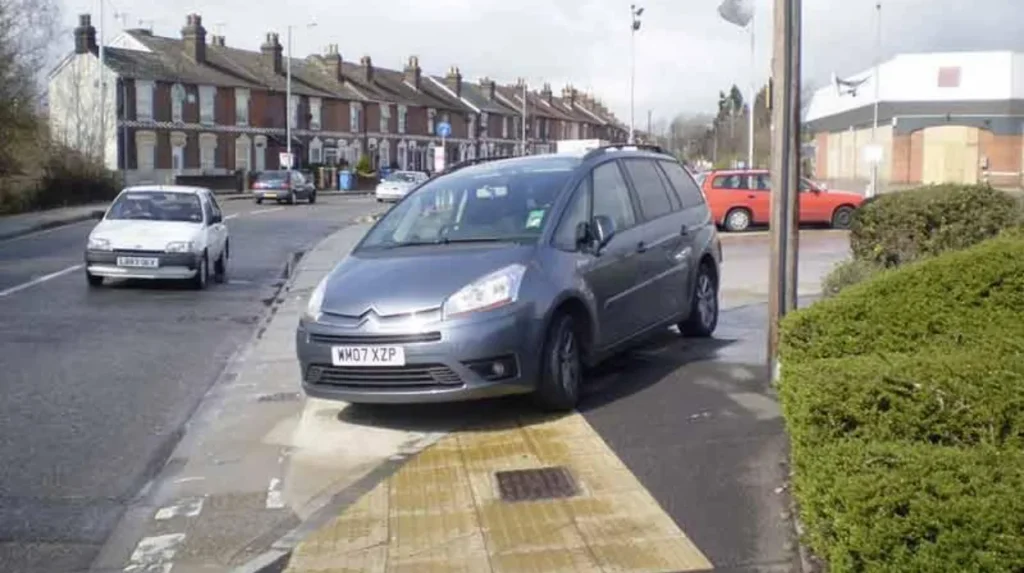
Yes. Pavement parking is generally prohibited across Scotland under the Transport (Scotland) Act 2019, subject to specified exemptions. Glasgow residents can report suspected offences to Glasgow City Council through its dedicated pavement parking reporting service.
A pavement is the pedestrian part of a street beside the carriageway. A vehicle parked on it can narrow or completely block the route used by people walking, wheelchair users and people pushing prams.
The national prohibition came into force for enforcement purposes on 11 December 2023. Local authorities gained powers to issue a penalty charge notice of £100, reduced to £50 when paid within 14 days, subject to the applicable rules and exemptions.
Not every location is assessed in isolation from its legal status. Some areas can be exempted under the statutory framework, with appropriate signs and markings indicating where permitted. Report the obstruction and its precise location rather than assuming that every vehicle with a wheel on the pavement automatically qualifies for a penalty.
Can you report a vehicle blocking a dropped kerb?
Yes. Parking across a dropped kerb at a designated crossing point is covered by Scotland’s national parking prohibitions, subject to applicable exemptions. Report the vehicle to Glasgow City Council when it appears to breach the restriction or prevents people from using the crossing safely.
A dropped kerb lowers the pavement edge to make it easier to move between the pavement and the road. These crossings support wheelchair users, people with limited mobility and people using pushchairs.
A vehicle parked across a dropped kerb can force pedestrians into the carriageway or prevent them from crossing. Include a photograph showing the lowered kerb, the vehicle’s position and the surrounding street layout.
Can you report double parking?
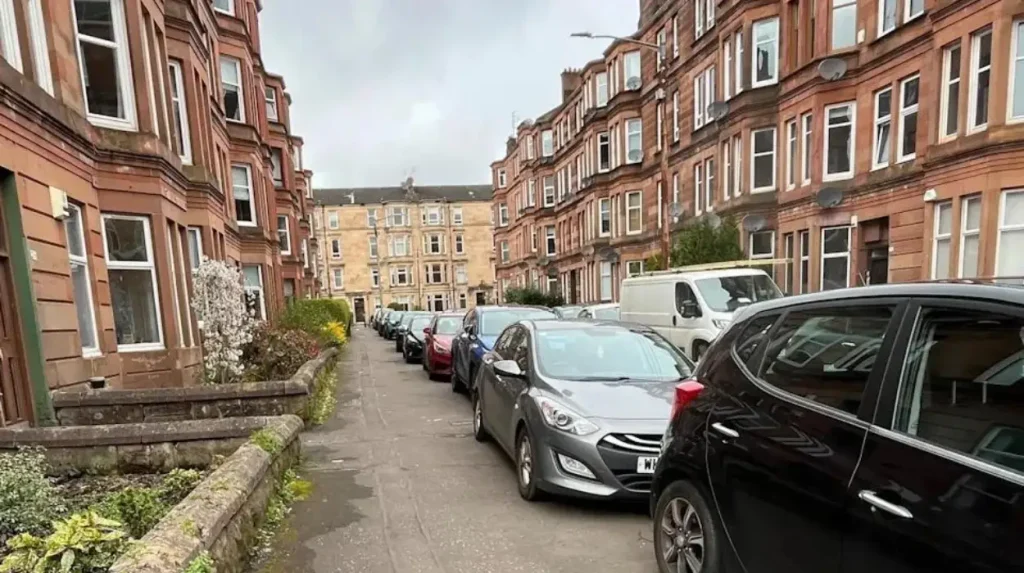
Yes. Double parking is one of the parking behaviours covered by the Transport (Scotland) Act 2019. Report a suspected offence to Glasgow City Council for assessment, especially when the vehicle occupies space beside another parked vehicle and restricts the usable carriageway.
Double parking can narrow a street, interfere with deliveries and prevent other vehicles from passing safely. The exact circumstances determine whether the legal prohibition applies.
Describe the obstruction clearly. For example, explain whether a parked van prevents buses or other road users from moving through a narrow residential street. Do not attempt to direct traffic yourself.
Can you report parking on yellow lines or in a disabled bay?
Yes. You can report suspected breaches of parking restrictions, including parking on yellow lines and misuse of designated disabled parking bays. Glasgow City Council handles relevant civil parking enforcement, while the circumstances determine whether another authority needs to be involved.
Single and double yellow lines indicate waiting restrictions, although the precise rules depend on the location, times displayed on signs and any applicable exceptions. Loading restrictions and other marked areas have separate conditions.
A disabled parking bay is intended for eligible users under its applicable rules. If a vehicle appears to occupy a designated bay unlawfully, provide the location, registration number and a photograph of the bay markings or nearby sign.
A report does not itself establish that an offence occurred. The enforcement team checks the relevant restriction and available evidence before deciding whether to act.
When should you contact Police Scotland about a parking problem?
Contact Police Scotland on 101 for non-emergency dangerous parking or a vehicle causing a serious obstruction. Call 999 when there is immediate danger to life or a serious incident requiring urgent police assistance. Routine parking restriction reports should normally go to Glasgow City Council.
Police Scotland and Glasgow City Council have different responsibilities. Civil parking enforcement deals with relevant parking restrictions, while police handle dangerous situations and offences requiring police intervention.
A vehicle parked on a yellow line without an immediate safety risk is not the same as a vehicle positioned dangerously on a bend, blocking a crossing or creating an immediate hazard. The Scottish Police Authority explains that, in areas where parking enforcement has been decriminalised, routine restrictions are generally enforced by the local authority. Police retain powers in relation to offences such as dangerous parking and obstruction.
Call 101 when a vehicle creates a non-emergency safety hazard or obstruction. Be prepared to describe its location, registration number, make, model and colour, together with the reason the parking is dangerous.
What information should you include in a Glasgow parking complaint?
A useful parking complaint identifies the exact location, vehicle registration, type of obstruction and time of observation. Add photographs that clearly show the vehicle and surrounding restrictions when safe and permitted. Detailed evidence helps the receiving authority identify the incident and assess whether enforcement action is appropriate.
A report with an unclear location or no description of the problem can be harder to investigate. Provide factual information rather than assumptions about the driver’s intentions.
Which vehicle details should you record?
Record the registration number if visible, along with the vehicle’s make, model and colour. These details help distinguish the reported vehicle from other cars parked nearby.
The vehicle’s registration number is particularly useful on streets with limited parking spaces or frequent vehicle movements. If the registration is obscured, provide any other identifying details you can safely observe.
Do not touch the vehicle, interfere with it or try to identify its owner through private means. The relevant authority can determine whether further identification is required.
What location details should you provide?
Give the street name, nearby building number, junction, landmark or postcode. Explain which side of the road the vehicle occupies and whether it blocks a pavement, dropped kerb, driveway or traffic lane.
For example, a report about a vehicle obstructing a crossing on Sauchiehall Street should identify the nearest junction or property rather than simply saying it is in central Glasgow.
If the problem occurs repeatedly, record the dates and approximate times. A recurring issue outside a school, shop or residential entrance requires a different description from a single incident on a main road.
Should you include photographs?
Photographs provide useful supporting evidence when the reporting service accepts them. Capture the vehicle’s position, relevant road markings, the blocked access point and enough surrounding context to establish the location.
Take photographs only from a safe, lawful position. Do not stand in the carriageway, obstruct traffic or confront the driver to obtain a better image.
Preserve the original image when possible. Avoid editing it in ways that alter the evidence, and do not publish unnecessary personal information about people in the photograph.
What happens after you submit a parking report in Glasgow?
After you submit a report, the receiving authority reviews the information and directs it to the relevant service for assessment. Glasgow City Council’s MyGlasgow app supports submitted reports and updates. Enforcement depends on the evidence, the applicable restrictions and the authority’s assessment.
A report does not guarantee that an officer will attend immediately or that a penalty charge notice will be issued. The authority determines the appropriate response according to its powers and the circumstances.
The process generally involves the following stages.
First, the authority receives the complaint and identifies the reported location and issue. The report is then assessed to establish whether it falls within the service’s responsibilities.
Second, the authority considers the details and any supporting photographs. It assesses whether the described behaviour appears to breach a relevant restriction or requires another response.
Third, the responsible team determines the next step. That step can include enforcement, further assessment, a request for additional information or no further action if the available evidence does not establish a breach.
If the vehicle is creating an immediate safety risk, do not rely on an online report alone. Contact the appropriate emergency or police service.
Keep any submission reference, confirmation message or correspondence. These records help you identify the original complaint if you need to provide further information or request an update.
How do you report repeated parking problems in a Glasgow neighbourhood?
Report recurring parking problems to Glasgow City Council with the locations, dates, times and effects of each incident. Repeated evidence helps the council identify persistent obstructions, assess enforcement needs and determine whether additional parking management measures require consideration.
A recurring problem often involves vehicles parking across the same pavement, blocking a residential entrance or obstructing a road during particular hours. Recording the pattern makes the complaint more informative than reporting each incident without context.
For example, residents in a street near a school can explain that vehicles repeatedly obstruct a pedestrian crossing during school drop-off and collection periods. A report should identify the affected crossing, the approximate times and the safety consequences.
Glasgow City Council’s published committee papers describe its use of targeted parking enforcement and assessment processes for pavement parking. Council papers also confirm that members of the public can report concerns through the council’s pavement parking webpage.
Residents can strengthen a recurring complaint by keeping a simple record of incidents. Include the dates, times, vehicle details where available and the specific access or safety problem. Submit the information through the relevant council reporting service.
If the obstruction involves dangerous driving, threats or an immediate hazard, use the appropriate Police Scotland reporting route instead of waiting for routine council action.
What is the law on pavement parking in Glasgow?
The Transport (Scotland) Act 2019 established national prohibitions on pavement parking, double parking and parking at dropped kerbs. Enforcement powers became available to local authorities from 11 December 2023, with a standard £100 penalty subject to applicable exemptions and reduced-payment rules.
The legislation introduced measures intended to improve pedestrian safety and accessibility. Before these national prohibitions, the legal treatment of pavement parking differed across the United Kingdom, and Scotland did not have the same general statutory framework now in force.
The three principal prohibitions address distinct situations:
- Pavement parking: a vehicle parked on a pavement, subject to statutory exemptions.
- Double parking: a vehicle parked beside another parked vehicle in circumstances covered by the prohibition.
- Dropped-kerb parking: a vehicle parked at a dropped kerb at a designated crossing point, subject to the relevant rules.
Examples include a car obstructing a wheelchair user’s route along a pavement, a van preventing vehicles from passing a row of parked cars, or a vehicle blocking a lowered kerb used to cross a road.
The penalty for an applicable offence is £100, reduced to £50 when paid within 14 days. The national framework permits exemptions in specified circumstances, so the facts of an individual case remain important.
Glasgow’s implementation has also involved local assessments of pavement parking and exemption status. In council committee reporting, the authority described targeted enforcement and the use of public reports to identify problems. This demonstrates why residents should provide the exact location rather than assuming every street has identical enforcement circumstances.
Explore More Area Guide
Report Potholes in Glasgow | Road Fault Guide
Glasgow Parking Charges: Complete Guide to Costs and Rules
What should you do if Glasgow City Council does not resolve a parking complaint?
If a parking complaint remains unresolved, retain the reference number, review any council response and submit additional factual evidence through the appropriate reporting channel. Explain what remains unresolved, when the problem recurred and how it continues to affect access, safety or compliance with parking restrictions.
A complaint may remain open because the vehicle has moved, the evidence is insufficient or the authority requires further assessment. An absence of immediate enforcement does not automatically mean the council has ignored the report.
Start by checking whether you received a confirmation or reference number. If the MyGlasgow app was used, review the submitted report and any available updates. The app’s published features include access to reports and the ability to add notes.
If the problem continues, provide an update with a new date, time and photograph where appropriate. Explain whether the obstruction is recurring and identify any new safety implications.
For a complaint about the handling of a council service, use the council’s official complaints process. A complaint about the service response is different from an appeal against a parking penalty. If you receive a penalty charge notice, follow the instructions and deadlines provided with that notice.
Where a vehicle creates an immediate danger, contact Police Scotland using the appropriate emergency or non-emergency route. Do not wait for the outcome of an earlier council complaint when urgent intervention is needed.
How can Glasgow residents prevent parking obstructions and improve road safety?
Residents can help reduce parking obstructions by reporting verified problems, keeping pedestrian routes clear and following the parking restrictions that apply to each street. Accurate reporting, consistent evidence and appropriate use of council and police services support safer access for pedestrians, cyclists, drivers and public transport users.
Parking management depends on both compliance and enforcement. Drivers need to understand restrictions, while residents need accessible ways to report problems when vehicles create hazards or block public space.
Before leaving a vehicle, drivers should check the road signs, yellow lines, bay markings and any relevant local restrictions. They should avoid obstructing dropped kerbs, pedestrian routes and access points where parking is prohibited.
Residents should use official reporting channels rather than confronting drivers or posting identifying details on social media. A factual report gives the responsible authority information it can assess.
The national pavement parking rules are especially relevant to people who depend on unobstructed pavements, including wheelchair users, older people and parents pushing prams. A vehicle blocking a pedestrian route can force people into the road, creating avoidable safety risks. Transport Scotland identifies pedestrian safety and accessibility as central objectives of the national prohibitions.
Glasgow’s parking rules, reporting services and enforcement powers provide a framework for dealing with these problems. Residents who identify the correct authority, provide a precise location and describe the obstruction clearly give their reports the best chance of being assessed effectively.
How do I report illegal parking in Glasgow?
Report illegal parking through the relevant Glasgow City Council service. Use the official Glasgow pavement parking webpage for pavement parking offences or the MyGlasgow app for supported council issues.