
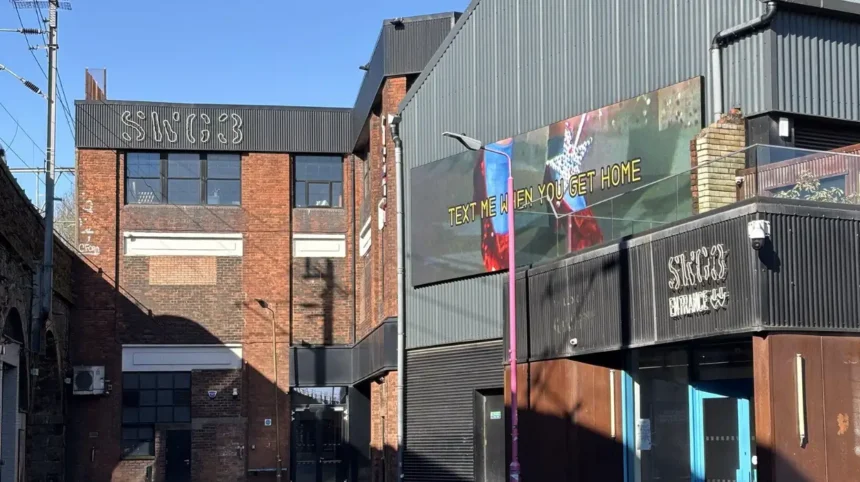
SWG3 is a major independent cultural venue at 100 Eastvale Place in Glasgow’s West End. It combines live music, club culture, contemporary art, street art, studios, community projects, hospitality, outdoor events and creative enterprise across a former industrial site beside the River Clyde.
- What is SWG3 and where is it located?
- How did SWG3 develop from an industrial site into a creative venue?
- Why is SWG3 described as a multidisciplinary creative venue?
- What makes SWG3’s buildings important to its creative identity?
- How does Yardworks contribute to SWG3’s creative reputation?
- How does SWG3 support artists and creative careers?
- What role does live music and club culture play at SWG3?
- How large is SWG3’s creative operation?
- How does SWG3 connect commercial activity with charitable cultural work?
- How is SWG3 contributing to Glasgow’s public art and community development?
- Why is sustainability an important part of SWG3’s creative model?
- How does SWG3 combine creativity with environmental innovation?
- How does SWG3 contribute to Glasgow’s wider creative economy?
- What makes SWG3 different from a conventional music venue?
- Why is SWG3 important to Glasgow’s cultural identity?
- What is the future relevance of SWG3 as a creative venue?
- What explains SWG3’s reputation as one of Scotland’s most creative venues?
The venue is recognised for its multidisciplinary structure rather than a single cultural function. Its programme connects music, visual art, design, fashion, food, nightlife, education and public art. SWG3 also operates through a relationship between commercial activity and the charitable Clydeside Initiative for Arts (CIA), which supports artists, communities and creative projects.
SWG3 occupies approximately 135,000 square feet of studios, warehouses and outdoor spaces. Its current programme includes exhibitions, festivals, educational workshops, live performances, club events and community initiatives. This scale gives the organisation a physical platform for different creative disciplines to operate within the same complex.
What is SWG3 and where is it located?
SWG3 is an independent multidisciplinary cultural venue at 100 Eastvale Place in Glasgow. It occupies former industrial buildings near the River Clyde and combines music, art, studios, community activity, hospitality, outdoor events and creative enterprise.
SWG3 is located in the Yorkhill and Finnieston area of Glasgow’s West End. The venue sits within a former industrial landscape associated with the Clyde and the city’s manufacturing and engineering history.
The site is particularly significant because its architecture remains connected to its industrial past. Former warehouses, concrete structures, steelwork and open yards provide the physical framework for contemporary cultural activity.
The official SWG3 description identifies the complex as a former galvanizers’ yard and a group of warehouses that once serviced the Clyde. These buildings now accommodate art, design, music, fashion, food, shopping and nightlife.
The venue is also close to Finnieston, a major food, hospitality and leisure district. SWG3 states that Partick Interchange is the nearest major transport hub, with the venue approximately a 10-minute walk away.
This location gives SWG3 a strong relationship with Glasgow’s West End cultural infrastructure. Its position also connects it to the wider regeneration and creative development activity around the Glasgow Riverside Innovation District.
How did SWG3 develop from an industrial site into a creative venue?
SWG3 developed from artist studios and creative activity in a derelict industrial warehouse into a large multidisciplinary cultural complex. Clydeside Initiative for Arts began the organisation’s charitable work in 2005, supporting affordable creative space and artistic collaboration.
The origins of SWG3 are closely connected with the reuse of industrial buildings. The organisation’s history records its beginnings in a derelict warehouse, where artists’ studios created an early foundation for cultural activity.
Clydeside Initiative for Arts was established in 2005. Its initial purpose was to create affordable spaces for artists, DJs, musicians and designers to work, collaborate and share creative activity.
The physical character of the site became an important part of its identity. Instead of replacing the industrial structures with a conventional purpose-built cultural centre, SWG3 developed existing warehouses and industrial spaces for new uses.
This approach created flexible environments for exhibitions, live music, club nights, rehearsals, workshops, production and events.
The Warehouse provides a clear example. SWG3 describes it as originating from a derelict storage area within an old tobacco bond. The space developed from a word-of-mouth rave location into a venue used for club nights, live music, art, dinners, launches, screenings, photography and live art.
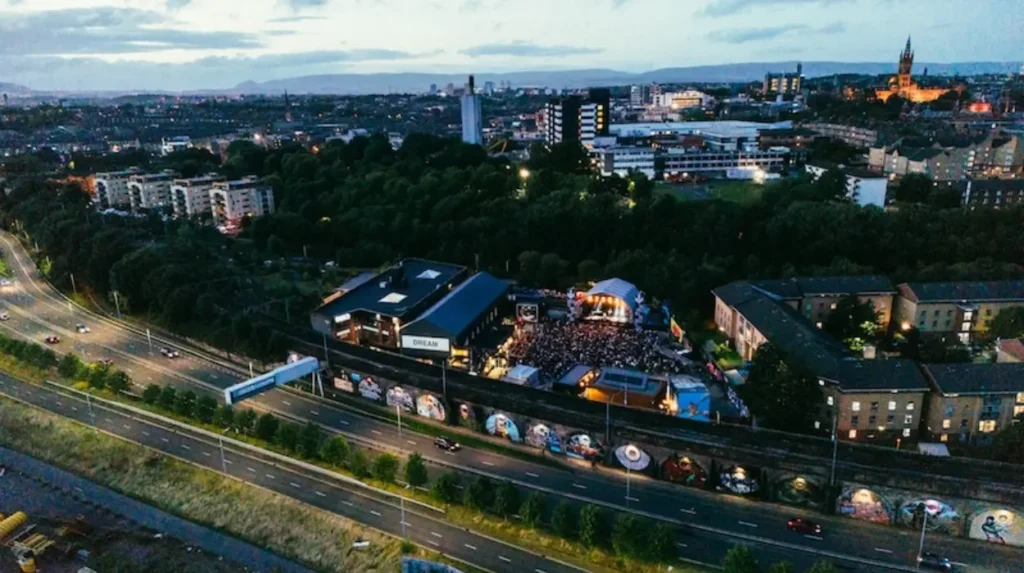
The Galvanizers Yard provides another example of industrial reuse. The 25,000-square-foot outdoor area occupies the former site of Clydeside Galvanizers and now operates as an outdoor event space with capacity for up to 4,000 standing guests.
SWG3’s development therefore reflects a wider Glasgow pattern in which former industrial spaces have been adapted for cultural, commercial and community uses.
Why is SWG3 described as a multidisciplinary creative venue?
SWG3 is multidisciplinary because its programme integrates live music, club culture, visual art, street art, design, fashion, food, education, community activity and creative studios. These disciplines operate within connected spaces rather than as isolated cultural programmes.
Multidisciplinary programming is central to SWG3’s operating model. The organisation does not function solely as a concert venue or nightclub.
Its programme includes live music and club events alongside exhibitions, festivals, art fairs, educational workshops and community projects.
The visual arts programme operates throughout the year. SWG3 identifies Acid Bar and Yard Life Gallery as permanent gallery spaces supporting rotating exhibitions of contemporary art.
Music remains a major part of the organisation. The venue hosts concerts, electronic music events and club nights across different spaces. Its programme includes both established performers and contemporary acts.
The combination creates opportunities for audiences to experience several forms of cultural production within one organisation.
SWG3 also provides studios and creative workspaces. These facilities support artists and graduates who require affordable places to develop projects and professional practices.
The organisation’s charitable arm has provided affordable studios to more than 300 artists and sponsored studio space for 60 new graduates, according to SWG3’s published impact figures.
This structure gives SWG3 a role that extends beyond presenting finished cultural products. It also supports the production, development and promotion of creative work.
What makes SWG3’s buildings important to its creative identity?
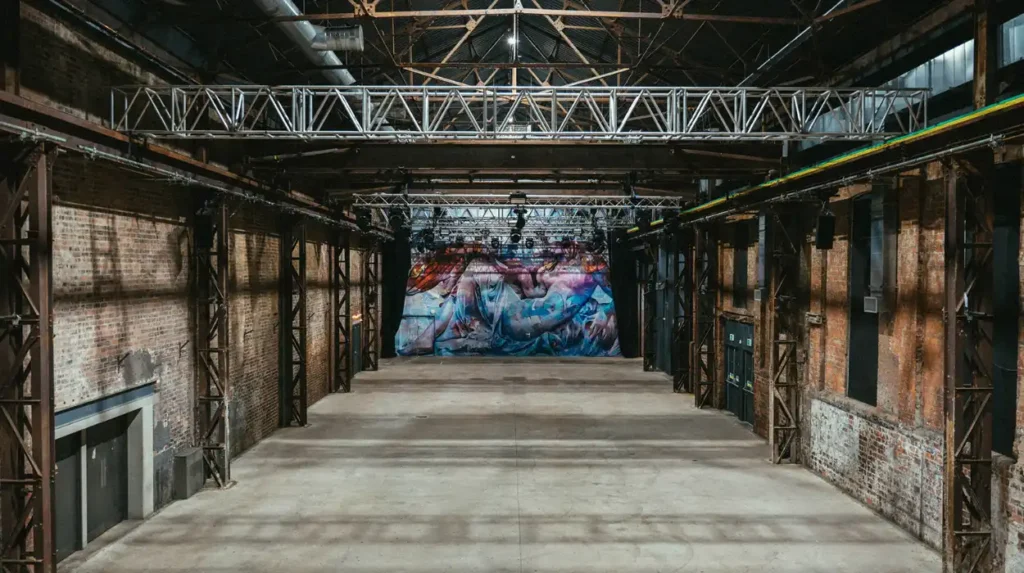
SWG3’s industrial buildings provide adaptable spaces with exposed brick, concrete, steel structures, warehouses, galleries and outdoor yards. Their physical flexibility supports concerts, exhibitions, club nights, festivals, photography, conferences, markets and large-scale public art.
The built environment is an active component of SWG3’s cultural model.
The TV Studio demonstrates how an industrial interior can support different event formats. The space retains concrete pillars and exposed brickwork while accommodating up to 1,000 standing guests or 300 seated guests.
The Warehouse provides a smaller environment. It accommodates 500 standing guests, 200 seated guests or 240 people for dinner. Its windows overlook Yorkhill and connect the space to an outdoor terrace bar and garden.
The Galvanizers Yard provides the largest outdoor format. Its 25,000 square feet support outdoor performances, art and design markets, screenings and festival activity.
The Zinc Bar adds another layer. It operates as a café, restaurant, bar and gallery overlooking the Galvanizers Yard. It also hosts contemporary art and restaurant residencies.
This variety allows SWG3 to scale events according to their purpose. A small creative meeting uses a different environment from a 4,000-person outdoor performance.
The result is a venue infrastructure designed around flexibility rather than one fixed cultural format.
How does Yardworks contribute to SWG3’s creative reputation?
Yardworks strengthens SWG3’s creative identity through street art, graffiti, design, exhibitions, education and public commissions. Founded in 2004, the programme has developed into a major European street-art platform connecting Glasgow artists with international practitioners.
Yardworks is one of the most significant creative programmes associated with SWG3.
The initiative began in 2004 with a focus on street arts, graffiti and design. It subsequently expanded into festivals, community projects, artist development and public art.
The Yardworks Festival brings local artists and international street-art practitioners together. The programme provides opportunities for artists to create work publicly and interact with audiences.
Yardworks also operates beyond the SWG3 site. Its projects include murals, community commissions and commercial artworks across Scotland.
Yard Life Gallery provides a permanent exhibition environment within the Eastvale Place complex. Yardworks Studio provides dedicated facilities for street artists.
SWG3 describes Yardworks Studio as Scotland’s first purpose-built home for street arts. The facility supports artists working across Partick, Yorkhill and Govan and contributes to the development of a wider street-art district.
The programme therefore connects several levels of cultural activity. Artists receive workspace. Audiences receive exhibitions and festivals. Communities receive public artworks. Glasgow receives additional cultural infrastructure.
This combination makes street art a sustained part of SWG3’s creative programme rather than an occasional event theme.
How does SWG3 support artists and creative careers?
SWG3 supports creative careers through affordable studios, graduate opportunities, exhibitions, mentoring, educational activity and artistic commissions. Its charitable arm focuses on developing opportunities for artists while commercial events help support wider creative and community work.
Artist development is a central element of the SWG3 model.
The Graduate Programme, founded in 2005, provides free studio space for graduates for one year after leaving university. Its purpose is to help emerging creatives develop their practice without the immediate financial burden of studio rent.
SWG3 has also provided affordable studio space to more than 300 artists, according to CIA’s published figures. This gives the organisation a direct role in Glasgow’s creative infrastructure.
Artist development also occurs through exhibitions, workshops and commissioned work.
The model is important because creative careers require more than public performance. Artists need production space, professional networks, opportunities to display work and access to audiences.
SWG3 connects those requirements within one complex.
The organisation also works with community groups and educational participants. Its community programme includes interactive workshops, long-running development programmes and projects created with local groups.
This provides a pathway between participation and professional creative activity.
What role does live music and club culture play at SWG3?
Live music and club culture remain core parts of SWG3’s programme, with concerts, electronic music events and club nights operating alongside art and community activity. Its flexible warehouses and studios allow different musical formats within the same complex.
SWG3 has developed a strong identity within Glasgow’s live music and electronic music landscape.
The Warehouse originated partly through club culture and rave activity. Its development from a derelict storage area into a recognised event space illustrates how music became part of the site’s cultural foundation.
The venue continues to host electronic music, club events and live performances.
Its current programming demonstrates the range of formats. SWG3’s event calendar includes club events, gigs and outdoor performances across spaces such as Galvanizers Yard, Galvanizers, Warehouse and TV Studio.
The organisation’s ability to host both music and visual art creates an integrated cultural environment.
Music audiences also encounter galleries, public art, hospitality spaces and outdoor areas. Artists and visual creatives operate within a venue already connected to music culture.
This interaction contributes to SWG3’s multidisciplinary identity.
How large is SWG3’s creative operation?
SWG3 operates across approximately 135,000 square feet of studios, warehouses and outdoor spaces. Its charitable arm reports more than 700 cultural events annually, audiences exceeding 300,000 each year, and activity involving thousands of artists and performers.
The scale of SWG3 is significant for an independent cultural organisation.
Its programme covers approximately 135,000 square feet. This includes studios, warehouses, galleries and outdoor areas.
CIA reports that the organisation has hosted more than 3,500 musicians and performing artists and delivered more than 250 art exhibitions and onsite projects over its history.
The organisation also reports more than 700 cultural events annually and audiences exceeding 300,000 people each year.
These figures show that SWG3 operates as a substantial cultural ecosystem rather than a single event space.
Its impact also includes public art. CIA reports more than 40 public artworks and murals across Glasgow.
The combination of audience scale, artist participation and physical infrastructure explains why SWG3 has a visible role within Scotland’s contemporary cultural sector.
How does SWG3 connect commercial activity with charitable cultural work?
SWG3 connects commercial events with charitable cultural activity through an organisational model involving SWG3 Ltd and Clydeside Initiative for Arts. Commercial operations generate income while the charity focuses on community, artist development and creative projects.
The organisational structure is an important reason for SWG3’s distinct identity.
Clydeside Initiative for Arts is the founding charity. It focuses on community and creative projects.
SWG3 Ltd manages events, bars and day-to-day operations. According to the organisation’s published model, income generated through gigs and events helps support charitable activity.
This creates a relationship between cultural consumption and cultural development.
Commercial events provide an audience-facing operation. The charitable programme provides artist support, education, community projects and public art.
The structure also enables different types of activity to occupy the same site.
This model has become particularly relevant in an environment where independent cultural organisations face increasing operating costs. SWG3’s combination of commercial and not-for-profit activity creates multiple mechanisms for maintaining cultural infrastructure.
How is SWG3 contributing to Glasgow’s public art and community development?
SWG3 contributes to public art and community development through murals, street-art programmes, workshops, a community garden, graduate support and projects across Partick, Yorkhill and Govan. These activities extend the venue’s cultural role beyond its physical boundaries.
SWG3’s community work is designed to operate beyond ticketed events.
The organisation has developed a street-art district featuring open-air murals and artworks across surrounding areas. These projects connect creative activity with local streets and buildings.
Its Community Garden transformed previously derelict land into a public growing and green space. SWG3 states that the garden was developed with consultation involving local neighbours and communities.
The wider GRID programme focuses on the Glasgow Riverside Innovation District. Glasgow City Council documents describe projects designed to connect Govan, Partick and Yorkhill through street art and public-space improvements.
A UK Community Renewal Fund-supported phase involved 153 people, 28 partners and 16 public artworks, according to Glasgow City Council documentation.
This demonstrates the broader geographic impact of the SWG3 model.
The venue therefore functions as both a destination and a platform for cultural activity across neighbouring communities.
Why is sustainability an important part of SWG3’s creative model?
Sustainability is integral to SWG3’s operating strategy through renewable electricity, BODYHEAT, recycling, circular-economy initiatives, biodiversity projects and carbon measurement. The venue uses environmental innovation as part of its long-term cultural and operational planning.
SWG3 has developed one of the most distinctive sustainability programmes associated with a Scottish cultural venue.
The organisation has purchased 100% renewable electricity since 2021. In 2022, it introduced BODYHEAT, a system that captures heat generated by audiences and stores it using ground-source technology.
The Scottish Government identifies BODYHEAT as an integrated system using ground-source heat pumps and thermal storage. The project received support through the Low Carbon Infrastructure Transition Programme and was completed in October 2022.
The system uses a closed-loop ground-source borehole array for thermal storage. Heat generated by event audiences is captured and transferred through the venue’s heating and cooling infrastructure.
SWG3 also measures its carbon footprint.
Its 2024 sustainability report records a total carbon footprint of 963.91 tonnes of CO2 equivalent. The organisation states that its operational emissions were 77% below its baseline in 2024 and revised its operational net-zero target to 2027 after expanding the scope of its carbon accounting.
The venue also recorded a 64% recycling rate in 2024, against a 70% target for 2025.
SWG3 received the VIBES Scottish Environment Business Award for Best Medium Business in 2024. The VIBES awards are led by the Scottish Environment Protection Agency and recognise environmental business practices in Scotland.
How does SWG3 combine creativity with environmental innovation?
SWG3 combines creativity and environmental innovation by integrating low-carbon technology, public art, biodiversity, community projects and creative placemaking. Its sustainability programme treats the venue as a place for cultural production and practical environmental action.
SWG3’s sustainability work extends beyond energy efficiency.
Its 2024 sustainability reporting identifies creative placemaking as a central approach. The organisation is developing the Glasgow Riverside Innovation District as a street-art district and open-air gallery while also supporting active travel and public artworks.
The organisation reported creating 41 new artworks in 2024, including three large gable-end murals and 38 additional pieces across shopfronts and electrical boxes.
This approach connects environmental regeneration with cultural production.
Vacant and underused areas become sites for murals, walking routes, community projects and public space.
The community garden provides another example. It combines biodiversity, public access, creative activity and sustainability planning within the SWG3 site.
This is significant because the venue’s environmental strategy is visible within its physical surroundings. Sustainability is therefore connected to architecture, public space, technology and community engagement.
How does SWG3 contribute to Glasgow’s wider creative economy?
SWG3 contributes to Glasgow’s creative economy by providing event infrastructure, affordable studios, artistic commissions, employment, audience development, cultural programming and spaces for creative businesses. Its activities connect artists, audiences, producers, designers, hospitality workers and organisations.
Creative economies depend on networks as well as individual cultural organisations.
SWG3 provides infrastructure for those networks through studios, galleries, event spaces and public programmes.
Artists gain workspace and exhibition opportunities. Musicians gain performance infrastructure. Event producers gain adaptable venues. Designers and fashion professionals gain spaces for launches and activations. Audiences gain access to cultural programming.
The venue also supports hospitality through bars, restaurants and food-related events.
Its commercial operations therefore interact with several areas of Glasgow’s economy.
The organisation’s published figures include £8 million of private and public investment across its development and programmes.
Its cultural programme also attracts audiences from beyond the immediate neighbourhood.
This produces economic activity around transport, hospitality, accommodation, food, retail and event services while reinforcing Glasgow’s reputation as a cultural destination.
What makes SWG3 different from a conventional music venue?
SWG3 differs from a conventional music venue because it combines performance, production, exhibition, education, community development, public art, hospitality and environmental innovation. Its physical site and organisational structure support creative activity before, during and after events.
A conventional music venue primarily focuses on presenting performances.
SWG3 operates across a wider cultural lifecycle.
Artists can develop work in studios. Visual artists can exhibit in galleries. Street artists can participate in Yardworks. Musicians can perform in warehouses and outdoor spaces. Communities can participate in workshops and public-art projects.
Audiences can attend concerts, club nights, exhibitions, festivals, markets and community events within the same overall complex.
The venue also supports creative activity during daytime hours. Its studios and hospitality areas create uses beyond traditional nightlife.
This wider operating pattern is one reason SWG3 is frequently described as a multidisciplinary venue.
The organisation itself identifies its programme across visual art, design, live music, club culture, fashion, food, entertainment and nature.
Why is SWG3 important to Glasgow’s cultural identity?
SWG3 is important to Glasgow’s cultural identity because it combines the city’s industrial heritage with contemporary music, art, street culture, community projects and creative enterprise. Its development demonstrates how historic urban infrastructure can support modern cultural production.
Glasgow has a strong industrial heritage and an established international cultural reputation.
SWG3 connects these two characteristics through adaptive reuse.
The venue preserves industrial buildings while giving them contemporary cultural functions. Its warehouses and yards retain physical connections to the Clyde’s industrial past while hosting modern music, art and design.
Its public-art programmes also extend Glasgow’s creative identity into surrounding neighbourhoods.
Yardworks links local artists with international street-art networks. The galleries provide contemporary exhibition opportunities. The studios provide creative production space.
SWG3’s sustainability work adds another dimension by linking culture with environmental innovation.
This combination gives the organisation relevance beyond entertainment.
It demonstrates a model in which cultural venues can operate as spaces for performance, artistic development, community participation, environmental experimentation and urban regeneration.
Explore More Area Guide
Merchant City Festival: Comprehensive Guide to Summer Events Merchant City Glasgow 2026
Why Glasgow Leads the UK Live Music Scene | Glasgow 2026
What is the future relevance of SWG3 as a creative venue?
SWG3’s future relevance is based on its multidisciplinary programming, artist-development infrastructure, flexible industrial spaces, sustainability strategy and community projects. These functions position the organisation to remain part of Glasgow’s evolving cultural, creative and urban landscape.
The organisation’s future strategy is closely linked with creative placemaking, sustainability and community development.
SWG3 states that its vision is to ignite Glasgow’s creative energy and bring people together through experiences, connections and opportunities. Its model combines commercial activity with charitable cultural work.
The sustainability strategy is also evolving. SWG3’s current target is operational net zero by 2027, following its decision to revise the original 2025 target after expanding its carbon-accounting scope.
Its creative infrastructure continues to expand through studios, galleries, community projects and street-art programmes.
The organisation also continues to operate large-scale event spaces such as Galvanizers Yard, which can accommodate up to 4,000 standing guests.
These developments show why SWG3 has a continuing role within Glasgow.
Its importance is not based on one event or one artistic discipline. It comes from the integration of cultural production, presentation, community participation, creative careers, environmental innovation and adaptive reuse.
What explains SWG3’s reputation as one of Scotland’s most creative venues?
SWG3’s reputation comes from its combination of industrial architecture, multidisciplinary programming, artist development, street art, live music, community projects, public art, sustainability and commercial innovation. Its integrated model makes creativity central to the entire organisation.
SWG3 represents a distinctive form of cultural infrastructure in Glasgow.
Its former industrial site provides adaptable spaces for different audiences and creative practices. Its Warehouse supports music, art and private events. Its TV Studio accommodates larger productions. Its Galvanizers Yard provides a major outdoor setting. Its galleries and studios support ongoing artistic activity.
Its charitable arm provides another layer through artist development, community projects, public art and education.
Yardworks connects Glasgow’s street-art scene with international creative networks.
BODYHEAT connects cultural infrastructure with low-carbon technology.
The community garden and GRID projects connect creativity with public space and neighbourhood development.
The published figures demonstrate the scale of this operation. CIA reports more than 3,500 musicians and performing artists hosted, more than 250 exhibitions and onsite projects, more than 300 affordable artist studios, more than 700 cultural events annually and audiences exceeding 300,000 each year.
The evidence therefore points to a clear explanation.
SWG3 is considered one of Scotland’s most creative venues because creativity is not restricted to its entertainment programme. It is embedded in the buildings, studios, artistic development, community projects, public realm, environmental strategy and commercial model.
That integrated structure gives SWG3 a distinctive position within Glasgow’s cultural landscape and provides a strong example of how independent venues can combine heritage, contemporary culture, community participation and sustainable innovation.
What is SWG3 in Glasgow?
SWG3 is a multidisciplinary cultural venue in Glasgow’s West End. It combines live music, club nights, contemporary art, street art, artist studios, community projects, hospitality and outdoor events within a former industrial complex.