

Key Points
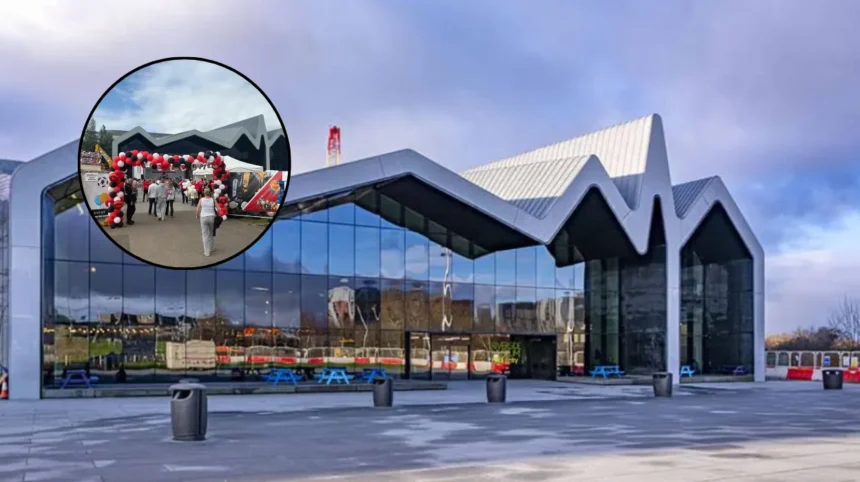
- Over 36,000 people attended the Advance Construction Experience at Glasgow’s Riverside Museum over the weekend.
- The interactive event was designed to inspire children and young people to pursue careers in construction, engineering, and infrastructure.
- Visitors participated in hands-on activities, operated heavy plant machinery, and engaged with industry experts.
- Sector leaders highlighted the urgent need to address the skills gap and replace a retiring workforce in Scotland’s construction industry.
- The event featured prominent Scottish construction firms, educational bodies, and training providers showcasing modern trade career paths.
Glasgow (Glasgow Express) August 17, 2026 – More than 36,000 visitors attended the Advance Construction Experience over the weekend at the Riverside Museum in Glasgow, marking one of the largest interactive trade events hosted in Scotland this year. The free public event was organised to address growing skill shortages within the built environment sector by providing hands-on exposure to civil engineering, modern building practices, and heavy machinery operations. Across the two-day gathering, families, school pupils, and job seekers engaged directly with industry professionals, site equipment, and interactive simulators.
- Key Points
- Why Did the Advance Construction Experience Take Place in Glasgow?
- What Interactive Activities Were Available for Visitors at Riverside Museum?
- How Are Industry Leaders Responding to the Event’s Record Attendance?
- Background of the Advance Construction Experience
- Prediction: How Will This Event Impact Scotland’s Construction Industry and Future Workforce?
Why Did the Advance Construction Experience Take Place in Glasgow?
The primary objective of the Advance Construction Experience was to demystify the construction sector and showcase the diverse range of career pathways available to young people. Organised in response to long-standing workforce shortages across Scotland, the event transformed the grounds of the Riverside Museum into a sprawling, interactive construction site.
Exhibitors aimed to challenge traditional perceptions of construction work as solely physical labor, placing equal emphasis on civil engineering, architecture, digital design, surveying, and environmental technology.
By offering direct engagement with machinery and digital tools, event leaders sought to spark early interest among primary and secondary school students before they make critical decisions regarding their subject choices and future career paths.
What Interactive Activities Were Available for Visitors at Riverside Museum?
Attendees of all ages were given access to a wide array of practical demonstrations and real-world trade experiences. Under professional supervision, children and young adults operated mini-excavators, tested virtual reality training simulators, and tried their hand at traditional trades such as bricklaying, joinery, and scaffolding assembly.
In addition to heavy equipment demonstrations, the event featured interactive exhibits focused on sustainable infrastructure, renewable energy integration, and modern methods of construction (MMC). Civil engineers demonstrated drone survey mapping and 3D modeling technologies, showing visitors how modern construction relies as much on software engineering and data analytics as it does on traditional craftsmanship.
Representatives from local colleges and apprenticeship providers were also on hand to offer guidance on direct entry routes, modern apprenticeships, and higher education diplomas.
How Are Industry Leaders Responding to the Event’s Record Attendance?
Organisers and industry representatives expressed strong satisfaction with the turnout, noting that the attendance figures surpassed initial forecasts. Sector leaders stressed that engaging with 36,000 members of the public provides a vital platform to reshape public perception surrounding vocational qualifications.
Industry advocates noted that direct experience with machinery and construction technology helps bridge the gap between classroom learning and practical trade application.
With major infrastructure projects planned across Scotland over the coming decade, industry spokespersons emphasized that building a robust local workforce remains critical to meeting housing, transport, and net-zero carbon targets.
Explore More Local Glasgow News
Glasgow City Council Staff Face Wage Cuts In Equal Pay Deal Glasgow 2026
Glasgow Newspaper Site Set for Student Tower Development Renfield Street 2026
Background of the Advance Construction Experience
Scotland’s construction sector has faced mounting structural challenges over the past decade, driven primarily by an ageing demographic, shifting migration patterns, and changing educational priorities among school leavers.
According to data from the Construction Industry Training Board (CITB), thousands of additional workers are required annually in Scotland to meet existing building demand and keep infrastructure development on schedule.
Historically, vocational careers have suffered from a perception deficit compared to traditional academic degree pathways. In response, regional industry bodies and private contractors have increasingly shifted toward experiential outreach events.
By allowing young people to operate equipment and experience construction environments firsthand, trade groups aim to build early familiarity with the sector.
The choice of Glasgow’s Riverside Museum as the venue was strategic, leveraging a prominent, accessible public space that regularly attracts families.
Previous smaller-scale trade fairs often struggled to reach audiences outside of existing trade networks; hosting the experience in a high-profile museum context allowed organisers to connect directly with the wider public, parents, and prospective apprentices.
Prediction: How Will This Event Impact Scotland’s Construction Industry and Future Workforce?
The successful hosting of the Advance Construction Experience is likely to yield several tangible outcomes for Scotland’s built environment sector, local educational institutions, and young job seekers in the coming years.
For the regional construction industry, sustained outreach initiatives of this magnitude are anticipated to bolster the pipeline for modern apprenticeships and technical entry schemes. By engaging children at an early age alongside their parents, contractors can gradually dismantle long-standing stigmas regarding trade professions.
In the mid-to-long term, an increase in apprenticeship applications will prove essential for replacing retiring skilled tradespeople, mitigating labor cost spikes, and ensuring local firms possess the capacity to deliver major public works and housing developments.
For young people and parents across Glasgow and the central belt, the event serves as a clear indicator of evolving employment opportunities.
As the sector increasingly integrates green technology, robotics, and digital modeling, future entry-level roles will demand a broader mix of practical and technological skill sets. Increased engagement at public events will likely encourage secondary schools to strengthen partnerships with regional colleges and industrial training bodies, ensuring that curriculum choices align more closely with real-world infrastructure demand.