
Moving to Glasgow from another country involves more than finding accommodation and employment. New residents also need to understand local social customs, neighbourhood life, workplaces, community organisations and the experience of meeting established residents.
- Are Glaswegians generally welcoming to people moving from abroad?
- Why does Glasgow have a long history of welcoming people from other countries?
- How diverse is Glasgow today?
- Do Glaswegians mix easily with international newcomers?
- Is Glasgow welcoming to refugees and asylum seekers?
- Does speaking with a foreign accent affect how newcomers are treated?
- Do international students find Glasgow socially accessible?
- Which parts of Glasgow have strong international communities?
- How do Glaswegians communicate socially with newcomers?
- Does Glasgow have community organisations that help people settle in?
- Are there limits to Glasgow’s reputation for friendliness?
- What helps someone moving to Glasgow from abroad make local friends?
- What should international newcomers expect from everyday life in Glasgow?
- Is Glasgow a suitable city for people building a new life from abroad?
Glasgow has a long history of migration. People from Ireland, Eastern Europe, South Asia, Africa, the Middle East and many other parts of the world have contributed to the city’s communities, economy and cultural life. This history provides important context when assessing how international newcomers experience Glasgow today.
The evidence does not support a simple claim that every Glaswegian is friendly or that every newcomer receives the same experience. Social attitudes differ between individuals and communities. However, official Scottish research provides substantial evidence about attitudes towards immigration, diversity and contact between different groups.
Scotland’s 2022 Census recorded 554,900 residents born outside the United Kingdom, representing 10.2% of Scotland’s population. The number increased by 185,600 between 2011 and 2022.
Glasgow forms an important part of this migration story. Academic research describes the city as Scotland’s largest and most ethnically diverse city and documents neighbourhoods where long-established residents live alongside European migrants, refugees and other newer arrivals.
Are Glaswegians generally welcoming to people moving from abroad?
Glaswegians generally live in a city with substantial international migration, established migrant communities and extensive intercultural contact. Scottish evidence records significant support for diversity, although attitudes vary between individuals, neighbourhoods, social groups and personal experiences.
The word “friendly” describes an individual social experience rather than a measurable characteristic shared by every resident. A newcomer can therefore experience different levels of openness depending on workplace, neighbourhood, age group, social networks and circumstances.
Glasgow’s demographic history creates frequent opportunities for interaction between people from different backgrounds. International residents are present in universities, workplaces, businesses, housing areas, community organisations and cultural institutions.
The Scottish Social Attitudes Survey provides useful national evidence. Its 2025 survey found that 39% of respondents agreed or strongly agreed that people from outside Britain who come to live in Scotland make the country a better place. A further 43% neither agreed nor disagreed, while 17% disagreed or strongly disagreed.
These figures describe attitudes across Scotland rather than Glasgow specifically. They show that positive attitudes towards newcomers are substantial, while also demonstrating that Scottish society contains different views about immigration.
Glasgow’s own civic institutions have also developed programmes focused on integration and community relations. Scottish Government policy describes the New Scots approach as supporting refugees and people seeking asylum to integrate into communities from the day they arrive.
Why does Glasgow have a long history of welcoming people from other countries?
Glasgow’s international character developed through successive periods of migration linked to industry, trade, employment, education, conflict and family settlement. Earlier migrant communities established institutions, businesses and neighbourhood networks that remain part of the city’s social landscape.
Glasgow became a major industrial and commercial centre during the nineteenth and twentieth centuries. Economic expansion created demand for workers and strengthened connections with other parts of Britain and overseas.
Irish migration became particularly significant during the nineteenth century. Jewish communities also developed in Glasgow, including communities associated with the Gorbals and other parts of the city. Research from the University of Glasgow documents the development of Jewish settlement and community life from the arrival of migrants from Eastern Europe through later processes of integration and suburban settlement.
Migration continued through the twentieth century. South Asian communities became an important part of Glasgow’s demographic and cultural development. Academic research has specifically examined Pakistani and Bangladeshi migration to Scotland and the factors shaping these communities.
More recent migration includes people from Poland and other Central and Eastern European countries, as well as migrants, refugees and people seeking asylum from a wide range of countries.
This historical continuity matters because international migration is not a new phenomenon in Glasgow. The city has repeatedly incorporated new communities into its urban economy and social institutions.
The University of Glasgow’s historical diversity research covering approximately 1850 to 1950 also demonstrates the depth of institutional and community diversity in Glasgow’s past.
How diverse is Glasgow today?
Glasgow is one of Scotland’s most diverse cities, with established communities alongside newer international residents. Its diversity includes different countries of birth, ethnic backgrounds, languages, religions, migration histories and generations, creating frequent opportunities for intercultural contact.
Scotland’s Census 2022 recorded more than half a million people born outside the United Kingdom across Scotland. Poland was the most common country of birth among overseas-born residents, followed by India and Pakistan.
The census also shows that migration has changed Scotland’s age structure. Around 35.3% of overseas-born residents in Scotland arrived in the United Kingdom between the ages of 20 and 29. This pattern reflects the importance of higher education and employment in international migration.
Glasgow has its own longstanding ethnic and cultural diversity. Academic research identifies Glasgow as Scotland’s largest and most ethnically diverse city and examines how its ethnic profile has changed over time.
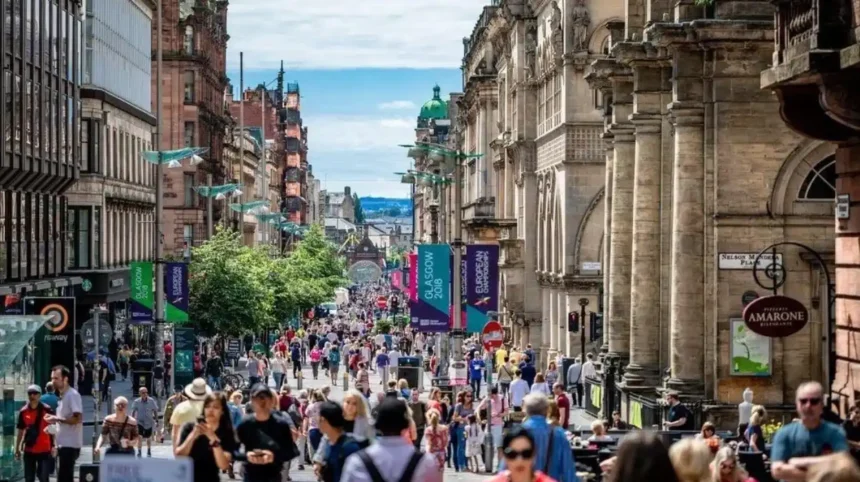
This diversity appears in everyday life. International food businesses, religious institutions, community groups, cultural events and multilingual services form part of the city’s urban environment.
The presence of established migrant communities also provides social infrastructure for newcomers. A person arriving from another country can often find community organisations connected with language, nationality, religion, education or professional interests.
This does not guarantee an immediate friendship network. It does mean that international newcomers enter an environment where migration is already an established part of city life.
Do Glaswegians mix easily with international newcomers?
Social interaction between established Glaswegians and international newcomers depends on regular contact, shared activities and neighbourhood conditions. Research in Glasgow shows that diverse communities interact through community projects, organisations and everyday spaces, while experiences differ according to local circumstances.
Academic research into a diverse Glasgow neighbourhood found that long-term White and ethnic-minority communities live alongside Central and Eastern European migrants, refugees and other recent arrivals. The research highlights the importance of population composition, neighbourhood context and community conditions in shaping intergroup relations.
Another University of Glasgow study examined community spaces in the East End of Glasgow involving Polish migrants and long-established residents. Community food projects created opportunities for different groups to work together and develop shared spaces.
These findings provide an important distinction between “being friendly” and “building relationships”. A resident can receive polite treatment from neighbours without developing close friendships. Stronger relationships generally develop through repeated contact.
Workplaces, universities, sports clubs, volunteering projects, religious organisations and community activities create structured opportunities for this contact.
For people moving from abroad, regular participation therefore provides an important route into local social networks. The process involves more than simply living in the city.
Is Glasgow welcoming to refugees and asylum seekers?
Glasgow has a substantial history of supporting refugees and people seeking asylum, with public services and community organisations developing dedicated integration activity. Scottish Government policy identifies friendship, safety, services and community connections as important parts of successful refugee integration.
A refugee is a person who has received international protection because of persecution or serious danger in their country of origin. An asylum seeker is a person who has applied for international protection and is awaiting a decision.
Glasgow has played a major role in the United Kingdom’s asylum dispersal system. Scottish Government material states that services in Glasgow adapted to the needs of refugees and asylum seekers and identifies increased cultural diversity and a younger demographic profile among the effects associated with migration.
The New Scots strategy focuses on integration and access to essential areas including education, housing, health and employment. Its stated vision is a Scotland where refugees and people seeking asylum are welcomed and supported to integrate into communities.
Glasgow also has community-level initiatives involving refugee, asylum-seeking and migrant residents. Recent Glasgow City Council records include projects using oral history, storytelling and heritage workshops to connect refugees, asylum seekers and new Scots with local communities.
These programmes do not mean every newcomer receives an identical experience. They demonstrate that formal integration infrastructure exists alongside informal community relationships.
Does speaking with a foreign accent affect how newcomers are treated?
Accent and nationality can influence social experiences in Scotland. Official survey data records accent and nationality among commonly perceived reasons for discrimination, showing that positive community relationships coexist with instances of exclusion and unequal treatment.
Language is one of the most visible markers of international migration. A newcomer can speak fluent English while retaining an accent associated with another country.
The Scottish Household Survey provides evidence that discrimination and harassment remain part of Scottish social experience. In the 2022 survey, 8% of adults reported experiencing discrimination during the previous 12 months, while 5% reported harassment.
Among people reporting discrimination, accent and nationality were each identified as perceived reasons by 20% of respondents. Ethnicity was identified as a perceived reason for 18% of reported harassment, while nationality and accent were each identified by 16%.
These statistics apply to Scotland rather than specifically to Glasgow. They demonstrate why a balanced assessment of social friendliness needs to include both positive interaction and documented discrimination.
For international newcomers, accent does not prevent participation in Glasgow society. Universities, employers, community organisations and public services operate in multilingual and culturally diverse environments.
Do international students find Glasgow socially accessible?
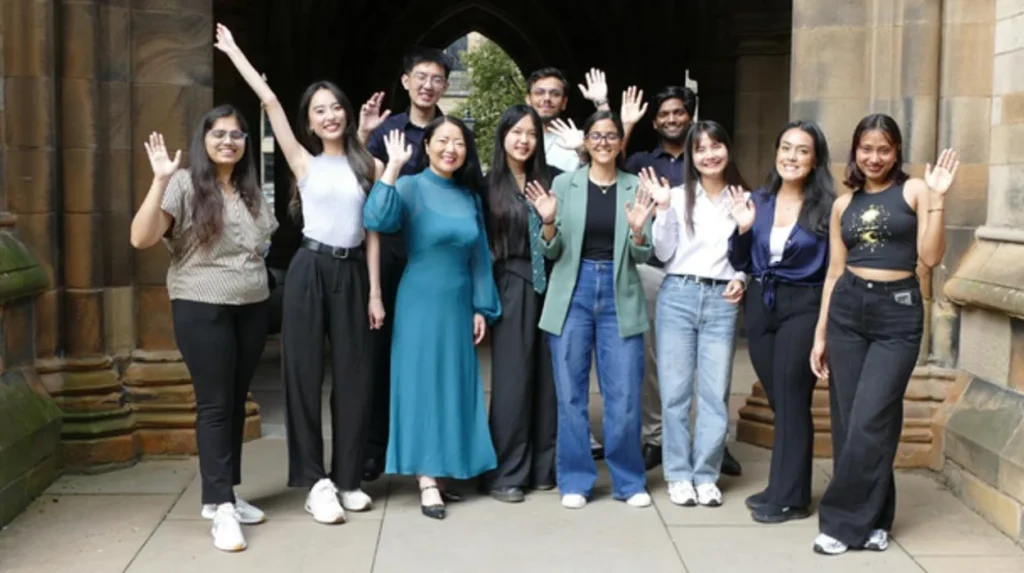
Glasgow has a large international education environment that creates structured opportunities for newcomers to meet residents and other international students. Universities, student organisations, societies, accommodation communities and cultural activities provide established routes into social networks.
International students form an important part of contemporary migration to Scotland. Scotland’s Census found that 35.3% of overseas-born residents had arrived in the United Kingdom between ages 20 and 29, an age group strongly associated with study and early employment.
Glasgow has several higher education institutions with international student populations. Universities provide societies, clubs, volunteering opportunities, sports and cultural programmes that create regular interaction.
International students also encounter local residents outside university campuses through accommodation, hospitality, retail, transport, employment and leisure activities.
The social experience therefore extends beyond formal education. Students who participate in local organisations and activities have additional opportunities to build relationships with people who have lived in Glasgow for longer.
This pattern also applies to international graduates who remain in the city for employment. Workplaces become important spaces for developing longer-term connections.
Which parts of Glasgow have strong international communities?
International communities exist across Glasgow rather than in one single migrant district. Areas such as Govanhill and parts of the East End feature documented histories of migration and diverse populations, while universities, workplaces and community organisations connect newcomers across the wider city.
Govanhill is one of the most frequently researched examples of Glasgow’s diverse urban communities. Academic research examines its histories of migration, racialisation, belonging and community identity.
The East End also provides an important example. Research has examined community interaction involving Polish migrants and long-established residents through food projects and shared community spaces.
However, international residents are not concentrated exclusively in these areas. Glasgow’s migration networks operate through housing, employment, universities, religious institutions, shops, restaurants, cultural organisations and voluntary groups across the city.
For someone moving from abroad, choosing an area based only on nationality is therefore unnecessary. Practical factors such as employment location, transport, housing costs, access to services and existing social networks also shape the experience of living in Glasgow.
How do Glaswegians communicate socially with newcomers?
Glaswegian social communication is strongly influenced by informal conversation, humour, local expressions and direct interaction. Newcomers who understand these communication patterns often find everyday conversations easier, while unfamiliar accents and dialect can require an adjustment period.
Glaswegian refers to a person from Glasgow. “Glaswegian” also describes aspects of the city’s distinctive local culture and speech.
Glasgow has a recognisable local dialect and vocabulary. Some expressions differ from standard British English, and the speed of informal conversation can initially challenge people who learned English elsewhere.
This language difference does not represent hostility. It reflects local linguistic identity.
Newcomers often encounter local expressions in workplaces, shops, public transport, sports settings and social events. Asking someone to repeat an unfamiliar phrase is a normal part of cross-cultural communication.
Humour also forms part of informal social interaction. Understanding whether a comment is serious, playful or sarcastic requires familiarity with conversational context.
International residents do not need to adopt a Glasgow accent to participate successfully. Clear communication, active listening and regular interaction provide the practical foundation for developing local relationships.
Does Glasgow have community organisations that help people settle in?
Glasgow has a substantial network of public, voluntary and community organisations supporting migrants, refugees and other newcomers. Their work includes integration, language access, community participation, employment support, cultural activities and connections with local services.
Integration describes the process through which newcomers participate in social, economic, cultural and civic life while retaining aspects of their own identity.
Scotland’s New Scots strategy uses partnership between the Scottish Government, COSLA and the Scottish Refugee Council and involves public, private and third-sector organisations. Its framework includes access to education, housing, health and employment.
Glasgow also has local community infrastructure. Recent council records identify projects involving migrant communities, ethnic minorities and wider Scottish communities through education, community engagement and intercultural learning.
Police Scotland community engagement in Glasgow has also included interaction with Ukrainian community networks, asylum-support groups, religious organisations and other communities during periods of heightened community tension.
These organisations provide practical routes into local society. They also demonstrate that integration is treated as a community process rather than solely as an individual responsibility.
Are there limits to Glasgow’s reputation for friendliness?
Glasgow’s welcoming reputation does not mean every international resident experiences complete social acceptance. Scottish research records discrimination, differing immigration attitudes and varying preferences for diverse communities, making individual experiences dependent on social and economic circumstances.
The 2025 Scottish Social Attitudes Survey provides the clearest recent national evidence. It found that 39% agreed that people from outside Britain who come to live in Scotland make the country a better place, while 17% disagreed.
The same survey found that 47% preferred living in an area with lots of different kinds of people, compared with 31% who preferred an area where most people are similar to themselves.
Attitudes also varied according to personal contact. People who knew someone from a different ethnic background were more likely to prefer living in diverse areas than those without that contact.
The Scottish Government’s 2025 analysis also recorded a rise in the proportion agreeing that there is sometimes good reason to be prejudiced against certain groups, from 22% in 2015 to 31% in 2025.
These figures demonstrate that Scotland contains both positive and negative attitudes towards diversity. Glasgow’s international character does not remove the possibility of prejudice.
What helps someone moving to Glasgow from abroad make local friends?
Newcomers generally have more opportunities to develop local friendships when they participate regularly in workplaces, universities, community groups, sports, volunteering, cultural activities and neighbourhood events. Repeated contact creates stronger social connections than occasional encounters.
Moving to a new city involves building social networks as well as arranging practical matters. International newcomers can use existing community infrastructure to create regular contact.
Work provides one of the most consistent opportunities. Colleagues often become the first local social connection for international employees.
Universities provide another structured environment. Student societies, sports clubs, volunteering and academic groups allow newcomers to meet people around shared interests.
Community participation also matters outside formal institutions. Volunteering connects residents around practical projects and creates repeated interaction.
Religious organisations provide another route for people whose faith forms an important part of their social life. Glasgow contains established religious communities representing different traditions.
Cultural events, local markets, sports activities, libraries and community centres also provide informal meeting points.
The underlying mechanism is repeated contact. Regular participation creates familiarity, shared experiences and opportunities for relationships to develop.
Explore More Area Guide
Glasgow for Expats: Moving to Scotland Guide
Cambuslang Property Investment for Glasgow Commuters
What should international newcomers expect from everyday life in Glasgow?
International newcomers can expect a socially diverse city with established migrant communities, informal local communication and extensive opportunities for interaction. They should also expect differences between individuals and neighbourhoods, including occasional misunderstandings or experiences of discrimination.
Glasgow’s demographic development means international migration is already embedded in many parts of city life.
The city’s universities attract international students. Employers recruit workers from different countries. Restaurants and shops reflect international cultures. Community organisations support newcomers. Religious institutions serve diverse populations.
At the same time, the Scottish evidence base shows that diversity does not produce identical attitudes among all residents.
This distinction is important for anyone researching whether Glaswegians are friendly to people moving from abroad. A city-wide stereotype cannot describe every social interaction.
The strongest evidence points instead to a city where international migration is established, intercultural contact is common and formal integration structures exist, alongside measurable experiences of discrimination and differing attitudes towards immigration.
For a newcomer, social integration therefore depends on both the wider environment and personal circumstances.
Is Glasgow a suitable city for people building a new life from abroad?
Glasgow provides established international communities, migration infrastructure, higher education, employment networks and community organisations that support newcomers. Its social environment includes substantial intercultural contact alongside documented differences in attitudes and experiences across Scotland.
The evidence provides several measurable indicators of Glasgow’s international character.
Scotland recorded 554,900 residents born outside the United Kingdom in the 2022 Census, with the overseas-born population increasing by 185,600 since 2011.
Academic research identifies Glasgow as Scotland’s largest and most ethnically diverse city and documents interaction between established communities, European migrants, refugees and other recent arrivals.
The city also has a documented history of migration involving Irish, Jewish, South Asian, Central and Eastern European and other communities. University of Glasgow research provides evidence of these historical and contemporary migration processes.
The Scottish Government’s New Scots framework further establishes integration as an important part of public policy, with emphasis on services, community connections and participation.
The most accurate conclusion is therefore factual rather than absolute: Glasgow is a diverse city with extensive experience of international migration and numerous opportunities for newcomers to build connections. Social experiences still vary between individuals, neighbourhoods and circumstances.
For people moving to Glasgow from abroad, understanding the city’s history, participating in local life and using existing community networks provides a practical foundation for becoming part of the city’s social fabric.
Are Glaswegians friendly to foreigners?
Yes. Glasgow has a long history of international migration and established migrant communities. Many newcomers interact with local residents through workplaces, universities, neighbourhoods, community groups, sports clubs and cultural activities.