
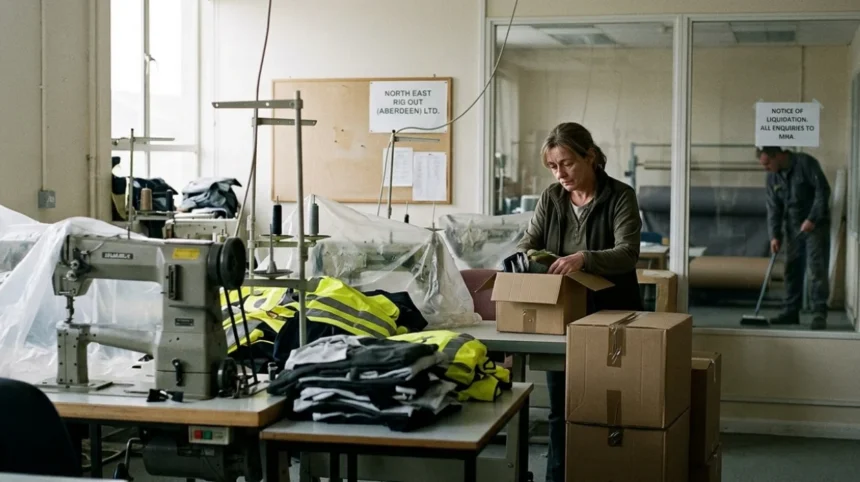
The Aberdeen clothing manufacturer North East Rig Out (Aberdeen) Limited ceased trading and entered liquidation in May 2026 after more than 40 years in business, resulting in the immediate loss of all eight jobs. The company specialized in workwear, school uniforms, and custom protective apparel for oil and gas, construction, engineering, aviation, transportation, and retail sectors. Insolvency experts from MHA were appointed as liquidators following a voluntary dissolution decision after the firm could no longer sustain operations due to overwhelming liabilities.
- What Company Closed in Aberdeen and What Did It Manufacture?
- Why Did the Aberdeen Clothing Manufacturer Go Into Liquidation?
- How Many Jobs Were Lost When the Aberdeen Clothing Firm Closed?
- When Exactly Did North East Rig Out Stop Trading and Enter Liquidation?
- What Industries Relied on North East Rig Out’s Workwear and Protective Apparel?
- Who Appointed as Liquidator for the Closed Aberdeen Clothing Company?
- How Does This Closure Affect Aberdeen and Glasgow’s Manufacturing Sector?
- What Are the Broader Implications for UK Clothing Manufacturing After This Closure?
- What Support Is Available for Employees Affected by the Aberdeen Clothing Manufacturer Closure?
- How Long Did North East Rig Out Operate Before Closing Its Doors?
- What Happens to Company Assets During the Liquidation Process?
- Will Other Clothing Manufacturers in Scotland Face Similar Closure Risks?
- What Does This Closure Mean for Future Workwear Supply in Scotland?
What Company Closed in Aberdeen and What Did It Manufacture?
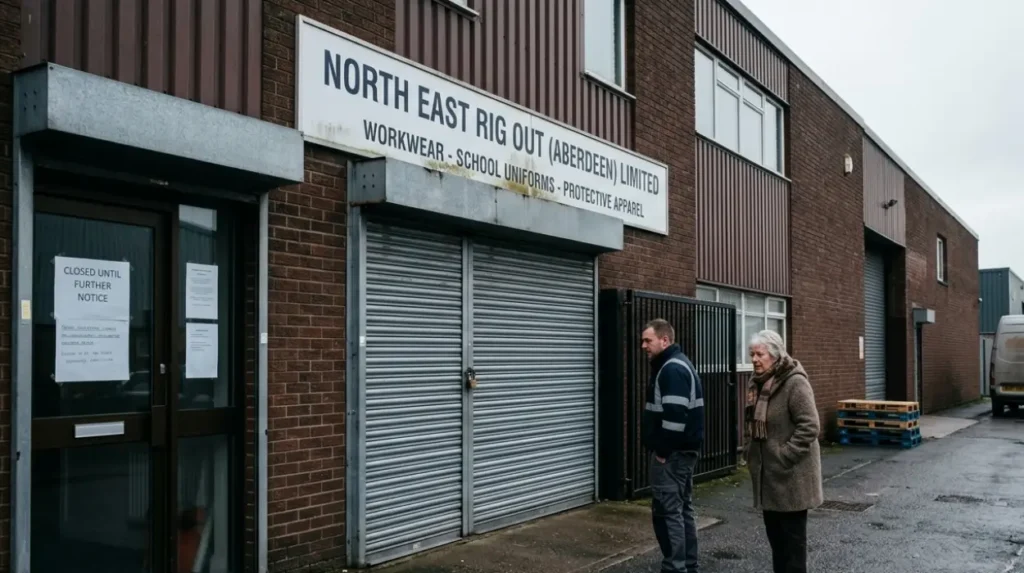
North East Rig Out (Aberdeen) Limited was an Aberdeen-based Scottish clothing manufacturer that produced workwear, school uniforms, and protective apparel for 40+ years before closing in May 2026. The company served multiple industries including oil and gas, construction, engineering, aviation, transportation, and retail with custom protective clothing and workwear solutions. This established business operated from Aberdeen in northeast Scotland, a region known for its oil and gas industry infrastructure.
The manufacturer’s product range included specialized workwear designed for demanding industrial environments. School uniforms represented another significant product line, serving educational institutions across the region. Custom protective apparel formed the core of their business, meeting safety standards required by high-risk industries like oil and gas extraction and construction work.
North East Rig Out (Aberdeen) Limited registered as a Scottish company under UK corporate law. The firm maintained operations for over four decades before financial pressures became unsustainable. Their client base spanned multiple sectors, demonstrating the company’s adaptability to different market demands while maintaining focus on functional workwear and protective clothing.
Why Did the Aberdeen Clothing Manufacturer Go Into Liquidation?
The company entered liquidation because it could no longer sustain trading due to overwhelming liabilities, as confirmed at an April 15, 2026 meeting under the Insolvency Act 1986. Official documents revealed that financial obligations exceeded the company’s capacity to continue operations, forcing voluntary dissolution. MHA insolvency experts were appointed as liquidators to manage the cessation of business and asset distribution.
The liquidation process follows UK insolvency law when a company cannot pay its debts. Under the Insolvency Act 1986, directors must act when a company becomes insolvent to minimize creditor losses. The April 15 meeting formally determined that trading could not continue, triggering the liquidation procedure.
Economic pressures affecting UK manufacturing likely contributed to the closure. The clothing manufacturing sector faces challenges including rising production costs, competition from overseas manufacturers, and changing market dynamics. The oil and gas sector, a key client base for North East Rig Out, has experienced volatility that impacts demand for specialized workwear.
The voluntary dissolution decision indicates directors chose this path rather than forced liquidation by creditors. This approach typically allows for more orderly closure and may provide better outcomes for employees and creditors. However, all eight employees still lost their jobs immediately when trading ceased.
How Many Jobs Were Lost When the Aberdeen Clothing Firm Closed?
Eight employees lost their jobs when North East Rig Out (Aberdeen) Limited ceased trading and entered liquidation in May 2026. All remaining staffer positions were eliminated as the company permanently closed its operations after more than four decades in business. The entire workforce faced immediate redundancy with no positions retained during the liquidation process.
The small workforce size of eight employees reflects the company’s scale as a specialized manufacturer rather than a large-scale production facility. This workforce size is typical for niche clothing manufacturers serving specific industrial sectors with custom orders rather than mass production.
Job losses in manufacturing particularly impact local communities in Aberdeen and northeast Scotland. Each position represented specialized skills in clothing production, pattern making, sewing, and quality control for protective apparel. These skills took years to develop and are not easily transferable without retraining.
The immediate nature of the job losses means employees received no advance notice period beyond the liquidation announcement. Workers affected are entitled to claim redundancy payments through UK government schemes if they meet eligibility criteria. The liquidators from MHA would process employee claims for outstanding wages and redundancy pay.
When Exactly Did North East Rig Out Stop Trading and Enter Liquidation?
North East Rig Out (Aberdeen) Limited ceased trading in mid-April 2026, with the formal liquidation decision made at an April 15, 2026 meeting, and public announcements appearing on May 14-15, 2026. Official documents filed under the Insolvency Act 1986 revealed the April 15 meeting determined the firm could no longer sustain operations. News reports confirming the closure published on May 14 and May 15, 2026.
The timeline shows a gap between the internal decision to liquidate and public announcement. This period allowed liquidators from MHA to prepare for taking control of the company and notifying stakeholders. The voluntary dissolution process requires formal documentation and notification to relevant authorities.
April 15, 2026 marks the critical date when directors formally acknowledged insolvency. This date determines employee entitlement calculations for redundancy and outstanding wages. The May 14-15 media reports represent when the public learned of the Closure through business news outlets covering Scottish economic developments.
The company operated for over 40 years before reaching this point. This means North East Rig Out began operations sometime in the early-to-mid 1980s, establishing itself during a different economic era for UK manufacturing. The closure represents the end of an era for Aberdeen’s local manufacturing sector.
What Industries Relied on North East Rig Out’s Workwear and Protective Apparel?
Six key industries relied on North East Rig Out’s products: oil and gas, construction, engineering, aviation, transportation, and retail. The company produced specialized workwear and custom protective apparel meeting safety standards required by each sector. School uniforms represented an additional product line serving educational institutions.
The oil and gas industry represented the most significant client base given Aberdeen’s status as Europe’s oil capital. Protective apparel for this sector requires flame resistance, high-visibility coloring, and compliance with strict safety regulations. Workers in offshore platforms and onshore facilities depend on correctly specified protective clothing for safety.
Construction companies needed workwear resistant to abrasion, weather protection, and high-visibility features for site safety. Engineering firms required specialized clothing for workshop environments with specific hazard protections. Aviation sector clients needed apparel meeting aviation safety standards for ground crew and maintenance personnel.
Transportation companies utilized workwear for drivers and logistics staff requiring durability and comfort for long hours. Retail clients purchased workwear for staff requiring professional appearance with practical features. School uniforms represented a different market segment, focusing on durability, cost-effectiveness, and institutional branding.
This diverse client base demonstrated the company’s adaptability across sectors. However, it also meant the company faced multiple market pressures simultaneously when economic conditions deteriorated across these industries. The oil and gas sector’s volatility particularly impacts Aberdeen-based manufacturers serving this market.
Who Appointed as Liquidator for the Closed Aberdeen Clothing Company?
MHA, a UK insolvency firm, was appointed as the liquidator for North East Rig Out (Aberdeen) Limited following the voluntary dissolution decision. MHA insolvency experts took responsibility for managing the company’s closure, asset liquidation, and creditor distributions. The appointment followed formal procedures under UK insolvency law.
MHA is a recognized insolvency practice handling corporate liquidations across the UK. Liquidators have legal authority to take control of company assets, investigate director conduct, and distribute proceeds to creditors according to statutory priority. They also handle employee claims for unpaid wages and redundancy payments.
The liquidator’s responsibilities include identifying and realizing company assets, reviewing transactions before liquidation for potential recovery, and communicating with creditors about the process. They must file reports with Companies House and maintain records for the statutory period. Employee queries regarding entitlements go through the liquidator.
Voluntary liquidation appointed by directors differs from compulsory liquidation forced by creditor court orders. Directors chose this path, suggesting they acted responsibly upon recognizing insolvency. This approach typically results in more orderly closure and may preserve more value for creditors compared to forced liquidation.
How Does This Closure Affect Aberdeen and Glasgow’s Manufacturing Sector?
The closure reduces Aberdeen’s already diminished manufacturing capacity and reflects broader challenges facing UK clothing manufacturing, with implications for Glasgow’s textile and workwear supply chains. Eight jobs lost in Aberdeen’s manufacturing sector represents another contraction in local industrial employment. Glasgow, as Scotland’s largest city and industrial hub, faces similar pressures from manufacturing decline.
Aberdeen’s economy historically depended heavily on oil and gas, with supporting industries like specialized manufacturing. The closure of North East Rig Out demonstrates how sector volatility cascades through the supply chain. Companies serving oil and gas face reduced demand when energy prices fall or exploration activity decreases.
Glasgow’s manufacturing sector includes textile production, clothing manufacturing, and related industries. While Glasgow and Aberdeen operate as separate markets, they share exposure to UK-wide manufacturing challenges. Rising production costs, overseas competition, and changing consumer patterns affect manufacturers in both cities.
The closure signals continued pressure on UK domestic manufacturing. Businesses in Glasgow sourcing workwear from Scottish manufacturers may need to find alternative suppliers, potentially increasing costs or reducing quality. Some Glasgow companies might shift to overseas suppliers or larger UK manufacturers with more financial resilience.
Local economic impact extends beyond direct job losses. Reduced manufacturing activity affects supporting services including logistics, utilities, and commercial property. The cumulative effect of multiple manufacturing closures contributes to regional economic decline unless offset by growth in other sectors.
What Are the Broader Implications for UK Clothing Manufacturing After This Closure?
This closure exemplifies ongoing challenges facing UK clothing manufacturing, including rising costs, overseas competition, and sector volatility, with the company operating for 40 years before succumbing to these pressures. The loss of an established manufacturer with four decades of history demonstrates that even long-standing businesses cannot withstand current economic headwinds.
UK clothing manufacturing has declined significantly since the late 20th century. Many manufacturers closed or relocated production overseas to reduce labor costs. Remaining domestic manufacturers typically specialize in niche markets, custom orders, or high-quality products commanding premium prices. North East Rig Out followed this specialization model but ultimately could not sustain operations.
Rising costs include energy prices, raw materials, labor, and regulatory compliance. UK manufacturers face higher costs than overseas competitors in countries with lower labor wages and less stringent regulations. Brexit introduced additional complexities including customs procedures and trade barriers affecting import/export operations.
The oil and gas sector’s volatility particularly impacts manufacturers serving this industry. When energy prices fall or exploration activity decreases, demand for specialized workwear drops immediately. Companies without diversified client bases face heightened risk during sector downturns. North East Rig Out served multiple industries but oil and gas likely represented significant revenue.
Future relevance for UK clothing manufacturing depends on adapting to new realities. Automation, nearshoring trends, and demand for sustainable domestically-produced goods offer potential opportunities. However, these require significant investment that struggling manufacturers cannot afford. The closure pattern suggests continued consolidation in the sector.
What Support Is Available for Employees Affected by the Aberdeen Clothing Manufacturer Closure?
Affected employees can claim redundancy payments through UK government schemes, access jobcentre support for reemployment, and potentially receive training assistance through Skills Development Scotland. Eight workers lost their jobs immediately when North East Rig Out ceased trading, making them eligible for statutory redundancy pay if they meet service requirements.
Statutory redundancy pay depends on age, length of service, and weekly pay (capped at a statutory limit). Employees with two or more years of continuous service qualify. The liquidators from MHA process claims for outstanding wages, holiday pay, and redundancy payments. Unpaid amounts may be claimed through the government’s Redundancy Payments Service if the liquidator cannot pay.
Jobcentre Plus provides support including job search assistance, benefits advice, and access to vacancy databases. Affected employees should register immediately to claim Universal Credit if needed and access job search support. Work coaches help develop action plans for finding new employment.
Skills Development Scotland offers training and retraining opportunities for displaced workers. Programs may include skills assessment, vocational training, and career counseling. Specific programs target manufacturing workers transitioning to new industries. Funding may cover course fees and living costs during training periods.
Local enterprise organizations in Aberdeen and Scotland provide business start-up support for employees considering self-employment. This includes advice, training, and potential funding for those wanting to start their own businesses. The closure creates both challenges and opportunities for skilled workers.
How Long Did North East Rig Out Operate Before Closing Its Doors?
North East Rig Out (Aberdeen) Limited operated for more than 40 years before closing in May 2026, establishing itself in the early-to-mid 1980s. Multiple sources confirm the company had “over four decades of history” and “40 years in business” before entering liquidation. This represents a significant operational lifespan for a UK manufacturing business.
Operating for 40 years means the company survived multiple economic cycles, including recessions, industry transformations, and changing market conditions. The early 1980s saw significant manufacturing decline in the UK, suggesting the company navigated challenging early years successfully. Longevity indicates strong market positioning and customer relationships during most of its existence.
The company’s survival for four decades contrasts with the typical lifespan of UK manufacturing businesses. Many manufacturers closed during the 1980s deindustrialization, 2008 financial crisis, or post-Brexit economic调整. North East Rig Out’s longevity demonstrates resilience until recent pressures became overwhelming.
Four decades of operation means the company witnessed the transformation of Aberdeen from a small fishing port to Europe’s oil capital and back through oil price volatility. This history included boom periods with high demand for workwear and bust periods with reduced orders. The company adapted to these cycles until recent conditions proved unsustainable.
The closure after 40 years represents loss of institutional knowledge and specialized skills developed over generations. Employees who worked there for decades accumulated expertise in protective apparel manufacturing that cannot be quickly replaced. This loss impacts Aberdeen’s manufacturing ecosystem beyond immediate job numbers.
What Happens to Company Assets During the Liquidation Process?
During liquidation, MHA as liquidator will identify, value, and sell all company assets including equipment, inventory, intellectual property, and property to generate funds for creditor repayment. Assets are realized according to statutory priority, with secured creditors paid first, followed by preferential creditors including employees, then unsecured creditors.
Manufacturing equipment such as industrial sewing machines, cutting equipment, and pattern-making tools will be valued and sold. Workwear inventory and raw materials represent additional assets for liquidation. Office equipment, vehicles, and computer systems also form part of the asset pool. Any property owned or leased by the company will be addressed according to lease terms or ownership.
Intellectual property including designs, patterns, trademarks, and customer lists may have value for competing manufacturers. These assets could be sold to other clothing manufacturers interested in acquiring the company’s customer base or specialized knowledge. The liquidator investigates whether any assets were transferred at undervalue before liquidation, which could be clawed back.
Employee claims for unpaid wages, holiday pay, and redundancy payments rank as preferential creditors, giving them priority over unsecured creditors like suppliers and landlords. However, asset values may not cover all claims, meaning some creditors receive partial payment or nothing. The Redundancy Payments Service covers unpaid employee claims when assets are insufficient.
The liquidation process typically takes months to complete as assets are identified, valued, marketed, and sold. Creditors receive updates from the liquidator throughout the process. Final distribution occurs after all assets are realized and administrative costs paid. The liquidator files final reports with Companies House before the company is dissolved.
Will Other Clothing Manufacturers in Scotland Face Similar Closure Risks?
Other Scottish clothing manufacturers face similar risks from the same pressures that closed North East Rig Out, including rising costs, overseas competition, and sector volatility, though specialized manufacturers with diversified clients may have better survival prospects. The closure demonstrates that even established 40-year businesses cannot withstand current economic headwinds.
Manufacturers serving volatile sectors like oil and gas face heightened risk when those sectors experience downturns. Companies with diversified client bases across multiple industries have better resilience than those dependent on single sectors. The economic pressures affecting North East Rig Out apply broadly across UK clothing manufacturing.
Smaller manufacturers with limited financial reserves face greater vulnerability during economic downturns. Larger manufacturers with access to capital and diversified operations better withstand pressure. The closure pattern suggests continued industry consolidation as weaker players exit and stronger ones acquire their assets or customers.
Manufacturers adapting to new market demands through automation, sustainability focus, or niche specialization may find opportunities. However, these adaptations require investment that struggling manufacturers cannot afford. The sector faces a bifurcation between resilient specialized manufacturers and those at closure risk.
Glasgow and Aberdeen manufacturers serving similar markets face comparable challenges. Regional economic conditions, access to skilled labor, and client base composition affect individual vulnerability. The closure serves as a warning signal for other Scottish manufacturers to assess their financial resilience and market positioning.
What Does This Closure Mean for Future Workwear Supply in Scotland?
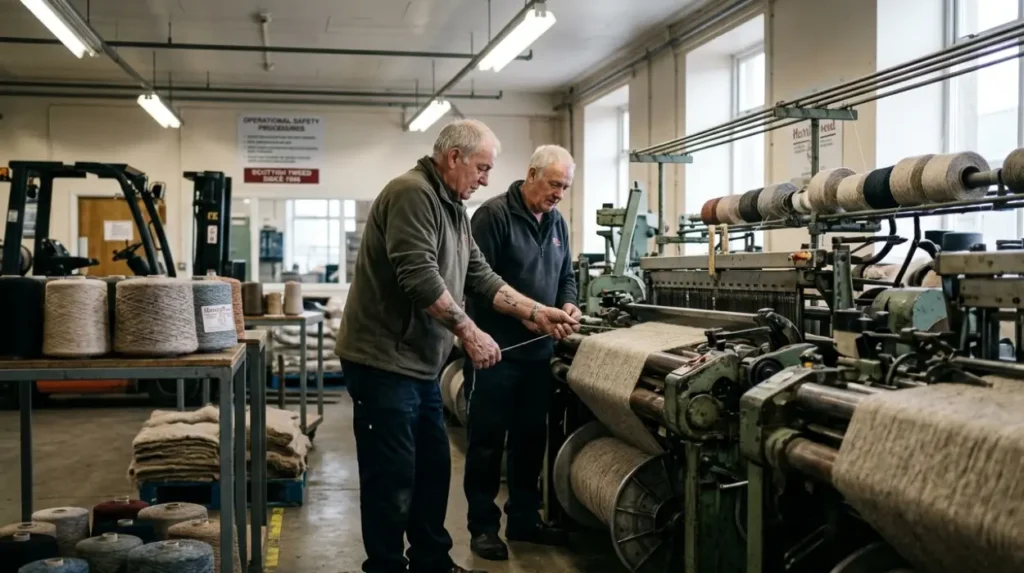
The closure reduces Scotland’s domestic workwear manufacturing capacity, forcing businesses to source from remaining Scottish manufacturers, larger UK producers, or overseas suppliers, potentially increasing costs and reducing supply chain resilience. Eight jobs lost represents diminished local production capability for specialized protective apparel.
Scottish businesses previously sourcing from North East Rig Out must find alternative suppliers. Remaining Scottish manufacturers may lack capacity to absorb all displaced demand. Some businesses will shift to larger UK manufacturers with more production capacity but potentially less personalized service. Overseas suppliers offer lower prices but longer lead times and quality consistency concerns.
Supply chain resilience suffers when domestic manufacturing capacity declines. Relying on overseas suppliers increases vulnerability to shipping disruptions, customs delays, and currency fluctuations. The COVID-19 pandemic demonstrated risks of over-reliance on distant supply chains. Domestic manufacturing provides faster response times and better communication.
Cost implications vary by supplier choice. Larger UK manufacturers may offer competitive pricing through economies of scale but require minimum order quantities favoring larger businesses. Overseas suppliers typically offer lower unit prices but add shipping costs and longer delivery times. Small and medium businesses may face higher costs overall.
Quality considerations matter for protective apparel where safety standards apply. Domestic manufacturers typically provide better quality control and compliance verification. Overseas suppliers may not meet UK safety standards consistently. Businesses must balance cost savings against quality and compliance risks when selecting new suppliers.
The closure represents another step in long-term decline of UK clothing manufacturing. Reversing this trend requires policy support, investment in automation, and consumer/business preference for domestically-produced goods. Until such changes occur, Scotland’s workwear supply will increasingly depend on external sources.
What happened to North East Rig Out in Aberdeen?
North East Rig Out (Aberdeen) Limited stopped trading and entered liquidation in May 2026 after more than 40 years in business. The company could no longer continue operating because of overwhelming financial liabilities, and all eight employees lost their jobs immediately.