Glasgow has an extensive public transport network that connects university campuses, student accommodation, shopping districts and surrounding neighbourhoods. Students use buses, the Glasgow Subway, local trains, cycling routes and walking paths to travel across the city. Understanding the transport system helps students manage daily journeys, reduce travel expenses and reach university facilities efficiently.
- What public transport options are available for students in Glasgow?
- How does the Glasgow Subway work for university students?
- What are the Glasgow Subway fares for students?
- Can students use a National Entitlement Card on the Subway?
- How can students travel by bus in Glasgow?
- Who qualifies for free student bus travel in Glasgow?
- What is a National Entitlement Card?
- How can Glasgow students apply for free bus travel?
- Which bus journeys are excluded?
- How can Glasgow students save money on train travel?
- Can students use a 16–25 Railcard?
- What rail discounts are available through Young Scot?
- How can students choose between Glasgow train tickets?
- What is a ZoneCard and how does it help Glasgow students?
- Which Glasgow neighbourhoods offer convenient transport for students?
- Can students cycle or walk to university in Glasgow?
- How should international students plan their transport in Glasgow?
- How can students plan reliable and affordable daily journeys in Glasgow?
- How accessible is Glasgow’s public transport for students with additional travel requirements?
- What should students know about the future of student transport in Glasgow?
The main advantage for eligible students is Scotland’s Young Persons’ Free Bus Travel Scheme. Residents aged 5–21 can access free journeys on most registered bus services across Scotland using a valid National Entitlement Card (NEC) or Young Scot NEC. Students aged 22 and over can use other student discounts, railcards and public transport season tickets to manage commuting costs. Transport Scotland+1
What public transport options are available for students in Glasgow?
Glasgow students have access to buses, underground trains, suburban rail services, taxis, cycling routes and pedestrian networks. These transport options connect major universities, residential areas, city-centre facilities and neighbouring towns. Students select services according to journey distance, cost, timetable and campus location.
Glasgow’s transport network is supported by several operators and transport organisations. Strathclyde Partnership for Transport (SPT) manages the Glasgow Subway and coordinates regional transport planning. First Bus, McGill’s and other operators provide local and regional bus services. ScotRail operates the majority of passenger rail services connecting Glasgow with other Scottish destinations.
The transport network serves major educational institutions, including the University of Glasgow, University of Strathclyde, Glasgow Caledonian University, Glasgow School of Art and Glasgow Clyde College.
Students generally use different transport options for different journeys. A University of Glasgow student living in the West End can use the Subway or a local bus to reach the city centre. A student attending the University of Strathclyde can walk from central accommodation or use nearby rail and bus connections.
The main transport options include:
- Buses: Local services connect the West End, City Centre, East End, Southside and outer residential districts.
- Glasgow Subway: An underground railway connecting 15 stations across the city’s central and western areas.
- Trains: Suburban and regional services connect Glasgow Central, Queen Street and other railway stations.
- Cycling: Dedicated cycle routes and shared paths provide alternatives for shorter journeys.
- Walking: Pedestrian routes connect central university campuses, libraries, accommodation and shopping areas.
Understanding these options helps students choose practical travel arrangements before selecting accommodation or beginning university.
How does the Glasgow Subway work for university students?
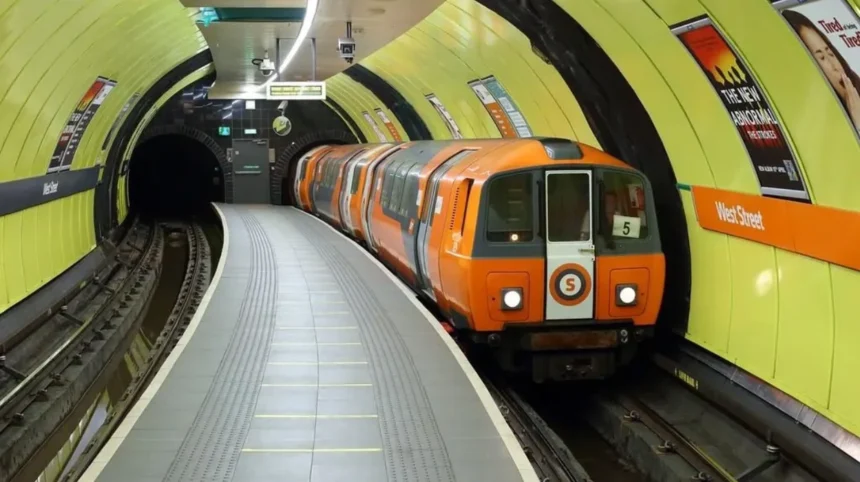
The Glasgow Subway is an underground railway operated by Strathclyde Partnership for Transport. It connects 15 stations through an Inner Circle and Outer Circle, providing convenient access to the West End and central Glasgow. Students use it for campus journeys, shopping and city-centre travel.
The Glasgow Subway is one of the city’s most recognisable transport services. It opened to passengers on 14 December 1896, making it one of the world’s oldest underground railway systems. The original network was constructed to improve transport connections within Glasgow’s expanding urban area. spt.co.uk
The Subway operates a circular route with two directions:
- Outer Circle: Trains travel clockwise around the network.
- Inner Circle: Trains travel anticlockwise around the network.
Both directions serve the same 15 stations. Students can select the direction that provides the shortest journey to their destination.
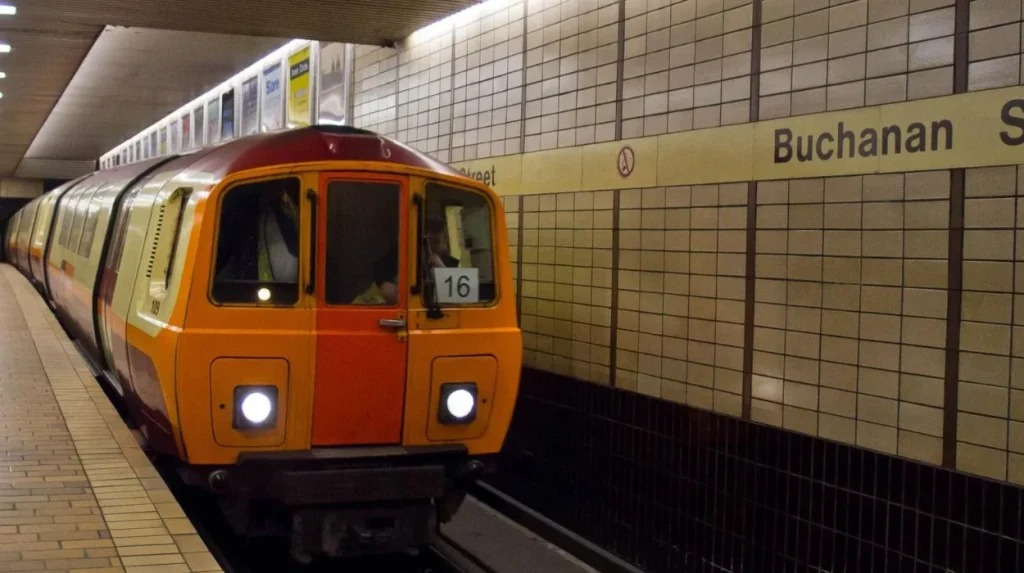
Important Subway stations for students include Hillhead, Kelvinbridge, St George’s Cross, Buchanan Street, St Enoch and Partick.
Hillhead station is particularly useful for University of Glasgow students because it serves the Byres Road area and the university’s main Gilmorehill campus.
Buchanan Street offers access to Glasgow Caledonian University and central shopping areas. St Enoch connects passengers with the southern part of the city centre. Partick provides connections with local trains and bus services.
What are the Glasgow Subway fares for students?
Glasgow Subway fares depend on ticket type, passenger eligibility and payment method. The Subway does not provide a general student fare simply because someone holds a university identification card.
From 5 January 2026, the adult Smartcard single fare is £1.80, while the adult daily fare is £3.40. A disposable adult single ticket costs £1.85, and a disposable daily ticket costs £4.45.
Students can use the following adult Smartcard fares:
- Single journey: £1.80.
- All-day travel: £3.40.
- Seven-day ticket: £15.50 when purchased at stations.
- Twenty-eight-day ticket: £60.
A Subway Smartcard offers flexible payment and helps regular passengers avoid buying individual disposable tickets. Pay-as-you-go credit is also available.
The Subway’s daily Smartcard fare structure charges passengers for their first two journeys in a day. Further journeys are free within the applicable daily fare arrangement. This makes Smartcard payment useful for students making several journeys.
Students should check the current SPT fare information before purchasing longer-term tickets because prices and ticket conditions change.
Can students use a National Entitlement Card on the Subway?
A National Entitlement Card does not automatically provide free Glasgow Subway travel to every student. General under-22 free travel applies to eligible bus journeys, not automatically to Subway journeys.
Eligible disabled and older concessionary cardholders receive separate Subway concessions. The applicable concession fare and eligibility conditions are published by SPT.
How can students travel by bus in Glasgow?
Buses provide extensive coverage across Glasgow, connecting university campuses, residential neighbourhoods, shopping areas and transport interchanges. First Bus and McGill’s operate important local services. Eligible residents aged 5–21 receive free travel on most Scottish bus services.
Bus travel is an important part of student transport in Glasgow because services reach areas without direct Subway or railway connections.
Two important operators are First Bus and McGill’s Buses.
First Bus Glasgow
First Bus operates services across Greater Glasgow. Its routes connect the city centre with areas such as:
- Partick and the West End.
- Maryhill and Springburn.
- Govan and Paisley.
- Shawlands and Pollokshields.
- Easterhouse and Glasgow Fort.
Students can use the First Bus app to purchase tickets, check journey information and access discounted student travel.
First Bus publishes several student ticket options. Its published Greater Glasgow student fares include:
Students need a valid official student identification card to use First Student tickets. Some tickets are available through the app only.
McGill’s Buses
McGill’s Buses provides services across Greater Glasgow and surrounding communities.
Its network covers areas including Glasgow, Renfrewshire, East Renfrewshire, East and West Dunbartonshire, North Lanarkshire and Rutherglen.
McGill’s offers dedicated StudentSaver tickets for verified students. Its Greater Glasgow student fares published for 2026 include:
- Student DaySaver: £5.35.
- StudentSaver weekly: £20.45.
- StudentSaver four-weekly: £71.60.
The operator also provides student tickets for its Greater Glasgow Plus network. A valid photographic matriculation card is required for student verification. Prices and ticket conditions should be checked before purchase.
How should students use Glasgow buses?
Students should check the route number, destination and timetable before boarding. They should also confirm whether their ticket covers the entire journey.
A practical bus journey involves identifying the nearest stop, checking the service through the operator’s journey planner and presenting the correct ticket when boarding.
Students using free under-22 bus travel must carry their valid National Entitlement Card and tap it on the electronic ticket machine.
Who qualifies for free student bus travel in Glasgow?
Scotland’s Young Persons’ Free Bus Travel Scheme provides eligible residents aged 5–21 with free journeys on most registered bus services. University enrolment is not required. Applicants need a valid National Entitlement Card or Young Scot NEC with active travel entitlement.
The Scottish Government introduced the nationwide scheme to improve access to education, employment and essential services while encouraging sustainable travel.
The scheme applies to eligible young residents throughout Scotland, including Glasgow. Students do not need to attend a particular university or college to qualify.
What is a National Entitlement Card?
A National Entitlement Card is a smartcard issued through Scotland’s concessionary travel system. It provides access to eligible travel benefits and other services.
Young people generally use one of two card options:
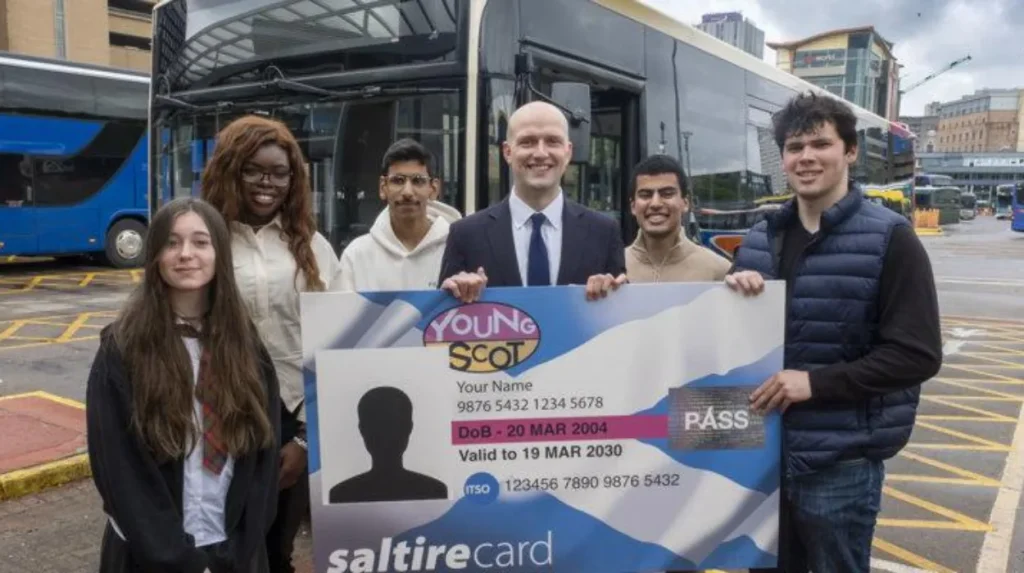
- Young Scot NEC: A card offering eligible travel benefits, identification and Young Scot rewards.
- Standard NEC: A National Entitlement Card without Young Scot branding.
Students aged 11–21 generally receive a photographic card. Children aged 5–11 receive a card without a photograph.
The card must contain the appropriate free bus travel entitlement. An ordinary university matriculation card does not automatically qualify as a free bus pass.
How can Glasgow students apply for free bus travel?
Students can apply online through the National Entitlement Card application portal or through their local council.
The online application process generally requires proof of identity, proof of address and a recent photograph.
Students aged 16–21 can apply themselves. Parents, guardians or carers must apply for children aged 5–15.
Transport Scotland advises applicants to allow up to ten working days for online application processing. Council applications generally require at least two weeks for card delivery. Transport Scotland+1
Students aged 16–21 with an existing eligible NEC can also use the Transport Scot Pass Collect app to download free bus travel onto their card. Dedicated university matriculation cards are not compatible with this process.
Which bus journeys are excluded?
The free travel scheme covers most registered local and long-distance bus services in Scotland. However, some services are excluded.
Examples include premium-fare services, sightseeing buses, certain cross-border services and dedicated school buses.
Students should check eligibility with the bus operator before travelling, particularly when using airport services or specialist coach connections.
How can Glasgow students save money on train travel?
Students can reduce Scottish rail expenses through Young Scot rail discounts, the 16–25 Railcard and eligible season tickets. These schemes provide different benefits according to age, education status and journey type, making eligibility checks essential before purchasing tickets.
Glasgow has an extensive railway network connecting the city centre with surrounding towns, university locations and other Scottish cities.
The two principal railway stations are Glasgow Central and Glasgow Queen Street.
Glasgow Central handles many services towards destinations including Paisley, Ayrshire, Lanarkshire and the wider south and west of Scotland.
Glasgow Queen Street provides important connections towards Edinburgh, Stirling, Perth and northern Scotland.
Local stations such as Partick, Charing Cross, Exhibition Centre, Anniesland and Queen’s Park provide additional access across the city.
Can students use a 16–25 Railcard?
The 16–25 Railcard offers eligible passengers one-third off most rail fares in Great Britain.
It is available to people aged 16–25. Mature students aged 26 or older can also qualify if they meet the full-time education requirements.
The published cost is £35 for one year or £80 for three years. Mature students aged 26 and over receive a one-year card and must provide evidence of their studies.
The Railcard is particularly useful for students who regularly travel between Glasgow and other Scottish cities or return home during university holidays.
What rail discounts are available through Young Scot?
Young Scot NEC holders aged 16–18 receive one-third off most eligible rail fares in Scotland.
The discount also applies to eligible full-time volunteers aged up to 25.
Young Scot rail benefits include:
- One-third off eligible single and return fares.
- Fifty per cent off eligible weekly season tickets.
- Fifty per cent off eligible monthly season tickets.
A minimum fare of £12 applies to certain weekday journeys before 10 am. This restriction does not apply during July and August or to season tickets.
These discounts are separate from the free bus travel scheme. Students should check the relevant railcard conditions before combining discounts.
How can students choose between Glasgow train tickets?
The best ticket depends on travel frequency and destination.
A student travelling occasionally between Glasgow and Edinburgh should compare standard advance fares with Railcard-discounted tickets. A student commuting daily from a surrounding town should compare weekly or monthly season tickets.
Students should check journey restrictions, departure times, available discounts and refund conditions before completing a purchase.
What is a ZoneCard and how does it help Glasgow students?
ZoneCard is an integrated transport ticket managed by Strathclyde Partnership for Transport. It allows passengers to use eligible ScotRail, Glasgow Subway and participating bus services within selected geographical zones, helping regular commuters manage multi-operator journeys.
Glasgow’s transport network includes different operators with separate ticketing systems. A student travelling between home, university and a part-time job sometimes needs more than one transport service.
ZoneCard provides an integrated ticketing option for these journeys.
Students can select the geographical zones they need and purchase tickets for different durations. Options include daily, weekly, four-weekly and annual tickets, alongside flexible travel products.
For example, a student travelling from a residential area outside the city centre to the University of Glasgow can select the zones required for the bus and rail connections.
SPT identifies the University of Glasgow, University of Strathclyde and Glasgow Caledonian University among educational destinations within Zone 1.
Zone 1 also includes the city centre, West End, Merchant City and Scottish Event Campus.
How does ZoneCard work?
ZoneCard is loaded onto a compatible smartcard. Passengers use the card differently depending on the transport service.
On buses, passengers present the card to the reader when boarding and state their destination.
On ScotRail, passengers tap at ticket gates or platform validators at the beginning and end of the journey.
On the Subway, passengers present the card to the orange reader at the ticket gate.
Students can purchase ZoneCard products through the official ZoneCard website, its mobile app and participating Payzone outlets.
ZoneCard is not automatically the cheapest option for every student. Someone who travels only by bus should compare it with an operator-specific student ticket before purchasing.
Which Glasgow neighbourhoods offer convenient transport for students?
Student neighbourhoods in Glasgow have different transport connections depending on their distance from university campuses and access to buses, Subway stations and railway services. West End, City Centre, Partick, Dennistoun and Shawlands offer distinct commuting arrangements.
Choosing accommodation near reliable transport connections helps students manage commuting time and living expenses.
West End
The West End is popular with University of Glasgow students because of its proximity to the Gilmorehill campus.
Hillhead and Kelvinbridge Subway stations provide connections to the city centre. Partick offers additional rail and bus connections.
Byres Road is a major local destination with restaurants, supermarkets, cafes and student facilities.
Students living in Hillhead, Kelvinbridge and Partick can combine walking with public transport for everyday journeys.
Glasgow City Centre
City Centre accommodation provides convenient access to Glasgow Caledonian University, the University of Strathclyde and several colleges.
Buchanan Street Subway station, Glasgow Queen Street and Glasgow Central provide important transport connections.
The city centre also has extensive bus services and pedestrian routes. Students living centrally can reach many educational facilities without needing a daily public transport journey.
Dennistoun
Dennistoun is an East End neighbourhood with railway connections through stations such as Alexandra Parade and Duke Street.
Students attending universities in the city centre can use local trains or buses for commuting.
Its transport connections also make it practical for students travelling towards the wider East End.
Shawlands and Pollokshields
Shawlands and Pollokshields are Southside residential areas with railway connections to Glasgow Central and other parts of the city.
Students attending institutions in the city centre can use suburban trains and connecting bus services.
These neighbourhoods provide alternatives for students who prefer accommodation outside the central shopping and university districts.
Partick
Partick is an important transport interchange in the West End.
The station connects the Subway, ScotRail and local bus services. This makes it particularly useful for students who need to change transport modes during their journeys.
Partick also provides access to the University of Glasgow area and other West End destinations.
Can students cycle or walk to university in Glasgow?
Cycling and walking provide practical alternatives to public transport for students living close to their campuses. Glasgow has pedestrian streets, shared paths and cycling infrastructure connecting residential neighbourhoods, educational institutions, parks and city-centre destinations.
Active travel refers to journeys made through physical activity, particularly walking and cycling. These options reduce dependence on public transport and provide opportunities for regular exercise.
Cycling in Glasgow
Glasgow has developed cycling infrastructure through local and regional active travel projects.
The South City Way is an important cycling route connecting the Southside with central Glasgow. It provides cycling infrastructure through areas including Govanhill and Gorbals.
The city also has connections to wider walking and cycling routes, including the Kelvin Walkway and National Cycle Network routes.
Students can use cycling for journeys between accommodation, libraries, university buildings and local shopping facilities.
Before cycling regularly, students should consider:
- Secure bicycle storage at accommodation.
- Suitable bicycle locks.
- Front and rear lights.
- Weather-resistant clothing.
- Safe cycling routes.
- Campus bicycle parking facilities.
Students should also check their university’s cycle storage and shower facilities.
Walking to university
Walking is particularly convenient for students living close to their campus.
University of Glasgow students living in Hillhead, Kelvinbridge and nearby West End streets can reach many campus facilities on foot.
University of Strathclyde and Glasgow Caledonian University students living around the City Centre can also access their campuses through pedestrian routes.
Walking eliminates ticket expenses and reduces dependence on bus and train timetables.
Glasgow’s weather requires practical preparation. Waterproof clothing, suitable footwear and additional commuting time help students manage wet and windy conditions.
How should international students plan their transport in Glasgow?
International students should understand Glasgow’s transport operators, concessionary travel eligibility, ticketing systems and university locations before arriving. Preparing a travel budget, identifying nearby stations and checking airport connections makes the transition to student life more manageable.
International students attending Glasgow universities need to understand an important distinction: free under-22 bus travel is based on Scottish residency eligibility, not simply student age or university admission.
Students arriving from outside Scotland should check their eligibility and residency circumstances before relying on free bus travel.
Airport transport
Glasgow Airport is located outside the city centre, near Paisley.
The airport has dedicated bus connections to central Glasgow, including the Glasgow Airport Express service.
Students arriving with luggage should compare airport bus connections with available taxi and private transfer options.
They should also check ticket prices and luggage arrangements before travelling.
Planning the first university journey
International students should identify their accommodation, university campus and nearest public transport stops before travelling.
For example, a student attending the University of Glasgow should identify the Hillhead and Kelvinbridge Subway stations, nearby bus services and walking routes.
A student attending Glasgow Caledonian University should investigate Buchanan Street Subway station, nearby bus stops and the city-centre pedestrian network.
Students should also download the relevant operator applications and save their accommodation address for journey planning.
Important travel documents
International students should keep their passport, university matriculation card and relevant concessionary travel documents accessible.
A university identification card proves student status for eligible operator-specific discounts. It does not automatically provide free travel on every transport service.
Students should also check whether their course registration qualifies them for mature-student railcard arrangements.
How can students plan reliable and affordable daily journeys in Glasgow?
Affordable student commuting depends on matching the correct ticket with journey frequency, transport operator and eligibility. Students should compare single fares, daily tickets, weekly passes, integrated travel cards and concessionary discounts before choosing regular commuting arrangements.
A transport budget should reflect the actual number of journeys rather than the advertised price of an individual ticket.
For example, a student travelling to university five days each week should compare the cost of individual journeys with a weekly or monthly ticket.
A student travelling only two days each week should calculate whether individual tickets offer better value.
Compare transport costs
Each ticket has separate eligibility requirements and geographical coverage.
Check journey changes and service disruptions
Public transport schedules change because of maintenance, engineering work, road conditions and operational disruptions.
Students should check live departure information before leaving accommodation.
Useful resources include the official websites and applications of:
- Strathclyde Partnership for Transport.
- First Bus.
- McGill’s Buses.
- ScotRail.
- National Rail.
Using official operator information helps students confirm departure times, fares and service changes.
Consider late-night journeys
Students attending evening lectures, university events or social activities should check the last available transport service.
Bus and Subway operating times differ. A route that operates during daytime commuting hours does not necessarily provide the same frequency late at night.
Students should identify alternative routes and safe walking connections before travelling after evening activities.
They should also check whether their ticket covers the intended service.
Explore More Area Guide
Best Free Things to Do in Glasgow for Students
Best Student Nightclubs in Glasgow: Top Clubs and Student Nights
How accessible is Glasgow’s public transport for students with additional travel requirements?
Glasgow’s transport network includes accessibility facilities across selected railway stations, Subway stations and bus services. Students should check step-free access, lifts, assistance arrangements and vehicle accessibility before travelling to unfamiliar campuses or destinations.
Accessibility is an important part of transport planning for students with mobility requirements, visual impairments or other additional needs.
Glasgow Queen Street railway station provides step-free access to all platforms, lifts and passenger assistance facilities according to National Rail’s station information.
Students travelling through other stations should check individual accessibility information because facilities differ between locations.
SPT also provides concessionary travel information for eligible disabled passengers. Certain National Entitlement Card holders qualify for reduced Subway fares.
Students should contact their transport operator when they require assistance with boarding, changing services or accessing station facilities.
Universities also provide student support services that can help arrange suitable campus access and discuss commuting requirements.
What should students know about the future of student transport in Glasgow?
Glasgow’s student transport system continues to develop through integrated ticketing, public transport investment, cycling infrastructure and digital journey planning. These improvements support university accessibility, sustainable commuting and better connections between residential neighbourhoods and educational institutions.
Transport planning is important as Glasgow attracts students from across Scotland, the United Kingdom and overseas.
Several developments influence the future of student commuting.
Integrated ticketing
Integrated ticketing allows passengers to use different transport operators through compatible travel products.
SPT’s ZoneCard provides an established example by connecting eligible bus, rail and Subway services through one ticket.
Greater integration helps students who travel between residential neighbourhoods, university campuses and employment locations.
Sustainable transport
Walking, cycling and public transport support Glasgow’s wider sustainable transport objectives.
Cycling infrastructure projects provide additional options for short-distance journeys. Improved connections between neighbourhoods and university campuses also support active travel.
Digital journey planning
Transport applications provide live departure information, journey planning and electronic ticket purchasing.
Students increasingly use operator applications to compare routes and identify service changes before leaving home.
These digital services help students make informed commuting decisions and reduce uncertainty when travelling around Glasgow.
Glasgow offers students several transport options, including buses, the Subway, trains, cycling and walking. The most suitable option depends on university location, accommodation, journey frequency and travel budget.
The Young Persons’ Free Bus Travel Scheme provides an important financial benefit for eligible Scottish residents aged 5–21. Students aged 22 and over can investigate First Bus student tickets, McGill’s StudentSaver products, Subway Smartcards, ZoneCard and rail discounts.
Understanding these arrangements helps students manage everyday commuting expenses and select accommodation with convenient transport connections.
Before purchasing a travel pass, students should check the latest fares, eligibility conditions and service information through official transport providers.
Is public transport free for students in Glasgow?
Public transport is not entirely free for all students. Eligible Scottish residents aged 5–21 receive free travel on most registered bus services through the Young Persons’ Free Bus Travel Scheme. Subway and train journeys generally require separate tickets.