Glasgow is one of Scotland’s most important student cities, offering access to historic universities, public museums, cultural attractions, green spaces and independent creative communities. Students can explore much of the city without spending money because many major attractions operate with free admission.
- Why Is Glasgow a Good City for Free Student Activities?
- Glasgow’s Student Population and University Neighbourhoods
- Why Free Attractions Matter for Student Budgets
- Which Free Museums and Art Galleries Can Students Visit in Glasgow?
- Kelvingrove Art Gallery and Museum
- Riverside Museum
- Gallery of Modern Art (GoMA)
- The Burrell Collection
- The Hunterian Museum
- St Mungo Museum of Religious Life and Art
- Which Free Parks and Gardens Are Best for Glasgow Students?
- Where Can Students Find Free Street Art and Cultural Experiences in Glasgow?
- Glasgow City Centre Mural Trail
- University of Glasgow Campus and Cloisters
- Ashton Lane and The Hidden Lane
- Which Free Historic Places Should Students Explore in Glasgow?
- Where Can Students Find Free Study Spaces and Libraries in Glasgow?
- What Free Outdoor Activities Can Students Enjoy in Glasgow?
- Walk Along the River Clyde
- Explore the Kelvin Walkway
- Join a Free Parkrun
- Enjoy Free Photography Locations
- How Can Students Enjoy Free Things to Do in Glasgow Throughout the Year?
- Free Activities During Winter
- Free Activities During Spring
- Free Activities During Summer
- Free Activities During Autumn
- How Can Students Plan a Free Day Out in Glasgow?
- What Should Students Know Before Visiting Free Attractions in Glasgow?
- Check Opening Hours
- Understand Free Admission Conditions
- Consider Public Transport
- Respect Public Spaces
- How Do Free Activities Benefit Glasgow’s Student Community?
- What Are the Best Free Things to Do in Glasgow for Students?
The city combines academic opportunities with a wide range of affordable leisure activities. Its museums preserve Scottish history, its parks provide outdoor recreation, and its streets feature public art and historic architecture. These attractions make Glasgow accessible to students who want to experience city life while managing limited budgets.
Glasgow also has a strong university presence, with institutions including the University of Glasgow, the University of Strathclyde and Glasgow Caledonian University. Their campuses connect students with libraries, cultural venues, public transport and neighbourhood facilities.
Free activities provide practical ways to explore the city between lectures, meet friends, study outside university buildings and understand Glasgow’s history. From Kelvingrove Art Gallery and Museum to Glasgow Green, students have access to educational and recreational spaces throughout the year.
Why Is Glasgow a Good City for Free Student Activities?
Glasgow is suitable for students seeking free activities because its public museums, galleries, historic landmarks and parks provide cultural and recreational opportunities without standard admission charges. Its university neighbourhoods also connect students with accessible public spaces and educational resources.
Glasgow has a long-established reputation as a centre for education, culture and industry. Its development as a major Scottish city created important public institutions, including museums, libraries, galleries and civic buildings.
The city is particularly attractive to students because several leading cultural attractions are supported by public organisations. Glasgow Life, the organisation responsible for delivering cultural and leisure services across Glasgow, operates numerous museums and cultural venues.
Many of these institutions offer free general admission. Students can explore permanent exhibitions, attend selected public events and use cultural facilities without purchasing an entry ticket.
Glasgow’s green spaces provide another important part of student life. Public parks create opportunities for walking, running, reading, socialising and outdoor recreation. These activities are especially useful for students living in shared accommodation or university residences.
Glasgow’s Student Population and University Neighbourhoods
Glasgow has several established higher education institutions. Each university contributes to the city’s academic and cultural environment.
The University of Glasgow is located in the West End, close to Kelvingrove Park, the Hunterian Museum and Glasgow Botanic Gardens.
The University of Strathclyde is based in the city centre, providing convenient access to Glasgow Green, George Square and the Gallery of Modern Art.
Glasgow Caledonian University is also situated in the city centre, near Buchanan Street, public libraries and major transport connections.
These university locations allow students to combine academic responsibilities with free recreational activities. Walking between campuses, museums, parks and libraries also helps reduce everyday transport expenses.
Why Free Attractions Matter for Student Budgets
University students regularly manage expenses associated with accommodation, food, transport, study materials and social activities. Free attractions reduce the amount spent on entertainment.
A museum visit, public park walk or self-guided architecture tour requires no standard admission payment. Students can also organise group outings without purchasing individual tickets.
However, free admission does not mean every associated service is free. Parking, refreshments, special exhibitions, guided experiences and optional activities can involve additional charges.
Checking the official venue information before travelling helps students avoid unexpected expenses.
Which Free Museums and Art Galleries Can Students Visit in Glasgow?
Glasgow offers several free museums and art galleries where students can explore Scottish history, international art, science, transport and design. Kelvingrove, Riverside Museum, GoMA, the Burrell Collection and the Hunterian provide accessible educational experiences.
Glasgow’s museums are among its most valuable free attractions. They preserve historical collections, explain the city’s industrial development and introduce visitors to artistic movements from Scotland and around the world.
These institutions also provide educational opportunities outside university classrooms. Students studying history, architecture, engineering, fine art, sociology and cultural studies can connect academic subjects with real collections.
Kelvingrove Art Gallery and Museum
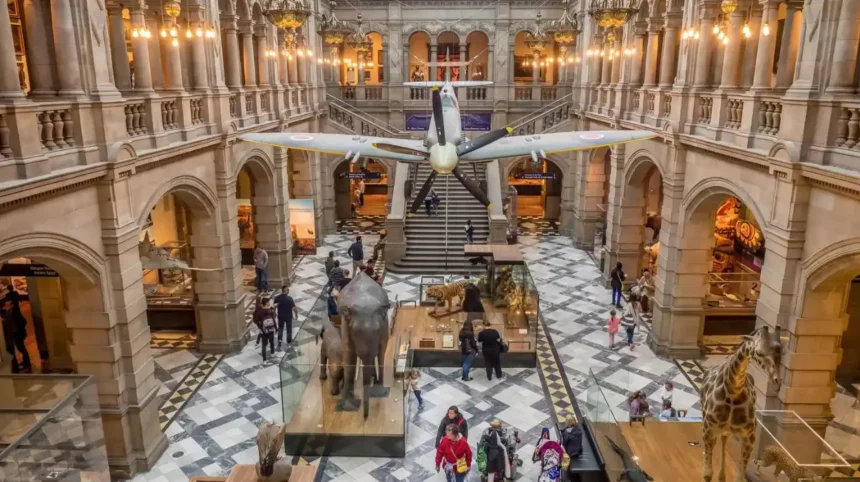
Kelvingrove Art Gallery and Museum is one of Glasgow’s best-known cultural attractions. Located in the West End, the museum opened in 1901 and contains 22 galleries covering different subjects.
Its collections include European paintings, natural history, ancient Egyptian artefacts, Scottish design and historical objects.
Visitors can see works associated with major artists, including Salvador Dalí, Rembrandt and Vincent van Gogh. The museum also displays Charles Rennie Mackintosh-related design objects and Scottish cultural collections.
The building itself is an important architectural attraction. Its Spanish Baroque design, decorative stonework and impressive central hall make it a significant landmark in Glasgow.
Students benefit from the museum’s educational displays and broad subject coverage. Art students can examine paintings and design, while history students can explore historical artefacts and cultural developments.
General admission is free. Some temporary events or special activities have separate conditions.
Riverside Museum
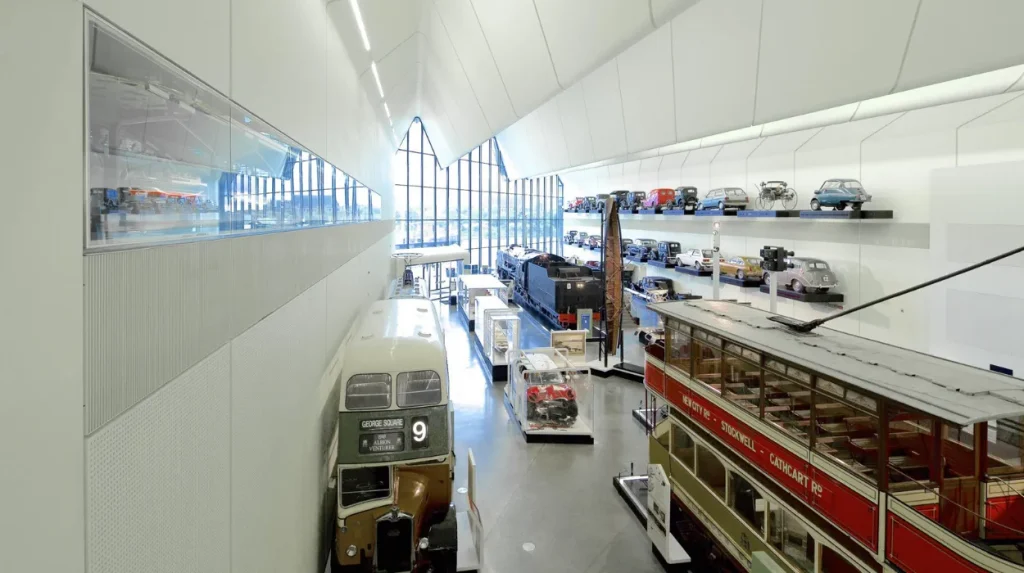
The Riverside Museum explores Glasgow’s transport and industrial history. It stands beside the River Clyde and occupies a distinctive building designed by architect Zaha Hadid.
The museum displays different forms of transport, including vintage cars, motorcycles, bicycles, trams, locomotives and historical vehicles.
One of its key features is a recreated historic Glasgow street. Visitors can walk through the setting and examine shops and objects representing earlier periods of city life.
The collections explain how transport influenced Glasgow’s economic development. They also demonstrate the importance of engineering, manufacturing and shipbuilding to the city’s industrial identity.
For engineering and design students, the museum provides useful examples of technological development and industrial heritage.
General museum admission is free. The Tall Ship Glenlee, located nearby, is a separate attraction with its own admission arrangements.
Gallery of Modern Art (GoMA)
The Gallery of Modern Art is located in the city centre at Royal Exchange Square.
Known locally as GoMA, the gallery focuses on modern and contemporary art. Its exhibitions introduce visitors to different artistic approaches, social themes and creative movements.
The collection includes works by international and Scottish artists. Students can explore paintings, installations, sculpture and other forms of contemporary expression.
The building is also historically significant. It originally served as a merchant’s townhouse before becoming an art gallery.
The famous statue of the Duke of Wellington outside the entrance is another recognisable Glasgow landmark. Its frequently replaced traffic cone has become part of the city’s popular visual identity.
GoMA offers free general admission, making it suitable for students interested in visual arts, photography, architecture and contemporary culture.
The Burrell Collection
The Burrell Collection is located within Pollok Country Park in Glasgow’s Southside.
The museum contains an extensive collection assembled by Sir William Burrell, a Glasgow-based shipping businessman and art collector.
Its exhibitions include medieval art, Chinese ceramics, European paintings, sculptures, textiles, furniture and historical objects.
The collection provides an opportunity to study artistic traditions from different geographical regions and historical periods.
Its location within Pollok Country Park makes it particularly suitable for a full free day out. Students can combine museum exploration with woodland walks and outdoor relaxation.
General admission is free, although visitors should check opening arrangements before travelling.
The Hunterian Museum
The Hunterian Museum is located inside the University of Glasgow’s historic Gilmorehill campus.
Established in 1807, it is Scotland’s oldest public museum. Its collections cover natural history, archaeology, geology, medicine and scientific instruments.
Visitors can explore Roman artefacts, fossils, minerals and historical scientific objects.
The museum also provides an opportunity to learn about William Hunter, the physician and collector whose collections formed its foundation.
Students studying science, archaeology, medicine and history can use the museum to explore subjects beyond their university courses.
The neighbouring Hunterian Art Gallery provides access to additional artistic collections. However, the Mackintosh House has separate admission arrangements.
St Mungo Museum of Religious Life and Art
The St Mungo Museum of Religious Life and Art explores religious beliefs, traditions and artistic expression from different parts of the world.
Its collections introduce visitors to Christianity, Islam, Buddhism, Hinduism and other religious traditions.
The museum promotes understanding of religious diversity and the historical role of faith in different societies.
Students studying sociology, history, philosophy, anthropology and cultural studies can use its exhibitions to explore religious practices and social development.
The museum is located close to Glasgow Cathedral and the Necropolis, making it easy to include in a free historical walking trip.
Which Free Parks and Gardens Are Best for Glasgow Students?
Glasgow has several public parks and gardens that provide free access to walking routes, green spaces, gardens and recreational facilities. Kelvingrove Park, Glasgow Green, Queen’s Park and Pollok Country Park are useful student destinations.
Glasgow is historically associated with the phrase Dear Green Place, reflecting its extensive network of public green spaces.
These outdoor areas provide students with alternatives to indoor entertainment. They also offer opportunities for exercise, photography, picnics, reading and social activities.
Public parks are particularly useful during university holidays and warmer months when students want to spend time outdoors.
Kelvingrove Park
Kelvingrove Park is a historic Victorian park in Glasgow’s West End. It was established in 1852 and sits beside the River Kelvin.
The park features landscaped pathways, lawns, monuments, gardens and recreational areas.
Students can use its open spaces for walking, jogging, reading and meeting friends. Its proximity to Kelvingrove Art Gallery and Museum also makes it convenient for combining outdoor and indoor activities.
The park contains a skatepark and bowling facilities. Some activities and facilities have specific access or booking conditions, so students should check Glasgow Life information before participating.
Glasgow Botanic Gardens
The Glasgow Botanic Gardens is a major green attraction in the West End.
The gardens contain landscaped grounds, plant collections and Victorian glasshouses.
One of their most recognisable structures is Kibble Palace, an impressive glasshouse containing tropical and subtropical plants.
Students interested in biology, environmental science, horticulture and photography can explore the gardens while learning about different plant environments.
The surrounding outdoor spaces also provide opportunities for quiet walks and relaxation.
Entry to the gardens is free. Students should check current access arrangements for individual glasshouses and special events.
Glasgow Green
Glasgow Green is one of the city’s oldest public parks. Its history dates back to the medieval period, and it occupies a large area beside the River Clyde.
The park contains several historic landmarks, including the Nelson Monument and McLennan Arch.
Students can explore its pathways, open lawns and riverside surroundings without paying an admission fee.
Glasgow Green also hosts public gatherings and cultural events. Its location near the city centre makes it accessible for students attending Glasgow Caledonian University and the University of Strathclyde.
It is suitable for walking, informal sports, photography and group picnics.
Queen’s Park
Queen’s Park is located in Glasgow’s Southside.
The park is known for its landscaped grounds, walking routes and elevated viewpoint. The flagpole area provides panoramic views across Glasgow and the surrounding landscape.
Students can visit for walking, jogging, photography and outdoor relaxation.
The park also contains recreational facilities and open spaces used by local communities.
Its elevated location makes it a useful destination for students interested in city photography and landscape views.
Pollok Country Park
Pollok Country Park is Glasgow’s largest country park and occupies a substantial area in the city’s Southside.
It contains woodland, riverside pathways, gardens and open parkland.
One of its most recognisable features is its Highland cattle, which attract visitors interested in Scottish rural heritage and wildlife.
Students can explore the park on foot, take photographs and enjoy outdoor activities.
The Burrell Collection is also located within the park, allowing visitors to combine a museum visit with a countryside-style walk.
General access to the park is free, although individual attractions and services within its grounds have separate arrangements.
Where Can Students Find Free Street Art and Cultural Experiences in Glasgow?
Glasgow provides free cultural experiences through its public mural trail, historic architecture, university campuses and community art spaces. Students can explore creative neighbourhoods and discover local artistic traditions without paying standard admission fees.
Glasgow has a recognised street art culture that contributes to its public identity.
Its city-centre mural trail transforms ordinary streets and building walls into an outdoor art exhibition. The murals represent different subjects, including Scottish history, wildlife, local personalities and contemporary visual culture.
Glasgow City Centre Mural Trail
The Glasgow City Centre Mural Trail is a self-guided route featuring large-scale artworks across the city centre.
The murals are displayed on building walls, public spaces and other urban surfaces.
Important examples include:
- Saint Mungo by artist Smug, depicting Glasgow’s patron saint.
- Honey, I Shrunk the Kids, a large-scale optical illusion mural.
- Wonderwall, a prominent artwork associated with the University of Strathclyde area.
Students can follow the trail independently and photograph the artworks.
The route also provides an opportunity to explore the city centre on foot while learning about Glasgow’s creative identity.
There is no standard admission charge for viewing public murals.
University of Glasgow Campus and Cloisters
The University of Glasgow has one of the city’s most recognisable historic campuses.
Founded in 1451, it is one of Scotland’s ancient universities.
Its main Gilmorehill campus features Gothic Revival architecture, historic buildings and the famous cloisters.
The university’s main building is an important architectural landmark. Its stone arches, vaulted passages and distinctive tower attract students, visitors and photographers.
Students from other institutions can explore accessible public areas of the campus, subject to university access rules.
The nearby Hunterian Museum and Art Gallery provide additional free cultural experiences.
Ashton Lane and The Hidden Lane
Ashton Lane is a cobbled street in Glasgow’s West End, known for its independent businesses, restaurants and distinctive urban setting.
Although many businesses charge for food and drinks, walking through the lane and exploring its architecture is free.
The Hidden Lane in Finnieston is another creative location. It features colourful buildings, independent studios and creative businesses.
Students interested in photography, independent design and local culture can explore these neighbourhoods without purchasing anything.
These locations also demonstrate how Glasgow’s independent creative communities contribute to the character of its neighbourhoods.
Which Free Historic Places Should Students Explore in Glasgow?
Glasgow has historic landmarks that explain its medieval development, religious heritage, Victorian expansion and industrial history. Glasgow Cathedral, the Necropolis and Provand’s Lordship offer students opportunities to explore important historical sites.
Glasgow’s historical attractions provide an understanding of how the city developed from a medieval religious settlement into a major industrial and commercial centre.
Many important historic sites are located within walking distance of each other, making them suitable for free educational outings.
Glasgow Cathedral
Glasgow Cathedral is one of Scotland’s most important surviving medieval religious buildings.
The cathedral is associated with Saint Mungo, the patron saint of Glasgow.
Its history dates back to the medieval period, and its Gothic architecture features vaulted ceilings, stone columns and historic stained-glass windows.
The building provides an opportunity to understand Scotland’s religious history and medieval architecture.
Students studying history, architecture, theology and heritage management can explore its historical features.
General visitor admission is free, although donations are welcomed and visitor access arrangements should be checked before arrival.
Glasgow Necropolis
The Glasgow Necropolis is a Victorian cemetery situated on a hill beside Glasgow Cathedral.
Established in the nineteenth century, it contains elaborate monuments, sculptures and memorials associated with Glasgow’s historical residents.
The cemetery provides insight into Victorian funerary architecture, social history and the development of Glasgow’s wealthy merchant communities.
Its elevated position also offers views across the city.
Students can explore the pathways and monuments independently. Free guided tours are also organised by Friends of Glasgow Necropolis at selected times, with donations appreciated.
Visitors should treat the site respectfully because it remains a historic burial ground.
Provand’s Lordship
Provand’s Lordship is one of Glasgow’s oldest surviving buildings.
Dating from 1471, the medieval house provides an insight into domestic life in earlier Glasgow.
Its historic rooms contain period furniture, portraits and objects associated with Scotland’s past.
The building is located near Glasgow Cathedral and the Necropolis, allowing students to visit several historic attractions during one outing.
General admission is free, making it a useful destination for students interested in medieval architecture and Scottish heritage.
Where Can Students Find Free Study Spaces and Libraries in Glasgow?
Glasgow has public libraries and university learning environments that provide access to books, study resources and cultural activities. The Mitchell Library is a particularly important public resource for students seeking a quiet alternative to cafés.
Libraries are an important part of student life because they provide opportunities for independent study, reading and research.
Glasgow has a network of public libraries alongside university libraries and specialist academic collections.
Public library facilities are especially useful for students who need additional study space outside their accommodation.
The Mitchell Library
The Mitchell Library is one of Glasgow’s most important public libraries.
It is recognised for its extensive collections, historic architecture and research resources.
The library contains books, historical documents, reference materials and public study facilities.
Students can use its reading areas for independent work and research. Its collections also provide access to material related to Glasgow’s social, cultural and historical development.
General public access is free, although some specialist services and collections have separate access requirements.
Students should check the official Glasgow Life library information for current opening times and available facilities.
University Libraries and Public Learning Spaces
Glasgow’s universities operate academic libraries with specialist resources.
The University of Glasgow Library supports research and learning across numerous academic disciplines.
The University of Strathclyde Library provides study facilities and academic resources for its university community.
Glasgow Caledonian University also operates learning spaces designed for students and researchers.
Access policies differ between institutions. University students generally receive access through their student credentials, while external visitors must follow individual library arrangements.
Public libraries remain an alternative for students who do not have access to another institution’s facilities.
Glasgow Women’s Library
Glasgow Women’s Library is a specialist library, museum and cultural centre.
Its collections focus on women’s history, literature, social movements and cultural contributions.
The institution preserves books, archival materials and historical objects connected with women’s experiences.
Students researching gender studies, sociology, literature, history and social change can explore its resources and exhibitions.
General visitor access is free, although selected events and activities have individual booking or pricing arrangements.
What Free Outdoor Activities Can Students Enjoy in Glasgow?
Students can enjoy several free outdoor activities in Glasgow, including walking, jogging, photography, park exploration, riverside routes and selected community events. Public green spaces and pedestrian routes make outdoor recreation accessible throughout the city.
Outdoor recreation is an important part of Glasgow’s student lifestyle.
Students do not need expensive equipment or paid memberships to enjoy many outdoor activities. Public pathways, parks and riverside routes provide accessible options.
Walk Along the River Clyde
The River Clyde has played a central role in Glasgow’s economic and industrial history.
Its waterfront connects different parts of the city and provides opportunities for walking, cycling and photography.
Students can explore sections of the riverside to observe historic industrial buildings, modern developments and important city landmarks.
The route also provides an opportunity to understand Glasgow’s relationship with shipbuilding and maritime trade.
Walking along publicly accessible sections of the Clyde is free.
Explore the Kelvin Walkway
The Kelvin Walkway follows the River Kelvin through green spaces and residential areas.
It connects parts of Glasgow’s West End with quieter riverside environments.
Students can use the route for walking, jogging, wildlife observation and outdoor photography.
The walkway also provides access to areas around the Botanic Gardens and Kelvingrove Park.
Some sections have uneven or muddy surfaces, particularly following rainfall. Suitable footwear is useful.
Join a Free Parkrun
Parkrun is a community-organised running initiative that provides free, timed 5-kilometre events in public parks.
Students can participate in local events after completing the required online registration.
Parkrun supports different fitness levels and welcomes participants who prefer walking, jogging or running.
It also provides opportunities to meet people outside university environments.
Glasgow has multiple public park locations associated with organised running activities. Students should check the official Parkrun website for current local event schedules and registration details.
Enjoy Free Photography Locations
Glasgow has numerous locations suitable for photography without entrance fees.
The university’s historic buildings provide architectural subjects, while the Necropolis offers elevated city views.
Glasgow Green provides opportunities to photograph historic monuments and riverside landscapes.
The city-centre mural trail is another useful location for students interested in street photography and creative projects.
Students studying media, journalism, architecture and visual communication can use these public spaces for independent practice.
How Can Students Enjoy Free Things to Do in Glasgow Throughout the Year?
Students can explore Glasgow throughout the year by combining indoor museums, outdoor parks, public art and seasonal community activities. Choosing suitable destinations according to weather, opening hours and university schedules helps maintain affordable leisure routines.
Glasgow’s free attractions operate across different seasons, although opening times, event programmes and outdoor conditions influence individual visits.
Planning activities around the academic calendar helps students make better use of available leisure time.
Free Activities During Winter
Winter weather in Glasgow often creates demand for indoor activities.
Museums and galleries provide alternatives to outdoor recreation.
Students can visit Kelvingrove, Riverside Museum, GoMA and the Hunterian to explore permanent collections.
The Mitchell Library also provides a public indoor environment for reading and independent research.
Students should check venue opening times during public holidays and seasonal closures.
Free Activities During Spring
Spring brings opportunities to explore Glasgow’s gardens and public parks.
The Botanic Gardens offer seasonal plant displays, while Kelvingrove Park provides opportunities for walking and photography.
Students can also explore the university campus and follow the city-centre mural trail.
Outdoor visits become particularly useful as daylight hours increase.
Free Activities During Summer
Summer is suitable for outdoor recreation and exploring Glasgow’s neighbourhoods.
Students can organise picnics in public parks, follow riverside walking routes and visit public cultural events.
Glasgow’s outdoor spaces also host selected festivals and community gatherings.
Some events offer free entry, while others require tickets. Students should check event information before making plans.
Free Activities During Autumn
Autumn provides opportunities to explore Glasgow’s historic parks and architectural landmarks.
Pollok Country Park, Queen’s Park and Kelvingrove Park offer changing seasonal landscapes.
The city’s museums remain useful destinations when outdoor conditions become less favourable.
Students can also explore historic buildings and libraries while learning about Glasgow’s cultural development.
How Can Students Plan a Free Day Out in Glasgow?
Students can organise a free day out in Glasgow by grouping nearby attractions, walking between accessible locations and checking museum opening times before departure. Combining cultural sites, parks and public spaces reduces transport expenses and unnecessary travel.
Glasgow’s main attractions are spread across different neighbourhoods. Planning visits by geographical area helps students use their time efficiently.
A city-centre itinerary can include several historic and cultural locations without requiring expensive transport.
West End Free Student Day
Students can explore the West End through a combination of museums, university architecture and green spaces.
A practical itinerary includes:
- Begin at the University of Glasgow and explore its historic campus.
- Visit the Hunterian Museum.
- Walk towards Kelvingrove Art Gallery and Museum.
- Explore Kelvingrove Park.
- Finish at Glasgow Botanic Gardens and Kibble Palace.
This itinerary combines academic history, art, science and outdoor recreation.
Most of the route can be explored on foot, although the distance between the Botanic Gardens and other attractions should be considered when planning the day.
City Centre and Historic Glasgow Day
Students interested in history and architecture can organise a day around Glasgow’s city centre and Cathedral Precinct.
A practical itinerary includes:
- Start at the Gallery of Modern Art.
- Explore nearby city-centre streets and public murals.
- Walk towards Glasgow Cathedral.
- Visit Provand’s Lordship.
- Explore Glasgow Necropolis.
These attractions provide insight into Glasgow’s artistic, medieval and Victorian heritage.
Walking between these locations also allows students to explore the city’s architecture and historic streets.
Southside Free Student Day
Students living in Glasgow’s Southside can organise a day around its major public green spaces.
A practical itinerary includes:
- Visit Pollok Country Park.
- Explore the Burrell Collection.
- Walk through the park’s woodland and open spaces.
- Visit Queen’s Park on another part of the Southside.
This combination provides access to art, history, nature and outdoor recreation.
The Burrell Collection offers a particularly useful indoor option when weather conditions are unsuitable for extended walks.
What Should Students Know Before Visiting Free Attractions in Glasgow?
Students should check official opening hours, admission conditions, transport connections and accessibility information before visiting Glasgow attractions. Free general admission does not guarantee that every exhibition, guided tour, facility or special event is available without payment.
Although Glasgow provides numerous free attractions, practical planning improves the visitor experience.
Museums and cultural venues occasionally change their opening arrangements because of maintenance, special exhibitions and public holidays.
Students should confirm current information through official venue websites.
Check Opening Hours
Opening hours differ between museums, galleries and public parks.
Some museums open later on certain days, while others operate different schedules during holidays.
Checking opening times prevents unnecessary journeys.
Understand Free Admission Conditions
Many Glasgow museums offer free admission to their permanent collections.
However, special exhibitions, workshops, guided experiences and other activities sometimes involve additional charges.
Students should distinguish between free general entry and separately priced experiences.
Consider Public Transport
Glasgow has bus, subway and railway connections linking its major neighbourhoods.
Students can use public transport when attractions are too far apart for comfortable walking.
However, grouping nearby attractions into one outing helps reduce travel expenses.
Walking between the university campus, Kelvingrove, the Botanic Gardens and nearby West End streets is particularly practical.
Respect Public Spaces
Glasgow’s parks, museums and historic landmarks are shared public resources.
Students should follow visitor guidelines, respect historical buildings and dispose of waste responsibly.
Photography restrictions also apply in certain exhibition spaces and religious buildings.
Following local rules helps preserve these attractions for future visitors.
Explore More Area Guide
Best Student Nightclubs in Glasgow: Top Clubs and Student Nights
Best Student Pubs in Glasgow: Top Budget-Friendly Bars
How Do Free Activities Benefit Glasgow’s Student Community?
Free activities support Glasgow’s student community by improving access to culture, education, exercise and social interaction. Public museums, libraries and parks provide opportunities to develop knowledge, maintain wellbeing and explore the city without increasing entertainment expenses.
Free attractions contribute to more than affordable entertainment.
Museums provide access to historical collections and educational resources. Libraries support independent learning, while public parks create opportunities for physical activity and social interaction.
These facilities also help students understand Glasgow beyond their university campuses.
Exploring neighbourhoods such as the West End, Finnieston, the city centre and the Southside provides insight into the city’s architecture, communities and cultural development.
Public art and historical landmarks also create opportunities for students to develop creative projects and independent research.
For international students, these attractions provide accessible ways to become familiar with Scottish history and local culture.
Free community activities also support social connections. Students can participate in public events, visit cultural spaces and explore shared interests without the financial pressure associated with expensive entertainment.
Glasgow’s free cultural infrastructure therefore remains an important part of its appeal as a student destination.
What Are the Best Free Things to Do in Glasgow for Students?
Glasgow offers students access to a wide range of free cultural, historical, educational and outdoor activities. Its public museums, historic buildings, parks, gardens and creative neighbourhoods provide opportunities to explore the city without spending money on standard admission.
Kelvingrove Art Gallery and Museum, Riverside Museum, the Burrell Collection and the Hunterian are important destinations for students interested in art, science, history and industrial heritage.
Glasgow Green, Kelvingrove Park, Queen’s Park and Pollok Country Park provide opportunities for walking, exercise and outdoor recreation.
Students interested in architecture and local history can explore Glasgow Cathedral, the Necropolis, Provand’s Lordship and the University of Glasgow campus.
The city-centre mural trail, Glasgow Botanic Gardens and Mitchell Library provide further options for cultural exploration and independent learning.
By combining nearby attractions, checking opening times and using public spaces, students can enjoy Glasgow throughout the academic year without placing additional pressure on their budgets.
Glasgow’s free attractions demonstrate that student life does not depend on expensive entertainment. The city’s museums, public spaces and cultural heritage provide substantial opportunities for learning, recreation and community participation.
What are the best free things to do in Glasgow for students?
The best free things to do in Glasgow include visiting Kelvingrove Art Gallery and Museum, exploring Glasgow Green, walking through the University of Glasgow campus, discovering street art and visiting the Riverside Museum.