


Choosing between the University of Glasgow and the University of Strathclyde involves more than comparing courses and tuition fees. Their campus locations shape accommodation choices, daily transport, living expenses, social activities and access to Glasgow’s main student neighbourhoods.
- How do the University of Glasgow and the University of Strathclyde differ in location?
- Which student neighbourhoods are best for the University of Glasgow?
- Which student neighbourhoods are best for the University of Strathclyde?
- Where are the main student areas in relation to both universities?
- How much does student accommodation cost near Glasgow and Strathclyde?
- University of Glasgow accommodation costs
- University of Strathclyde accommodation costs
- Private accommodation in Glasgow
- Which university area offers better transport connections?
- Which area provides better access to student shopping and everyday facilities?
- What social and recreational facilities are available around both universities?
- Social activities around the University of Glasgow
- Social activities around the University of Strathclyde
- Parks and outdoor recreation
- How do student communities differ between the two universities?
- University of Glasgow student community
- University of Strathclyde student community
- Shared student activities across Glasgow
- What historical background explains the locations of both universities?
- Which university area is better for international students?
- International students at the University of Glasgow
- International students at the University of Strathclyde
- Important considerations before moving
- Which university area is more suitable for students on a limited budget?
- Budget considerations for University of Glasgow students
- Budget considerations for Strathclyde students
- Understanding the complete accommodation budget
- What should students consider before choosing between the two university areas?
- How will Glasgow’s student neighbourhoods remain relevant for future students?
- University of Glasgow vs Strathclyde student areas
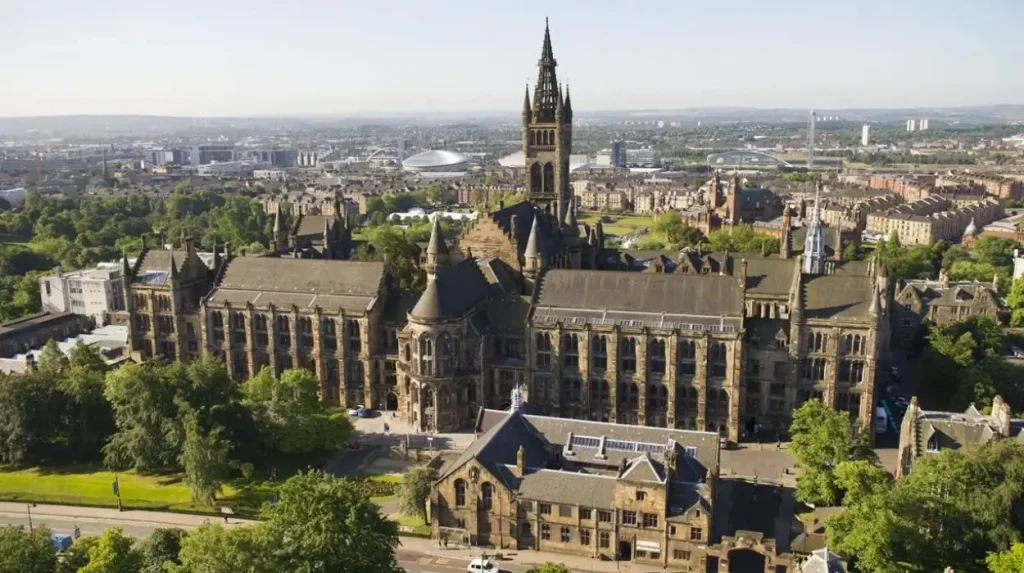
The University of Glasgow is based at Gilmorehill in the West End, an area known for its historic university buildings, independent cafés, cultural attractions and green spaces. The University of Strathclyde is located in Glasgow city centre, close to major transport connections, shopping districts, student accommodation and the city’s business district.
Both universities provide access to Glasgow’s wider student community. However, their surrounding neighbourhoods offer different experiences. Understanding these differences helps prospective students, international applicants and existing residents choose suitable places to live and study.
How do the University of Glasgow and the University of Strathclyde differ in location?
The University of Glasgow occupies the Gilmorehill campus in Glasgow’s West End, while the University of Strathclyde operates from a central Glasgow campus. This geographical difference influences accommodation, commuting, shopping, entertainment and everyday student life across the city.
The University of Glasgow was founded in 1451 and is one of the oldest universities in the English-speaking world. Its main campus stands in the Hillhead area of the West End. The campus combines historic architecture, modern learning facilities, research buildings and student services.
The University of Strathclyde is situated in the city centre, particularly around the Townhead and Cathedral Street area. Its central position places academic buildings close to Glasgow’s commercial centre, public transport facilities and major shopping streets.
These locations create two distinct student environments.
University of Glasgow: Gilmorehill and the West End
Gilmorehill is the principal campus of the University of Glasgow. It is surrounded by Hillhead, Partick, Kelvinbridge and other West End neighbourhoods.
The campus includes the Gilbert Scott Building, University Library, James McCune Smith Learning Hub, sports facilities, museums and student union buildings.
The surrounding area contains supermarkets, independent retailers, restaurants, cafés and entertainment venues. Ashton Lane, Byres Road and Great Western Road are important destinations for students.
University of Strathclyde: Glasgow city centre
The University of Strathclyde campus is integrated into Glasgow’s central urban environment. Its academic buildings, library, Students’ Union and sports facilities are concentrated around the city-centre campus.
Students have convenient access to Buchanan Street, George Square, Glasgow Queen Street Station and Buchanan Bus Station.
The surrounding area includes purpose-built student accommodation, restaurants, shopping facilities, cultural attractions and transport connections.
The main geographical distinction is straightforward: Glasgow offers a traditional university-centred West End environment, while Strathclyde offers a city-centre university environment.
Which student neighbourhoods are best for the University of Glasgow?
Hillhead, Partick, Finnieston, Woodlands and Hyndland are established residential choices for University of Glasgow students. These West End neighbourhoods provide access to Gilmorehill, local shops, public transport, restaurants and recreational facilities.
The University of Glasgow’s location makes the West End a natural starting point for accommodation searches. However, each neighbourhood has different housing options and transport connections.
Hillhead
Hillhead is one of the closest residential areas to the Gilmorehill campus. It is centred around Byres Road, Great Western Road and Ashton Lane.
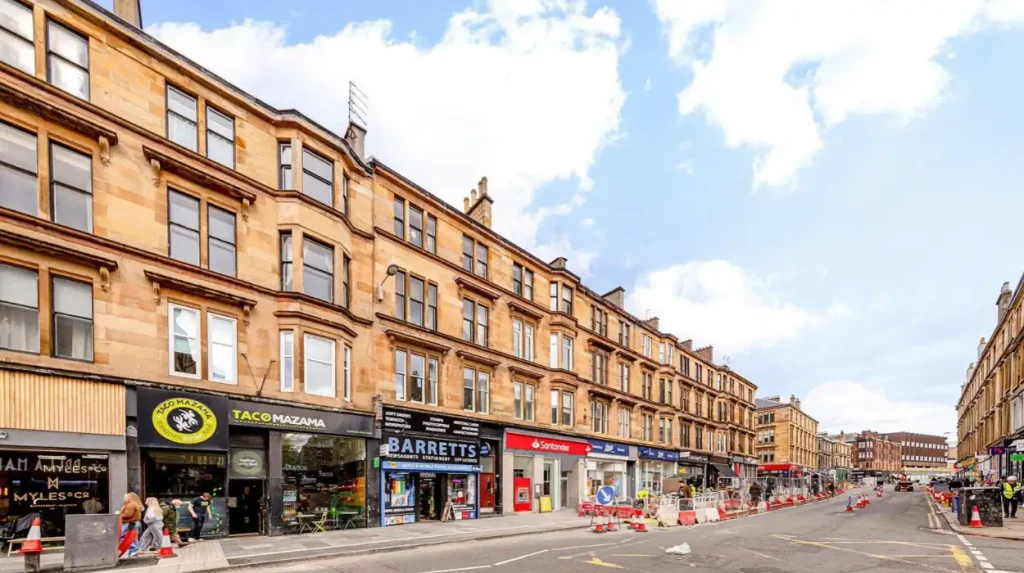
The neighbourhood offers traditional sandstone tenement flats, student apartments, university residences and privately managed accommodation.
Byres Road contains supermarkets, bookshops, cafés, restaurants and everyday services. Hillhead Subway Station provides connections to Glasgow city centre and other parts of the Subway network.
Ashton Lane is a recognised social destination with restaurants, pubs and independent venues. Its proximity to the university makes Hillhead particularly convenient for students attending lectures and using campus facilities.
Partick
Partick is located west of Hillhead and provides access to the wider West End. Its housing includes traditional tenement flats, modern apartments and shared student accommodation.
Partick Interchange connects rail, subway and bus services. This makes the neighbourhood useful for students travelling between the university, city centre and surrounding districts.
Dumbarton Road contains supermarkets, food shops, restaurants and independent businesses. Partick also provides access to the River Clyde and local leisure facilities.
Students who want West End accommodation with several transport options regularly include Partick in their property searches.
Finnieston
Finnieston lies between Glasgow city centre and the West End. Argyle Street forms an important commercial and social route through the neighbourhood.
The area contains restaurants, cafés, bars, independent retailers and residential apartment developments. Its location also provides access to Kelvingrove Park and cultural venues.
Finnieston suits students who want access to both university districts. However, the distance to Gilmorehill requires a walk or public transport journey.
Woodlands and Hyndland
Woodlands sits between the city centre and the West End. It provides access to Kelvingrove Park, Sauchiehall Street and the University of Glasgow.
Hyndland is further west and has a predominantly residential character. It offers traditional tenement properties, local shops and railway connections.
Both neighbourhoods provide alternatives to living immediately beside the main university campus.
Which student neighbourhoods are best for the University of Strathclyde?
Townhead, Merchant City, Glasgow city centre, Dennistoun and Cowcaddens are practical accommodation choices for University of Strathclyde students. These neighbourhoods provide access to central campus buildings, transport services, shopping facilities and student amenities.
Strathclyde’s city-centre position creates a different accommodation pattern from the University of Glasgow. Students can live close to university buildings without necessarily choosing West End housing.
The university also provides its own accommodation facilities within the central campus environment.
Townhead
Townhead is located north of Glasgow city centre and close to the University of Strathclyde.
It contains university buildings, student accommodation, residential properties and local services. The neighbourhood provides convenient access to the main campus and Glasgow Caledonian University.
Students who prioritise short walking journeys to lectures frequently consider Townhead.
Merchant City
Merchant City is situated east of the main shopping district and close to Strathclyde’s campus.
Its streets contain converted commercial buildings, modern apartments, restaurants, galleries and independent retailers.
The neighbourhood provides access to Trongate, Ingram Street, Glasgow Cross and the city-centre shopping area.
Merchant City is particularly relevant to students who want to combine central accommodation with access to cultural attractions and restaurants.
Glasgow city centre
Glasgow city centre contains a substantial range of accommodation and everyday services.
Buchanan Street, Sauchiehall Street and Argyle Street are important shopping and commercial areas. George Square is a central public space surrounded by historic buildings and transport connections.
City-centre accommodation provides access to Strathclyde’s campus, railway stations, bus services, shops and entertainment venues.
Students should compare building facilities, rent and contract conditions because centrally located accommodation includes different property types and price levels.
Dennistoun
Dennistoun is an East End residential neighbourhood located close to Glasgow city centre.
Duke Street provides access to independent cafés, restaurants, convenience shops and local services. The area contains traditional tenement properties and residential streets.
Its location provides an alternative to higher-demand central accommodation. Students need to consider their exact campus destination and the walking or public transport journey before signing a tenancy.
Cowcaddens
Cowcaddens is located north-west of the city centre. It provides access to Glasgow city centre, the University of Strathclyde and Glasgow Caledonian University.
The neighbourhood has residential accommodation, student housing and public transport connections. Cowcaddens Subway Station also connects residents with the wider city-centre and West End network.
It is a useful option for students who want to remain close to central educational institutions.
Where are the main student areas in relation to both universities?
The University of Glasgow is positioned west of central Glasgow, while Strathclyde is located east of the principal shopping district. Hillhead and Partick serve West End accommodation searches, whereas Townhead and Merchant City serve central-campus searches.
Understanding the geographical relationship between neighbourhoods helps students compare accommodation more accurately.
- Hillhead is immediately associated with the University of Glasgow campus.
- Partick provides West End accommodation and transport connections.
- Finnieston occupies an intermediate position between the West End and city centre.
- Townhead is close to the University of Strathclyde.
- Merchant City provides central residential and commercial facilities.
- Dennistoun offers an East End alternative.
Students should distinguish between geographical proximity and actual journey time. A property near a railway station or Subway entrance does not necessarily provide the shortest journey to a particular university building.
The University of Glasgow also has facilities outside Gilmorehill. Students should check their department’s teaching location before selecting accommodation.
Similarly, Strathclyde students should identify the relevant faculty buildings rather than assuming every lecture takes place in one central building.
How much does student accommodation cost near Glasgow and Strathclyde?
Accommodation costs depend on room type, tenancy duration, location and included utilities. University-managed accommodation provides published weekly rates, while private rentals require comparisons of rent, energy, broadband, council tax eligibility and additional housing expenses.
Accommodation represents a major part of a student’s Glasgow living budget.
Both universities provide accommodation information and managed residences. Private accommodation is also available across the West End, city centre and surrounding residential districts.
University of Glasgow accommodation costs
The University of Glasgow publishes accommodation prices for its 2026/27 undergraduate academic session.
These rates relate to the university’s published 2026/27 accommodation schedule. Heating, utilities, Wi-Fi and group possessions insurance are included in the listed residence fees.
The university operates accommodation in several locations, including Hillhead, Gibson Street, Southpark Terrace and Murano Street.
This allows students to compare proximity, room facilities and weekly costs.
University of Strathclyde accommodation costs
The University of Strathclyde offers accommodation within its city-centre campus environment.
Its accommodation information advertises rooms starting from £133.49 per week, with utilities, heating, Wi-Fi and other listed benefits included. Prices depend on the accommodation option and applicable contract. University of Strathclyde
The university’s international student financial breakdown provides additional budgeting estimates.
For 2026/27 planning, its published indicative budget for a single student in university accommodation is:
- Accommodation: £182 per week.
- Food, local travel, laundry and entertainment: £100 per week.
- Total: £282 per week.
- Estimated 39-week undergraduate session: £11,798.
These figures are estimates rather than guaranteed charges for every student or accommodation contract. University of Strathclyde
Private accommodation in Glasgow
Private renting provides another option for students attending either institution.
Students commonly investigate shared flats, individual rooms, purpose-built student accommodation and private studios.
A shared flat divides rent and household expenses between tenants. However, students must check whether utilities, internet and other charges are included.
Private student accommodation often provides furnished rooms, shared kitchens and communal facilities. Some buildings offer ensuite bathrooms, study rooms, gyms and social spaces.
Before accepting a property, students should examine:
- Weekly or monthly rent.
- Deposit requirements.
- Tenancy start and end dates.
- Energy and broadband costs.
- Furniture and appliance provision.
- Distance from the university.
- Property maintenance arrangements.
Students should also check whether a property is covered by the appropriate Scottish tenancy arrangements and whether the landlord is registered where required.
Which university area offers better transport connections?
Strathclyde benefits from its central location near Glasgow Queen Street Station, Buchanan Bus Station and city-centre transport routes. Glasgow benefits from Hillhead, Kelvinhall and Partick Subway connections, alongside rail and bus services throughout the West End.
Glasgow has an extensive public transport network consisting of buses, suburban trains and the Glasgow Subway.
The best transport arrangement depends on where students live and how frequently they travel.
Glasgow Subway
The Glasgow Subway is an underground railway operated by Strathclyde Partnership for Transport (SPT). It connects 15 stations through an Inner Circle and Outer Circle.
Important stations for University of Glasgow students include:
- Hillhead, for the Gilmorehill campus.
- Kelvinhall, for the western part of the West End.
- Kelvinbridge, for nearby residential neighbourhoods.
- Partick, for transport interchange facilities.
Strathclyde students benefit from Buchanan Street and St Enoch stations, which serve the central shopping and commercial districts.
SPT publishes the following 2026 contactless adult fares:
The daily and weekly contactless caps apply when passengers consistently use the same payment card or device.
Students should compare contactless payments with available season tickets before purchasing regular travel.
Bus services
Glasgow’s bus network connects the West End, city centre, East End and Southside.
First Bus and other operators provide routes through major residential and commercial areas.
West End students use buses along Great Western Road, Byres Road and Dumbarton Road. Strathclyde students benefit from central bus routes and proximity to Buchanan Bus Station.
Buses are useful for journeys that do not follow the Subway route. However, journey times depend on traffic conditions, route frequency and the location of stops.
Students should check current operator timetables and ticket options when planning regular journeys.
Railway connections
Glasgow has two major city-centre railway stations.
Glasgow Central Station provides services to destinations including Paisley, Ayrshire and southern Scotland. Glasgow Queen Street Station serves routes including Edinburgh, Stirling and northern Scotland.
University of Strathclyde students benefit from proximity to Queen Street Station.
University of Glasgow students can access rail services through Partick and other West End stations.
Rail transport is particularly useful for students who live outside Glasgow or travel to other Scottish cities during weekends and academic holidays.
Walking and cycling
Walking is practical for students living near either university.
Hillhead residents can walk to the University of Glasgow campus, while Townhead and Merchant City residents have convenient pedestrian access to Strathclyde.
Cycling provides another transport option. Students should consider secure bicycle storage, suitable cycling routes, road conditions and campus facilities before relying on a bicycle for daily travel.
Which area provides better access to student shopping and everyday facilities?
Glasgow West End provides shopping through Byres Road, Dumbarton Road and Great Western Road. Strathclyde’s city-centre location provides access to Buchanan Street, Argyle Street and Merchant City, including supermarkets, clothing retailers, pharmacies and food outlets.
Daily convenience is an important part of choosing student accommodation.
Students regularly need access to food shops, pharmacies, banks, laundry services, cafés and affordable household products.
Shopping near the University of Glasgow
Byres Road is one of the main shopping streets in the West End.
It contains supermarkets, convenience shops, restaurants, bookshops and independent retailers. Students also find everyday services along Great Western Road and Dumbarton Road.
Partick provides additional shopping facilities through its high street and nearby retail businesses.
Students living around Hillhead and Partick can access most routine services without travelling into the city centre.
Shopping near the University of Strathclyde
Strathclyde students have access to Glasgow’s principal shopping district.
Buchanan Street contains major fashion retailers, department stores and commercial premises. Argyle Street and Sauchiehall Street provide additional shopping destinations.
Merchant City offers independent businesses, restaurants and specialist retailers.
Buchanan Galleries and nearby shopping facilities provide further options for clothing, electronics and household purchases.
The central location also makes it convenient to reach supermarkets and convenience stores around the city centre.
What social and recreational facilities are available around both universities?
The University of Glasgow offers access to West End cultural attractions, parks, museums and student venues. Strathclyde students benefit from city-centre entertainment, shopping, restaurants, cultural institutions and university sports facilities. Both locations provide access to Glasgow’s wider social environment.
Student life includes more than lectures and academic facilities. Recreational opportunities help students manage their schedules and participate in university communities.
Social activities around the University of Glasgow
The West End contains several recognised social and cultural destinations.
Ashton Lane provides restaurants, bars and independent entertainment venues close to Hillhead.
Kelvingrove Park offers open green spaces, walking paths and recreational areas. It is located close to the university and Finnieston.
Glasgow Botanic Gardens provides landscaped gardens, plant collections and the Victorian Kibble Palace glasshouse. It is located further west along Great Western Road.
Kelvingrove Art Gallery and Museum contains art collections and exhibitions covering subjects such as natural history, design and historical artefacts.
The University of Glasgow also provides student societies, cultural activities, sports facilities and student union events.
Its campus includes two student unions and a large library. The university reports more than 300 clubs and societies, providing opportunities for students to participate in academic, cultural and recreational activities.
Social activities around the University of Strathclyde
Strathclyde students have access to several central Glasgow attractions.
George Square is an important public space surrounded by historic buildings and commercial facilities.
Merchant City provides restaurants, independent shops, galleries and cultural venues.
Glasgow Cathedral is a significant medieval religious building with historical connections to the development of Glasgow.
Glasgow Necropolis is a historic Victorian cemetery situated on a hill east of the city centre.
The University of Strathclyde also operates Strathclyde Sport, which includes fitness facilities, swimming and sports activities.
University accommodation information identifies sports membership among the benefits available to residents in specified university accommodation.
Students can also access Glasgow’s wider entertainment scene through central transport connections.
Parks and outdoor recreation
Both universities provide access to Glasgow’s green spaces.
Students at the University of Glasgow can visit Kelvingrove Park and Glasgow Botanic Gardens. Other nearby outdoor destinations include Victoria Park and the wider riverside environment.
Strathclyde students can reach Glasgow Green, the Glasgow Necropolis and other central recreational spaces.
Glasgow Green is one of the city’s historic public parks. It provides walking routes, open areas and access to the People’s Palace and Winter Gardens.
These facilities give students options for outdoor recreation without requiring travel outside the city.
How do student communities differ between the two universities?
The University of Glasgow has a prominent West End student community centred on Gilmorehill, Hillhead and Partick. Strathclyde has a central student community connected to Townhead, Merchant City and city-centre accommodation, with access to Glasgow’s wider university population.
Student communities develop through accommodation, academic departments, student unions, societies and neighbourhood activities.
Glasgow has several higher education institutions, including the University of Glasgow, University of Strathclyde, Glasgow Caledonian University and Glasgow School of Art.
The city therefore has a student population extending beyond the immediate residential areas of either university.
A Glasgow student population review for 2024/25 reported approximately 67,900 full-time students across the three largest universities in the city: Glasgow, Strathclyde and Glasgow Caledonian. Together, these institutions accounted for 94% of Glasgow’s full-time student population in that review.
University of Glasgow student community
The West End has an established student environment.
University accommodation, independent cafés, student societies and local businesses contribute to this community.
The university’s two student unions provide spaces for student activities, events and social interaction.
Students living in Hillhead and Partick can participate in university activities while accessing local businesses and neighbourhood facilities.
University of Strathclyde student community
Strathclyde’s central campus creates a concentrated student environment.
University buildings, the library, accommodation and Students’ Union facilities are located within the city-centre area.
Students living in university halls can access campus activities and meet other residents.
Private student accommodation also brings together students from different universities and academic backgrounds.
Shared student activities across Glasgow
Students from both institutions can participate in Glasgow’s wider cultural and recreational activities.
These include live music, museums, sporting events, festivals, independent food businesses and public events.
The city’s connected transport network makes it possible to socialise across different neighbourhoods without living directly beside another university.
What historical background explains the locations of both universities?
The University of Glasgow dates back to 1451, while the University of Strathclyde originated in 1796 as Anderson’s Institution. Their different histories shaped their academic identities and contributed to their present locations in the West End and Glasgow city centre.
The history of Glasgow’s universities explains why their campuses occupy different parts of the city.
History of the University of Glasgow
The University of Glasgow was established in 1451. It developed into an important institution for higher education, research and academic teaching.
The university’s main campus at Gilmorehill became an important architectural and educational landmark in the West End.
Its historic buildings, including the Gilbert Scott Building, remain prominent features of the university environment.
The university has continued developing its campus through investment in research, teaching and public facilities. Its £1 billion campus development programme includes new learning and research infrastructure.
History of the University of Strathclyde
The University of Strathclyde originated in 1796 when Professor John Anderson established Anderson’s Institution.
Its original purpose focused on useful learning, science and practical education.
The institution developed through several changes:
- 1796: Anderson’s Institution was established.
- 1828: It became Anderson’s University.
- 1887: It became the Glasgow and West of Scotland Technical College.
- 1964: It received its Royal Charter and became the University of Strathclyde.
Its development established a strong connection with technological education, engineering, science and business.
The university’s present John Anderson Campus occupies a central position in Glasgow.
Its historical development and central location contribute to its identity as an urban university.
Which university area is better for international students?
International students should compare accommodation availability, transport, university support, living costs and access to everyday services. Glasgow offers established international student communities in both the West End and city centre, with different accommodation and commuting arrangements.
International students arriving in Glasgow need to organise accommodation before beginning their courses.
Both universities provide accommodation information and guidance for students preparing to move to Scotland.
International students at the University of Glasgow
The West End offers convenient access to university buildings, supermarkets, cafés and transport.
Hillhead and Partick provide access to everyday services and established student accommodation.
University-managed residences also provide options for students who prefer accommodation connected with the university.
International students should review the accommodation contract, payment schedule and included facilities before confirming a room.
International students at the University of Strathclyde
Strathclyde’s central location provides access to university buildings, shopping facilities and transport connections.
University-managed accommodation is particularly relevant to international students who want to live close to their academic facilities.
The university advises international students to arrange temporary accommodation in advance when their permanent accommodation is not available immediately after arrival. Its guidance recommends booking temporary accommodation for at least two weeks when longer-term arrangements remain unfinished. University of Strathclyde
Important considerations before moving
International students should investigate several practical requirements before arriving:
- Confirm university accommodation eligibility.
- Check the accommodation contract and payment dates.
- Arrange temporary accommodation when necessary.
- Research local supermarkets and pharmacies.
- Identify the nearest transport connections.
- Understand UK tenancy requirements.
- Budget for food, transport and personal expenses.
Students should also identify their university’s international student support services for immigration, registration and academic guidance.
Which university area is more suitable for students on a limited budget?
Students managing limited budgets should compare accommodation outside the immediate campus areas, shared housing, included utilities and commuting expenses. Dennistoun, Partick and selected surrounding neighbourhoods provide additional options beyond premium West End and central accommodation.
The cheapest property is not always the most economical choice.
Students should calculate total monthly living expenses rather than comparing rental prices alone.
Budget considerations for University of Glasgow students
Hillhead provides convenient access to the university but students should compare its rental costs with nearby areas.
Partick, Maryhill and other residential neighbourhoods provide additional accommodation searches.
Students should calculate whether travelling to campus from a cheaper property creates additional transport expenses.
Budget considerations for Strathclyde students
Townhead and the city centre provide convenient campus access.
However, students can also investigate Dennistoun and other residential districts.
Shared accommodation helps divide rent and household expenses between tenants.
Understanding the complete accommodation budget
Students should also check whether council tax applies to their accommodation. Eligible full-time students are generally exempt from council tax, subject to the applicable rules and household circumstances.
A property shared with people who are not eligible students requires additional checking.
What should students consider before choosing between the two university areas?
Students should compare their academic campus, accommodation budget, transport requirements, housing availability and preferred residential environment. The University of Glasgow suits West End living, while Strathclyde offers direct access to central Glasgow and its commercial and transport facilities.
A practical accommodation decision begins with the location of the student’s academic department.
The University of Glasgow has a main campus at Gilmorehill, while Strathclyde’s main campus is centrally located.
Students should identify their regular teaching buildings before choosing a neighbourhood.
Check accommodation before signing
Students should inspect the property or request a reliable virtual viewing.
They should check the condition of the kitchen, bathroom, heating system, windows and communal spaces.
The tenancy agreement should clearly identify the rent, deposit, contract duration and responsibilities for utility payments.
Students should also verify the landlord’s registration where required and understand the applicable tenancy deposit protection arrangements in Scotland.
Consider the academic timetable
Students attending early lectures or regularly using university facilities should prioritise accommodation with convenient campus access.
A short walking journey reduces dependence on transport timetables.
Students with placements, laboratory sessions or irregular schedules should also consider transport availability outside standard university hours.
Compare the wider neighbourhood
The immediate street environment matters as much as the wider district.
Students should check nearby food shops, pharmacies, transport stops, lighting, pedestrian routes and available services.
A property that provides access to these facilities supports a more convenient daily routine.
Explore More Area Guide
Glasgow Student Transport Guide: Buses, Subway and Trains
Best Free Things to Do in Glasgow for Students
How will Glasgow’s student neighbourhoods remain relevant for future students?
Glasgow’s established universities, residential neighbourhoods, transport network and cultural facilities support continued demand for student accommodation. Future student housing choices will depend on affordability, university investment, rental supply and improvements to transport and educational infrastructure.
Glasgow remains an important higher education centre in Scotland.
The city’s population reached 654,330 in mid-2025, according to National Records of Scotland. This makes Glasgow Scotland’s most populated council area.
The presence of major universities contributes to demand for housing, retail facilities, transport and recreational services.
University development
The University of Glasgow’s campus development programme includes investment in academic and research facilities.
Strathclyde also continues to develop its campus as part of its Strathclyde 2030 strategy.
These investments contribute to the long-term importance of both university locations.
Student accommodation demand
Purpose-built student accommodation, university residences and private rented properties serve different housing requirements.
Future accommodation decisions will depend on rental affordability, available housing, room facilities and university admission patterns.
Students should monitor official accommodation announcements because prices, availability and eligibility requirements change between academic sessions.
Neighbourhood development
The West End retains its importance as a university and cultural district.
Glasgow city centre continues to serve as a major location for education, employment, shopping and transport.
Neighbourhoods such as Partick, Dennistoun, Finnieston and Merchant City provide additional residential choices.
The relationship between these districts and Glasgow’s universities makes neighbourhood knowledge an important part of student planning.
University of Glasgow vs Strathclyde student areas
The University of Glasgow and the University of Strathclyde offer different geographical experiences within Glasgow.
The University of Glasgow’s Gilmorehill campus places students in the West End, close to Hillhead, Partick, Byres Road, Ashton Lane and Kelvingrove Park. This location provides access to established student neighbourhoods, cultural attractions and university facilities.
The University of Strathclyde’s central campus provides access to Townhead, Merchant City, Buchanan Street, George Square and major transport connections. Its location supports students who prefer central accommodation and convenient access to Glasgow’s commercial district.
Both universities offer access to accommodation, public transport, shopping, recreation and Glasgow’s wider student community.
The most suitable student area depends on academic location, accommodation costs, transport requirements and individual housing preferences. Comparing these factors before signing a tenancy helps students make informed decisions about living and studying in Glasgow.
Which university is better for student life in Glasgow, Glasgow or Strathclyde?
The University of Glasgow offers a traditional university environment in the West End, while the University of Strathclyde provides a central city-campus experience. Both offer student societies, accommodation, sports facilities and social activities.


